Jump to ratings and reviews
Rate this book

The Struggle for Taiwan

Rate this book
A gripping account of the past and future of Taiwan

'Deeply researched and fascinating' - The Guardian

In the overwhelming chaos across Asia at the end of the Second World War, one relatively minor issue was the future of the Japanese colony of Taiwan, a large island some one hundred miles off the coast of Fujian. Handed to the Kuomintang-ruled Republic of China, in 1949 it suddenly became the focus of global attention as a random cross-section of defeated Nationalists, including President Chiang Kai-shek, fled there from Mao's triumphant Communist forces.

The Struggle for Taiwan is a balanced and convincing account of the sequence of events that has left Taiwan for generations as a political anomaly, with issues around its status and future continuing to threaten war. With deepening democratization, Taiwan further goads Beijing, remaining functionally independent from China even as Xi Jinping clamours for unification.

This invaluable book allows readers to understand the complex story of this unique place and its role in international relations. With its striking economic dynamism and commitment to democracy, can Taiwan continue - as Hong Kong once did - to thrive, or will China conquer it? And will the world be able to maintain peace across the Taiwan Strait or will it stumble into war?

336 pages, Hardcover

First published May 14, 2024

88 people are currently reading
1139 people want to read

About the author

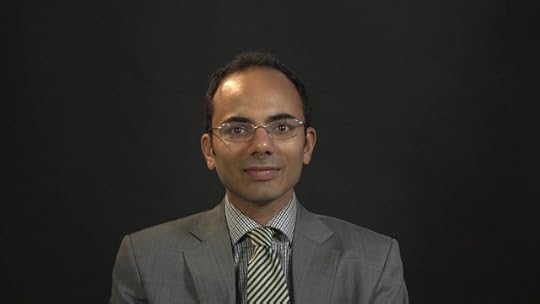
Sulmaan Wasif Khan

4 books13 followers
Sulmaan Wasif Khan is Assistant Professor of International History and Chinese Foreign Relations at the Fletcher School at Tufts University. He also directs the Water and Oceans program at the Center for International Environment and Resource Policy (CIERP). He received a Ph.D. in History from Yale University in 2012. He has written for The Economist, The American Interest, Prospect, e360, and YaleGlobal on topics ranging from Burmese Muslims in China to dolphin migration through the Bosphorus.

Ratings & Reviews

What do you think?
Rate this book

Friends & Following

Create a free account to discover what your friends think of this book!

Community Reviews

5 stars
111 (25%)
4 stars
191 (44%)
3 stars
105 (24%)
2 stars
18 (4%)
1 star
3 (<1%)
Displaying 1 - 30 of 59 reviews
Profile Image for William Cooper.
Author 3 books312 followers
June 4, 2024
While Americans obsess over political trivially--like the latest spat between Marjorie Taylor Green and AOC on the House floor--huge challenges that impact all of humanity go ignored by millions. Near the top of the list: the struggle for Taiwan.

This shouldn't be followed closely only by professionals in national security and a few pundits. It should be watched intently by everyone. A great place to start: by reading this well-informed and thoroughly researched book. It's rooted in the history of the struggle and the current dynamics--and also looks to the future. An important addition to the subject.
Profile Image for CatReader.
1,030 reviews177 followers
August 18, 2024
Sulmaan Wasif Khan is an associate professor of International History and Chinese Foreign Relations at Tufts University. In The Struggle for Taiwan, he narrates the history of Taiwan dating back to World War II, and how it's been a chronic sticking point in US-China relations, intensifying in recent years as US-China relations have soured and tensions have escalated. I found this to be a quick and informative read, and generally well-researched (the caveat being that I listened to the audiobook and thus didn't see footnotes, which I presume are in the physical text).

As I've stated in prior reviews as a Westerner reading about China in this current political climate, it's important to read books from all sources to stay informed and derive opinions.

Further reading: China and US-China relations
The Impossible City: A Hong Kong Memoir by Karen Cheung
Waiting to Be Arrested at Night: A Uyghur Poet's Memoir of China's Genocide by Tahir Hamut Izgil
China's World View: Demystifying China to Prevent Global Conflict by David Daokui Li

My statistics:
Book 180 for 2024
Book 1783 cumulatively
Profile Image for Audrey.
1,756 reviews
April 30, 2024
For a quick down and dirty explanation of the shifting loyalties and tensions between China, Taiwan, and the United States, this can't be beat. It is written in such a way as to be completely accessible to the novice in foreign affairs while still maintaining a respect for the people standing on the knife blade of empire and politics. Thanks to Edelweiss and the publisher for the ARC.
Profile Image for Graham.
86 reviews44 followers
June 5, 2024
Just finished:

New York: Basic Books, 2024.

An eye-opening book as well that should be required reading for anyone interested in where World War 3 could happen (not that I want that). Khan argues that the United States has not had a clear policy in regards to China partially due to not clearly spelling it out as well as changes in administrations and the split between the executive and legislative branch. However, the PRC at one point was willing to give Taiwan up or even have two China's (a North and South China would be an interesting intellectual question). It was only with Chiang Kai-Shek's efforts to attack Communist China from the mainland. Finally Taiwan, the most dynamic player in this conflict. It started a dictatorship under Chiang, who did all he could to manipulate the United States and keep money flowing to the ROC. However, Taiwan ultimately became a democracy and has leaned towards the United States in order to keep that democracy.

Ultimately the author argues that it was not inevitable that we would be where we are and a war with China is not inevitable if cooler heads prevail.
Profile Image for Cav.
907 reviews205 followers
July 6, 2024
"In another time, Washington and Beijing would have been able to dial the tension down. But June 2023 belongs to a different age..."

The Struggle for Taiwan is a timely and important book, but the writing here bored me to tears...

Author Sulmaan Wasif Khan is Assistant Professor of International History and Chinese Foreign Relations at the Fletcher School at Tufts University. He also directs the Water and Oceans program at the Center for International Environment and Resource Policy (CIERP).

Sulmaan Wasif Khan:
Sulmaan-Wasif-Khan-820x500-1

As mentioned above; the geopolitical struggle for Taiwan is a pressing matter. Tensions between the United States and China over the small island have gradually been escalating since the Communists won the Chinese Civil War in 1949..

Unfortunately, the telling of this interesting history fell far short for me here. Broadly speaking - history books break into two distinct categories. Some find the most exciting and memorable episodes and characters, and unfold the story around a cohesive plot, ensuring the reader stays engaged. Others rattle off a virtual non-stop torrent of names, dates, and places. Over and over again. Rinse and repeat - until the reader becomes frustrated.

Sadly, this book was an example of the former, and not the latter. My reviews are always very heavily weighted towards how readable I find the book, and sadly that will see this one penalized fairly harshly...

The author drops this quote, outlining the aim of the book:
"This book, therefore, seeks to provide a comprehensive account of that relationship over the last eight decades. The story begins in 1943, when the Cairo Declaration first held forth the idea that Taiwan would be part of a Chinese state; it ends with the elections in a democratic, practically independent Taiwan in 2024. I could not have attempted such a survey without the excellent work that others have done on various aspects of those relations, though I have also benefited from primary sources from all three sides.7 There are, to be sure, inevitable gaps in the record. But there is enough material around to guide us along the paths that brought the three countries to their present moment—and thereby, perhaps, to show where they might go in the future..."




******************

Although the book presents a factual telling of this important topic, the writing here was way too long-winded and tedious for my picky tastes. I put the book down midway, which is something I rarely do.
I would not recommend it.
1 star.
Profile Image for Murtaza.
712 reviews3,387 followers
February 17, 2025
As good a history for Taiwan as you’ll get.
Profile Image for Jay Perrone.
25 reviews2 followers
June 11, 2024
I don't read a lot of nonfiction, but I'm glad I picked this one up. The history between the three nations is long, (and while Taiwan hasn't officially declared itself independent from the People's Republic of China, it functionally is) and things have most definitely reached the "edge of chaos" the author mentions in the book. I can only hope that the people in power make the right choices to keep from all out war because the consequences would be dire. The book was really informative and I'm really glad I have this understanding now.
Profile Image for Jennifer.
155 reviews6 followers
July 27, 2025
Idaho Talkington Family Book Club Summer 25.
5 reviews1 follower
January 29, 2025
A very interesting topic but I found the author condescending and lacking insight outside of the facts.
113 reviews5 followers
November 13, 2024
An enlightening international relations history of Taiwan on the years 1943-2024. The book starts with the Cairo conference in 1943 when it was decided that Taiwan would be handed to the leader of China, Chiang Kai-Shek, up to today with the Biden administration's hardening stance on Taiwan. The book also includes Deng's "One China, Two Systems" idea and the democratization that Taiwan experienced in the 1990s. My main criticisms with this book is that Khan is hypercritical of Chiang and not critical enough of Mao, underappreciating the impact of Chiang's modernization policy from the 1960s onwards that was happening while Mainland China was experiencing one of its darkest chapters in history. Khan is also hypercritical of the US policy to Taiwan, which at times is fair and at times underappreciates the kind of stability it has brought to the region, often attributing the de-escalation of potential wars between the US and China to "luck". It is a worthwhile read that should be taken with a grain of salt.
Profile Image for Mehrdad Alemzadeh.
26 reviews
January 17, 2025
Ming dynasty was dethroned by Qing in 1600s. This was a group of people in Manturia who took over China and later Taiwan and central Asia.
Qing went after Taiwan to mainly manage the European presence as well as Ming devoted pirates.
During the mid 1800s, with the British success of the Opium War and the Treaty of Nanjing (freedom over Chinese law for the foreigners), other countries including the US, Russia, Germany and French followed suit.
With Japan’s attack in 1894, Qing lost Taiwan.
The early 20th century was all about domestic challengers to the Qing such as the Boxers, Sun Yat-sen and Yuan Shikai. Therefore, China started to loose territories such as Mongolia to Russia, Tibet as an independent entity.
During the WWI Rosevelt was trying to annex/exploit China for a war against Japan. Chian Kaishek expected the US to help restore a lot of territories under China/Qing. While the generals on the ground (born and raised in China) counsoled FDR about lack of stamina in Kaishek to fight against Japan, the US agreed to Taiwan becoming a part of China in Cairo (there are records to prove that the US has deliberately kept these discussions unavoidable).
American support of Chiang (who had fled to Taiwan) and Mao leaning towards the Soviets, had put FDR in a situation of losing territories to the communists (therefore the cold wars). The US was divided in terms of taking Taiwan or let it fall in the hands of CCP. They finally decided that because they don’t have the public support for a takeover and that they can rely on the UN in case of future hostilities, therefore, they should strengthen their positions in the Philippines and Japan and focus on trade continuum with China.
In 1950 North Korea got the Soviet green light to invade the south, now that they all had Mao’s blessing. Washington poured in through a UN lead coalition (US kept China out of the UN till 71) to prevent further losses to the Communist.
McArthur’s fight against communism came at the cost of getting China involved in the Korean war (AKA Sino-American War) because he tried to further militarize Taiwan. And China, not only got him sacked but won the war for North Korea to show immense power and a retaliation for hosting Chiang. The war dragged for so long since the US and China couldn’t agree for the US to de-base from Taiwan. This is in spite of Japan de-claiming it through San Francisco conference.
Post Covid pandemic, Sino-American relationships took another twist in regard to Taiwan. Taiwan had correctly warned against the virus spread in 2019, and due to China’s influence over WHO, this information was suppressed. Also during the pandemic, Taiwan had successfully managed to control it by implementing the correct social and international isolations, but that information was also blocked from the rest if the world by China. Trump’s tariff politics wouldn’t work and therefore Biden came in. In a different situation he would had wanted a smoother relationship with China but ended up toughening up even more than all his predecessors but clearly claiming that Taiwan is not part of China and sending Pompeo and Pelosi there for strengthening his political ambitions.
One issue for Taiwan to lean towards the US was the expectation for buying more ractopamine-pork which is forbidden almost everywhere due to its health concerns.
We shall see soon if the US can eventually block China from the Pacific Ocean and its corridors of Taiwan or not.
Profile Image for Randall Harrison.
208 reviews
November 1, 2024
A good history lesson, or refresh for those with knowledge of the subject. Well-researched, but concisely reported analyses of R.O.C./US relations from 49 to present - economically, politically, and militarily, and changes in those issues over time.

Funny (tragic?) how much the Wolf Warriors in the PRC's foreign ministry seem to have turned the heat up on the issue and hardened US resistance to perceived Chinese bullying over Taiwan in response, exactly opposite of what the warriors expected strategically from their efforts.

As an American, I have an issue with laws that restrict the democratically-elected leader of Taiwan from simply traveling in and out of our country freely, wholly at the PRC's insistence. We sell the country billions in military hardware, but kowtow to the PRC with respect to how we interact with them otherwise, e.g., interest sections instead of embassies, etc.

I get it, I know about the Shanghai Communique and all that. Times have changed, time for a reboot of our policies wrt this unique nation. The concern for ROC's sovereignty has only heightened after we see how the PRC reneged on treaty commitments toward Hong Kong after the turnover. With Xi in charge, what's past is prologue. Taiwan and the US have strong vested interest in remaining friendly. What say you Professor Khan about the nature and direction of that relationship?

Khan is a historian by trade, providing much more description than prescription, or even some prediction. He cops to this in the Epilogue yet I wanted a bit more historical analysis from a guy at Fletcher. Why is the author hedging his bets and not telling us what his education, knowledge and research is telling him where this is most likely to go? Put differently, I found the Epilogue some disappointingly thin gruel.

Good book, but think it better as a Foreign Affairs, New Yorker, or Atlantic-type long read. Regardless, it would be worthwhile for a lot of Americans to read this book, but it's not likely many will.

Taiwan is a certain incubator for an unanticipated spark to a military conflict between PRC and USA. More people in the US should be reading this book, if only to get a better understanding of the issue. Informed citizens can do a better job communicating to our elected officials how we feel about the issue. There could come a time in the very near future when it will be a determinative campaign issue in Senate and Presidential elections.

Read it, liked it. Just left me wanting more definitive response to basic questions I had before reading. Where does he think this is most likely to go? Maybe he'll answer those in his next volume.
Profile Image for BJ Richardson.
Author 2 books92 followers
February 7, 2025
At the time of my writing this, two days ago, five Chinese spies were caught and arrested in the Philippines. Three days ago Philippines President Marcos promised he would return the Typhoon (an American SMRF missile system) to the US if China backed off its aggression in the Western Philippine islands. The day before that, Chinese warships prevented the Philippine coast guard from rescuing some Philippine fishermen. Not long before that, they prevented a Philippine scientific research team from landing and conducting on a different Philippine island.

I am certain that if you, the reader, were to do a quick Google research of just two words: "Philippines" and "China" an abundance of new similar articles would appear. China is not a fair player on the global stage. Its actions with regard to its neighbors are not all that different from Japan a century ago or Austria in the Balkans around the dawn of the twentieth century. To put it in a more modern perspective, I demonstrated to my students how China's current actions against the PH is eerily similar to the scenario of Russia towards Ukraine from about 2010 to 2015... and we all know how that has played out. China is simply a banana republic style dictatorship with the economic, political, and military clout to pretend at legitimacy. As true as this is for places like the Philippines, Japan, or even Australia, it is ten times more true for the Republic of China, more commonly known as Taiwan.

The PRC (mainland China) has never given up pretensions of owning this island and to this day will refuse to negotiate with any country that recognizes Taiwan's independence. See again the economic, political, and military clout comment above and you can imagine how well that bodes for the island nation. What is more, any time anyone does anything that might offend the PRC, they retaliate by invading Taiwanese waters, launching missiles over or near the island, and calling it "military drills." As you can imagine, of late this is a nearly daily occurrence.

Despite this handicap, this little democratic island nation has thrived. It has earned much goodwill recently for being a model for the rest of the world on how to effectively combat COVID (or, as Trump calls it, "the China virus"). The Struggle for Taiwan by Sulmaan Wasif Khan charts the historical course of how this has come to be. He demonstrates how this was by no means a foregone conclusion and its much likelier fate should have parallelled that of Hong Kong. He doesn't take sides in equally criticizing or praising China, the US, or the Chiangs (Kai-shek and his son Ching-kuo). Khan demonstrates how, as with most history, we have arrived where we are at by a rambling combination of missteps and blind luck. For Taiwan to remain free of the PRC's despotic grip, we need even more blind luck in the days to come.
Profile Image for Joey.
225 reviews7 followers
November 8, 2025
In "The Struggle for Taiwan" Wasif Khan seems primarily interested in establishing that decisionmakers in the United States, China, and Taiwan are free to choose the way forward through the tangle of this geopolitical love/hate triangle. This seems like a slightly sophomoric conclusion, but Wasif Khan explains well why it's actually a critical distinction. Viewed in hindsight, the way that key moments in this three-way relationship (the Cairo conference, the Korean War, the Nixon/Kissinger detente with China in the 1970s, the 1996 cross-strait crisis, etc) played out seems inevitable, like the flow of history is really quite outside decisionmakers' control. This, of course, is not so. Had leaders made different choices at these junctures, or had any numbers of factors broke differently, Taiwan could today be an independent nation, a province under the PRC, an illiberal police state, a player within the international community, etc. Taiwan's existence today as a democratic success story on the knife's edge of serious conflict with mainland China was never preordained. This seems to be one of Wasif Khan's central theses.

"The Struggle for Taiwan" is well-written and well-paced. A healthy share of the book seems to be devoted to the period spanning the end of WWII through the US detente with China in the 1970s. But I didn't feel that Wasif Khan gave short shrift to more contemporary developments either. I think that my only beef with this volume is that Wasif Khan seems to repeatedly contradict himself in one key way. He correctly notes that the conflict between the United States and China over Taiwan has been characterized through the decades by reliance on deterrence, chest-beating, posturing, toxic nationalism, and reluctance to try to understand the restrictions, mindset, history, and vital interests of the other side(s, as we should include Taiwan here too). Yet when he lays out the possibilities for the future of the three-way relationship, Wasif Khan seems to assume that it's possible for any of these three powers to turn on a dime and stop behaving like they have for 80 years. Sure, it's possible, strictly speaking. But reality seems much more likely to be more of the same. Changes to the landscape of the conflict must come slowly, gradually, and within the framework of the reality that the past has gifted to the present. It didn't seem like Wasif Khan grasped that.
Profile Image for Chad Manske.
1,388 reviews56 followers
January 29, 2025
Sulmaan Wasif Khan’s “The Struggle for Taiwan: A History of America, China, and the Island Caught Between” offers a nuanced exploration of Taiwan’s complex historical and geopolitical trajectory. Khan adeptly traces Taiwan’s evolution from a Japanese colony to a Cold War flashpoint and its current status as a de facto independent democracy under constant pressure from Beijing. The book excels in unpacking the policy missteps, ideological clashes, and strategic indecision by both the U.S. and China that have perpetuated Taiwan’s precarious position. Khan’s narrative is most compelling in its analysis of missed opportunities, such as the potential for a U.N. trusteeship or Formosan separatism during the mid-20th century. These alternatives, though feasible, were sidelined by Washington’s commitment to Chiang Kai-shek’s regime, leading to “strategic drift” that constrained U.S. options. His detailed recounting of Cold War dynamics highlights how anti-communism shaped U.S.-Taiwan relations while avoiding oversimplification of either side’s motives. However, the book is not without flaws. Some claims, such as linking Taiwan’s independence movement directly to the 1947 228 Incident, are critiqued as oversimplified or misleading. Despite these missteps, Khan’s balanced approach and rigorous research provide valuable insights into Taiwan’s unique role in global politics. The book’s strength lies in its ability to connect historical decisions with contemporary challenges, offering a sobering reminder of how past choices shape present dilemmas. Khan concludes with a poignant call for future decisions on Taiwan to be informed by history’s lessons and unrealized possibilities—a timely message as tensions in the Taiwan Strait escalate. This work is essential reading for those seeking a deeper understanding of Taiwan’s past and its implications for the future.
Profile Image for Thomas Ray.
1,506 reviews521 followers
October 13, 2025
The Struggle for Taiwan, Sulmaan Wasif Khan (M.A. 2005, Ph.D. 2012), 2024, 321 pages, Dewey 951.249, ISBN 9781541605046

History of U.S.-People's Republic of China-Taiwan relations, 1943-2024 (with backstory back to the 1600s). p. 8.

The author's writings have appeared in /The Economist/, /Foreign Affairs/, and /Foreign Policy/. So we know he's coming from the all-for-the-billionaires camp. But both Taiwan and Xi Jinping's People's Republic of China are in the same camp (as is every U.S. administration). This book gives a relatively evenhanded account, duly criticizing all three governments.

For an establishment pundit, Khan is quite alive to the fact that war with China would be Bad.

ERRATA

Accepts the 1943 Cairo Declaration at face value, "The U.S., UK and Republic of China are fighting to restrain and punish the aggression of Japan. They covet no gain for themselves." p. 12. No admission that FDR /forced/ Japan to war, by blockading fuel, so that U.S. corporations, not Japan, could take the natural wealth of Indonesia. Pearl Harbor gave FDR the excuse he was waiting for to go to war. But to this author, FDR was not imperialist. pp. 24, 27.

Uses "Democrat" to mean "Democratic," as in "Democrat officials." pp. 1, 128.

AT THE EDGE OF THE ABYSS

U.S., PRC, and ROC choices have come from confusion, panic, stubbornness, and a stunning inability to think through long-term consequences. p. 247.

The normalization of force to answer complex problems may lead to catastrophe. p. 260.

Nuclear holocaust is only one of several futures we might bring into being. p. 251, 256.

Taking Taiwan could infect Chinese people with Taiwanese ideas of democracy. p. 254

An empire is overstretched when its commitments outstrip its resources, and its economy is cannibalized by military spending. p. 255. Taiwan can't be defended cheaply. p. 258.

Security is in neighbors' goodwill. p. 255.

HISTORY

1943 FDR agrees that Taiwan will be part of China. p. 27.

1945 Chiang's troops and officials looted Taiwan. p. 34.

1946.02.22 George Kennan's "long telegram" presages knee-jerk anticommunism as U.S. policy. p. 34. Being soft on Communism would be the death blow to a political career. p. 53.

1946 Chiang resumes civil war against Mao. p. 36.

1947 It was surprising how often American officials would recognize irremediable incompetence in a leader and still recommend military support. As General Wedemeyer did, supporting the brutal, kleptocratic Nationalist rule in Taiwan. pp. 36-42.

1948 Chiang gave himself temporary powers, suspending the Republic of China's constitution. These powers would stay until 1991. p. 48.

1949 Communism thrived where there was oppression. The only way to keep Formosa out of Communist hands would have been to eject the brutal Kuomintang government. --George Kennan. This would've meant evicting the 300,000 KMT soldiers on the island. pp. 42-45, 48, 55, 66.

1949.10.01 Mao's Communists declared the foundation of the People's Republic of China. p. 48.

1950.01.12 Secretary of State Dean Acheson tells the National Press Club that the U.S. is not committed to defending Korea or Taiwan. pp. 57-58.

1950.02 Senator Joseph McCarthy gains political power by slandering officials as Communist. Anticommunism is now the predominant force in U.S. politics. No U.S. politician can henceforth afford to be soft on Communism or soft on China. pp. 53, 71, 105.

1950.06.25 North Korean dictator Kim Il-Sung attacked South Korea. Suddenly the U.S. decided that Korea was a vital interest. p. 59. General MacArthur disobeyed Truman and pursued the North Korean army not just to 38°N, but beyond, leading China into the Korean War. p. 61.

1950.07 Truman sent the U.S. Navy to the Taiwan Strait, to prevent the PRC and ROC from attacking each other. pp. 60, 71. Truman wrongly believed that doing so did not constitute interference in the Chinese civil war, which he had said he would not do. Mao learned not to trust the U.S. p. 63.

1964 China develops an atomic bomb. p. 97.

1971.10 The People's Republic of China finally gains its seat in the United Nations. p. 60, 113.

1975. Chiang Kai-shek died. Senator Barry Goldwater made sure the Senate kept backing the ROC. p. 126-127.

1976.09 Mao died. China will turn capitalist in all but name, under Deng Xiaoping p. 118.

1979.01.01 U.S. & People's Republic of China normalize relations. BUT Congress passed the Taiwan Relations Act, saying the U.S. won't tolerate PRC invasion of Taiwan: the U.S. /would/ interfere in Chinese internal affairs. pp. 92, 118, 131-134.

1988 Chiang Ching-kuo died. The Chiang-dynasty police state will end. p. 149.

1989 Tiananmen square massacre. pp. 136,

1995 Taiwanese president Lee Teng-hui donated generously to U.S. congresspeople's campaign funds. He was then given a visa to give a speech in the U.S. p. 157.

2002 Taiwan joins World Trade Organization. p. 137.

2007 Costa Rica terminated diplomatic relations with the ROC, after Taiwan's rapacious fishing in Costa Rican waters. Costa Rica sold fishing rights instead to the PRC. p. 182

2008.07 Tourists may now fly across the strait. p. 179.

2012 Xi Jinping became general secretary of the Chinese Communist Party. p. 167. He rules as an authoritarian, brooking no criticism. p. 187.

2017.01 Donald Trump became president of the United States. p. 167. Trump normalized the idea of a China threat that required getting tough. p. 196. With broad bipartisan support. p. 207.

2019.12.30 Wuhan doctors warn of the Covid danger. Hospital management tells them to shut up. p. 209. The People's Republic of China and the World Health Organization withhold facts about the danger. Millions died. The world shut down. p. 211. The resulting downturn would hamper Trump's bid for reelection. p. 213.

2022.02 President Biden says the U.S. will protect Taiwan. p. 216. The U.S. supports Taiwan in order to antagonize China. p. 220. American pundits lead cheers for war, including nuclear war, with China. p. 240. Jingoism and confusion guide the foreign policies of both the U.S. and PRC. 2024 presidential candidates vied to be "toughest-on-China." p. 241.

2022 U.S. officials, including speaker of the House Nancy Pelosi, visited Taiwan, angering China and spurring it to new levels of aggression, including 1,600 PRC incursions per year into ROC airspace. p. 260.

2023 Taiwan builds and launches its first submarine. p. 199.

2024.05 This book published.


SEE ALSO
https://www.goodreads.com/review/list...


Profile Image for Daniel Gusev.
119 reviews11 followers
November 27, 2025
Greatly enjoyable, well-paced, academic enough to be highly regarded, well written to be generally accessible.

Evokes stories by James Barr on the origins of the Arab-Israeli grievances: rooted in history, entrenched in moral convictions and nationalistic fervour, turned around by accidental manoeuvring in a maze of internal politicking.

Sulmaan Khan is a masterful author and an extremely well qualified expert on the matters of China.

A short digest follows:

A territory that once belonged to a long gone empire of Qing - that modern autocratic regimes love to resurrect as they stretch the newfound or accumulated resources - one witness Communist China fighting together with indigenous population against usurpers of Japan during WW2 and then Chiang Kai Shek government.

It is the suppression of nationalist tendencies that in the 1980 provide a relative period of detente as China opens up under Deng and the bygone era of Taiwan being seen as an aircraft carrier during Korean War is relegated to history - to re-emerge as a porcupine to demonstrate resolve to “punish China” during the current era of “strong powers”.

Numerous misinterpretations and sidestepping of realism - that Kissinger and then Brzezinski professed - narrate the current dangerous time: where common sense is abjectly missing. Absurdity evokes numerous juxtapositions - where proclaimed goals contradict themselves (one China policy yet proceed with actions that dismantle the policy), are full of holes (claim territory as something eternal where other territories were in the past amicably negotiated).

Politics never changes.
Profile Image for Christine LaBatt.
1,106 reviews9 followers
September 29, 2024
3.5/5 ⭐️
A look into Chinese and American relations as the issue of who controlled Taiwan was being decided.

What I liked:
- Well-researched
- Covered a wide span of time to really try to get at the issue

What I didn't like:
- The chapter organization! It was way too long of a time period in one chapter. The first chapter was almost 60 pages long. In NF books, I think more medium sized chapters (not too short, not too long) are important because they allow the reader to have a good stopping point and to digest the information just presented. Just so much happened in each chapter and I kept thinking why didn't this break here.
- I would say this is more about Chinese-American diplomacy issues that uses Taiwan as the mechanism for this. I wish there had been more analysis of how the people in Taiwan today feel.

I received my copy from Netgalley in exchange for an honest review.
Profile Image for Fer Tostado.
257 reviews1 follower
July 13, 2025
Taiwan stands as a compelling case study in Cold War geopolitics—a strategic proxy in the broader struggle to contain communist expansion in East Asia. This island nation has been profoundly shaped by American influence and support, transforming from a relatively modest economy into the technological and economic powerhouse we see today. Without sustained U.S. backing, Taiwan's remarkable development trajectory would likely have been impossible.
The question that looms large is whether we are approaching a pivotal moment when China will move beyond rhetoric to action in pursuing its "One Country, Two Systems" vision. Will Beijing finally commit to forcibly reunifying Taiwan with the mainland? The answer may ultimately depend less on Chinese resolve than on American willingness to permit such an outcome.
Profile Image for Steven Tone.
87 reviews1 follower
July 9, 2024
In his book "The Struggle for Taiwan: A History of America, China, and the Island Caught Between," Khan meticulously traces the events that shaped Taiwan's trajectory, from the Chinese Civil War to its present-day status as a thriving democracy. In the past, the U.S. supported Taiwan and its brutal dictator to counter Communist expansion. Now, Taiwan is a flourishing democracy that makes 90 percent of the most advanced computer chips in the world. With its timely exploration of the complex relationship between Taiwan, China, and the United States, the book sheds light on the historical roots of the current tensions. This interests anyone desiring an understanding of one of the key potential flashpoints in the world today.
86 reviews2 followers
August 25, 2024
One country Two systems is essentially how America operates or will operate. Capitalism is Taiwan and Communism is China.

Much of what I thought was true about this conflict was dead wrong which makes this a great book.

Now I can at least have a conversation about this area.

Oh, interesting discussion US opening our pork to Taiwan but our pork contains an additive the makes our pigs grow faster and bigger. It’s linked to increased heart rate. Banned in Europe and Asia but we eat it not worried!!

Anyone interested in what the next 50 years globally potentially might look like must read.
Profile Image for Chris.
790 reviews10 followers
January 4, 2025
This book is dense with many different names and acronyms to remember and with chapters 40-60 pages long is sometimes repetitive until modern day times near the end.

This book will provide the reader with a history of Taiwan dating back to the Qing dynasty and an understanding of the battle for the island between the USA and China and why.

The book also does a pretty good job of explaining US foreign policy and at times lack thereof.

I do have a hard time recommending this book though because the writing style is dry and disengaging.
Profile Image for Andres Cordoba.
111 reviews2 followers
July 12, 2024
A wonderful book I found by watching an interview on PBS news hour. Fully going in expecting to leave only moderately satisfied, the book surprised me and offered amazing summary of the history of the Taiwan conflict and China (in all its ideologies) and US involvement. Showing little political lean like I had come to expect, the book was easily digestible with all sorts of important lessons. Definitely a good starting place for anyone interested in learning more about the complex issues.
Profile Image for Joey.
262 reviews53 followers
August 21, 2024
It will help us understand why China claims Taiwan as part of its territory in the context of history and why the US has been interested in Taiwan despite its strategic ambiguity. However, Khan appears to be subtle about some of his points,which also lack wider context.For ex. he doesn´t explicitly discuss the external factors ( aside from China) that influence Taiwan to hold firmer against One China policy.Perhaps, he intends to leave his readers gaze at their navels?
Profile Image for Pei-jean Lu.
314 reviews1 follower
October 13, 2024
As a Taiwanese, I’m well versed in Taiwan’s history and so I have a certain level of expectation when I do read a book on Taiwan. Thus far all books I’ve read fall very short of truly explaining in depth the challenges that Taiwan faces as a country without any formal recognition on the world stage. This is the book I have been waiting for and one that doesn’t over simplify the events that lead to Taiwan’s current standing in the world.
This entire review has been hidden because of spoilers.
515 reviews2 followers
June 26, 2024
Excellent book! I learned a lot, and it definitely gave me a lot to think about. I didn't agree with everything the author wrote. But even in the parts I disagreed with, I thought they were well thought-out and had good logic. It's just that sometimes American propaganda and the propaganda of the Western world are hard to turn away from.

二零二四年:第十五本书
Profile Image for Joanne Swenson.
64 reviews7 followers
July 28, 2024
Why is Taiwan’s sovereignty disputed? Here’s the answer, with important historical context and four possible scenarios for the future. One surprising term and fact: “strategic ambiguity” in the US position on Taiwanese sovereignty since 1972. Yep—we aren’t either for or against the PRC’s ruling Taiwan. “It all depends…”
Profile Image for Oraklet.
45 reviews
October 9, 2024
This is a good introduction to why the situation in Taiwan is what they are. The chapters can seem a bit long but there are a few cut offs in every chapter where it's excellent to stop if one so desires. There are at the end a further reading list with literature that are more focused on certain aspects and one can also look at the notes section for inspiration to further reading.
33 reviews
June 26, 2025
This book offers a clear and insightful overview of how Taiwan has arrived at its current status and situation. The title aptly reflects the ongoing “struggle” faced by Taiwan. While not everyone may be drawn to historical topics, this book serves as a valuable reflection, reminding us not to repeat the same mistakes in the future.
Displaying 1 - 30 of 59 reviews

Can't find what you're looking for?

Get help and learn more about the design.