The best travel photos you've ever seen weren't accidents.
They’re made by photographers who know something most people don' The picture is set in motion long before the shutter fires. Before the flight. Before the hotel. Before the light is right.
The Traveling Photographer's Manifesto is a field guide for serious amateurs and working photographers who are tired of coming home with technically correct pictures that somehow feel like they’re missing something.
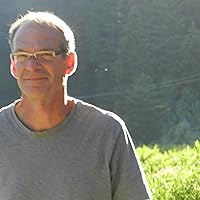
Written by a photojournalist with 40 years and 10,000 assignments behind him, this book will reframe your approach to both photography and travel. You’ll learn to see your camera as not just a recording device, but also as your passport to a deeper, more personal travel experience.
From David Hobby, founder of Strobist®, the photography education resource that has taught millions of photographers to see and use light.
What you'll
How to create a self-assignment, to arrive with a story already in motion the moment you get off of a planeHow to build genuine human connection with people who don't speak your language, have no reason to trust you, and will open doors once you've earned itHow to strip your gear bag down to what actually matters and move through a place like you belongHow to read and protect light in-camera, instead of correcting it away in postHow to see composition as architecture, not arrangement, and wait for the moment that makes your frameIn short, how to grow as a thinking photographer
This book will take you on a photo trip to Vietnam. But that's just the vehicle. The principles work in Portugal. In Detroit. In local neighborhoods you've driven past a thousand times without stopping.
Fifty-six lessons, from a lifetime behind a camera, across 312 pages.
"Easily the best photography book I've read on craft, technique — and written with soul." "I read it start to finish in one sitting." "Don't be alarmed at the lack of photos. The lessons are the point."
4,5 stars; loved the narrative angle the author took to convey the joys of photography; all the nuts-and-bolts have their appearance during a fictional trip you take with the author, one he actually undertook many times in real life; this guide-motif works very well; recommended reading for the interested.
An amazing read for anyone interested in learning how to approach travel photography. David does a great job of distilling travel photography down and humanizing the experience for the reader, making it very relatable and digestible. And as a former freelancer, like David in his younger years, it’s extremely relatable and familiar. This read has given me real inspiration to get out again and shoot. Like David’s work for strobist.com, he continues to inspire and motivate anywhere he goes. Well done.
Review: More Than a Travel Guide—A Framework for the Creative Mind Rating: ⭐⭐⭐⭐⭐
As a hobbyist photographer who shoots high-energy subjects like motorsport and concerts, I am accustomed to the technical demands of the craft. However, David Hobby’s The Traveling Photographer's Manifesto offered me something I didn't realise I was missing: a system for organisation.
While the title suggests a guide for globetrotters (and it is excellent for that), the real value lies in how Hobby structures the mental approach to photography. For anyone who struggles with the chaos of "what to shoot" or the overwhelm of being in a new environment, this book is a grounding force.
The "Solutions Architect" Approach to Photography What I loved most was that Hobby doesn't just tell you to "be creative"; he provides a structural workflow to make creativity possible.
Pre-Trip Visualisation: The chapters on "An Assigned Constraint" and "Map Out Your Subjects" resonate deeply with anyone who thinks analytically. Hobby treats a trip like a project with clear deliverables, which helps silence the noise and focus the mind.
Gear Discipline: The section "GAS and the Matrix" is a necessary reality check. The concept that "Less is More" isn't just about weight; it’s about removing the cognitive load of having too many choices, allowing you to react faster to the moment.
Mental Organisation: The book tackles the invisible barriers to photography—fear of rejection, jet lag, and lack of direction. By offering concrete tactics (like "The Invisible Shield" and bi-phasic sleep patterns), Hobby provides a toolkit for managing the photographer's internal state, not just their f-stops.
A Guide to Connection Beyond the organisational aspect, the book is a masterclass in empathy. The sections on approaching strangers and "Peeling back the layers of a culture" remind us that the camera is a passport to interaction, not a barrier. Using his trip to Hanoi as a case study provides a tangible example of how these theories play out in the real world.
Final Thoughts If you are looking for a technical manual on camera settings, this isn't it. But if you are looking for a manifesto on how to organise your thoughts, streamline your workflow, and engage more deeply with the world around you, this book is essential reading. It helped me rethink what it means to be an organised, intentional photographer.
“…the measure of a photographer isn't about which camera they use, or the maximum aperture of their lenses, or the size of their camera bag....the success or failure of any photographer will be decided in the space between their ears."
David Hobby's "The Traveling Photographer's Manifesto" immediately transports you to Hanoi, Vietnam - but the wisdom shared in this book applies to any photographer and location in the world. As a photographer, the concepts outlined in this book were refreshing and have inspired me to try new ways of approaching my shots. As I prepare for a trip to Iceland, a completely different area of the world than Hanoi, I feel like the techniques, concepts, and information in this book still apply. This is what I appreciated the most from this book; the concepts can easily be applied to any traveler or photographer regardless of the destination. Hobby's writing is engaging and feels conversational - a great read for any traveler or photographer alike!
David's book is a revelation! From the first morning taking a stroll before daylight to the final moments on the plane home (and back home), this has given me so much food for thought about how (and, more importantly) why I take photos when I'm overseas visiting.
It is full of useful advice and tips, whether it's taking notes or helping you step out of your comfort zone, encouraging you to be a much better photographer. This will be very useful when I revisit Singapore next year and the in-between trip to Vietnam - and every other trip I make going forward!
I picked this up by chance not knowing what to expect. Whether you are traveling or not, the advice here will surely help you make better photos and more of them. And the whole process will be more fun. Imagine a virtuous cycle where photography makes your life better and in turn opens more doors to more photos and an even better life.
Beyond just travel photography, this book teaches you a mindset towards photography which I think extends far beyond travel photography into street, documentary or journalistic photography. Truly one of my favorite photo books (despite there not being a single image in the book!). I’ve re-read it several times and gifted to several photographer friends.
The best book that I have read, so far, on travel and photography. This is the first book that I have read that incorporated photography and travel as a single experience. Thanks, David!
I'm a little torn about this book. My first impulse is to be critical because 1. There is a lot of common sense advice that seems somewhat pointless to write about. (Although I say that knowing that it's not common sense to a lot of people...) 2. There's a good deal of redundancy. 3. It's definitely written from a male perspective and there are several things that would not work for me as a woman photographer. That last point is important and I will get back to that.
However, despite my cynical, critical nature, I found myself highlighting a lot of part of the book and I have committed "Left to right, top to bottom, front to back" to memory and have already been thinking that in the photos I've taken this week here at home. If I got nothing else from the book, that one tip makes it a worthwhile read. But that's not the only part that made an impact. Although I wasn't all that interested in the way to schedule the legs of a flight, among other travel tips, I love the slower pace of a photo trip Hobby outlines here. That's not what he calls it, but that's what it is. Taking time to really learn about where you are and not spending the whole trip spraying and praying. I also appreciate his inclusion and advocacy for more current sites such as Reddit and Google maps as a part of planning and sharing your trip. Many hobbies can get stuck in the traditional way of doing things to their detriment.
My biggest complaint is the big section on the importance of rising at 5 and heading out to explore the city (or lake, in Hanoi). I love the idea, but as a woman alone, that is not a comfortable idea for me. Especially in an unfamiliar city, although I would be more on alert even close to home. There is a mention of the difference between a woman approaching a stranger vs. a man at a later point in the book, so sex differences are not entirely ignored. But the apparent lack of awareness about a woman's ability to wander a foreign city, carrying very expensive items, in the dark is a pretty big blind spot.
From the person behind The Strobist blog from many years back. The author has extensive expertise working as a newspaper photographer. The book actually doesn't have any photos in it! Strange for a photography book, but there is an associated PDF file with photo examples for the couple of chapters that are more technique related.
The crux of the book though, is that it is *not* about the gear, or best technique, or working for a big magazine/paper/company. It's about planning, people, talking with/approaching strangers in a respectful way, being human to other fellow humans that give you the best shots. He teaches that there are techniques you can use to influence "luck" in your favor, but the reality is if you put in the work, the "luck" is kind-of a side-effect. So you'll appear to be luckier.
The way he explains the techniques in the book is via an imaginary "assignment" trip to Vietnam. [He also does lead photo tours there, so he's also talking from experience.]. So he walks through the way he approaches such a task using a mix of techniques from back in his photo-journalist days and subsequent experience in the field.
The result is VERY good reading and there were many "Aha!" moments for me embedded in the book. Particularly about approaching people and getting to know them a bit before bringing up the camera. The techniques are useful in any situation, no matter where one is in the world. Recommended.
This book was more valuable to me than anything seeking to make me more technically proficient with making a properly exposed or composed image. I travel extensively for work and often carry my camera. Despite years of shooting I’m sometimes overwhelmed with what I should shoot. Another obstacle I face is a bit of shyness with regard to shooting people, which is often why I hid behind the long telephoto lens or focused on architecture and landscapes. I appreciated all the techniques the author shared about how to open the door to more intimate photos at shorter prime focal lengths that have traditionally intimidated me. I still have to do the work but David has offered a path to unlocking those photos I think I’ll give a try.
In my mind the type of person who is interested in reading this book already has a basic photographic knowledge so with that being said I don't think over 100 pages of photo lessons is needed. It could certainly be condensed to less than half that. If that was done my rating would be 5/5. The rest of the book was wonderful and full of ideas I will keep forever.
Beyond just travel photography, this book teaches you a mindset towards photography which I think extends far beyond travel photography into street, documentary or journalistic photography. Truly one of my favorite photo books (despite there not being a single image in the book!). I’ve re-read it several times and gifted to several photographer friends.
I wasnt sure what to expect when i opened the book. It was a delightful read full of fabulous tips and techniques for any photographer. If nothing else it will make u want to visit Hanoi ideally with a camera. A must read for anyone who travels with a camera