We saw the risk we took in doing good,
But dared not spare to do the best we could
Though harm should come of it; so built the screen
You had begun, and gave them back their shade.
All this to prove we cared. Why is there then
No more to tell? We turned to other things.
The Exposed Nest
Besides his skills with making his verse sing and developing the most rustic images into complex metaphors—Robert Frost is a first-rate actor. He adopts a persona in every poem. In fact, we seldom hear the real voice of Frost in any of the poems contained within these two collections, just this wise-old rustic fella mulling over roads in the woods, birds singing, and birch trees. He describes things simply and then, calmly, reflects a quiet moment, then transforms them into deep reflections on the mysteries of the universe and of being human. That’s not the voice of Frost—that’s the voice Frost creates to convey his poetic sensibilities.
Take it from me: Frost was not an active farmer. His biographers note he tried to be a farmer but, frankly, wasn’t good at it and took up teaching. Though well read, he labors to ensure his poetry is simple and natural: Let’s talk about trees, let’s talk about birds, let’s talk about neighbors. He makes as if he wakes up one morning and writes this stuff while waiting for the coffee to brew before heading out to the fields. Yeats says it best about writing really good lines of poetry:
I said, ‘A line will take us hours maybe;
Yet if it does not seem a moment’s thought,
Our stitching and unstitching has been naught.
Better go down upon your marrow-bones
And scrub a kitchen pavement, or break stones
Like an old pauper, in all kinds of weather;
For to articulate sweet sounds together
Is to work harder than all these, and yet
Be thought an idler by the noisy set
Of bankers, schoolmasters, and clergymen
The martyrs call the world.’
Adam’s Curse
The amount of sheer talent and effort which goes into this poetry is staggering. Frost worked hard to make these poems seem effortless and simple.
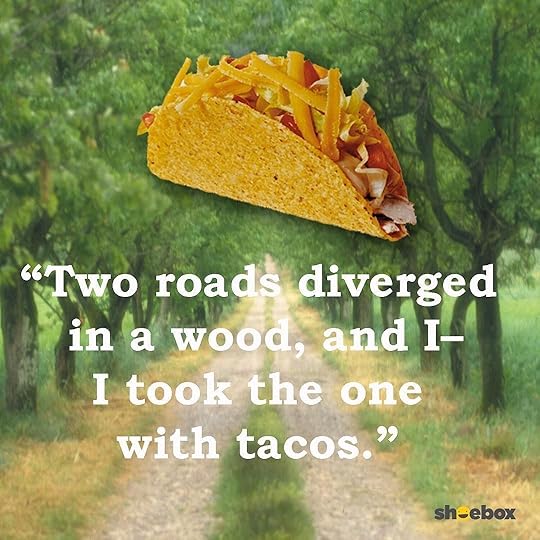
Mountain Interval begins with his famous poem “The Road Not Taken.” Everyone recognizes this poem; its last stanza is used to espouse independent living: “That’s right, people, I took the road less traveled by and that has made all the difference!” Never mind the fact the narrator just told us for three stanzas both roads were “really about the same.” He sighs at the end, because in the end he feels he has to justify his decision to take one road over another. Why not say it was the better road because no one else took it, he thinks. He envisions himself saying just that before he has even stepped onto the path. It’s not praise for independence, for pioneering a path the common herd was too ignorant or timid to pursue. The ending is so strong, so well-written, we tend to overlook what led to the final two lines. I’m sure Frost would be amused to realize how “ages and ages hence” we continually misunderstand this simple poem.
In fact, Mountain Interval is about taking routes through life and where these routes take us. We can have the grandest of intentions, but, in the end, we’re like Farmer Brown (“Brown’s Descent”) going about our evening chores and suddenly sliding a couple miles downhill without any viable means of stopping or changing direction. How we get where we get isn’t as interesting to Frost as how we think or react to the fact that we end up somewhere.
New Hampshire is not as superior a collection as Mountain Interval; it actually has a few weaker poems in the Frost canon. It’s still good poetry, but by focusing on politics or anti-war, he’s moving beyond is usual métier. For a change of pace, he even adopts the persona of an old rustic woman recounting a childhood memory in “Wild Grapes.” Funny, she sounds a lot like his persona of an old rustic man—only she is a different gender.
The poem from this collection which surprised me was “A Fountain, A Bottle, A Donkey’s Ears, and Some Books.” The narrator is promised a guided trip by Old Davis into the mountain woods to see an abandoned Mormon settlement. When Davis admits he can’t find it and takes the narrator to see a mountain stain in the shape of a bottle and then suggests they hike to a valley which looks like it has donkey ears after an avalanche, the narrator gets upset. The guide then makes an astute observation:
For God’s sake, aren’t you fond of viewing nature?
What signify a donkey’s ears and bottle,
However natural? Give you your books!
Well then, right here is where I show you books.
Has the adopted persona cracked? Can we see the real Frost—a peevish man bickering with his tour guide that nothing’s original to see out on these mountain trails? Davis sees a “book guy,” not a New England farmer taking a break from chopping firewood or plowing the field. Old Davis takes the narrator to the attic of an abandoned house where a deceased poetess once lived and wrote poetry: “She was ‘shut in’ for life. She lived her whole /Life long in bed, and wrote her things in bed.” Old Davis shows the narrator a box of the poetess’s published book of poems in the attic left to the elements. The narrator then reflects on the incident in the closing lines:
All the way home I kept remembering
The small book in my pocket. It was there.
The poetess had sighed, I knew, in heaven
At having eased her heart of one more copy--
Legitimately. My demand upon her,
Though slight, was a demand. She felt the tug.
In time she would be rid of all her books.
While he had provided us with descriptions of his mountain trek with Old Davis to this abandoned house, what stays with him are the books, the poetry. For Frost, it’s not just the roads or the bird singing in the woods; it’s remembering the poetry.
I won’t forget this poetry, either. And that, that makes all the difference.