

What do you think?

Транзитная зона
Кристофер Прист – английский писатель-фантаст, представитель "новой волны", автор романов "Престиж", "Машина пространства" и "Опрокинутый мир", троекратный обладатель премии Британской ассоциации научной фантастики, лауреат Всемирной премии фэнтези.
В один прекрасный и странный день голливудская актриса Жанетт Маршан, красавица и любимица зрителей, села на самолет, который должен был доставить ее в лондонский аэропорт. Самолет благополучно приземлился, и многие видели, как Жанетт сошла с трапа, но с этого момента она словно растворилась в пространстве и времени. Ее больше никто никогда не видел. Все усилия полиции оказались тщетными.
Спустя годы, молодой успешный кинокритик Джастин Фармер, увлеченный историей кинематографа и авиацией, затевает рискованное расследование с твердым намерением разгадать тайну исчезновения актрисы, покорившей его воображение.
В один прекрасный и странный день голливудская актриса Жанетт Маршан, красавица и любимица зрителей, села на самолет, который должен был доставить ее в лондонский аэропорт. Самолет благополучно приземлился, и многие видели, как Жанетт сошла с трапа, но с этого момента она словно растворилась в пространстве и времени. Ее больше никто никогда не видел. Все усилия полиции оказались тщетными.
Спустя годы, молодой успешный кинокритик Джастин Фармер, увлеченный историей кинематографа и авиацией, затевает рискованное расследование с твердым намерением разгадать тайну исчезновения актрисы, покорившей его воображение.
288 pages, Hardcover
First published May 25, 2023
About the author
Christopher Priest
156 books1,103 followersChristopher Priest was born in Cheshire, England. He began writing soon after leaving school and has been a full-time freelance writer since 1968.
He published eleven novels, four short story collections and a number of other books, including critical works, biographies, novelizations and children’s non-fiction.
He also wrote drama for radio (BBC Radio 4) and television (Thames TV and HTV). In 2006, The Prestige was made into a major production by Newmarket Films. Directed by Christopher Nolan, The Prestige went straight to No.1 US box office. It received two Academy Award nominations. Other novels, including Fugue for a Darkening Island and The Glamour, are currently in preparation for filming.
He was Vice-President of the H. G. Wells Society. In 2007, an exhibition of installation art based on his novel The Affirmation was mounted in London.
As a journalist he wrote features and reviews for The Times, the Guardian, the Independent, the New Statesman, the Scotsman, and many different magazines.
He published eleven novels, four short story collections and a number of other books, including critical works, biographies, novelizations and children’s non-fiction.
He also wrote drama for radio (BBC Radio 4) and television (Thames TV and HTV). In 2006, The Prestige was made into a major production by Newmarket Films. Directed by Christopher Nolan, The Prestige went straight to No.1 US box office. It received two Academy Award nominations. Other novels, including Fugue for a Darkening Island and The Glamour, are currently in preparation for filming.
He was Vice-President of the H. G. Wells Society. In 2007, an exhibition of installation art based on his novel The Affirmation was mounted in London.
As a journalist he wrote features and reviews for The Times, the Guardian, the Independent, the New Statesman, the Scotsman, and many different magazines.
Ratings & Reviews
Friends & Following
Create a free account to discover what your friends think of this book!
Community Reviews
Displaying 1 - 30 of 51 reviews

March 17, 2025
#5 Priest: Airports, Cinema, and the Unreality of Transit
Airside, Christopher Priest's last novel, is what I consider to be a fascinatingly good example of a novel that is very speculative and able to combine different genres. From historical fiction about the golden age of film and the beginning of commercial aviation, to mystery and the attempt to solve the case of a missing star, to speculative fiction as it deals with the strange and unreality of transit in an airport.
In 1949, famous Hollywood star Jeanette Marchand landed in London, but no one ever saw her again, apparently lost in transit at London Airport. How could that be? Decades later, film student and then film critic Justin, who is fascinated by aeroplanes and the films of the golden era of the 1930s, sets out to find out what really happened to Marchand...
But what seems to be a story about solving the case turns out to be a coming-of-age story, a story about various very interesting protagonists of this age of cinema, including actual reviews by this film critic of legendary films such as Casablanca or La Jetée. We follow Justin's life in episodes, from his childhood watching the arriving planes at Manchester airport and his first experiences of being on an aeroplane himself, to finding his passion for writing about films, finding his first love and still remembering the beauty and aura of former film star Jeanette Marchand.
Priest is able to create a very intimate feeling with Justin and made me want to dig deeper into the directors, films and actors mentioned. This is strong and compelling storytelling, even though, or perhaps because, the story is told in episodes rather than a straightforward storyline.
Another big part of the book is about that strange feeling you get when you go to an airport, try to catch a flight, and are more or less doomed to wait until you have checked in, boarded the plane, and finally are above the clouds and have arrived at your destination. Then the game repeats itself. You have to wait for your luggage, go through security checks and so on.
From the moment you enter the airport of departure to the moment you leave the airport of arrival, there are hours of waiting and a feeling of uncertainty, especially if you have never been to that particular airport before. What is the procedure? Where do I have to go? Will I get there in time? Where is the gate again? Priest captures these feelings in several chapters, one in particular that I won't spoil here, but at some point you will feel completely lost with Justin himself, who just wants to catch his flight and get on with his job. It's quite a rollercoaster and Priest masters it very well. Moreover, being in my twenties and only familiar with airports with huge security measures, I get a glimpse of what it used to be like in an airport that was much freer and more pragmatic.
From my point of view, this novel has much to say about the golden age of cinema, about human development and our ability to be fascinated by films, but also about airports and aeroplanes, which is quite understandable, since commercial flying is still a quite new possibility for mankind and will not lose any of its fascination for a very long time.
Priest's last novel, which is my fifth novel by him that I have read (after starting with his first four novels), stands out in the field of contemporary literary work!
Airside, Christopher Priest's last novel, is what I consider to be a fascinatingly good example of a novel that is very speculative and able to combine different genres. From historical fiction about the golden age of film and the beginning of commercial aviation, to mystery and the attempt to solve the case of a missing star, to speculative fiction as it deals with the strange and unreality of transit in an airport.
In 1949, famous Hollywood star Jeanette Marchand landed in London, but no one ever saw her again, apparently lost in transit at London Airport. How could that be? Decades later, film student and then film critic Justin, who is fascinated by aeroplanes and the films of the golden era of the 1930s, sets out to find out what really happened to Marchand...
But what seems to be a story about solving the case turns out to be a coming-of-age story, a story about various very interesting protagonists of this age of cinema, including actual reviews by this film critic of legendary films such as Casablanca or La Jetée. We follow Justin's life in episodes, from his childhood watching the arriving planes at Manchester airport and his first experiences of being on an aeroplane himself, to finding his passion for writing about films, finding his first love and still remembering the beauty and aura of former film star Jeanette Marchand.
Priest is able to create a very intimate feeling with Justin and made me want to dig deeper into the directors, films and actors mentioned. This is strong and compelling storytelling, even though, or perhaps because, the story is told in episodes rather than a straightforward storyline.
Another big part of the book is about that strange feeling you get when you go to an airport, try to catch a flight, and are more or less doomed to wait until you have checked in, boarded the plane, and finally are above the clouds and have arrived at your destination. Then the game repeats itself. You have to wait for your luggage, go through security checks and so on.
From the moment you enter the airport of departure to the moment you leave the airport of arrival, there are hours of waiting and a feeling of uncertainty, especially if you have never been to that particular airport before. What is the procedure? Where do I have to go? Will I get there in time? Where is the gate again? Priest captures these feelings in several chapters, one in particular that I won't spoil here, but at some point you will feel completely lost with Justin himself, who just wants to catch his flight and get on with his job. It's quite a rollercoaster and Priest masters it very well. Moreover, being in my twenties and only familiar with airports with huge security measures, I get a glimpse of what it used to be like in an airport that was much freer and more pragmatic.
From my point of view, this novel has much to say about the golden age of cinema, about human development and our ability to be fascinated by films, but also about airports and aeroplanes, which is quite understandable, since commercial flying is still a quite new possibility for mankind and will not lose any of its fascination for a very long time.
Priest's last novel, which is my fifth novel by him that I have read (after starting with his first four novels), stands out in the field of contemporary literary work!
August 11, 2023
There will be quibbles about whether this story is SF; clearly it is speculative, so in that sense, yes, it is. And regardless of any such debate, Christopher Priest owes nothing to anyone's expectations. What's inarguable is that this story is crafted by a master storyteller at the peak of his skill. Engaging, thought-provoking, endlessly fascinating, not in spectacular fashion - although there are scenes to get the pulse racing - but in a deeply human way that makes the story a wonderful and highly satisfying experience.

June 28, 2023
Things I liked:
- This is probably one of the best researched books I've ever read, to the point where the story reads like non-fiction, and the lines blur brilliantly between fiction and fact. If you like the way true crime is written, or read a lot of non-fiction about old movies, this will probably pique your interest.
- The mystery was just enough to keep me reading, even though I'm not an avid fan of historical films. I was guessing throughout where Jeanette Marchand might have disappeared to and forming theories as the book went on.
- Christopher Priest has captured perfectly the sense of 'nullity' and disorientation one feels while waiting at an airport. Having travelled a lot over the last few years, I completely relate to the long periods of waiting and moments of frantic, impatient movement that come with a trip through an airport.
Things I wasn't keen on:
- The mystery doesn't seem like the central focus of the book, as the blurb would lead you to believe. I went into it expecting a search for a missing woman that was far more action packed and twisty than a film fanatic's gradual journey towards the truth. Priest's tale feels instead like the story of one man's life, covering his influences and experiences down to the minutiae, including but definitely not limited to the mystery. This isn't a bad thing, but left me disappointed.
- A lot of chapters feel like filler, discussing small things Justin (the main character) does without much reason behind them. I didn't feel like the story was building towards anything. It was more of an essay on film, aircraft and travel, which caused me to lose interest at times.
- The ending was less of a big reveal than I'd hoped, . I did enjoy the final moments, but I had also predicted what would happen, which dulled the impact for me.
I recommend this to those who love film, travel, well researched essay-style writing and very subtle mystery. It wasn't my favourite, but it's a genre out of my comfort zone and I know some of you will really appreciate it and find it fascinating.
Thank you to Orion Books for my copy in exchange for an honest review.
- This is probably one of the best researched books I've ever read, to the point where the story reads like non-fiction, and the lines blur brilliantly between fiction and fact. If you like the way true crime is written, or read a lot of non-fiction about old movies, this will probably pique your interest.
- The mystery was just enough to keep me reading, even though I'm not an avid fan of historical films. I was guessing throughout where Jeanette Marchand might have disappeared to and forming theories as the book went on.
- Christopher Priest has captured perfectly the sense of 'nullity' and disorientation one feels while waiting at an airport. Having travelled a lot over the last few years, I completely relate to the long periods of waiting and moments of frantic, impatient movement that come with a trip through an airport.
Things I wasn't keen on:
- The mystery doesn't seem like the central focus of the book, as the blurb would lead you to believe. I went into it expecting a search for a missing woman that was far more action packed and twisty than a film fanatic's gradual journey towards the truth. Priest's tale feels instead like the story of one man's life, covering his influences and experiences down to the minutiae, including but definitely not limited to the mystery. This isn't a bad thing, but left me disappointed.
- A lot of chapters feel like filler, discussing small things Justin (the main character) does without much reason behind them. I didn't feel like the story was building towards anything. It was more of an essay on film, aircraft and travel, which caused me to lose interest at times.
- The ending was less of a big reveal than I'd hoped, . I did enjoy the final moments, but I had also predicted what would happen, which dulled the impact for me.
I recommend this to those who love film, travel, well researched essay-style writing and very subtle mystery. It wasn't my favourite, but it's a genre out of my comfort zone and I know some of you will really appreciate it and find it fascinating.
Thank you to Orion Books for my copy in exchange for an honest review.

July 13, 2023
Probably 2.5. I was disappointed with this. For once his style put me off, and a few nights I didn't even pick it up. The blurb makes it sound like you're about to read an exciting mystery/investigation into an odd disappearance. Instead we get a slightly OCD plane, then film enthusiast biography, complete with fake reviews/articles scattered throughout. The supposed twist is obvious. There are a few scifi oddities to keep his readers onside but it's really not enough.

September 15, 2023
I've always been a big fan of Priest's writing and Airside is one of his more intriguing speculative fiction concepts.
After an actress disappears from a flight between New York and London, no clues as to what happened are apparent and she soon fades into obscurity. Many years later, a prominent film critic and reviewer stumbles upon the mystery of his childhood screen crush and embarks on an investigation to discover what happened, picking up on loose threads and connections along the way.
The book is fascinating because it blends fact and fiction seamlessly - a style of storytelling I have always enjoyed and Priest achieves it masterfully here. Weaving in big name actors, directors and even films amongst counterparts invented for the story, he paints an intriguing picture of the Golden era of Hollywood filmaking. Much of the book is the story of the film critic as he talks about his own obsessive note making, his knowledge of films, the interviews he conducts and his critiques of various films like La Jette (a wonderful film by the way) and Casbalanca. It was these deep dives which I loved the most as it sent me on a research ride outside of the book, but at the time it isn't clear how these subtle seedings are progressing the investigation, until you start to notice the subtle connections he is interweaving throughout everything.
Intertwined with the films is the idea that constantly traversing airports with their monotonous, labyrinthian setups, work against exhaustion and jet lag to trap unsuspecting travellers into liminal zones, lost in a madness of time and space
A gripping book for me and one that reads fluently without trace of the over indulgent writing and metaphors that much of so labelled lterary fiction can get bogged down in. The subtleties are there though linking everything together and the references should appeal to anyone with interest in films of the first half of the twentieth century. However, the book doesn't always feel like it is keeping itself on track and will likely struggle to hold the attention or the patience of readers who prefer a tighter leash on their mysteries and speculative fiction.
After an actress disappears from a flight between New York and London, no clues as to what happened are apparent and she soon fades into obscurity. Many years later, a prominent film critic and reviewer stumbles upon the mystery of his childhood screen crush and embarks on an investigation to discover what happened, picking up on loose threads and connections along the way.
The book is fascinating because it blends fact and fiction seamlessly - a style of storytelling I have always enjoyed and Priest achieves it masterfully here. Weaving in big name actors, directors and even films amongst counterparts invented for the story, he paints an intriguing picture of the Golden era of Hollywood filmaking. Much of the book is the story of the film critic as he talks about his own obsessive note making, his knowledge of films, the interviews he conducts and his critiques of various films like La Jette (a wonderful film by the way) and Casbalanca. It was these deep dives which I loved the most as it sent me on a research ride outside of the book, but at the time it isn't clear how these subtle seedings are progressing the investigation, until you start to notice the subtle connections he is interweaving throughout everything.
Intertwined with the films is the idea that constantly traversing airports with their monotonous, labyrinthian setups, work against exhaustion and jet lag to trap unsuspecting travellers into liminal zones, lost in a madness of time and space
A gripping book for me and one that reads fluently without trace of the over indulgent writing and metaphors that much of so labelled lterary fiction can get bogged down in. The subtleties are there though linking everything together and the references should appeal to anyone with interest in films of the first half of the twentieth century. However, the book doesn't always feel like it is keeping itself on track and will likely struggle to hold the attention or the patience of readers who prefer a tighter leash on their mysteries and speculative fiction.

March 29, 2025
If you like old planes and old movies, you might enjoy this. If not, don’t bother.
March 27, 2024
Christopher Priest's final novel has the flavour of JG Ballard, though his approach to characters is less utilitarian and more human. It has a remarkable diptych of stories as our main character outlines his obsession with airports and flight, and with cinema. The delirious and detailed highpoint of the novel is set in an airport in Seoul, and the novel switches register to pure menace. Priest's prose becomes a nightmare of anxiety, as modern world is made wildly awkward and quietly terrifying. A Ballardian idea grafted to this novel of false Hollywood history. The film history which is the throughline of the other half of the novel is a fascinating collage of film reviews, faux history and real cinema. Priest is fantastic on films, and it is a real kick for a cinephile to parse each piece of history. Airside begins as a intriguing fake Hollywood mystery, and ends as profound statement on the mysterious technological present. I couldn't have liked it more.

May 14, 2024
Reminded me of Auster's "Book of illusions"for its focus on film. It is a mixture of different styles (Airports and the sense of unease they can instil, thriller, coming of age, biography, history of cinema etc. ) and it is never clear what is real and what is ficticious in the story. The enjoyment comes from the reader's engagement and thinking why has Priest told me this? Sad to here of his demise, few could write this story.
March 31, 2024
This was soooooo boring. I was looking forward to a thriller about an actors disappearance, and ended up with a book about a film critic’s boring life. The chapter where he gets lost at Seoul airport was unbelievably bizarre and pointless. And the dramatic end and big reveal wasn’t revealing because it’s obvious half way through. How this was shortlisted for the BSFA is beyond me.
This entire review has been hidden because of spoilers.

August 3, 2023
Immediate reaction - slightly overlong, a bit kitsch, but parts of it mesmerising. At the very least, it made me go back and watch 'La Jetée' again, for which I am very thankful. Feels like Priest on autopilot but enjoyable all the same.

August 11, 2023
This sounded like it would be a fast paced mystery, but it ended up being a slow paced, meandering story.
I feel very let down!
I feel very let down!

July 14, 2025
Not my favorite but there are interesting parts. I think one needs to be a Christopher Priest fan to fully appreciate this book.


November 28, 2025
Not his best, but another excellent Christoper Priest novel (his last, alas). The sequence in the Singapore airport was incredible - very tense and disorienting. Good stuff.

May 27, 2023
As I type this, we are on the cusp of the Summer holiday season. It can only be good planning that means that we get at the same time Christopher Priest’s latest novel – about those odd places that many visit especially at this time of year – the airport.
The initial set-up reads like an airport thriller, designed to grab the casual peruser of the airport bookshop, perhaps. The premise is that in 1949 a young American Hollywood star called Jeanette Marchand flies into London Airport one evening, walks across to the airside part of the terminal and is never seen again.
However, this is a Christopher Priest novel – an author known for going to unexpected places. And so he does here. Although the mystery is the catch-plot, designed to grab the reader’s attention, much of the book is not about the missing character, but about the place she disappeared from. Airside is really about dealing with the place and those situations that people find themselves in at airports – times of stress with intense and rapid transit separated by periods of queuing and waiting.
According to the author himself, “The book is largely about the liminal and always slightly disconcerting experience of passing through an airport. All travellers are familiar with the fact that every airport has two ‘sides’. In landside we check to see if the flight is on time, or when it is likely to board. If we are arriving from a flight, landside is where we are able to pick up our luggage. Most of us don’t delay long in landside. Coming in we are anxious to get home. On an outward journey we hasten towards: Airside. This is where we have to be electronically scanned, have our bags X-rayed, our laptop looked at, where we put keys and loose change in a tray, where sometimes we have to remove our belt, or transfer little tubes and bottles of harmless unguents into a plastic bag. We cannot proceed through airside without a boarding pass in hand, or a passport. Closed-circuit cameras are everywhere, and some of them are checking our faces against a database. There is a sense that at any time, for any random reason, we might be challenged by someone in a uniform.
Once through all that we experience the unique nullity of airside. Most of us feel a little disoriented or apprehensive while waiting for a flight. It’s not impatience, fearfulness or boredom. There is only one thing we can do in airside, which is leave. But it’s impossible to leave unless it’s on the aircraft on to which we are booked. It is simply impossible to go back the way we came from. (A misguided attempt to do so will lead to a memorable experience.) So we are there to do the only thing allowed to us — to wait in a state of suspense, a herded passenger.”
With this in mind, the book doesn’t initially sound like the most exciting premise, to be honest – although I was amused by the idea that many reading this novel will be in an airport, somewhere. But then Airside is a Christopher Priest novel, where even the most everyday things can become something of interest.
The other thing to remember with a Christopher Priest novel is that the author often approaches the plot obliquely. Things are never approached head-on. Instead, the story builds by showing the reader elements that first seem relatively unrelated or barely related to what we think is the main story.
Instead of continuing with Marchand, the next chapters tell of Justin Farmer, a boy who becomes obsessed with aeroplanes flying over his primary school in London and then eventually a film reviewer who, years later, finds himself becoming interested in Marchand’s disappearance, because the story involves aeroplanes and film stars, obviously. Like the reader, he finds himself intrigued by the mystery - Where did she go? Was she really dead? Who was the mysterious man who sat beside her on the flight across from New York?
The connection between Farmer and the airport is that as part of his work, we find Farmer travelling through airports all over the world to festivals and conventions. Priest’s descriptions of Farmer travelling wearily from one film festival to another may derive wry grins from genre writers or conventioneers who have followed similar journeys. I am sure that it is inspired by Christopher’s own travels!
Much of Farmer’s travel is divided up by selections of his reviews. These connect the plot to reality, with the films becoming connected to motifs in Farmer’s own life. They are interesting on their own, and at times their choice is inspired. Accompanying one lengthy sojourn around Seoul Airport, for example, we have ‘Farmer’s’ review of Stephen Spielberg’s film, The Terminal (2004), a story based on real events of Mehran Karimi Nasseri, a man stranded at Charles de Gaulle Airport, unable to leave. It seems that Farmer is destined to be in a place between airside and landside indefinitely until he manages to escape. Real-life repeats in film, which repeats in fiction, although (unlike Nasseri), Farmer travels on to Australia where the story is resolved, albeit blearily.
In its use of such supplementary material to set the fiction in some sort of reality, I was reminded a little of Nina Allen’s short story collection, The Art of Space Travel, so it was a surprise* to see the credit in the Acknowledgements to the “book’s secret but invaluable collaborator.”
Like much of Priest’s other work, Airside plays with ideas centred around a sense of place, memory and personal identity. The last third of the book finds Farmer on a global tour, interviewing actors, actresses and film crew, and being a guest at various festivals. It all becomes a bit of a blur and Priest does well to depict this as Farmer enters a kind-of Kafkaesque world of bureaucratical misunderstandings in a foreign airport, in what I can only imagine is a traveller’s nightmare, rushing between terminals in a distinctly uniform, clinical, even Ballardian landscape of enormous but faceless buildings, lobbies and terminals.
In summary, then, like much of Christopher’s work, Airside is a book that challenges expectations. Priest does well (again) to create suspense out of what could easily be mundanity, but Airside is less of a mystery and more a thoughtful story of descriptive observation of airport lounges, international air travel and the human condition.
As ever with Christopher’s books, I liked the fact that it is a novel that does not reveal its points easily, nor does it provide the reader with easy answers. Readers expecting easy solutions and everything tied up at the end may be disappointed, but for me much of the enjoyment in reading a Christopher Priest novel is seeing how the often disparate elements eventually interact, and Airside does not disappoint in that respect. It is a book where the journey is the important thing, not the destination, which seems somewhat appropriate for a book about air travel!
Like most of Priest’s books, this is one that may sit in the brain for a while after reading, raising thoughts and ideas that the reader will keep coming back to. In that respect, it is another success.
*but not too much of a surprise, as Nina is Christopher’s partner in real life.
The initial set-up reads like an airport thriller, designed to grab the casual peruser of the airport bookshop, perhaps. The premise is that in 1949 a young American Hollywood star called Jeanette Marchand flies into London Airport one evening, walks across to the airside part of the terminal and is never seen again.
However, this is a Christopher Priest novel – an author known for going to unexpected places. And so he does here. Although the mystery is the catch-plot, designed to grab the reader’s attention, much of the book is not about the missing character, but about the place she disappeared from. Airside is really about dealing with the place and those situations that people find themselves in at airports – times of stress with intense and rapid transit separated by periods of queuing and waiting.
According to the author himself, “The book is largely about the liminal and always slightly disconcerting experience of passing through an airport. All travellers are familiar with the fact that every airport has two ‘sides’. In landside we check to see if the flight is on time, or when it is likely to board. If we are arriving from a flight, landside is where we are able to pick up our luggage. Most of us don’t delay long in landside. Coming in we are anxious to get home. On an outward journey we hasten towards: Airside. This is where we have to be electronically scanned, have our bags X-rayed, our laptop looked at, where we put keys and loose change in a tray, where sometimes we have to remove our belt, or transfer little tubes and bottles of harmless unguents into a plastic bag. We cannot proceed through airside without a boarding pass in hand, or a passport. Closed-circuit cameras are everywhere, and some of them are checking our faces against a database. There is a sense that at any time, for any random reason, we might be challenged by someone in a uniform.
Once through all that we experience the unique nullity of airside. Most of us feel a little disoriented or apprehensive while waiting for a flight. It’s not impatience, fearfulness or boredom. There is only one thing we can do in airside, which is leave. But it’s impossible to leave unless it’s on the aircraft on to which we are booked. It is simply impossible to go back the way we came from. (A misguided attempt to do so will lead to a memorable experience.) So we are there to do the only thing allowed to us — to wait in a state of suspense, a herded passenger.”
With this in mind, the book doesn’t initially sound like the most exciting premise, to be honest – although I was amused by the idea that many reading this novel will be in an airport, somewhere. But then Airside is a Christopher Priest novel, where even the most everyday things can become something of interest.
The other thing to remember with a Christopher Priest novel is that the author often approaches the plot obliquely. Things are never approached head-on. Instead, the story builds by showing the reader elements that first seem relatively unrelated or barely related to what we think is the main story.
Instead of continuing with Marchand, the next chapters tell of Justin Farmer, a boy who becomes obsessed with aeroplanes flying over his primary school in London and then eventually a film reviewer who, years later, finds himself becoming interested in Marchand’s disappearance, because the story involves aeroplanes and film stars, obviously. Like the reader, he finds himself intrigued by the mystery - Where did she go? Was she really dead? Who was the mysterious man who sat beside her on the flight across from New York?
The connection between Farmer and the airport is that as part of his work, we find Farmer travelling through airports all over the world to festivals and conventions. Priest’s descriptions of Farmer travelling wearily from one film festival to another may derive wry grins from genre writers or conventioneers who have followed similar journeys. I am sure that it is inspired by Christopher’s own travels!
Much of Farmer’s travel is divided up by selections of his reviews. These connect the plot to reality, with the films becoming connected to motifs in Farmer’s own life. They are interesting on their own, and at times their choice is inspired. Accompanying one lengthy sojourn around Seoul Airport, for example, we have ‘Farmer’s’ review of Stephen Spielberg’s film, The Terminal (2004), a story based on real events of Mehran Karimi Nasseri, a man stranded at Charles de Gaulle Airport, unable to leave. It seems that Farmer is destined to be in a place between airside and landside indefinitely until he manages to escape. Real-life repeats in film, which repeats in fiction, although (unlike Nasseri), Farmer travels on to Australia where the story is resolved, albeit blearily.
In its use of such supplementary material to set the fiction in some sort of reality, I was reminded a little of Nina Allen’s short story collection, The Art of Space Travel, so it was a surprise* to see the credit in the Acknowledgements to the “book’s secret but invaluable collaborator.”
Like much of Priest’s other work, Airside plays with ideas centred around a sense of place, memory and personal identity. The last third of the book finds Farmer on a global tour, interviewing actors, actresses and film crew, and being a guest at various festivals. It all becomes a bit of a blur and Priest does well to depict this as Farmer enters a kind-of Kafkaesque world of bureaucratical misunderstandings in a foreign airport, in what I can only imagine is a traveller’s nightmare, rushing between terminals in a distinctly uniform, clinical, even Ballardian landscape of enormous but faceless buildings, lobbies and terminals.
In summary, then, like much of Christopher’s work, Airside is a book that challenges expectations. Priest does well (again) to create suspense out of what could easily be mundanity, but Airside is less of a mystery and more a thoughtful story of descriptive observation of airport lounges, international air travel and the human condition.
As ever with Christopher’s books, I liked the fact that it is a novel that does not reveal its points easily, nor does it provide the reader with easy answers. Readers expecting easy solutions and everything tied up at the end may be disappointed, but for me much of the enjoyment in reading a Christopher Priest novel is seeing how the often disparate elements eventually interact, and Airside does not disappoint in that respect. It is a book where the journey is the important thing, not the destination, which seems somewhat appropriate for a book about air travel!
Like most of Priest’s books, this is one that may sit in the brain for a while after reading, raising thoughts and ideas that the reader will keep coming back to. In that respect, it is another success.
*but not too much of a surprise, as Nina is Christopher’s partner in real life.

August 14, 2023
Intense novel, intriguing mystery, undermined by an unsatisfactory and loose ending. Promised so much more.

October 3, 2023
I found myself oddly compelled to keep reading this. There were glimpses, particularly in the Seoul hotel and Gimpo airport when I felt like the whole world would fall apart, and we'd crack through into whatever Matrix-like edifice we were actually in. The aviation stuff was interesting, of course, and I suppose having that as a thread, along with film, made for an interesting and learnable yarn. I never quite felt at ease with the timing of things, Justin's life felt oddly compressed or contracted. I felt like smartphones and the era of propellers had an uneasy detente in the book, and neither were quite comfortable with the other on the page.
A book I'd read again? Maybe, for the illusive detail. One I am comfortable I've understood all the nuances of? Not a chance.
A book I'd read again? Maybe, for the illusive detail. One I am comfortable I've understood all the nuances of? Not a chance.

March 17, 2024
This was the most boring book I’ve read in ages. Just bizarrely dull. I finished it because (a) I really hate to DNF even if I intensely dislike a book—it just bugs me; and (b) I had a morbid curiosity about whether anything would ever actually happen. Spoiler alert: No.
I do not need every story to have a propulsive plot, but in lieu of plot I would like, perhaps, compelling characters or enjoyable feats of prose styling. Here there is none of that. It’s inert, one-dimensional, meandering, and padded with filler. It might have made a decent short story but as a novel it’s a failure, in my opinion.
I do not need every story to have a propulsive plot, but in lieu of plot I would like, perhaps, compelling characters or enjoyable feats of prose styling. Here there is none of that. It’s inert, one-dimensional, meandering, and padded with filler. It might have made a decent short story but as a novel it’s a failure, in my opinion.
August 7, 2024
It looked like an exciting disappearance mystery story and yet it was not. We get a great opening idea in the disappearance of a famous actress from within an airport. Then we get a few hundred pages of a film fanatic rambling through life trying to very slowly and ineffectively solve the case. There is a whole chapter where he gets lost in an airport. There are whole chapters that are a discourse on the nature of airports and transience. And then there is a stupid ending. Disappointing.

April 29, 2024
It seems like 2 or 3 different books and I didn't like any of them

July 16, 2024
this book is so bad it makes me want to pluck all my hair out. i don’t even know what to say it’s so bad

July 12, 2026
Review from my blog.
This is the last novel Priest published. The narrative rolls along readily enough, activities occur, mysteries are resolved, and yet in the end it does not, for me, add up to a major work.
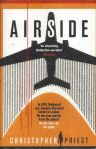
I do like the cover.
The interesting things: The protagonist strikes me, from the little I know, as the most autobiographical of Priest's characters. Justin is around the same age as Priest, hails from Cheshire as did Priest, and grows up fascinated by aircraft but also by film, and in time becomes a respected film journalist and reviewer. Indeed, the book contains a handful of his reviews, which are good reviews of, in most cases, real movies (e.g. a retrospective review of Casablanca), and at least 2 of which were repurposed by Priest from reviews he wrote years earlier. Thus, Justin reads as something like an alternative Priest - a path he might have taken had film overridden his desire to write fiction. (In 1974 Priest published a nonfiction title, Your Book of Film-Making with Faber and Faber. His interest was strong.)
Further, the descriptions of airports and the state of suspended animation we enter when we are 'airside' (having gone through immigration, or at least the X-ray machines if a domestic flight) provide the central image of the novel. These scenes are well evoked. The 'place that sends you mad' scenes when Justin tries to retrace his steps but somehow cannot get back to where he started have a tension all their own, and chime with my own experiences in such places. Somehow, you end up on the wrong side of security, or in an area you are not supposed to be able to get to - yet you never crossed a barrier or went anywhere that was marked as off limits. And now you are in trouble.
The intertexts intrigue. La Jetée is clearly the kicking-off point for the whole exercise (as it was for 12 Monkeys), and Justin reviews it early in the book. (Points in the novel seem to momentarily visit this short film's world.) Playtime by Jacques Tati also has many points of contact. We get references to King Kong, Casablanca, and various other movies, real and fictitious, which leads to that sensation very common in Priest's books of not knowing what bits of the narrative are drawn from life, and what is made up. The border is well blurred.
Less interesting is the overarching story. We see Justin from youth to later middle age. He is fascinated by the disappearance of Jeanette Marchand, a Hollywood star from the golden age. He uses his career to pursue the interest and try to solve the mystery. It plays out fairly straightforwardly.
I must preface this next comment by saying I am (these days) a professional editor of nonfiction. I also teach writing and editing, in a small way. We talk about using active voice, writing directly, using precise and interesting verbs, and so on. That does not mean I have the right to tell a novelist how to write, lord knows, but it means I have been sensitised to various aspects of writing. Not always to my benefit. Use of verbs like 'was', 'were' and 'had' often mark passive constructions. Priest uses them a lot. And I can't not see them. This is not a slight on his prose style, it is a comment on how too much knowledge is a dangerous thing. It genuinely took me out of the book repeatedly, but is not likely to bother most readers, I suspect.
A good read. A relatively minor work by the author's standards, but minor Priest remains worth reading.
This is the last novel Priest published. The narrative rolls along readily enough, activities occur, mysteries are resolved, and yet in the end it does not, for me, add up to a major work.
I do like the cover.
The interesting things: The protagonist strikes me, from the little I know, as the most autobiographical of Priest's characters. Justin is around the same age as Priest, hails from Cheshire as did Priest, and grows up fascinated by aircraft but also by film, and in time becomes a respected film journalist and reviewer. Indeed, the book contains a handful of his reviews, which are good reviews of, in most cases, real movies (e.g. a retrospective review of Casablanca), and at least 2 of which were repurposed by Priest from reviews he wrote years earlier. Thus, Justin reads as something like an alternative Priest - a path he might have taken had film overridden his desire to write fiction. (In 1974 Priest published a nonfiction title, Your Book of Film-Making with Faber and Faber. His interest was strong.)
Further, the descriptions of airports and the state of suspended animation we enter when we are 'airside' (having gone through immigration, or at least the X-ray machines if a domestic flight) provide the central image of the novel. These scenes are well evoked. The 'place that sends you mad' scenes when Justin tries to retrace his steps but somehow cannot get back to where he started have a tension all their own, and chime with my own experiences in such places. Somehow, you end up on the wrong side of security, or in an area you are not supposed to be able to get to - yet you never crossed a barrier or went anywhere that was marked as off limits. And now you are in trouble.
The intertexts intrigue. La Jetée is clearly the kicking-off point for the whole exercise (as it was for 12 Monkeys), and Justin reviews it early in the book. (Points in the novel seem to momentarily visit this short film's world.) Playtime by Jacques Tati also has many points of contact. We get references to King Kong, Casablanca, and various other movies, real and fictitious, which leads to that sensation very common in Priest's books of not knowing what bits of the narrative are drawn from life, and what is made up. The border is well blurred.
Less interesting is the overarching story. We see Justin from youth to later middle age. He is fascinated by the disappearance of Jeanette Marchand, a Hollywood star from the golden age. He uses his career to pursue the interest and try to solve the mystery. It plays out fairly straightforwardly.
I must preface this next comment by saying I am (these days) a professional editor of nonfiction. I also teach writing and editing, in a small way. We talk about using active voice, writing directly, using precise and interesting verbs, and so on. That does not mean I have the right to tell a novelist how to write, lord knows, but it means I have been sensitised to various aspects of writing. Not always to my benefit. Use of verbs like 'was', 'were' and 'had' often mark passive constructions. Priest uses them a lot. And I can't not see them. This is not a slight on his prose style, it is a comment on how too much knowledge is a dangerous thing. It genuinely took me out of the book repeatedly, but is not likely to bother most readers, I suspect.
A good read. A relatively minor work by the author's standards, but minor Priest remains worth reading.

June 29, 2023
There have been many attempts to define what science fiction is - I've always thought the most feeble is probably 'what SF writers write' - yet that's probably the best reason to call Airside science fiction. Christopher Priest has been a major force in the genre since the 1970s. Thanks to the film, he's probably best known for The Prestige, but his work has always challenged both the expected shape of what science fiction is and the reader's mind.
In some ways, Airside reminded me of Gene Wolfe's classic fantasy novel There Are Doors. These are both books where the reader is left for most of the book unsure as to quite what is going on. But Priest is able, far more so than Wolfe often was in his (brilliant) novels, to tie it all up at the end. I don't mean by this that there is a clear, everything explained scenario, but you are left thinking 'Aha, that's why we had that bit I didn't understand'.
According to the blurb, this is a book about the disappearance of a Hollywood actress in 1949. However, that is just one component in a much richer whole. The central character Justin is an obsessive film buff and professional writer on the subject. Perhaps in part because of a couple of childhood experiences, he is obsessed with airports and particularly their inner structures. He is also determined to find out what happened to Jeanette Marchard, the missing actress. All this comes together in a mix that also weaves in a number of Justin's reviews (of real films), which all tie into the structure of the book and Justin's worldview.
What is most surprising is how effective the book is given that a lot of is written more in the style of a long newspaper article than a novel. There is an awful lot of 'tell' rather than 'show', particularly when relating past events, and Priest makes frequent use of relatively short descriptive sentences. There isn't any dialogue to speak of until page 33, and although there are longer passages later, the journalistic style continues to dominate. This is clearly deliberate, and although it feels like it should make the book less easy to get into, somehow, it doesn't. I felt a pressure to read on, even though I was well aware there was unlikely to be a resolution of all the mysteries at the end.
Returning finally to whether or not this is science fiction, it certainly mostly isn't. There are a few elements that feel a little like fantasy, though you could see them as suggestions that there is something physical that connects certain locations, putting them outside the conventions of normal space. It has been remarked that Priest has a tendency to link landscapes and the psyche - here, the very particular landscapes of airport terminals - and particularly their weird-feeling no-persons'-land airside portions - do certainly have a kind of connection. If you come at this book expecting a typical SF novel, you will be disappointed. It is driven by a technology - but one that was futuristic in the original 1949 event, not now. But take it on with an open mind and it is both fascinating and surprisingly approachable for what could be regarded as piece of avant garde work
I hesitate to use the word, but for me this is something of a masterpiece.
In some ways, Airside reminded me of Gene Wolfe's classic fantasy novel There Are Doors. These are both books where the reader is left for most of the book unsure as to quite what is going on. But Priest is able, far more so than Wolfe often was in his (brilliant) novels, to tie it all up at the end. I don't mean by this that there is a clear, everything explained scenario, but you are left thinking 'Aha, that's why we had that bit I didn't understand'.
According to the blurb, this is a book about the disappearance of a Hollywood actress in 1949. However, that is just one component in a much richer whole. The central character Justin is an obsessive film buff and professional writer on the subject. Perhaps in part because of a couple of childhood experiences, he is obsessed with airports and particularly their inner structures. He is also determined to find out what happened to Jeanette Marchard, the missing actress. All this comes together in a mix that also weaves in a number of Justin's reviews (of real films), which all tie into the structure of the book and Justin's worldview.
What is most surprising is how effective the book is given that a lot of is written more in the style of a long newspaper article than a novel. There is an awful lot of 'tell' rather than 'show', particularly when relating past events, and Priest makes frequent use of relatively short descriptive sentences. There isn't any dialogue to speak of until page 33, and although there are longer passages later, the journalistic style continues to dominate. This is clearly deliberate, and although it feels like it should make the book less easy to get into, somehow, it doesn't. I felt a pressure to read on, even though I was well aware there was unlikely to be a resolution of all the mysteries at the end.
Returning finally to whether or not this is science fiction, it certainly mostly isn't. There are a few elements that feel a little like fantasy, though you could see them as suggestions that there is something physical that connects certain locations, putting them outside the conventions of normal space. It has been remarked that Priest has a tendency to link landscapes and the psyche - here, the very particular landscapes of airport terminals - and particularly their weird-feeling no-persons'-land airside portions - do certainly have a kind of connection. If you come at this book expecting a typical SF novel, you will be disappointed. It is driven by a technology - but one that was futuristic in the original 1949 event, not now. But take it on with an open mind and it is both fascinating and surprisingly approachable for what could be regarded as piece of avant garde work
I hesitate to use the word, but for me this is something of a masterpiece.
December 12, 2023
What I liked about this book the most was that I didn’t really know what it was. It didn’t feel like any genre in particular (not even lit fic!) and it had a mise-en-abyme structure that appealed to me.
The blurb sets you up for a missing person story, but the “solution” to that is obvious fairly early on. A Hollywood actress flies to London in 1949 and disappears: doesn’t even seem to pass through the airport terminal. The answer to this question that is offered later on leaves you satisfied as to the why of it, but it is the how of it that is the main theme of this book.
Which is not to say that the how is ever on the page in black and white. But what Priest is really concerned about is the idea of liminality, in particular the weird and unsettling space of the airport.
The protagonist is a film critic, one of the semi-serious ones, the kind who write allusive articles in Sight and Sound and who publish books about film. But he’s not an academic, so he doesn’t go all the way up his own arse, doesn’t teach a university course about liminal spaces in film… although he probably should.
As a protagonist he is more of an absence than a presence. Doesn’t seem to have a passion for film, as some might say, but finds film fascinating. Fascinated, in his sprectrumy way, by the kind of obscure also-rans of cinema history. The people who make one film and then end up working in television. The kind who have a promising career which then fades away into supporting roles and character acting.
Justin, for that is his name, is also interested in flight and air travel, although he doesn’t enjoy it. He is interested in those liminal spaces, the proximity of the great flying machines of the jet age, and the bewildering anonymity of airports. If you have flown, you will know the feeling of the enormous space, the long walk to your gate, that sense that you pass through areas which are copies of other areas, the same but different. How you enter into a kind of fugue state.
Life is an Edward Hopper painting. Hopper didn’t paint airports, but he might have found a rich seam of people sitting around waiting, his major theme. Hopper painted people in and outside theatres, in bedrooms, in windows, in hotel lobbies. Wherever people sit and wait for time to pass, he painted it. So it’s strange, really, that he didn’t paint airports.
Jeanette Marchand, Hollywood actress, walked from a plane to a terminal and disappeared. In one scene in the book, Justin Farmer gets lost in an airport and seems to lose time. The connection between these two events might be an answer to the how of Marchand’s disappearance.
Interspersed with the main narrative are articles purportedly written by Farmer, about films set in airports. These narratives within the main narrative draw a tenuous connecting thread. The book is more interested in this thread than it is with the disappearing actress. As a reader, too, you lose your sense of time in the book. What year is it, how old is everyone? You can’t really tell. Like movie stars, the characters are timeless and ageless.
Don’t come to this expecting a thriller, or a science fiction novel, or a mystery story. This book is as liminal as its subject.
The blurb sets you up for a missing person story, but the “solution” to that is obvious fairly early on. A Hollywood actress flies to London in 1949 and disappears: doesn’t even seem to pass through the airport terminal. The answer to this question that is offered later on leaves you satisfied as to the why of it, but it is the how of it that is the main theme of this book.
Which is not to say that the how is ever on the page in black and white. But what Priest is really concerned about is the idea of liminality, in particular the weird and unsettling space of the airport.
The protagonist is a film critic, one of the semi-serious ones, the kind who write allusive articles in Sight and Sound and who publish books about film. But he’s not an academic, so he doesn’t go all the way up his own arse, doesn’t teach a university course about liminal spaces in film… although he probably should.
As a protagonist he is more of an absence than a presence. Doesn’t seem to have a passion for film, as some might say, but finds film fascinating. Fascinated, in his sprectrumy way, by the kind of obscure also-rans of cinema history. The people who make one film and then end up working in television. The kind who have a promising career which then fades away into supporting roles and character acting.
Justin, for that is his name, is also interested in flight and air travel, although he doesn’t enjoy it. He is interested in those liminal spaces, the proximity of the great flying machines of the jet age, and the bewildering anonymity of airports. If you have flown, you will know the feeling of the enormous space, the long walk to your gate, that sense that you pass through areas which are copies of other areas, the same but different. How you enter into a kind of fugue state.
Life is an Edward Hopper painting. Hopper didn’t paint airports, but he might have found a rich seam of people sitting around waiting, his major theme. Hopper painted people in and outside theatres, in bedrooms, in windows, in hotel lobbies. Wherever people sit and wait for time to pass, he painted it. So it’s strange, really, that he didn’t paint airports.
Jeanette Marchand, Hollywood actress, walked from a plane to a terminal and disappeared. In one scene in the book, Justin Farmer gets lost in an airport and seems to lose time. The connection between these two events might be an answer to the how of Marchand’s disappearance.
Interspersed with the main narrative are articles purportedly written by Farmer, about films set in airports. These narratives within the main narrative draw a tenuous connecting thread. The book is more interested in this thread than it is with the disappearing actress. As a reader, too, you lose your sense of time in the book. What year is it, how old is everyone? You can’t really tell. Like movie stars, the characters are timeless and ageless.
Don’t come to this expecting a thriller, or a science fiction novel, or a mystery story. This book is as liminal as its subject.

March 4, 2024
Последний роман большого литератора Кристофера Приста начинается крайне обещающе — с истории американской актрисы, которая в 1949 году села в самолет в Нью-Йорке, перелетела океан, в Лондоне вышла в аэропорт и... бесследно исчезла. Далее действие переносится в современность и в повествование вводится некий кинокритик, одержимый кинематографом Золотого Века в целом и данной актрисой в частности.
Ага, думает читатель, сейчас кинокритик будет по документам и воспоминаниям расследовать загадочное исчезновение 50-летней давности! Звучит неплохо!
Но не тут-то было.
Весь этот пролог занимает от силы страниц двадцать, а затем автор начинает излагать историю всей жизни кинокритика, начиная с раннего детства. Изложение супер детальное и насыщенное фактами, именами, датами, в модном стиле mockumentary, от реальной биографии не отличить. К сожалению, жизнь у кинокритика довольно скучная, он в основном летает по всему миру на разные кинофестивали, смотрит разные артхаусные фильмы и рецензирует их (несколько таких рецензий Прист честно написал от имени героя и добавил в книгу). Пропавшая американская актриса никак не упоминается. С годами критику приходится все больше времени проводить в бесконечных утомительных перелетах, и он все больше ненавидит аэропорты. В какой-то момент он знакомится с пожилой английской актрисой, которая появилась в Лондоне в 1949 году словно бы из ниоткуда, об ее прошлой жизни никто ничего не знает, но на полочке в ее доме стоит фотка бывшего мужа американской актрисы. Не придав этому ни малейшего значения, кинокритик продолжает жить своей жизнью и летать на фестивали, бесконечные трансферы и ожидания рейсов становятся все более запутанными и кафкианскими. В финале романа до героя наконец доходит запоздалое озарение, но оно уже не интересно ни ему, ни читателю, ни, кажется, самому автору. Все очень устали от этой бесконечной череды перелетов и хотят домой.
В целом книга оставляет ощущение, что уже сильно пожилой Прист (роман вышел, когда ему было уже 80, незадолго до смерти) просто решил желчно излить на бумаге свою нелюбовь к самолетам и путешествиям. Говоря словами автора,
<< Аэропорт — это негативная среда. Он делает вид, что приветствует вас предложениями хорошей еды, цивилизованных напитков, места, где можно провести время с семьей или друзьями, обещанием комфорта и отдыха. Реальность же абсолютно противоположна. Пребывание в аэропорту вызывает у вас стресс, беспокойство, желание как можно скорее покинуть его стены. Еда здесь почти не имеет вкуса и есть ее приходится наспех. Напитки обычно пьют стоя, по сути на бегу. Разговаривать здесь практически невозможно из-за шума объявлений, музыки, давления толпы. Рейсы постоянно задерживаются или отменяются, а если и вылетают по расписанию, на них трудно успеть вовремя. >>
Если вы чувствуете по отношению к самолетам, аэропортам, путешествиям что-то похожее, то, возможно, Airside вам понравится и затронет некие струны души. Я же летать очень люблю, и меня эта книга, к сожалению, оставила полностью равнодушным.
P.S. Будем считать, что Прист закончил свою карьеру не литературным произведением, а 300-страничным брюзжательным эссе, что в целом вполне в его характере :)
Ага, думает читатель, сейчас кинокритик будет по документам и воспоминаниям расследовать загадочное исчезновение 50-летней давности! Звучит неплохо!
Но не тут-то было.
Весь этот пролог занимает от силы страниц двадцать, а затем автор начинает излагать историю всей жизни кинокритика, начиная с раннего детства. Изложение супер детальное и насыщенное фактами, именами, датами, в модном стиле mockumentary, от реальной биографии не отличить. К сожалению, жизнь у кинокритика довольно скучная, он в основном летает по всему миру на разные кинофестивали, смотрит разные артхаусные фильмы и рецензирует их (несколько таких рецензий Прист честно написал от имени героя и добавил в книгу). Пропавшая американская актриса никак не упоминается. С годами критику приходится все больше времени проводить в бесконечных утомительных перелетах, и он все больше ненавидит аэропорты. В какой-то момент он знакомится с пожилой английской актрисой, которая появилась в Лондоне в 1949 году словно бы из ниоткуда, об ее прошлой жизни никто ничего не знает, но на полочке в ее доме стоит фотка бывшего мужа американской актрисы. Не придав этому ни малейшего значения, кинокритик продолжает жить своей жизнью и летать на фестивали, бесконечные трансферы и ожидания рейсов становятся все более запутанными и кафкианскими. В финале романа до героя наконец доходит запоздалое озарение, но оно уже не интересно ни ему, ни читателю, ни, кажется, самому автору. Все очень устали от этой бесконечной череды перелетов и хотят домой.
В целом книга оставляет ощущение, что уже сильно пожилой Прист (роман вышел, когда ему было уже 80, незадолго до смерти) просто решил желчно излить на бумаге свою нелюбовь к самолетам и путешествиям. Говоря словами автора,
<< Аэропорт — это негативная среда. Он делает вид, что приветствует вас предложениями хорошей еды, цивилизованных напитков, места, где можно провести время с семьей или друзьями, обещанием комфорта и отдыха. Реальность же абсолютно противоположна. Пребывание в аэропорту вызывает у вас стресс, беспокойство, желание как можно скорее покинуть его стены. Еда здесь почти не имеет вкуса и есть ее приходится наспех. Напитки обычно пьют стоя, по сути на бегу. Разговаривать здесь практически невозможно из-за шума объявлений, музыки, давления толпы. Рейсы постоянно задерживаются или отменяются, а если и вылетают по расписанию, на них трудно успеть вовремя. >>
Если вы чувствуете по отношению к самолетам, аэропортам, путешествиям что-то похожее, то, возможно, Airside вам понравится и затронет некие струны души. Я же летать очень люблю, и меня эта книга, к сожалению, оставила полностью равнодушным.
P.S. Будем считать, что Прист закончил свою карьеру не литературным произведением, а 300-страничным брюзжательным эссе, что в целом вполне в его характере :)

September 23, 2024
When I saw a possibility to pre-order a new novel by Christopher Priest on Amazon in hardcover at a more than reasonable price, I jumped on it. It was even more fascinating that it had a beautiful cover, one that I still admire and like a lot. Unfortunately, the cover is the best of it as well.
This is a late Priest that shows only glimpses of his former glory. At the center of it all is another one of his fascinations - this time about the airport terminals and the kind of non-space and time they represent. The titular airside is almost a parallel world, with its own rules and logic, that someone can exit in a completely new place, either deliberately or not (not even Priest is sure of this one, so he mixes up all kind of conspiracy theories again, although not spending too much time on them). I also got the impression that a lot of the feelings about the airside and the consequences of frequent travelling amongst many time zones and the effect on the mind and body is deeply personal for Priest. The scene of wandering along the terminal in Singapore trying to catch a flight only to give up completely wasted, falling asleep in the middle of an empty corridor is quite memorable and the best in the book. Priest even manages to top it off with waking up in the desired destination without a recollection - simple stroke of genius!
Alas, he is not satisfied with making the book solely about airside. My guess is it was too obvious (and too conspiracy contaminated already) for his sensibility. So he adds another passion of his - film criticism. And that is where it doesn't gel. The main protagonist is too dry, cerebral and focused on films that it becomes boring to read. For a moment it picks up with the fictional actress from silent movies and her life story (that serves as a hook for the whole book) but the mystery it represents is dragged too long with quite unsatisfactory and unbelievable resolution. Reading that part I was reminded of another, much, much better book - The Book of Illusions.
All in all, this novel by Priest is not one of his best and I am not sure I will return to it ever, but it will stay with me and I am glad I read it.
This is a late Priest that shows only glimpses of his former glory. At the center of it all is another one of his fascinations - this time about the airport terminals and the kind of non-space and time they represent. The titular airside is almost a parallel world, with its own rules and logic, that someone can exit in a completely new place, either deliberately or not (not even Priest is sure of this one, so he mixes up all kind of conspiracy theories again, although not spending too much time on them). I also got the impression that a lot of the feelings about the airside and the consequences of frequent travelling amongst many time zones and the effect on the mind and body is deeply personal for Priest. The scene of wandering along the terminal in Singapore trying to catch a flight only to give up completely wasted, falling asleep in the middle of an empty corridor is quite memorable and the best in the book. Priest even manages to top it off with waking up in the desired destination without a recollection - simple stroke of genius!
Alas, he is not satisfied with making the book solely about airside. My guess is it was too obvious (and too conspiracy contaminated already) for his sensibility. So he adds another passion of his - film criticism. And that is where it doesn't gel. The main protagonist is too dry, cerebral and focused on films that it becomes boring to read. For a moment it picks up with the fictional actress from silent movies and her life story (that serves as a hook for the whole book) but the mystery it represents is dragged too long with quite unsatisfactory and unbelievable resolution. Reading that part I was reminded of another, much, much better book - The Book of Illusions.
All in all, this novel by Priest is not one of his best and I am not sure I will return to it ever, but it will stay with me and I am glad I read it.

August 20, 2024
Once again, the 5-star rating seems like a blunt instrument. It makes you think -- that's worth another star.
I enjoyed this, and found it intriguing and very readable. Like (some) other reviewers, I enjoyed the faux-documentary style, the way fictional Jeanette Marchand is insinuated into real-life Hollywood stories and filmographies, and some of the roman-à-clef touches, such as who could be the horrible, narcissistic director guest of honour at the final, catastrophic film festival? Candidates, anyone? I especially enjoyed the essays on movies that capture the sense of airports as unique, liminal spaces, where anything can, and often does, happen, including one of my favourites, the bizarre and wonderful French 1960s short La Jetée.
I wasn't sure about the ending, but I can't deny that it all ... lingers. (Bear in mind that I had just given up halfway through a book that I felt was wasting my time. I never felt that this was wasting my time. I'm just not sure I know what it was doing. Exactly what Priest thought he was doing .... )
I'd say, read it yourself and see what you think.
I wonder if we all have "airside" experiences. I have one: I was flying from JFK to Columbus, Ohio. I had checked in (very early), gone though security, and I had just settled down for a long wait for my flight when I looked up and noticed that, at the gate where I had randomly plonked myself, there was an earlier flight for Columbus. I could swear that it wasn't on the board when I checked in, and I couldn't swear that it was there when I first sat down. But I walked up to the gate, asked if I could board, and I was on the flight -- and home hours earlier than I expected to be. Yayy! It all felt dream-like, and as if that flight had been magic'd out of nowhere, just for me ...
I enjoyed this, and found it intriguing and very readable. Like (some) other reviewers, I enjoyed the faux-documentary style, the way fictional Jeanette Marchand is insinuated into real-life Hollywood stories and filmographies, and some of the roman-à-clef touches, such as who could be the horrible, narcissistic director guest of honour at the final, catastrophic film festival? Candidates, anyone? I especially enjoyed the essays on movies that capture the sense of airports as unique, liminal spaces, where anything can, and often does, happen, including one of my favourites, the bizarre and wonderful French 1960s short La Jetée.
I wasn't sure about the ending, but I can't deny that it all ... lingers. (Bear in mind that I had just given up halfway through a book that I felt was wasting my time. I never felt that this was wasting my time. I'm just not sure I know what it was doing. Exactly what Priest thought he was doing .... )
I'd say, read it yourself and see what you think.
I wonder if we all have "airside" experiences. I have one: I was flying from JFK to Columbus, Ohio. I had checked in (very early), gone though security, and I had just settled down for a long wait for my flight when I looked up and noticed that, at the gate where I had randomly plonked myself, there was an earlier flight for Columbus. I could swear that it wasn't on the board when I checked in, and I couldn't swear that it was there when I first sat down. But I walked up to the gate, asked if I could board, and I was on the flight -- and home hours earlier than I expected to be. Yayy! It all felt dream-like, and as if that flight had been magic'd out of nowhere, just for me ...

February 16, 2025
I've read enough of Priest's work to know he's a tricky customer whose flat, apparently factual style (I don't think there's a single simile in this novel) is great for lulling readers into either a false sense of security or inducing a profound existential unease. I was looking forward to 'Airside' but although there are some good moments (including a marvellous account of the alienating effects of being lost in an international airport), the book as a whole doesn't hang together. The mystery at its heart is easily solved (why does it take Justin, the protagonist, so long to see it?) and the endless digressions into Justin's obsessions with air travel and film, while initially intriguing, drift into tediousness. Justin's various film reviews read less like film criticism than all-purpose media/critical theory essays; they belong in academic journals rather than in, say, 'Sight and Sound.'
Priest is usually very good at creating fake memories and personal histories which 'feel' right even though they may be deeply misleading. Here though he gets caught up in minutiae and fails to develop a possibly engaging story to the best effect. The characters are cardboard and never become interesting, while the incidents at the Australian film festival in the final chapters are overblown and unconvincing.
If this had handled the mystery element with more dynamism (or more mystery), if it had cut back the digressions and been more decisive in determining what the storyline and characterisation required, it might have been one of Priest's best books. Unfortunately, it meanders, rather like a long-haul passenger killing time in a duty-free outlet.
Priest is usually very good at creating fake memories and personal histories which 'feel' right even though they may be deeply misleading. Here though he gets caught up in minutiae and fails to develop a possibly engaging story to the best effect. The characters are cardboard and never become interesting, while the incidents at the Australian film festival in the final chapters are overblown and unconvincing.
If this had handled the mystery element with more dynamism (or more mystery), if it had cut back the digressions and been more decisive in determining what the storyline and characterisation required, it might have been one of Priest's best books. Unfortunately, it meanders, rather like a long-haul passenger killing time in a duty-free outlet.

September 15, 2023
This is another of Priest's enigmatic novels where identities are confusing and we're not sure what reality is. But that's the point: This is fiction, and there is no 'reality', so Priest can play with our perceptions of time and space.
An actress arrives at a London airport in 1949, but once she enters the arrival building nobody sees her ever again. In later decades, a film critic pursues the mystery by questioning those who knew her, and the man who flew on the airplane with her.
There is a lot of film history in this book, which is interesting enough to keep the reader going but pads out what is a fairly straightforward mystery. The writing seems matter-of-fact but Priest is clever about presenting strange occurrences in a matter-of-fact way.
A perceptive reader will figure out the solution to the mystery fairly early, but the digression into how it was pulled off goes into areas of liminal spaces, especially the unsettling spaces of airports. As with his other books, he creates a dreamlike atmosphere that should be recognizable to anyone who has occupied a transitional space such as an airport, where they are not quite comfortable and not quite oriented to where they are and where they're going.
An actress arrives at a London airport in 1949, but once she enters the arrival building nobody sees her ever again. In later decades, a film critic pursues the mystery by questioning those who knew her, and the man who flew on the airplane with her.
There is a lot of film history in this book, which is interesting enough to keep the reader going but pads out what is a fairly straightforward mystery. The writing seems matter-of-fact but Priest is clever about presenting strange occurrences in a matter-of-fact way.
A perceptive reader will figure out the solution to the mystery fairly early, but the digression into how it was pulled off goes into areas of liminal spaces, especially the unsettling spaces of airports. As with his other books, he creates a dreamlike atmosphere that should be recognizable to anyone who has occupied a transitional space such as an airport, where they are not quite comfortable and not quite oriented to where they are and where they're going.
November 30, 2023
Wait, what...?
I write this having just finished the book and the ending has left me a little bit baffled. I think I'll need to read up a bit on how others interpret that as I'm slightly confused!
Nevertheless, I really enjoyed this throughout. The amount of discussion around cinema and various films is very appealing to me and I enjoyed how Priest inserted his characters into several famous historical moments, replacing the real people for his fictional creations.
As you might imagine given the title of the book and much of the content, he absolutely nails the feeling and experience of airports. As a nervous flyer, I really felt so much of what he described about these places and the weird limbo they create as spaces.
Very enjoyable, pretty easy read but I will need to go away and find out more about how to understand those final pages!
I write this having just finished the book and the ending has left me a little bit baffled. I think I'll need to read up a bit on how others interpret that as I'm slightly confused!
Nevertheless, I really enjoyed this throughout. The amount of discussion around cinema and various films is very appealing to me and I enjoyed how Priest inserted his characters into several famous historical moments, replacing the real people for his fictional creations.
As you might imagine given the title of the book and much of the content, he absolutely nails the feeling and experience of airports. As a nervous flyer, I really felt so much of what he described about these places and the weird limbo they create as spaces.
Very enjoyable, pretty easy read but I will need to go away and find out more about how to understand those final pages!
Displaying 1 - 30 of 51 reviews