If you’re seeing this...then I’m dead. This is a scheduled upload. I’m coming to you from the past; don’t try to save me now.
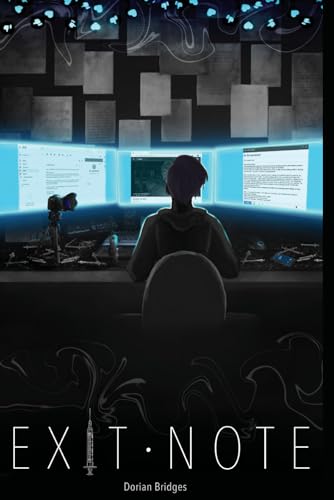
Zillah Marsh is a demi-celebrity with a problem...& it isn’t just his raging heroin addiction.
Tormented through nearly four decades of hellish existence by his frustrating neurodiverse brain, self-medication became the solution...& for Zillah, it works. He’s successful, functional – well on his way to becoming a household name. But when the love of his life dumps him, & the internet threatens to cancel him for his lifestyle, he’s forced to find a loophole in a broken system. As the final door of corrupt drug-war legislature slams in his face, he takes an explosive stand, using the only two weapons left to him – worldwide notoriety, & an eloquent junkie’s bitter death-wish.
Can one jaded intellectual on the brink of insanity take down a corrupt system...or is he destined to wind up just one more dead dope-fiend, riddled with grandiose delusions?
I don’t know how I feel about this. Did I enjoy it?. To answer the question, I’d say I didn’t but that doesn’t mean that I didn’t like the book. It was alright, although I wish I didn’t make the mistake of having high expectations.
I know that Dorian has a lot of potential in his writing, given that I’ve already read ‘Millennium Gothic’, which was a great autobiographical story about his teenage hood in the early 2000s goth scene. I’m planning on rereading it since he was able to capture an unforgettable experience with how his life has evolved. Maybe the choice in how ‘Exit Note’ was written in the third person could have contributed to my feelings and the limited descriptive language didn’t help me connect with the story as much as I wanted to.
The happy ending felt rushed and unrealistic. It would have been better if Zillah’s recovery process could have been more fleshed out (i.e. the struggles, fluctuations, the sluggish progress made and yet the process is still worth it - perhaps a quieter and somewhat positive ending would have been more appropriate here instead of a proposal to Em).
I didn’t feel like I connected with the characters, and I feel like Tom’s perspective could have been written better. I wanted to know more about how he was able to maintain his friendship with Zillah, and there could have been more Zillah POVs. The dialogue felt a bit flat for me, unfortunately, but I liked the change in Zillah’s speech pattern and character following his suicide attempt. All of the characters felt distant, but I don’t think that was intentional in the author’s part. Something felt missing and I finished the book wanting something more. There are a lot of things to work with here, but they were left unexplored (i.e. a more detailed mechanism behind mental illness, the neurodivergent experience and how that might have contributed to Zillah’s mental health, etc.). I would have loved a more realistic take on how many people are willing to help following a suicide attempt. Usually, being placed in a psychiatric ward feels isolating and the longer the mental illness lasted, the more likely it is for people to leave or get tired of having to put up with you (this part is a bit sad but more probable, which was briefly mentioned by Dorian throughout). In the actual story, everyone is lined up to be with Zillah.
I felt a bit misled by the summary, though this is my fault because I thought the author mentioning neurodivergence hinted at an in-depth discussion about the topic (which wasn’t what ended up happening at all - it was more about suicide, unhelpful mental health facilities, hospitals that refuse treatment, and how mental illness and drug addiction can greatly impact loved ones).
On a positive note, I’m glad that Dorian was able to get some help for his mental health, and I’m glad that he is still here. Another thing is I’m happy that he was able to discuss his controversial viewpoint on a broken societal structure that leads to hospitals refusing drug treatment despite the need to administer drugs (i.e. diamorphine, morphine, methadone) to treat addicts at times. I also found his take on internet cancel culture and romanticising influencers thought provoking and important. Many people, especially his young audience who are more prone to idolising Dorian, need to know that influencers are also people.
To conclude, I think whether or not you end up liking this book depends on the type of person you are. If you are like me, who likes to know a lot of details and descriptions of places, people and things, then you won’t love this book. This is because the book mainly uses dialogue to convey the message of the story, which is that people should simply listen, and hospitals should listen to their patients. I think people should go in with more realistic expectations (ideally, no expectations at all) and understand the circumstances in which this book was written (the author was suicidal at the time and seemed to have struggled a lot).
TW: suicide, drug use, mentions of the br*tish g*vernment
I flew through this in just over an hour. It’s mostly dialogue, which is a shame because this author’s strengths really do lie in descriptive prose. The dialogue is engaging however and you can feel the main character’s desperation and frustration.
The plot very much felt like a revenge fantasy. The main character attempts suicide which convinces his ex to take him back, a clinic to give him the medication he’s been trying and failing to acquire for years, and his fans not to cancel him. His girlfriend also accepts his marriage proposal at the end. Yes, he does suffer memory problems and brain damage, but aside from that his life seems to be much better than it was before he made an attempt on it (which he broadcast to the world via YouTube), which… ya know? Obviously the state of addiction treatment in Britain is shocking and does drive a lot of people to attempt suicide, but the reality is that a suicide attempt isn’t going to fix your life, and I don’t think we should be sending the message that it will. I understand that a lot of the plot points here are borrowed from the author’s own experience, but purely on a narrative basis it felt slightly unrealistic.
Tom, the second protagonist, doesn’t have much agency. He seems to be at the first protagonist’s beck and call to the point of not caring when his bathroom gets smashed up, which is quite an unhealthy level of devotion. Right up until the very last page I was half expecting them to ditch their girlfriends and date each other lol, or at least for there to be an unrequited love plot line.
The overall message, I think, is that the government should prescribe diamorphine to heroin addicts, which I one-hundred percent agree with. Showing that Zillah’s life improved once he received this treatment was one way to go about driving the message home, but as I said above it sort of came across like his suicide attempt fixed everything, especially because— well, it kind of did. The diamorphine didn’t bring his girlfriend back, she was already weeping by his bedside right after he attempted.
Overall, the message that the author WANTED to get across was good, and the writing kept me engaged enough to finish the whole thing in one sitting. Minus half a star for the lack of descriptive prose (which as I said is a strength of this author— see their other works) and minus another half star for the unfortunate and probably accidental “a suicide attempt will fix everything” vibes. I would minus another half star because I think Zillah is a stupid name, but that would just be petty and unfair lol.
Once again this author has a lot of potential and I look forward to seeing what he writes next.
This entire review has been hidden because of spoilers.
There's a lot of merit for this book; the writing of a character in the midst of a bad relapse, the repetition in trains of thought, the twisting of words and holding onto specific phrases, the writing of Zillah before hospital was uncomfortably realistic. There is also the genuinely interesting choice of having a book themed around being misunderstood or even unable to express yourself in a way that will be understood and then putting only two out of nineteen chapters in the perspective of the main character, and even then those two chapters are in third person, while the rest of the narration is first person from the perspective of his mate. Keeping us out of his head enhances the concept of his existence in a place that no one can understand but him, having lived his life. Bridges' craft with that choice was a good subtle way to add to the distress and barrier to communication in the novel.
The core concept of giving up on the mental health system/the healthcare system in general, and the idea brought up blatantly of the penchant to ignore neurodivergent needs, is really timely. The book works as a pointed, lurid statement piece on the current state of both for-profit and fund-gutted healthcare in the western world. I found aspects of this book, mostly in the more or less blank slate of Tom and the dissonance between the character voices in dialogue and the character ages, leaving a bit to be desired. It hangs between believable as realistic fiction, and completely unbelievable. Still, everything that exists in this world was made for some sort of purpose, and I do believe this book serves the purpose it was written for. It gets at the drawn out, protracted misery of the healthcare system. It gets at the issues, lifelong, that come from the negligence of the healthcare system. I do think Bridges writes best when writing autobiographically, and the step of separation from that, I believe, weakens this novel slightly, but, again, it was a book written for and under specific circumstances, and to critique craft elements feels like misunderstanding the purpose and conditions of it.
Finally, I got to read this book after months of waiting! Zillah is a YouTube star whose life collapses in on him in less than 24 hours. While it seems like he was holding it together over the last number of months, internally, he was drowning. At times, I found his character very annoying and self-centred. He could only focus on one thing, and everyone else felt like his focus was wrong. The story follows his recovery journey and figuring out what worked for him. I love how the author notes that without his social media presence, he wouldn't have gotten the support he needed. It perfectly highlights how people need support from each other to get through life. It really does take a village!
Is it okay to write a review of a suicide note? The answer may be no but a part of me is thinking it’s literal “death of the author” - anything goes. The next question is: “Is this a suicide note? How could it be when the author is still alive?" I’d argue that it is! You write a suicide note and turn it into a fiction book with a living author, but maybe, in part, it remains the former.
I read Exit Note for the reason most people did: because I love Dorian. I have for about five years so I’m technically a part of the wild mob of teenage devotees described in the book (I'M IN THE BOOK!!!). Having read a few stories from The Putrescent Vein, listened to the "Nostalgia Project" excerpts on YouTube, and read plenty of Dorian’s Instagram captions and comments, I can say that the angry, despondent writing in Exit Note is different from his other work but still so identifiable. Perhaps selfishly, it’s in many ways comforting as a fan to read an honest depiction of "the worst of it." This is what he means when he says it’s bad. When you look up “Of Herbs and Alters,” still so many of the results are commentaries on that 2021/22 relapse. Public breakdowns are the backbone of today's online drama. A mental health crisis is not only scandal, but treated as a statement made by the sufferer that demands op-eds and critique. In this regard, Exit Note feels like closure. It's a desperate yet ingenious way to extend a truce to fans and foes alike, saying "This is all there is to say. Let's move forward."
Calling back to my initial question, there's something darkly comedic about having criticisms of a suicide note. Wherever the ethical concerns may lie, I'm deflecting them by commenting on the writing and story in isolation from the broader context. It's good writing, containing no errors and exuding Dorian's classic bad-boy vampire style, but the consistency doesn't lend itself to the structure of the book. They write each chapter in either Tom's first-person perspective or following Zillah in third-person, but in such a dialogue-heavy book, it's noticeable how much of the dialogue reads the same. Zillah is slightly more verbose than the other characters. Other than that, none of the character's voices seemed unique compared to each other. Their personalities and positions in Zillah's life are all dramatically different so it's always clear who's speaking based on what they say, but I often read dialogue and thought "That's how Zillah would say that, why does everyone in this book sound the same?" However, this issue didn't detract much from the readability of the book.
On a personal note, while I feel lucky I didn't reach any particular lows this year, it was a turning point for me in accepting that I'll never be a happy person. I'll never figure it all out one day and be okay from there on out. It gets better and then it gets worse, and it gets better and repeats. If you're depressed or anorexic or a junkie, there is an expectation of what treatment looks like that no one's allowed to deviate from. Questioning the "experts" only brings on accusations of not trying, self-destructing, and just being stupid. What makes Dorian so special to the people who tune into his every word is that he tells the truth that these programs, philosophies, pills, and adages are outdated. They don't work for everyone. This Victorian mental health system we're all meant to operate in is killing people and the older you get, the longer you survive within it, the worse everything gets. Even though it's cleaner and nicer to think recovery is never touching the needle or the pills or razorblades ever again, Zillah needed a diamorphine prescription. No one who has this chronic misery can just turn it all off and get better, so we need to find ways to get better regardless.
I struggle rating this book, seeing as it was essentially a cry for help through a character.
This is the second book of Dorian’s I’ve read. Bridges excels at biographical descriptive prose and this book has very little of it, it was mostly dialogue. Every character sounds equally as verbose as the main character, Zillah, and by extension Dorian himself, does. Tom, Zillah’s best mate, is essentially a blank slate the reader can project themselves on to. I liked that most chapters were written from his perspective, pinpointing how the world does not fully understand Zillah’s struggle. Zillah’s repetition of the same arguments over and over again felt true to an addict psyche. It was frustrating to read. In a good way.
We have the classic „Suicide fixes everything, everyone feels bad and I finally get my happy ending“ scenario here. It’s cheap and untrue but I understand why it is here. This book was written as a suicide note after all. This is a note to drug agencies to just give people the damn thing and they CAN live happy and more or less „conventional lives“.
Millenium Gothic, Bridges‘ first book I’ve read, was all hypnotic, swirling prose and it was sad to see how much Dorian’s spirit dulled. I am glad he’s in a better place now and am looking forward to reading more of his writing.
As a huge Poppy Z Brite fan I always love seeing his influence on Dorian’s writing.
This entire review has been hidden because of spoilers.
Exit Note is a heavy, thought-provoking and emotionally intense story. Having read the rest of Dorian’s works, this is my final of their books and I’m now absolutely hungry for more of their writing, their writers voice is so unique and clear to which you’re instantly thrown back into their style of writing and expression from the first page.
Heavy trigger warnings for this book: Exit Note, as suggested by the name, is based around s*icide and contains very subject matter. The main themes in this book are s*icide and heavy drug use/ addiction, but there are also detailed descriptions of self harm and discussions around mental health, neurodiversity and mental illness. Please do not read if you’re not in a good space.
Big Spoilers ahead:
Exit Note is about Zillah Marsh, a neurodivergent, self-proclaimed junkie, demi-celebrity internet influencer. Heavily depressed and suicidal, Zillah stakes his very life on the possibility of a diomorphine script, a legal, dosed form of heroin. As Zillah fights for the medication he needs, he battles the ups and downs of relationships and friendships through the throws of addiction, overdoses and withdrawals. Anyone who has read or watched Dorian’s other media knows that Zillah is based heavily off their own experiences, making it a raw and very real depiction. This book left me questioning and rethinking my own views and perspectives as someone not involved in the world of hard drugs
This entire review has been hidden because of spoilers.
This is the second of Dorian’s books I’ve read. Needless to say, this one is very different to The Putrescent Vein. Knowing the author via their YouTube channel, they were identifiable within the story as it progressed through Zillah’s harrowing depiction of the minefield of mental health services in the UK.
As an ex-nurse who worked in an acute general medicine environment, I can attest to the inadequacies within the NHS in relation to providing effective assistance to those in crisis. The first port of call is often this setting, and I witnessed failure upon failure to provide the right care for the patient.
Dorian’s storytelling, if I can refer to it so flippantly in that manner, is totally on point. Their expression of themselves is evident within Zillah as he attempts to navigate his attempt to heal. Portrayal of events is punchy, direct and allows open wounds to be displayed for all to see. This is an honest and gritty window into the life of someone battling to save themselves.
A read such as this is not for the faint-hearted and will tear you up, spit you out and give you a kick to get up again. Fighting to live another day is the message woven into the pages…even though Zillah appears hell-bent to achieve the exact opposite. I’m glad Zillah got his HEA. I only hope Dorian achieves the same.
I love Dorian, was very much OBSSESSED with millennium Gothic that’s why i was so excited for this release.
It saddens me a bit after reading both books that it felt like the Dorian’s soul is clearly burned out in this book, it’s not as glaring and intoxicating as young Dorian in Mellennium Gothic which truly serves the point why this book was supposed to be an “exit note” because it’s truly saddening to see them spiral down and demand help through a fictional character & even the happy messy ending was quite triggering (especially for someone with suicidal tendencies & neurodivergence) I just finished reading it and I can say that it feels quite painful to see aspects of yourself in Zillah, and it feels uncomfortable to see how Dorian unfortunately really dulled down over the years due to the failed medical system.
That’s being said, I’m glad they’re in a good place now and this is not an “Exit note” anymore, but rather a chapter in their story. Can’t wait for the ED book to come out, I do believe Dorian does best writing autobiography instead of third person. And they tend to write best about things that excites them instead of frustrating them.
Raw. The desperation of someone with a neurodivergent brain who can barely hold on to life without heroin. I highly recommend this book to anyone in medicine, especially those interested in working with people with addiction and neurodivergence. Dorian was very clever in telling the majority of the story from the perspective of a neurotypical person, making the book more accessible to the general public while also emphasizing the helplessness of the loved ones who tried their best yet still failed to understand and to help.
Interesting book with insight to what goes on in some people,a brains and it gives hope thing's might get better. I hope we here more about these people from the bopk
I think because of the moral implications of this book it causes polarizing opinions. It definitely did for me. For the first time in a decade I stayed up all night to finish what I was reading (I am very busy and this was a bad idea but I couldn’t help it). At the same time I asked myself why? I don’t agree with a lot of what was said or what happened in the book. I don’t think it’s realistic. There are so many criticisms that people smarter and better than I could say about the whole thing….but none of that matters. Because this book I believe speaks to the carnal side of us who experiences depression and suicidal ideation. It reaches in and grabs that part and creates a fantasy to cling to. One where there is a happier ending, there is justice. One where you matter. For anyone who has been in the shoes of the main character this book scratches an itch and resolves a trauma. And we can discuss the ins and outs of it until we are all dead inside. But there is a fantasy here that is splashed onto a page and resolved flaws and all. I don’t think this is a book for a younger audience who hasn’t lived much yet to see this angle, to see all the nuances, to see all the flaws for what they are. But it is for those who have lived with pain of some kind for a long time.
This entire review has been hidden because of spoilers.