

What do you think?
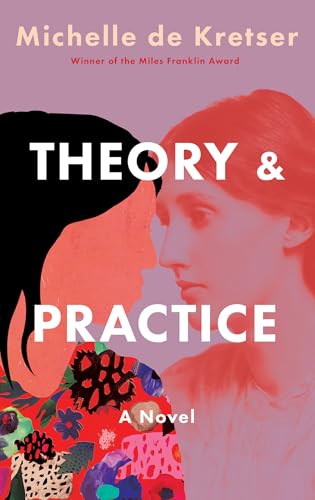
Theory & Practice
With echoes of Shirley Hazzard and Virginia Woolf, a new novel of startling intelligence from prize–winning author Michelle de Kretser, following a woman looking back on her young adulthood, and grappling with the collision of her emotions and her values
In the late 1980s, the narrator of Theory & Practice—a first generation immigrant from Sri Lanka who moved to Sydney in her childhood—sets up a life in Melbourne for graduate school. Jilted by a lover who cheats on her with another self-described "feminist," she is thrown into deeper confusion about her identity and the people around her.
The narrator begins to fall for a man named Kit, who is in a “deconstructed relationship” with a woman named Olivia. She struggles to square her feminism against her jealousy toward Olivia—and her anti-colonialism against her feelings about Virginia Woolf, whose work she is called to despite her racism.
What happens when our desires run contrary to our beliefs? What should we do when the failings of revered figures come to light? Who is shamed when the truth is told? In Theory & Practice, Michelle de Kretser offers a spellbinding meditation on the moral complexities that arise in this gap. Peopled with brilliantly drawn characters, the novel also stitches together fiction and essay, taking up Woolf’s quest for adventurous literary form.
In the late 1980s, the narrator of Theory & Practice—a first generation immigrant from Sri Lanka who moved to Sydney in her childhood—sets up a life in Melbourne for graduate school. Jilted by a lover who cheats on her with another self-described "feminist," she is thrown into deeper confusion about her identity and the people around her.
The narrator begins to fall for a man named Kit, who is in a “deconstructed relationship” with a woman named Olivia. She struggles to square her feminism against her jealousy toward Olivia—and her anti-colonialism against her feelings about Virginia Woolf, whose work she is called to despite her racism.
What happens when our desires run contrary to our beliefs? What should we do when the failings of revered figures come to light? Who is shamed when the truth is told? In Theory & Practice, Michelle de Kretser offers a spellbinding meditation on the moral complexities that arise in this gap. Peopled with brilliantly drawn characters, the novel also stitches together fiction and essay, taking up Woolf’s quest for adventurous literary form.
192 pages, Hardcover
First published January 1, 2024
About the author
Michelle de Kretser
16 books350 followersMichelle de Kretser is an Australian novelist who was born in Sri Lanka but moved to Australia when she was 14.
She was educated in Melbourne and Paris, and published her first novel, 'The Rose Grower' in 1999. Her second novel, published in 2003, 'The Hamilton Case' was winner of the Tasmania Pacific Prize, the Encore Award (UK) and the Commonwealth Writers Prize (Southeast Asia and Pacific). 'The Lost Dog' was published in 2007. It was one of 13 books on the long list for the 2008 Man Booker Prize for Fiction. From 1989 to 1992 she was a founding editor of the Australian Women's Book Review.
She was educated in Melbourne and Paris, and published her first novel, 'The Rose Grower' in 1999. Her second novel, published in 2003, 'The Hamilton Case' was winner of the Tasmania Pacific Prize, the Encore Award (UK) and the Commonwealth Writers Prize (Southeast Asia and Pacific). 'The Lost Dog' was published in 2007. It was one of 13 books on the long list for the 2008 Man Booker Prize for Fiction. From 1989 to 1992 she was a founding editor of the Australian Women's Book Review.
Ratings & Reviews
Friends & Following
Create a free account to discover what your friends think of this book!
Community Reviews
Displaying 1 - 30 of 639 reviews
![Profile Image for s.penkevich [hiatus-will return-miss you all].](https://i.gr-assets.com/images/S/compressed.photo.goodreads.com/users/1735525095i/6431467._UX200_CR0,11,200,200_.jpg)
May 6, 2025
**Winner of the 2025 Stella Prize!**
When frequently immersed in fiction, how often do we compile the details of the world around us to find a narrative or process life as a story? While pursuing her studies on Virginia Woolf at the University of Melbourne amidst a literature department beating the drums of Theory, Sri Lankan immigrant Cindy finds her romantic and intellectual life caught in the maelstrom between theoretical living and real consequences in Michelle de Kretser’s brilliantly realized and aptly titled ninth novel, Theory & Practice. This novel stirred with such blunt and blazing honesty across lovelorn writhing, social critique, and academic explorations of narrative that my mind, heart, and soul all reverberated with every line of de Kretser’s staggeringly polished prose. There is a campus coming-of-age novel with relationship turmoil akin to the works of Sally Rooney as the centerpiece that gives de Kretser platform for ironic pretension ‘free to posit and demystify and interrogate’ with a cast of characters unironically attempting to develop their ‘sense of self through Theory.’ Its the perfect and, admittedly, all too familiar catalyst for Cindy’s entanglements with Kit and his ‘deconstructed relationship’ with another woman, heady discussions on feminism or post-structuralism, department politics, or a Marxist professor who throws a birthday party for his Mac computer. Yet, at its heart, this is a novel about the struggles of the self to gaze at the world through its own eyes yet still thwarted by the mirror reflections that can throw confidence in the self or even one’s greatest idols—through whom Cindy was incubating her burgeoning opinions and self-assessments—asunder. Able to brave intellectual vertigo and render dense or heavy ideas and emotions with a blissful lightness of poetic expression and accessibility, Theory & Practice tackles a cavalcade of themes and rises from the page as a bold, beautiful, and staggeringly intelligent work of the heart and the ways we grapple with living authentically with a brain too hellbent on deconstructing our own desires.
‘Many years had to pass before I’d realize that life isn’t about wishes coming true but about the slow revelation of what we really wished.’
This book hit me with such a passion and force that after finishing it I had to immediately walk across the bar and foist it onto someone I knew would appreciate and revel in it as well. I’m struck with awe by how de Kretser writes something so intimate yet simultaneously at an observational and examinational remove, with the novel having a rich metatextual quality that also gazes back upon itself. It’s a book that challenges the reader into deep contemplation yet also values an accessible delivery of the lesson over intellectual posturing that, for all it’s commendable erudition, feels like a favorite University lecturer praising you for a successful and practical engagement with the material. ‘I no longer wanted to write novels that read like novels,’ de Kretser voices through her characters is a way that touches upon the novel at hand, ‘instead of shapeliness and disguise, I wanted a form that allowed for formlessness and mess.’ The story comes at us in vignettes as if strewn across the counter after being shoveled from a long ignored kitchen drawer, but it is as if the seemingly haphazard organizing of memory becomes its own meta-commentary on its own form. 'I wouldn’t say I set out to break forms, as to invent new ones ' de Kretser told The Guardian and the novel feels quite fresh even in a time when literary reinvention around form feels like it's all been done before. Cindy’s dissertation leans heavily on Virginia Woolf’s The Years and it’s narrative structure is frequently nudged, as well as Hélène Cixous’s idea of the écriture féminine—a distinctly “woman’s writing”—to tell the story:
So, too, is the effect of Truth and Practice, reading as a pastiche of sorts and lingering between fiction and essay in a really thrilling manner. The combination also harkens to the central theme of the novel denoted by its title. It got me to gleefully read both Woolf’s A Room of One’s Own and Hélène Cixous’s essay The Laugh of the Medusa to better engage with the text, which is a true sign of a good book.
Theory & Practice is a novel that starts with a narrative failure in a novel and quickly turns the clock back to a youthful period where attempting to live life like a novel crumbled into a failed narrative. It’s a brash livelihood many of the philosophically minded attempt to harness in youth yet few can stand to hold the reigns across the tempests of Theory colliding with everyday living. ‘I started to make a literary being of myself, someone who lives as if her experiences were to be written down someday,’ writes Nobel laureate Annie Ernaux in her book A Girl's Story, and amidst the literary landscapes of collegiate life, de Kretser’s narrator (and plausibly fictional-self) decides she will commit to the same. For moral reasons, of course, none of us in the midst of aspirational idealism want to be anything less than the theories we shout from our starry-eyed soap boxes. Yet in writing the self-heroism of a campus novel of the self, perhaps we should have been wonderin ‘who will write the history of tears?’ Well, friends, de Kretser sure will. And we’ll be better for it.
‘In theory there was no reason not to be a Marxist feminist, but it was tricky in practice because Marxism in student politics was dominated by men.’
As the novel announces with its title, this is a story about the conflicts of theory and practice, or praxis as is more “social media philosopher” to term it. Set in the mid 1980s, Theory—always written with a capital T in derisive reverence—rules the day and the intellectual joys come with equal amounts of disdain.
Nothing is sacred and the students take this to heart in their lives, abandoning the art of living for the guidelines of theoretical purity. ‘Artists used to think about art through art,’ voices a character, ‘now they think about it through Theory. What happened to praxis?’ The praxis, at least in Cindy’s case, often leads to self-destructive behavior and makes one appear less an astute mind and more an asshole as well as a conundrum of self when idealizations and actualizations don’t align. For instance, finding Woolf—often written as “The Woolfmother” in a playful yet cynical commentary on the notions of mother/daughter relationships that thread through the novel—disparaging E. W. Perera, a Sri Lanka’s leader for liberation from Britain, finds the narrator realizing her own idol is flawed and in her rejection of Perera finds a rejection of herself.
The narrator frequently reflects back on allowing her poster of Woolf to sag and fall from her bedroom wall in the aftermath of this disappointing discovery as a metaphorical acknowledgement of the idolized mask slipping. Yet finding a way to rationalize and contextualize the good of people with their flaws, the Theory with the lived reality, is at the heart of the novel’s moral discourse. ‘She helped build my brain. You know?’ the character Anti admits about Woolf before adding ‘ten minutes with her and I’d be calling for a gun.’ We can still appreciate the work of a person while recognizing we might not want to know them as well. It also touches on the idea of mothers and daughters that the narrator is navigating, such as seeing her own as a mother figure but also her child who she must take care of and ‘neither of us could break out of a situation I found savagely repellent and to which I was sadly resigned. She considers Woolf's words that ‘we think back through our mothers if we are women,’ and this desire to both live up to expectations while wanting to deviate and disappoint becomes another impulse of personal theory to straddle.
‘I’d raged silently, inwardly, censored by asn internal critic who found jealousy a trite, despicable emotion, a morbid symptom that ran counter to feminist practice.'
Though it is not only grappling with Woolf betraying her own feminist principles but also detecting such ‘morbid symptoms’ running parallel in herself. Most notably in trying to decode the semiotics of her relationship with Kit and his ‘deconstructed relationship’—imagine a man telling you that, christ—with Olivia, feeling her jealousy as unbecoming of her own attempted adherence to Theory. ‘I’d been careful not to see into Olivia, preferring to create an effigy whose capacity for love and suffering and joy fell far short of mine,’ she muses, struggling through the self-inflicted agony of coffee dates with Olivia while fantasizing about hurting her or her possessions. She also observes how pitting women against each other under the male gaze is a patriarchal disruption tactic:
Reading the cruel and possibly unjust takedown of a book review Cindy’s advisor wrote to destroy the career of a romantic rival allows Cindy to step outside herself but also more critically consider the failure of Theory in practice.
‘I wanted to join the bourgeoisie and I wanted to destroy it.’
There’s a socio-cultural element to St. Kilda, Melbourne and the university society that Kretser investigates with a brilliant eye for the rhythm of the cultural heartbeat that occasionally recalls Joan Didion. Cindy may have the fashionable academic acumen, style, and correct feminist flair to navigate the social hierarchies but, brown-skinned and from an immigrant family, she is forever a guest to their circles. They are the sort of academic radicals that have the financial backing and family names that allow them space to investigate the caverns of selfhood against a backdrop of Theory which they so champion but fail to notice the ways this financial freedom is an unearned gift denied many others. It’s an adherence to Marxism in Theory that can be paraded around or graded upon without any social necessity to act upon in practice. It is, like many of the other identities exhibited by the students in the novel, yet another mask and not a face made of flesh. Principals in Theory often retreat in the face of reality and practical decisions, such as a character jumping into a job for his girlfriend’s father ‘because Anglo Daddy’s sorted his future.’ Or, perhaps is it the girlfriend’s ‘future that Anglo Daddy had sorted,’ where offering the job makes the boyfriend into wealthy husband-material for her as ‘a thoughtful gift.’ These are families that put up the gated communities and ensure nobody outside will make it in.
‘Late Capitalism preferred to shroud its facts in velvet, but here they showed brutal and plain’
Even in all its beach-front beauty, St. Kilda is often described as an abstract threatening landscape, where the ‘sunset was a murderous red stripe’, or the waves break in a sound of ‘baffled rage’ upon a bay that ‘had the look of a mouthful of fillings.’ The muted frustration exhibited by the landscape often channels the narrator’s inner frustrations that she has yet to find the language to vocalize. Even when she can reach for the words, she is met with dismissal lest she rock the waves. Her upset over her discovery in Woolf’s diaries is swept aside by her advisor as a discussion on colonialism that would criticize the obdurate, white hegemony and confront racist histories is not a necessary or desired topic whereas a commentary on Theory and the text of the novels is adequately radical while ultimately toothless against the lived oppressions Cindy or other “outsiders” experience. It is also an insidious way power constraints movements like feminism to rage against individuals or symptoms but not ‘on the social structures that constrain women’s options in the first place,’ as Carol Hay writes in Think Like a Feminist , its all a way to ‘defang feminism of its radical potential’ by making it a chic form of social posturing instead of actual action.
‘The machinery of racism ran silently in 1986. It was unmentionable, shameful, and ordinary. How could I fit into a sentence about Virginia Woolf? I couldn’t even fit it into a sentence about myself.’
Michelle de Kretser’s Theory & Practice is a brilliantly crafted, beautifully written, and bold commentary on those who ‘confuse realism with reality,’ when we are ‘looking to life for the satisfactions provided by novels: the possibility of redemption, answers and patterns, motive and cause.’ Navigating a plethora of thematic discourses while gazing back at the past to better understand how she came to her present, this book delivers emotionally resonant blows to the head and the heart in the best way. I will certainly be going back through de Kretser’s catalogue and I suspect by years end I’ll still be looking back at this as one of the best books I read for the year. An intellectual treat that warmly welcomes you in, Theory & Practice shows you can have yourcake theory and eat practice it too.
5/5
‘I will go on adventuring, changing, opening my mind & my eyes, refusing to be stamped & stereotyped.’
—Virginia Woolf, The Years
When frequently immersed in fiction, how often do we compile the details of the world around us to find a narrative or process life as a story? While pursuing her studies on Virginia Woolf at the University of Melbourne amidst a literature department beating the drums of Theory, Sri Lankan immigrant Cindy finds her romantic and intellectual life caught in the maelstrom between theoretical living and real consequences in Michelle de Kretser’s brilliantly realized and aptly titled ninth novel, Theory & Practice. This novel stirred with such blunt and blazing honesty across lovelorn writhing, social critique, and academic explorations of narrative that my mind, heart, and soul all reverberated with every line of de Kretser’s staggeringly polished prose. There is a campus coming-of-age novel with relationship turmoil akin to the works of Sally Rooney as the centerpiece that gives de Kretser platform for ironic pretension ‘free to posit and demystify and interrogate’ with a cast of characters unironically attempting to develop their ‘sense of self through Theory.’ Its the perfect and, admittedly, all too familiar catalyst for Cindy’s entanglements with Kit and his ‘deconstructed relationship’ with another woman, heady discussions on feminism or post-structuralism, department politics, or a Marxist professor who throws a birthday party for his Mac computer. Yet, at its heart, this is a novel about the struggles of the self to gaze at the world through its own eyes yet still thwarted by the mirror reflections that can throw confidence in the self or even one’s greatest idols—through whom Cindy was incubating her burgeoning opinions and self-assessments—asunder. Able to brave intellectual vertigo and render dense or heavy ideas and emotions with a blissful lightness of poetic expression and accessibility, Theory & Practice tackles a cavalcade of themes and rises from the page as a bold, beautiful, and staggeringly intelligent work of the heart and the ways we grapple with living authentically with a brain too hellbent on deconstructing our own desires.
‘Many years had to pass before I’d realize that life isn’t about wishes coming true but about the slow revelation of what we really wished.’
This book hit me with such a passion and force that after finishing it I had to immediately walk across the bar and foist it onto someone I knew would appreciate and revel in it as well. I’m struck with awe by how de Kretser writes something so intimate yet simultaneously at an observational and examinational remove, with the novel having a rich metatextual quality that also gazes back upon itself. It’s a book that challenges the reader into deep contemplation yet also values an accessible delivery of the lesson over intellectual posturing that, for all it’s commendable erudition, feels like a favorite University lecturer praising you for a successful and practical engagement with the material. ‘I no longer wanted to write novels that read like novels,’ de Kretser voices through her characters is a way that touches upon the novel at hand, ‘instead of shapeliness and disguise, I wanted a form that allowed for formlessness and mess.’ The story comes at us in vignettes as if strewn across the counter after being shoveled from a long ignored kitchen drawer, but it is as if the seemingly haphazard organizing of memory becomes its own meta-commentary on its own form. 'I wouldn’t say I set out to break forms, as to invent new ones ' de Kretser told The Guardian and the novel feels quite fresh even in a time when literary reinvention around form feels like it's all been done before. Cindy’s dissertation leans heavily on Virginia Woolf’s The Years and it’s narrative structure is frequently nudged, as well as Hélène Cixous’s idea of the écriture féminine—a distinctly “woman’s writing”—to tell the story:
‘Woolf had set out to write a different kind of novel. It would alternate between essays and fiction: between ‘fact and vision’, as she called it, between the ‘granite’ of truth and the ‘rainbow’ of characters.
So, too, is the effect of Truth and Practice, reading as a pastiche of sorts and lingering between fiction and essay in a really thrilling manner. The combination also harkens to the central theme of the novel denoted by its title. It got me to gleefully read both Woolf’s A Room of One’s Own and Hélène Cixous’s essay The Laugh of the Medusa to better engage with the text, which is a true sign of a good book.
Theory & Practice is a novel that starts with a narrative failure in a novel and quickly turns the clock back to a youthful period where attempting to live life like a novel crumbled into a failed narrative. It’s a brash livelihood many of the philosophically minded attempt to harness in youth yet few can stand to hold the reigns across the tempests of Theory colliding with everyday living. ‘I started to make a literary being of myself, someone who lives as if her experiences were to be written down someday,’ writes Nobel laureate Annie Ernaux in her book A Girl's Story, and amidst the literary landscapes of collegiate life, de Kretser’s narrator (and plausibly fictional-self) decides she will commit to the same. For moral reasons, of course, none of us in the midst of aspirational idealism want to be anything less than the theories we shout from our starry-eyed soap boxes. Yet in writing the self-heroism of a campus novel of the self, perhaps we should have been wonderin ‘who will write the history of tears?’ Well, friends, de Kretser sure will. And we’ll be better for it.
‘In theory there was no reason not to be a Marxist feminist, but it was tricky in practice because Marxism in student politics was dominated by men.’
As the novel announces with its title, this is a story about the conflicts of theory and practice, or praxis as is more “social media philosopher” to term it. Set in the mid 1980s, Theory—always written with a capital T in derisive reverence—rules the day and the intellectual joys come with equal amounts of disdain.
‘Theory announced that the future was now. To mark its arrival, Theory had taken book, essay, novel, story, poem, and play, and replaced them all with text. Theory rejected binaries, exposed aporias, and posited. It posited that meaning was unstable and endlessly deferred…Theory took words I knew and used them in startling new ways.’
Nothing is sacred and the students take this to heart in their lives, abandoning the art of living for the guidelines of theoretical purity. ‘Artists used to think about art through art,’ voices a character, ‘now they think about it through Theory. What happened to praxis?’ The praxis, at least in Cindy’s case, often leads to self-destructive behavior and makes one appear less an astute mind and more an asshole as well as a conundrum of self when idealizations and actualizations don’t align. For instance, finding Woolf—often written as “The Woolfmother” in a playful yet cynical commentary on the notions of mother/daughter relationships that thread through the novel—disparaging E. W. Perera, a Sri Lanka’s leader for liberation from Britain, finds the narrator realizing her own idol is flawed and in her rejection of Perera finds a rejection of herself.
‘The Woolfmother constructed interiority in radical new ways in her fiction by describing what she found when she looked into herself. That looking inspired her to assemble a feminist politics from her experience of patriarchy: she knew what it was like to be her. But she didn’t know what it was like to be E.W. Perera and she didn’t care to find out. He was simply as ‘instructable’ to her as the world from which he came.’
The narrator frequently reflects back on allowing her poster of Woolf to sag and fall from her bedroom wall in the aftermath of this disappointing discovery as a metaphorical acknowledgement of the idolized mask slipping. Yet finding a way to rationalize and contextualize the good of people with their flaws, the Theory with the lived reality, is at the heart of the novel’s moral discourse. ‘She helped build my brain. You know?’ the character Anti admits about Woolf before adding ‘ten minutes with her and I’d be calling for a gun.’ We can still appreciate the work of a person while recognizing we might not want to know them as well. It also touches on the idea of mothers and daughters that the narrator is navigating, such as seeing her own as a mother figure but also her child who she must take care of and ‘neither of us could break out of a situation I found savagely repellent and to which I was sadly resigned. She considers Woolf's words that ‘we think back through our mothers if we are women,’ and this desire to both live up to expectations while wanting to deviate and disappoint becomes another impulse of personal theory to straddle.
‘I’d raged silently, inwardly, censored by asn internal critic who found jealousy a trite, despicable emotion, a morbid symptom that ran counter to feminist practice.'
Though it is not only grappling with Woolf betraying her own feminist principles but also detecting such ‘morbid symptoms’ running parallel in herself. Most notably in trying to decode the semiotics of her relationship with Kit and his ‘deconstructed relationship’—imagine a man telling you that, christ—with Olivia, feeling her jealousy as unbecoming of her own attempted adherence to Theory. ‘I’d been careful not to see into Olivia, preferring to create an effigy whose capacity for love and suffering and joy fell far short of mine,’ she muses, struggling through the self-inflicted agony of coffee dates with Olivia while fantasizing about hurting her or her possessions. She also observes how pitting women against each other under the male gaze is a patriarchal disruption tactic:
'Shame could transform female solidarity into a scold's bridle. It could ensure that a philosophy designed to free us set a weight on our tongues.'
Reading the cruel and possibly unjust takedown of a book review Cindy’s advisor wrote to destroy the career of a romantic rival allows Cindy to step outside herself but also more critically consider the failure of Theory in practice.
‘I wanted to join the bourgeoisie and I wanted to destroy it.’
There’s a socio-cultural element to St. Kilda, Melbourne and the university society that Kretser investigates with a brilliant eye for the rhythm of the cultural heartbeat that occasionally recalls Joan Didion. Cindy may have the fashionable academic acumen, style, and correct feminist flair to navigate the social hierarchies but, brown-skinned and from an immigrant family, she is forever a guest to their circles. They are the sort of academic radicals that have the financial backing and family names that allow them space to investigate the caverns of selfhood against a backdrop of Theory which they so champion but fail to notice the ways this financial freedom is an unearned gift denied many others. It’s an adherence to Marxism in Theory that can be paraded around or graded upon without any social necessity to act upon in practice. It is, like many of the other identities exhibited by the students in the novel, yet another mask and not a face made of flesh. Principals in Theory often retreat in the face of reality and practical decisions, such as a character jumping into a job for his girlfriend’s father ‘because Anglo Daddy’s sorted his future.’ Or, perhaps is it the girlfriend’s ‘future that Anglo Daddy had sorted,’ where offering the job makes the boyfriend into wealthy husband-material for her as ‘a thoughtful gift.’ These are families that put up the gated communities and ensure nobody outside will make it in.
‘Late Capitalism preferred to shroud its facts in velvet, but here they showed brutal and plain’
Even in all its beach-front beauty, St. Kilda is often described as an abstract threatening landscape, where the ‘sunset was a murderous red stripe’, or the waves break in a sound of ‘baffled rage’ upon a bay that ‘had the look of a mouthful of fillings.’ The muted frustration exhibited by the landscape often channels the narrator’s inner frustrations that she has yet to find the language to vocalize. Even when she can reach for the words, she is met with dismissal lest she rock the waves. Her upset over her discovery in Woolf’s diaries is swept aside by her advisor as a discussion on colonialism that would criticize the obdurate, white hegemony and confront racist histories is not a necessary or desired topic whereas a commentary on Theory and the text of the novels is adequately radical while ultimately toothless against the lived oppressions Cindy or other “outsiders” experience. It is also an insidious way power constraints movements like feminism to rage against individuals or symptoms but not ‘on the social structures that constrain women’s options in the first place,’ as Carol Hay writes in Think Like a Feminist , its all a way to ‘defang feminism of its radical potential’ by making it a chic form of social posturing instead of actual action.
‘The machinery of racism ran silently in 1986. It was unmentionable, shameful, and ordinary. How could I fit into a sentence about Virginia Woolf? I couldn’t even fit it into a sentence about myself.’
Michelle de Kretser’s Theory & Practice is a brilliantly crafted, beautifully written, and bold commentary on those who ‘confuse realism with reality,’ when we are ‘looking to life for the satisfactions provided by novels: the possibility of redemption, answers and patterns, motive and cause.’ Navigating a plethora of thematic discourses while gazing back at the past to better understand how she came to her present, this book delivers emotionally resonant blows to the head and the heart in the best way. I will certainly be going back through de Kretser’s catalogue and I suspect by years end I’ll still be looking back at this as one of the best books I read for the year. An intellectual treat that warmly welcomes you in, Theory & Practice shows you can have your
5/5
‘I will go on adventuring, changing, opening my mind & my eyes, refusing to be stamped & stereotyped.’
—Virginia Woolf, The Years
April 14, 2025
UPDATE: THEORY & PRACTICE HAS WON THE 2025 STELLA PRIZE!
CONGRATULATIONS MICHELLE DE KRETSER!
'That's the purpose of art. It gives form to experience. It makes sense of our lives!
Theory & Practice by Michelle de Kretser is a masterpiece of contemporary fiction. De Krester dives headfirst into the complexities of love, ambition, and the messy gap between who we are and who we want to be. With a narrative that's both razor sharp and deeply compassionate.
The novel examines the lives of characters grappling with personal and professional desires, each one portrayed with a realism that makes them feel achingly familiar. De Kretser's prose is gorgeous and balances humor and insight in a way that makes every page feel alive. Her observations about the human condition are startlingly precise, and she has a knack for capturing the quiet but powerful moments that shape our lives.
The characters wrestle with morally gray areas, ambitions that don't pan out, and relationships that require more than they're prepared to give, a testament to how relatable the themes are. It's not just a novel but an exploration of how we navigate the personal and social forces that pull us in different directions.
Theory & Practice is an unforgettable read, challenging readers to question their assumptions about love, success, and what it means to live authentically. This is a book that stays with you long after you've turned the last page. Michelle de Kretser has crafted a stunning work that deserves a place on every bookshelf.
My Highest Recommendation.
Warmest regards to Text Publishing for gifting me an advanced readers copy of Theory & Practice for review.
CONGRATULATIONS MICHELLE DE KRETSER!
'That's the purpose of art. It gives form to experience. It makes sense of our lives!
Theory & Practice by Michelle de Kretser is a masterpiece of contemporary fiction. De Krester dives headfirst into the complexities of love, ambition, and the messy gap between who we are and who we want to be. With a narrative that's both razor sharp and deeply compassionate.
The novel examines the lives of characters grappling with personal and professional desires, each one portrayed with a realism that makes them feel achingly familiar. De Kretser's prose is gorgeous and balances humor and insight in a way that makes every page feel alive. Her observations about the human condition are startlingly precise, and she has a knack for capturing the quiet but powerful moments that shape our lives.
The characters wrestle with morally gray areas, ambitions that don't pan out, and relationships that require more than they're prepared to give, a testament to how relatable the themes are. It's not just a novel but an exploration of how we navigate the personal and social forces that pull us in different directions.
Theory & Practice is an unforgettable read, challenging readers to question their assumptions about love, success, and what it means to live authentically. This is a book that stays with you long after you've turned the last page. Michelle de Kretser has crafted a stunning work that deserves a place on every bookshelf.
My Highest Recommendation.
Warmest regards to Text Publishing for gifting me an advanced readers copy of Theory & Practice for review.

November 8, 2024
nothing like a campus novel to curb the desire to do a phd

March 21, 2025
I no longer wanted to write novels that read like novels. Instead of shapeliness and disguise, I wanted a form that allowed for formlessness and mess.
In this book, de Kretser has succeeded admirably at creating a novel that is built, productively, on 'formlessness and mess'. There's already that paradox in the statement 'a form that allowed for formlessness' and a playful critique of literary theory that is often based on the idea of form even when that very adopted structure is intentionally and programmatically designed to overspill the edges. Add too the internal intertextuality with Woolf's later novels (The Waves, Between the Acts, The Years), all texts which try to escape the 'rules' of the novel, of character and of temporality - and I'm in awe of de Kretser's ability to hold this all together rather than have it collapse in a gooey mess.
One way of binding the text is via the voice of the narrator who, we only late in the book learn, is named Cindy - a remnant from her Sri Lankan parents who emigrated to Australia with barely more than they could carry in their suitcase. Giving focus to all the strands of the book is Cindy's work on an MA dissertation on, yes, Virginia Woolf.
From this hangs a range of discourses from 1984 academia, perhaps the first generation to be forced into the straightjacket of literary theory - a topic with which de Kretser has some fun, however essential the ideas are, even if we don't name them in quite the same way today - to ideas of female inheritance from our mothers building on Woolf's statement that women think back through their mothers. For Cindy, she has two maternal lines: the biological one, and that of the 'Woolfmother': the writer who so many of us discovered in our teens who has lived with us through our intellectual lives.
The eponymous 'theory & practice' plays out in various ways: most pressingly, for me, in the uncomfortable reckoning with Woolf's situated and historicised colonialist mindset and racism; and the way Cindy proclaims herself a feminist and yet continues to be the secret 'other woman' in a fraught triangulated affair. Her realisation of the way she has refused to 'read' Olivia, to even acknowledge that she, too, has an interiority and a lived experience is collocated against the way Woolf brings a brown man from Ceylon (as it was then) and an Indian into her drawing rooms and yet allocates them no interiority or space to speak, shows no interest in even beginning to imagine their subjectivity.
For all the serious topics put to work here, what I take away is de Kretser's witty, sparky intelligence that can shift between acute moments of comic recognition ('she said that pretend-laughing with senior academics was an essential workplace skill we should be allowed to list on our CVs') to understated but weighty scenes where one of her friends enumerates the people he has lost just that week to AIDs/HIV.
This is wonderfully rigorous and provocative but somehow manages to be serious without ever becoming pompous or pretentious. This is likely to be some of the most stimulating 200 pages I'll read this year.

April 18, 2025
*** Winner of the 2025 Stella Prize***
"Theory & Practice". Or should that be "Theory & Praxis"?
A lot of this went way over my head. Basically it's about a student writing her thesis about the works of Virginia Woolf (aka the "Woolfmother") and overcoming her heartache at being betrayed by her lover by doing the same to another woman. So much for the sisterhood.
"Deconstructed relationship" anyone?
Set in 1986 in Melbourne, there are a lot of parties, plenty of drinking, and bucket loads of obsession and jealousy.
I've not read Virginia Woolf and this book doesn't inspire me to.
Lots of prattle about people being terribly clever and/or arty. Competing with other people who are also terribly clever and/or arty. But seemingly supportive of one another. Dah-ling.
Throw into the mix the sad relationship our main character has with her widowed mother - as upset and frustrated with her as her mother is proud of her daughter - it shows a self absorbed side of academia. There's a scene at one of the many dinner parties where the circle of women friends and acquaintances get stuck in blaming their mothers for everything that is wrong in their lives. Ugh.
It's an unpleasant look at women who supposedly support feminism while their behaviours don't mirror the ideals.
From reading a few other reviews apparently our protagonist's name was Cindy. I completely missed that. I just wasn't engaged with the story
enough.
Probably the only thing I'll remember of this down the track is the little gift our narrator includes when returning her lover's lasagna dish after their breakup. Classy.
I'm disappointed as I was really hoping to enjoy this. Michelle De Krester just looks so darn likeable on the front and back covers of this edition, and in interviews I've read so far comes across as warm and affable. But the story and especially the characters just didn't appeal. They are self indulgent and caught up in their own dramas. Not anyone I'd want to have a cuppa with.
3 stars simply because the writing is actually really good and I appreciated it. But the storyline. Ugh! Empty people that didn't leave a favourable impression.
"Our lives always come down to money and shit."
A philosopher could not have said it better.
"Theory & Practice". Or should that be "Theory & Praxis"?
A lot of this went way over my head. Basically it's about a student writing her thesis about the works of Virginia Woolf (aka the "Woolfmother") and overcoming her heartache at being betrayed by her lover by doing the same to another woman. So much for the sisterhood.
"Deconstructed relationship" anyone?
Set in 1986 in Melbourne, there are a lot of parties, plenty of drinking, and bucket loads of obsession and jealousy.
I've not read Virginia Woolf and this book doesn't inspire me to.
Lots of prattle about people being terribly clever and/or arty. Competing with other people who are also terribly clever and/or arty. But seemingly supportive of one another. Dah-ling.
Throw into the mix the sad relationship our main character has with her widowed mother - as upset and frustrated with her as her mother is proud of her daughter - it shows a self absorbed side of academia. There's a scene at one of the many dinner parties where the circle of women friends and acquaintances get stuck in blaming their mothers for everything that is wrong in their lives. Ugh.
It's an unpleasant look at women who supposedly support feminism while their behaviours don't mirror the ideals.
From reading a few other reviews apparently our protagonist's name was Cindy. I completely missed that. I just wasn't engaged with the story
enough.
Probably the only thing I'll remember of this down the track is the little gift our narrator includes when returning her lover's lasagna dish after their breakup. Classy.
I'm disappointed as I was really hoping to enjoy this. Michelle De Krester just looks so darn likeable on the front and back covers of this edition, and in interviews I've read so far comes across as warm and affable. But the story and especially the characters just didn't appeal. They are self indulgent and caught up in their own dramas. Not anyone I'd want to have a cuppa with.
3 stars simply because the writing is actually really good and I appreciated it. But the storyline. Ugh! Empty people that didn't leave a favourable impression.
"Our lives always come down to money and shit."
A philosopher could not have said it better.

Read
August 2, 2024This is de Kretser at her very best – intellectually rigorous, bursting with youth and desire, styling prose in ways most can only dream about. She’s also playing with hybrid forms blending fiction, memoir and essay. Colonialism and its many evils lie at the heart of this book and her light touch makes it all the more affecting and effective. There’s so much to grapple with here. I feel like de Kretser seeks to reinvent herself as a writer with each book which is wildly impressive and exciting.

June 30, 2026
When I studied literary criticism a lifetime ago, I wrote a paper on the difference between classicism and romanticism. One of the things that became obvious as I was writing the essay was how hard it is to say what the differences between them are. And if that is true for the classic and the romantic, it is doubly so for the differences between the modern and the post-modern. This is made even harder by the fact that the post-modern doesn’t really even have a name - it is just something that ‘sort of’ comes after the modern. At the start of this novel, I couldn’t help thinking of that other novel that gets called post-modern by so often, Calvino’s If On A Winter’s Night A Traveller. This one even starts with a novel that is abandoned well before the end of the first chapter.
Although, does it? To which, of course, the answer is no. There is barely a theme in the first wee ‘abandoned novel’ that isn’t central to the rest of the novel. The sex of the central character changes, the main character in the first novel are younger - but the images and themes remain. Jewellery, relationships with absent parents, theft, illness and death, unreliable memories. The lesson being, I guess, that if a novel begins with a story that we are then told has been abandoned, you basically know that it hasn’t been abandoned at all.
And then there is the very clever bit where the title is introduced - where the narrator, as a young girl, has never been able to make sense of the connection between musical theory and practicing the piano. She learns each, through repetition and rote learning, but each is learned with no real reference or feeling of connection to the other. And so her life proves. She even mentions this vaguely at some point - about praxis and how hard it is to achieve - praxis being the putting of revolutionary theory into practice.
What is perhaps interesting is she is writing her thesis on the novels of Virginia Woolf - a feminist, sure enough, but also something of the archetypal modernist writer. And at one point she is advised to focus her thesis on the novels, and not the diaries - which I also took to be related to the theory and practice ideas too. There is lots in this, perhaps just hints, to ideas of deconstruction and Derrida’s ideas of defer-ance (as opposed to difference), that is, to how important it is, now that the novel is dead, and the author is dead, and the reader isn’t feeling too well either - that we defer our interpretations and try to understand the text (that is, life), not only in its own terms, but in terms of our own life, our understanding, interpretations and desires. To defer interpretation knowing it will change and we have no ultimate access to the truth. The novel could hardly have made those ideas clearer - if by negation, by showing how almost impossible this ‘delayed interpretation’ is. The bit I particularly liked was the narrator and the ‘other woman’ who are both making love to the one man - but who the narrator had decided is his true love - and how each woman leaves marks on his body as they have sex with him - love bites, scratches - turning his body into a text where each woman is effectively communicating with the other through the clear intimate contact they each have with him. If there is one thing you can say with certainty about the post-modern, it is that everything becomes a text. Perhaps boyfriends doubly so.
I guess Sartre and de Beauvoir set the ultimate example of ‘theory/practice’ divide in terms of relationships. Open relationships are much easier in theory than in practice. I could make all of the arguments in favour of open relationships you might like, but I certainly couldn’t be in one. The theory is that you live in the present - that possession is a social construct - but it quickly becomes clear that regardless of Barthes’ advice - or that of Derrida too, of course, that she isn’t able to live outside of jealousy or interpretation. She hardly differs her interpretations - if we can never know the ultimate meaning of a text (or relationship or other people) this does nothing to stop her from knowing with near certainty her boyfriend’s motivations and those of her antagonist female other. Her imagined revenges of her ‘other’ - the other woman - involve mostly symbolic pain - stealing her boyfriend, or her treasured necklace, destroying her clothes, punishing her for her perfect life and her unearned privileged, either imagined or real.
There was a time when the connection between theory and practice was much more obvious. That time is what sociologists like Bauman refer to as ‘solid modernity’, or what other post-modernists call the age of ‘grand narratives’ - like Marxism or Fascism, a time when everything could be explained by the dictates of historical materialism or of the connection between blood and soil. But post-modernism makes everything relative - and hence the theoretical demand to defer interpretation. In the end, we are to be Nietzsche’s Übermensch (the overman, the superman, the person capable through the force of their own will to revalue all values - to live outside convention and to make are own moral universe). Except, this never proves quite as simple as we hope. Certainly, the life she desires with her lover, denied her by the existence, she imagines, of the other woman, is hardly distinguishable from a conventional romantic relationship.
The contradictions abound in this novel - naturally, between theory and practice. She wants the freedom promised by post-modernism - not just sexual freedom, but emotional freedom too. But is this really what she wants? And then, there is the idea that the first premise of existentialism is that existence proceeds essence - that what we do is what makes us who we are - not the other way around. None of us has a fundamental essence - a true nature - but that we become what we do. But for most of this book, she is terrified she is predestined to become her mother - that is, essence over existence.
This was an interesting wee book. A very dear friend of mine read it for a book group and no one liked it. I can understand that, I guess. But I thought the writing was interesting and some of the themes particularly so. If you are reading this - you want to think about jewellery and what it means, not as precious stones or metals, but as symbolic representations of interpersonal relationships. The author really couldn’t have left more jewellery lying around in this book. In fact, if the book wasn’t called theory and practice, it could easily have been called The Great Jewellery Heist. Just saying.
Although, does it? To which, of course, the answer is no. There is barely a theme in the first wee ‘abandoned novel’ that isn’t central to the rest of the novel. The sex of the central character changes, the main character in the first novel are younger - but the images and themes remain. Jewellery, relationships with absent parents, theft, illness and death, unreliable memories. The lesson being, I guess, that if a novel begins with a story that we are then told has been abandoned, you basically know that it hasn’t been abandoned at all.
And then there is the very clever bit where the title is introduced - where the narrator, as a young girl, has never been able to make sense of the connection between musical theory and practicing the piano. She learns each, through repetition and rote learning, but each is learned with no real reference or feeling of connection to the other. And so her life proves. She even mentions this vaguely at some point - about praxis and how hard it is to achieve - praxis being the putting of revolutionary theory into practice.
What is perhaps interesting is she is writing her thesis on the novels of Virginia Woolf - a feminist, sure enough, but also something of the archetypal modernist writer. And at one point she is advised to focus her thesis on the novels, and not the diaries - which I also took to be related to the theory and practice ideas too. There is lots in this, perhaps just hints, to ideas of deconstruction and Derrida’s ideas of defer-ance (as opposed to difference), that is, to how important it is, now that the novel is dead, and the author is dead, and the reader isn’t feeling too well either - that we defer our interpretations and try to understand the text (that is, life), not only in its own terms, but in terms of our own life, our understanding, interpretations and desires. To defer interpretation knowing it will change and we have no ultimate access to the truth. The novel could hardly have made those ideas clearer - if by negation, by showing how almost impossible this ‘delayed interpretation’ is. The bit I particularly liked was the narrator and the ‘other woman’ who are both making love to the one man - but who the narrator had decided is his true love - and how each woman leaves marks on his body as they have sex with him - love bites, scratches - turning his body into a text where each woman is effectively communicating with the other through the clear intimate contact they each have with him. If there is one thing you can say with certainty about the post-modern, it is that everything becomes a text. Perhaps boyfriends doubly so.
I guess Sartre and de Beauvoir set the ultimate example of ‘theory/practice’ divide in terms of relationships. Open relationships are much easier in theory than in practice. I could make all of the arguments in favour of open relationships you might like, but I certainly couldn’t be in one. The theory is that you live in the present - that possession is a social construct - but it quickly becomes clear that regardless of Barthes’ advice - or that of Derrida too, of course, that she isn’t able to live outside of jealousy or interpretation. She hardly differs her interpretations - if we can never know the ultimate meaning of a text (or relationship or other people) this does nothing to stop her from knowing with near certainty her boyfriend’s motivations and those of her antagonist female other. Her imagined revenges of her ‘other’ - the other woman - involve mostly symbolic pain - stealing her boyfriend, or her treasured necklace, destroying her clothes, punishing her for her perfect life and her unearned privileged, either imagined or real.
There was a time when the connection between theory and practice was much more obvious. That time is what sociologists like Bauman refer to as ‘solid modernity’, or what other post-modernists call the age of ‘grand narratives’ - like Marxism or Fascism, a time when everything could be explained by the dictates of historical materialism or of the connection between blood and soil. But post-modernism makes everything relative - and hence the theoretical demand to defer interpretation. In the end, we are to be Nietzsche’s Übermensch (the overman, the superman, the person capable through the force of their own will to revalue all values - to live outside convention and to make are own moral universe). Except, this never proves quite as simple as we hope. Certainly, the life she desires with her lover, denied her by the existence, she imagines, of the other woman, is hardly distinguishable from a conventional romantic relationship.
The contradictions abound in this novel - naturally, between theory and practice. She wants the freedom promised by post-modernism - not just sexual freedom, but emotional freedom too. But is this really what she wants? And then, there is the idea that the first premise of existentialism is that existence proceeds essence - that what we do is what makes us who we are - not the other way around. None of us has a fundamental essence - a true nature - but that we become what we do. But for most of this book, she is terrified she is predestined to become her mother - that is, essence over existence.
This was an interesting wee book. A very dear friend of mine read it for a book group and no one liked it. I can understand that, I guess. But I thought the writing was interesting and some of the themes particularly so. If you are reading this - you want to think about jewellery and what it means, not as precious stones or metals, but as symbolic representations of interpersonal relationships. The author really couldn’t have left more jewellery lying around in this book. In fact, if the book wasn’t called theory and practice, it could easily have been called The Great Jewellery Heist. Just saying.

December 31, 2024
This novel wouldn't be everyone's choice but I found it both intellectually challenging and enjoyable. As the title suggests, de Kretser is interested in the difference between theory and practice: in literature, in art and music and more broadly in life itself. She suggests that we all (and novelists in particular of course) shape our experiences into stories, better to deal with the emotions they evoke. That's the theory. In practice, 'life is cruel and messy'.
The cover has a photo of the author as a young woman but De Kretser has insisted that the book is not auto-fiction.Her narrator (whose name we finally learn is Cindy) arrives in Melbourne to do her Masters in English Literature. She is studying the later novels of Virginia Woolf. As a mature student, I also did a Masters in English around this time (not in Melbourne). I was challenged and often bemused by the literary criticism of the day, based largely on French critics and philosophers, as my original degree had been influenced the 'modern criticism' of F R Leavis. What a change!
Cindy is fascinated by literary theories and also by Marxism and feminism - she is a post-modern woman after all. But when she falls in love she finds her passions and jealousies do not match the theories of 'open' relationships. When she reads Woolf's diaries she sees that her apparent 'freedom' and 'woman's room of her own' were only possible because of the English class system that had bred her. It did not prevent Woolf from holding racist and colonialist views.
De Kretser is originally from Sri Lanka and the exploitative nature of colonialism is explored in part in this novel. The book is also very much about mothers and daughters and how we deal with our maternal legacy rather than the patriarchy. Cindy's mother appears as a character through regular short letters to her daughter, whose life is fundamentally different from her own. Woolf is also Cindy's literary 'Woolfmother'. The changing position of the photo of Woolf that Cindy has on her wall becomes emblematic of how we can love, resent, blame and accept our mothers.
If this sounds complicated, it is! It's a relatively short book that kept me completely absorbed over two days. There was one sequence introduced towards the end that didn't obviously fit, but that's a small criticism. A bonus was the occasional perfect description of nature: the summer 'pineapple-syrup light (that) dripped on everything'; the 'roll and slosh of the depths (of the sea'; 'little flowers of cold printed along my arms' (on a cold winter's day).
This is a rich novel, one to be savoured and re-read. A very satisfying end to my reading year.
A
The cover has a photo of the author as a young woman but De Kretser has insisted that the book is not auto-fiction.Her narrator (whose name we finally learn is Cindy) arrives in Melbourne to do her Masters in English Literature. She is studying the later novels of Virginia Woolf. As a mature student, I also did a Masters in English around this time (not in Melbourne). I was challenged and often bemused by the literary criticism of the day, based largely on French critics and philosophers, as my original degree had been influenced the 'modern criticism' of F R Leavis. What a change!
Cindy is fascinated by literary theories and also by Marxism and feminism - she is a post-modern woman after all. But when she falls in love she finds her passions and jealousies do not match the theories of 'open' relationships. When she reads Woolf's diaries she sees that her apparent 'freedom' and 'woman's room of her own' were only possible because of the English class system that had bred her. It did not prevent Woolf from holding racist and colonialist views.
De Kretser is originally from Sri Lanka and the exploitative nature of colonialism is explored in part in this novel. The book is also very much about mothers and daughters and how we deal with our maternal legacy rather than the patriarchy. Cindy's mother appears as a character through regular short letters to her daughter, whose life is fundamentally different from her own. Woolf is also Cindy's literary 'Woolfmother'. The changing position of the photo of Woolf that Cindy has on her wall becomes emblematic of how we can love, resent, blame and accept our mothers.
If this sounds complicated, it is! It's a relatively short book that kept me completely absorbed over two days. There was one sequence introduced towards the end that didn't obviously fit, but that's a small criticism. A bonus was the occasional perfect description of nature: the summer 'pineapple-syrup light (that) dripped on everything'; the 'roll and slosh of the depths (of the sea'; 'little flowers of cold printed along my arms' (on a cold winter's day).
This is a rich novel, one to be savoured and re-read. A very satisfying end to my reading year.
A

Want to Read
February 28, 2026i just went to add this book to my tbr after someone recommended it to me and it was already there. so i'm going to choose to believe this is fated

October 26, 2025
Winner of the 2025 Stella Prize and the 2025 the Prime Minister's Literary Award for Fiction
Michelle de Kretser’s Theory and Practice is a highly impressive and fiercely intelligent work and one that sets a standard that I would love to see more contemporary authors try to match.
In form, it explicitly questions the fabric of the realist novel.
In the weeks after I read about Kochavi's application of Situationist theory to colonising practice, experiences I'd had, over time, with theory and practice kept coming into my mind. The smooth little word 'and' makes the transition from theory to practice seem effortless, but I'd rarely found that to be the case. As I recalled thrashing about in the messy gap between the two, I began to see that my novel had stalled because it wasn't the book I needed to write. The book I needed to write concerned breakdowns between theory and practice, and the material was overwhelming. Particles of it had entered my novel and jammed up its works.
An artist once told me that she no longer wanted to make art that looked like art. I was discovering that I no longer wanted to write novels that read like novels.
Instead of shapeliness and disguise, I wanted a form that allowed for formlessness and mess. It occurred to me that one way to find that form might be to tell the truth.
The first sentence a reference to this LRB article: https://www.lrb.co.uk/the-paper/v43/n...
And in content, it manages to include it is relatively brief length (de Kretser is also a brilliantly ruthless editor of her own work) a dissection of mother-daughter relationships; a balanced acknowledgement of Woolf’s literary and personal influence (A Room of Her Own and her last novel, The Years, the two key touchstones) versus her questionable views; racial identity in 1980s Australia, still impacted by the legacy of the White Australia policy; and literary theory and practice.
On Woolf, the narrator, a postgraduate student in literature in Melbourne from a family that emigrated from Sri Lanka, is jolted when she discovers in Woolf’s diaries, the entry for Tuesday 16th October 1917 with the Woolf’s meeting the barrister, politician and freedom fighter from Sri Lanka (then British Ceylon) Edward Walter Perera. Perera’s cause, to argue for the lifting of martial law, was actively supported by Leonard, but Virginia dismisses him l, contempously, as “the poor little mahagony coloured wretch”. In the Years as well, the narrator centres her literary appraisal on the non-speaking role of “an Indian in a pink turban”.
I thought about her/my/our Woolfmother. She was our Bildungstheorie, showing us how to understand ourselves in relation to the world. Our mothers closed doors in order to keep us safe and never stopped warning us about the dangers outside. The Woolfmother said, 'Imagine!' and opened doors in our minds. She was the one we turned to when our own mothers failed. Our mothers failed because (1) we were obliged to ignore them (2) we kept presenting them with our pooey nappies (3) they didn't have £500 a year and a room of their own in a Bloomsbury square.
The Woolfmother outed herself as a snob and a racist and an antisemite, failing us because mothers are obliged to fail. But her writing about women inspired us and gave us courage because our imaginations were bigger than hers. Our imaginations projected us into sentences intended for upper-middle-class Englishwomen. They propelled us into a future in which we were artists and scholars and our lives were experimental adventures. In that future we could destroy the Woolfmother, rip her to pieces, and end up motherless and weeping. Or we could frame her, put her up on a wall and keep her under glass.
Theory had taught me wariness around either/ or, so I came up with a different solution. Acknowledgment lay between denial and tearing down.
Interview with the author: https://tinhouse.com/transcript/betwe...
Michelle de Kretser’s Theory and Practice is a highly impressive and fiercely intelligent work and one that sets a standard that I would love to see more contemporary authors try to match.
In form, it explicitly questions the fabric of the realist novel.
In the weeks after I read about Kochavi's application of Situationist theory to colonising practice, experiences I'd had, over time, with theory and practice kept coming into my mind. The smooth little word 'and' makes the transition from theory to practice seem effortless, but I'd rarely found that to be the case. As I recalled thrashing about in the messy gap between the two, I began to see that my novel had stalled because it wasn't the book I needed to write. The book I needed to write concerned breakdowns between theory and practice, and the material was overwhelming. Particles of it had entered my novel and jammed up its works.
An artist once told me that she no longer wanted to make art that looked like art. I was discovering that I no longer wanted to write novels that read like novels.
Instead of shapeliness and disguise, I wanted a form that allowed for formlessness and mess. It occurred to me that one way to find that form might be to tell the truth.
The first sentence a reference to this LRB article: https://www.lrb.co.uk/the-paper/v43/n...
And in content, it manages to include it is relatively brief length (de Kretser is also a brilliantly ruthless editor of her own work) a dissection of mother-daughter relationships; a balanced acknowledgement of Woolf’s literary and personal influence (A Room of Her Own and her last novel, The Years, the two key touchstones) versus her questionable views; racial identity in 1980s Australia, still impacted by the legacy of the White Australia policy; and literary theory and practice.
On Woolf, the narrator, a postgraduate student in literature in Melbourne from a family that emigrated from Sri Lanka, is jolted when she discovers in Woolf’s diaries, the entry for Tuesday 16th October 1917 with the Woolf’s meeting the barrister, politician and freedom fighter from Sri Lanka (then British Ceylon) Edward Walter Perera. Perera’s cause, to argue for the lifting of martial law, was actively supported by Leonard, but Virginia dismisses him l, contempously, as “the poor little mahagony coloured wretch”. In the Years as well, the narrator centres her literary appraisal on the non-speaking role of “an Indian in a pink turban”.
I thought about her/my/our Woolfmother. She was our Bildungstheorie, showing us how to understand ourselves in relation to the world. Our mothers closed doors in order to keep us safe and never stopped warning us about the dangers outside. The Woolfmother said, 'Imagine!' and opened doors in our minds. She was the one we turned to when our own mothers failed. Our mothers failed because (1) we were obliged to ignore them (2) we kept presenting them with our pooey nappies (3) they didn't have £500 a year and a room of their own in a Bloomsbury square.
The Woolfmother outed herself as a snob and a racist and an antisemite, failing us because mothers are obliged to fail. But her writing about women inspired us and gave us courage because our imaginations were bigger than hers. Our imaginations projected us into sentences intended for upper-middle-class Englishwomen. They propelled us into a future in which we were artists and scholars and our lives were experimental adventures. In that future we could destroy the Woolfmother, rip her to pieces, and end up motherless and weeping. Or we could frame her, put her up on a wall and keep her under glass.
Theory had taught me wariness around either/ or, so I came up with a different solution. Acknowledgment lay between denial and tearing down.
Interview with the author: https://tinhouse.com/transcript/betwe...

December 6, 2024
finished the book tipsy…. TERRIBLE opener, so trite. well-written and an easy read, valuable claims about criticism but ofc the narrator was grating at times… girl please

May 12, 2025
Reading “Theory & Practice” is a bit like being seated next to a very clever person at a dinner party who, halfway through the opening course, tears off their name tag and says, “By the way, I’ve been fictional this whole time.” It’s ambitious, form-bending, conceptually rich, and about as fun as marking undergraduate essays on post-structuralism in a windowless room.
It’s fine. Genuinely. Parts of it are even quite good. De Kretser blends fiction, memoir and essay in a way that Woolf might’ve appreciated (if she’d had a stronger tolerance for narrative whiplash). The book opens with a fictional setup in the Swiss Alps, which starts off slow but promising, before promptly dissolving into a more overtly autobiographical narrative. From there, it shifts shape with the regularity of a glitchy slideshow: a first-person memoir, essayistic digressions and fragments of fiction all coexisting in slightly wary proximity.
The central theme - how people fail to live up to their own ideals - is strong. De Kretser skewers the discrepancy between theory and lived experience with sharp, unflinching precision. The narrator’s feminist principles clang painfully against her petty jealousies. Virginia Woolf’s progressive reputation is interrogated alongside her private racism. The book’s structure, chaotic as it sometimes is, reinforces this point: life is messy, and so is the way we try to account for it.
It’s not exactly a page-turner. If you’re expecting a novel in the traditional sense, brace yourself for long stretches of erudite discomfort. Some sections read like they’ve wandered in from a separate manuscript entirely, and a few nonfiction chunks feel less like integrated narrative and more like footnotes that got ideas above their station. The tone wobbles between witty and didactic and occasionally lands on wearying.
There’s also the risk of preaching to the choir. If you’ve ever been a young academic spiralling through your own crisis of theoretical commitment, this will speak to you, perhaps uncomfortably. If you haven’t, well, good luck. Some passages feel like you’ve walked into an advanced seminar halfway through, and everyone’s already deeply over it. You’ll need to bring your own moral framework, a decent grasp of critical theory, and maybe a drink.
Still, buried within the digressions are some sharp questions: what do we do with the artists we love when we learn they were awful? How do we square our own ideals with the times we fall short? Is desire always tangled with shame, and if so, who taught us that? De Kretser doesn’t offer answers. She just lays the contradictions bare and leaves you to sit in the uncomfortable truth, like a cat knocking over your moral furniture and then daring you to do something about it.
Two and a half stars. It’s smart, occasionally moving, and full of chewy, difficult ideas, but it’s also disjointed, overly mannered, and more likely to provoke a sigh than a gasp. A book for readers who enjoy watching form unravel under intellectual pressure. If you came here for a plot, you may want to make a graceful exit.
⭐ ⭐ 1/2
It’s fine. Genuinely. Parts of it are even quite good. De Kretser blends fiction, memoir and essay in a way that Woolf might’ve appreciated (if she’d had a stronger tolerance for narrative whiplash). The book opens with a fictional setup in the Swiss Alps, which starts off slow but promising, before promptly dissolving into a more overtly autobiographical narrative. From there, it shifts shape with the regularity of a glitchy slideshow: a first-person memoir, essayistic digressions and fragments of fiction all coexisting in slightly wary proximity.
The central theme - how people fail to live up to their own ideals - is strong. De Kretser skewers the discrepancy between theory and lived experience with sharp, unflinching precision. The narrator’s feminist principles clang painfully against her petty jealousies. Virginia Woolf’s progressive reputation is interrogated alongside her private racism. The book’s structure, chaotic as it sometimes is, reinforces this point: life is messy, and so is the way we try to account for it.
It’s not exactly a page-turner. If you’re expecting a novel in the traditional sense, brace yourself for long stretches of erudite discomfort. Some sections read like they’ve wandered in from a separate manuscript entirely, and a few nonfiction chunks feel less like integrated narrative and more like footnotes that got ideas above their station. The tone wobbles between witty and didactic and occasionally lands on wearying.
There’s also the risk of preaching to the choir. If you’ve ever been a young academic spiralling through your own crisis of theoretical commitment, this will speak to you, perhaps uncomfortably. If you haven’t, well, good luck. Some passages feel like you’ve walked into an advanced seminar halfway through, and everyone’s already deeply over it. You’ll need to bring your own moral framework, a decent grasp of critical theory, and maybe a drink.
Still, buried within the digressions are some sharp questions: what do we do with the artists we love when we learn they were awful? How do we square our own ideals with the times we fall short? Is desire always tangled with shame, and if so, who taught us that? De Kretser doesn’t offer answers. She just lays the contradictions bare and leaves you to sit in the uncomfortable truth, like a cat knocking over your moral furniture and then daring you to do something about it.
Two and a half stars. It’s smart, occasionally moving, and full of chewy, difficult ideas, but it’s also disjointed, overly mannered, and more likely to provoke a sigh than a gasp. A book for readers who enjoy watching form unravel under intellectual pressure. If you came here for a plot, you may want to make a graceful exit.
⭐ ⭐ 1/2

Read
June 6, 2025In theory, there's no difference between theory and practice. In practice, there is. -- Y. Berra, American Philosopher.
That's my epigram for the review, not the writer's for her novel, but it's apt. She writes, instead:
The smooth little word 'and' makes the transition from theory to practice seem effortless, but I'd rarely found that to be the case. . . . The book I needed to write concerned breakdowns between theory and practice, and the material was overwhelming. Particles of it had entered my novel and jammed up its works.
Indeed it did. The narrator is a mahogany-skinned graduate student, soon to be a writer. Her first paper will be on Virginia Woolf, those early Feminist ideas. But Woolf's contradictions, seemingly racist, intrude. As does the narrator's own mother. And the narrator's obsessive love affair where she is the 'other' woman.
In the end, it was not Feminism, nor the sometimes trite plot, that mattered. It was the intrusions that left their mark, where there was a difference between Theory and Practice.
_____ _____ _____ _____
There is a sentence in the novel that I couldn't fit into this brief review, but I still feel the need to share: Women were mocked for Bovarysme, but in her experience it was men who were swayed by well-worn narrative tropes.
That's my epigram for the review, not the writer's for her novel, but it's apt. She writes, instead:
The smooth little word 'and' makes the transition from theory to practice seem effortless, but I'd rarely found that to be the case. . . . The book I needed to write concerned breakdowns between theory and practice, and the material was overwhelming. Particles of it had entered my novel and jammed up its works.
Indeed it did. The narrator is a mahogany-skinned graduate student, soon to be a writer. Her first paper will be on Virginia Woolf, those early Feminist ideas. But Woolf's contradictions, seemingly racist, intrude. As does the narrator's own mother. And the narrator's obsessive love affair where she is the 'other' woman.
In the end, it was not Feminism, nor the sometimes trite plot, that mattered. It was the intrusions that left their mark, where there was a difference between Theory and Practice.
_____ _____ _____ _____
There is a sentence in the novel that I couldn't fit into this brief review, but I still feel the need to share: Women were mocked for Bovarysme, but in her experience it was men who were swayed by well-worn narrative tropes.

Read
December 20, 2024I must have missed something reading this book. Although I understood that frustration of having to redefine that image of your writer heroes (my undoing was Wifedom by Anna Funder of George Orwell), this book left me with a “meh”. Something about the vignettes, the long and short passages, odd descriptions, and some capitalised words to denote emphasis or feeling of others, made me scratch my head.
I’ve read Virginia Woolf and some other authors mentioned in this book and understood how Theory & Practice was meant to be a blend of fiction, memoir and essay however I think it missed the mark somehow?
Maybe it’s because this year, I learned that I’m not a fan of auto-fiction (after reading the works Annie Ernaux which left me feeling the same way) and this book “seems” to be like that.
Overall I think it’s also partly because of the pretentious characters - they weren’t people I’d like as friends at all as they lack empathy. The only time we get to have some feeling for the protagonist is when she makes realisations of the limitations of her hero Woolf, colonisation and treatment of women. That’s when I perked up and thought, “ah, here she is, more of this please!” then in one foul swoop the highbrow academic pretentious discussions about literature put an end to it.
I’ve read Virginia Woolf and some other authors mentioned in this book and understood how Theory & Practice was meant to be a blend of fiction, memoir and essay however I think it missed the mark somehow?
Maybe it’s because this year, I learned that I’m not a fan of auto-fiction (after reading the works Annie Ernaux which left me feeling the same way) and this book “seems” to be like that.
Overall I think it’s also partly because of the pretentious characters - they weren’t people I’d like as friends at all as they lack empathy. The only time we get to have some feeling for the protagonist is when she makes realisations of the limitations of her hero Woolf, colonisation and treatment of women. That’s when I perked up and thought, “ah, here she is, more of this please!” then in one foul swoop the highbrow academic pretentious discussions about literature put an end to it.

November 27, 2024
I can already see myself reading this again, this time with a pencil, highlighters and notes (maybe even index cards as a nod to the protagonist). Right after I go out and buy a personal copy.
January 5, 2025
she writes incredibly, the sentences tumbled out like silk. need to read all of virginia woolf’s novels and enter a triangular relationship now

June 6, 2025
I found this very disappointing. It begins with the opening of a historical novel, but 22 pages in, the narrative falters, and a different voice emerges: a character called Cindy, who was writing a historical novel, but now finds she needs to reflect on her own life and choices. Cindy, like Michelle de Kretser, was born in Sri Lanka, but moved to Australia when she was 14. When we meet her, it is the mid-1980s, and she is writing a Masters on Virginia Woolf. The narrative seems to be one that sets itself up to be inventive or to push genres -- it seems like we will learn about Woolf and critical theories in parallel to Cindy's relationship with a man named Kit, as well as her exploration of the colonialism she experienced in Sri Lanka, and the racism in Australia. However, the narrative really doesn't go beyond the day-to-day life of Cindy in her apartment in Melbourne, and the author fails to hook my interest in her life and relationships -- the characters are stock, and little develops over the months that are described in the novel. I didn't understand why we got the misleading lead-in of a novel De Kretser wasn't going to write, or why a straightforward story was being dressed up in this way. Disappointing and unconvincing.

January 7, 2025
3.5 stars. An original, odd short novel mainly about a 24 year old young woman doing a masters degree in Melbourne, Australia, on Virginia Woolf. The book reads like a memoir of the author. The narrator is Sri Lankan, immigrated to Australia with her parents, and writes historical novels.
The novel begins with the beginnings of a fictional work by the young woman narrator. The ‘fictional’ story is suddenly ended at the end of chapter one, then we shift to the narrator who comments in the present first person on her life as a student and her relationships during her 24th and 25th years of life. She has a relationship with an engineering student, Kit, who is in another relationship.
The author certainly takes the ‘novel’ to a new form, which I liked.
I found this book a satisfying read.
This book won the 2025 Stella Prize.
The novel begins with the beginnings of a fictional work by the young woman narrator. The ‘fictional’ story is suddenly ended at the end of chapter one, then we shift to the narrator who comments in the present first person on her life as a student and her relationships during her 24th and 25th years of life. She has a relationship with an engineering student, Kit, who is in another relationship.
The author certainly takes the ‘novel’ to a new form, which I liked.
I found this book a satisfying read.
This book won the 2025 Stella Prize.

March 12, 2025
THEORY & PRACTICE
Michelle de Kretser
This book has me thinking about The Big Bang, how all this material had to have been compacted into such a small space before (bang) it explodes into being.
Theory & Practice feels like that. 192 short pages that still feel like it could have been 592, packed into a space that, upon reading, bursts to life in an expansive, creative, and honestly, at rare times, incomprehensible way.
Why is this book so good? Maybe because it’s one that just seems so distracted with itself it continually threatens to just not work out in the end. And yet.. that’s a point it’s making.
The narrator (the eventual narrator) decides to break the fourth (fifth? sixth?) wall and tell us something different than she has been so far. It’s almost a bit campus novel, dealing with life at university in Melbourne where the narrator is writing a thesis on Virginia Woolf, feminist theory, etc.
(I was underarmed coming to this text as I have not read Woolf, but I don’t think that affected how I felt about the book—I understand that there is a gap between what Woolf preached and her actions, between her Theory and her Practice.)
The narrator starts her own undefined Big Bang with Kit (engaged to Olivia)—the novel shines in its revelation of how this competition eats away at our narrator, and how a man gets away with having his sexual relationships be as formal or informal as he whims. The novel’s negative space allows for an important spotlight on Olivia, perhaps the unifying character of the work.
Theory & Practice’s feminist focus brings in an ongoing complex and affecting timeline around the narrator’s thoughts about her mother, her eventual daughter, and literature, making a nest of contradictions for the reader to sit inside and reflect.
In the end, the novel pulls itself taut while it also bursts with short, seemingly unrelated “essays”, each sequentially more impressive in how it comes full circle to the text/narrative/plot. The novel left me with a strange dreary nostalgia, a hopeful gratitude for having read it.
Michelle de Kretser
This book has me thinking about The Big Bang, how all this material had to have been compacted into such a small space before (bang) it explodes into being.
Theory & Practice feels like that. 192 short pages that still feel like it could have been 592, packed into a space that, upon reading, bursts to life in an expansive, creative, and honestly, at rare times, incomprehensible way.
Why is this book so good? Maybe because it’s one that just seems so distracted with itself it continually threatens to just not work out in the end. And yet.. that’s a point it’s making.
The narrator (the eventual narrator) decides to break the fourth (fifth? sixth?) wall and tell us something different than she has been so far. It’s almost a bit campus novel, dealing with life at university in Melbourne where the narrator is writing a thesis on Virginia Woolf, feminist theory, etc.
(I was underarmed coming to this text as I have not read Woolf, but I don’t think that affected how I felt about the book—I understand that there is a gap between what Woolf preached and her actions, between her Theory and her Practice.)
The narrator starts her own undefined Big Bang with Kit (engaged to Olivia)—the novel shines in its revelation of how this competition eats away at our narrator, and how a man gets away with having his sexual relationships be as formal or informal as he whims. The novel’s negative space allows for an important spotlight on Olivia, perhaps the unifying character of the work.
Theory & Practice’s feminist focus brings in an ongoing complex and affecting timeline around the narrator’s thoughts about her mother, her eventual daughter, and literature, making a nest of contradictions for the reader to sit inside and reflect.
In the end, the novel pulls itself taut while it also bursts with short, seemingly unrelated “essays”, each sequentially more impressive in how it comes full circle to the text/narrative/plot. The novel left me with a strange dreary nostalgia, a hopeful gratitude for having read it.

January 14, 2025
I don't know how to review this book, because nothing about it should work and yet everything does. This reads more like memoir than a novel, but the strong insistence that it is a novel also forces the question of what narrative is, what writers try to achieve, and how life and work intersect. It reminded me incessantly of Monkey Grip - possibly because it is set in a in the same city in similar eras (well a decade or so) - but likely because both inhabit this similar uncertain netherworld in which art is made out of truth, or maybe truth is made out of life, in a way that examines the intersection between social constraint and self. De Kretser's work has always felt carefully constructed to me, but Theory and Practice did not (although it clearly was). Rather it feels unleashed, like this was just waiting to be written, even as it resonates, puns and circles back on itself in clever ways. And even as it explicitly toys with how our theories and our practice shape each other. Our protagonist grapples with her love for Woolf and her growing exposure to Woolf's racism and antisemitism, just as she hits the Melbourne theory-intensive English literature scene, and just as she jealously fixates on her lover's girlfriend while writing feminism. We see how theory can be a refuge, but also a deception, an avoidance and a hypocrisy. A way of not-seeing or refusing to look. The work also chronicles the way that things which feel eternal in your 20s change, like everything else, like you, in fact.
It has been almost two weeks since I read this that I am reviewing, and my thoughts about this book still feel more whirled than settled. I did love reading it though, and tore through it, which feels worth recording. I also want very much to say that I thought she was very kind to St Kilda, a suburb with great pubs but a lousy beach, but this is not at all relevant to anyone else's enjoyment of the work.

April 11, 2025
I imagine literatis find Theory & Practice a cathartic and mentally engaging read. Perhaps de Kretser even liberates contemporary Woolf studies that “[squish] ideas about Woolf’s novels in a corset of theory,” designed to constrict and uphold. I can confidently say Theory & Practice’s unconventional form and my lack of formal training in Woolf lit. makes for a confusing experience.
I finished the book because I hoped I would find a way into the story. Maybe invitations were the narrator’s relationship with maternal figures and Olivia—she situates herself as losing a primitive romantic war whereby two women vie for Kit’s attention. She also notes her conception of Olivia’s adornment: virginal, flowery, “femininely” clothed. Conscious of this “retrograde,” “abject,” and “unfeminist” competition, de Kretser gets ahead of our critique: “Had the writer no shame?” However, aside from the narrator’s relationship with some women, this novel went over my head. I couldn’t even find a way in, so to speak, through the narrator writing a research project. Give Theory & Practice a read if you’re more initiated than me (it’s not a high bar).
And now, back to grading theoretical papers.
I finished the book because I hoped I would find a way into the story. Maybe invitations were the narrator’s relationship with maternal figures and Olivia—she situates herself as losing a primitive romantic war whereby two women vie for Kit’s attention. She also notes her conception of Olivia’s adornment: virginal, flowery, “femininely” clothed. Conscious of this “retrograde,” “abject,” and “unfeminist” competition, de Kretser gets ahead of our critique: “Had the writer no shame?” However, aside from the narrator’s relationship with some women, this novel went over my head. I couldn’t even find a way in, so to speak, through the narrator writing a research project. Give Theory & Practice a read if you’re more initiated than me (it’s not a high bar).
And now, back to grading theoretical papers.

October 16, 2025
The blurb promises a book about emotion. Specifically, desire, jealousy, and shame. But the reality is distant and clinical. The prose observes rather than feels, turning what could have been an immersive story into something flat and detached.
The characters read like cutouts, there to deliver commentary rather than live through it. The book tries to be socially conscious, but with so many ideas packed in and so little depth, the result is noise without resonance.
If this were geared towards being a slice-of-life novel, I'd says it’s competent enough. But the writing feels colourless. It's all tonal grey, no light or dark. Even moments that should carry weight, like the protagonist’s shock at Virginia Woolf’s racism, land as mild shrugs. And let's be real here. To think Woolf did not hold racist views, when you consider the period she was born into and her background, it was almost going to be a certainty she wouldn't escape inheriting such views. Don't present me with a character, who's studying language and writing, and who is shocked to learn this. It doesn't hold weight.
This book is well written - there's no doubt about that. But it felt lifeless. Maybe I need to read her earlier works to see if they resonate with me.
The characters read like cutouts, there to deliver commentary rather than live through it. The book tries to be socially conscious, but with so many ideas packed in and so little depth, the result is noise without resonance.
If this were geared towards being a slice-of-life novel, I'd says it’s competent enough. But the writing feels colourless. It's all tonal grey, no light or dark. Even moments that should carry weight, like the protagonist’s shock at Virginia Woolf’s racism, land as mild shrugs. And let's be real here. To think Woolf did not hold racist views, when you consider the period she was born into and her background, it was almost going to be a certainty she wouldn't escape inheriting such views. Don't present me with a character, who's studying language and writing, and who is shocked to learn this. It doesn't hold weight.
This book is well written - there's no doubt about that. But it felt lifeless. Maybe I need to read her earlier works to see if they resonate with me.

August 31, 2025
Really enjoyed reading and dissecting this one at book club. I obviously loved the musings on female relationships and feminism, and it plays with narrative form in a way that keeps it feeling fresh and interesting. Definitely a book by an academic for Literary Readers, a bit opaque at times but did make me want to read Virginia Woolf and enrol in a feminist theory class. Also loved the ending and the way that all that intense emotional drama just comes out in the wash.
June 2, 2025
Really smart, stretches the reader in terms of both form and content, and is simultaneously bitingly funny and deeply serious (and sometimes sad) and profound. I wavered a bit on giving the novel that elusive (for me) fifth star, because there are some places where more (or less) seems needed…but the author asks a lot of her readers, and I was more than willing to indulge her.

January 13, 2026
Wow this was a brilliant read. Set mostly in Melbourne in 1986 amongst postgrad students, the narrator’s thesis is on Virginia Woolf. She’s from an immigrant family from Sri Lanka (like de Kretser) and there’s much comment on colonialism, class, academia, feminism, child abuse, AIDS, relationships, mothers (the narrator has a poster of Woolf she’s calls the Woolfmother) and much much more. I enjoyed this so much, great writing, none of the points are made in a heavy way, and I smiled a lot as I was reading.

August 31, 2025
i feel like i got all my thoughts about this book out at book club. i found the narrator’s perspective interesting, though i can’t say as a man i grasp the mother daughter dynamic except to the extent that it seems to resonate with women, and i like that.
i liked that kit was dehumanised, reduced to a plaything that facilitated a real or imagined relationship with Olivia. i can see why people thought her death was tidy but i personally didn’t mind it.
the academic meandering, the ability to write in good faith about the tension between theory and practice (does what it says on the tin) was good. you can have good politics and still be insane. it’s nice when you feel seen by an author.
i liked that kit was dehumanised, reduced to a plaything that facilitated a real or imagined relationship with Olivia. i can see why people thought her death was tidy but i personally didn’t mind it.
the academic meandering, the ability to write in good faith about the tension between theory and practice (does what it says on the tin) was good. you can have good politics and still be insane. it’s nice when you feel seen by an author.

November 29, 2024
Finished Tuesday morning. Not for me, too self-indulgent.

August 31, 2025
I bought my copy of this novel, the one published by Sort Of Books, at the English Bookshop in Gothenburg. I had almost run out of books to read on the plane journey back to New Zealand, so I abandoned the copy of Woolf’s Mrs Dalloway and the old Penguin copy of The Moth and Other Stories which I was given in Sweden, in favour of this modern novel about a woman writing about Virginia Woolf.
The more I read this the more I wondered just how much was biographical and how much was fiction.
For example, it is all about a young Sri Lankan woman living as a student in Melbourne. She is taking a Masters degree and writing a thesis on the later novels of Virginia Woolf. De Kretser came to Australia from Sri Lanka in the 1970s and studied at the University of Melbourne.
During the course of the book the friendships the central character developed in St Kilda eventually peter out, but she comes back to one or two acquaintances after she has become a successful writer.
At that point, when we know the central character is a writer, she begins to make comments about real people and literary festivals she has attended. One of these was the diarist Donald Friend, whose diaries revealed some less than appropriate relationships with young boys during the time he lived in Bali. The appearance of his collected diaries glimpsed on the shelves of others also raises a question of why so many of the establishment appear to defend Friend, rather than condemning him for what he really was. The link goes back from this story to Virginia Woolf, and the potential abuse she and her sister suffered at the hands of her older half-brother, George Duckworth. It seemed that no-one believed Woolf, not even some of her later biographers.
Observations about Theory & Practice. Firstly the style in which it is written is deceptively simple - it is light and almost superficial in the way it flits across multiple subjects. This is deceptive - there is an awful lot going on under the surface, and it is de Kretser’s skill as a novelist which making this deception work so well.
Some of the major themes of the book:
Jealousy is a key theme throughout.
The narrator being both a feminist and at the same time happy to “steal” or at least share, another women’s partner.
The sharing of a partner and the resulting issues of jealousy (and revenge) that engenders.
The relationship of the narrator and her mother.
Colonialism & racism, witnessed through the writings of Virginia Woolf.
Virginia Woolf as a woman’s icon - while at the same time being a snob, a racist and anti-Semitic.
There are a lot of things to process there. Allow me to make a few comments to back them up.
Over the course of the book there is a deterioration of the feelings that the narrator has for Virginia Woolf. At first, she has her portrait in a place of honour, but gradually this is reduced to having the picture blu-tacked to the wall behind a door. During the course of her study of Woolf’s later works she comes to see her attitude to colonial characters as patronising. This quote also illustrates some of the feelings:
With regard to the mother/daughter relationship, this sums things up very well. The daughter has bought her mother a horrible lipstick, but has deliberately left the price tag on to show that it was very expensive. The price shows the mother just how much her daughter loves her:
I could go on, but I don’t want to spoil the absolute joy of this novel. Go and find a copy and make time to enjoy it to the full. It is well worth the effort.
The more I read this the more I wondered just how much was biographical and how much was fiction.
For example, it is all about a young Sri Lankan woman living as a student in Melbourne. She is taking a Masters degree and writing a thesis on the later novels of Virginia Woolf. De Kretser came to Australia from Sri Lanka in the 1970s and studied at the University of Melbourne.
During the course of the book the friendships the central character developed in St Kilda eventually peter out, but she comes back to one or two acquaintances after she has become a successful writer.
At that point, when we know the central character is a writer, she begins to make comments about real people and literary festivals she has attended. One of these was the diarist Donald Friend, whose diaries revealed some less than appropriate relationships with young boys during the time he lived in Bali. The appearance of his collected diaries glimpsed on the shelves of others also raises a question of why so many of the establishment appear to defend Friend, rather than condemning him for what he really was. The link goes back from this story to Virginia Woolf, and the potential abuse she and her sister suffered at the hands of her older half-brother, George Duckworth. It seemed that no-one believed Woolf, not even some of her later biographers.
Observations about Theory & Practice. Firstly the style in which it is written is deceptively simple - it is light and almost superficial in the way it flits across multiple subjects. This is deceptive - there is an awful lot going on under the surface, and it is de Kretser’s skill as a novelist which making this deception work so well.
Some of the major themes of the book:
Jealousy is a key theme throughout.
The narrator being both a feminist and at the same time happy to “steal” or at least share, another women’s partner.
The sharing of a partner and the resulting issues of jealousy (and revenge) that engenders.
The relationship of the narrator and her mother.
Colonialism & racism, witnessed through the writings of Virginia Woolf.
Virginia Woolf as a woman’s icon - while at the same time being a snob, a racist and anti-Semitic.
There are a lot of things to process there. Allow me to make a few comments to back them up.
Over the course of the book there is a deterioration of the feelings that the narrator has for Virginia Woolf. At first, she has her portrait in a place of honour, but gradually this is reduced to having the picture blu-tacked to the wall behind a door. During the course of her study of Woolf’s later works she comes to see her attitude to colonial characters as patronising. This quote also illustrates some of the feelings:
I asked Anti if she’d read ‘A Room of One’s Own’, and she asked if the pope shat in the woods. ‘That book explained my life.’
‘That’s what I thought when I read it.’
“It explains the life of every woman on the planet.’
I asked Lenny if he’d read ‘A Room of One’s Own’. He said that Virginia Woolf was a product of the British upper middle class, and that her book was addressed to women like her. ‘She knew nothing about working-class lives’.
I asked Shaz if she’d read ‘A Room of One’s Own’. She said that it had changed her life. ‘Virginia Woolf was like my mother if my mother had been like I wanted.’
I thought about her/my/our Woolfmother. She was our ‘Bildungstheorie’, showing us how to understand ourselves in relation to the world. Our mothers closed doors in order to keep us safe and never stopped warning us about the dangers outside. The Woolfmother said, ‘Imagine!’ And opened doors in our minds. She was the one we turned to when our own mothers failed. Our mothers failed because (1) we were obliged to ignore them (2) we kept presenting them with our pooey nappies (3) they didn’t have $500 a year and a room of their own in a Bloomsbury square.
The Woolfmother outed herself as a snob and a racist and an antisemite, failing us because mothers are obliged to fail. But her writings about women inspired us and gave us courage because our imaginations were bigger than hers. Our imaginations projected us into sentences intended for the upper-middle-class Englishwomen. They propelled us into a future in which we were artists and scholars and our lives were experimental adventures. In that future we could destroy the Woolfmother, rip her to pieces, and end up motherless and weeping. Or we could frame her, put her up on a wall and keep her under glass.
Theory had taught me wariness around either/or, so I came up with a different solution. Acknowledgement lay between denial and tearing down. Very carefully, I slid a table knife between the wall and the four blobs of Blu Tack holding up my poster of the Woolfmother. She came away undamaged from her location above my desk, and I repositioned her on the dark wall behind my front door. Now that she was cornered and her eyes were level with mine, her downcast gaze was that of a naughty child unable to look her parents in the face.
My bathroom was at the opposite end of the hallway. It didn’t have an extractor fan, and the window was warped shut. Steam from my shower, escaping into the hall, kept unsticking the Woolfmother, but she always contrived to hang on by a corner or two.
With regard to the mother/daughter relationship, this sums things up very well. The daughter has bought her mother a horrible lipstick, but has deliberately left the price tag on to show that it was very expensive. The price shows the mother just how much her daughter loves her:
In my mother’s idiom, ‘feeling bad’ covered the spectrum from fleeting disappointment to suicidal ideation. The phone call ended, and I lay on the bed feeling bad that:
I was the kind of daughter who let the price sticker show on the savagely repellent lipstick I bought for my widowed mother;
She was the kind of mother who didn’t find the lipstick savagely repellent;
Neither of us could break out of a situation I found savagely repellent and to which I was sadly resigned.
I could go on, but I don’t want to spoil the absolute joy of this novel. Go and find a copy and make time to enjoy it to the full. It is well worth the effort.

Read
January 12, 2026TEORÍA Y PRÁCTICA es una novela (narrativa pero también metaliteraria) en la que una joven de familia inmigrante recibe una beca para escribir su tesina sobre una novela de Virginia Woolf en la Melbourne de los años 80.
La protagonista nos introduce en dos universos: en el del proprio proceso de investigación de diversos aspectos de la obra de la escritora inglesa y en el del ambiente académico de un grupo de estudiantes que están descubriéndose a sí mismos y al mundo que los rodea.
La joven aprende a la vez a ser académica y a ser moderna, dos cualidades que se oponen de frente a la crianza que ha recibido y a las características socioeconómicas de su propia familia. Y trata de navegar por esas realidades dicotómicas a veces sorteando las olas, otras veces hundida bajo la marea.
En esta novela (que, de alguna forma, contiene otras novelas) se nos presenta un despertar hacia la vida adulta, una sangrienta disección de las relaciones maternofiliales (las biológicas, pero también las literarias), un retrato afiladísimo sobre la toxicidad de la Academia, un recuerdo de cómo el sida impactó en el día a día de toda una generación, una reflexión decolonial sobre la literatura que nos ha formado y una radiografía de un triángulo amoroso enfermizo destinado a que ninguno de sus vértices lo olvide.
Michelle de Kretser hila una obra compleja, llena de prismas, rica en verdades y absolutamente fascinante.
La protagonista nos introduce en dos universos: en el del proprio proceso de investigación de diversos aspectos de la obra de la escritora inglesa y en el del ambiente académico de un grupo de estudiantes que están descubriéndose a sí mismos y al mundo que los rodea.
La joven aprende a la vez a ser académica y a ser moderna, dos cualidades que se oponen de frente a la crianza que ha recibido y a las características socioeconómicas de su propia familia. Y trata de navegar por esas realidades dicotómicas a veces sorteando las olas, otras veces hundida bajo la marea.
En esta novela (que, de alguna forma, contiene otras novelas) se nos presenta un despertar hacia la vida adulta, una sangrienta disección de las relaciones maternofiliales (las biológicas, pero también las literarias), un retrato afiladísimo sobre la toxicidad de la Academia, un recuerdo de cómo el sida impactó en el día a día de toda una generación, una reflexión decolonial sobre la literatura que nos ha formado y una radiografía de un triángulo amoroso enfermizo destinado a que ninguno de sus vértices lo olvide.
Michelle de Kretser hila una obra compleja, llena de prismas, rica en verdades y absolutamente fascinante.

March 30, 2025
Oh how I wanted to like this book.
It is, like much of academia, a very navel gazing, almost diary like, book which raises ideas and then doesn't fully engage with them. It creates the illusion of depth all the while skirting over notional ideas about colonisation and class.
These are, as we read from Michelle's perspective, things that are discussed over wine at dinner events with friends. They're conversations held in between natter about a sojourn in France or the meaning of literature.
It's funny that one of the books I aim to read next is No One Round Here Reads Tolstoy, a book which - from what I understand - engages with the notion of ideas being discussed about sections of society without actually including them in the conversation. Is anyone from lower class Ireland going to read Tolstoy? No, unlikely, but that's partially because the avenue for them to be able to read Tolstoy isn't there.
This book then acts as a suggestion that everyone has the same access, understanding, and ability to engage with society on an academic level, and like much of academia, it then belittles you if you're not engaging on that level.
Foolish of me then to expect any different from a book titled Theory & Practice, but here I am.
It is, like much of academia, a very navel gazing, almost diary like, book which raises ideas and then doesn't fully engage with them. It creates the illusion of depth all the while skirting over notional ideas about colonisation and class.
These are, as we read from Michelle's perspective, things that are discussed over wine at dinner events with friends. They're conversations held in between natter about a sojourn in France or the meaning of literature.
It's funny that one of the books I aim to read next is No One Round Here Reads Tolstoy, a book which - from what I understand - engages with the notion of ideas being discussed about sections of society without actually including them in the conversation. Is anyone from lower class Ireland going to read Tolstoy? No, unlikely, but that's partially because the avenue for them to be able to read Tolstoy isn't there.
This book then acts as a suggestion that everyone has the same access, understanding, and ability to engage with society on an academic level, and like much of academia, it then belittles you if you're not engaging on that level.
Foolish of me then to expect any different from a book titled Theory & Practice, but here I am.
Displaying 1 - 30 of 639 reviews