Rich and various, From Base Materials ranges thematically from violence towards women, love in old age and surviving cancer to translations from Arabic and Russian and a topical re-imagining of the Rubaiyat of Omar Khayyam. The poems speak of formation, transformation and the struggles of the human spirit to transmute 'base matter' and accept mortality and frailty of the flesh with courage and compassion. For the long poem, 'Love in Old Age', Jenny Lewis 'Although it addresses a lover, it is really about multiple experiences of love (both real and imagined) throughout a long life and how I am as much a literary construct as a human individual. I have drawn on literature that has shaped me, including the Epic of Gilgamesh, early Celtic nature poetry and hermit poetry and, more recently, feminist writings such as those of Hé lè ne Cixous.'
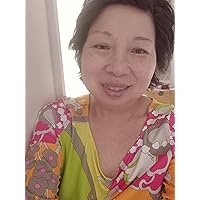
Jenny Lewis is an Anglo-Welsh poet, playwright, songwriter, children’s author and translator who teaches poetry at Oxford University. She trained as a painter at the Ruskin School of Art before reading English at St Edmund Hall, Oxford. She has worked as an advertising copywriter and a government press officer for, among others, the Equality and Human Rights Commission. She has also written children’s books and plays and co-written, with its creator, Kate Canning, a twenty-six-part children’s TV animation series, James the Cat. Her first poetry sequence, When I Became an Amazon (Iron Press, 1996) was broadcast on BBC Woman’s Hour, translated into Russian (Bilingua, 2002) and made into an opera with music by Gennadyi Shizoglazov which had its world premiere with the Tchaikovsky Opera and Ballet Company in Perm, Russia, November 2017. Since 2012, Jenny has been working with the Iraqi poet Adnan al-Sayegh on an award-winning Arts Council-funded project, ‘Writing Mesopotamia’, which aims to build bridges and foster friendships between English and Arabic-speaking communities. Her work for the theatre includes Map of Stars (2002), Garden of the Senses (2005), After Gilgamesh (2011) and, with Yasmin Sidhwa and Adnan al-Sayegh, Stories for Survival: a Re-telling of the 1001, Arabian Nights (2015). She has published two collections with Oxford Poets/Carcanet, Fathom (2007) and Taking Mesopotamia (2014). Jenny is currently completing a PhD on Gilgamesh at Goldsmiths.
The themes were of a piece with lots of my recent reading: science and nature imagery, ageing, and social justice pleas. But Lewis adds in another major topic: language itself, by way of etymology and translation. “Another Way of Saying It” gives the origin of all but its incidental words in parentheses. The “Tales from Mesopotamia” are from a commissioned verse play she wrote and connect back to her 2014 collection Taking Mesopotamia, with its sequence inspired by The Epic of Gilgamesh. There are also translations from the Arabic and a long section paraphrases the Rubaiyat of Omar Khayyam, which recalls the books of Ecclesiastes and Job with its self-help aphorisms. Other poems are inspired by a mastectomy, Julian of Norwich, Japanese phrases, and Arthurian legend. The title phrase comes from the Rubaiyat and refers to the creation of humanity from clay. There’s such variety of subject matter here, but always curiosity and loving attention.
These poems, published in 2024 by Carcanet, are raw, scarring, powerful.
Lewis writes about what it's like to age, to be a woman who ages. What it feels like to sift through the past, counting up losses.
Her "How I Felt Exposed on One Side Like a Fire-Damaged House" is about her mastectomy. I challenge ANYONE to come up with a poem that frames that procedure with this kind of clarity.
The voice is in-your-face, strong -- it reminds us all that it takes a lot of courage to grow old. And Lewis has courage in spades.
I picked it up as an item someone put outside to give away for free, with no expectation and it turned out to be a great collection of poems published quite recently. It's not mind blowing or anything but there was a good range of poetic forms employed, and you can appreciate the skills in the collection. I liked the fact that Lewis wrote about bigger concepts here, like existence, the human condition, trauma, writing using 'base materials' of existence. Lots of allusions to the classic texts, and drawing inspiration from ancient stories to explore the philosophical place of humanity.