The author of the New York Times bestselling horror phenomenon She Is a Haunting is back with a novel about the monsters that swim beneath us . . . and live within us.
Since the hurricane, the town of Mercy, Louisiana has been overtaken by a strange red algae bloom. Noon and her mother have carved out a life in the wreckage, trawling for the mutated wildlife that lurks in the water and trading it to the corrupt harbormaster. When she’s focused on survival, Noon doesn't have to cope with what happened to her at the Cove or the monster itching at her skin.
Mercy has never been a safe place, but it’s getting worse. People are disappearing, and the only clues as to why are whispers of underwater shadows and warnings to never answer the knocks at night. When the harbormaster demands she capture the creature that's been drowning residents, Noon finds a reluctant ally in his daughter Covey. And as the next storm approaches, the two set off to find what’s haunting Mercy. After all, Noon is no stranger to monsters . . .
Trang Thanh Tran writes speculative stories with big emotions about food, belonging and the Vietnamese diaspora. They grew up in a big family in Philadelphia, then abandoned degrees in sociology and public health to tell stories in Georgia. When not writing, they can be found over-caffeinating on iced coffee and watching zombie movies. SHE IS A HAUNTING is their debut novel.
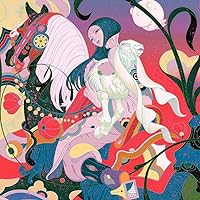
I think each of Trang Thanh Tran’s book covers deserves a special award! I can’t take my eyes off them. I loved her previous work, She Is Haunting, and she has outdone herself with They Bloom at Night by perfectly blending Vietnamese mythology, horror, sci-fi elements, powerful self-exploration, and messages about gender identity. It’s unique—something you rarely find—pure, refreshing, intelligent, innovative, and deeply emotional.
The story revolves around young Noon, who is navigating life with her mother, a woman traumatized by the loss of her son and husband. Noon’s mother believes they have reincarnated as sea creatures and forces her daughter to help search for them. This quest becomes increasingly urgent as a red algae bloom turns into a threat in Mercy, Louisiana, and people begin to go missing. Rumors spread about a mysterious sea monster hunting the townsfolk.
Unfortunately, Noon and her mother are in debt to Jimmy, a dangerous and powerful man who runs a shady sea emporium. He summons them for a mission: to find the sea monster that has been targeting people, including a group of scientists who vanished without a trace. Jimmy forces them to work with his daughter, Covey, a skilled and bookish young woman who knows how to wield knives and navigate the wilderness with ease.
Although Noon’s mother is opposed to hunting any sea creature—still holding onto the hope of finding her loved ones within them—Noon reluctantly agrees to work with Covey. This means returning to her childhood home and confronting the traumatic night at the notorious cove that changed her life forever. Along the way, Noon must also grapple with the changes in her body, her hallucinations of her dead brother, and the visions of massacred people trying to send her messages. To make matters worse, a hurricane is approaching, reminiscent of the one that once forced people to abandon their homes.
Can Noon learn to accept the changes within herself as she struggles to fit into the mold of an ordinary girl? Can she uncover the real threat lurking in the sea? What if the creatures in the water are not as dangerous as the greedy humans who hunt and exploit them?
Overall, They Bloom at Night is a one-sitting read with excellent pacing, vivid descriptions of the underwater world, and powerful messages of self-acceptance and empowerment. I highly recommend adding this mythological sci-fi meets LGBTQ+ teen horror to your reading list ASAP! It absolutely lives up to the hype, and I can’t wait to read more from Trang Thanh Tran in the future.
A huge thank you to NetGalley and Bloomsbury USA Children’s Books for sharing this digital review copy with me in exchange for my honest thoughts.
This story is a masterpiece that seamlessly intertwines supernatural elements with profound themes of identity and the universal quest for acceptance. At its core, it delivers an undeniable message: even in moments of isolation or feeling different, we are never truly alone in our experiences.
The prose is undeniably lyrical and immersive, evoking vivid imagery and stirring emotions. While there are instances where the language may veer towards the ornate—sometimes bordering on excessive—this choice largely amplifies the dreamlike quality of the narrative. This book refuses to fit into a strictly defined genre; it transcends traditional boundaries of horror and thriller, creating an entirely new classification. The author has expertly crafted a unique narrative that embraces diversity while juxtaposing invaluable lessons about self-acceptance against unsettling undertones.
The plot is straightforward but unfolds in a manner that demands patience and engagement. We are thrust directly into the action without the luxury of a traditional beginning. This narrative choice is deliberate, as the heart of the story lies within the enigmatic layers surrounding the unfolding events.
Character development is a clear strength, particularly with the side characters. Each contributes a distinct flavor, enriching the narrative. However, the mother character presents a challenge. Despite her apparent good intentions, her failure to communicate with her daughter casts doubt on her motivations and maternal instincts, leaving me with mixed feelings about her.
Nhung arises as an exceptional protagonist, embodying anyone who has felt unloved, awkward, or pressured to conform to societal norms. Her journey of self-discovery and acceptance—realizing her intrinsic value and understanding that love exists within—is beautifully portrayed. The author skillfully draws parallels between Nhung’s transformation into something society might label a "monster" and her awakening to the truth of her beauty, both inside and out.
The romance, effectively positioned as a subplot, is a wise narrative decision. With the protagonist’s growth and the overarching plot already substantial enough, the subtle romance takes a back seat for much of the book but is sweetly executed, capturing the essence of young love. The dynamic between Nhung and Covey evolves from initial tension into a friendship that smoothly develops into something deeper—fluent and organic, much like the flow of water.
In conclusion, this book is truly unique, defying neat categorization into any specific genre. It imparts a valuable insight: it’s perfectly acceptable not to have all the answers or to force everything into labeled boxes. The journey of self-exploration and the acceptance of uncertainty are intricately woven throughout the narrative, making it a powerful read.
Since reading She Is a Haunting, I knew I’d want to read everything that Trang Thanh Tran subsequently publishes. It is interesting that her stories are based around Vietnamese culture and folklore, as it’s interesting to learn about different cultures through well-written literature. There is some (much appreciated) Queer representation too.
”I wonder if all myths share roots. Maybe people across different cultures and times yearn for the same things - love, companionship, safety-and accept that there is a cost with the universe to get them.”
The ocean/botanical/body horror in They Bloom at Night is so well-described and eerie. I am a fan of all these horror sub-genres, and the way they are used to create viscerally terrifying images within the readers’ minds. Considering this is categorised as “Young Adult” speculative/horror fiction, please don’t let that deter you. There are so many hidden gems in the YA genre.
There were so many aspects of this book that I liked: body horror, gender exploration, incorporation of Vietnamese myths, and the brilliant metaphor of monstrous transformation as a response to sexual trauma and the alienation from the physical body that can happen as a result. But for some reason, they didn’t all coalesce as seamlessly for me as the various elements and themes in Trang’s debut novel, She Is a Haunting. There were moments of clunkiness in the prose, lines that felt written more to be quoted than to serve the flow of the story, and a tendency to repeat metaphors that had already landed powerfully, which dulled their impact. One example that stuck out to me was the amazing line: “Monsterhood is a girl's body you don’t belong in,” which carried so much resonance in its double entendre the first time it appeared, but lost power when its meaning was spelled out later, just in case we missed it.
This book felt slightly more simplified than their debut (perhaps more squarely aimed at a younger YA audience?) and the pacing felt off kilter: generally slow and low on plot, only to rush through major revelations. The horror/sci-fi elements were also more confusing here than in She Is a Haunting, though that may be on me; I wasn’t in the best headspace while listening to the audiobook. That said, the commentary on the objectification and fetishization of underage girls, the use of transformation to explore alienation from the body, and the hauntingly poignant mother-daughter relationship still stood out as emotionally resonant.
Despite my slight disappointment, I’m still a big fan of this author and will continue picking up everything they write. I’m even considering a reread of this one when I’m in a better place emotionally, because I really do want it to work for me!
Trigger/Content Warnings: racism, death, body horror, sexual assault, gore, loss of a sibling, loss of parents, homophobia, grooming
if the shape of water and "hell is a teenage girl" had a baby, it'd be they bloom at night.
this was a borderline read on me because why has trang thanh tran described my dysfunctional family twice now in both of their books? 🥲 i loved all of this: the mythology, the mystery, the family drama(s), messages of environmentalism, the gore, and the beautiful allegory of trans/nonbinary identity. seeing things specific to vietnamese culture—like cao gío (ancient vietnamese medicine practice called 'coining')—was awesome because i never thought i'd see it in a western novel.
the future is trans. the future is non-binary. the future is soup.
now the bad: one of my biggest pet peeves is constantly using a descriptor without it being essential to the plot or to create atmosphere. if i took a shot every time i read about covey's blue eyes, i'd be dead. i didn't hate covey (a side character) but i also didn't understand her appeal besides the fact that they were trauma bonding. even in the barnes & noble-exclusive epilogue, covey admits . lastly, i tandem read this with a hardcover copy and the audiobook. hearing the narrator's vietnamese made me cringe a bit. it was almost always stiff or robotic, most tones were wrong, and sometimes it read like she was putting a viet accent on top of a viet accent while trying to speak viet. i'm surprised no one was in the booth to help guide her pronunciation and put more emotion into it. if i didn't read this book physically, i wouldn't know what she was saying. it's not a hindrance for non-speakers but vietnamese speakers listening to the audiobook will likely find it distracting and jarring.
other than that, everything else is great and i highly recommend this weird, vietnamese, creature feature. nhung (anglicized to "noon") is a great protagonist, not giving a shit about gender norms and just doing her own thing even though it took her insurmountable trauma to get to that level of confidence. they're like me fr. illustrating vietnamese parental love and being able to admit wrongs was cathartic for me. the ending (especially page 250) was chef's kiss like that scene alone was a 5-star moment for me.
tw: body horror, homophobia, grooming & sexual assault (off-page)
----
omfg LOOK AT THAT COVER!!! vietnamese sea monsters!?! my viet pisces heart 🥹💖
I'm torn on how I feel about this one. I think the horror elements were fantastic. The author also did a really good job digging into some really important topics especially concerning the messy chaos someone spirals down following a traumatic event.
What didn't work for me is most of the book is just one long stream of consciousness without a lot of plot or direction. I felt like I kept waiting for something to happen.
Gothic, eco-horror unevenly spliced with a brooding variation on a coming-of-age story. There are strange things in the waters surrounding Mercy, a small fishing community in Louisiana. In the aftermath of a near-apocalyptic hurricane, bizarre red algae have been growing at a ferocious pace, mutant sea creatures abound, people are disappearing, and there are rumours of a Lovecraftian monster lurking beneath the waves. Nhung aka Noon and her mother are all that’s left of their family, they travel through the red bloom in their boat, fishing and searching for answers. When Noon’s mother’s unexpectedly injured, Noon’s forced to team up with her boss’s daughter Covey, and they form a tentative bond. But Noon is struggling with the impact of a traumatic assault, sworn to secrecy by her mother, she’s filled with rage and self-loathing. And now, she too may be undergoing an intense process of transformation.
Trang Thanh Tran’s atmospheric narrative’s partly inspired by Laurie Halse Anderson’s Speak and partly influenced by the surreal, wilderness zone depicted in Annihilation. But Tran also weaves in aspects of Vietnamese myth and culture taking her story in unanticipated directions. However, I felt Tran was trying to tackle too many weighty topics here: environmental disaster, issues around gender, embodiment, and alienation through to the possibility of renewal or rebirth. The result’s definitely intriguing, lots of striking images and macabre, unsettling passages but it could be frustratingly slow. The style’s oddly dense, and I found the structure a little confusing, hard to follow at times. Noon's a sympathetic figure but the supporting characters need fleshing out – the villains are particularly cartoonish. But I relished the observations about aquatic life, and the queer rep’s well integrated.
Thanks to Netgalley and publisher Bloomsbury for an ARC
4.5 There are so many impressive stylistic elements and themes to unpack. First, I have to note my absolute admiration for this new author. This is a first book, and it read masterfully. It's extremely suspenseful, but it's not merely the plot that propels readers. The protagonist's voice is so raw, honest, almost brutally poignant...and it is incredible to witness as readers. I felt utterly addicted to Nhung's voice from page one. She's funny, witty, insightful, and her observations about gender roles as cages we lock ourselves into, the planet and environmental change, friendship, love, and even monsters are all extremely timely.
The Basic Plot: Nhung, aka Noon, lives on shrimping boat with her mother ever since massive environmental changes have taken place. The Mississippi river suffered extreme am permanent flooding after a hurricane which brought a red tide that just won't end. This red algae isn't like the normal kind; it's slowly causing mutations--monsters in the deep. Nhung and her mother are tasked by Jimmy, who is basically the local organized crime leader, to find a monster and capture it for his emporium. But local scientists studying the environmental changes have gone missing, and such a task won't be easy. Jimmy's daughter, Covey, comes along with Nhung and her mom as insurance. But soon Nhung learns that there's a lot more to all of this--the red algae, the monster hunt, she and her own mother, and even Covey--than she ever imagined.
Two points about the plot: 1) The exact genre of They Bloom at Night doesn't have a name yet--books like this one break the mold. It contains aspect of southern gothic horror, folk horror, science-fiction, fantasy, apocalyptic fiction and reflexive realism. The science referred to in the book and the premise behind the red algae is something that as a reader I had no problem accepting--there's so much going on around and outside of the science. I have seen lesser novels try to build a plot around a seemingly sudden and dramatic scientific change, and it just never fully works for me because it is so "out there." This novel has none of those issues--it is so cleverly layered, steeped in Vietnamese and American Southern folklore, superstition, and mythology just as much as science. Suspension of disbelief is never an issue. Besides, Nhung's voice as narrator is so strong that readers will follow it anywhere.
2) Nhung's mother's traditional Vietnamese culture and her own role within that tradition is certainly a part of Nhung's personal identity crisis. She wonders whether or not her mother can truly love the type of girl she is, especially now during what she refers to as the apocalypse in the Gulf of Mexico (I will never call this bit of land the Gulf of America--what unmitigated egotism). There are also many other aspects of Vietnamese culture brought up in the local color of these characters' and their friends' lives. The blending of American deep southern/fishermen's culture with Vietnamese-American culture is absolutely fascinating, and I loved reading about it.
Style, Form and Themes: The whole time I was reading, I kept pausing just to marvel over the author's turn of phrase, and her descriptions (concise, never purple, yet completely loaded symbolically). Her sentence structure, while always grammatically spot on, is organic and imitates the action, the mood and tone. Start to finish, this novel is extremely impressive, and I will be shocked if in the years to come this obviously massively talented author doesn't go on to win international awards.
This is a book about monsters--the ones we imagine, the ones we create, the ones that look back at us from the mirror, and the ones who are all too human, and sadly, supported by the constructs of society and injustice. It's a coming of age story, coming of age during a catastrophic environmental event, and learning to love the new person who emerges from the wreck of that trauma.
------warning: the next section contains a spoiler------
*The Only Issue I had:
About halfway through the book Nhung's closest childhood Vietnamese-American friend emerges--pops up out of the blue, and he has brought a new friend with him. We are told that they had been in a completely different part of the country, and now here they are in a disaster zone. Nhung only mentions him vaguely in the first part of the book. Then he is mentioned as missing when Nhung's mom needs nursing from his parents at their lighthouse. If he had never returned, nothing would have been lost, and his return is just a bit too convenient.
I completely understand the function Ms. Tran intended for the reemergence of this friend. He had initially left his family over their disapproval of his bisexuality. Nhung also worries she is "wrong" in the eyes of her mother and her traditions. He gives Nhung and Covey a safe place to regroup and plan--the safe place he has found is a new setting for a new stage of personal discovery and responsibility. So essentially he is in the plot to demonstrate how kind people can be to one another during such literal and figurative apocalyptic upheavals. He gives Nhung the witness she needs, one who truly understands what she has been going through.
My issue is that a stranger or two "nearly" strangers whom Nhung had once seen around school but with whom she didn't actually grow up could have served these purposes just as well without coming off as forced. It's just a little too coincidental that Nhung's long lost childhood friend comes back right when she needs him to in the middle of an environmental crisis when roads and whole towns would have been closed.
This is the only part of the book that seemed "young." It's just a very minor, first book issue. And the desire to have all aspects of one's writing work in tandem, tied off with proverbial ribbons, is probably overwhelming--so I get it. But stumbling upon two people Nhung barely knew--and finding them hospitable after a short period of suspicion--is a far more believable plot development. There was no reason why one of these two characters had to be the exact friend Nhung had been missing. Yes, this would mean that Nhung's childhood friend never got to confront and reconcile with his parents but not all issues in a novel need bow ties. Sometimes what is left undone is just as powerful.
I’ve tried reading this three times. Every time it puts me to sleep. I was sure that I was going to love it. I’m sure it gets good? I probably read more than the number of pages in the book itself between the three attempts. I’m ready to move onto an easier book to get into.
“They Bloom At Night” is a dystopian story filled with body horror, Vietnamese folklore, and “monsters”.
Readers follow a mother and daughter, Vietnamese diaspora, as they trawl for shrimp and search for the family member washed away in the last hurricane. They are hired to find the creature hiding within the murky waters and flood zones that is taking people and leaving no trace. Threaded throughout the story is the malignant red algae bloom that refuses to dissipate.
This is a story of family, culture, identity, and the clashes that occur within these pillars. It’s also about trauma, and the main character Noon has it in spades.
I loved the descriptions of the changed landscapes and creatures, the decay and loss of structure into nature. What I could’ve done without was the annoying mother, the romance aspects, and the disjointed narrative. It would’ve been nice to keep this as a horror with the young adult/coming of age aspects as parallel to the weird and terrifying world these characters are living in. However, the “finding oneself” “enemies to lovers” tropes take over at the midway point in my opinion. The ending I didn’t fully understand despite rereading it.
as i continue my horror journey, i find that i enjoy horror novels that emphasizes the author's culture and commentary on the specific culture's diaspora.
"Every generation before had a semblance of a chance, but we have the end of the world. This end of the world. It’s beautiful, it’s crushing, and I wish we could think of a future without a thousand ways of how we must change to endure it.”
i have conflicting thoughts. on one hand, they bloom at night exceeded my expectations. woven with vietnamese folklore, the mysteries of the ocean, and botanical body horror, it's a story that dwells on identity and what it means to be truly connected to another through more than shared humanity. the writing is beautiful and evocative, and many things inside the vaguely post-apocalyptic setting worked well for me. i didn't anticipate it having such strong messages—i picked it up only looking for a short book to finish before the end of the month (look how that turned out), and what i got was a monstrous fever dream wrapped in queer found family. it's difficult to summarize, but if you like "weird" books (e.g. house of hollow), this is for you.
"Mrs. Olivier walks into the water. It seeps into her nightgown, a blood spill in reverse."
body horror used to disturb me, but ever since discovering queer horror, i've found it fascinating. trans narratives often tie really well into body horror because they involve discomfort with the body or the struggle for autonomy in a body that doesn't feel like your own. dysphoria can feel like being trapped in a horror novel, and authors using fiction to abstractly explore the struggle of being queer through a fantasy lens is one of the reasons i love the genre so much. it's no different here—nhung undergoes slow transformation that leads her to realize she's nonbinary. trang thanh tran uses nhung as a vessel to show a human to monster metamorphosis as a metaphor for transitioning, something deeply reminiscent of hell followed with us by andrew joseph white (another queer horror book i liked). i enjoyed nhung's character development from start to finish and how she finally feels comfortable in her form at the end.
"Monsterhood is a girl's body you don't belong in."
on the other hand, it took so long for me to get into the book. i wasn't fully invested until around the 200-page mark, and i firmly believe it could've been faster-paced. of course, it's hard to keep readers interested when the book takes place on a boat—the real events usually happen off the boat, like a character almost drowning or a dangerous creature lurking in the water. if the other stuff is too stretched out, it becomes boring, like it did here. the execution was somewhat haphazard.
overall, i liked it. it resonated with me—melancholic and strange, disturbing and moving all at once, it was exactly what i signed up for. i'm genuinely baffled it's rated so low; i don't see why it should be any less than 3.80 stars on average like any other book with generally lukewarm/neutral reviews, so please don't let that deter you from reading it. i might read she is a haunting solely based on andrew joseph white's recommendation (of three books endorsed by him, none have let me down), but for now i'm moving on.
"They Bloom at Night" is a wonderful YA, queer coming-of-age speculative tale, blending body and ocean horror with incredible depictions of climate change, biological mutations and Vietnamese folklore. The writing is calm and balanced, highly introspective rather than descriptive, even when the situation calls solely for description: all happenings are filtered through the main character's mood, the traumatized Viernamese teenage girl Nhung (called "Noon"), whose highly ambiguous sensibility makes for a tale heavy with emotion and unsettling moments of self-doubt.
The book has a very eerie atmopshere, almost as if everything has been already decided and we're just going through the motions; a feeling of tension combines with an underlying sense of resignation, as Noon's body slowly changes, her mother is seemingly losing her marbles, and the local loan shark (and his right hand, a predator on teenage girls) starts asking for the impossible. In older cultures, this young Vietnamese girl would have been portrayed as a saint: she finds herself facing so many existential challenges, her experience brims with metaphysical anxiety and environmental terror affecting her personality in revelatory ways, forcing her to re-examine her life choices vis-a-vis her mother's crumbling authority and the collapse of her community. In fact, the sense of community is very strong in the book, though the community itself is actually absent: the small town she lives in has been devastated by a hurricane, and is being haunted by mutated red algae ("Mother Nature's menstruation," as the book puts it), monstrously transformed sea life, and the erosion due to the loss of entire families.
Noon's essentially alone, and, inevitably, not even her found family (one member of which is the loan shark's own daughter) will be enough to provide her with a place in the world. She's essentially called upon to create one of her own, and the hurdles she meets on the way drive the plot of the book forward. That said, there are some awkward YA moments (for example, when you see a name referenced enough, you know the character will eventually appear in the novel; initial conflict often leads to romance; trauma is concelaed by bravado), but the author treats the subject-matter with such empathy, attention to detail and insight, it's easy to ignore the typical YA features and enjoy the book irrespective of age, class, and gender: Noon's story is humanity's own story, or it will most probably be so, in the near future.
wow! i picked this up in the YA section, and this was had some horror themes i did not expect but really enjoyed. i also really liked the writing, it could be a bit wordy at times but it flowed in a way that was captivating. there was just so much symbolism and a lot of random plot points that muddled things occasionally, but overall this was a solid read for me!!
This was very middle-of-the-road. Very cool and interesting concept- queerness, body horror, all that jazz. However, I don’t think it was fully explored.
DNF at 50%, with the giant disclaimer that I didn't realize this was YA when I picked it up. I know plenty of readers who enjoy YA, but it typically doesn't resonate with me as much - in this case, the foreshadowing is very heavy-handed. The expositions about marine biology feel out of place and there's no clear explanation as to why these characters seem to know more than the adults around them. With that said, more explicit foreshadowing and fast pace is typically expected for a younger audience so it's not a critique of the book or writing, but more the type of books I tend to enjoy.
With that tangent aside, I did like the integration of Vietnamese folklore and queer representation from the characters. There are meaningful discussions about race, trauma, and belonging that are important for any reader to absorb. My major critique is that some of the descriptions of settings and events don't make sense. I found myself re-reading passages often to try and make sense of what was happening, and in some cases, I had to give up and move on in the hopes of subsequent clarity. It makes the world-building and pivotal scenes hard to understand and ultimately lessens the impact. I do have an ARC and not the finished copy, so hopefully, there's a much-needed round of edits happening before this is published.
Thank you to Bloomsbury for sending an early copy of this my way!
It was okay, but I felt like I was waiting for something that never came. It just never truly gripped me or made any big moment to excite me. Maybe it'll be better for you, though 🫶
They Bloom at Night is an atmospheric and deliciously icky read. We’ve got a creepy setting, an MC who may or may not be becoming something Other, and a story that moves at a fairly solid pace. More than once, I was reminded of Scooby-Doo! Mystery Incorporated—which I mean as a compliment. I loved that show as a kid. Tone-wise, They Bloom at Night is clearly YA but the author still delivers some satisfyingly yucky body horror (I can definitely see this appealing to fans of Stephen Graham Jones, House of Hollow by Krystal Sutherland, and Into the Drowning Deep by Mira Grant).
The story takes place in Mercy, a small Louisiana town still reeling from a hurricane that permanently altered its landscape. A red algae bloom has overtaken the area, mutating the local flora and fauna, and there may be something monstrous lurking in the swampy waters that have inundated the town. Our protagonist, Noon, a Vietnamese-American teen, wants out. But her grief-stricken mother refuses to leave, convinced that her dead husband and son are still out there—possibly reincarnated as sea creatures. Things take a turn for the worse when Mercy’s local thug-cum-leader forces Noon and her mother to hunt down the creature that’s been disappearing the few residents left, promising a big reward in return and sending his own daughter along to keep an eye on them.
The novel does a fantastic job with atmosphere—the imagery is vivid, and the horror elements land exactly as they should. Motifs like water, monstrousness, and queerness add to the various themes underpinning this tale: being connected to one’s past, confronting one’s Otherness, and reconciling with the experience of existing outside ‘normal’ social binaries. I really liked the chemistry between the characters and Noon’s personal journey, especially how the book explores generational divides and the way miscommunication can push people apart.
That said, while the monster premise is intriguing, it’s clear from the start that the supernatural entity isn’t the real villain. I’m all for this reversal of the monster trope, but the human villains were way too one-dimensional and cartoonish. This made the final arc feel a little anti-climactic. The characterization in general also felt somewhat thin, particularly with characters who should have had more emotional weight, like Noon’s family. I didn’t really feel the impact of her father and brother’s absence—some flashbacks to her early childhood, rather than just snippets from her teens, might have made their loss hit harder or given her mother more presence as a character in her own right.
Still, I was entertained for the most part. There’s some well-done angst, an enemies-to-lovers romance you actually root for, and a rewarding exploration of a character coming to terms with her own 'monstrosity’. If you’re looking for atmospheric horror that isn’t particularly scary but fully delivers on the eerie vibes, They Bloom at Night is definitely worth a read.
They Bloom at Night is a stunning exploration of healing from trauma in nature, relationships, and within ourselves. A mesmerizing novel with visceral descriptions that are both gorgeous and terrifying. Tran skillfully weaves a tale about the duality of water; the unknown horrors of the depths but also the splendour of the deep blue, reflecting the ways in which people can similarly hide their monstrousness beneath the surface or come to discover hidden beauty within themselves. With its exquisite prose, captivating mystery, and a setting so vibrant that you can smell the salt and hear the waves crashing, They Bloom at Night is a must-read.
Had a few issues but I really enjoyed this overall! The characters felt so well realized and I grew very connected to them in such a short amount of time!
3,5/5 stars, rounding down. The meaning of some pages remains unclear, and I am disappointed by the last 20 percent. On the other hand, I really liked the mix of styles. It makes for original and lively writing. Noon is very endearing and authentic in her quest for identity. Overall, I really liked this book.
Honestly, this book shouldn't have taken me this long to read and I really wanted to like it but it fell short on numerous aspects for me.
They Bloom At Night is a queer YA horror that centres on Nhung aka Noon who navigates the waters of the small town of Mercy in Mississippi with her grieving mother after a hurricane hit that led to the infestation of red algae. Both of them are in debt to Jimmy, the typical leader who calls the shots in their debilitating town, and are ordered by him to find whatever creature is responsible for the missing residents. They're joined by his bookish and unpredictable daughter, Covey, who may end up Noon's closest ally as they set out on this mission.
Now, that all sounds interesting and the ideas definitely were but I think this book bit more than it could chew. I'll start off with what I really liked here.
Like a lot of horror aficionados, I love a good monster story and Trang Thanh Tran actually conceived a very intriguing sea creature that they infused with Vietnamese culture and folklore. Noon's family calls this otherworldy aquatic force Sông and after finishing this book I quickly sequestered myself into a rabbit hole where I found a lot of very interesting folklore. The very first one I found was a common creation myth involving Lac Long Quân (son of a dragon goddess) and Âu Co (an immortal mountain goddess) who were married and gave birth to a hundred eggs, and they divided them so that fifty would go with Lac Long Quân to the sea, and the other half would stay with Âu Co on land and this half eventually became the Vietnamese people. I think if this little bit of folklore was mentioned in the book, the story would have been far richer for it, but knowing this after reading it helped with contextualising a lot of the story elements, because I think this actually comes into play regarding Noon's relationship with their family and it would have given it more depth.
In any case, I do have to give the author credit for subtly adapting that folklore as well as the development of Noon's 'human' self to what Sông wanted them to become. I think Tran weaving Noon's actualisation of their queerness with their physical transformation into this vague, marine, and unique sea creature was quite well done. And it's why it's a shame that it only really paid off in the lacklustre last act of the book.
Before I get started on the ending, I want to talk about how the setting of They Bloom At Night didn't really feel all that devastating. Mercy was ravaged by the hurricane and then this aquatic and botanical mutated infestation of red algae, but I didn't really feel the creepiness of it all. We got descriptions of it all but I don't think the right atmosphere was created to evoke that eerie feeling. I think a lot of it was to do with the writing being kind of disjointed in places. There were some poetic lines but the way they were placed didn't make me feel anything, and only seemed like it was trying too hard sometimes. There would be mentions of a character in one scene then they'd be forgotten, but suddenly they're there four scenes after just for convenience's sake. The pacing was also very slow that I was bored out of my mind for most of the book. I kept waiting for something to happen and most of it happened in the ending.
I think the worst part in the story is the characters. As much as I did like Noon's evolution from human to 'sea creature', I did not care for them at all. In fact, I didn't care for any of the characters except Sandbag, and that's because she's a cat. There were monologues, and attempts at relationship bonding with the characters especially Covey, and Wilder, but I just felt nothing for all of it. Although when they started talking about the research that the scientists who came to the town did, and the characters started theorising, I was just in disbelief. They were teenagers around 16-17 years old, and the fact that they're spouting all these scientific theories because they've been reading books in the abandoned mansion of some rich guy for a few weeks really made me hard to relate because what 16 or 17 year old would correlate these points unless they're some genius. And they were definitely not geniuses, because their characterisations didn't establish that in a logical manner story-wise. I feel like if they were adult characters, this would have been a far stronger book and easier for me to stomach all of their scientific musings.
I'd like to add as well that I wish there was a bit of content warning as there are mentions of grooming and sexual assault in this book. The acts are not explicitly described but they were definitely very haunting experiences for Noon, and I do think the subject matter was handled quite delicately especially with how they've coped with the realisation of being a survivor of such horrific abuse. However, I think it should be outrightly said that these topics were discussed in the book.
Now, the ending. I wasn't surprised by how it all turned out. The only thing I liked was Noon's decision to transition because that was the one thing in this book that followed the flow of the story. However, once again, I didn't end up caring for any character in the end because there wasn't much to care about.
I really wish that I cared because the story did have potential but I felt like I just wasted my time, not to mention, a waste of a really beautiful cover. Sadly, this story didn't bloom to its full potential and is just now drifting among a river of unfulfilling books.
Boat simulator then walking simulator then I stopped paying attention.
Number one self sabotage from my side: whenever I read a short book, that I from the get go think is pretty mid, I keep going cause it's "short and quick" and then I ALWAYS end up filled with rage and boredom and a reading slump and hating my life. This is my formal apology to myself, I should start practicing self care and I should've DNF'ed 20 pages in.
I have a lot of thoughts about this book. “They Bloom at Night” is a gothic eco-horror that follows Noon, a queer character heavily implied to be nonbinary. The story is complex, tackling subjects like racism, immigration, homophobia, gender identity, and sexual assault.
The premise follows Noon and their love interest Covey as they explore the town of Mercy two years post-apocalyptic hurricane/algae bloom for a so-called monster causing mass disappearances. What they find instead are a family they choose for themselves, goals and aspirations, and self-acceptance. Oh, and a literal hive mind of mutated people that beckons Noon to let us in let us in let us in let us in
As far as Noon’s story goes, the pacing is incredibly well done. You learn why they’ve built their walls up so high and then you watch as they learn to break them down again. This is a gut-wrenching take on the YA coming-of-age story. If you want to cry and ache and experience a hurricane of emotions, you’ve found your book. There’s also beautiful representation in this story that is so, so natural in its presentation that no one feels othered or left out.
If you’re looking for specifically queer romance, this book might not be for you. Don’t get me wrong, Noon and Covey have several tender moments together that are definitely romantically charged; however, the romance is barely a subplot. The bulk of the story focuses on Noon and their journey to self-acceptance.
The book takes that fish out of water feeling and makes it a literal plot point. Throughout the story, Noon experiences a change within themself. This change is both internal and external: they don’t know what it means to be a girl. They experienced a terrible assault, something they’ve heavily internalized. Riddled with horrendous self-blame, Noon is wracked with shame. As they learn to embrace the slow onset of their new monsterhood, they also learn new ways of coping. They find a family within their new friends and also self-acceptance. While they still hurt from what happened to them, they are taking the steps toward healing.
In this way, the book and its ending are both bittersweet. Most of it is an allegory for how out of place Noon feels. Once their ‘wrongness’ is exposed through fish-like gills and white hair, only then are they truly free to be themself.
╰──ིੑ🍓ᬉ what didn’t work…
I loved this book. I was really hooked at the beginning. Most notable to me was Covey’s introduction, this wild teenage girl who liked to read on hammocks with a knife between her teeth. A knife she used as a bookmark, of all things.
This book does many things right. Unfortunately, I have a few reasons for knocking it down to 4 stars.
Firstly, so much happens and yet… nothing happens? For the most part, the story is confined to Noon’s thoughts and internal monologue. While many, many parts of that are abstract and beautifully detailed, it also made some parts (especially the middle) drag a bit. Because of this, a lot of the book feels somewhat summarized (aside from Noon’s slow development) and we don’t get to connect with the characters as much as I would have liked. Side characters like Wil and Saffy are barely made known to the reader, and yet they become apart of this found family Noon is forming. The most well-developed characters are Noon, Covey, and Noon’s mother. Everyone else falls to the wayside. This includes the villains, who feel two dimensional and predictable. That said I do think that Aaron serves as a really good guide on red flags to look out for.
I did like the abstract writing style but sometimes it made the narrative hard to follow. There were several moments in which I found myself rereading sentences or paragraphs to glean some meaning out of them.
╰──ིੑ🍓ᬉ overall thoughts…
This is a great book with amazing representation. There’s not a lot of romance here but there is a lot of substance. The horror isn’t there to be particularly scary — it has meaning and depth. I really, really enjoyed this book. It handled dark topics in a meaningful way. For me, this is a must read.
This entire review has been hidden because of spoilers.