

What do you think?

Scout Camp: Sex, Death, and Secret Societies Inside the Boy Scouts of America
In this timely and deeply personal true crime memoir, acclaimed journalist, author, creator of the True Crime This Week podcast, and former Boy Scout James Renner, explores the dark side of an American institution, its pervasive culture of sexual abuse, and the traumatic—even deadly—repercussions of its long-buried secrets.
In the summer of 1995, at the largest Boy Scout camp in Ohio, a night of sexual violence ended with one counselor dead and another hospitalized. The death was ruled “accidental.” It wouldn’t be the last death associated with Seven Ranges Reservation.
James Renner, too, was a counselor at Seven Ranges that year. He was always sure there must be more to the story of Mike Klingler’s death, because Renner also knew firsthand that the 900-acre camp was not the safe getaway it was portrayed to be. On Friday nights the boys were ushered into the woods for a frightening ceremony in which they learned the rules for becoming good young men—and, above all, that keeping secrets was a Scout’s duty. No matter how dark the secrets were.
Determined to face his demons, Renner embarks on a journey back to that tumultuous summer and exposes a clandestine society that left indelible scars on the Scouts and the staff who were there. For Renner, it meant opening up about his twisted upbringing, his issues with trust and sexuality, and a lifetime of self-medication. The result is a deeply personal, no-holds-barred, and vitally important true crime memoir.
In the summer of 1995, at the largest Boy Scout camp in Ohio, a night of sexual violence ended with one counselor dead and another hospitalized. The death was ruled “accidental.” It wouldn’t be the last death associated with Seven Ranges Reservation.
James Renner, too, was a counselor at Seven Ranges that year. He was always sure there must be more to the story of Mike Klingler’s death, because Renner also knew firsthand that the 900-acre camp was not the safe getaway it was portrayed to be. On Friday nights the boys were ushered into the woods for a frightening ceremony in which they learned the rules for becoming good young men—and, above all, that keeping secrets was a Scout’s duty. No matter how dark the secrets were.
Determined to face his demons, Renner embarks on a journey back to that tumultuous summer and exposes a clandestine society that left indelible scars on the Scouts and the staff who were there. For Renner, it meant opening up about his twisted upbringing, his issues with trust and sexuality, and a lifetime of self-medication. The result is a deeply personal, no-holds-barred, and vitally important true crime memoir.
272 pages, Hardcover
Published February 25, 2025
About the author
James Renner
23 books1,093 followersJames Renner is an award-winning journalist and author of True Crime Addict, the definitive book on the Maura Murray disappearance. Renner is also a novelist, having written The Man from Primrose Lane and other works of scifi and fantasy. He currently hosts the podcast, The Philosophy of Crime.
In 2019, he founded The Porchlight Project a nonprofit that raises money for new DNA testing and genetic genealogy for Ohio cold cases. In May, 2020, James Zastawnik was arrested for the murder of Barbara Blatnik, thanks to the work of genealogists funded by the Porchlight Project.
In 2019, he founded The Porchlight Project a nonprofit that raises money for new DNA testing and genetic genealogy for Ohio cold cases. In May, 2020, James Zastawnik was arrested for the murder of Barbara Blatnik, thanks to the work of genealogists funded by the Porchlight Project.
Ratings & Reviews
Friends & Following
Create a free account to discover what your friends think of this book!
Community Reviews
Displaying 1 - 30 of 130 reviews

March 4, 2025
James Renner tackles a beloved national organization fraught with scandal and his own personal demons in his latest true-crime book "Scout Camp: Sex, Death, and Secret Societies Inside the Boy Scouts of America", his best book yet. And definitely his most personal and emotionally powerful.
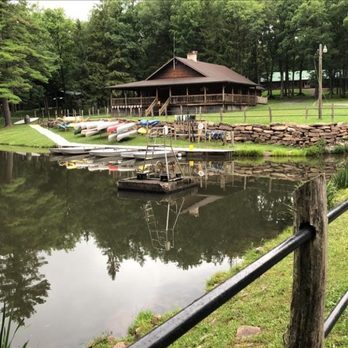
Seven Ranges Boy Scout Reservation, located in Kensington, Ohio
Something happened at the Seven Ranges Boy Scout Reservation in Northeast Ohio---the largest boy scout camp in Ohio---in 1995, when Renner was between his junior and senior year of high school. Renner loved Boy Scouts, having attended the camp every summer for the past several years. That year, Renner was a counselor-in-training, something he had been looking forward to for months.
Something happened that summer. Something horrible and tragic. But for 30-plus years, Renner couldn't talk or write about it, for a myriad of reasons. One of those reasons was because it would mean having to examine an uncomfortable aspect of his sexuality. Indeed, it meant reliving a past that involved physical abuse and sexual trauma, and reopening some old wounds.
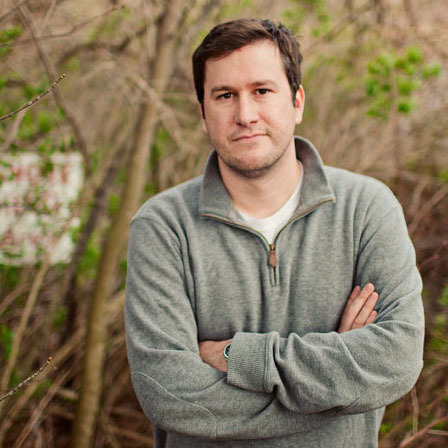
James Renner
Alternating brilliantly between his own personal history and the history of the Boy Scouts of America organization, Renner's book is both a fascinating study of an organization that, like the Catholic Church, was forced to reckon with a history of sexual impropriety, pedophilia, and passing the buck when it came to blame and the ways (healthy and unhealthy) in which victims cope with trauma from abuse. (https://www.independent.co.uk/news/wo...)
Strangely enough, this is not a "hit-piece" against the BSA or the scoutmasters and staff members who acted improperly towards young boys. Renner still has fond memories of his summers spent at scout camp. His personal attempts at coming to terms with---and even finding forgiveness for---his abusers are as gripping and intense as any of his previous true-crime thrillers.
This may be the first Renner book you will read where you may need a box of tissues handy.
Seven Ranges Boy Scout Reservation, located in Kensington, Ohio
Something happened at the Seven Ranges Boy Scout Reservation in Northeast Ohio---the largest boy scout camp in Ohio---in 1995, when Renner was between his junior and senior year of high school. Renner loved Boy Scouts, having attended the camp every summer for the past several years. That year, Renner was a counselor-in-training, something he had been looking forward to for months.
Something happened that summer. Something horrible and tragic. But for 30-plus years, Renner couldn't talk or write about it, for a myriad of reasons. One of those reasons was because it would mean having to examine an uncomfortable aspect of his sexuality. Indeed, it meant reliving a past that involved physical abuse and sexual trauma, and reopening some old wounds.
James Renner
Alternating brilliantly between his own personal history and the history of the Boy Scouts of America organization, Renner's book is both a fascinating study of an organization that, like the Catholic Church, was forced to reckon with a history of sexual impropriety, pedophilia, and passing the buck when it came to blame and the ways (healthy and unhealthy) in which victims cope with trauma from abuse. (https://www.independent.co.uk/news/wo...)
Strangely enough, this is not a "hit-piece" against the BSA or the scoutmasters and staff members who acted improperly towards young boys. Renner still has fond memories of his summers spent at scout camp. His personal attempts at coming to terms with---and even finding forgiveness for---his abusers are as gripping and intense as any of his previous true-crime thrillers.
This may be the first Renner book you will read where you may need a box of tissues handy.

March 18, 2025
This was a tough read, but absolutely an important one. The author alternates between more journalistic chapters and deeply personal ones to paint a picture of a deeply troubled organization. He recounts his own experience of being sexually abused at Scout camp, and shares the ways that trauma continues to affect his life decades later. He also delves deep into scouting history and interviews other survivors to expand the story beyond his personal experience. I was completely gripped by this book and I highly recommend it.

September 11, 2024
ARC for review. To be published February 25, 2025.
A powerful book about the author’s personal experiences in 1995 at the Seven Ranges Boy Scout Reservation in rural Ohio where he was a counselor. To a lesser extent it’s also about the abuse of Boy Scouts across America, the author’s addiction issues as an adult and promoting the use of MDMA and psychotropic mushrooms for those with PTSD. There’s a lot here’s but it’s an interesting book.
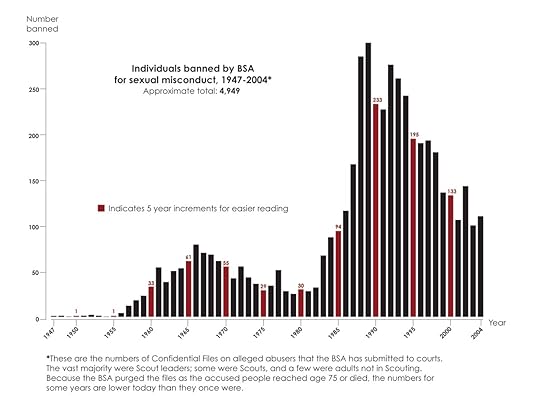
Though not as widely covered as the sexual abuse scandals of the Catholic Church, there were decades of systematic abuse throughout the Boy Scouts of America. Eventually the organization went bankrupt due to the lawsuits. The numbers are unbelievable. While there are 11,000 known cases of abuse within the Catholic Church in America there have been 82,000 Boy Scouts who have filed claims. 82,000. Wrap your head around that if you can.
In 1995, the author’s summer, the matter involved both rape and death. Horrible. I won’t go into the details here, but they are in the book. And it doesn’t take much extrapolation to believe that for at least one, perhaps more of the people involved, this might not have been his first time around. At the same time, Renner shows us life for young people his age in 1995, the life they should have been leading, fun, carefree…they were working at a summer camp; but even that camp framework contained rituals that normalized improper discussions of sexual activity, and this harkens back to the very founding of the Boy Scouts.
It’s a hard book to say one enjoyed, but I carry only appreciated Renner’s candor, as well as that of those he interviewed for the book. This is something the general public should know more about (the author mentions a recent Hulu documentary called “Leave No Trace: A Hidden History of the Boy Scouts”). Recommended.
A powerful book about the author’s personal experiences in 1995 at the Seven Ranges Boy Scout Reservation in rural Ohio where he was a counselor. To a lesser extent it’s also about the abuse of Boy Scouts across America, the author’s addiction issues as an adult and promoting the use of MDMA and psychotropic mushrooms for those with PTSD. There’s a lot here’s but it’s an interesting book.
Though not as widely covered as the sexual abuse scandals of the Catholic Church, there were decades of systematic abuse throughout the Boy Scouts of America. Eventually the organization went bankrupt due to the lawsuits. The numbers are unbelievable. While there are 11,000 known cases of abuse within the Catholic Church in America there have been 82,000 Boy Scouts who have filed claims. 82,000. Wrap your head around that if you can.
In 1995, the author’s summer, the matter involved both rape and death. Horrible. I won’t go into the details here, but they are in the book. And it doesn’t take much extrapolation to believe that for at least one, perhaps more of the people involved, this might not have been his first time around. At the same time, Renner shows us life for young people his age in 1995, the life they should have been leading, fun, carefree…they were working at a summer camp; but even that camp framework contained rituals that normalized improper discussions of sexual activity, and this harkens back to the very founding of the Boy Scouts.
It’s a hard book to say one enjoyed, but I carry only appreciated Renner’s candor, as well as that of those he interviewed for the book. This is something the general public should know more about (the author mentions a recent Hulu documentary called “Leave No Trace: A Hidden History of the Boy Scouts”). Recommended.

April 19, 2025
5 Stars!

July 15, 2025
James Renner is an American true crime writer. His 2025 book Scout Camp is part true crime thriller, part memoir as he's a character in the true crime story he writes about herein (in a much more personal way than how the late Michelle McNamara wrote herself into I'll Be Gone in the Dark: One Woman's Obsessive Search for the Golden State Killer).
Despite reading a fair breadth of nonfiction genres, true crime is one I consciously don't dip into often due to its generally disturbing nature. Scout Camp is an exposé into the accusations of pedophilia and abuse (as well as the panoply of racism, homophobia, sexism and cultural appropriation) within the Boy Scouts of America (BSA), told largely through the lens of Renner's first-hand experiences as a former scout and scout camp counselor in the 1990s. Renner was a multi-year participant, then a teenage counselor in 1995, at the (extant) Seven Ranges boy scout camp in Northeastern Ohio. 1995's camp featured multiple traumatic events that Renner is still dealing with into his 40s. The book details the systemic gaps that permitted and perpetuated a culture of abuse within the BSA, both at the 1995 camp and more broadly. (BSA filed for chapter 11 (consolidation) bankruptcy in 2020 and has since established a settlement fund for survivors of sexual abuse, but as Renner details, accessing the fund is contingent upon state-specific laws and statutes of limitation, which aren't uniform.)
Renner also spends about half of the book detailing his traumatic childhood and how its effects have lingered into his middle adulthood. I have mixed feelings about the inclusion of these parts of the book in the overall narrative here. While he's certainly entitled to share his own story on his own terms, I felt like it bifurcated the narrative too much, and it was hard to parse how his BSA-specific trauma vs. other childhood and adolescent traumas contributed to his ongoing mental health and addiction struggles (this is probably an impossible question to answer). I sympathize with Renner a lot; I have no first-hand experience with BSA, but I did grow up in the Catholic church and am well aware of the parallel sexual abuse scandals. My parish growing up featured not just one but two head parish priests who have been accused of sexual crimes against children, one of which came to light only recently from an event that happened in the 1990s when I was attending the grade school attached to the parish. The accuser could have easily been one of my classmates or someone else I knew - and this is someone who's likely suffered in silence for decades and whose trauma likely has manifested in detrimental ways as their life has progressed.
Further reading:
Betrayal: The Crisis in the Catholic Church by the Boston Globe
What Is a Girl Worth?: My Story of Breaking the Silence and Exposing the Truth about Larry Nassar and USA Gymnastics by Rachael Denhollander
Consent: A Memoir of Unwanted Attention by Donna Freitas
Notes on a Silencing: A Memoir by Lacy Crawford
My statistics:
Book 215 for 2025
Book 2141 cumulatively
Despite reading a fair breadth of nonfiction genres, true crime is one I consciously don't dip into often due to its generally disturbing nature. Scout Camp is an exposé into the accusations of pedophilia and abuse (as well as the panoply of racism, homophobia, sexism and cultural appropriation) within the Boy Scouts of America (BSA), told largely through the lens of Renner's first-hand experiences as a former scout and scout camp counselor in the 1990s. Renner was a multi-year participant, then a teenage counselor in 1995, at the (extant) Seven Ranges boy scout camp in Northeastern Ohio. 1995's camp featured multiple traumatic events that Renner is still dealing with into his 40s. The book details the systemic gaps that permitted and perpetuated a culture of abuse within the BSA, both at the 1995 camp and more broadly. (BSA filed for chapter 11 (consolidation) bankruptcy in 2020 and has since established a settlement fund for survivors of sexual abuse, but as Renner details, accessing the fund is contingent upon state-specific laws and statutes of limitation, which aren't uniform.)
Renner also spends about half of the book detailing his traumatic childhood and how its effects have lingered into his middle adulthood. I have mixed feelings about the inclusion of these parts of the book in the overall narrative here. While he's certainly entitled to share his own story on his own terms, I felt like it bifurcated the narrative too much, and it was hard to parse how his BSA-specific trauma vs. other childhood and adolescent traumas contributed to his ongoing mental health and addiction struggles (this is probably an impossible question to answer). I sympathize with Renner a lot; I have no first-hand experience with BSA, but I did grow up in the Catholic church and am well aware of the parallel sexual abuse scandals. My parish growing up featured not just one but two head parish priests who have been accused of sexual crimes against children, one of which came to light only recently from an event that happened in the 1990s when I was attending the grade school attached to the parish. The accuser could have easily been one of my classmates or someone else I knew - and this is someone who's likely suffered in silence for decades and whose trauma likely has manifested in detrimental ways as their life has progressed.
Further reading:
Betrayal: The Crisis in the Catholic Church by the Boston Globe
What Is a Girl Worth?: My Story of Breaking the Silence and Exposing the Truth about Larry Nassar and USA Gymnastics by Rachael Denhollander
Consent: A Memoir of Unwanted Attention by Donna Freitas
Notes on a Silencing: A Memoir by Lacy Crawford
My statistics:
Book 215 for 2025
Book 2141 cumulatively

October 30, 2025
A decent book surrounding the allegations of sexual abuse many suffered at the hands of leaders of the Boy Scouts of America. It mainly follows one summer the author was at camp and the rituals used and the abuse some suffered. Its more of a memoir that a true crime novel, following our author and his subsequent addiction issues.
Its a fast read and engaging with lots of thoughts of the author throughout. If you are looking for a comprehensive overlook at the organization as a whole this is not the book. Its a personal reflection of one summer the author endured.
Its a fast read and engaging with lots of thoughts of the author throughout. If you are looking for a comprehensive overlook at the organization as a whole this is not the book. Its a personal reflection of one summer the author endured.

March 26, 2025
Wow. Just... wow.
I listened to this on audio and I loved his historical context of how BSA came to be. And his telling of his story in the "then" and "now" contexts. It was easy to follow. He respected the privacy and story of those he grew up with. He honored the dead and protected the innocent but brought to light that which needed to be.
Love that he finally told his own story.
I listened to this on audio and I loved his historical context of how BSA came to be. And his telling of his story in the "then" and "now" contexts. It was easy to follow. He respected the privacy and story of those he grew up with. He honored the dead and protected the innocent but brought to light that which needed to be.
Love that he finally told his own story.

October 21, 2024
I was not prepared for this book. James said we would not be prepared and he was right because I was not. I immediately jumped when I saw he had a new book coming out with even reading what it was about. I saw Boy Scouts and thought it would be an expose of the pedos. Which technically it was but it’s also so much more. The content is definitely dark but also gives more background on James’ life. Having followed him for a while through books, podcasts and online, I knew something was going on with him. This book revealed a lot of reasons why. I can usually devour his book in 3, 4 days tops. Not this time. I had to keep stopping and leaving the book. The content made my wounded child want to hug his wounded child and tell him it gets better. The book is amazingly written as always but the content could be triggering to some. Would I read it again? Definitely. Why? Because I probably missed a lot of details because my heart hurt for everyone involved. Also, I’m glad you’re still here James!

April 27, 2025
Less about “sex, death, and secret societies,” and more about this guy’s personal experience. That’s worthwhile, but slap “memoir” on the actual cover. This is not the deep dive, journalistic endeavor, sprinkled with personal account, I’d hoped for.

July 19, 2025
took me back to the good ol’ days

July 9, 2025
“Scout Camp” is part memoir, part true crime, and too real to ignore. It’s about physical abuse, sexual abuse, mental health, and addiction. It’s personal, but it’s also a broader investigation into cycles of abuse and how they reverberate through time and memory.
This one was heavy. The subject matter is deeply upsetting, but there’s a straightforward honesty in how Renner confronts both the crimes and his own demons. It’s about reckoning with the past, questioning the institutions we’re taught to trust, and understanding how trauma shapes us, even when we don’t want it to.
At times, it’s hard to read, but it’s worth it. Especially if you’re interested in memoirs that dig into the uncomfortable places most people avoid. There’s no neat resolution, but that feels intentional. Renner isn’t writing for closure. He’s writing to shine a light.
Not an easy book. But a powerful one.
This one was heavy. The subject matter is deeply upsetting, but there’s a straightforward honesty in how Renner confronts both the crimes and his own demons. It’s about reckoning with the past, questioning the institutions we’re taught to trust, and understanding how trauma shapes us, even when we don’t want it to.
At times, it’s hard to read, but it’s worth it. Especially if you’re interested in memoirs that dig into the uncomfortable places most people avoid. There’s no neat resolution, but that feels intentional. Renner isn’t writing for closure. He’s writing to shine a light.
Not an easy book. But a powerful one.

January 31, 2026
Loved the way this was written. I wasn’t aware before that the Boy Scouts was started by an actual pedophile I just knew it was a pedophiles playground. I can’t personally relate to most of this it just made me sad but the part of the authors relationship with his mom made me have a come to jesus moment. I was up at 1/2am and realized some things about myself and it was like a weight lifted off my shoulders

March 21, 2025
I love love love James Renner. Our minds work similarly when it comes to true crime—reading his books is akin to picking his brain on a particular case. I love how he breaks the fourth wall and writes as if you’re in a conversation with him. I can’t remember if it’s a common feature of his books but this one includes not on,y discussion questions at the end but rabbit hole suggestions as well for those wanting todo a deeper dive. Brilliant.
This book was a mixed bag for me. Boy Scouts holds very little interest for me and this was especially true when Renner would get technical with it and write at length about stuff like secret societies. On the flip, there’s an actual story involved from the summer of 1995 that’s worthwhile. Renner himself also tackles his own demons with an unflinching amount of vulnerability that I wasn’t expecting but that made me value this book exponentially more.
This book was a mixed bag for me. Boy Scouts holds very little interest for me and this was especially true when Renner would get technical with it and write at length about stuff like secret societies. On the flip, there’s an actual story involved from the summer of 1995 that’s worthwhile. Renner himself also tackles his own demons with an unflinching amount of vulnerability that I wasn’t expecting but that made me value this book exponentially more.

April 26, 2025
Most of this book was poorly written and borderline offensive, at one point the author says that because BSA was founded by a possible pedophile (of which there is no concrete proof) it has so many pedophiles. Also the author starts one chapter talking about how important his daughter was to trying to get sober and then spends the majority of the chapter talking about how one drug trip changed his life. It’s also presented as some sort of mystery when there is literally nothing mysterious about anything that happens in this book the crime it alludes to at the start is a very clear-cut suicide. He actually presents a possible theory of murder and calls it “unlikely” like yeah I could say that my great grandmother died of old age or possibly the ghost of Hitler but that doesn’t make it a mystery

March 27, 2025
Rating true stories is so much more complicated than rating fiction, but mad kudos to James for telling this story

March 13, 2025
This book is a bit all over the place. The timeline goes back and forth between the past and the present. Over time, the book becomes less about the Boy Scouts and more about addiction and mental illness. I understand that trauma is a huge contributing factor to both of these issues, but it felt like the author included random facts for shock value only. I hope writing this book was cathartic for Renner! That he will be able to find some closure and get control of his demons.
If you are looking to learn more about the Boy Scouts, I wouldn’t recommend this book. If you are looking for a disturbing recounting of a troubled childhood, then this might be the book for you.
If you are looking to learn more about the Boy Scouts, I wouldn’t recommend this book. If you are looking for a disturbing recounting of a troubled childhood, then this might be the book for you.

September 30, 2025
Deeply moving. This one is going to take some time to deal with. This was a very difficult read for me and brought up some past experiences. I am shocked to find these things are still going on in the BSA. Thank you for sharing your story.

March 16, 2025
TW: Basically everything...Suicide, graphic child abuse, violence, sexual assault, drug and alcohol abuse
In this book Renner weaves his own traumatic experience at Boy Scout camp in 1995 with a discussion the organization's history and management of the sexual abuse that's been allowed to flourish under its infrastructure. It also ends up spending quite a bit of time on the nature of abuse, trauma, addiction and recovery, informed by own Renner's experience.
I requested this book because, as a lifetime Girl Scout, I've followed the horrors and controversies associated with the Boy Scouts for nearly 30 years. This book doesn't go into as much depth about the organizational framework that allowed abuse to persist, the subsequent problems with BSA Scouting going co-ed and( direct attacks on Girl Scout troops (not mentioned in this book) as I personally might have liked. What it does instead is also worthwhile, but the overall story is told through the lens of his experience. (Not a dig, just something to know if you're reading it for the history and broader context.)
Renner's description of his experience includes two violent deaths, multiple sexual assaults on children, an secret society based on loin-clothed grown men painting themselves red and wearing imitation American headdresses and unmeasurable consequences. He does a good job describing his experiences in retrospect while giving his young self grace.
I also learned things that were wholly new to me about secret societies at Boy Scout camps, which reminded me of stories I'd heard from friends who went to an all-boys YMCA camp where the best campers went off to do some kind of appropriation-sounding ritual they wouldn't tell me any more about. It should be obvious that there are problems beyond the appropriation here. Telling kids to keep events of a while evening secret opens up opportunities for predators to use this secrecy to abuse children.
I'd give the book 5 stars but it did feel a bit under-edited to me. The narrative jumps between sections that are focused on BSA as an organization and Renner's personal story. Sometimes the timing of the switches seemed a bit off, and we spent a lot of time on a tangent about psychedelics and PTSD, which was interesting, but I would have rather spent that time better understanding what the organization is doing to keep the youth under its charge safe as we go forward.
Overall, I got a lot out of this book and it will stay with me for years to come. That being said, I absolutely do not recommend this book for everyone, but I do recommend it for people who are confident that they can manage the triggers while protecting their health who want to be educated about this topic. The story is unfortunately so extreme that it reads like a novel.
Thank you to Tantor Audio and NetGalley for the ARC for an unbiased review.
In this book Renner weaves his own traumatic experience at Boy Scout camp in 1995 with a discussion the organization's history and management of the sexual abuse that's been allowed to flourish under its infrastructure. It also ends up spending quite a bit of time on the nature of abuse, trauma, addiction and recovery, informed by own Renner's experience.
I requested this book because, as a lifetime Girl Scout, I've followed the horrors and controversies associated with the Boy Scouts for nearly 30 years. This book doesn't go into as much depth about the organizational framework that allowed abuse to persist, the subsequent problems with BSA Scouting going co-ed and( direct attacks on Girl Scout troops (not mentioned in this book) as I personally might have liked. What it does instead is also worthwhile, but the overall story is told through the lens of his experience. (Not a dig, just something to know if you're reading it for the history and broader context.)
Renner's description of his experience includes two violent deaths, multiple sexual assaults on children, an secret society based on loin-clothed grown men painting themselves red and wearing imitation American headdresses and unmeasurable consequences. He does a good job describing his experiences in retrospect while giving his young self grace.
I also learned things that were wholly new to me about secret societies at Boy Scout camps, which reminded me of stories I'd heard from friends who went to an all-boys YMCA camp where the best campers went off to do some kind of appropriation-sounding ritual they wouldn't tell me any more about. It should be obvious that there are problems beyond the appropriation here. Telling kids to keep events of a while evening secret opens up opportunities for predators to use this secrecy to abuse children.
I'd give the book 5 stars but it did feel a bit under-edited to me. The narrative jumps between sections that are focused on BSA as an organization and Renner's personal story. Sometimes the timing of the switches seemed a bit off, and we spent a lot of time on a tangent about psychedelics and PTSD, which was interesting, but I would have rather spent that time better understanding what the organization is doing to keep the youth under its charge safe as we go forward.
Overall, I got a lot out of this book and it will stay with me for years to come. That being said, I absolutely do not recommend this book for everyone, but I do recommend it for people who are confident that they can manage the triggers while protecting their health who want to be educated about this topic. The story is unfortunately so extreme that it reads like a novel.
Thank you to Tantor Audio and NetGalley for the ARC for an unbiased review.

December 30, 2025
A super heartbreaking story that tells the ugly truth behind an organization that raised so many men, even ones my own age - Boy Scouts. To be honest, it isn’t all that surprising reading about all of the cases of abuse in Boy Scouts. What else can we expect from an organization made by men and run by men where millions of underage boys are meant to ‘become men?’ The culture of Boy Scouts was one of honor. “Men” apparently honor secrecy, a brave never tells, they would tell the boys. This indoctrination set up the perfect scenario for their leaders to do whatever they wanted and get away with it every time. We live in a sick world, and it’s a system that’s set up for disaster.
”We’re all looking around for the Illuminati. Brother, here it is.”
It was very interesting to learn about the actual history of the Boy Scouts and how it came to be, something I never knew or would not have known if not for this book. It seems to me like the entire thing was built with suspicious intention to begin with and probably should have been stopped in its tracks a long time ago.
I think this book hit especially close to home because of its location. This specific story took place at the largest camp in Ohio - Seven Ranges - only an hour or so from my home. Cities I’m familiar with, including my own, were mentioned all throughout this book as well as specific buildings I’ve been in so many times. Kent State, Akron General, Belden Village Mall. It’s scary knowing that such awful things can happen so close to home. When you think about things like pedophilia and sexual assaults, you like to think of them distantly. But books like these remind you that awful people are lurking everywhere.
I think it was important that James talked about the way his trauma is still effecting him today. He hadn’t even fully realized what he’d gone through until he became an adult with a family of his own. But a lot of his problems in adulthood stemmed from the abuse he endured at home as well as what he went through in Boy Scouts. And he hadn’t even received the worst of it compared to so many others - so I can’t imagine the way it affected those who were harmed and assaulted to such terrible extents. I don’t think the world considers enough the possibility of sexual abuse targeted at young boys or the long-lasting effects it will have.
My one critique about this memoir is that I feel like the aspect of the “then” and “now” chapters made this timeline harder to follow. I feel that if it was written in a way where the past and present were combined, it would have been more fluid and the story wouldn’t have been so chopped up.
TW: sexual abuse and child molestation, coercion, alcoholism, drug abuse, child abuse, domestic violence, pedophilia, suicide
”We’re all looking around for the Illuminati. Brother, here it is.”
It was very interesting to learn about the actual history of the Boy Scouts and how it came to be, something I never knew or would not have known if not for this book. It seems to me like the entire thing was built with suspicious intention to begin with and probably should have been stopped in its tracks a long time ago.
I think this book hit especially close to home because of its location. This specific story took place at the largest camp in Ohio - Seven Ranges - only an hour or so from my home. Cities I’m familiar with, including my own, were mentioned all throughout this book as well as specific buildings I’ve been in so many times. Kent State, Akron General, Belden Village Mall. It’s scary knowing that such awful things can happen so close to home. When you think about things like pedophilia and sexual assaults, you like to think of them distantly. But books like these remind you that awful people are lurking everywhere.
I think it was important that James talked about the way his trauma is still effecting him today. He hadn’t even fully realized what he’d gone through until he became an adult with a family of his own. But a lot of his problems in adulthood stemmed from the abuse he endured at home as well as what he went through in Boy Scouts. And he hadn’t even received the worst of it compared to so many others - so I can’t imagine the way it affected those who were harmed and assaulted to such terrible extents. I don’t think the world considers enough the possibility of sexual abuse targeted at young boys or the long-lasting effects it will have.
My one critique about this memoir is that I feel like the aspect of the “then” and “now” chapters made this timeline harder to follow. I feel that if it was written in a way where the past and present were combined, it would have been more fluid and the story wouldn’t have been so chopped up.
TW: sexual abuse and child molestation, coercion, alcoholism, drug abuse, child abuse, domestic violence, pedophilia, suicide

April 1, 2026
Quite a true crime tale. I’m happy the author found peace and meaning around the event but the personal narrative aspects of the book weren’t as engrossing as the central tale. Certainly a worthy read especially for anyone who ever attended a Boy Scout summer camp. I, gratefully, never experienced anything like what was featured here, but, now in retrospect I realize the depth of “but for the grace of God there go I” I danced with.

March 18, 2025
Loved this! I was so excited to have unexpectedly won this in a giveaway, as I quite literally never win anything. Wasn’t even on my radar, but I am so glad this found its way to me. I look forward to also checking out James’ true crime podcast. Very real and personable delivery for sensitive material - feels as if he is talking directly to you as you read.

June 30, 2024
This book is a roller coaster of emotion from the first page to the last. I felt such anger, sadness, and sympathy. A person can be shaped by their life experiences, whether it be for good or bad (sometimes in between) and this book is a good example of that and is also such an eye opener into a society that was once thought of as so trustworthy.

April 9, 2025
4 stars for a quick read. I thought the "then" chapters set at the camp were the strongest. A lot of Scouts in my family went to Seven Ranges, so this was an especially interesting book. Sidenote: Belden Village Mall never had a movie theater in it, so that threw me off, LOL.

April 3, 2025
Thank you for writing this book. I thought it was very thoughtful and brought a number of issues to the surface.
I’m so sorry so many have become victims and have suffered immeasurably.
I’m so sorry so many have become victims and have suffered immeasurably.

February 4, 2026
Felt like the author was heavily projecting his own proclivities when he went after Baden Powell.

March 19, 2026
I have no idea how to feel about this read.

July 1, 2025
This definitely isn’t a true crime book. It’s not bad, but the description is misleading.

May 26, 2025
James Renner gives a short history of the Boy Scouts and during his research he discovered that the founder was a homosexual involved in the Boer Wars in South Africa. His guidebook for scouts became a bestseller and almost one hundred years later a scandal blew up revealing widespread abuse. Eighty-two thousand sexual abuse cases were uncovered. The Catholic Church in America had eleven thousand cases but received much more bad press. The Boy Scouts filed for bankruptcy in February of 2020.
Having read three of Renner's books, I expected a true crime page-turner but instead encountered an autobiography of the author's inner demons. The self described alcoholic has ventured into magic mushrooms, marijuana and prescription drugs in order to retain his sanity. The possible suicide of his molester receives only a small portion of the book; a huge disappointment.
Having read three of Renner's books, I expected a true crime page-turner but instead encountered an autobiography of the author's inner demons. The self described alcoholic has ventured into magic mushrooms, marijuana and prescription drugs in order to retain his sanity. The possible suicide of his molester receives only a small portion of the book; a huge disappointment.

October 21, 2024
STARRED REVIEW for Library Journal Jan 01, 2025
Journalist and true-crime podcaster Renner (founder and director of the Porchlight Project; Little, Crazy Children: A True Crime Tragedy of Lost Innocence) takes a grim yet cathartic and at times humorous journey through memory and trauma in this riveting true-crime memoir. In alternating timelines, Renner recalls his youthful experiences at Seven Ranges, the largest Boy Scout summer camp in Ohio, and his present-day challenges with PTSD and substance-use disorder. His book addresses the formation and history of the Boy Scouts of America.
Renner asserts that the organization’s standards and traditions cultivate an environment of secrecy that permits and casts a blind eye to sexual abuse. Drawing on expert research, interviews with friends and families, and public case files, the book provides details of notable cases and personal stories of abuse within the group that lend credibility to Renner’s argument. The book’s conversational tone makes for compelling reading, and switching between past and present keeps the pacing tight. Renner treats the serious subject matter with sensitivity, but his wry humor prevents the book from becoming too grim.
VERDICT The lack of books on the Boy Scouts' largest summer camp makes this deeply personal, captivating, and accessible title an essential addition to true crime collections.
This review first appeared in the January 2025 issue of Library Journal.
Journalist and true-crime podcaster Renner (founder and director of the Porchlight Project; Little, Crazy Children: A True Crime Tragedy of Lost Innocence) takes a grim yet cathartic and at times humorous journey through memory and trauma in this riveting true-crime memoir. In alternating timelines, Renner recalls his youthful experiences at Seven Ranges, the largest Boy Scout summer camp in Ohio, and his present-day challenges with PTSD and substance-use disorder. His book addresses the formation and history of the Boy Scouts of America.
Renner asserts that the organization’s standards and traditions cultivate an environment of secrecy that permits and casts a blind eye to sexual abuse. Drawing on expert research, interviews with friends and families, and public case files, the book provides details of notable cases and personal stories of abuse within the group that lend credibility to Renner’s argument. The book’s conversational tone makes for compelling reading, and switching between past and present keeps the pacing tight. Renner treats the serious subject matter with sensitivity, but his wry humor prevents the book from becoming too grim.
VERDICT The lack of books on the Boy Scouts' largest summer camp makes this deeply personal, captivating, and accessible title an essential addition to true crime collections.
This review first appeared in the January 2025 issue of Library Journal.
October 6, 2024
DO NOT BE FOOLED. James Renner is one of the most unprofessional and downright horrible journalists out there. This book has no sources, bibliography, or anything else to prove this story happened . He shrouds Michael Klingler death in unwarranted mystery and drama making him out to be possibly murdered, only for him to agree with the verdict of suicide in the end. This whole book seems like a BSA shit-talk rather than an actual crime case.
Instead of actually addressing problems properly and offering solutions forward. Renner will go on long rants that flip between homophobic rants about Robert Baden Powell and sympathy for the modern day situation. At one point you will hear about the time he went to a mental hospital and then started psychedelics (IM NOT JOKING!)
There are better and more thoroughly researched books out there that document the dark side of the Boy Scouts. Please seek those out rather than this rage-bait written by a true-crime charlatan
Instead of actually addressing problems properly and offering solutions forward. Renner will go on long rants that flip between homophobic rants about Robert Baden Powell and sympathy for the modern day situation. At one point you will hear about the time he went to a mental hospital and then started psychedelics (IM NOT JOKING!)
There are better and more thoroughly researched books out there that document the dark side of the Boy Scouts. Please seek those out rather than this rage-bait written by a true-crime charlatan
Displaying 1 - 30 of 130 reviews