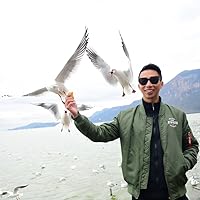
Inspired by family lore, a young writer embarks on an epic quest through the Argentine Andes in search of a heritage spanning hemispheres and centuries, from the Jewish Levant to turn-of-the-century trade routes in South America
One Thanksgiving afternoon at his grandparents’ house, Jordan Salama discovers a large binder stuffed with yellowing papers and old photographs—a five-hundred-year wandering history of his Arab-Jewish family, from Moorish Spain to Ottoman Syria to Argentina and beyond.
One story in particular captures his that of his great-grandfather, a Syrian-born, Arabic-speaking Jewish immigrant to Argentina who in the 1920s worked as a traveling salesman in the Andes—and may have left behind forgotten descendants along the way. Encouraged by his grandfather, Jordan goes in search of these “Lost Salamas,” traveling more than a thousand miles up the spine of South America’s greatest mountain range.
Combining travelog, history, memoir, and reportage, Stranger in the Desert transports readers from the lonely plains of Patagonia to the breathtaking altiplano of the high Andes; from the old Jewish quarter of Damascus to today’s vibrant neighborhoods of Buenos Aires. It is also a fervent journey of self-discovery as Salama grapples with his own Jewish, Arab, and Latin American identities, interrogating the stories families tell themselves, and to what end.
Family history is both personal and part of the fabric of human migration in society. When it involves Jewish genealogy, family history involves the movement of people over the course of centuries. Jordan Salama is not exactly your typical Jewish guy from New York. The only thing that makes him typical is that he identifies as Jewish and grew up in New York. Unlike the myriads of Ashkenazi Jews calling the Empire State Home, the Salama family is a melting pot of cultures. They are descendants from Iraqi, Syrian Arab and Argentine Jews, with their branch of the family immigrating to the enclave where many Jewish families call home: New York. Salama knew his family was different- his grandparents spoke Arabic and Spanish and minimal Hebrew. They watched Argentine fútbol and ate traditional Iraqi foods on Shabbos when their Ashkenazic friends went to shul and ate cholent and kishke. One Thanksgiving; the all-American holiday, Salama discovered a binder in his grandparents’ basement entitled Historia Antigua. Intrigued, this discovery got the ball rolling and lead Salama down the path toward becoming his family’s genealogist and preserver of history. As one who has been entranced by both my own family history and that of the movement of Jewish diaspora over the centuries, reading about this slim volume on the Jewish Book Council website was like uncovering a gem. I knew I had to get my hands on the Salama family history.
Jordan Salama’s grandparents Moisés and Faride Salama are Argentine Jews descended from those who made it out of the Levant. For centuries Jews and Muslims lived side by side peacefully in the lands of rhe Ottoman Empire, following the expulsion from Spain. The Salama clan wandered as far as Iraq and the Cohen Hop family settled in Aleppo and Damascus. When things started getting bad for Jews in the region, both sides of the family eventually immigrated to Argentina, a country with no extradition laws. The family name was Salama and to mark the name as separate from the Muslim Salamas, at one point an ancestor added the name Huedaie. In Arabic this is translated to mean midwife but the spelling also denotes Yehudi, Jew. All Jewish Salamas the world over who Jordan has encountered during his travels and research also bear the name Huedaie. This marker is something he was unaware of on that unassuming Thanksgiving night. Jordan knew that his grandparents came from Argentina but knew little of his great grandfather Selim Salama and his family. He knew that his grandparents were the only members to move to America after his grandfather successfully completed medical school and that both sides of the family listed branches all over the world. Who were these lost Salamas? Jordan decided to embark on a journey to the far reaches of Argentina to uncover the lost branches of his family.
Like my great grandfather who became a junk peddler in Chicago, Jordan Salama’s great grandfather Selim Salama sold junk on the streets of Buenos Aires. Many Jews turned to the profession and high jn the Andes people referred to these peddlers as turcos, meaning Jew. Also known as hamlados, these peddlers transversed the Cordillera in northwest Argentina and spent several months at a time away from their families. Family lore has it that these men being away from their families for long stretches of time fathered numerous children, whose descendants are now scattered throughout the Andes. Jordan’s search took him to the Andes to uncover these supposed lost family members. Cousins in Buenos Aires called him loco because at the time he spoke little Spanish and no Arabic. How was he supposed to converse with these indigenous people in the mountains if he could not speak their language. Jordan discovered more than family members. At each village someone had a story to tell the budding journalist that ended up being a false lead; however, someone always invited him home and had stories to tell to match his own. The universal language that he shared in these remote regions was always the same: food. When both Muslim and Jewish Arabs immigrated to Argentina at the turn of the 20th century, Spanish, Italian, and German citizens chose to marginalize them. These Arabs or turcos turned to the one profession they knew: sales. Many opened stores in Jewish neighborhoods and some turned to junk dealing up and down the Cordillera. Arab communities sprouted up in regions evocative of the mountains of Iraq. In his travels and encounters with these mountainous people, Jordan discovered shared history and similarity of traditions passed down over the generations. Here, he started to feel like an Argentine.
Jordan, known as Shorthan by his Argentine cousins, began to feel more comfortable speaking Spanish, although with an American accent. He began to embrace both the Argentine and Arab parts of his family history. For years being Argentine in the United States meant watching pirated fútbol games. Today it means drinking mate on the beach and sharing long talks with his grandparents in Spanish, known as Negro and China to the myriads of Salamas throughout Latin America. Identifying as Arab is more problematic, especially in this day and age. Jews who came from the Middle East are Arab and they are Jewish. Many who settled in the west drop the Arab moniker, and Jordan notes that when he fills out identification papers, he does not know which ethnic group to list: he is Arab, Hispanic, and Jewish, and usually he lists Jew or sometimes other. In order to eat kibbeh, sfeeha, and other delicacies in Middle Eastern restaurants in New York, the Salamas treaded carefully if people asked them if they were Jewish. Today Jordan might not outwardly say that he is a Jew in these situations but he embraces the shared history of these people, often intertwined by war and also a long, shared culture. In addition to the Lost Salamas, this cultural history is what Jordan set out to discover when he embarked on his journey to the Andes.
I have found family history fascinating throughout my entire life. I enjoy listening to stories of my family’s ancestors and how they got to now. My family is more straight forward: descendants of Ashkenazic Jews from the Ukraine who got out before the Russian Revolution. We have lived in the United Ststes for 120 years. My husband’s family is more complex because he is the descendant of conversos from Spain, which is a subject I have studied at length and would like to do more research on. In all of our cases, this is the study of a family’s history that becomes part of Jewish history and the fabric of our people. There are Jews all over the world, even in the remote mountainous regions of the Argentine Cordillera and the villages of El Salvador. It is important to record these histories before older generations are incapable of remembering clearly or die out. My daughter just completed an all so important family history project for her school’s history requirement. This is what Jordan Salama was done as well, and now he administers a Salama chat group with all the relatives he discovered in his travels. His book became a gift to both his family heritage and to all the Jewish people. We should all be so fortunate as to discover stories of our families’ history.
This book left me with an emotional response and still pondering questions and stories that were articulated. I love when books do that! This book inspires me to dive into my family history more. “Home is where the stories are familiar” is such a powerful quote. Well done, Jordan. Well done.
I listened to the audio version of this book which was narrated by the author making it all the more personal and moving. He has a pleasant voice and great delivery and I really enjoyed listening to him read his own book.
Jordan Salama has given us a very personal look at the history of Jews (in particular his family of Arab Jews) in South America.
Mr Salama was inspired to travel to Argentina after discovering that his great grandfather, who moved with his family to South America after the expulsion of Arab Jews from Syria, became a travelling salesman. He plied his trade seemingly from one end of Argentina to the other spending little time at home with hos family. He may have even travelled into Bolivia at various times. Jordan follows his great grandfather's trail on learning there is anecdotal evidence that his great grandfather might have left more than goods with his customers so he goes in search of other Salama offspring.
As he travels he learns more about the way of life and the hardships that all Jews expelled from their lands have suffered. Some family returned once Israel was established but returned to Argentina only a few years later having found little to keep them in the disorganised new country.
Jordan also realises that his grandfather was not the only travelling salesman and as he goes to Bolivia his hope to find more family begins to wane.
The journey itself was of epic proportions since, at the beginning, Salama's Spanish was rudimentary but the journey and his interaction with other families throughout Argentina and Bolivia give him a greater understanding of his own origins.
A truly fascinating travel and family memoir.
Thankyou to Netgalley and Brilliance Publishing for the advance review copy.
Jordan Salama is on a hunt for a certain branch of his family tree - it is diverse in its genes, its jobs, and the stories that had passed down to those in his generation. A fabulous telling, traveling from New York to one South American country to another, looking for his father's grandfather's people. They are a mix of Syrian, Argentine, Jewish and Iraqi, sometimes called Turks (but not today's Turkey), and maybes in the Travelers and Romani camp - all of which comprise a bundle the author fondly refers to as The Lost Salamas. The search for them is his Quest, whole-hearted and enduring.
The author's diligent notes, story-takings, lead him into the company of and meetings with many, many others who, like him, are searching for a legendary grandfather with the same unusual blendings, in the same places, doing the same job (traveling sellsperson) and names that are very similar if not the same. It is eerie how closely compared stories match up in all the right places - and yet this is the first meeting of the storytellers. Those sort of striking realizations carry serious weight in my world. (Shiver down the spine time.)
For anyone who enjoys the family history hunt, or has interests in cross-culture blends based in South America (or anywhere), I am certain this book will have appeal. Am happy to find that this author has a previous book, Every Day the River Changes, and I'm now on the hunt!
*A sincere thank you to Jordan Salama, Brilliance Publishing, and NetGalley for an ARC to read and review independently.* 52:34
I have never considered that Argentina was a site of migration for Syrian Jews and Christians in the early 20th century. Jordan Salama follows the likely route of his traveling salesman great-grandfather in search of lost family but finding a larger family than he considered. I enjoyed this short and readable memoir.
My reading lately has taken me to memoirs and novels about family journeys, particularly the journeys of the Jewish diaspora. Salama's story is one of the more interesting ones - he traces his paternal family's surprising and unique journey from Jewish Syria to the Argentinian Andes to New York, alongside his maternal family's exodus from Iraq. Part travelogue, part memoir, Salama's languid writing style contrasts nicely with the stories of peril and exile he shares.
41/2 “Once upon a time” gets us ready to read or hear a story. Those handed down from generation to generation help create memories and identity. This is the story of how stories did just that - how a young man of Arab and Jewish descent traveled the path through the Andes in Argentina, of his great grandfather, who was a traveling salesman of his time. Since I’m most familiar with the Jewish diaspora of Eastern Europe, I was very interested in learning about those who traveled from and to Spain, the Middle East and South America. Part memoir, part history book, part religious awakening and a search for identity, and because I’m from a family of storytellers, I loved this book.
A very touching book that made me think of my own family history -- quite different from Jordan's in terms of geography and sometimes tone, but similar in his overall purpose of telling the story.
I struggled a bit with what felt like romanticization of the past and would have liked to have more time dedicated to working with stories that family members would've preferred not to remember, if that is even in his story. I would be surprised if it wasn't; I feel it quite a lot in mine.
"Stranger in the Desert: A Family Story" by Jordon Salama is part travelogue, part family history memoir, part musings on identity and place, and part reflection on the Jewish diaspora experience. As a teenager, he finds a document of family history that his grandfather has been compiling and quickly gains a deep fascination in the stories that have been past down. Salama comes from a family of Ashkenazi/Arab Jews from Syria and Iraq who were forced to immigrate multiple times over the course of the 20th century from Syria and Iraq to Argentina to Israel back to Argentina and eventually ending up in the USA. Born into this complex web of cultures and languages, Salama's investigations into his family's legacy is also in some ways a coming of age story. Originally on a mission to follow in the footsteps of his great-grandfather, a traveling salesman in Argentina, his journey eventually becomes more about the importance and value of relationships to living family and figuring out his own connection to his heritage.
As someone who has a huge passion for family history research, I had a hunch going in that this would likely be a book I would really enjoy. The author's enthusiasm to understand his family's story was both relatable and compelling. Of all the continents South America is the one I probably read the least from, so I found the discussions about Argentina's landscape, history, and culture fascinating.
I listened to the audiobook narrated by the author which is something I always enjoy and appreciate in a memoir.
Argentinian Arab Jews were not a group I was familiar with before reading this book. Jordan Salama does a great job of weaving his family's story into the fabric of the greater community's history. I also learned a lot about the origins and customs of that group, and Argentinian culture. About halfway through though, the book got a bit boring and I found myself periodically skimming to the end.
Really enjoyed this! I’ve gotten to work a bit with Jordan through my job, and his story is fascinating, heartwarming, and thought provoking. Jordan’s voice is his own, and his musings on place, circumstance, and the people that came before us are very moving. I loved learning about the mix of cultures, stories, and experiences that made up his family. Especially for Jewish families, but really for all families who’ve had to move around over the generations, documenting and discovering the story is of the utmost importance and interest. I hope to be able to have similar adventure to Jordan’s someday, where I can trace some of these stories I’ve heard for so many years.
“UP IN THE PUNA, THE AIR WAS LIGHT AND COLD, the ground crumbly and dry. Everything was bleak where in the old days only the most hardened of herders and hunters lived—people who slept in adobe houses heated by fires burning across woodstoves, little pockets of warmth dotting these frigid and windy highlands of the Andes. In a waking dawn, a vicuña blinked, a condor soared, a salt flat glimmered in the distance; in a small house somewhere, a child was born without a father, and an old woman died dreaming of the sea.”
Another great read! The writing is fantastic and you feel and see what the author is seeing, and it has so many layers, about immigration, antisemitism, the Arabic Jews that are in diaspora, searching for your family’s history and expanding the definition of self. A must read!
In the chilly winters the stars were brilliant and numerous, though the sky looked different here in the Andes than it did in the northern countries where they came from. The moon here looked like it had been turned upside-down. But with time they would become used to the southern sky in Argentina, and their descendants would come to think nothing of it. Just as they and their children would eventually become Argentine, and just as their parents and grandparents had become Arabs before them, hundreds of years ago, in another life. In this new world, by the rivers and the valleys and the stars that guided them, the trading people found their way.
The act of telling these stories from one generation to the next helped reinforce the idea that we were part of something larger than ourselves: that we had an identity that was worth preserving. Even though we no longer lived in Iraq anymore, we were still Iraqi Jews. For we are Jews, and we are Arabs, and we are Americans—Americans from the United States, but also Latin Americans. We are Arab Jews, and Arab Jews everywhere have had to become experts at trying to remember all that the world wishes for us to forget.
This kind of othering is ever-present in the history and discrimination of the Jewish people as well—such as the antisemitic stereotype of the Wandering Jew, the stateless soul, the lowly nomad loyal to no place and no one and cursed to a destiny of displacement. It began as a Christian supremacist legend in the Middle Ages: “a Jew who taunted Jesus on the way to his Crucifixion is cursed to roam the earth until the end of days,” according to the Brandeis Center for Human Rights Under Law. Now it is just another way of saying that Jewish people don’t belong anywhere, and are not to be trusted.
Expressions like ojalá (hopefully) invoke the name of Allah, God, in the same way that Arabic speakers do when they say alhamdullilah (praise God) or inshallah (God willing) or allah ma’akon (God be with you), often regardless of their religion.
What is it that makes us want to connect with the past, to try and follow in the footsteps of our ancestors? Why are we so intrigued with finding out about the people and places we came from? Genealogy has been an avid past time for generations but what can learning about our great-great-great grandparents tell us about ourselves?
I think Jordan Salama was thinking along those lines when he set out for Argentina, looking to follow in the footsteps of his great grandfather, a traveling salesman, and see if he can find any “lost Salamas”, children begotten along the routes. But Jordan is also embracing the notion of the traveling Jew, as his book explores his family’s journeys from Syria, to South America, and then back to the Arab world, to Argentina, and then finally to America. He explains the uncertainty that has accompanied Jews throughout history, as they have both metaphorically and literally have had their bags packed, ready to flee. This book is an exploration of what it means to be from a place and what home embodies.
This book came out in February but the audiobook comes out in July and while I am sure the physical book is an excellent read but to be honest, this feels like a story that needs to be heard. Not only because it is the oral traditions that are so important to Jordan’s story but since language is such an vital part of the Salamas’ heritage, to hear the magic of the words in those various languages brings even more depth to the book.
Finally, I try not to get political here but I think it is essential to read from different points of views to get a full sense of things, which is why I believe people should read various newspapers, magazines, books, etc, so they are not just reinforcing their own world view. And right now, the current situation in the Middle East is incredibly fraught and though I think some things that the Israeli government is doing is truly horrific, I think that Salama’s book highlights how Jews, much like other peoples, are not just one thing or from one place. And if you want to fully understand the current situation, you need to read stories like this. History is complicated.
Stranger in the Desert: A Family Story is an incredible travel memoir of the author’s quest through the Argentina Andes in search of a heritage that spans hemispheres, from the Jewish Levant to the old trade routes of South America. The author reveals the discovery that inspired this book: a family history document hidden in his grandfather’s basement with 500 years of his Sephardic Jewish heritage and his ancestor’s journey across Argentina.
This book is the perfect instruction manual for what to do when you find a buried treasure. The author includes maps, emails, and interviews he conducted. He creates narratives that encapsulate the moment and the history of the place he is. He did a beautiful job discussing the migration and the wandering nature of Jews in history and called them suitcase-ready, which is an apt description. He also discusses his personal relationship to Judaism. In one passage, he says, "Judaism is like this. We are a people who constantly question and adapt, and only ever are we able to move forward if we modify our traditions and laws and customs in a way that is reasonable, livable for us wherever we are. For my family and indeed for many families I know, these kinds of modifications are as old as time.” Earlier, he says, "As if being Jewish were not a complicated enough existence, being an Arab Jew feels even more complex because along with the traumatic memories associated with being expelled from the Arab world for being Jewish, there also came widespread experiences of palpable prejudice and discrimination within the larger Jewish world for being Arab too, especially as the Arab-Israeli violence has deepened divisions and made personal tensions more painful and pronounced." Stranger in the Desert is a beautiful memoir that touches on identity, migration, and navigating multiple cultural identities.
(Note: I received an advanced reader copy of this book courtesy of NetGalley)
In his latest work, Jordan Salama recounts his journey to Argentina to try and learn more about his great-grandfather, and also his own roots - a mix of Jewish, Arab, and Argentine heritage that is as wonderfully mixed as this book itself. Stranger in the Desert, ends up being a combination of travelog, personal memoir, a family history stretching back several generations, general histories of the lands he travels,, with plenty of other odds and ends, resulting in a journey that was fit bursting with all kinds of places, peoples, and subjects that were brand new to me To name only a few examples, Salama was able to introduce me to the “turcos” salesman and peddlers that once traveled the more remote regions of the Argentine countryside, the unique culture developed by Middle Eastern immigrants to South America, the fast-fading gauchos of the grasslands, and provide delightfully thorough min-education on maté.
It’s arguable that maybe my enthusiasm is a bit biased from the fact that my reading habits don’t often take me to South America in general, much less the particular corners that I traveled to through these pages, leading in turn to the wide range of exposure that I experienced. However, even if I already had any sizable familiarity with the abovementioned, I think I still would have enjoyed the book just as much thanks to the unique Salamas family history shared here which ties everything together. Salamas shares a deeply, and at times beautifully open and intimate look into his clan, which in turn allows for some wonderful musing on identity and belonging to bloom.
This is one of the more memorable nonfiction reads I’ve encountered recently - although relatively short, Stranger in the Desert proved to be incredibly rich in a way that was frankly anticipated in the most wonderful manner.
I cannot believe my friend wrote this book. This book really was an incredible piece of work. Jordan managed to turn a (pretty niche) story about his family into something that resonates. 1. I loved that he wasn’t afraid to talk about political issues, both current and past and the fact he interjected them within the text 2. I really appreciated the acknowledgement of his own shortcomings / the fact that it’s not a story that is filled with accomplishment after accomplishment along your journey. I especially liked the part where he spoke about perhaps realising that he may have been focusing his efforts in a way that was ~perhaps~ deemed sexist, focusing on his great-grandfather when in fact there are important stories everywhere (e.g. his abuela’s perspective). 3. Yes it was about his family but it was more symbolic of the thousands of other stories out there. He did a really good job of balancing between his family’s story and history whilst also calling out that similar journeys occurred with many many others! 4. Waiting until the very end to bring in the one response that his abuelo sent to him, when he’d just covered the full circle moment of them all being in Argentina together, learning about his grandparents lives first-hand, seeing them in context…but now also having his own context, was fantastic. Brought tears to my eyes.
This entire review has been hidden because of spoilers.
First of all, I really enjoyed this book. The author tells how he found a family history his grandfather was writing and how he eventually travels from his home in New York to Argentina to find “long lost” members of his family. His family were Arab and Iraqi Jews who emigrated to Buenos Aires in the early 20th century. The mix of cultures and languages is part of the fabric of their lives. At one point he writes that it’s a good thing to feel at home in more than one place. He comes to understand himself as he learns about the “Historia Antiqua” of his whole family.
Maybe one reason I related so much to this is that as a young adult, I left my home near Boston and ended up spending nearly nine years living in Spain. Like the author, my brain would feel exhausted at night trying to absorb all the Spanish. He grew up hearing it. I had studied it for six years in school. Eventually the brain adapts.
This book is well worth reading. I’ve often wished I had thought to ask my parents and other relatives about their lives. It’s only once they were gone that I realized what I’d missed.
This was an interesting book. I requested it because it was a short volume and seemed to be about something that I had not known before.
The author has a unique background, which ultimately turns out to be one that several others share with him. I will not go into the specific genetic details, especially since the first few chapters are focused on what drives the family’s to their ‘homelands’.
Starting with his grandfather’s accounts of his childhood and the stories that revolved around his ancestor, the author decided to dig a little deeper into their shared past and the country that most recently shaped them. The journey is not easy and although the descriptions and travel is relatively brief for a book like this, it covers a lot of ground ( both literally and figuratively).
Since the author has done his own narration, it is quite seamless and a book I would definitely recommend to people who like delving into different family histories.
I received an ARC thanks to Netgalley and the publishers but the review is entirely based on my own listening experience.
This wins a great award for holding my attention so that I could read it from beginning to end even while it's immensely slow and sleepy, nonfiction with dates. The writing was SO beautiful-- the precise intersection of The Alchemist by Paulo Coelho and Bless Me Ultima by Anaya. Many times, I was tempted to leave off trying to read it because it was, after all, just the personal genealogical story of one individual and his family floating in space, nothing to tether me to it. But each time I had this temptation, I was brought back by the narrative re-tracking and correcting to be about something more than himself and his genealogy. Each time, it became more about place, peoples, cultural detail, what family and tradition and memory mean to all of us, and a larger history in world context. The descriptions of place alone were enough to keep me. And then it wrapped up in time, without becoming unnecessarily or overly long. My immediate next read is certainly his other work.
This book reminded me of the line in the movie, Fiddler on the Roof, spoken by Tevye, “Maybe that’s why we always wear our hats.” Seems like at one time, Jewish people were always on the move; not a choice of their own making. It is Jordan Salama’s grandfather who inspires Jordan (the author) to begin a long journey across Argentina to discover his Jewish roots. Based mainly on Jordan’s great-grandfather and his exploits, he finds a connection to an Arab-Jewish existence which surely complicates one’s life since being Jewish is cause for expulsion from the Arab community and vice-versa. We learn about “turcos,” salesmen and peddlers, of which his great-grandfather was a part of, travelling across the Argentine countryside. The many stories told by people Jordan came across, and his continual self-discovery throughout his journeys, made this book most interesting and a satisfying read.
Read for book club, the author tells his family story of migration due to persucution. He is curious about his great grandfathers history , the stories he has been told and the possibility that he might have had other children. His grandfather was a traveling salesman in Argentina. This was a common profession in Argentina , and they were known for their survival skills. The author returns to Argentina in search of some family history. He used the 23 and me ancestory and DNA search results ,He also used social media to connect with other people who had similiar stories. I won't spoil the story and tell you what happens. Writting was good, easy read, although I listened to it on Audible, so it was actually the authors voice as narator. The reason it has 3 stras is because I feel like I have read too many of these kinds of stories, and perfer to learn things when I read, This one didn't deliver anything new for me.
It would be presumptuous for such a young man to write a memoir, unless it’s not about himself but his predecessors. The author’s search for “the lost Salamas” takes him to the deserts of Argentina where the locals take him in despite, or maybe because of, his Quixotic quest to find out about his great grandfather. A Jewish Arab immigrant who made his living as a peddler in this inhospitable terrain left no easy trail to follow. But it’s a joy to follow this travelog. With my America the Bilingual filter, I was fascinated by his own growing command of Spanish, which he had to seize on his own as it was not given to him as a child. The languages of his family, Ladino, Hebrew, Arabic, Spanish stay with you, said one of his relatives, like the soles in your shoes.
Bought the hardcover and listened to him read it on audio.
Reading was interrupted by a three week trip to India. Hence the long reading period.
Read for the Hadassah book club; I was the discussion leader for this book.
To be frank: I would have quit reading this book if I hadn’t been assigned as discussion leader.
Jordan Saldana appears to be a very nice guy. But I kept wanting to say: get to the point.
As far as I could see, the point was: my great grandfather was a traveling salesman in Argentine cordillera in the 1920s. I SUSPECT i have relatives in this region. I’m going to look for them.
But of course, he does not find them. He comes to realize that he’s not going to find them and it’s more important to visit the known Argentine relatives.
These are good realizations. But predictable.
I’m glad Jordan explored the cordillera and connected with his relatives. I don’t think there’s enough here for a book.
The search for his ancestors, the lost Salamas, led the young Salama, on journeys across mountains and oceans, borders and continents, far and wide. He didn't quite find what he thought might be there, but instead, even more rewarding, perhaps, he constructed his own identity, and his relationship with his extraordinary extended family.
This is the second book I've read by the author. The research for the book may be lacking in depth compared to the more established authors, but the topic is just too intriguing to pass up, especially for a foreigner who had no exposure to any of the four great identities that constituted the world of the author. I appreciated his reflective writing style, his capability to put complex matters into simple perspectives, and his way of writing. Looking forward to his future works.
"Stranger in the Desert is a book about the power of nostalgia, the roots of family history and the surprises the past has in store – and the way they shape the present. Jordan travels to look for long-lost relatives in Argentina, only to learn he is the Argentine man missing in his grandfather’s book. It’s a travelogue that puts emphasis on people rather than places, a transcript of a baptism by fire of Argentine living, featuring a young Jordan Salama who experiences the best and the worst the country has to offer, ultimately realizing that he finds himself in a place that he can call his own."
Does the result matter or can the journey itself become the purpose? That’s something Jordan Salama must decide while writing “Stranger in the Desert: A Family Story” (Catapult). After discovering a binder in his grandfather’s basement, Salama becomes fascinated with the idea that his great-grandfather – a traveling salesman in Argentina – might have sired children throughout his journeys. He ponders finding these long-lost relatives and decides to travel from the U.S. – where he and his father were born – to Argentina, where his grandfather lived before moving to the States. See the rest of my review at https://www.thereportergroup.org/book...
Jordan Salama attempts to uncover the story of his family of Syrian Jews who migrated to Argentina and then America. Using the recorded stories of his grandparents he attempts to retrace the steps of his great-grandfather, a travelling salesman who traversed the wilderness of the Andes mountains to the Bolivian border, to try to find some long lost relatives. I'm not sure it "translated" well to audio since Salama (who narrates the audio himself) intersperses letters, notes, encyclopedia articles, newspaper clippings, etc. and it's very difficult for the listener to differentiate between his narration and these other sources. Nevertheless, it was short, accessible, unique and super interesting . . . and might be a possibility for my book clubs next year.
While Salama’s writing is great and engaging I felt this book left more to be desired. I found the family background very interesting, especially as some is similar to my own family’s, but the book ended up reading like his research process. I was hoping for more details about the adventure considering it’s partially supposed to be about his own journey but instead it read as quite episodic his journey with little flow in the narrative. I also felt that at points he put his family’s lineage and legacy on a pedestal compared to others of similar backgrounds, which I don’t really buy. Those parts just felt embellished and not always in a good way. Nonetheless, I wasn’t bored while reading the book; it kept me entertained throughout.
Heartwarming and beautifully written, Stranger in the Desert is a captivating chronicle that follows the author's quest for a lost family lineage through Argentina. The narrative of this journey, aiming to reconstruct a family history, unfolds as an ode to memory, customs, stories and traditions, ultimately evolving into the writer's personal search for identity. Jordan Salama's prose is full of warmth and brightness; he paints the Argentine landscape and its people with vivid strokes. He has a fierce curiosity that unearthes untold stories among the most diverse individuals that he encounters. He gives insightful observations on how past and present intricates in each place he visits, and within each conversation he has with young and old along the way. Threads of legacy, history, land and identity are waved togehter in this loving, brilliant narration that seizes the profound significance of family stories.