Edith Nesbit (married name Edith Bland; 15 August 1858 – 4 May 1924) was an English author and poet; she published her books for children under the name of E. Nesbit. She wrote or collaborated on over 60 books of fiction for children, several of which have been adapted for film and television. She was also a political activist and co-founded the Fabian Society, a socialist organisation later connected to the Labour Party.
Edith Nesbit was born in Kennington, Surrey, the daughter of agricultural chemist and schoolmaster John Collis Nesbit. The death of her father when she was four and the continuing ill health of her sister meant that Nesbit had a transitory childhood, her family moving across Europe in search of healthy climates only to return to England for financial reasons. Nesbit therefore spent her childhood attaining an education from whatever sources were available—local grammars, the occasional boarding school but mainly through reading.
At 17 her family finally settled in London and aged 19, Nesbit met Hubert Bland, a political activist and writer. They became lovers and when Nesbit found she was pregnant they became engaged, marrying in April 1880. After this scandalous (for Victorian society) beginning, the marriage would be an unconventional one. Initially, the couple lived separately—Nesbit with her family and Bland with his mother and her live-in companion Maggie Doran.
Initially, Edith Nesbit books were novels meant for adults, including The Prophet's Mantle (1885) and The Marden Mystery (1896) about the early days of the socialist movement. Written under the pen name of her third child 'Fabian Bland', these books were not successful. Nesbit generated an income for the family by lecturing around the country on socialism and through her journalism (she was editor of the Fabian Society's journal, Today).
In 1899 she had published The Adventures of the Treasure Seekers to great acclaim.
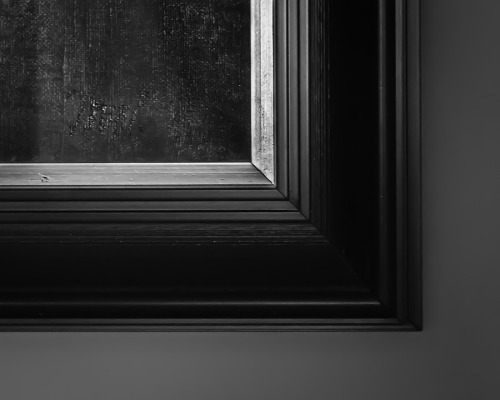
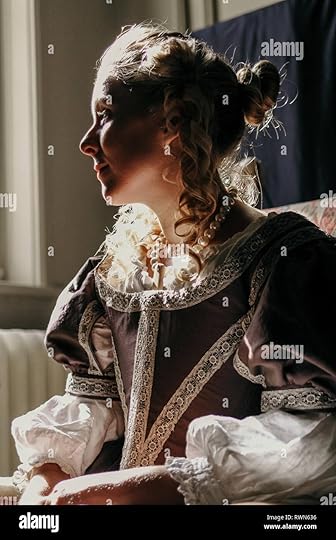
The tale revolves around a man named Henry Devigne, who inherits a house filled with antique treasures. Among these is a striking ebony frame with a portrait of an enchanting woman. Henry is inexplicably drawn to the portrait and soon discovers a mysterious connection between the woman in the painting and himself. The narrative unfolds as the painting serves as a bridge between the present and the mystical past, unveiling a tragic love story intertwined with fate, loss, and the supernatural.
This is my first reading of anything written by Edith Nesbit, it certainly won’t be my last. This was an exceptionally well done short story. The longing and the loss the characters feel is palpable. Making this a story well worth the short time it takes to read.
It’s really odd to think that the beloved children’s book author Edith Nesbit ventured into the realm of the supernatural. Overall it was a rather odd short story, but because of it I found a Spotify podcast with audio recordings of classics, so it’s still a win in my books.
Creepy, disturbing, awful! Since I suppose that’s rather the point, I have to say that this little horror story is probably pretty good. A morally weak protagonist, a sensual mystery woman, a demonic bargain . . . this may not be my cup of tea, but many horror fans will find much to like here. The writing is solid, and the plot keeps driving forward to its ultimate conclusion.
Mr. Devigne inherits a house with old furniture and a stuffed attic (“lumber room”) from his Aunt Dorcas. He finds two paintings bound together, facing each other. One portrait bears a striking resemblance to himself. Another is of a woman in black velvet next to a table full of scientific instruments Mr. Devigne doesn’t understand. He is captivated by her. Late at night, while he is neither sleepy nor drunk, he holds out his arms to the painting and wishes she were a woman, not merely a likeness, and would come to him.
Oh, my friend. Be careful what you wish for.
On a second read, I find I’ve grown fonder of this little gothic tale. It is unapologetically melodramatic, with stories of witchcraft, deals with the devil, and surrendering one’s hopes of heaven. All the same, author Nesbit offers the reader al bit of humor.
I like this more on the second reading than I did the first time through.
Obsession! The Devil! Old-fashiondy horror which doesn't feel scary in a modern context! I wanted to smack the main character at more than one point...but I definitely think that was the point.
This delicious gothic tale can be read and interpreted in many different ways. For example, it is worth mentioning that it was published three years subsequent to the publication of Wilde's controversial novel The Picture of Dorian Gray, another fin-de-siècle work which had featured an accursed portrait and a young person of exquisite personal beauty. In both cases, the portrait and its owner were destroyed in a symbolic allusion to the death and degeneration of true art in the midst of a decadent generation that knew not how to value and read into it.
The story can also be read from the respective lenses of psychoanalysis and socio-economy. Mr. Devigne's experience amidst the lower middle-classes is tinged by an explicit bitterness he describes himself at the beginning of the narrative. Thus, when the money of his late aunt had saved him from the clutches of poverty, he admitted that his attraction towards Mildred, the woman he was then courting, had lost its luster. Before the inheritance, Mildred had been a solace and a comfort, but afterwards she merely became the almost unwanted link to his old hated life.
Thus, when the two portraits were found, he immediately associated himself with one of them, and identified the other as the prototype of a perfect mate. In this manner, the whole episode can be read as fits of hallucination or even dreams prompted by the man's repressed desire to break free from his engagement, and at the same time his unwillingness to do so at the expense of his character even though he wanted nothing else more fervently, which is clearly distinguishable in his final words of indifference towards both his wife and marital life.
I loved this story. Creepy. Haunting. Mystical. A covenant with the Devil. Lost souls destined to wander in sorrow. Eternal unrequited love. A macabre atmosphere. Even a grisly witch burning.
It's my kind of Gothic horror story.
There was a point where Mr. Devigne, while attempting to rescue his true love, ends up rescuing Mildred by mistake. When he realizes just whom is really in his arms, he dejectedly states: "It was Mildred." And I literally laughed out loud. I thought, how many married couples have said the same thing on their wedding night?
The writing was beautiful and moving. And I was captivated by Mr. Devigne's sense of loss and sorrow. Reality never seems to have the same wonderment as the haunting beauty of the imagined world.
A man is left his aunt's estate and an allowance. He is happy. He has a decent girl he plans to marry someday, but not yet. As he's looking around, he finds an ebony frame with no picture in it. Thinking it might be worth a lot of money, he searches and finds two pictures wrapped face-to-face. He is stunned by the woman he sees. He knows he must know her, then he spies the other picture, and it is himself. The spitting image, except dressed as if two hundred years ago. He feels upon his arm, and the woman is there. He knows she is the love of his life, and she tells him the story.
This is a romantic story with an horrific ending. It would work well as a read-aloud. E. Nesbit is a favourite author. She writes well, and this is an eerie Gothic romance.
A young man’s inheritance includes a picture frame that encloses two pictures facing each other. Upon separating them, he finds himself looking at his own image on one, and at a beautiful woman in the other. Unnaturally besotted by her painting, he reframes it with the ebony frame. And unnatural it is, when she starts to exert a strange hold on him. This rather disturbing ghost story is definitely horrific, mostly by the request of the ghost. Still, it is interesting though vastly disturbing.
Το "The Ebony Frame" δημοσιεύτηκε για πρώτη φορά στο τεύχος Οκτωβρίου 1891 του περιοδικού Longman's. Επανεκδόθηκε στις ανθολογίες του E. Nesbit, Grime Tales, του 1893. Πρόκειται για ένα διήγημα, μια ανατριχιαστική ιστορία φαντασμάτων, που θα ενθουσιάσει τους λάτρεις του φανταστικού!
I listened to windy night stories audiobook on Youtube. I have an innate hatred and fascination for horror stories about moving paintings or photos or anything of the sort. When things like this come across my feed, I must consume, and each time, a part of me gets chills from it.
3.5 - This was a haunted story, in the sense that the main character's soul was haunted by his lover, separated by time. He should have realized that a bird in the hand is worth two in the bush.
A beautiful tale of love, loss, lust and unfulfilled desires. Truly magnificent, how the dramatic nuances greatly elevate a rather ordinary backdrop into fascinating heartbreaking romance.