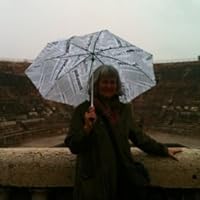
Winner of the Prime Minister's Literary Award for Non-fiction, 2014.The compelling story of Madeleine St John, one of Australia's finest female novelists.
At the age of fifteen Madeleine saw herself as a painter and pianist, but Ms Medway peered down at Madeleine during her entrance interview in 1957 and 'You know dear, I think you might write.'
Madeleine would write. But not for some time. The Women in Black, a sparkling gem that belied the difficulties that had dogged her own life, was published when Madeleine St John was in her fifties. Her third novel, The Essence of the Thing, was shortlisted for the 1997 Booker Prize, and she continued to write until her death in 2006.
Helen Trinca has captured the troubled life of Madeleine St John in this moving account of a remarkable writer. After the death of her mother when Madeleine was just twelve, she struggled to find her place in the world. Estranging herself from her family, and from Australia, she lived for a time in the US before moving to London where Robert Hughes, Germaine Greer, Bruce Beresford, Barry Humphries and Clive James were making their mark. In 1993, when The Women in Black was published, it became clear what a marvellous writer Madeleine St John was.
Helen Trinca has co-written two previous The Battle that Changed Australia and Better than How a Whole Generation Got Hooked on Work. She has held senior reporting and editing roles in Australian journalism, including a stint as the Australian's London correspondent, and is currently Managing Editor of the Australian.
'The only lasting fame for any of the rest of us will reside in the fact that we once knew her.' Clive James
'[A] brilliant biography.' Australian Women's Weekly
'a rich and moving account of a difficult life redeemed by art.' Independent
'a compassionate understanding of St John's development and eventual deterioration. This biography enriches our appreciation of St John's four novels, and Trinca is a thorough detective but not a judge.' Good Reading
'Moving, frustrating, Madeleine is a wonderful book. One thinks St John might have appreciated its elegance, at least. Though she would have hated it, of course; which is to say Trinca has told her story scrupulously, and well.' Delia Falconer, Weekend Australian
'Expertly researched and fair in its portrayal...[Trinca's prose] is able to masterfully conjure the affluence of 1950s Sydney, its lonely housewives and lost migrants, as well as the shabby chic of 60s London and its bohemian share houses, head with casual sex and marijuana.' Readings Monthly
'[Madeleine] isn't merely a history of a singular writer, it is also a trenchant interrogation of a period and a country.' The Monthly
After reading Helen Trinca's article on her research for this book (and her discoveries) in The Australian this week, I'm longing to read it. St John was such a brilliant, acerbic, dryly funny writer - with, it seems, a complex and fascinating life story.
It seems this book will explore not just the making of a writer, but the way inheritance (psychological and, perhaps, genetic) shapes a person's life and character.
St John's mother Sylvette suicided when she was twelve, after three to four years in and out of institutions. St John blamed her father's coldness and reserve; she bitterly hated her father (a Liberal politician who held Tony Abbott's seat of Waringah) and stepmother, who she experienced as cruel. Trinca wonders if the 'Feminine Mystique' boredom typical of the era factored into Sylvette's mental problems.
St John had her own mental struggles too, as an adult, when she was also in and out of psychological institutions. How is this connected to her mother's experience?
She destroyed most of her personal papers just before her death of emphysema at 64 - but left behind nine hours of taped conversations with a friend she hoped would be her biographer (who passed them to Trinca). They focused largely on her passionate hatred of her father and unresolved grief over her mother's death.
Trinca has accessed hospital records and interviewed family members and former friends to create this book.
It's a rare literary biography that leaves you less inclined to read the subject's works, but this one pulled it off. Trinca is hampered by her subject, Madeleine St John, who comes across as a paranoid, prickly, easily offended person. The writing is workmanlike and occasionally clunky, and it doesn't feel like you get a lot of insight into St John's work from this summary of her life.
Madeleine St John was the first Australian woman shortlisted for the Booker Prize, with her short novel The Essence Of The Thing. Although horrified at being labelled Australian, she had closed off her connections to her country of birth, through pain, grief, and willful dismissal. An extraordinary, prickly character of Australian history I had not heard about until this read.
This memoir pieces together the difficult, tumultuous life of Madeleine, from the strained relationship of her parents, and then the devastating suicide of her mother. Never finding a way through understanding this loss and then with the arrival of a new step-mother in her world, Madeleine's rage sat firmly with her father, forever. A cosmopolitan life on the surface, Madeleine lived a troubled life in the US and then through divorce come to live in the UK. Living in a council flat in London, struggling financially and vocationally, drifting really between challenging social and romantic connections.
The Essence Of The Thing was Madeleine's first work of fiction, but was passed up several times, the title changed more times, and was bought only as a twin with another book she had written. To then be called in by the judges in 1997 for the Booker Prize, and then be shortlisted is quite the book journey alone.
A fascinating, if tenuous grasp of the life and emotional turmoil, of Madeleine St John, through research, interviews, letters, and recordings. A window into a complex woman of our literary history.
After reading her novel The Women In Black, which I liked very much, I decided to read this biography on Madeleine St John. While it was interesting enough to read to the end, I was left with feelings of regret about spending time and money researching Ms. St John. For she ended up being one of the types of individuals who interest me the least--those who refuse to deal with their childhood issues, but instead spend their entire lives hating and blaming others.
Yes, to her dying day, Madeleine St. John hated her father and blamed him for her own psychological problems. (The real problem there is not the hatred, but blaming someone else for her problems and unhappiness.) She also despised her stepmother, and refused to believe her mother intentionally killed herself, intentionally leaving her two young daughters behind. In addition, she often had unkind things to say about her sister. Actually, she often had unkind things to say about many people, held grudges, and dropped friends with no concern.
She hated Australia, too, and didn’t want to be connected to the country, when she finally found writing success in her 50s. Ms. St John considered herself British, with London being her adopted home. Interestingly, while in England, she appeared to spend most of her adult life working on a manuscript about Helena Blavatsky, who co-founded the Theosophical Society. After the writing world finally recognized her talents, she showed others the manuscript on Madame Blavatsky, but no publisher was interested, and Ms. St John would then unfortunately destroy it.
When her dreams of becoming a successful writer finally started to come true, Madeleine St John was told by a doctor she had emphysema. (She had been a heavy cigarette and marijuana smoker.) After writing three more novels, she died at the age of 65. Even at that age, according to this biography, she apparently still felt like a victimized child, and still believed that how she saw things in life was the only correct way to see those things, much like how a child believes.
St. John is renowned as private, and this effort takes us no closer to her character. It becomes a litany of her activities, who she was talking to and who she had burned out of her life, even if only temporarily. I had hoped for more insight.
Helen Trinca’s biography of Madeleine St John is timely, because there is renewed interest in this author’s small but important oeuvre, thanks to Text Publishing reissuing her novels. I am one of many readers who would never have had the pleasure of discovering The Women in Black (1993) if not for Michael Heyward’s initiative in publishing Australia’s ‘forgotten classics – and I am keen to read St John’s ‘English’ novels, A Pure Clear Light (1996); The Essence of the Thing, (1997) and A Stairway to Paradise (1999) all of which are now back in print.
When I read The Women in Black, I thought it was ‘poignant, tender, and witty’ (see my review) but until I read Helen’s Trinca’s biography, I had no idea just how poignant a figure St John was. For all the words of great praise from the likes of Bruce Beresford and Clive James, Madeleine St John seems to have had a lonely and bitter life, traumatised from childhood by the ambiguity of her mother’s probable suicide, and incapable of sustaining relationships.
I read this book after reading Madeleine St John's book 'Women in Black'. I loved the 'women in black' and felt I needed to read more about the author. I am not normally a biography reader (only 1 a year when my book club requires a biography) so I may not be the best person to offer a review as I have little to compare it to. This book contained a great amount of well researched information which would have been extremely difficult considering Madeleine destroyed much of her letters and personal papers. She was an extremely complex individual with mental health issues and a sad and unstable background. The relationship between Madeleine and her family (particularly her father) is very sad. But in saying this Madeleine was a person that is very difficult to like. The reason I gave this book 3 stars is that at times I felt I was reading a textbook or newspaper article. This is understandable due to Helen Trinca's background in the media. Although it was interesting I think it really has a limited audience.
Madeleine St John was a terrific writer, in my opinion. I had read a bit about her - mainly around the time of her Booker nomination and her death - but was by no means au fait with much of her life story. I knew she had been in that Clive Jamesy/Robert Hughesy kind of milieu at Sydney University, and that she had ended up living in relative poverty in London before finding fame late in life, but not much beyond that.
I found a great deal to interest me in this book, in all the various phases of her life. The childhood was a bit of a horror show. Madeleine’s mother certainly had her personal problems, which reverberated through the family, and her father was no picnic, either. He was an eminent person in his own right, and I followed up and did a bit of reading on him after finishing the book. A most interesting political career, he had.
For someone like me who has an interest in mid-century Sydney, there was a lot of juicy stuff in the book. The St Johns lived at Castlecrag, and the picture that was painted of that place was most interesting. The university/push stuff was interesting too. Stories of twentieth century Sydney are catnip to me. I can’t get enough of that Ruth Park kind of stuff. If it ain’t your bag to the same extent, it is still competently told and very readable. I also thought Trinca did a particularly good job on Madeleine’s ill-fated marriage and the move to America. That section of the book really evoked that late 60s period very well.
The London stuff I enjoyed as well. Madeleine’s sort of hand-to-mouth bohemian outsider life put me in mind of those columns that Beryl Bainbridge used to write in The Spectator. If you are a vaguely arty/literary type of person, it might even give you a pang or two about the road untaken, but I suspect her London life might have been easier to read about than it was to actually live.
I’ve read a comment or two from people who didn’t like this book because it painted Madeleine St John as prickly and difficult and flawed. To me, that misses the point. Surely the point of a biography is to explain the subject, as best the author can, not to make us like her. If we feel like we know something about the subject by the end of the book, then it is a success, whether we “like” the subject or not. And in any case, what’s with the obsession with likeability? We want our writers and our movie directors and our singers and our songwriters and our other creatives to have extraordinary insight and extraordinary skill and extraordinary imagination and to create works of transcendent beauty that we are not capable of ourselves. But on the other hand, we want them to be nice and polite and ordinary and easygoing and unassuming just like us (or just like we imagine ourselves to be). It demonstrates a fundamental misunderstanding of human nature, in my view.
Helen Trinca’s writing is solid and very professional and never gets in the way of the story. She is not in the class of (for example) a David Marr, whose biography of Patrick White is the gold standard for this type of book. But, unlike a lot of Australian journalists, she does write a crisp, readable sentence. That might sound patronising but it isn’t meant to be. Many Australian journalists are dreadful stylists and that’s a fact.
Even if this book doesn’t grab you, do yourself a favour and read The Women In Black. Even if you don’t find Madeleine St John likeable, you will love that novel.
I think that Madeleine St John would have been infuriated by this biography, where the author treats her with a cool impassiveness. She does not buy into St John’s histrionics and manipulations, but recognizes patterns in her behaviour and makes some sense of it, without condoning it. The book lightens, as did St John’s own life, once she achieved her break-through publications, but for Trinca (and me, for that matter), her writing only highlighted the paradox between the writer and her work. Trinca keeps her eyes steadily on Madeleine the character, and there is no in-depth analysis of the books as such. Her footnotes pay testament to the author’s diligence in tracking down friends and acquaintances – none of whom could give unalloyed praise for St John. She was fortunate to be given access to a collection of audiotapes recorded by St John that were left in the keeping of a friend. She read St John’s own statements about her life with a judicious eye, and combed through the lively but self-serving correspondence that other people had kept, much against St. John’s wishes. Using this network of friends and acquaintances, Trinca manages to weave a background against which St John’s life can be placed; a background that captures the heady optimism of university life in the early 1960s, the tangled connections amongst an intellectual and creative largely expatriate milieu, and the continued warp and weft of family background, no matter how much someone might want to distance themselves from it.
Whether one has read any of Madeleine St John's novels will doubtless influence one's reading of this biography of her troubled life. I have yet to have the pleasure but all four novels are in circulation online and elsewhere. Now, of course, my reading of the novels will be influenced by the biography. Can't have it both ways. This biography is marvellously written and thoroughly researched. First class work all round. The story itself has sufficient episodes and drama to sustain interest and my reactions to Madeleine herself oscillated somewhere between admiration and frustration. This is a sad story indeed, lightened only by her late minor success as an author. Well, perhaps one should not say, minor. Shortlisted for the Booker Prize and losing to "The God of Small Things." I'd like that in my CV! I had no knowledge of Madeleine before reading this. Indeed, at first I thought I was about to read a hagiography of a Saint. And neither the book nor the person are that!. I do recall her father's brief stint as a refreshing rebel within the Liberal Party and this biography has certainly shaded my understanding of the kind of man he was. By the way, the surname is pronounced "sin-jen" although this is not mention in the book.
An important book to read, and remind ourselves that a Mother's loss can be a source of great pain but also great inspiration. It can fracture a family but also make us brittle around those we love.
We were joined by Helen Trinca to discuss Madeleine St John, her father Ted St John, and researching a person's life. Originally broadcast on 18/04/2013. The podcast is available at zedbookclub.com
Madeleine St John was a fascinating writer. The author of amongst other works, The Women in Black and The Essence of the Thing – which saw her as the first Australian woman short-listed for the Booker prize. The Australian part of that acknowledgement didn’t thrill Madeleine though as she had, at that point, become very much an English writer in her own mind. Fiesty and formidable, brilliant but damaged, Madeleine St John makes for a character as fine as any she wrote, and Helen Trinca, managing editor at The Australian has looked into her life, writing and the moments that defined her in Helen’s new book Madeleine: A Life of Madeleine St John.
Helen Trinca presents the life of this difficult-to-know author, originally Australian, in a scholarly fashion with little embellishment. I doubt anyone will ever understand Madeleine St John, and it was sad to read of her struggles and the sadness of many in her family and circles. Interesting also was to read of Madeleine in her social and historical context when the world of women changed so much. I have read only one of her four novels but am a little surprised at the value placed on her work by some reviewers.
Rather monotonous chronological listing of this woman's life. The only vague interest comes from the times she lived in - in Australia and UK - among such up-and-coming intellectuals as the Whitlams, Mungo McCallum, Clive James, etc. After a rather sad childhood and the loss of her mother, Madeline never seems to have been able to shake off the sense of rejection she felt from her father and the bitterness that left her with. The book did not inspire me with any sense of Madeleine's apparent writing skills [Booker prize listing] and overall was a depressing read!
I was somewhat disappointed with this book. It seemed to suddenly jump 25 years in her life with very little information about the intervening years. She came across as rather unlikable and mentally or emotionally disturbed. I understand the research would have been difficult as a lot of her papers and letters were destroyed. I still found it interesting to read about this unhappy author whose life was clearly pretty miserable and rather empty.
An intriguing read although I acknowledge it won't be for everyone. It is a biography of Madeleine St John who was shortlisted for the Booker Prize in 1997 for her novel The Essence of the Thing. Madeleine was a member of The Octopus group at Sydney University in the 60s and a contemporary of the likes of Clive James, Bruce Beresford and Mungo McCallum. Her story spans three continents and makes for a challenging but nevertheless fascinating read.
had to read this after devouring all 4 of Madeleine St John's novels. so, it's obvious that I adored the novels...however I did find Trinca's biography a little dry. still, i learned stuff, mainly how very private, self-destructive & strange Madeleine was. the portrait of the times is engaging enough. can't help but wonder what Madeleine herself would feel about it...
It took me a little while to get into this book, but once I did I found it riveting. I love Madeleine St John's novels and knew little about her life, so I found her life story fascinating. I want to reread her novels now that I know more about her. Highly recommended.