What do you think?
Rate this book

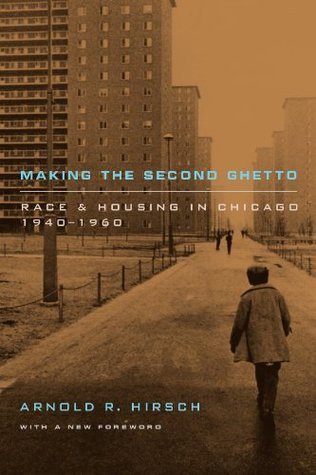
384 pages, Kindle Edition
First published January 1, 1983
primary attention is devoted to whites. That is where the power was. This is not to say that blacks have simply 'reacted' to the actions of others and do not 'act' in their own behalf. But what we are looking at here is the construction of the ball park within which the urban game is played. And there is no question that the architects, in this instance, were whites' (xii)
It was the sheer presence of the first ghetto and the white reaction to it, though, tht did the most to produce the second. In creating it, white Chicago conceived a "Frankenstein's monster," which threatened to "run amok" after World War II. The establishment of racial borders, their traditional acceptance, and the conditions spawned by unyielding segregation created an entity that whites feared and loathed. Those who made it were soon threatened by it, and, desperately, they both employed old techniques and devised new ones in the attempt to control it. Others elected to flee to the suburbs, thus compounding the difficulties of those left behind. In any event, the very process of racial succession, dormant for nearly a generation, inspired both the dread and the action that called forth the second ghetto (15-16)
The forces promoting a durable and unchanging racial border--the dual housing market, the cost of black housing, restrictive covenants--were, at first, buttressed by teh hosing shortage. Once new construction began, however, those same forces became an overwhelmingly powerful engine for change(29).
The Chancellor and the President gazed out across the park,
They laughed like anything to see that things were looking dark.
"Our neighborhood," the Chancellor said, "once blossomed like the lily."
"Just seven coons with seven kids could knock our program silly."
"Forget it," said the President, "and thank the Lord for Willie."
Nothing would have shocked Hype Parkers more than the assertion that they were part of a generalized "white" effort to control the process of racial succession in Chicago. The imputation of brotherhood with the ethnic, working-class rock throwers would have been more than they could bear. Yet, there was just such a consensus (171)....
Chicago's whites found themselves engaged in a desperately competative struggle with each other. The successful "defense" of one neighborhood increased the problems of the others (172).
The ethnics' defensive yet militant espousal of their "whiteness," however, and the demand for privilege on that basis, was a flawed defense in the context of post-World War II race relations' (197)
Second, the immigrants and their children displayed the poor judgment of becoming militantly white at the precise moment prerogatives of color were coming into question. If they were successful in finally lining their identity to that of the natives, they were left not simply with the natives' privileges of rank but also with the bill for past wrongs that the "whites" were now expected to pay' (198).