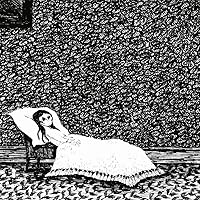
From critically acclaimed author Nicole Galland, a vibrant and thought-provoking historical tale of love, political intrigue, and gender-swapping set in the theatre world of Elizabethan London.
Alexander “Sander” Cooke is the most celebrated “boy player” in the Chamberlain’s Men, William Shakespeare’s theatre company. Indeed, Sander’s androgynous beauty and deft portrayal of female roles have made him the toast of London, and his companionship is sought by noblewomen and -men alike. And yet, now at the height of his fame, he teeters on the cusp of adulthood, his future uncertain. Often, he wishes he could stop time and remain a boy forever.
Joan Buckler, Sander’s best friend, also has a dream. Though unschooled, she is whip-smart and fascinated by the snippets of natural philosophy to which she’s been exposed. And while she senses that Sander’s admiration for her is more than mere friendship, Joan’s true passion is knowledge, something that is nearly impossible for her to attain. As a woman, she has no place in the intellectual salons and cultural community of the day; only in disguise can she learn to her heart’s content.
Joan’s covert intellectual endeavors, coupled with Sander’s theatrical triumphs, attract the attention of none other than Francis Bacon: natural philosopher and trusted adviser to Queen Elizabeth. It is through their connection with Bacon—one of the greatest minds of their time—that their lives will be changed forever as they become embroiled in an intricate game of political intrigue that threatens their very survival.
Brimming with heart, curiosity, and rich historical detail, Boy offers an intimate glimpse of the moral complexities of a singular artistic era, and the roles we all choose to play on the world’s stage.
Nicole Galland writes critically-acclaimed novels in several different genres. She is mostly know for historical fiction, but recently teamed up with Neal Stephenson to write the New York Times bestselling, time-travel-themed The Rise And Fall of D.O.D.O. (HarperCollins, 2017). She'll be releasing its sequel, Master of the Revels, in February of 2021.
Her historical novels (all published by HarperCollins or imprints) include: The Fool's Tale; I, Iago; Revenge of the Rose; Godiva; and Crossed: A Tale of the Fourth Crusade. Her debut, The Fool's Tale, was a "Barnes & Noble Discover Great New Writers" selection.
Nicole has written two contemporary comic novels, Stepdog, and On The Same Page.
With a collective of six other authors (including Neal Stephenson and Greg Bear) Nicole co-authored the Mongoliad Trilogy (published by 47N), and under the pen name E. D. deBirmingham, also wrote the Siege Perilous, a Mongoliad sequel.
Galland is a "Shakespeare nerd" at heart. With actress/director Chelsea McCarthy she is the co-creator of Shakespeare for the Masses at the Martha's Vineyard Playhouse, and writes a tongue-in-cheek column for the Martha's Vineyard Times.
The Boy reimagines the story of Alexander Cooke who played the female roles of Shakespeare’s plays.
Alexander “Sander” Cooke is the most celebrated boy player in the Chamberlain’s Men, William Shakespeare’s theatre company. His portrayal of female roles made him the toast of London. But now at the cusp of adulthood his future is uncertain.
Sander’s theatrical triumphs catch the first attention of Francis Bacon – philosopher and one of the greatest minds of their time. But what catches his next attention is Sander’s original question, only to discover quickly the truth that Sander is not his would-be acolyte. It’s someone else.
Joan Buckler is Sander’s best friend. While Sander wishes for more than friendship, she craves knowledge. Something that is unattainable for a woman of her time. From childhood, she had interest in botany and using plants for medicinal purposes. She became an experimental botanist under a guide of two experts, who already recognized her early on as a precarious toddler. That’s why they supported her curiosity throughout her childhood, and have been her mentors of natural philosophy and botany.
Joan, as a woman, is not part of the philosophical conversations which she desires. She is fascinated by emerging philosophical thoughts but in order to get closer to those discussions, she needs to disguise herself.
The men talk about inductive logic, knowledge without the bias of old beliefs. Those conversations are fascinating but I can also see that not everyone might be engrossed by it. And at some points, it results in uneven pacing.
As both, Sander and Joan, triumph they draw attention of some influential figures, which also leads to their tragedies as they become snarled into political intrigues of the court.
The Boy is written with eloquence and is immersed with philosophical discussions and intrigues of the court, effortlessly drawing the reader into the story.
Source: ARC was provided by the publisher via NetGalley in exchange for an honest review.
This revolves around the lives of two people, Alexander, who goes by ‘Sander’ is the most acknowledged and beloved actor in the Chamberlain’s Men, Shakespear’s theatre company. He is loved by both men and women, but he wishes - a bit like Peter Pan - to never grow up.
Sander’s best friend is Joan, a young woman who seems determined to be seen as more than just a woman, she is a woman who is interested in philosophy in an age when women were not encouraged to expand their knowledge. She has always been curious, and so she dresses in disguise as a man in order to find a way to learn even more and to be accepted into their world.
This was a somewhat tedious read for me at times, in part because I've been busy with other things that needed my attention, but I’m glad that I finished reading it since it really did come together perfectly at the end.
Pub Date: 25 Feb 2025
Many thanks for the ARC provided by William Morrow
What a lark of a story! In Shakespearean London an apprentice teenager has risen to fame acting female roles, invited into the homes–and beds–of society. But Sander is discovering his feelings toward his childhood friend Joan in changing.
Joan “has the mind of a philosopher but no access to much learning,” so they come up with a plan. Sander appropriates clothing from the theater wardrobe and Joan dresses as a boy–Jack–and as Sander’s servant is taken into the home of Francis Bacon. Joan is soon discovered, but Bacon is impressed with her mind and arranges for her to help with his experiments.
Meanwhile, Joan and Sander have admitted their feelings and engage in a passionate affair.
Sander’s future after his apprenticeship ends in a few months is uncertain and he seeks a patron. The Earl of Essex is interested in hiring him to start a new actors troop. But Bacon warns that Essex is out of favor with Queen Elizabeth I.
We learn about the life of Shakespeare’s actors, the political machinations against Queen Elizabeth I, the newly forming inductive logic of Bacon, but it’s never boring.
He had never, since the age of twelve, gone so long without some stranger marveling at his existence. from Boy by Nicole Galland
Sander has been coddled for his beauty, but Joan is forcing him to grow up.
Joan is the strong character in the book, a 16th c woman with the mind of a scientist–and a feminist, intend on forging her own life. She can mop and clean and haul Thames water for experiments with equal competence. When Sander is implicated in the plot to overthrow the Queen, it is Joan, using Bacon’s logic, who saves the day.
“I will be a natural philosopher,” Joan announces in the end. And we believe she will outshine her new teacher as she did Bacon.
Thanks to the publisher for a free book through NetGalley.
"Boy" by Nicole Galland is a captivating novel that intertwines historical events with a fascinating fictional tale. “Boy” is about the real-life actor Alexander Cooke, who played the leading female roles in many of Shakespear’s most well-known plays in the early 1600’s and Alexander’s fictional bff, Joan, who disguises herself as a boy. Alexander (Sander) helps her do this so she can engage in intellectual pursuits that are not afforded to girls and women of those times.
While Galland creates a very compelling narrative that keeps the reader engaged, I struggled to maintain interest in the very beginning. That changed as the story progressed, and I truly enjoyed this book!
The author's meticulous research is evident in the rich portrayal of the characters and the vivid settings, which transport the reader to the medieval period. As a fan of Shakespeare, it was fun to see him as a supporting character in the book, as well as a friend and admirer of Sander.
Both protagonists, Alexander and Joan, are complex characters whose journey is both heartwarming and thought-provoking. Galland's writing style is eloquent and immersive, effortlessly drawing the reader into the world of the story and the life-or-death drama unfolding around them. The plot is carefully crafted, full of unexpected twists and turns that add depth to the narrative. The seamless blending of historical detail and fictional elements makes for a truly enriching reading experience.
The historically accurate supporting characters, such as William Shakespeare, John Heminges, and Richard Burbage, are equally well-developed, each adding a layer of nuance to the story. The interpersonal relationships and dynamics of the Lord Chamberlain’s Men acting companies are portrayed with authenticity, making the characters feel genuine and multi-dimensional. It also provides justification for many of Alexander’s poor fictional life decisions, including landing himself in the middle of a massive political coup against Queen Elizabeth.
While the novel's pacing is generally well-executed, there are moments when the narrative lingers longer than necessary, which may test the patience of some readers in the very beginning.
Overall, "Boy" is a captivating and rewarding read that offers a unique blend of history and fiction. Galland's masterful storytelling and attention to detail make this novel a must-read for fans of historical fiction.
Thank you to #NetGalley, #NicoleGalland, and #HarperCollins for the free ARC in exchange for my honest review. #boy
Romance is not in the top tags of this book, but in my head, it should be, because it all centers around Sander and Joan's romantic relationship and the decisions they have to make about their lives regarding that. It's also marked as queer before it's marked as romance, which is really baffling to me considering the only queer part about this book is that there's maybe some sentiments that might appeal to trans people and Sander is not particularly picky about who he chooses to romp around with, but that's it.
At the end of the day, I didn't HATE this book, but it was too romance-based for me for a romance that just made me mad. Like,
A book about two cross-dressers who feel more comfortable in the genders they perform as than they do in their assigned sexes feels like it should be an interesting and politically relevant historical fiction novel. But the cross-dressing is really just a device here, not an avenue to explore alternative sexualities or complicated identities in a period and culture that didn't have our phenomenological understandings of gender. But Galland isn't interested in historicizing gender and gender identity (if such a thing can be historicized in this context). Instead, she's merely suggestively playing to the controversies of today by dressing her characters up in the garb of the past. I don't doubt that she's probably both a Renaissance England afficionado, and I also don't doubt that she thinks this work is socially and culturally relevant to the present era -- that this work is for trans and gender nonconforming readers to identify with a pair of spunky protagonists. And I'm sure she thinks this book interrogates what it means to the the title -- what it means to be a boy.
Ultimately, however, the gender here feels like a bland, 2010s, watered-down Judith Butler, not a thoughtful use of past understandings of gender and representations of gender to bring in dialogue with the present. Her leads feel totally modern, 21st-century personalities plopped in the past. Maybe this anachronistic quality to their moxy and their ambitions is a helpful mechanism for readers to glom onto an understanding of the past. But it never feels immersive. As if Shakespeare's England was overlaid with a Buzzfeed sheen.
The appeals to questions of science and empiricism in the period, largely through the inclusion of the real figure of Francis Bacon as a major character, seemed shallow. Galland, I think, doesn't have enough knowledge or background to ventriloquise Bacon, who becomes an underdeveloped stock character in a bland, lazy, period piece. There are very few writers who could handle Bacon: Mantel, perhaps (though he's becomes important about 50-75 years after her Wolf Hall trilogy), Groff could write something interesting, and perhaps a few others. All more experimental. All more artful.
When I finished this, my overwhelming thought was that this was maybe five different novels all mushed together into one. It wanted to be about the young boy in amongst Shakespeare and the Chamberlain's Men, but it also wanted to be about a young woman disguising herself as a man to access education, but then it also wanted to be a deeply plotted historical thriller about intrigue and mischief in the dying court of Elizabeth I. So what you get in the end is a jumbled plot that doesn't justify the page length of the book, particularly as the plot didn't seem to really figure out what it was doing until the last quarter. I just felt a bit disjointed from the novel while I was reading it. That's not to say that I didn't enjoy parts of it - I did and I felt the prose writing scene to scene was great - I just felt it didn't quite hit the mark I wanted it to.
I enjoyed this imaginative reinterpretation of the inspiration for Shakespeare's indomitable character of Portia, and was interested in the exploration of Francis Bacon's intellectual and political pursuits in the Elizabethan era. While the novel was grounded in the sights, sounds, and smells of its time, themes of female empowerment, reproductive choice, and the performance of gender resonated today. A fun read!
The writing in this book was wonderful but the story, in my opinion, was average. I received an ARC of this book and was excited as I love the time period and was interested to learn more about the boy players. The players seemed like an excuse to just write a political intrigue story about petty noble squabbles. Which is fine if that’s what you want to write about, but I don’t like that it was dressed up as something else.
Thank you to NetGalley and William Morrow Books for this ARC e-copy of Boy by Nicole Galland.
Set in Elizabethan England, “Boy” by Nicole Galland explores the varied roles of gender in the aforementioned time period, utilizing a cast of both real and fictional characters. Sander Cooke, the most famous “boy player” at the Globe, is nearing the end of his apprenticeship, and therefore, the end of everything he has ever known. Meanwhile, Joan Buckler, his dearest friend, struggles with her inability to join in on her desired intellectual and philosophical pursuits as a woman. But neither of them go unnoticed, and as Sander and Joan increasingly draw the interest of influential figures, they become tangled up in the dangerous political intrigues of the court.
Readers should know that this book is sometimes heavy on philosophy—to be expected of a novel that prominently features Francis Bacon—and includes many in-depth discussions within the text regarding the subject. If you are an enjoyer of philosophy, then this book may please you for that reason; if philosophy was a subject that you did not enjoy in school, as is the case for me, then some portions of this book may feel like a bit of a slog through the mud.
The best part of this novel is the palpable connection between the two main characters. Their long-standing, nuanced friendship is evident on the page in all of their little interactions. The triumphs and tragedies of their relationship I was eager to follow until the end.
I will admit that I enjoyed the second half of this book much more than the first half, and as a Shakespeare enjoyer, I of course loved every play scene at the Globe. This was a well-written and lovingly researched romp through a few months in the life of a niche historical figure.
Another reviewer called this a lark of a novel and I think that is perfect. I liked the Shakespearian humor, the setting, the smart heroine, and the discussions of natural philosophy.
Nicole Galland's Boy and that lovely smirky cover is about two "boy"s. . .
Sander Cooke - one of Shakespeare's favorite young men who could pull off the ingenue roles in his plays - that's Boy #1. The next protagonist in this read is Joan Buckler - who has ambitions to be a philosopher, and a surgeon - she's Boy #2. Both of these line crossing people are friends, and help each other to better fulfill their hopes. Joan helps Sander be better at girling, giving fashion advice, coaching mannerisms and helping him understand the female mind. She also lends her hand to stitching costumes, props and feather arrangement. Sander helps Joan pass as a young man in amongst the students, patients, and leading guildsman in the halls of learning where she regularly makes her way in by dressing male servant or other inconspicuous accepted [male] member. In that garb she's able to watch surgeries, dissections and attend medical lectures.
Set in Shakespeare's world, amongst his works and comrades, the author deftly weaves in the political intrigues of the time - and there were plenty. Readers attend plays from both sides of the stage with these two characters, and a number of historical events including the execution of the 2nd Earl of Essex (Robert Devereux) a former favorite of Queen Elizabeth I. The Rose and Globe theatres are featured.
Those who are interested in all things Bard, may settle in expecting a book completely about the most famous William - but this truly is the story of Boy #2 mostly, whose moon is Boy #1.
Enjoyable and hit all my *I love Shakespeare* buttons!
*A sincere thank you to Nicole Galland, William Morrow, and NetGalley for an ARC to read and review independently.* #Boy #NetGalley
Galland sets her historical novel in 16th century Tudor England, during the reign of Elizabeth I. The Chamberlains Men is Shakespeare's theatre company and is part of the plot line.
The author uses historical people, such as Sir Francis Bacon, counselor to the Queen, Robert Devereaux, who is the Earl of Essex, who staged an uprising against the Queen, ( this event plays out in the story) as well as Alexander (Sander) Cooke, who was an apprentice in The Chamberlains Men and played many of the female roles in Shakespeare's plays.
With Galland's brilliant imagination she portrays a young woman, Joan Buckler, who is smart and curious, but because of her gender, is not able to study like a man. Sander knows he cannot forever stay an apprentice playing female roles, even though that's what he wants to do. joan and Sander have been loyal friends since childhood, and their relationship develops into a deep, abiding love.
All the characters, whether real or imagined are excellently fleshed out with rich detail. The gritty and dirty city of London is full of intrique and mystery. Although some parts of the book moved slowly, it was Galland's beautiful and erudite writing that held me to this story to the vey last page.
complete blah. has nothing interesting to say about gender which is so confusing considering the way it’s framed/marketed?? the romance is rushed and surface level but also kinda funny and cute at times! there’s a scene towards the end that could’ve been really strong if the text wasn’t literally like “this is an important and moving scene because of xy and z reasons that it represents this character’s inner turmoil” I can figure that out myself !!😭
Extremely well written. I’ve read very few regency era historical fictions in the perspective of the working class. Nicole does dumb but pretty and smart but ugly so so well. Each character has the young (boyish) charm without feeling forced, or frustrated. Each character has incredible depth to them without feeling overdeveloped. Absolutely love how she integrated history into this one without the real-life events feeling too overpowering. Just a very interesting read overall
I have a soft spot for the Elizabethan era and I appreciated this novel, with its gender-swapping characters who become embroiled in the nefarious plots of the Earl of Essex in the last days of Elizabeth I's reign. All that said, I felt like Sander Cooke was incredibly naive, to the point that I really didn't see why Joan loved him. Perhaps I've read too many histories of this era, but its hard to provide as much benefit of the doubt when characters edge too close to treason, something most people of that era would have highly aware of.
Really enjoyed this book and it was fun to read while staying in London pretty close to where most of the action takes place. At times the pace was a bit too slow, and it was hard to ascertain the focus of the narrative, but overall I enjoyed these characters and felt immersed in Kate Elizabethan life!
Typically I start my reviews with a quick summary of the book, like a rewording of the back of the book. However, I don’t think that this book needs a summary. I think it just needs three words. Historical Soap Opera.
I was excited for this book about a piece of history that I didn’t know much about. The boy actors that were used to act as women and what happens after they grow up. However, this is honestly rarely mentioned. It is used as an explanation for Sander(the boy actor)’s actions but the actual consequences of it are hardly mentioned or explored. Instead, the plot is about people in court and their petty squabbles, not even really touching on the people that get caught between.
I honestly hated both characters too. Sander makes bad decisions at every turn and each time says that he will learn but he doesn’t, not really. His explanations always seem shallow but he always gets away with it. Joan is annoying for a different reason and it is because she’s a flat character. Oh she learns a lot about science, in her apprenticeship with Francis Bacon, but she doesn’t change through the whole novel. I also hated the romance between the two of them because they are stated at the beginning of the book as being long-time friends but
SLIGHT SPOILER the only thing they do after getting together is argue and have sex. They even “resolve” their issues with sex. It was unnecessary and I felt like it diminished any development that either character might have had. END OF SPOILER
Honestly, I just don’t think that this was my cup of tea. If the words Historical Soap Opera sounds good to you, give it a read. But I just didn’t like it.
Londen, eind 16de eeuw. Alexander (‘Sander’) Cooke is een gevierde jonge acteur die vrouwenrollen speelt in de toneelstukken van William Shakespeare. Zijn beste vriendin sinds zijn kindertijd, Joan Buckler, heeft een scherpe geest en een dorst naar kennis, met name naar natuurfilosofie. Met de hulp van Sander kleedt ze zich als een jongen, Jack, waardoor ze in contact kan komen met de grote denkers van die tijd. De meest prominente is de adviseur van de koningin, Francis Bacon, die als fervent bewonderaar van Sander ermee instemt om “Jack” onder zijn hoede te nemen, nieuwsgierig om te zien of hij een ongeschoolde geest kan onderwijzen ten behoeve van de samenleving. Zowel Sander als Joan vinden een zekere kracht in het uitbeelden van het andere geslacht. Vrouwen – en sommige mannen – hebben zich altijd aan Sanders voeten geworpen. Maar hij is bang voor wat er zal gebeuren als hij te oud wordt voor de vrouwelijke rollen. Joan daarentegen vindt nieuwe vrijheid wanneer ze zich als Jack kleedt. Terwijl de twee hun veranderende levens navigeren, beginnen ze een relatie met elkaar... 'Boy' is een verhaal waarin historische figuren een rol spelen. Sander bestond écht maar Joan is fictie. Ik had soms wat moeite om het allemaal te geloven, en vond het ook wat voorspelbaar en wat te netjes afgerond. Maar Nicole Galland is een enthousiast en levendig verteller. Ik heb van het boek genoten.
Nicole Galland’s Boy is a richly imagined, emotionally incisive historical novel that brings Shakespeare’s London to vivid life while interrogating gender, performance, desire, and political danger. Set against the volatile backdrop of the Essex Rebellion, the novel explores the complicated inner life of Alexander “Sander” Gagliano, a male actor whose youth, beauty, and talent place him at the center of the Elizabethan stage—and at the margins of social safety. Galland’s achievement lies not only in her meticulous historical grounding, but in her ability to render the psychological cost of living as both spectacle and secret. Boy is a novel about performance in every sense: theatrical, romantic, political, and personal.
At its core, Boy follows Sander, a young Italian-born actor in London who specializes in female roles at a time when women were forbidden from the stage. His greatest success comes from playing Shakespeare’s heroines, most notably Rosalind in As You Like It. Sander’s talent is inseparable from his androgynous beauty, a gift that both elevates and endangers him. As England teeters on the edge of rebellion, with the Earl of Essex plotting against Queen Elizabeth, the world of theater becomes entangled with treason, surveillance, and the precarious politics of patronage.
Galland structures the novel around several converging plotlines: Sander’s rise as an actor; the increasing political tension surrounding Essex and the theaters implicated in his cause; and Sander’s profound romantic entanglement with Joan Buckler, a fiercely intelligent, practical, and emotionally guarded woman who becomes both his anchor and his mirror. Joan is not merely a love interest; she is a moral and intellectual force in the novel, shaping Sander’s understanding of himself and the world he inhabits.
The romance between Sander and Joan is one of the novel’s great triumphs. It is intense without being melodramatic, tender without sentimentality. Galland allows their relationship to unfold through moments of misunderstanding, negotiation, and vulnerability, capturing the difficulty of loving someone whose life is defined by disguise. Joan loves Sander not despite his femininity on stage, but in conversation with it, and the novel never simplifies the tension between desire and identity. Their bond feels earned, rooted in shared risk and mutual recognition rather than romantic fantasy. It is, as you note, strong and deeply realistic.
Joan herself is a remarkable creation. Her wit, clarity of judgment, and resistance to easy categorization evoke Shakespeare’s great heroines, particularly Portia from The Merchant of Venice. Like Portia, Joan operates within the constraints of a patriarchal society while quietly outmaneuvering it. Her intelligence is practical rather than performative, and her moral seriousness grounds the novel’s emotional stakes. Galland subtly suggests that Joan’s influence—her voice, her logic, her capacity for mercy balanced with firmness—feeds into the imaginative world that produces characters like Portia. In this way, Boy becomes not just a novel set near Shakespeare, but a meditation on how real women, largely excluded from public authorship, nonetheless shaped the literature of the period.
Sander’s artistic journey is similarly entwined with Shakespeare’s work, particularly As You Like It. His portrayal of Rosalind—herself a woman who disguises herself as a man who plays at being a woman—becomes a site of profound self-exploration. Through Rosalind, Sander interrogates the fluidity of gender and the performative nature of identity. Galland brilliantly uses Shakespeare’s layered disguises to reflect Sander’s own experience: a man performing a woman who performs a man, all while navigating his private desires and fears. The novel suggests that Sander’s understanding of Rosalind is not merely technical but existential. He does not just play her; he lives her questions.
The political plot surrounding the Essex Rebellion adds urgency and danger to the narrative. Galland shows how theater, often dismissed as frivolous, becomes politically charged in moments of instability. The staging of Richard II, with its deposition of a monarch, becomes a lightning rod for accusations of sedition. Sander, whose livelihood depends on performance, finds himself implicated in forces far beyond his control. This tension reinforces one of the novel’s central themes: the vulnerability of those whose power lies in art rather than arms.
Galland’s prose is consistently elegant and controlled. She writes with a lyricism that never overwhelms clarity, and her dialogue feels both period-appropriate and emotionally immediate. The physical world of Elizabethan London—the smells of the streets, the precarious architecture of the theaters, the constant presence of disease and surveillance—is rendered with immersive precision. Yet the novel’s greatest strength lies in its interiority. Galland gives us access to Sander’s fears, longings, and self-doubts without reducing him to a symbol. He is neither simply a victim nor a transgressive hero; he is a working actor trying to survive in a world that profits from his beauty while punishing his difference.
Ultimately, Boy is a novel about who gets to be seen and on what terms. It asks what it costs to be legible to others while remaining true to oneself, and whether love can exist without full transparency. By linking Sander’s and Joan’s lives to the imaginative universe of Shakespeare’s plays, Galland blurs the boundary between history and literature, reminding us that great art is born from real, complicated lives.
Boy succeeds as historical fiction, as romance, and as literary conversation with Shakespeare. It honors the plays not by reverence, but by engagement—by showing how characters like Rosalind and Portia might emerge from the lived experiences of people like Sander and Joan. The result is a novel that feels both intellectually rich and emotionally resonant, a story that lingers long after the final page, much like the plays it so lovingly echoes.
Joan Buckler and Sander Cooke have been friends ever since they were children. Both of them are unusual. Joan is a gifted natural philosopher (scientist) who has been lucky enough to find mentors willing to teach a girl. Sander is famous for playing female roles in the prestigious acting company, the Lord Chamberlain’s Men. But as Sander approaches the end of his apprenticeship and the end of when he can credibly play women and Joan starts working with the polymath Sir Francis Bacon, their dynamic shifts. Boy, by Nicole Galland, tells their story (with hints of Twelfth Night and The Merchant of Venice, among other works by Shakespeare) of love, betrayal, loyalty, and ambition...
Read the rest of my review at A Bookish Type. I received a free copy of this book from the publisher via NetGalley, for review consideration.
really enjoyed this! meticulously-researched historical fiction interwoven with a delightful plot and well-rounded characters––and of course a healthy dose of shakespearean gender-bending. the only thing i wanted to see expanded on was the novel's exploration of sexuality and gender identity, especially as filtered through the period's understanding of those ideas
Historical fiction about a young man who plays female roles in Shakespeare's works. Interesting once you get into it, but at times moves too slowly. Other times it moves too quickly, leaving out important details. Joan is a great character.
Such an interesting snapshot in history and really vivid example of history/human life not progressing in a linear fashion always. Their attitudes towards sex and gender are remarkably complex compared to ours today, in a way I found refreshing, puzzling and enthralling
So creative and playful and smart — imagines the life of a real boy actor (Alexander Cooke) in Elizabethan England that deftly weaves into the story plots and tropes reminiscent of Shakespeare’s plays, all set against the backdrop of Essex’s rebellion. I thoroughly enjoyed this book.
Such a fun historical fiction book that takes place in Shakespearean England! Loved the two main characters and the development of their relationship. Satisfying ending!