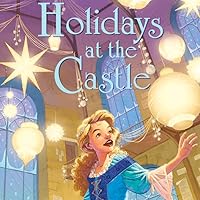
In their fight against FunTIme, the tedious, elective-crushing test prep program, origami Yoda and the Rebel Alliance have found powerful allies in unexpected places. But the allegiance of one mysterious, all-powerful figure remains to be Principal Rabbski. She says she’ll help the rebels, but now? The state standards tests are just a month away, and the FunTime Menace is as strong as ever.
Tom Angleberger artist-turned-writer. He is a columnist for the Roanoke Times in Roanoke, Virginia, and began work on his first book while in middle school. Tom is married to author-illustrator Cece Bell. He lives in Christianburg, Virginia.
First off, I'd like to add a disclaimer that I'm several years older than the target audience for this series, which I would estimate to be 9-12 year olds. Nevertheless, these books resonate with me deeply as a throwback to middle school years and I enjoy them more than most of the angsty paranormal/romance/action/dystopia/insert-current-trend-here novels on YA shelves today. I personally thought this was the best in the series so far. I LOVE the Funtime plot, much more than the plots of the first couple books. My middle school placed way too much emphasis on standardized tests, in fact entry into my school required students to get a certain score or higher on state tests. Students would always be comparing scores and it wasn't uncommon for seventh graders to be taking the SAT, and almost everyone was doing some sort of SAT/ACT prep. I do realize that this isn't a typical middle school experience, but most students are subject to standardized testing and could probably relate to this sort of storyline. Even in high school, teachers often play videos (Khan Academy, anyone?) or have us take notes from the textbook instead of actually teaching. But at least we don't have singing cartoon calculators :)
As for Murky's sexual orientation...I actually didn't see that coming, even though I did think it was a bit odd he chose a female character for his origami last book, and that he'd keep mentioning how the aforementioned character was married to Harvey's character. Reviewers here are saying that it's unnecessary, but what about Quavondo's chapter on pigging out on meat, or James Suervo's chapter on LuckyYucky, or the entire Crab Soccer storyline? At least now there is a plot--the first book was just a collection of vignettes containing evidence for Origami Yoda's existence, and almost any of the stories could've been deleted without much harm to the book. In fact, I think Murky's chapter was necessary. When I was in middle school, no popular books aimed towards my age had LGBT characters (none I can think of, anyway). When my friend came out, I had no idea what to do. For those of you saying it's inappropriate for second- or third-graders, these books aren't targeted to kids that young (there's dating and some curse words covered up by symbols!@#&). Disregarding that, there are LGBT kids at ANY age. They are born LGBT, and so I just don't see how this is "inappropriate."
As far as the series goes this is the best book by far. The message is very powerful and it just leaves you feeling good. However there is one major flaw and reason why I can't give this book 5 stars even though I really wanted to. There is one completely pointless and unrelated chapter about a sixth grader being gay. Why??? I am not one to find any problem with being gay, I don't support it but I'm not going to tell you how to live your life. I'm also not going to sit here and deny the fact that some sixth grader out there is probably struggling with their sexuality, but this book is not the place to find comfort. Nothing in this story/series has anything to do with it and I feel like although these books are written for middle school kids, some of my third graders devour these books (in fact I borrowed this one from a student) and it is not an appropriate conversation to be having with them. Argue with me all you want but it's my opinion and I'm sticking to it and giving this book a star short of what it could have gotten because of it.
The Good: This book nicely resolves all the threads that were left hanging by the last entry's cliffhanger ending. It's also good to see a principal who actually goes out on a limb for her students, not just some evil headmaster/headmistress who couldn't care less about the student body. Not only that, but, Christian faith was mentioned and not bashed in this one.
The Bad: Why did the author feel the need to mention that a student was gay, and why would wearing a pink shirt make him that way? I've known completely heterosexual guys who wore that color; in high school, a male friend of mine wore a pink polo shirt, and a female classmate applauded him, saying, "It takes a real man to wear pink!" Sure, middle school students will use pretty much anything to accuse you of being homosexual, but to make him actually that way instead of just thought to be that way was unnecessary.
We're not finished yet with the Rebel Alliance and their struggle against the FunTime Menace. Dwight (formerly Captain Dwight) and many others abandoned the resistance after Principal Rabbski turned the heat up on anyone threatening to do poorly on the state standards test in retaliation for FunTime's excruciating training videos and the elimination of all extracurricular activities, but the rebels scored a victory at the conclusion of The Surprise Attack of Jabba the Puppett when Mr. Howell and Jabba unexpectedly came through for them at a meeting between their parents and Rabbski. When the parents saw FunTime in action, they switched to support their kids, and FunTime's eradication appeared imminent. Weeks later, however, as Princess Labelmaker to the Rescue! begins, no changes have occurred. Principal Rabbski claims she's speaking to her superiors about student concerns regarding FunTime, but the machinery is moving very slowly, and the weeks are whizzing by to summer vacation. If FunTime isn't scrapped by then, they'll have suffered an entire school year of lame edutainment videos and no creative classes or activities. The administration will have run the clock out on the Rebel Alliance.
But...
...who...
...is...
...Princess Labelmaker?
This case file doesn't open like any that came before. A plethora of sensitive papers documenting the Rebel Alliance's clash with Principal Rabbski—anecdotes, doodles, protest logistics, daily news—have been organized and covertly delivered to the principal's office by an anonymous someone calling themselves Princess Labelmaker. Every snarky or angry comment made behind Rabbski's back, every time kids broke the rules casually or blatantly, every misadventure in the ranks as they figured out how to effectively defy the school, is contained in those pages. The principal isn't the enemy, Princess Labelmaker insists she believes, and if Rabbski reads the case file with an open mind, she'll see the kids aren't her enemy. They're suffering from FunTime's mind-numbing program and the lack of extracurriculars. Talented writers, artists, origami folders, actors, singers, and academic standouts, they used to like school for the fun, challenging options presented. Now they dread school, but have the tenacity to try and set things right even when the adults in charge don't understand their desire to eliminate FunTime, responding to their sincere protest with nothing but threats. If Principal Rabbski is fair-minded, Princess Labelmaker pleads, she'll see that Origami Yoda and the kids under his command want what's best for the school. She's their last best hope.
Most of this book is the case file, as usual, but each piece starts with a short introduction by Princess Labelmaker. We see the Rebel Alliance expand as other students tire of FunTime, then shrink at Rabbski's warning of dire consequences for children who "disrupt the learning environment." Even the core members have trouble maintaining a disciplined approach, and of course Harvey injects his sarcastic opinion whether it's needed or not. There are tense scenes in Principal Rabbski's office as she negotiates with Origami Yoda's anti-FunTime crew, though none that boil the blood quite like in The Surprise Attack of Jabba the Puppett. As in Darth Paper Strikes Back, the final showdown is at a school board meeting, but with a surprise guest who's prepared to defend FunTime, a guy with way more experience debating educational values than anyone in the Rebel Alliance. Dwight, Tommy, Sara, Kellen, Lance, Harvey, and the rest have determination and the Force on their side, as well as a new ally who might be as effective as Jabba the Puppett during the rebellion's other most pivotal moment. The fate of the school year depends on a coalition of smart, artistic seventh-graders taking down a smooth-talking company representative who cares little about their future. Is this the Alliance's last stand?
"To win, one must be strong when an opponent is weak".
—Princess Labelmaker to the Rescue!, P. 60
I love the Origami Yoda series. It's chockfull of special moments that would receive exclamation marks if I were annotating the narrative like a chess match. The best of them in Princess Labelmaker to the Rescue! come at the school board meeting, times when I felt like standing up and cheering out loud. It's tough to get readers that emotionally invested, but Tom Angleberger is a master of it. I'd go through the anxious buildup again just for those liberating scenes at the meeting, when a group of adults who wield immense power over the lives of children but aren't close enough to any actual kids to properly use it are put in their place by people who do care, stepping up to prove it as the rebellion starts to crumble. What made me realize this book is a keeper was Origami Yoda's insight that conflict between kids and adults usually happens because we misunderstand each other. Kids think adults are tyrants who want to turn them into miniature grownups, making frivolous rules to punish them for being young. Adults believe kids have a bad attitude and just want to grumble, not appreciating how hard it is to be in charge. How do we bridge that divide so adults listen to the legitimate concerns of kids, and we in return try not to complain without good reason? By showing adults we're intelligent, considerate, and our attitudes are positive overall. That's what Princess Labelmaker to the Rescue! is about, trusting a grownup to peek into the world of kids and recognize that they're doing a lot right in their protest of FunTime. They're not objecting to cause trouble; they're standing up for ideas they feel strongly about, while creatively expressing themselves, developing responsibility, and forming closer friendships. It takes first-class children's stories to show adults who've forgotten how it feels to be a kid that many young people have good intentions, and should be provided outlet for their creativity and passion for learning. Princess Labelmaker to the Rescue! is the kind of story that proves to adults the merits of children's literature, drawing young and old into a meeting of the minds that could head off the need for rebellions like the one in this book. Yet a hardhearted grownup won't be moved by the best juvenile stories. It takes a sympathetic person in charge, humble enough to admit their shortcomings and acknowledge that kids can be right and adults wrong, for change to occur even when the right case file falls across their desk. That's what allows this story's miracle to happen, and reminds us that lost causes are never as lost as we fear. Sometimes all that's required to save them from the brink is one unforeseen agent of change.
"Let fear defeat you not".
—Origami Yoda, Princess Labelmaker to the Rescue!, P. 160
The staples of the Origami Yoda series are all in this book, and we still love them. The comedy is fantastic, and Origami Yoda's advice is as simple and marvelous as ever. Dwight can be a goofball (I use the term affectionately) whose actions are hard to explain, but whether he's the source of Origami Yoda's wisdom or the Force is truly in effect, you'd do well to listen when the Jedi master speaks. In these last two books, his greatest feat has been damage control in the aftermath of heated arguments with school officials. It's difficult to respond rationally when your heart is pounding and you're furious from being treated unfairly, but yelling or insulting only hurts your position. Origami Yoda keeps a calm head when everything is chaotic, and that's why the Alliance has a chance against the FunTime Menace. That serenity under pressure is what I'll remember from this book when I face my own stressful disputes, and the reminder will be invaluable. I rate Princess Labelmaker to the Rescue! at least two and a half stars, maybe three, and by now I don't hesitate to say this is an excellent series. I'm privileged to read it and to know Tom Angleberger personally. Enjoy, fellow Folders.
These books just get better and better, don't they? We started out wondering if Origami Yoda was real, and reading to find out what would happen to Dwight. But now the universe of Origami Yoda has expanded to include the entire school, as the kids lose all elective courses (art, sports, drama, music) in favor of watching endless test-prep videos and taking endless prep tests. It's a very sly commentary on what is really happening in education today, and I cheered at the ending of this one!
I think I might need to go out right now and get the next (and last!) book . . . I'm pretty sure my 9yo won't have a problem with that, either.
This was my favorite of the Origami Yoda books, although I guess you'd have to say the first one set the bar fairly high for its creativity and great tone. The commentary on the EduFun company which makes both the tests, and the ridiculous materials to prepare for the tests -- the absurdity of which is noted by the twelve-year-olds in the book but apparently not by lots and lots of educational experts in the real world -- was really great. The tone is fun, and the characters will remind you of what middle schoolers are like on their best days.
Author and illustrator Tom Angleberger continues his perfect record with Princess Labelmaker to the Rescue, the fifth installment of his excellent Origami Yoda series. Misfit Dwight Tharp, his origami finger puppet and sure-fire oracle Yoda, and the rest of the Ralph McQuarrie Middle School gang are back to continue their Origami Rebellion Alliance.
For those new to the series, the data-obsessed Principal Rabbski has eliminated drama, art, chorus, music, and some sports at to make room for Fun Time™ — a stultifying video program to drill the seventh-graders in math for the end-year high-stakes tests, complete with a rapping Professor Fun Time and a cartoon dancing, rapping calculator. The Fun Time™ Menace, as it’s dubbed by Origami Yoda, is even more stultifying and ridiculous than you can imagine. While the ending is a bit improbable, you’ll find yourself cheering and enjoying every moment. Adults, who can remember those awkward years, will laugh louder and enjoy these books even more than its target audience.
And if you can listen to Princess Labelmaker to the Rescue as an audiobook, you’ll find the same wonderful cast of narrators as the four previous novels. While you’ll miss out on the wonderful illustrations, the immediacy is worth it.
Every middle grade reader should read this book now, and then again when they're 5 years into their chosen profession. Just to remember the lessons present.
I like that the principal gets a backstory in this series- she's not just some evil villain who enjoys torturing kids. She actually cares about what the kids are saying and works to advocate for them within the parameters she has to work within.
Another great book in the series. So cute, so funny -- perfect pitch for middle school readers with the "drama" of standardized tests and who likes who. The doodles in the margins just keep getting better and better. Looking forward to Origami Yoda #6.
I read the whole Origami Yoda Book series and I really like to read more like these if there will be a new kind of YODA I am really curious how he looks like and what should his powers do This was the first and the only book I love to read
Origami Yoda book should be a Series Movie which will really awesome to see I wish there will be an OriGami Yoda movie soon!
Origami Yoda: Princess Labelmaker to the Rescue is a timeless piece of realistic fiction written by Tom Angleberger. This is the 5th installment in the series and the most important in the storyline. It is told through all main members of the Rebel Alliance and follows a group of students and their leader Tommy, who are rebelling against a FUNtime education program that has caused their electives to disappear and all of the fun to be sucked out of their time at school. In the previous installments, they debated whether Origami Yoda was real, and could indeed use the force to give them advice. They then tried to prevent Origami Yoda’s owner, Dwight, from getting kicked out of the school. Dwight was a very peculiar and misunderstood student who couldn’t be more different from Origami Yoda and wouldn’t even take his own advice. Dwight left to go to a private school but ended up coming back, only to find that FUNtime was a new problem. He became Captain Dwight and formed the Rebel Alliance trying to get kids to bomb the tests to prove that Funtime didn’t work. The main group consisted of kids that each had star wars finger puppets and used them to argue against their principle to remove FUNtime. They ended up succeeding in the end, but realized that their principal wasn’t their enemy. Tommy is developed through the people around him and the events that shape his character. He starts the book as someone who has been appointed leader but can’t find the voice to lead when he needs to. For example, when confronted by his principal about their rebel alliance, he has a chance to say something, but can’t find the words and instead misses the opportunity and is critiqued by his adversarial friend. As the book progresses, Tommy continues to be tested by his school and the enemy FunTime. As the alliance grows stronger, he grows in confidence and is able to lead by example through his words. His origami character is Foldy-Wan Kenobi, a natural leader in the Star Wars movies. I think that this small piece of the story is a great addition to the development of Tommy. His rise from padawan to Jedi Knight and then to a leader in the start of the rebellion is a nice detail that adds to the development of his character. Just as Obi-Wan rose from an inexperienced Padawan to Jedi knight Tommy rises from a conflicted student to a well-spoken leader that promotes those around him to follow his example and in turn he leads the rebellion to success. One significant theme in the book is centered around confidence. Tommy’s confidence is the reason he is able to lead the people around him and it is the reason that he is eventually able to build a relationship with Sara, who becomes his girlfriend. Another theme in the story is friendship. In the beginning of this series, Tommy is only really friends with 2 other people, Kellen and Harvey. Through origami yoda, they build a community around them and really come together despite their differences. Lastly, the book shows the importance of wisdom and that it can come from many different unexpected places. So many people disregard Origami Yoda because Dwight is weird, but as soon as they get advice, they change their minds and always become better people in the end. Without Tom Angleberger's playful writing style, we wouldn’t get the same experience from the characters. Through the omniscient point of view you get to see each character write in first person about their experience. This adds critical depth to the story that wouldn’t be there without input from all the characters. I also love the comments that are put by Tommy and Harvey at the end of each case file chapter, they really show Tommy and Harvey’s conflicted friendship and add to the development of the stories. Overall, the story being told through children’s points of view is a very nice touch and makes you feel like you are part of the story. The fact that I read this book series in 3rd grade, came back to read it again, and still enjoyed it as much as I did adds to the timeless nature of this book. No matter how old you are, you can always enjoy this book because of the appeal to many different types of readers. Even if you don’t enjoy star wars, the book explores the joys and pitfalls of early adolescence. And this is why I would still give this book a 5 star rating even if I read it at 70 years old.
***May contain events that spoil the story, you have been warned.*** Have you read a book that makes you like the enemy? Well in this book it does this impeccably. The genre of this is fiction but it feels like it is much more than just "fiction." This book is amazing! Tom Angelberger is an stupefying writer and I love what he does.
Most of the stories events take place on the school board so the setting is very slim and will not be very long. The school wanted to ban Funtime with Gizmo and Professor Funtime but Ms. Rabbaski (The principal) is not giving in so the students decides to make a plan to get a 70% on the standardized tests witch will break the school then Ms. Rabbaski ends Funtime and gives the elective classes back which makes everyone happy. The conflict in this story is PvP (Person Versus Person) because the entire school is fighting Funtime which involves Ms. Rabbaski.
In my opinion this book is amazing, with a few minor flaws. I was surprised when the school decided to end Funtime by getting terrible grades because you don't really see that kind of behavior in a lot of other schools. My favorite part was when Jaba The Puppet Muted Funtime permanently because of the Gangnam Style part and then Harvey complains about still having Funtime.
I believe that this book is very well done and really adds a lot to the series. I like the way the author draws pictures on the side of the book just like the official "How to become a Jedi book" so this is amazing in my perspective. I was moved when the real action started and the school announced that they would almost fail the standardized tests with a 70%.
I give this book 5/5 stars because of how its written and what it is written about, being an enormous Star Wars fan (Owning a trivia book with over 1000 questions) I looked at this book when it was first manufactured. I would recommend this book to people who love Star Wars and are about the age of 9-13 because it really will not give very much interest in adults but if you love reading, go for it. So if you like to have Star Wars and origami blended together than this is perfect.
**WARNING SPOILERS AHEAD** Hey do you love the origami Yoda books well you'll love Princess Label Maker To The Rescue. It's a realistic fiction book. Wait origami Yoda is in the origami rebel alliance but not Dwight. That's as weird as Dwight thinking he's a magic squirrel. Though this is a real great book and I hope you enjoy it. In the exposition " Princess Label maker " is apparently showing principle Rabbski the case file anonymously. In the rising action their having a meeting on wether to keep Funtime or not. In the climax all the suspense is building to the point were virtually sweating. In the falling action Ms.Rabbski actually stands up for what's right for the learning environment. In the resolution the principle resigns and Sara almost kisses Tommy and wait you prevented that in this book but not in Fake Mustache fail Tom Angleberger ( kid's note: About time you said his name Karol ( car-ol) who guess what internet, he's totally a boy.) fail well and the good guys all live happily ever after ( Not. Also yes even Harvey lives happily ever after ) The setting is at McQuarrie middle school spring semester. The conflict is person vs society because all the good kids ( and the principle ) are ( legally ) battling the school board to end Funtime once and for all. All that is crazy that Dwight somehow stole the file. But wait why does Murky have Pad-me? He's a he for squids sake that is creepy. Here's a little something. Professor Funtime is the bad guy. I agree with that but if you read this book you'll know even he hates Funtime. Well AR-GAP sounds fun. I agree with that but it's an edu-fun product like xtremefun. Also have you ever been tired of being random ( cricket noises ), me neither. But Rabbski is the bad guy. I'd agree with that but not any more. Ok well um Murky is.... I don't agree with that and don't say it. Ok ok. In conclusion this book is amazing that's why I gave it 5 stars. I recommend this to all you origami Yoda fans. Bye. Peace out. Cake.
Are you intrested in space,puppets,mystery? If you do I suggest you read this book now! The genre is realistic fiction. My opinion on this book is average because this kind of gets confusing at some point of the story and then you start to get the whole idea. My book is about kids that calls themselves Rebels in 7th grade that has a group of their own with puppets, soon later they came against a new program called "FunTime" they made case files and tried to persuade their Principal Rabbski to cancel the program. The story takes place at a Mc Quarrie Middle School. The Rebels made a load of case files for the Principal so she could be on their side to turn it down. The conflict is person vs. person because The kids tried different tactics on to getting evidence from different teachers and sources from computers. The theme is; Even though you fail,there is always a key to your goal. The major symbol in the story is don't give up because the Rebels didn't give up on their Principal, they kept on trying and trying until they reached their goal. For example the case files helped them from convincing the Principal. I was surprised when the superintendent changed FunTime to a learning enviornment. They used all they have on them to achieve the goal. I rate the book a 4 out of 5 because the structure of the book is very great of how they set it up. I would recommend this book to people who like Star Wars and action. If you like to change everything for everyone you would like to read this book.
This is the sort of thing I love in this series - one page so succinctly explaining why it makes no sense to completely write off comic books as having no literary merit.
Book #5 continues on with the students' struggle to rid their school of the FunTime Menace, a supplemental educational program aimed at raising standardized test scores that's replaced all extracurricular classes. When I finished book #4, I felt like it was just half of a book and that #4 and #5 should be combined. Reading #5 didn't change my mind. I hate to say that, because combining them might require that several thought provoking subplots be left out. But overall I think the main plot suffers a bit by being stretched out through two books. I give it four stars because it still managed to make me laugh and I really did enjoy it, I just think two pretty good books could have been combined to equal one really great one.
The Origami Rebellion is underway, and Princess Labelmaker has joined the fight. Her comments, written on label maker tape to disguise her handwriting and protect her identity, lead us to believe she holds the key to vanquishing the FunTime menace. But who is she, really? And can she be trusted once the case file goes missing and all fingers and finger puppets point to her?
This book focuses almost exclusively on the battle against FunTime and the fight to restore curricular activities. I love the message relating to the shortcomings of standardized testing, but I wondered if it was too steep and issue for children’s literature. The theme of the Origami Yoda series is learning to celebrate individuality and to use each other’s strengths for group success. Both Princess Labelmaker to the Rescue and The Surprise Attack of Jabba the Puppett deviate from the episodic stories we’ve come to love, and in doing so loses focus on the development of each character. I really missed those personal stories and hope to see a strong return in the last installment of the Origami Yoda series.
Tommy and the origami rebellion tried to fight off the school board even more. They had to do even more "fun-functional" math work. Harvey made a chart to show how that made them dumber and he was going to show that to the school board. Dwight told them all he was going to get transferred because of everything he got in trouble for. I think that would be heartbreaking for them all because he started the origami rebellion. I think they needed a new leader for the rebellion. It turns out Tommy was the next in line, which is good because he has an origami Obi Wan Kenobi. Harvey wanted to be the next leader but because he had an origami Darth Vader, they thought it was a bad idea. I think that was a bad idea because he could've made them seem worse than they were. The principal went to the origami rebellion because she found out that the school board was doing this for money to keep for themselves and not for the school. Tommy made the principal a Princess Leia figure for her. I think the principal should've just told the school board to send out the money to schools instead of keeping it to themselves, then she wouldn't have had to "join" the origami rebellion.
This entire review has been hidden because of spoilers.
The series continues after the exciting events in SURPRISE ATTACK OF JABBA THE PUPPET, with Principal Rabbski telling the kids that she'll help them. The question is will she really help them or is it a trick? The kids are great, the story engaging, and I love talking about what happens to the characters with my kids. Even my 15 year old daughter loves this series, as well as my picky 10 year old son. Great for all ages and the parents in the way it addresses ways kids can work together to solve their problems.
So good, the commentary on testing should be read by teachers and parents. Sadly, I think a lot of kids miss the biting nature of EduFun, because it is their world as they know it.
Now, the Murky story line. I felt it came out of left field. It was short, never felt like we had a good resolution, and thrown in, almost like the author is trying to keep this out of younger readers' hands. I don't care if the character is gay, i care if he adds to the story. I care if it changes the characters. I don't care about his shirt.
The book is about how students are getting angry for having fun time. They tell and tell the teacher that we supposed to have clubs. The next day a teacher from a different school, tells if you get 80% or higher on your test, you could be in the clubs. And students are arguing that is not fair for all the students to have fun time and rest to have clubs. I really like this book because it doesn't talked about all star wars. I recommend this book to the kids who like star wars.
I kind of don't really like this story because it technically the result of the last book. They made another case file to show what happened after what happened. Then the case file got stolen by Dwight and turned in to the Principal. Though, it did make the principal understand. Then they fought against the district and won the Fun Time Menace. Best of all, they got to go D.C.. The next book is the field trip. (Warning) (Mushy parts.)
This entire review has been hidden because of spoilers.