Jump to ratings and reviews
Rate this book
Rate this book
Saunders' novel fuses the narrative style of fantasy fiction with a pre-colonial, alternate Africa. Inspired by and directly addresses the alienation of growing up an African American fan of science fiction and fantasy, which to this day remains a very ethnically homogonous genre.

Audiobook

First published November 1, 1981

83 people are currently reading
4155 people want to read

About the author

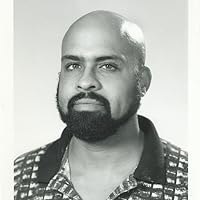
Charles R. Saunders

62 books185 followers
Saunders was born in 1946 in Elizabeth, Pennsylvania and emigrated to Canada in 1970. He has published science fiction and screenplays, two of which have become feature films. Saunders has also written a radio play, as well as other non-fiction works. He later worked as a journalist in Halifax, Nova Scotia and is the author of two recent works of historical non-fiction: Share and Care: The Story of the Nova Scotia Home for Colored Children and Black and Bluenose: The Contemporary History of a Community.

Ratings & Reviews

What do you think?
Rate this book

Friends & Following

Create a free account to discover what your friends think of this book!

Community Reviews

5 stars
280 (30%)
4 stars
361 (39%)
3 stars
190 (20%)
2 stars
60 (6%)
1 star
15 (1%)
Displaying 1 - 30 of 169 reviews
Profile Image for J.G. Keely.
546 reviews12.7k followers
April 4, 2015
In the hands of its most talented practitioners, Sword & Sorcery can be thrilling, scintillating, and deeply ironic--which makes it all the more regrettable to see just how thoughtless and cliche depictions of race and sex tend to be in the genre. Part of what excited me about the prospect of reading this hard-to-find series was that it is very much about race, a self-aware deconstruction of one of the genre’s historic failings.

It is that--as well as a dip into African History, a fascinating (and vast) slice of the human story that is too often ignored and downplayed--especially in the face of the endless pseudo-Medieval setting that covers the fantasy genre like a fetid swamp. However, the parallels with modern, Colonial slavery and the complexities of identity of American Blacks born to that tradition are a bit too on-the-nose. I would have appreciated more of a Humanistic look at the role slavery has played in human history, as well as the way that racial identity is coded and manufactured socially--it’s a vast and important set of ideas that needs more than simply the xenophobia of Lovecraft versus the modern, post-Civil Rights view to encapsulate it.

It was pleasant--particularly after trying the Kane series--to read stories which are so intensely focused upon the hero's internal life: his decisions, thoughts, experiences, and emotions. Never was there that struggle to connect the character to the world and to the story--as so often crops up in tales of ‘impossibly muscled’ heroes who cleave their way from danger to danger by the sweat of their brow, but otherwise remain aloof.

Unfortunately, Imaro’s successes were too often the result of a sort of generic ‘strength’--an overcoming by gritting one’s teeth, and simply coming out the other side unscathed. It’s always a shame to see a writer give in to such a simplistic resolution--but it's very common, and not only in the fantasy genre. There are few things more escapist, more wish-fulfilling than the notion of achieving something simply by wanting it enough, willing your way through, and forcing your preferences on the world. If only the world would bend to us, recognize that we are right, and let us have our way--but such a fantasy makes for a poorer story.

I wished that these internal struggles felt as personal and emotional to the character as his motivations. Intense conflict is such a great place to reveal a character, to show how he differs from everyone else on the page--what unique approach he takes, in light of his experiences and personal style.

Of course, that requires the imagination and skill of a seasoned author, while this is only Saunders' preliminary outing. There's certainly a lot of room for improvement, but also a lot of strong elements that make the story engaging and readable. I'll have to give Imaro another try, down the road, and see how he progresses.
Profile Image for Lee  (the Book Butcher).
378 reviews70 followers
April 12, 2023
African Conan! which is a good thing, only problem is the misogyny. this story is action packed. non stop action, battle scenes, and magical sorcerer out to get Imaro. not sure the writing is top self. really did not care for the bandit Imaro!
Profile Image for S.E. Lindberg.
Author 22 books208 followers
November 20, 2020
Quality Adventure with Legendary Context

Style & Legendary Motivations:
This unique blend of Lovecraft & African mythology features a Conan-like hero. It’s pulpy style & storytelling may merit 4 stars: its uniqueness & place in literature boost it to 5.

Imaro is adventure in the vein of vintage, pulp periodicals. Expect heavy doses of sorcery & horror at a brisk pace. Unlike traditional pulp stories, these chapters are slightly less-episodic and more-chronological. In other words, Imaro is more of a continuing character versus Howard’s original Conan publications. Adventure tropes that could be called “cheesy” are compensated well with engrossing, visceral battle scenes and bestial sorcery. In fact, I was reminded of James Silke Frazetta’s Death Dealer series and thought Charles R. Saunders was much more effective at a milieu including jungle/savannah beasts. Saunders’ Imaro felt more Frazetta-like than Gath in Prisoner of the Horned Helmet or Tooth and Claw.

An excerpt from Saunders’s Into to Milton Davis’s Griots: A Sword and Soul Anthology best reveals the author’s passion:
Robert E. Howard and his contemporaries were products of their time. Racism, in the form of white supremacy, was an integral part of the popular culture of the early decades of the twentieth century, and as such it pervaded pulp fiction. As a product of a later time during which the tenets of racism came under vigorous challenge, my enjoyment of fiction from past decades was often compromised by the racial attitudes I encountered in my reading. On some occasions, I simply let it slide. On others, I wrestled with resentment. Then I discovered a way to resolve my dilemma.

Interest in African history and culture surged during the 1960s, and at the same time I was reading sword-and-sorcery and fantasy fiction, I was also absorbing heretofore-unknown information about a continent that was not “dark” as its detractors made it out to be. I realized that this non-stereotypical Africa of history and legend was just as valid a setting for fantasy stories as was the ancient and medieval Europe that served as the common default setting for everything from Conan to Lord of the Rings. A character came into my head then: Imaro, a black man who could stand alongside mythical warrior-heroes like Beowulf and Hercules, as well as fictional creations such as Conan and Kull.

Saunders executed his dream very well, uniquely adding to adventure literature & steering how African mythology is conveyed with entertaining fiction. He coined the term “Sword & Soul” and effectively started a new subgenre. Wow! I would argue that he was so effective at writing that he depicted an almost darker Nyumbani continent (i.e. Africa), albeit one based more on history & substance rather than racism. Saunders’ sensitivity toward enslavement and genocide motivated him to replace his longest chapter (Book 3: Slaves of the Giant Kings) when Nightshade printed the second edition. He replaced it with “The Afua” and included an additional chapter (Betrayal in Blood).

I tracked down this copy too and really liked how Saunder's revisted his past work and made it stronger. The Afua chapter in particular seemed more consistent with Imaro's development as an outcast and his conflict with evil forces...and the writing seemed less forced (especially with Tanisha's introduction). The candid remarks from Saunders and Syzumskyj (a loyal fan who urged him to revist Imaro) added value. In short, despite the first edition being a good-read, I would recommend future readers to grab the Nightshade Version if given the option (since it is even better).

1981 Imaro Edition Contents:
• Book 1: Turkhana Knives
• Book 2: The Place of Stones
• Book 3: Slaves Of The Giant Kings (replaced with “The Afua” in the 2006 edition)
• Book 4: Horror in the Black Hills (Cover for 1986 based from this chapter)
• Book 5: The City of Madness (this is not in the 2006 edition of “Imaro-1” from Nightshade…but does appear in the first chapter in Nightshades’ “Imaro-2” renamed Mji Ya Wzimu its original title in from a 1974 publication in Dark Fantasy...actually, the Nightshade edition offers a different chapter in its place called Betrayal in Blood.)

Imaro:
Through these five chapters, Imaro evolves from being a fatherless, abandoned child (desiring to belong to a community)… into a vengeful, tribe-less Hercules-like figure (set on destroying evil forces). An excerpt captures his presence best:
The Ilyassai was a fearsome sight. His dark skin glistened sweat-slick through garments that hung in skimpy tatters from his massive frame. Crimson-crusted wounds scored his body like glyphs inscribed by devils. Dried blood matted his wooly hair. His face was hardened into an implacable mask of hatred. Unrequited vengeance flickered like a torch In his eyes, yet beneath the lamina of that emotion lay a core of grief so bitter it threatened to consume him entirely…


Imaro vs. Lovecraftian “Mashataan” Sorcery:
Each story compounds the conflict of Imaro versus the being Mashatann, whose minions or followers assume mythological status:
Elephantine legs rose like wrinkled trees from the ground, Long bony arms hung like sticks from a pair of, knobby shoulders. The hands were incongruously delicate and graceful. Other than his head, those hands were the only remotely human features [spoiler’s name] had left…

…Upon the dais hunched a bizarre image sculpted from pitted, gray-green stone. From the waist up, the creature the sculpture depicted resembled Ngai the gorilla, although its skin was hairless and its wide mouth bore fangs even longer than those of the red panther Imaro had slain. It was the lower extremities of the unknown beast’s body that marked it as something alien to the world of natural beings. Its legs were the hindquarters of Mboa the buffalo: thick, muscular haunches tapering to sharp, lethal hooves.


Cover:
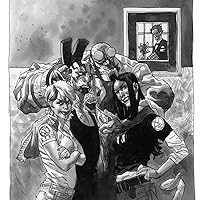
The 1981 cover by Ken Kelly captured the tone, but seems to have some glaring disconnects: the cover depicts Book Four Horror in the Hills, but has a hero that appears non-African and the creature approximates the primary antagonist...but is of the incorrect gender. The NightShade’s edition of Imaro-1, has a beautiful illustration by Vince Evans, but given the color-palette & the lack of magic & creatures, appears to showcase a Historical-Fiction novel rather than Fantasy-Fiction. Perhaps some of those design features were intentional marketing concepts.
Imaro by Charles R. Saunders Imaro by Charles R. Saunders

Finding A Copy:
The series Imaro continues with 3 more books: Imaro 2 : The Quest for Cush, The Trail of Bohu, Imaro: The Naama War, available from Lulu.com. Mshindo Kuumba has emerged as Saunder’s go-to artist for these. Click here to go to Saunders’ website to locate books: Where to purchase new Saunders books
The Quest for Cush (Imaro #2) by Charles R. Saunders The Trail of Bohu (Imaro, #3) by Charles R. Saunders The Naama War (Imaro, #4) by Charles R. Saunders
Although the first two Imaro books from DAW were reprinted in ~2006 by Nightshade, they are difficult to find now (2013). Used bookstores are your best bet. Ebooks are being developed according to a very credible source, that being virtual-brother-to-Saunders, Milton Davis, who edited Griots: A Sword and Soul Anthology, the foundational Sword & Soul anthology). He recently commented on the Sword & Sorcery Group on Goodreads - LINK
Milton Davis: Charles's current publisher is working on e-book versions of the Imaro books. There's a new Imaro story in Griots and a new Dossouye story in the upcoming Griots: Sisters of the Spear anthology. And to top it all off, I plan to publish the first book (or two) in a new series by him entitled 'Abengoni.


Sword & Soul is highly recommended to fantasy-fiction readers!
Profile Image for Jamie.
1,435 reviews221 followers
April 21, 2021
Imaro's is a fascinating world in an alternate Africa where sorcery and demons are manifest, yet I found it difficult to enjoy because he's just so utterly joyless. Again and again these stories, episodes in the coming of age and early adulthood of Imaro, "the son of no father", come down to themes of torment, alienation and vengeance, with his brooding over one betrayal after another. The somber mood is all pervasive, with Imaro seemingly incapable of enjoying any of his many victories and triumphs, nor much of anything else. It's a worthwhile read, especially for sword & sorcery enthusiasts, but I won't likely continue with the series as I prefer my heroes somewhat more dynamic and exuberant.
Profile Image for William Gwynne.
497 reviews3,562 followers
February 28, 2023
Heard that this is a traditional, classic sword and sorcery fantasy tale written in the 80s, exploring a fantasy world inspired by African culture. It intrigued me, so I listened to it on Audible over a few days. Imaro consists of a number of short stories with the same key character, which loosely link and have some over-arching plot lines. In that way it bears some similarities to The Last Wish, the first instalment in The Witcher books, especially as their is a lot of journeying in this tale as well, with the main focus on one central figure, and a few side characters cropping up a number of times.

It was said to bear similarities with Conan, which I see, but they are not really similar. They both would be considered 'classic sword and sorcery' fantasy, with a warrior as the main character, but the significantly different cultures explored as well as the themes, which are often about a bit of politics and leadership in Imaro make it different and also really interesting as well.

A good listen, with some great moments.

3.5/4 Stars
Profile Image for Edward Gwynne.
574 reviews2,447 followers
January 29, 2022
Sword and Soul fantasy, set in Africa, Conan style. Imaro is a great character and I loved the setting of these short stories.
Profile Image for C. Michael.
Author 7 books77 followers
October 8, 2012
I just read Imaro and it was rewarding reading experience I've had in quite some time.

I loved the Conan novels as a teen and imagined at some point writing a story with a black protagonist. Imaro is something like what I had in mind, but I've got to admit, much better! It's obvious Saunders immersed himself in African culture to create this world. The culture of the Masai-like Illassai is depicted so realistically and the story seems so grounded in reality that by the time the paranormal raises its head, I totally bought it.

Conan, almost as much as Tarzan, is a two-dimensional character. He's described as brooding, but Robert E. Howard never really explains why, other than that barbarians are no-nonsense. But Imaro is a fully realized character; the sources of his personal pain are clear to the reader and we see how the tragedies of his youth make him the man he becomes.

Imaro isn't simply black power wish fulfillment. To me, the story is elevated by the way the hero's triumphs are always either bitter sweet, laced with tragedy, often followed by disaster or misinterpreted (like the forest people whose demon-god he destroyed and who for generations afterward curse his name). He's almost always "outnumbered and outgunned." I was also struck by the pace of the story, which seems decades ahead of its time, more post than pre-Indiana Jones. Just as one crisis is resolved a greater one is bubbling up, for example when Imaro defeats the lion in his initiation only to face the confrontation with his tribe for cowardice.

Frankly I would have been satisfied with a black Conan, a hero we haven't seen before, but Imaro is deeper and better than that.

Profile Image for D.K..
Author 21 books138 followers
March 31, 2010
Imaro’s mother surrendered her five year old son so that he could become a great warrior of the Ilyassai tribe. His mother’s people treated him with disdain and ridicule. Through it all, Imaro grew to be the biggest and strongest of the Ilyassai children. When he reached manhood and the time had come for him to truly become an Ilyassai warrior and be accepted by his mother’s people, an evil magician strip him of that reward, spiraling Imaro’s life into a world of slavery, murderous thieves, and black magic.

Charles R. Saunders takes the reader through an Africa untainted by Europeans influences, whose history is quite different than the one we have always known. Imaro is to become a great warrior in a world he doesn’t feel he is apart of. Through his adventures, Imaro becomes a threat to enemies who work within the shadows and manipulates the weak willed and innocent to do their bidding. Imaro soon realizes if he is to survive, he must take the battle directly to the evil that plagues him.

Imaro is a must read novel and is the first book in a series. I’m looking forward to getting my hands on the sequels and continuing with the further adventures of Imaro.
Profile Image for Jason Ray Carney.
Author 39 books76 followers
November 19, 2020
This is an excellent anthology of sword and sorcery stories that center on Imaro, the Ilyassai warrior of the Tamburure. One feature that makes this distinctive is the setting, which is a fantastical version of pre-modern, pre-colonial Africa. The evil sorcerers (or "n'tu-mchawi") are so intriguing: they are demon-worshipping witch doctors. The monsters Imaro faces off against--water demons, giant idols, mud demons--suggest the unique atmosphere of indigenous and traditional African art and mythology (reading this makes one want to learn more about indigenous, pre-colonial African cultures). Another feature that makes this great is the protagonist, the eponymous Imaro: his personality and psychology are rendered in surprisingly in-depth ways for the genre of sword and sorcery, which sometimes provides psychologically simplistic protagonists. Imaro struggles with alienation from his adopted tribe and, later, his bandit band (his "haramia") and is equally a deadly warrior. Finally, the writing style is beautiful, even literary without affectation. My only complaint is the cliffhanger ending, which is kind of a bonus, because it provides motivation to read "Imaro 2."
Profile Image for Hot Mess Sommelière ~ Caro.
1,486 reviews239 followers
December 22, 2022
Well, I have to give the author props for translating the misogynist hypermasculine hero's journey schtick into a fantasy-African setting.

With that being said, it's still the same shitty genre with the same shitty message: the underdog outcast hero (who is ridiculously taller, bulkier, stronger, smarter and mightier than all the other super strong hunter/warriors of his clan) overcomes the obstacles in his way, finds and loses (via death) a few lovely ladies and beats, one by one, magically overpowered villains.

None of that is really surprising, because the hero is so very tall and strong. Like, ridiculously so. When you look at him you immediately notice his difference (and superiority!) to the rest of his mother's clan.

Of course they hate his guts, but when Imaro genially beats the strongest, most vicious lion EVER in his rite de passage, surely they must finally accept him, though he is a bastard born of rape and his mother was exiled? Lol, you wish.

The two dozen or so warriors who came to witness the epic feat were all enchanted by the local evil shaman. He's the snickering kind, so of course we got his POV as well. Ugh.

Instead of seeing Imaro kill the ginormous beast with ease never before seen, the warrior think THEY killed the lion while Imaro was busy pissing his pants and running away like an unmanly ninny. They proceed to shave his head (like a woman's, boo fucking hoo), publically humiliate him, call him "Un-Man", chain him to a post and starve him for a while before they would exile him weaponless into the wild. Nice people, those.

Anyway, the worst part? A few months back the clan raided another clan and captured some hot pieces of ass for ... public use, I guess? And one of them was real hot and Imaro thought himself so in love he wanted to romantically wife her up after his difficult test of manliness.

And now that he failed, not only does this captive/future sex slave no longer watch him with compassion and sympathy in her eyes, she also moves on to Imaro's mortal enemy, some teenage bully.

Imaro is super quick to judge the weakness and fickleness of women bla bla bla.

He gets free, later kills his mortal nemesis and even the snickering shaman guy. Yada yada

The best scene of the book was probably when Imaro confronted his ex-lady love about her faithlessness and she CHECKED HIS ASS.

Because, yo, what else was she supposed to do? She was kidnapped with the express purpose of becoming some kind of public sex slave to Imaro's people. The only thing that saved her (for a while) was Imaro "bookmarking" her and everyone expecting him to manage his trial.

She was 1000% right of course.

Then she demanded Imaro bring her back to her people, were he stole her from, and he's like lol no.

Asshat.

Slave girl is later murdered and Imaro's enemies even strip her flesh from her bones so only her skeleton remained (except for the head; they did preserve that for the emotional impact).

Imaro's reaction: well that sucks for her.

Later, he reminisces about the worst, most cruel loss ever inflicted on him: an evil shaman (not his clan's shaman - another one that he also killed. There are a lot of shamans, I stopped before he could kill the third evil magician who was out for his hide) murdered his beloved cow.

Yes, his cow.

That's when the novel lost the last bit of my respect.

This entire genre obviously intends to reassert the reader's masculinity and it's unpleasant to read.
Profile Image for Derek.
1,382 reviews8 followers
September 5, 2016
Not a Conan or an anti-Conan in concept, but it is interesting how Saunders takes the basic principle of an outcast, a warrior who has left his homeland, and made it work for him. The violence that Conan wields and Robert E Howard seems to worship is here a sour and unsettling thing, borne of anger and alienation and other psychic poison. Imaro might be a noteworthy warrior and possibly a talented leader of men, but those who follow him will eventually turn from loyalty and admiration to fear.

I want very much to see the rest of Imaro's story, not just for the pure adventurous thrill of it, the Lovecraft-by-way-of-Howard and the menaces drawn from a different tradition, but to see how Imaro will eventually grapple with his demons and establish an identity.
Profile Image for Eric.
404 reviews80 followers
July 2, 2017
"Never before has a man of the Ilyassai slain Ngatun as you did," Masadu said. "And never before has an Ilyassai done what you have this night. Warrior-my weapons are yours."

Imaro remained impassive.

"Take them, Imaro," Mubaku urged.

Imaro still neither moved nor spoke. Mubaku's next words came haltingly, as if at great cost.

"The wrongs we Ilyassai have done to you are greater than any you have done to us," the ol-arem said. "If killing Muburi and Kanoko, and stampeding the ngombe, were part of what you had to do to destroy the evil that was Chitendu-an evil we did not even know was still among us-we can live with that.

"You are a man and a warrior, Imaro. You have done deeds greater than any Ilyassai of any clan since the time of the First Ancestors-of Ajunge himself. Return to the manyattas with us. We will do you honor-and we will honor the memory of Katisa, who brought you among us. No longer will you be called 'son-of-no-father.' I will make you my own son, for your mother's blood is mine, as is yours."

Imaro looked at him then. Mubaku, father of Katisa. Mubaku, his grandfather. He recalled a day, long past, when he had unwittingly called Mubaku "mkale-ya-mzazi"- father of my mother. On that day, Mubaku had beaten him senseless.

He bent, and took up Masadu's arem and simi. As he held the warrior-trainer's weapons in his hands, new strength flowed into his weary limbs. It was the strength of vindication. His lifelong goal-acceptance as a warrior among his mother's people-was his at last. For one painfully short moment, his heart sang in triumph.

Then the memories returned, crowding his mind like ants teeming from an overturned hill. Bitter memories, hateful memories, each one a brick in a soaring wall of acrimony that would forever stand between him and the people who had now, belatedly, acknowledged him. The Ilyassai were a proud people, a harsh people, a fierce people, a just people... but they were not his people.

And he could not forget.

His hands opened. Masadu's weapons fell with a clatter and a clang to the rock-strewn ground. His heart hardened. And the hurt child spoke.

"You did not accept me before," he said tonelessly. "I will not accept you now."


4 1/4 stars
This entire review has been hidden because of spoilers.
Profile Image for Nicholas Perez.
609 reviews133 followers
Want to read
August 4, 2022
Been on a hunt for some good 'ol sword and sorcery stories. Was glad to find a series by a Black author.
Profile Image for Edward Erdelac.
Author 79 books114 followers
October 13, 2012
Very enjoyable sword and sorcery novel, Howardian in its excitement, and a bit above and beyond in terms of characterization. Though Imaro is the kind of superman that slashes his way through this genre, he's also capable of three dimensional thought and feeling, which is how I like to think Howard might have progressed had he lived.

Saunders does not limit Imaro or himself to a historical or prehistoric world, but instead fashions a fantastic Africa that never was, crawling with demons and magic infested sorcerers, animate tribal totems, ravenous river demons, proud hunters, and lusty bandits.

I didn't read the original 70's incarnation. As other reviewers state, the origin story of Imaro's love Tanisha has actually been revised as I guess the initial story referenced the real life conflict of the Tutsi and Hutu genocide a little too closely for the author's taste.

It's extremely refreshing to read a non-racist/stereotypical portrayal of an African hero in a sword and sorcery setting, particularly one where he's center stage, driving the plot. There's not a white face in Imaro and I'm fine if there never is in the character's continuing adventures, though I confess I would be curious to see how Saunders would handle white characters in his Afro-centric universe.

In the meantime, I'll be picking up Saunders' 30's pulp hero outing Damballah next.
Profile Image for Charles.
Author 41 books286 followers
July 30, 2008
Very inventive sword & sorcery set in an Alternate Africa. Virtually unique at the time it came out in introducing a hero who was black into a heroic fantasy setting. This is the first of three books in a series, although the three don't make a trilogy in the standard sense. Each book stands on its own.
Profile Image for Kalem Wright.
63 reviews20 followers
March 2, 2017
Imaro is a pioneering work in Black science fiction that sought to ground the sword and sorcery genre in Africa. It’s an outstanding concept. A skilled writer could potentially draw on various animist mythology for worldbuilding and stand out amongst the traditional Grecian/Roman/Norse gods and demons. A well-crafted world would celebrate African traditions from the mundane buildings and dress to the vitally important distinctions of political organization. A grounded, nuanced, and relatable hero could even comment on the resilience and strength of people across the Diaspora. The fatal flaw, however, is Charles Saunders is not a skilled writer.

Such as it is, the plot of Imaro finds the titular hero living among his adoptive tribe when his mother is forced to abandon him to exile. Never fully accepted, he sets out on a journey of revenge after malevolent magical forces poison the well even further.

To give as much benefit of the doubt as possible, you might say Saunders invites questions about the nature of identity and what belonging truly means via Imaro’s wanderings – he is, after all, labeled The Outsider at one point. He also makes an admirable effort to ground the proceedings in an alternative universe Africa which is pioneering and laudable. The sorcerers that hound Imaro, dangerous men who’ve made Faustian bargains with unseen deities, acknowledge Lovecraft. There are genuinely interesting ideas contained within this world.

However. However. Saunders simply isn’t up to the task of building on his own ideas. Imaro is a profoundly cruel man who disregards allies’ sacrifices, is completely emotionally inaccessible, and is generally repellant. The friends and foes that round out the work are one-dimensional, measured in muscles, cowardice, or attractiveness. Dialogue is as repetitive as the plot and what you’d expect to be the main attraction – the sex and violence – is just as disappointing.

There’s tremendous opportunity for a novelist to create heroes for the Diaspora but Imaro isn't that hero.
This entire review has been hidden because of spoilers.
Profile Image for Simon.
587 reviews271 followers
July 7, 2013
Inspired by Robert E. Howard's sword and sorcery stories but disappointed by the lack of fantasy stories set in Africa, with black heroes and with an appreciation of the rich diversity of the continent's cultures, Saunders decided to write his own. And I have to say, what a fantastic job he did.

We follow Imaro from his mysterious and humble beginnings through his coming of age and his travels across a semi-mythical Africa as he meets friends, lovers and enemies, as eventually he discovers that he is but a piece in a deadly game between rival spiritual powers.

I was gripped throughout and it was a pleasure to read. If you like the style of authors like Howard but can't stomach the racist undertones, or simply just want to read brilliant action packed heroic adventures, you really don't want to pass this by. Thank goodness the author was persuaded to bring the stories back into print (in an albeit revised form). I just can't wait to read the sequel.
Profile Image for Jim Reddy.
304 reviews13 followers
August 12, 2023
Imaro is a sword and sorcery adventure based on Africa and African traditions and legends. At the start, the main character Imaro is a young boy struggling to fit in with his people. He faces bullies and then a lion, evil sorcerers, and creepy monsters. He becomes a fierce warrior but he remains an outsider no matter where he goes.

I like how the chapters progress and tie into each other, something that becomes more obvious towards the end. Although the chapters were originally written as short stories they move a larger story forward. Yes, he’s taller, stronger, and a better fighter than everyone else, but every time he finds some form of happiness, something gets in his way.

I’m interested in languages so I liked the use of Swahili vocabulary, which I think helped create a unique setting. On the other hand, so many terms were used so often it felt a little overwhelming at first. Luckily there’s a glossary in the back.

I read the 2006 updated edition from Night Shade Books. I’m looking forward to reading the other volumes, especially since this volume ends on a cliffhanger.
Profile Image for Vincent Darlage.
Author 25 books64 followers
March 16, 2020
I've wanted to read these for almost a decade. I finally found copies a year or so ago. My backlog of books to read is immense, but I can go through audiobooks quickly (I have an hour to drive each way between work and home), so I nabbed this on audiobook. It is read by a pleasantly sonorous voice (Mirron Willis) who reads the narration without accent, but reads the dialogue with a wonderfully African accent. It added to the flavor immensely.

Anyway, this is like having an African Conan. Imaro is a Conan-like figure, an outcast from his own world (although Conan is a self-imposed exile, and Imaro is not). The allegory also fits into the reasons why the book was written. Fantasy is generally represented by Caucasian authors writing Caucasian main characters. Blacks are outcast - but here Imaro has arrived to wreak vengeance with thrilling tales of a pseudo-Africa that rings authentic. There are wizards and beautiful women, fights and wars, politics and intrigue, beasts and monsters. These are well-written tales.

I heartily recommend this to any fans of fantasy and adventure.
Profile Image for Luke.
1,627 reviews1,197 followers
November 5, 2024
2.5/5

I'm no reader of superhero tales. At one point early on, I did ride the Marvel train for a time, but repetitive status quo eventually left me far behind. This particular title, then, came out of a diversity initiative, as well as a certain reviewer who I remember heavily interacting with back in the day but have otherwise followed a divergent path from for a number of years. Now, it would've been cheap to solely compare this to Black Leopard, Red Wolf, but having read that work less than three months ago and liked it to boot, having that upstart descendant anachronistically prefigure the groundbreaking ancestor would be impossible to avoid in all regards. As such, what I liked most about this book is when it took the time to expand outward from its immediate doings, whether by laying out cultural bulwark or backtracking to explain psychological motivations inherited by long historical periods of community building. What I didn't like was the Gary Stu nature of Imaro, something that certainly had its place in the sword and sorcery of the late 20th c. US lit scene, but is hardly going to win a reader like me over. Still, without this, who knows if I would have ever had my Butler, or my Delany, or my aforementioned James, and for that I must give Saunders credit where credit is due. I must also give credit to my erstwhile county library system, as a 2-2.5 hour round commute is hardly the worst price to pay for being able to access a copy of this for free. I just wish I had gotten to this while the author was alive, seeing as how I had seven years to do so.
Profile Image for Adam.
997 reviews240 followers
May 1, 2017
Fantasy is practically synonymous with its typical medieval European setting, with a lot of exoticized external cultures. That’s a shame, because that terrain has nearly lost its power to excite our imaginations, and requires a fair bit of talent to pull off in a way that feels creative at this point. Nor does the faux-historical Eurocentric worldview the geography invokes hold up in a world with a very different cultural and political landscape and a much more substantial exposure to non-Western cultures.

I’m looking forward to exploring non-Western setting fantasy more in general (though that enthusiasm is a bit tempered now tbh) but I was especially excited to read Imaro for a few reasons. Coming out of Conan the Barbarian, which has tremendously dull writing as well as a numbingly familiar, and familiarly racist, world, I was hoping the fresh perspective, particularly switching to the other end of Howard’s exoticism gradient, would pay off in a more interesting book. I was also particularly excited when I found out Imaro is set in East Africa. I spent a term studying and travelling in Tanzania, and it’s got SO INCREDIBLY MUCH to offer as a fantasy setting. There is such a huge amount of geographic and cultural diversity, fascinating intersections of historical forces, and the landscapes are so vast and evocative and packed the gills with life and danger. I don’t know if I’m the person to do it but it’s so potent in my imagination that I kinda wanna try it at some point. In any case, I was hoping Imaro would cash in on that promise.

Saunders takes a pretty straightforward approach to adapting Africa to his fantasy world—about as straightforward as Conan’s pre-historic Europe, though he adds a lot more cultural signifiers. Imaro is Maasai, though he more or less speaks Swahili (a definite historical anachronism, but I guess we can let that slide). This is interesting because I kind of actually still remember how to speak Swahili. A lot of the words did more to remind me of my intro to Swahili class than to evoke a distant time and place. I guess that’s not a common reader experience now, and probably was less so in the ‘80s.

The first chapter had me relatively excited. It has a lot of what are basically ethnographic notes woven into the narration, and while that’s not an ideal way to present a culture, they sell Imaro’s experience as a unique and different childhood, dealing with some universal ideas through a very different cultural lens. There was even a pretty emotional scene, when he is being treated really unfairly by his peers.

Unfortunately, that doesn’t last for long. Saunders describes some animals in passing, and Imaro fights a leopard and a lion, but otherwise the landscape is barely present in the story. It’s mentioned in passing, but it quickly becomes clear that Saunders doesn’t intend to use much of the potential his setting offers.

While Imaro himself is superficially a morally complex character, with hate and bitterness his main motivations throughout the story, often acting in spite (though generally in ways that still make him seem sympathetic), he’s also fair and honorable in ways that make him stand out from his milieu. The world, on the other hand, has no moral nuance. Across all the varied cultures and organizations that Imaro deals with, he is incessantly persecuted by a single race of deities, described in the glossary as “Demon Gods […] inimical to the people of Nyumbani.” This animosity is presumably due to Imaro’s ancestry, which ties him to the “benign” Cloud Striders. None of this has the scent of African folklore or even the slight Weird Horror mystery of Conan’s world. It feels very artificial, a device Saunders uses to constantly move Imaro’s goalposts and keep the story going. Combined with the way the setting is handled,, it feels like Saunders has very little of the world imagined beyond what’s immediately ahead of his characters.

In practice, this turns out to mean that whenever Imaro crushes his enemies with his iron thews and indomitable will, there’s another, a man jealous of his strength and what it has won him and eager to deal with demons to take him down a peg. It’s a tremendously boring cycle of violence, and it reduces every character’s motivations to revenge, jealousy, and hate. Whatever emotional depth Imaro had to start with wears off quickly, and his internal life comes down to marshalling his hate and gritting his teeth and then winning.

The whole thing is repetitive and shallow and dull, and the prose is bad and not particularly smooth or quick, even. Despite the strength of the premise, Imaro feels more even than most Western fantasy books like something a Western fantasy nerd would write, a novice’s attempt at reproducing something that wasn’t all that good in the first place (though Imaro is as good as or better than Conan, still). It loses some of the racist worldview, though it doesn’t gain much in its place, and that doesn’t necessarily make it very progressive. It’s still a bald-faced wish-fulfillment fantasy, it just isn’t the fantasy of a proto-Nazi. Imaro literally has a sex slave sneak into his tent and fuck him just cuz he is who he is. Which is the sort of thing you’d write to make fun of this genre and its authors, but it’s pretty much just there in exactly the form your mockery might take.
Profile Image for Ευθυμία Δεσποτάκη.
Author 31 books239 followers
August 14, 2014
Καταρχήν, όπως δηλώνει κι ο ίδιος ο Σώντερς, είναι στην ουσία Imaro Revisited, δηλαδή όχι μια απλή επιμέλεια, αλλά και αρκετές αλλαγές σχετικά με το τι περιέχει η κάθε νουβέλα. Ειδικά για την αντικατάσταση του κομματιού "The Slaves of the Giant-Kings" με το "The Afua" μιλάει ο ίδιος διεξοδικά για το πώς ένιωσε όταν είδε αυτό που εκείνος είχε γράψει ως μια περιπέτεια, να γίνεται αληθινό και μάλιστα με τόσο τραγικό αποτέλεσμα.


Ο Ιμάρο είναι τελικά όπως ακριβώς τον περίμενα. Δεν είναι ο Κόναν μαύρος ή ο Ταρζάν των Αφρικανών, αλλά ένας αντίστοιχος του Κόναν ήρωας, που ωστόσο είναι καθαρά Αφρικανός. Ούτε μία από τις εμπνεύσεις και εφευρέσεις της κοσμοπλασίας του Σώντερς δεν βγαίνει από το κεντρικό στυλ, δε γλιστράει προς το κέλτικο και το δυτικό. Οι Ιλιασάι -η φυλή με την οποία μεγαλώνει ο Ιμάρο- είναι σκληροί κι έχουν τις δικές τους προτεραιότητες, τη δική τους ηθική. Όταν ο Ιμάρο το σκάει και αρχίζει να γνωρίζει και τον υπόλοιπο κόσμο, οι φυλές που συναντάει είναι όλο και πιο διαφορετικές, κι όμως καθαρά-ξεκάθαρα αφρικανικές. Η μαγεία έχει το φρικιαστικό μέγεθος που της δίνουν οι Αφρικανοί, με μικρές υποψίες κθουλιανού ύφους. Ερείπια και λίμνες μεγάλες ακαθόριστα σκοτεινά νερά, μάγοι που πουλούν την ψυχή τους για χάρη της δύναμης, παράξενα πλάσματα και δαιμόνια.


Ο ίδιος ο ήρωας δεν υστερεί σε τίποτε από τον Κόναν. Ο καλύτερος πολεμιστής, μοναχικός -χωρίς ποτέ ο συγγραφέας να ξεχνάει τη μοναξιά του ήρωά του, τις τύψεις του ή τις ενοχές του, αλλά και χωρίς να τον κάνει μελόδραμα για δεσποινίδες. Με ικανότητες και αδυναμίες. Οι περιφερειακοί χαρακτήρες είναι ξεκάθαροι και παρά που συνήθως είναι άσπρο-μαύρο, δε μοιάζουν με καρικατούρες. Οι σκηνές μάχης είναι εξαιρετικές και τα θηρία πάνε κι έρχονται.


Η αφήγηση του Σώντερς είναι δυνατή, μεστή κι οι φιοριτούρες της δε με ενόχλησαν καθόλου. Αντίθετα επειδή ο όλος χαρακτήρας του βιβλίου είναι αρκετά σκληρός -θα πω και παρακάτω σχετικά- τον ζητάς πού και πού λίγο λυρισμό, μια πιο γλαφυρή περιγραφή, ένα πιο ευαίσθητο κομμάτι. Για τους διαλόγους δεν είμαι ιδιαίτερα σίγουρη ότι είναι πειστικοί, πάντως κάνουν τη δουλειά τους.


Το κακό του βιβλίου -που δεν ξέρω κιόλας αν είναι ακριβώς κακό ή απλώς εμένα με δυσκόλεψε- ήταν η σκληρότητά του. Γενικά ο Κόναν είναι ένας βάρβαρος που πολεμάει όχι για την τιμή του, αλλά γιατί έτσι του την βίδωσε. Ο Κόναν θα χωθεί μέσα σε ένα επικίνδυνο δάσος, γιατί δε θέλει να κάνει τον κύκλο βρε αδελφέ. Κάνει ότι τον προστάξει η καρδιά του. Και τις περισσότερες φορές το διασκεδάζει κιόλας. Αντίθετα ο Ιμάρο κι ο κάθε ένας που εμφανίζεται στην πρώτη αυτή νουβέλα, ό,τι κάνει το κάνει απλά και μόνο για να επιβιώσει. Η σκληρότητα της σαβάνας είναι τόσο έντονη στο πρώτο μέρος που πραγματικά σκεφτόμουν να το παρατήσω (έχω και τα προβλήματά μου, δεν είμαι να με ζορίζουν και τα βιβλία μου...) το ότι συνέχισα να το διαβάζω, έστω και αργά οφειλόταν κυρίως στο ότι τόσο η ιστορία είναι πολύ ενδιαφέρουσα, όσο και στο ότι οι συμβάσεις που χρησιμοποιεί ο Σώντερς μου ήταν πολύ οικείες και γι' αυτό και εύκολες στο διάβασμα. Δεν ξέρω αν είναι ένα βιβλίο για γερά στομάχια, πάντως εγώ ένιωσα πραγματικά στο πετσί του χαρακτήρα του κι αυτό δε με έκανε να νιώσω καλά.

Ο Ιμάρο δεν είναι απλά ένας μαύρος Κόναν, ένας Κόναν της αφρικανικής ηπείρου. Ο Κόναν, ό,τι κι αν κάνει, το κάνει για τη διασκέδασή του, γιατί έτσι του τη σβούριξε, βρε αδερφέ. Ο Ιμάρο παλεύει για την επιβίωσή του, ό,τι κι αν κάνει είναι για να καταφέρει να ζήσει. Ο Κόναν είναι παιχνιδιάρης, ο Ιμάρο σκληρός. Ο Κόναν μεθάει που κάθε βγαίνουν τ' άστρα. Ο Ιμάρο δε μεθάει ούτε καν από την εξουσία.

Ο Ιμάρο κουβαλάει τη μαχητικότητα μιας φυλής που όλες οι άλλες θέλουν να την υποτάξουν. Ο Κόναν απλά κατέβηκε από το χωριό και ήρθε να ξεδώσει.
Profile Image for Daniel.
724 reviews50 followers
April 18, 2014
I picked this up with the intention of reading a single story as a break from a long, demanding read, and ended up reading this exclusively to its end. I am now struck by a mixture of feelings both happy and sad: the former, because these stories were great fun and a wonderful discovery to behold; the latter, because Saunders is a lost (and yet living) light in adventure fiction--to the extent that this book, and its immediate sequel, are no longer in print.

I came across this title in a post about fiction that's off the beaten path, and the premise caught me: a heroic character, inspired by Conan, who lives in a mythological Africa inhabited by monsters, magic and legends that reach into the present. I've read my fair share of Eurocentric fantasy fiction, and I'm always game for fiction that deviates from this furrow and takes the genre elsewhere (and else-when). Saunders takes such a turn; he also writes lucid, vibrant prose that is a few pegs above the norm, giving texture to the setting and weight to the characters. Of the latter, Imaro is a fantastic hero whose most sensational acts stem from his credo, rather than his obvious brawn. His values are introduced in this collection's first (and strongest) story, which establishes Imaro's tragic origins. The subsequent stories cast Imaro out into a world that grows with every tale, ushering in peoples and monsters that challenge Imaro and push him to larger acts of violence and heroism.

I read this kind of fiction for adventures and awesome characters, and Saunders weaves all of these together wit exceptional skill in these stories. Anyone who enjoys Howard, Brackett, Wellman, Lieber, etc, will likely find great pleasure in discovering Imaro and his stories, as I have. And now, I am on the hunt for the sequel.
3,035 reviews14 followers
March 3, 2008
In the thirty-plus years since the stories in this book first appeared, the writer has matured, and rewritten major segments that he felt no longer worked for him, or his intended audience. This "creator revisionism" annoyed me a bit, but his goal was to remove aspects of the story that were too close to tragic events that had since occurred in the real world.
Written as a response to the earlier Eurocentric trends in Sword & Sorcery fantasy, the Imaro stories create an Africa every bit as mythical as the proto-Europe of Howard's Conan stories. The weakness is the same one Howard never quite overcame...the desire to make each culture something recognizable in modern terms.
Overall, a good book, and I plan to read the rest of these revised editions.
Profile Image for Susan.
1,592 reviews24 followers
August 22, 2021
What a chauvinistic, male-centered work of violence. I certainly appreciate that this is Afro-centric and celebrates aspects of many different pre-colonial African cultures (that’s why I didn’t give it a 1-star rating). It points out the flaws in prejudice between people and cultures… and solves them through additional prejudice and violence. Women exist almost nowhere, and where they do exist are typically sexual objects to be won or discarded. Then it ended more in the middle of a chapter than at a reasonable end-point of a story. This book was a terrible disappointment.
Profile Image for Ashley.
120 reviews24 followers
October 25, 2014
I've seen better writing on fanfiction Livejournals. There are no words to express how extremely disappointing this was. One of the few Africa-inspired fantasy epics out there and it was just dreadful. Important in the grand scheme of the history of fantasy as a genre I suppose, but only because it exists. I guess somebody had to go first.
Profile Image for Vincent Stoessel.
613 reviews36 followers
March 17, 2014
Refreshingly good. This is the gold standard of African influenced fantasy. An epic sword and sorcery tale that ranks with the great classics of a bygone era. This is the first part of an ongoing series and I will be reading the next one.
Profile Image for Dartharagorn .
192 reviews3 followers
August 29, 2023
This was my first jump into "Sword and Soul" as it was called. I would give it 3.5 if I could. The glossary in the back was very helpful. It was great getting a decent back story while telling the main story and the ending will make you want to try and find the second book. Enjoying vintage paperbacks can be a challenge when you get on a hunt for a second volume. I would say if you enjoy "Sword and Sorcery" You will most likely enjoy this.
Displaying 1 - 30 of 169 reviews

Can't find what you're looking for?

Get help and learn more about the design.