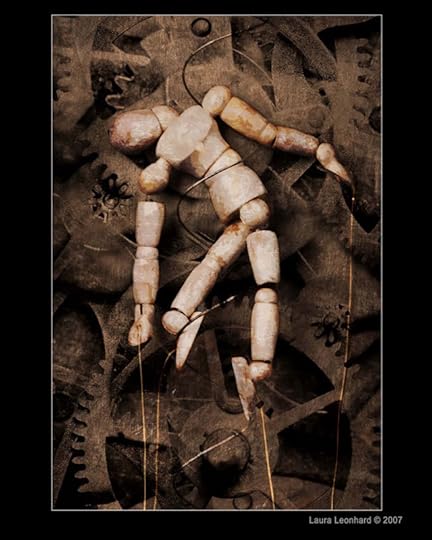
A soldier named Garnet Montrose returns home to coastal Virginia bearing a grotesque injury which is nauseatingly repellent to anyone who sees him. He hires two young male caretakers, Quintus Pearch and Potter Daventry, who look after his disability. They also act as a go-between with Garnet's childhood sweetheart, now the widow Georgina Rance, delivering her messages in a desperate attempt to restart their interrupted relationship.
With vivid Gothic imagery and drama, Purdy explores the varieties of love and the powerful transformations it can make in anyone's life. Readers will not soon forget Garnet, Quintus, and Daventry for the genuine human love that they share—and reject—and how they discover their way in the world.
James Otis Purdy was an American novelist, short-story writer, poet, and playwright who, from his debut in 1956, published over a dozen novels, and many collections of poetry, short stories, and plays. His work has been translated into more than 30 languages and in 2013 his short stories were collected in The Complete Short Stories of James Purdy. He has been praised by writers as diverse as Edward Albee, James M. Cain, Lillian Hellman, Francis King, Marianne Moore, Dorothy Parker, Dame Edith Sitwell, Terry Southern, Gore Vidal (who described Purdy as "an authentic American genius"), Jonathan Franzen (who called him, in Farther Away, "one of the most undervalued and underread writers in America"), A.N. Wilson, and both Jane Bowles and Paul Bowles. Purdy was the recipient of the Morton Dauwen Zabel Fiction Award from the American Academy of Arts and Letters (1993) and was nominated for the 1985 PEN/Faulkner Award for his novel On Glory's Course (1984). In addition, he won two Guggenheim Fellowships (1958 and 1962), and grants from the Ford Foundation (1961), and Rockefeller Foundation. He worked as an interpreter, and lectured in Europe with the United States Information Agency.
First published in 1975, this is a masculine gothic romance unlike anything I’ve read before. Garnet, our leading man, is a war-marred soldier who is so disfigured he frightens onlookers and requires the assistance of (attractive) men to rub circulation into his feet. He's also obsessed with a now-widowed woman who he had a crush on in high school. Over time, however, Garnet develops an attraction to his assistants and this new 'romance' plays out in bizarre, sometimes grotesque, ways.
It's an intriguing premise, and the intrigue easily keeps the pages turning. It helps that Purdy was a marvelous writer who effortlessly breathes life into the tight cast of characters. They all have deep desires, touches of backstory, and surprising secrets to reveal.
Sometimes these big character arcs happen in only a few pages, leading to some confusion if you aren't hanging on every word. A few times I was like "Wait, didn't that guy just feel the complete opposite in the last chapter?" That being said, Purdy's prose makes it easy. You WANT to hang on every word. He handles the novella structure exceptionally well and I don't believe it would have been as strong had he significantly expanded it. The vibe is reminiscent of Brideshead Revisited, but I thought Brideshead was overlong and could have benefited of a more concise style such as this.
Overall, an impressive work that delivers numerous surprises, a side of human condition rarely explored, some juicy homoerotic moments, memorable characters, and gorgeous writing. Also, it's something you could easily finish reading in a day. Recommended!
Unsure whilst reading and now unsure coming out. Purdy did his utmost to set me in a world which I can't place or at least I can't place the time. His use of language with that mix of old southern boy and the current slips which leave me confused as to when I am. It's surreal alright. But at the same time amidst all this misty feel of not knowing exactly where, when and what's happening, the feelings, the emotional tags ring out.
Well, our hero, Garnet has paid his price to society for being part of it, by 'defending' his country and the resulting consequences. Does this mean that now he can take free breaths, live free, love without constraints, be seen? But wouldn't doing so be lonely, it would mean he must forge a path all on his lonesome? Doesn't society exact a price from all of us, Daventry too. So was this a love story, a tragedy, comedy at it's darkest, tricky just like the story.
It's like we are puppets pulled here and there, pulled by the flow just like good little puppets being 'good' and sometimes we find ourselves in a strange position which we like, were we can breath and be 'seen' even though to the outside we appear all lopsided and strange. But then a slight shift again and we loose that position and for the life of us, we can't get that position back.
In a Shallow Grave is a story saturated by the horrifying effects of war long after the fighting stops, the complications inherent in the rural Southern U.S. experience, and the unexpected bonds that sometimes emerge to tie unlikely people together. It's a peculiar tale with a gothic bent to it, flirting with the supernatural but rooted in a dirty Southern realism characterized by bitter truths and a dash of mordant levity. It's the most nearly perfect novel I've read in recent memory and I couldn't have come across it at a better time, as it has renewed my waning faith that there is still literature out there that will utterly floor me. Not surprisingly in this case it comes by way of yet another semi-buried writer (in a shallow grave, perhaps), now deceased, whose work, despite being championed over the years by various better-known writers and having been reissued at various times by various publishers, has still not garnered a critical mass of readers. Throughout his career James Purdy stayed true to his uncompromising vision, often at odds with whatever critics wanted out of him, which naturally ensured his relative obscurity. Based on my experience with this book, however, I plan to read everything he wrote.
(Note: If you choose to read this in the City Lights edition, do not read the introduction before reading the novel. Most readers probably know to avoid reading introductions to novels until after they've finished the book, but in this case the level of spoilers is so egregiously high that it bears mentioning. Shame on you, Jerome Charyn, for revealing nearly every significant plot point in a novel that sustains much of its magic through suspense and slow-reveals.)
Do I know, really know, what I just read? Probably not, but I'm super happy I did. Of course I'm blaming this on Nick . And by blame I mean, thank you.
The best way to experience this tale, and yes, it is an experience, is to inhale it in one-go, let it subsume you, and float in James Purdy's mesmerizing language. For extra effect, I also chose to read it out loud. To my cat. She was lulled to sleep.
The bones of the story are whatever the blurb says: a soldier, Garnet Montrose, comes back horribly disfigured from the war in Vietnam, and, due to his physical ailments and ghastly appearance, decides to hire a man (his aspect is too horrifying for a woman) to tend to his needs and deliver love notes to a local widow. The applicants who end up taking the job don't exactly come through the regular channels, or are what Garnet expected. One is Quintus Powell, an 18 y.o. who comes to offer some goats that his momma no longer wants, and Potter Daventry, who just materializes, one day, in the forrest surrounding Garnet's house. The two split the work of caring for Garnet's physical and metaphysical needs, grounding him in the here and now, while releasing his mind.
To say any more would be a crime and tell you nothing of what this is about. In spite of the very specific time setting, this is a tale that could be taking place in the 1800's. It very much had that southern gothic Faulkner or O'Connor feel, where "The past is never dead. It's not even past." That unresolved or unhealed wound that was the Civil War, is barely scabbed over. There is a decidedly queer twist, and there is love between the men in the story, each of a different stripe, but this is definitely not a love story. Or maybe it is?
To me, it was a tale of identity, transformation, and becoming. At one point Garnet, who narrates the story, is talking about the nicknames he had in the army, and then says: "But now I am home I want only my own names used, but actually nobody calls me anything because nobody can see me to call me, you might say. I am more vague than the fog, and not even it seems to me as palpable as night."
C’è qualcosa di sgradevole, di urtante, in questo romanzo, ma allo stesso tempo si è spinti a proseguire la lettura. Il protagonista principale è Garnet Montrose, un ragazzo della Virginia reduce dal Vietnam che ritorna completamente sfigurato da un’esplosione e il cui aspetto fa ribrezzo. La sua vita si è fermata all’adolescenza, al suo ritorno tutto intorno è cambiato. Reietto e sprofondato in un abisso di dolore fisico e morale, Garnet resta ancorato al vecchio amore Georgina, ora vedova Rance, e al ricordo del suo passato di appassionato di ballo. La sua disabilità lo costringe a ricorrere all’aiuto di due assistenti, l’afroamericano Quintus, che leggerà ad alta voce per lui dei brani da testi poco comprensibili, e Daventry, fuggito dallo Utah dopo aver commesso un duplice assassinio e incaricato da Garnet di portare delle verbose lettere d’amore alla vedova Rance. Da qui l’intreccio si fa complesso, tra triangoli amorosi e relazioni omosessuali, deliri onirici e allucinazioni dovute ad abuso di erbe psicotrope, in un ambiente bigotto e razzista, e il tutto fa emergere ciò che è più nascosto e inconfessabile, ”È strano, ma quando ottieni ciò che desideri da tanto scopri che desiderare era meglio, desiderare fa più male, ma si avvicina più a quello che vuoi.”, mentre imperversa un uragano simbolico e reale a rimescolare le carte. E di sottofondo continua a suonare la canzone preferita di Garnet, On the Alamo.
This is the perfect book for anyone looking to discover or explore the works of James Purdy. In only 140 pages he displays the elements and characteristics of his highly literary writing: a mysterious Southern Gothic style, an unconventional narration which stimulates thought, dramatic turns of plot suggesting the supernatural...and a touch of violence. If you've read William Faulkner and/or Cormac McCarthy you will sense a resemblance, while also feeling eerily discomfited in the comparison as Purdy exposes alternate human truths never offered by those authors.
Perhaps, after reading this moving work, like me and many, many others, you will wonder why Purdy's numerous novels are virtually unknown to readers. This fact is one of the greater literary injustices which can be explained as having to do with the steady, longterm decline of American culture and the hypocrisy embedded within it. How interesting, then, that Purdy himself exposes that very culture to us in his works—and we surely don't want to see it.
(N.B. The book was also made into a 1988 movie with the same name. It changes the book's message: the ending was made more conventional.)
This video from the movie will give you a good idea of the feelings you'll have reading this strange book. It's not at all what I expected from reading other reviews... I expected pretension (I love me some pretension) and lots of wordy words. What I got instead was genuine Southern dialogue used to tell a story I have yet to make real sense of. I was just mesmerized by this little ditty. Highly recommended.
If you prefer normalcy, of any semblance, straight forward story telling, familiar use of the English language, or characters you can quickly identify with, well, we’re done here. For those who breathe less easily, keeping an eye out for strange shadows, Purdy lurks there, an odd duck (“a queer bird” as my mum used to say) who wrote without a damn what anyone might think of him, too busy pouring out his singular, often jarring stories, novels, plays and poems, pages teeming with southern gothic queer camp and truly broken hearts, wild scenarios and the bland everyday, abandoned castles and bustling diners all jumbled together.
I do wonder if he’s still being read. His work in general, his short stories in particular, are frequently misogynistic (think Margaret Dumont excised from Groucho and stuck in a horror movie /yes yes, frame of reference from a century ago/) and his portrayal of gay men often veers into the basic framework of this novel, the monster craving the Adonis. But his writer’s voice is so his own, so very wild! Swamp wild, a growing, dripping thing. Reading Purdy can be a bit of an acid trip with your elderly gay uncle recounting his violent love affair with a muscle bound construction worker. Unfair, that, he’s too serious a writer; Purdy’s refusal to offer the reader any comfort, coupled with his devotion to the written word has kept me attached since I first read In a Shallow Grave. It was a good place to begin.
Five on a scale of five? No, 13 on a scale of 10. Imagine the combined spirits of Faulkner and Flannery O'Connor on LSD, channeling Rimbaud and Kafka - who are trying to outdo each other paragraph by paragraph, chapter by chapter, like jazz musicians trading eights. This is the book they would write. Layers and layers with surprise after surprise, every idea and action is qualified or contradicted, then contradicted again and that contradiction is qualified, and it's all perfect and spectacular. What a wild ride. I've never read anything like it.
Garnet Montrose è un reduce della guerra in Vietnam: un quasi morto (o mezzo vivo) che riesce a tornare in Virginia. Il suo rientro non è tra i più facili da gestire: il suo volto è stato completamente deturpato dall'esplosione e ciò che i suoi occhi leggono nello sguardo di chi lo vede è solo disgusto.
Emarginato, allontanato, rifiutato da tutti, per lui vivere è come stare in una tomba. O forse se fosse stato chiuso in una tomba non avrebbe continuato a soffrire così tanto: le ferite non sono solo quelle inferte dall'ordigno sul suo corpo, ma sono quelle che il suo passato continua a infliggergli nella sua memoria, insieme a un presente fatto di rifiuto e di emarginazione.
"Ogni sedia su cui mi siedo diventa una padella incandescente, il letto è come vetro smerigliato, e perfino quando cammino, dalla cute del cranio all’alluce, mi sento di fuoco… «È la memoria» dicevano i medici, «le ferite al corpo sono guarite, è la memoria che continua a farti soffrire, impara a dimenticare e starai di nuovo bene.»"
Garnet sente la necessità di prendere a servizio da lui dei domestici con mansioni un po' insolite: leggere libri, massaggiargli i piedi quando diventano freddi, scrivere e far recapitare le lettere per la donna che Garnet considera l'amore della sua vita.
Nel girotondo di aspiranti domestici, due uomini saranno determinanti per Garnet: Quintus e Daventry. Grazie a loro, Garnet si sentirà accettato e comincerà a far i conti con la sua natura.
«Garnet, tu sei come una vena in cui scorre il fiume sotterraneo della vita».
Un romanzo dalle tinte forti, nere, in cui il lettore si muove nel fiume più scuro delle passioni: "Poi, dopo quel tremendo abbraccio, prima che capissimo che cosa stava accadendo, ballavamo sotto la mobile sfera multicolore che aveva visto almeno un milione di ragazzi e ragazze stringersi l’uno all’altro e scivolare volteggiando sul pavimento lucido. Adesso c’era una coppia che la luna non aveva mai veduto prima. Eravamo ballerini nella tomba, io credo, oppure avevamo attraversato il grande fiume e lasciato dietro di noi il nocchiero e il cane a tre teste. Ma ero di nuovo felice, anche se tutto era così strano, e avevo voglia di sussurrargli all’orecchio e chiedergli chi era, ma che importava, qualcuno mi stringeva di nuovo a sé mentre perfino i dottori erano colti da nausea e vomito alla mia vista, qualcuno mi teneva stretto a sé la notte prima di sposare la mia ragazza."
Tra accettazione e rifiuto, in balia di un desiderio erotico omosessuale, alla fine, anche per Garnet arriva la primavera: "La gemma è il simbolo della rinascita dell’anno, è la gioia degli alberi che esplode. È allora che gli alberi si presentano come creature nuove e la trasformazione è prodotta dalla loro vera essenza, e si dilettano grandemente a rivaleggiare l’un l’altro con le più svariate sfumature di colore."
It's character driven, centered around a disfigured soldier and his two hired servants, who form an intense codependency on one another. There's romance but it's not romantic. There's grotesque, body horror stuff but I wouldn't call it horror. There's supernatural stuff but it could also just be a series of coincidences. It's Southern Gothic at it's best.
It's also racist in a way that goes beyond what could've been brushed off as acceptable in the 1970's American South. It's the main reason why I can't give this 5 stars, and still feel guilty about giving it 4 stars. But it could be used as a jumping off point to have some great conversations in a book club or academic setting.
There's so much good stuff here that I've picked up one of the author's other books and plan to read it soon.
I’m sold—Purdy is a god. In a Shallow Grave, a haunting 1975 novella that charts with hallucinatory intensity a complex constellation of emotional allegiances and thwarted longings among four lonely souls in the wilds of Virginia, is just as surreally immersive as his unsettling Gothic melodrama Narrow Rooms (1978), if rather more trance-like than frenzied. Purdy’s language is highly idiosyncratic: he blends a variety of disparate styles and dialects together, repeats himself, employs italics, and switches between low slang and almost transcendent poetry, giving the prose a winding, hypnotic rhythm that makes one feel as if one were in a dream. It’s incredibly rich, surprising even, and the concise length of this book enables a powerfully concentrated and potent employment of these formal effects. The narrative is just as beautiful. It’s essentially a sort of psychological chamber drama, populated with what in lesser hands would be mere grotesques but in Purdy’s become vivid, captivating, painfully wretched human beings. Mystical, historical, and spiritual threads are masterfully interwoven throughout, rising in the final stretch to an apocalyptic pitch before becalming into a melancholy ripple. Like in Narrow Rooms, the consuming love story that the book centers itself around is ultimately a doomed one, but the ending here is full of healing rather than tragedy. It’s deeply poignant, and only further cements my view of Purdy as a major and shamefully overlooked American writer. Happy Valentine’s Day. ❤️
Interesting examination of love between two men, one of whom is a horribly disfigured Vietnam veteran. Difficult to describe, but the writing propels the story right along.
What a demented little book! What a fucked up mess! Purdy is a special writer, fo sho. The Goodreaders comparing his brand of Southern Gothic to Faulkner and O'Connor are onto something (I feel the aura of Poe here, as well)-- there's a dark comedy here, and a sort of Old Testament severity, as well-- but "In a Shallow Grave" is finally a unique delight. I mean, it's a love story, innit? A masochistic fantasy nightmare, yeah, but also a story about deep passions and unknown attracions. A gay (sort of) love triangle (quadrilateral?) that you'd probably never encounter in modern fiction, as Purdy and his characters are just too indifferent what we readers think of them. Which makes reading about their various plights both a perversely fun and somewhat chilling experience.
A war veteran*, hideously disfigured by his war wounds, sequesters himself in his ancestral Virginian estate. He seeks to hire "what in the days of my grandfather they called a valet" to wash his feet and pass his hopeless love letters to the widow Rance next door - but struggles to find a man who can be in his presence without retching. This is dark, existentialist Southern Gothic: there is violence, some startlingly explicit sex, complicated and nuanced homosexual (and interracial) love, natural disasters, and elements of the supernatural. Many of its characters reveal deep secrets.
With his laconic tone, and a vocabulary embellished by reading the centuries-old tomes in his home (a wonderful, intertextual touch, leading to the occasional mystification of his interlocutors), the hero Garnet Montrose conveys his acute emotional tumult obliquely and in stages, like Elmore Leonard rewriting Jean Genet. "The droll thing about getting what you long for is the longing was better," he summarises near the end. (Too bad he never read Proust.) "Longing pains more, but it's more what you want."
Purdy has something of a reputation as an overlooked American genius: Jonathan Franzen - whose past recommendations of Christina Stead and Paula Fox have steered me true - calls him "one of the most undervalued and underread writers in America". Purdy himself described his novels as an "underground river, flowing often undetected through the American landscape".
* A lone reference to somewhere "near the South China Sea" places the war in Vietnam and the story roughly comtemporary with its publication (1976), but by all signs it could have been set two hundred years ago, and for most of the time while reading I assumed that it was.
Purdy is not for you if you expect to like or see yourself in characters. You will not see yourself in his work. I never have, and that's great! His interests were not to transcribe reality, to comfort, to relate. His novels and stories, rather, expose the naked, painful, unreachable desires of his characters, and of all of us if we can admit it. This one, like NARROW ROOMS, is about desire and loneliness, fear, and dangerous love. Our narrator elicits sympathy in us because of his war injuries, as well as disgust because he can be pathetic cruel, and because he's a racist. In the intro, Schenker calls this Garnet's "conflicting racial attitudes," but it's just racism. I'm not saying Purdy was racist. I don't know that. But his character is. And really, when you read work by old white men, it's hard to know what you're going to get. It can be a little uncomfortable reading Purdy's portrayals, but honestly, every portrayal in his work causes discomfort. I think he was motivated by sexual desire, by his own tastes and desires, which may repel you.
Quintus, a Black man who becomes a kind of companion to Garnet, the main character, is almost a cipher, until he becomes one of the most powerful forces in the book. Purdy does this a lot, shifts power from one character to another. It's interesting. There are several reversals of love in this work. Just to see how Purdy controls these forces is astounding, and worth reading the book to witness.
I enjoyed James Purdy's In a Shallow Grave. I know this is described as dark and a horror story, but I must be jaded (and I do read a lot of super dark stuff) but I think everyone can handle this story. The subject is fascinating, and the characters are beautifully done. This is a book to savor and I definitely recommend it.
The audio version of In a Shallow Grave is nicely performed by Matt Godfrey.
spooky mysterious intense surreal southern gothic...... like if flannery o’connor wrote the book of revelations. The little blurbs on the back cover make it sound like the feel good book of the year but this is so much freakier than that.
This is a novel that demands discussion. There is so much going on, so much symbolism. I certainly have not figured everything out. It's a psychological drama about life and death, love, beauty... Read it!
Valancourt has reissued a lot of old Gothic/horror books over the last few years, so I've become a big fan of the stuff they publish, enough so that I'll buy a lot of their reprints sight unseen. That was the case with In a Shallow Grave. Unfortunately, not all of Valancourt's reprints are hits with me. That was also the case with In a Shallow Grave.
Most of my feelings about the novella, though, are due to my expectations. I think I was expecting the book to be a literary horror novel, not a literary novel with some supernatural overtones. The story is essentially plotless, relying on the characters to carry the story, and there wasn't much in them to which I could relate. The central characters are a Vietnam veteran who has suffered an injury that has turned him inside-out (I kept getting hung up on the impossibility of such a thing), a black man who serves as a caregiver for the veteran (who in turn raises some racist feeling in the narrator), and another caregiver who shows up on the veteran's property one day and forms a friendship with him. The three of them then spend the novella developing their relationships.
The story seems to be the kind that begs examination and discussion, and due to its themes, I can see it being the subject of many English literature courses. It just didn't do anything for me, again because I was looking for something a bit flashier, a bit more entertaining. I don't mind stories with literary ambitions, or that are unafraid to address complex themes, but I want it to be entertaining, as well. I'm much more interested in books that have been blurbed by Adrian Tchaikovsky or N.K. Jemisin than I am in those blurbed by Gore Vidal or Tennessee Williams. Call it anti-intellectual if you like, but it's the truth.
Fortunate Musical Connection: "Shallow Grave" by A Pale Horse Named Death
Three Stars for this Audible audiobook version of a Classic Gothic Romance Novel of Love and Alienation
The story told by James Purdy in his 1975 novel ‘In a Shallow Grave’, and currently being told in this 2019 Audible audiobook skillfully narrated by Matt Godfrey, is of a hideously disfigured veteran, Garnet Montrose, trying to return to his childhood sweetheart in their coastal Virginia hometown.
Montrose advertises for a caregiver and eventually hires two men, Quintus Pearch and Potter Daventry, whose major duties are to rub Garnet’s feet, read to him, and, while he dictates, write down and deliver letters to Georgina Rance, his childhood sweetheart, who is now the widow Rance.
I had no idea what to expect when I began listening to this audiobook, I’ll still not certain how I feel about everything that happened, but I’m sure I’ll appreciate it more as I continue to reflect on the multiple forms of love and alienation it portrays.
Ja vēl pirms izlasīšanas gribas uzmeklēt čupu ar citām autora grāmatām, tad mazāk par piecām zvaigznēm nevar likt. Viss notiek tādā kā bibliskā sapnī, kur visu gribas attiecināt uz visu citu, superspilgtas ainas nostiprinās n-tajos atkārtojumos, un visi runā kā Folknera murgu tēli.
This was the first work by James Purdy I ever read, in fact I had never heard of him and loved reading this short, mesmerising, transformative novel (only 140 pages and I strongly advise reading it in one session) and once read I could not understand how I had lived so long in ignorance of such a genius (although Purdy never had anywhere near the celebrity he deserves my ignorance was all my fault - I'd grown up with his books in my father's library - though I didn't know it then). Before saying anything about what the novel is let me tell you what it is not - a gothic novel, a southern gothic novel (nor is Purdy a southern writer - he was born and grew up in Ohio), a horror or supernatural novel, and above all it is not a gay novel. It is saturated, like almost all Purdy's novels, with a clear homoerotic desire for, love of and appreciation and desire for male flesh, for love between men, but to read it is purely a gay story is to miss so much. Purdy wrote some of the most clear and beautiful prose dealing physical desire between and towards men but is so outside what passes as gay today that it is grotesquely limiting and recipe for disappointment for anyone expecting a conventional gay story.
So what is the novel about? Love, redemption, transformation, resurrection - all of these and more. It is beautiful, lyrical and sad to an almost unbearable extent. It can be read as a morality tale, no one gets what they want but they get what they think they want, which is utterly different (and I would have used the more tears are shed over answered prayers if it hadn't been ruined by that over-rated fraud Truman Capote).
But describing, talking about, analysing works like 'In a Shallow Grave' serves only one purpose as far as I am concerned, as a spur to getting as many people as possible to read this wonderful work of art.
A few comments on the film 'In A Shallow Grave':
That anyone back in the 1980's chose to make a film of this book is to be congratulated, I can't help thinking that it must have someone's pet project - director, producer I don't know - but whoever's passionate interest got this project green lighted either accepted or imposed alterations which eviscerated the final film of any of the books depth and beauty.
'In a Shallow Grave' the novel is a 140 pages of tightly knitted relationships between a young, horribly scared veteran of WWII, his two teenage male carers, and the woman he worships and sends letters to but cannot met as she has forbidden it. In the end he loses everything he really wanted, gains what he thought he wanted and ceases to be the sender of unwanted love letters to being the recipient of them. It is a lot for 140 pages but is certainly a simple enough dynamic for a powerful film. But the film simplifies into crudeness a subtle masterpiece to produce a simplistic love story that doesn't work. What is more the film betrays the book without creating a great film - it is boring, conventional film which fails to engage because it doesn't have the courage to address any of the issues the novel does - most obviously in that the hideously scared protagonist of the novel who causes men to throw up and flee is transformed to someone with bad, but not repulsive, scaring on one half of his face. Once the central prop of the novel has been prettified out of existence it is easy to compromise the rest. If the film had been a great film then the changes wouldn't matter. Film and novels are different mediums - but once you compromise everything important then the film is lost and audiences know that they are being fed distortions and lies even if they have never read the source book.
My original not very good or insightful review from 2016:
This is at least the second time I have read this amazing book. James Purdy has to be one of the most extraordinary post war American writers. Gore Vidal has helped attract more attention to him recently and when you look at the success of Mr. Vidal's very mediocre novels compared to Mr. Purdy's almost complete obscurity it was a very noble thing to do. I loved this book, it is beautiful, moving, and I was blown away by it. Purdy is the writer I would be if I could write.
Sometimes when you think you’ve hit on a hidden gem you find out by the time the ending comes around that you’ve been tricked all along. Indeed, if you look at the reviews on this site you see a lot of comparison of James Purdy to other great writers. While I may admire a lot of what James Purdy is doing in this book the whole doesn’t come together all that well in the end, at least for me. In Shallow Graves is an absurd, funny and even touching book about a veteran who is so scarred by his wounds that he is disgusting and horrible to look at. Some characters even throw up at his appearance. His love for a woman whom he went to school with as a boy and who can no longer stand his appearance is especially poignant. He sends her desperate love letters that are repetitive and don’t really say anything at all and that he believes are scarcely noticed by her. He has become so debilitated that he can hardly take care of himself so that he has to rely on servants to do things such as rub his feet and to read to him. The entire beginning of the book deals with the difficulty in trying to find an adequate servant. Meaning one who can stand his appearance in the first place. It is a truly sad state for a person to be in. There is an awkward love triangle in this book that I didn’t find particularly convincing and that rang hollow. There are some gay undertones in this triangle too but this didn’t strike me as particularly believable given the context of the story and given the buildup. The gay part was only briefly touched on near the end although the undertones pervade much of the novel, so to call this Glbt fiction is a bit of misnomer because it’s not real explicit throughout. I love absurd novels but the character relationships still need to be compelling and believable. The characters were compelling but their relationships didn’t always make that much sense. Also this novel has a lot of very well written and poignant passages and the character voice is done very well, fitting with how southern people speak. So although I may have enjoyed many aspects to this book, the fact that my enjoyment of it deteriorated slowly over its course is the cause for the low rating. I’m not sure if this is because I missed something or if the story is missing some vital piece like I assume. It may be I missed something because I did read the novel in small increments over a period of time but I’d like to think that I didn’t miss too much.
his book is one of the darkest that Purdy has written, about a veteran named Garnet Montrose who returns to his Southern home totally disfigured and nauseatingly repellent to anyone who sees him. His primary relationships are with two young men, Quintus Pearch and Potter Daventry, whom he hires to rub his feet and deliver messages to his childhood sweetheart, now the widow Georgina Rance. The story is told in first person, and once you get caught in its grim magic, you will not want to finish it but you won't be able to stop reading.
A sad, chilling, very Gothic story about a disfigured war vet who's completely isolated from his species because he is so horrible to look at, and who pines after the lovely widow he can see out his window. One thing I like about it is the timelessness of it -- except for a single sentence you cannot begin to imagine which war he's a veteran of, because the story is so very ensconced in that stultified, humid sort of Deep South gentility that's been around since before the Civil War. Really beautifully written -- it's all about the fascinating character development.