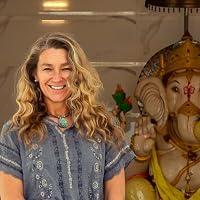
Delving deep into an intricate web of unlikely heroes, power struggles, and living legends, Elephants in the Hourglass takes listeners on an extraordinary journey of discovery. In her nonfiction debut, Kim Frank blends personal narrative, vivid descriptions, and meticulous research as she illuminates the ways we seek to survive on our rapidly changing planet.
Kim is a female explorer who found her life completely changed as she was drawn deeper and deeper into the plight of the remarkable Asian elephant. For Kim, once she learned about the intense, multi-faceted, but little-known conflict between humans and elephants in North India, she was unable to rest until she had learned more and told this story to the outside world. This was a place and topic totally unknown to her. Up until that point, Kim was an ordinary mom and emerging writer. After a fraught divorce, she felt a need to recapture her own voice and expand her world, and so she set out to the Himalaya with the goal of telling a story worthy of National Geographic.
What Kim experienced would change her life. Filled with unforgettable characters and encounters with one of the most sensitive, intelligent, and awe-inspiring creatures on the planet, Elephants in the Hourglass will inspire listeners to pursue their goals and be a force for change in unexpected places.
THE MAKING OF Elephants in the Hourglass, would be a better title for this book. I was hoping that this book would explain the problem of elephants and people coexisting, or failing to do so, in India, and some of it did. But instead of focusing on the title problem or it's solutions, most of this book is learning the behind-the-scenes minutia of how this story would be researched and the geographical and cultural logistics required to do so. It was a fine narration of how a woman was forced to deal with family and career during a time that she was figuring out what do write about and how to do it, and in that regard it was worth reading. But it's not the book I wanted to read or that was promised by the synopsis I read. I was hoping for a gripping narrative or a scholarly look at elephant situation, and I got only some of that, and only sporadically. Now I want to read the finished product. Good book, just not what I expected.
What it takes to balance motherhood and chase an endangered wildlife story (Sun Valley, Idaho, Northern Rockies, and northeast India bordering Nepal at the base of the Himalayas; 2013 to 2021): “I am an unlikely explorer. A mother of two daughters. Not a scientist or adventurer, but a woman who overcomes a lifetime of fear and lack of confidence in pursuit of a complex truth. Risk does not entice me, but a story that connects us and has the power to make change is irresistible,” writes multiple award-winning writer Kim Frank in her irresistible, multi-faceted Elephants in the Hourglass.
Irresistible beyond a complex, noble quest to observe, understand, and capture an urgent story of increasingly imperiled wild Asian elephants in the North/West Bengal region of India. A remote area with some of the greatest numbers of Indian elephants on the planet. (You’ll learn the difference between Indian and African elephants). That’s because Frank is after the interconnectedness and impact of people (in her personal life and more broadly) and wild animal conservation.
It’s important, then, to note the pacing of the book. The Hourglass in the title isn’t only poetic, but revealing since the action in the wilds of India doesn’t intensely kick in until the second half. The first half reads like a candid, passionate parenting memoir, with a potent desire to stretch oneself on a grander scale. Frank comes across as having a big heart, room for fiercely protecting her two daughters adopted from China and also taking her responsibilities very seriously as a storyteller. In this case, capturing rare moments witnessing a magnificent endangered animal, the Indian elephant. The scope breathtaking. The prose vivid.
As a mother, Frank asks the persistent question, Can a mother can have it all? How to “strike the right balance” between always wanting to be there for your children yet also yearning for an outsized purpose globally? Where should a mother’s loyalties be? Do you have to be true to yourself to be a good mother?
As for the elephants, she humbly asks: “Who am I to tell this story?’ Answered by a moral conviction and mindset that’s absorbed the wisdom of Indian novelist and environmental activist Arundhati Roy quoted in the epigraph:
“To never forget your own insignificance. To seek joy in the saddest of places. To pursue beauty to its lair. To never simplify what is complicated or complicate what is simple. To respect strength, never power. Above all to watch. To try and understand. To never look away. And never, never forgot.”
The writer in her is stirred by the question: “Where is the Western coverage about the Asian elephant?” She arrives at this question inspired by her husband David’s membership in the exclusive The Explorer’s Club, committed to exploration and discovery. Also inspirationally through his connections, meeting and befriending wildlife photographer “superhero” Jody MacDonald, named One of the 25 Most Adventurous Women in the Past 25 Years and One of the Nine Female Adventure Photographers Who Push the Limits.
Utterly amazed, Jody lets Frank join her on a planned expedition to northern India as a writing partner to bring home a “human-elephant conflict” story on the plight of Indian elephants. Accompanying Jody is another wildlife photographer, Avijan Saha, who later becomes Frank’s solo “guide and guru” as they keep returning to record the “struggling for peace and food” in a country with designated “elephant corridors.” A country that for centuries revered their elephant owing to a Hindu god with an elephant head: Ganesh.
Along with this ancient tradition is the practice of assigning a keeper, a caretaker, a mahout to care for an elephant for the rest of their life. You’ll meet a mahout: thirty-two-year-old Faridul, who has his own family but touchingly expresses he’ll devote his entire life to caring for one elephant. An emotionally affecting, lifelong bond between humans and elephants that we’re shown is “dying” out.
To whet your imagination as to what’s in store, see this joint MacDonald/Frank collaboration in Keepers of the Ganesh: https://jodymacdonaldphotography.com/....
To meet Faridul, the duo must first meet the legendary “Queen of Elephants,” an “elephant whisperer,” Parbati Barua, once a mahout, now a trainer of these special souls. In her early seventies, she’s “made a life in a man’s world.” Elusive and distrustful, she’s in no rush to open up to outsiders, calling for formidable patience and determination on a tight-time schedule to tell the heartfelt story of the threats to the survival of Indian elephants. Barua became famous thirty years ago when Britain’s Mark Shand wrote a book about her, Queen of the Elephants, and produced a BBC documentary by the same name.
“This is not a romantic tale, glorifying a bygone era, and it isn’t a scathing investigative journalism piece on animal abuse,” Frank says. The angst of divorcing her first husband after eleven years and continued tensions with him, then renewing a childhood friendship with David, marrying him four years later in the midst of her elephant journey provides important context to the emotional demands of pursuing a wildlife quest. Without his unwavering support, there’s little doubt this story would have ever been told by Frank. A rock and savior, he deeply appreciates Frank’s identity soul-searching, torn between her devotion as a mother and to this powerful story. Feels good to know she too is now a member of The Explorer’s Club.
A mother’s fears of the emotional damage leaving her children behind is exacerbated knowing one of her daughters has separation anxiety, having been abandoned twice in less than a year by her biological mother and foster mother. Heart-tugging too is Frank’s other daughter who’s extremely sensitive, mature, and selfless in wanting her mother to follow her dreams. Underscoring, then, the writer’s acute sensitivity to elephant mothers protecting their calves, profoundly viewed from the human lens of being a mother doing the same for her children.
Other inspirational people Frank and the reader meet are also protectors of India’s elephant by way of their nonprofit groups, such as the Wildlife Trust of India and SPOAR (Society for Protection Ophiofauna & Animal Rights).
The connections between the dangerous “mental condition” of the male Asian elephant, the bull, during mating season and the intensity of the elephant mother’s instinct to protect her calves is presented alongside other examples of less aggressive but harmful human behaviors such as social media, the loss of faith, lack of education, and the Bangladesh refugee crisis, often reminding us of related issues at home and abroad.
Other issues are identified too, ranging from habitat loss, especially the degradation of forests turned into tea plantations that don’t provide thriving habitats for elephants; railroad and highway deaths along migratory paths; lack of resources; greed, misunderstandings; and competition between humans and elephants fighting for the same limited food sources.
The image below of an elephant camp at the Gorumara National Park, a site Frank is finally granted access to, tells another part of this daunting story: https://commons.wikimedia.org/wiki/Fi....
Conflicted. While I appreciate Frank’s honesty throughout, I have a lot of thoughts. Firstly, if you’re actually wanting to know about actual human-elephant conflict in Northeast India, what’s being done about it and who the players are, skip to the last 75 pages.
I appreciate her deep introspection, but a great majority of the book is devoted to the author and her stories with marriage, children, and insecurities. This is juxtaposed with her self-described apathy towards actual villagers in some cases dealing with the conflict she wrote her book about.
I appreciate her journey and the fact that she more or less comes around to a level of comfort in her assignment in India, but I think she still missed the mark on learning about actual people dealing with this conflict. Frank says throughout the book that she wants to get the story to a “western audience.” Admirable. But she only gets around to describing experiences and connections with elephants and NGO and Forest Department workers. Virtually overloooked or actually interacted with are the other 50% of the conflict - the actual humans living the human-elephant conflict.
I loved this book! I am known for my love of animals, especially elephants, and my librarian put this book aside for me with a note “Saw this book. Thought you would enjoy it.” I’m so glad she did! I felt as though I were there with Kim for the entire adventure and found myself at the edge of my seat many times. I was in tears quite often while reading this book and some parts were difficult to read. But it is a story that needed to be told and I’m so glad that Kim was a “Brave Mouse” and went out there and did it. I live my life trying to do whatever I can to help animals so I found this book to be truly inspirational.
Compelling story of the human-elephant interaction crisis, but too much about her personal insecurities. I can relate to the "imposter syndrome" she experienced, but is this a book about the elephants, or a book about restarting a career after raising kids & going through a divorce?
Five stars - not because it was an amazing book, but because I couldn't wait to hear more about the way the people in the story blundered their way around India. The author, who narrated her incredible tale, is quite upfront about how absolutely unprepared she was for undertaking the project.
Let me back track. If I wake up in the middle of the night, I listen to the radio. Sometimes it's the BBC World Service and sometimes it's my local NPR station's very early morning offerings. I caught the author describing one of her encounters with a raging bull elephant and couldn't believe my ears. So, the next day I tracked down an audiobook version and listened in incredulity. The author lives in a very privileged bubble. But so do some of the Indian characters - princesses living in faded grandeur while still exerting great power, bureaucrats who confound her every move, friends/colleagues who lose interest in her project and move on the the next remote adventure. But, mostly, I was fascinated by how confused Ms Frank was that she couldn't just arrive in India and get what she wanted, when she wanted, and how she wanted.
However, after four trips during which she discovered so much both about herself and the plight of the elephants, she begins to understand how naive she was. So it's a compelling tale of the West meeting the East and the struggle to understand each other. Of how the internet can seemingly provide all the answers, but, in reality those aren't the answers. Or, maybe you didn't ask the right question?
This is not a scientific textbook about Elephas maximus. Instead, this is a story about an improbable journey taken by an uncertain woman to an area she knew nothing about, to tell a story of people she had never met trying to co-exist with a fabled species losing habitat at an alarming rate, with fatal results. Really, it is a story about all of us. About what compels us, what inspires us and, most of all, what drives us to act.
I really enjoyed this book. The pacing is quick, the characters are intriguing, and the problem is real. You could replace the word "elephants" with "wolves," "whales" or "narwhals" and the lessons would be the same. How do we as humans co-exist with wildlife as we simultaneously compete for food, habitat and security? The author shows her vulnerability as she tries to illuminate a serious problem in a far off place. She admits she is not a scientist, and she does not pretend to be. As she writes in the book, "Risk does not entice me, but a story that connects us and has the power to make change is irresistible. Somehow one story became two, then three, and eventually this book. Here is that tale. It begins with an elephant."
I highly recommend this book. If you are intrigued by the power to make change, this book is for you.
Hello- I am the writer of this book. That I gave it a 5-star is unusual as in my many years as a writer, I cannot reread much of what I have written without being extremely critical. This book is deeply personal and also illuminates the little-known story of endangered Asian elephants and the people who live with them. It was ambitious to write-- to somehow weave stories of motherhood, balancing careers, and facing fears with a growing understanding of Asian elephants and people along the eastern Himalaya. My vision was to show that if you want to fix something, you have to act. And, this means at every level: in your personal life as well as reaching for positive change for our planet, for future generations. It's been 3 years since I completed this book. My daughters are now in college and I am making a documentary that focuses on the people and elephants in this region. I give talks and am planning another project in India. When I re-read this book, I see the woman I was at that time: frightened, curious, naive, earnest, and courageous. I hope you find something in here that speaks to you. And, I hope you continue to follow this journey through film and ongoing projects.
Kim became aware of the human-elephant interaction issues in the North Bengal region of India and she wanted to know more and make it known. What she found was that the issues were more complex than she'd thought with no easy solutions. Over the course of three years, she makes several trips to see the conflict for herself and talk with those who are trying to find solutions. This came up on the county library site in the new Non-fiction titles. I've been fascinated by elephants for years and looked forward to reading this. Kim's passion for the cause comes through and she struggled with her emotions of the issues but also about leaving her tween daughters for several weeks each time. She is vulnerable and honest.
Kim’s selfless journey is one that shifts her perspective for a lifetime and one that shifted mine as well. As a reminder how privileged we are, and how we may end up in a worse state if we do not change critical decisions on our natural ecosystem being made by lawmakers. What is happening in India with the elephants is something that everybody should know about. And to hear these stories witnessed first hand was harrowing. The way Kim narrated this story was raw and poetic. I am truly touched by these stories. Pray for India and all of those misunderstood. The natives and the elephants. A poetic comparison of motherhood was woven into the story that I thoroughly appreciated.
This is a beautifully written, lyrical story of discovery and empowerment, that takes you on an exotic and harrowing journey to India where the author - and you - discover meanings and missions in life, through an odyssey among elephants to help save them. It's an unexpected and challenging adventure for the author, a stay at home mother who left a burgeoning creative career to devote herself to her two young daughters and family. Nothing but sheer grit and determination could prepare her for a trek to study and hopefully save these majestic beasts. But focus, heartache to see the ancient elephants' plight in the modern world, and courage that even she did not know she had, guide and continually propel her.
The author's writing is poetic and powerful. She has a keen eye and sensibility, and her writing is as lush and mesmerizing as the jungles and exotic creatures she encounters. There are countless setbacks and moments of terror in her quest. But they only add to her resolve to continue her mission, all the while somehow having to also balance ever-important milestones and even quiet moments at home for her daughters and husband literally half a world away.
Really great, indeed intoxicating writing, and a truly inspirational story. Most. Highly. Recommended.
Fascinating and enlightening, documenting the conflict between humans and Asian elephants. The author is honest about the challenges of trying to observe without becoming part of the problem. I can appreciate how hard it must be to stay professional, and see all sides while witnessing heartbreaking scenes of elephant and humans competing for resources. . Of course it’s not all bad. The author paints a complex picture. Some of it is beautiful and the way she shares her experiences makes you feel that you are on the journey with her. It’s well worth the read.
I received this book as a Christmas present and didn’t expect to enjoy reading it. But I surprised myself - to me, the story is interesting due to the author’s struggle to balance her personal and professional lives. I learned something about elephants in India. And I really enjoyed her writing skills.
There are so many mid-life memoirs out there about "finding self". What I appreciate about Elephants in the Hourglass is that it is a memoir about "finding purpose".
I could not finish the book. It is written !almost as a daily diary. If I could get past the style presentation to continue, it could rate more than a 2 star for me.