

What do you think?
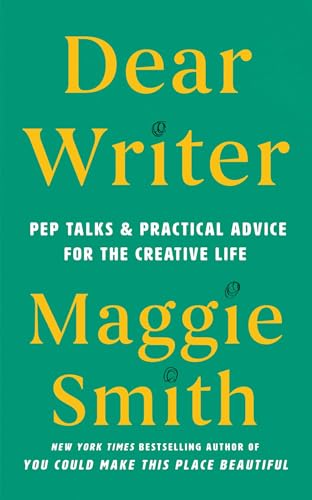
Dear Writer: Pep Talks & Practical Advice for the Creative Life
New York Times
bestselling author and poet Maggie Smith distills creativity and the craft of writing with a practical guide perfect for fans of Elizabeth Gilbert’s
Big Magic
and Anne Lamott’s Bird by Bird.
Drawing from her twenty years of teaching experience and her bestselling Substack newsletter, For Dear Life, Maggie Smith breaks down creativity into ten essential attention, wonder, vision, play, surprise, vulnerability, restlessness, tenacity, connection, and hope. Each element is explored through short, inspiring, and craft-focused essays, followed by generative writing prompts. Dear Writer provides tools that artists of all experience levels can apply to their own creative practices and carry with them into all genres and all areas of life.
Drawing from her twenty years of teaching experience and her bestselling Substack newsletter, For Dear Life, Maggie Smith breaks down creativity into ten essential attention, wonder, vision, play, surprise, vulnerability, restlessness, tenacity, connection, and hope. Each element is explored through short, inspiring, and craft-focused essays, followed by generative writing prompts. Dear Writer provides tools that artists of all experience levels can apply to their own creative practices and carry with them into all genres and all areas of life.
272 pages, Hardcover
First published January 1, 2025
About the author
Maggie Smith
19 books2,089 followersMaggie Smith is the author of the national bestseller Keep Moving: Notes on Loss, Creativity, and Change (One Signal/Simon & Schuster 2020); Good Bones (Tupelo Press, 2017); The Well Speaks of Its Own Poison (Tupelo Press 2015), winner of the Dorset Prize, selected by Kimiko Hahn; and Lamp of the Body (Red Hen Press 2005), winner of the Benjamin Saltman Poetry Award; and three prizewinning chapbooks.
Smith's poems and essays have appeared in the New York Times, The New Yorker, Poetry, Image, The Best American Poetry, The Paris Review, AGNI, Guernica, Brevity, the Washington Post, The Gettysburg Review, Ploughshares, and many other journals and anthologies. In 2016 her poem “Good Bones” went viral internationally and has been translated into nearly a dozen languages. In April 2017 the poem was featured on the CBS primetime drama Madam Secretary.
A 2011 National Endowment for the Arts Fellow, Maggie Smith works as freelance writer and editor. She is an Editor at Large at the Kenyon Review and is also on the faculty of Spalding University's low-residency MFA program.
Smith's poems and essays have appeared in the New York Times, The New Yorker, Poetry, Image, The Best American Poetry, The Paris Review, AGNI, Guernica, Brevity, the Washington Post, The Gettysburg Review, Ploughshares, and many other journals and anthologies. In 2016 her poem “Good Bones” went viral internationally and has been translated into nearly a dozen languages. In April 2017 the poem was featured on the CBS primetime drama Madam Secretary.
A 2011 National Endowment for the Arts Fellow, Maggie Smith works as freelance writer and editor. She is an Editor at Large at the Kenyon Review and is also on the faculty of Spalding University's low-residency MFA program.
Ratings & Reviews
Friends & Following
Create a free account to discover what your friends think of this book!
Community Reviews
Displaying 1 - 30 of 342 reviews

Read
April 21, 2025Decent, as writing advice books go, but maybe the needle was moved by the fact that it's mostly POETRY writing advice and that's my bailiwick at this point in my life. Sure, a lot of the advice was ho-hum and been there, read that, but there were also happy moments like the advice in the revising chapter, some of which I haven't tried before and may soon.
I wasn't enamored with the chapters that started with "Dear Writer" and ended with Maggie's signature. I guess the point was that Maggie Smith, famous poet and college professor, was writing a personal note to me, but the point that came across more was "corny."
What I liked best, though, were the chapters that ended with titles of poems, essays, and books that tie in with the chapter subject. They provided generous leads and I copied them all down in hopes that Smith's expertise would lead me to good stuff -- stuff that would benefit me both as a writer and a teacher.
I wasn't enamored with the chapters that started with "Dear Writer" and ended with Maggie's signature. I guess the point was that Maggie Smith, famous poet and college professor, was writing a personal note to me, but the point that came across more was "corny."
What I liked best, though, were the chapters that ended with titles of poems, essays, and books that tie in with the chapter subject. They provided generous leads and I copied them all down in hopes that Smith's expertise would lead me to good stuff -- stuff that would benefit me both as a writer and a teacher.

May 1, 2025
EXCERPT: On beginnings - The reader should be intrigued, drawn in, propelled forward. It doesn't matter how powerful the middle of the story is, or how gorgeous and resonant the ending is, if the reader never reaches it.
ABOUT 'DEAR WRITER': Drawing from her twenty years of teaching experience and her bestselling Substack newsletter, For Dear Life, Maggie Smith breaks down creativity into ten essential attention, wonder, vision, play, surprise, vulnerability, restlessness, tenacity, connection, and hope. Each element is explored through short, inspiring, and craft-focused essays, followed by generative writing prompts. Dear Writer provides tools that artists of all experience levels can apply to their own creative practices and carry with them into all genres and all areas of life.
MY THOUGHTS: Dear Writer worked for me on many levels. Initially I was disappointed because it appeared to be angled solely towards advice for poets. But, as I read, I came to realise that much of this advice can be applied equally well to any form of writing and I began to feel excited and inspired to the point where I was up at 3am reworking my writing group assignment, which I had been feeling unhappy with, the morning it was due.
The 'pep talks' start with the salutation "Dear Writer", finish with Maggie's signature and, while not always containing new advice, certainly reinforces what I have read before. But there are things that were new to me, advice that was a little more practical than that I have read before. Advice that is enormously valuable to someone who writes or wants to write but is also juggling family and career commitments. Life doesn't always allow us to sit down daily at a prescribed time and churn out a prescribed number of words, and Maggie Smith acknowledges this and provides alternative strategies.
Maggie stresses the importance of slowing down and paying attention to the world around you, to utilising all your senses - not just your sight and hearing; of jotting down words and ideas as they come to you - something I am guilty of NOT doing. I thought that if I repeated things to myself three times, I would remember - that definitely does NOT work for me! Pen and notebook, phone - it doesn't matter what you use - write on your arm if you need to!
She sets "Generative Writing Activities", some of which I am going to suggest to the writing group I attend, and provides lists of reference materials and recommended reading.
The text also contains a number of her own poems, most of which I lingered over and reread many times, and frequent references to her memoir, You Could Make This Place Beautiful, which I am going to find and read.
I have highlighted so much good advice and relevant information that I know I am going to come back to this text time and time again.
Thank you, Maggie Smith. You have not only actively inspired my writing, but reignited my long dormant passion for poetry.
⭐⭐⭐⭐.3
#DearWriter #NetGalley
MEET THE AUTHOR: I’m a poet, writer, editor, and teacher. I’ve published several books of poetry and prose, including Good Bones (you might know the title poem) and two recent bestsellers, Keep Moving and Goldenrod. My memoir, You Could Make This Place Beautiful, is a New York Times bestseller.
My poems and essays have appeared in the New York Times, The New Yorker, the Guardian, the Paris Review, Tin House, the Washington Post, and The Best American Poetry. When I’m not writing, teaching in an MFA Program, or editing books for other poets, I’m usually hanging out with my two favorite human beings: my daughter and son. We live in the Columbus, Ohio, area. Yes, it’s my hometown. (Source:maggiesmithpoet.com)
DISCLOSURE: Thank you to Canongate Books via NetGalley for providing an e-ARC of Dear Writer by Maggie Smith for review. All opinions expressed in this review are entirely my own personal opinions.
https://sandysbookaday.wordpress.com/...
ABOUT 'DEAR WRITER': Drawing from her twenty years of teaching experience and her bestselling Substack newsletter, For Dear Life, Maggie Smith breaks down creativity into ten essential attention, wonder, vision, play, surprise, vulnerability, restlessness, tenacity, connection, and hope. Each element is explored through short, inspiring, and craft-focused essays, followed by generative writing prompts. Dear Writer provides tools that artists of all experience levels can apply to their own creative practices and carry with them into all genres and all areas of life.
MY THOUGHTS: Dear Writer worked for me on many levels. Initially I was disappointed because it appeared to be angled solely towards advice for poets. But, as I read, I came to realise that much of this advice can be applied equally well to any form of writing and I began to feel excited and inspired to the point where I was up at 3am reworking my writing group assignment, which I had been feeling unhappy with, the morning it was due.
The 'pep talks' start with the salutation "Dear Writer", finish with Maggie's signature and, while not always containing new advice, certainly reinforces what I have read before. But there are things that were new to me, advice that was a little more practical than that I have read before. Advice that is enormously valuable to someone who writes or wants to write but is also juggling family and career commitments. Life doesn't always allow us to sit down daily at a prescribed time and churn out a prescribed number of words, and Maggie Smith acknowledges this and provides alternative strategies.
Maggie stresses the importance of slowing down and paying attention to the world around you, to utilising all your senses - not just your sight and hearing; of jotting down words and ideas as they come to you - something I am guilty of NOT doing. I thought that if I repeated things to myself three times, I would remember - that definitely does NOT work for me! Pen and notebook, phone - it doesn't matter what you use - write on your arm if you need to!
She sets "Generative Writing Activities", some of which I am going to suggest to the writing group I attend, and provides lists of reference materials and recommended reading.
The text also contains a number of her own poems, most of which I lingered over and reread many times, and frequent references to her memoir, You Could Make This Place Beautiful, which I am going to find and read.
I have highlighted so much good advice and relevant information that I know I am going to come back to this text time and time again.
Thank you, Maggie Smith. You have not only actively inspired my writing, but reignited my long dormant passion for poetry.
⭐⭐⭐⭐.3
#DearWriter #NetGalley
MEET THE AUTHOR: I’m a poet, writer, editor, and teacher. I’ve published several books of poetry and prose, including Good Bones (you might know the title poem) and two recent bestsellers, Keep Moving and Goldenrod. My memoir, You Could Make This Place Beautiful, is a New York Times bestseller.
My poems and essays have appeared in the New York Times, The New Yorker, the Guardian, the Paris Review, Tin House, the Washington Post, and The Best American Poetry. When I’m not writing, teaching in an MFA Program, or editing books for other poets, I’m usually hanging out with my two favorite human beings: my daughter and son. We live in the Columbus, Ohio, area. Yes, it’s my hometown. (Source:maggiesmithpoet.com)
DISCLOSURE: Thank you to Canongate Books via NetGalley for providing an e-ARC of Dear Writer by Maggie Smith for review. All opinions expressed in this review are entirely my own personal opinions.
https://sandysbookaday.wordpress.com/...

Read
May 9, 2025Very poetry based

November 11, 2024
Maggie Smith's "Dear Writer" is a gem, but with a catch. The absolute best parts are the suggested readings and writing exercises at the end of each chapter. As a former creative writing teacher, I know how hard it can be to find perfect example texts, but Smith nails it. The exercises aren't your typical "write about your childhood pet" prompts either; they really get you thinking deeply about your creative process and help you develop a consistent writing practice that sticks.
Here's the thing though – Smith is primarily a poet, and it shows (not necessarily in a bad way!). While her insights about creativity are spot-on and the book's framework of ten elements (like attention, wonder, and play) is super helpful, poets will definitely get the most bang for their buck here. If you're working on a novel or creative nonfiction, you might need to do some mental gymnastics to adapt her advice to your needs. That said, I'd still recommend it – just maybe pair it with some genre-specific craft books if poetry isn't your main jam.
Here's the thing though – Smith is primarily a poet, and it shows (not necessarily in a bad way!). While her insights about creativity are spot-on and the book's framework of ten elements (like attention, wonder, and play) is super helpful, poets will definitely get the most bang for their buck here. If you're working on a novel or creative nonfiction, you might need to do some mental gymnastics to adapt her advice to your needs. That said, I'd still recommend it – just maybe pair it with some genre-specific craft books if poetry isn't your main jam.

April 20, 2025
Dear Writer,
So you were looking for a book to inspire you to write a story or article? You were looking for advice on ways to spark creativity? You were looking for “practical advice for the creative life”?
Might I suggest you look elsewhere if you aren’t a poet. Toward the beginning of the book Smith says the book is for all types of writers, but this is not the case. Sure, some points are applicable to all writers, including journalists, but her focus is primarily on poetry. And her advice is not universal.
As a news and feature writer, I found this book mostly unhelpful. I got five quotes and two tips that I believe are useful to me as someone who doesn’t write poetry.
This book is misleading as it doesn’t market itself to poets, but to a wider audience who in turn are let down because the book is not as advertised.
Sincerely,
A Reader
So you were looking for a book to inspire you to write a story or article? You were looking for advice on ways to spark creativity? You were looking for “practical advice for the creative life”?
Might I suggest you look elsewhere if you aren’t a poet. Toward the beginning of the book Smith says the book is for all types of writers, but this is not the case. Sure, some points are applicable to all writers, including journalists, but her focus is primarily on poetry. And her advice is not universal.
As a news and feature writer, I found this book mostly unhelpful. I got five quotes and two tips that I believe are useful to me as someone who doesn’t write poetry.
This book is misleading as it doesn’t market itself to poets, but to a wider audience who in turn are let down because the book is not as advertised.
Sincerely,
A Reader

March 9, 2025
This book provides valuable advice for writers on safeguarding their creative essence. The author discusses the fragility of ideas, the importance of remaining open and receptive to creativity, and the power of silencing one's inner critic. Ultimately, she emphasizes that we are all, at our core, poets. The author breaks down creativity into ten essential elements: attention, wonder, vision, play, surprise, vulnerability, restlessness, tenacity, connection, and hope. Each element is explored through concise, inspiring essays that focus on the craft, accompanied by generative writing prompts. Rather than concentrating solely on technical aspects, Smith delves into the deeper emotional and mental facets of writing, addressing topics such as vulnerability, persistence, and the magic of observing the world.
The author provided excellent advice regarding chapter endings, emphasizing beginnings and closures. I appreciate how some chapters are very short and prescriptive, while others are more emotionally evocative. In the chapter on endings, she offered tips like ending earlier than you think you should. This book's blend of inspiration and actionable advice makes it stand out. The author doesn’t just tell writers to “keep going”—she gives them specific ways to do so, offering reflections, prompts, and insights drawn from her own creative journey.
To listen to my interview with the author, go to my podcast at:
https://zibbymedia.com/blogs/transcri...
The author provided excellent advice regarding chapter endings, emphasizing beginnings and closures. I appreciate how some chapters are very short and prescriptive, while others are more emotionally evocative. In the chapter on endings, she offered tips like ending earlier than you think you should. This book's blend of inspiration and actionable advice makes it stand out. The author doesn’t just tell writers to “keep going”—she gives them specific ways to do so, offering reflections, prompts, and insights drawn from her own creative journey.
To listen to my interview with the author, go to my podcast at:
https://zibbymedia.com/blogs/transcri...

April 14, 2025
This is an excellent collection of practical advice for writers by a writer I admire! There are no secrets or pretentious anecdotes, just
insightful advice written to the point in a conversational way. I appreciated Smith's examples and lists for further reading.
insightful advice written to the point in a conversational way. I appreciated Smith's examples and lists for further reading.

May 4, 2025
Maggie Smith is an American poet. I was largely unfamiliar with her before picking up her 2025 book Dear Writer, which is aimed at fellow creatives, particularly poets, and focuses largely on dispensing practical advice on how to improve one's poetry (with lesser foci on prose, peer review, and writing in general). As a non-poet, I wasn't the target audience for this book, but I will say I enjoyed listening to this work by a clearly skilled writer.
This seems like a nice corollary to Joli Jensen's Write No Matter What: Advice for Academics for those of us who write non-fiction and technical text as part of our work.
My statistics:
Book 139 for 2025
Book 2065 cumulatively
This seems like a nice corollary to Joli Jensen's Write No Matter What: Advice for Academics for those of us who write non-fiction and technical text as part of our work.
My statistics:
Book 139 for 2025
Book 2065 cumulatively
January 13, 2025
Smith’s latest book is a wonderful collection of practical advice for the average writer. Smith encourages writers to not fall victim to the typical advice—you have to write every day to be a writer!—and offers ways to, instead, slow down and pay attention. This book definitely leans more heavily toward poetry (specifically the writing practices outlined at the end of each chapter), which shouldn’t be surprising considering this is Smith’s preferred and primary method of writing, but many pieces can still be applied to fiction and other modes of non-fiction writing as well.
A lot of the advice in here, though nice to hear, felt a little too… “rah rah you can do it!” and it rubbed me weird. Still, scattered with writing prompts, reflections on the practice of writing, and recommendations on further reading, Dear Writer is a wonderful tool in any writer’s toolbox but I would mostly recommend it to those working toward writing more poetry.
Thank you Atria for the early copy in exchange for an honest review. Available Apr. 1 2025
A lot of the advice in here, though nice to hear, felt a little too… “rah rah you can do it!” and it rubbed me weird. Still, scattered with writing prompts, reflections on the practice of writing, and recommendations on further reading, Dear Writer is a wonderful tool in any writer’s toolbox but I would mostly recommend it to those working toward writing more poetry.
Thank you Atria for the early copy in exchange for an honest review. Available Apr. 1 2025

April 19, 2025
My writing life has been basically non existent the last 6 months so I needed this book! It was inspirational but also incredibly helpful. While I don’t do the type of writing that Smith does (though, as she argues, genre is a trap!), I learned SO much from this book. I loved the chapter on feedback, in particular.
December 4, 2024
Writing is an art, and this soon-to-be-released title is art at its finest. Using ten principles of creativity—attention, wonder, vision, surprise, play, vulnerability, restlessness, connection, tenacity, and hope—Smith shares what she’s learned about writing and life over the past 20 years. This book is filled with Smith’s usual insight, brilliance, and heart, but it means that much more to me as an English teacher and writer myself.
I think this book took me so long because of all the notes I was taking. Thanks to Net Galley for this ARC! Writers and teachers of writing will want this book when it comes out April 1st. I’ll be purchasing it and keeping it near me.
**Reread April 16, 2025, and I’ll continue to do so. Some of the greatest writing advice I’ve ever received.
I think this book took me so long because of all the notes I was taking. Thanks to Net Galley for this ARC! Writers and teachers of writing will want this book when it comes out April 1st. I’ll be purchasing it and keeping it near me.
**Reread April 16, 2025, and I’ll continue to do so. Some of the greatest writing advice I’ve ever received.
January 24, 2025
A incredibly kind book that gently nurtures creativity. I think this book came to me at the perfect time, when I was stuck in a creative slump and riddled with self-doubt. Maggie Smith encourages curiosity, vulnerability and offers insights into different styles of writing. The book felt like an asynchronous English literature class. In many chapters Smith outlines her own writing process explaining the thought process behind some of her poetry and analyzing the stylistic choices. By taking us step by step, Smith helped to curb my general fear of poetry. Definitely a book I will come back to to get inspired.
Thank you to Goodreads for the giveaway.
Thank you to Goodreads for the giveaway.

September 7, 2025
kind of helpful, kind of not, kind of inspiring, kind of a self advertisement, kind of pretentious, kind of relatable, kind of made me want to be a poet

May 7, 2025
I need to get a hard copy of this book so I can mark it up. As it was, I took notes and screenshots of the many things I want to revisit, and of the excellent writing prompts and reading lists. This isn’t the most revelatory book on writing I have ever read, but it’s wonderfully kind and full of thoughtful encouragement and insight into creativity and the creative process, with solid examples from Smith’s own poems and memoir as well as plenty of references by other authors. A book I can definitely see myself returning to as I nurture my own creative work.

August 24, 2025
"Taking care of yourself, is taking care of your creativity. Taking care of yourself as a whole human being, is taking care of the writer in you."
My second book by Smith and, as a writer, this one resonated. I felt the kindred spirit she spoke of in the beginning.
"We have to love making things more than we love having made them. We show up to discover what we think, but to proclaim or preach what we already know."
I largely enjoyed the way Smith went from macro to micro in this book, but sometimes it got a bit granular and tedious for me.
"There is no vulnerability without courage. They travel together. And I don't think you can create without them both."
I like how she talked about vulnerability, white space and hope.
"Remember, creativity can be solitary, but it never happens in isolation."
Audiobook: 6h 38m
My second book by Smith and, as a writer, this one resonated. I felt the kindred spirit she spoke of in the beginning.
"We have to love making things more than we love having made them. We show up to discover what we think, but to proclaim or preach what we already know."
I largely enjoyed the way Smith went from macro to micro in this book, but sometimes it got a bit granular and tedious for me.
"There is no vulnerability without courage. They travel together. And I don't think you can create without them both."
I like how she talked about vulnerability, white space and hope.
"Remember, creativity can be solitary, but it never happens in isolation."
Audiobook: 6h 38m

Read
February 12, 2025After reading Maggie Smith's memoir, "You Could Make This Place Beautiful", I knew I would pick up anything she writes in the future.
"Dear Writer" is a much different book, focused on her writing process, writing tips, and breaking down the parts of a poem. Although I don't consider myself a writer, I studied English Literature in my undergraduate degree and I wish I had this book in my hands during those 4 years. I would highly recommend this if you are an English major!
Besides her focus on writing, Maggie Smith always inspires the reader and makes you stop in your tracks with her incredible writing style. This book is not only for the writer but for any human who wants to reflect inward.
Thank you to NetGalley and Atria Books for an ARC of this incredible book!
"Dear Writer" is a much different book, focused on her writing process, writing tips, and breaking down the parts of a poem. Although I don't consider myself a writer, I studied English Literature in my undergraduate degree and I wish I had this book in my hands during those 4 years. I would highly recommend this if you are an English major!
Besides her focus on writing, Maggie Smith always inspires the reader and makes you stop in your tracks with her incredible writing style. This book is not only for the writer but for any human who wants to reflect inward.
Thank you to NetGalley and Atria Books for an ARC of this incredible book!
November 10, 2024
what I liked about DEAR WRITER is that it praises and reflects on the process of writing, not the product. it belongs next to ON WRITING, BIG MAGIC, WHY WRITE, & more on your bookshelf. in addition to process, DEAR WRITER also focuses on living: thinking & existing in the world count as writing if you’re a writer, & anyone can be, according to DEAR WRITER. much of the book is addressed to the reader, though given her focus on looking inward, I wonder if Maggie Smith was writing partially to herself. interspersed are her own anecdotes, poems, reading recommendation lists, & the occasional writing prompt throughout the book.

April 14, 2025
Right up there with Stephen King’s ON WRITING and Anne Lamott’s BIRD BY BIRD, Maggie Smith’s DEAR WRITER is a beautiful mentorship unfolding and deepening with every page. I devoured it! I actually reread almost the whole book because I didn’t have a pen to take notes one day, and I just had to remember all the useful suggestions and thoughtful explantions on the writing craft. Whoever has perused DEAR WRITER knows Maggie Smith has mastered the how-to on writing. If you’re an aspiring author, especially a poet, it’s more like a how-could-you-not read this book?! A true gem!

September 15, 2025
3.5 ⭐️ rounded down

February 13, 2026
The magic of a wonderful book for creatives…writers especially! Though I don’t write poetry, there was plenty of good stuff in here to grab onto and use for years to come!

Read
May 28, 2025I'm in the middle of a writing project I don't feel like I know how to do, so this was actually very helpful.

April 28, 2025
In her latest book, Dear Writer, Maggie Smith extends a warm invitation into the creative process with the intimacy of a trusted mentor and the wisdom of an experienced guide. As someone who has found solace and inspiration in Smith's poetry collections like Good Bones and her memoir You Could Make This Place Beautiful, I approached this book with high expectations—most of which were met, though not without some reservations.
Smith's approach feels simultaneously practical and poetic, breaking down creativity into ten essential principles: attention, wonder, vision, surprise, play, vulnerability, restlessness, connection, tenacity, and hope. What emerges is less a conventional writing manual and more a heartfelt conversation about cultivating a creative life in all its complexity.
The Heart of the Matter: Smith's Ten Principles
The framework of Dear Writer feels organic and intuitive. Each chapter begins with a letter addressing the reader directly, followed by craft essays and generative exercises. This structure creates a rhythm that alternates between inspiration and application, theory and practice.
Smith's first principle, attention, sets the tone for the entire book. "Attention is a form of love," she writes, reminding us that the writer's primary task is to observe the world with care and curiosity. Here, Smith's background as a poet shines through in her ability to find beauty in the ordinary. Her anecdote about "beauty emergencies"—those fleeting moments that demand immediate notice—resonated deeply with me as both a writer and a human being navigating an increasingly distracted world.
Other standout sections include:
- On Wonder: Smith's rejection of cynicism in favor of what she calls "poet's eyes"—the ability to maintain childlike awe when encountering the world
- On Vulnerability: Her honest discussion about the courage required to create, acknowledging that "there is no vulnerability without courage"
- On Feedback: Practical advice about receiving criticism that emphasizes questioning over prescriptive suggestions
Throughout, Smith weaves personal stories from her own writing journey—including the viral phenomenon of her poem "Good Bones"—that ground her advice in lived experience. Her discussion of how she navigated sudden fame while staying true to her creative voice offers valuable perspective for writers at any stage.
Strengths: Where the Book Truly Shines
Dear Writer excels in several key areas:
1. Authenticity and Accessibility
Smith writes with refreshing candor about the creative process, demystifying aspects of writing that often intimidate beginners. Her confession that she doesn't write every day challenges the often-repeated advice that "real writers" maintain rigid daily practices. Instead, she offers permission to find your own rhythm: "When I do write, I'm not picky about where or when... I usually write longhand first, in a notebook (blank, dotted, lined) or on a legal pad."
2. Craft Insights That Transcend Genre
While Smith is primarily known as a poet, her advice applies across genres. Her discussions of sensory details, metaphor, and sentence structure offer valuable tools for fiction writers, essayists, and poets alike. The section "On Shape" brilliantly compares stanzas to rooms in a house, providing a concrete metaphor for thinking about structure in both poetry and prose.
3. Practical Exercises With Depth
The generative writing activities that close each chapter strike an effective balance between structure and openness. Rather than prescribing rigid formulas, Smith offers jumping-off points that encourage experimentation. The "Springboard" exercise, which involves finding inspiration in others' writing, acknowledges the collaborative nature of creativity without sacrificing originality.
4. Community and Connection
Smith emphasizes that writing, while often solitary, doesn't happen in isolation. Her discussions of literary community and the importance of finding trusted readers (like her "poetry wife" Catherine Pierce) remind us that creativity thrives in connection. As she writes, "Nothing that any of us makes or achieves happens without community. Period. We need each other."
Limitations: Where the Book Falls Short
Despite its many strengths, Dear Writer has some limitations worth noting:
1. Repetitive Elements
Certain themes—particularly the importance of giving yourself permission to create—appear frequently throughout the book, sometimes with diminishing returns. While this repetition likely stems from Smith's genuine belief in these principles, more varied framing might have reinforced these ideas more effectively.
2. Less Technical Than Some Might Expect
Readers seeking highly technical instruction on grammar, plotting, or publishing mechanics will need to look elsewhere. Smith's approach favors inspiration and broad principles over granular technique. While this aligns with her stated purpose, it means the book serves better as a complement to more technical guides rather than a complete writing manual.
3. Light Treatment of Some Topics
Some topics that many writers struggle with—like structuring longer works, managing research, or navigating the business side of writing—receive relatively little attention. This reflects Smith's strengths as a poet who crafts shorter works, but it creates some gaps for writers working in longer forms.
4. Occasionally Lofty Abstractions
At times, Smith's poetic sensibilities lead her toward abstract concepts that, while beautiful, might leave pragmatic readers wanting more concrete examples. The section on "vision," while inspiring, sometimes hovers at an elevation that makes application challenging.
Who Will Benefit Most from This Book?
Dear Writer will resonate most strongly with:
- Beginning writers seeking encouragement and fundamental tools
- Experienced writers facing creative blocks or seeking renewal
- Poets and flash fiction writers working in shorter forms
- Creative writing teachers looking for fresh approaches to common concepts
- Anyone interested in cultivating creativity beyond writing
The book's primary strength lies in its ability to nourish the creative spirit rather than simply teaching technique. As Smith writes, "Making your life is the ultimate creative act." This holistic approach makes the book valuable even for those who don't identify primarily as writers.
Final Assessment: A Worthy Addition to Any Writer's Shelf
Dear Writer earns its place in the canon of writing guides through its blend of practicality and heart. Smith has created not just a manual but a companion for the creative journey—one that acknowledges both the joy and struggle inherent in making art.
The book's greatest gift may be its insistence that creativity isn't a rarefied talent possessed by a few, but a birthright we all share. "I believe creativity is our birthright as human beings," Smith writes. "Yes, all of us. Creativity is life-changing, and we all deserve that kind of transformation."
Despite its few shortcomings, Dear Writer succeeds as both a practical resource and a source of inspiration. Smith's generosity of spirit permeates every page, creating a reading experience that feels less like being instructed and more like being welcomed into a conversation with a wise and compassionate friend.
For writers seeking not just to improve their craft but to enrich their relationship with creativity itself, Maggie Smith's Dear Writer offers a path forward marked by attention, wonder, and hope. In a world that often devalues creative pursuits, this book stands as a powerful reminder of why we write and why it matters.
Smith's approach feels simultaneously practical and poetic, breaking down creativity into ten essential principles: attention, wonder, vision, surprise, play, vulnerability, restlessness, connection, tenacity, and hope. What emerges is less a conventional writing manual and more a heartfelt conversation about cultivating a creative life in all its complexity.
The Heart of the Matter: Smith's Ten Principles
The framework of Dear Writer feels organic and intuitive. Each chapter begins with a letter addressing the reader directly, followed by craft essays and generative exercises. This structure creates a rhythm that alternates between inspiration and application, theory and practice.
Smith's first principle, attention, sets the tone for the entire book. "Attention is a form of love," she writes, reminding us that the writer's primary task is to observe the world with care and curiosity. Here, Smith's background as a poet shines through in her ability to find beauty in the ordinary. Her anecdote about "beauty emergencies"—those fleeting moments that demand immediate notice—resonated deeply with me as both a writer and a human being navigating an increasingly distracted world.
Other standout sections include:
- On Wonder: Smith's rejection of cynicism in favor of what she calls "poet's eyes"—the ability to maintain childlike awe when encountering the world
- On Vulnerability: Her honest discussion about the courage required to create, acknowledging that "there is no vulnerability without courage"
- On Feedback: Practical advice about receiving criticism that emphasizes questioning over prescriptive suggestions
Throughout, Smith weaves personal stories from her own writing journey—including the viral phenomenon of her poem "Good Bones"—that ground her advice in lived experience. Her discussion of how she navigated sudden fame while staying true to her creative voice offers valuable perspective for writers at any stage.
Strengths: Where the Book Truly Shines
Dear Writer excels in several key areas:
1. Authenticity and Accessibility
Smith writes with refreshing candor about the creative process, demystifying aspects of writing that often intimidate beginners. Her confession that she doesn't write every day challenges the often-repeated advice that "real writers" maintain rigid daily practices. Instead, she offers permission to find your own rhythm: "When I do write, I'm not picky about where or when... I usually write longhand first, in a notebook (blank, dotted, lined) or on a legal pad."
2. Craft Insights That Transcend Genre
While Smith is primarily known as a poet, her advice applies across genres. Her discussions of sensory details, metaphor, and sentence structure offer valuable tools for fiction writers, essayists, and poets alike. The section "On Shape" brilliantly compares stanzas to rooms in a house, providing a concrete metaphor for thinking about structure in both poetry and prose.
3. Practical Exercises With Depth
The generative writing activities that close each chapter strike an effective balance between structure and openness. Rather than prescribing rigid formulas, Smith offers jumping-off points that encourage experimentation. The "Springboard" exercise, which involves finding inspiration in others' writing, acknowledges the collaborative nature of creativity without sacrificing originality.
4. Community and Connection
Smith emphasizes that writing, while often solitary, doesn't happen in isolation. Her discussions of literary community and the importance of finding trusted readers (like her "poetry wife" Catherine Pierce) remind us that creativity thrives in connection. As she writes, "Nothing that any of us makes or achieves happens without community. Period. We need each other."
Limitations: Where the Book Falls Short
Despite its many strengths, Dear Writer has some limitations worth noting:
1. Repetitive Elements
Certain themes—particularly the importance of giving yourself permission to create—appear frequently throughout the book, sometimes with diminishing returns. While this repetition likely stems from Smith's genuine belief in these principles, more varied framing might have reinforced these ideas more effectively.
2. Less Technical Than Some Might Expect
Readers seeking highly technical instruction on grammar, plotting, or publishing mechanics will need to look elsewhere. Smith's approach favors inspiration and broad principles over granular technique. While this aligns with her stated purpose, it means the book serves better as a complement to more technical guides rather than a complete writing manual.
3. Light Treatment of Some Topics
Some topics that many writers struggle with—like structuring longer works, managing research, or navigating the business side of writing—receive relatively little attention. This reflects Smith's strengths as a poet who crafts shorter works, but it creates some gaps for writers working in longer forms.
4. Occasionally Lofty Abstractions
At times, Smith's poetic sensibilities lead her toward abstract concepts that, while beautiful, might leave pragmatic readers wanting more concrete examples. The section on "vision," while inspiring, sometimes hovers at an elevation that makes application challenging.
Who Will Benefit Most from This Book?
Dear Writer will resonate most strongly with:
- Beginning writers seeking encouragement and fundamental tools
- Experienced writers facing creative blocks or seeking renewal
- Poets and flash fiction writers working in shorter forms
- Creative writing teachers looking for fresh approaches to common concepts
- Anyone interested in cultivating creativity beyond writing
The book's primary strength lies in its ability to nourish the creative spirit rather than simply teaching technique. As Smith writes, "Making your life is the ultimate creative act." This holistic approach makes the book valuable even for those who don't identify primarily as writers.
Final Assessment: A Worthy Addition to Any Writer's Shelf
Dear Writer earns its place in the canon of writing guides through its blend of practicality and heart. Smith has created not just a manual but a companion for the creative journey—one that acknowledges both the joy and struggle inherent in making art.
The book's greatest gift may be its insistence that creativity isn't a rarefied talent possessed by a few, but a birthright we all share. "I believe creativity is our birthright as human beings," Smith writes. "Yes, all of us. Creativity is life-changing, and we all deserve that kind of transformation."
Despite its few shortcomings, Dear Writer succeeds as both a practical resource and a source of inspiration. Smith's generosity of spirit permeates every page, creating a reading experience that feels less like being instructed and more like being welcomed into a conversation with a wise and compassionate friend.
For writers seeking not just to improve their craft but to enrich their relationship with creativity itself, Maggie Smith's Dear Writer offers a path forward marked by attention, wonder, and hope. In a world that often devalues creative pursuits, this book stands as a powerful reminder of why we write and why it matters.

December 26, 2024
Thank you to NetGalley and Atria Books/Washington Square Press for providing me with an ARC for an honest review. 🩷
What a lovely and meaningful book! I really enjoyed reading it and have highlighted so many tidbits of wisdom. It was inspiring and encouraging, and it felt like a cheerleader to anyone who finds meaning in writing.
One thing to note is that the technical advice here, which wasn't all of the book, was geared most toward creating poetry. Some of it applied to memoirists and essayists. If you write within any other genre, I think you will still get a lot from this book and feel very inspired, but the technicality of the prompts and advice may not apply to your work.
Her sections discussing the inner critic were very moving for me and contained exactly what I needed to hear. I appreciate this work and recommend all creatives read it for inspiration and encouragement!
What a lovely and meaningful book! I really enjoyed reading it and have highlighted so many tidbits of wisdom. It was inspiring and encouraging, and it felt like a cheerleader to anyone who finds meaning in writing.
One thing to note is that the technical advice here, which wasn't all of the book, was geared most toward creating poetry. Some of it applied to memoirists and essayists. If you write within any other genre, I think you will still get a lot from this book and feel very inspired, but the technicality of the prompts and advice may not apply to your work.
Her sections discussing the inner critic were very moving for me and contained exactly what I needed to hear. I appreciate this work and recommend all creatives read it for inspiration and encouragement!

March 12, 2025
Maggie Smith's "Dear Writer" is a literary compass that gently guides you through the labyrinth of the writing life. As you flip through its pages, you'll find yourself nodding in agreement, scribbling furiously in the margins, and feeling a renewed passion for your craft.
Smith's approach is refreshingly unique in the crowded landscape of writing guides. She doesn't just preach from a pedestal; she sits beside you, a fellow traveler on this writerly journey. Her breakdown of writing lessons feels like a series of intimate conversations, each one peeling back another layer of the creative process.
The book's structure is a testament to Smith's understanding of the writer's psyche. She alternates between sage advice and thought-provoking prompts, creating a rhythm that keeps one engaged and inspired.
One piece of advice that resonated deeply was Smith's emphasis on embracing vulnerability in writing. It's as if she reached through the pages, grasped my hesitant hand, and whispered, "It's okay to be afraid. Write anyway." This simple yet powerful message has become my mantra when facing the blank page.
"Dear Writer" has earned a permanent spot on my desk, right next to my coffee mug and favorite pen. It's more than a reference; it's a friend in book form, always ready with a word of encouragement or a gentle push when needed.
Thank you, Atria Books and NetGalley, for my free books.
Smith's approach is refreshingly unique in the crowded landscape of writing guides. She doesn't just preach from a pedestal; she sits beside you, a fellow traveler on this writerly journey. Her breakdown of writing lessons feels like a series of intimate conversations, each one peeling back another layer of the creative process.
The book's structure is a testament to Smith's understanding of the writer's psyche. She alternates between sage advice and thought-provoking prompts, creating a rhythm that keeps one engaged and inspired.
One piece of advice that resonated deeply was Smith's emphasis on embracing vulnerability in writing. It's as if she reached through the pages, grasped my hesitant hand, and whispered, "It's okay to be afraid. Write anyway." This simple yet powerful message has become my mantra when facing the blank page.
"Dear Writer" has earned a permanent spot on my desk, right next to my coffee mug and favorite pen. It's more than a reference; it's a friend in book form, always ready with a word of encouragement or a gentle push when needed.
Thank you, Atria Books and NetGalley, for my free books.

January 26, 2025
Dear Writer is the rare book on writing that both inspires you to write and covers the craft. Written as a series of letters to the reader, the book is an intimate and honest look at how Maggie Smith writes, using many of her poems as models and guides. Reading this book made me feel like I was listening to the most encouraging friend who fully believed in my abilities, and who was willing to light a lamp to guide my path for the inevitable ways I will stumble and flounder.
Dear Writer is definitely for the writer who has been struggling for years and needs a hand, but it’s also for someone who is just starting and is looking for ideas on how to proceed. Even if you’re not a writer but are a lover of words and the way they fit together, this book is also for you. It’s a kind guide and an absolute celebration of writing.
Thanks to NetGalley and Atria Books for the advanced copy in exchange for an honest review.
Dear Writer is definitely for the writer who has been struggling for years and needs a hand, but it’s also for someone who is just starting and is looking for ideas on how to proceed. Even if you’re not a writer but are a lover of words and the way they fit together, this book is also for you. It’s a kind guide and an absolute celebration of writing.
Thanks to NetGalley and Atria Books for the advanced copy in exchange for an honest review.
January 10, 2025
A beautiful book about the craft of writing with lots of practical tips. Definitely leans more heavily towards poetry than fiction writing. (The author even says her ulterior motive is to woo the reader into loving poetry.)
The middle sagged with lots of intricate specifics—which some readers may love!—but the beginning and ending is where the book really shines as a piece of inspirational reference.
Thank you to Net Galley and Atria Books for an advanced copy of this book in exchange for my honest review!
The middle sagged with lots of intricate specifics—which some readers may love!—but the beginning and ending is where the book really shines as a piece of inspirational reference.
Thank you to Net Galley and Atria Books for an advanced copy of this book in exchange for my honest review!
August 3, 2025
I'm sorry, but this was SO corny.
First of all, it's geared solely towards writing poetry. Yes, there's something about "Advice for the Creative Life" on the cover, but really, this only deals with poetry. Which, you know, would be fine if the poetry in question were truly stellar, or did something cool and unexpected with language or thoughts... but. As it turns out, Ms Smith's brand of Insta-ready, easily digestible poetry lite simply does not do it for me. And I say this as an expert on her work, because Ms Smith's sole area of interest is her own poems, which she proceeds to force-feed her "Dear Writers" at every turn.
So yes, I'm not impressed. I like my poetry a tad deeper and more complex than "I let a thought prove in my head overnight./ In the morning I check to see what's risen./ I try to expect nothing, which is exactly/ what I deserve. What kind of woman/ demands her head deliver?"
I'm sorry, what? Why wouldn't you "demand" your head to deliver, just because you're a woman? Isn't that a tad sexist? What am I supposed to draw from something like this? It's neither formally sophisticated or even just ambitious, nor does it have anything to say. It's just pretty words that don't tax the reader's poetry muscles too much and would look good on a postcard (or Instagram post).
I also felt aghast at the fact that she apparently more often than not needs to insert an epigraph from anotherperson's woman's poem as a jumping-off point. Not sure about the creativity quotient of that one...
Then, there's the quality of the advice itself. Take her professional, hard-won views on choosing a title (for your poem, of course), for example:
"A good title is an asset: it might carry metaphorical freight for the piece, [...], or do work the piece itself doesn't have to do. [...]
A bad title is a liability: it works against the piece rather than for it. [...]
A competent title is neither an asset nor a liability. It's neutral."
(She also compares a piece's title to a welcome mat, so apparently the idea is to stomp all over it and wipe the dirt off your feet.)
And while you're still catching your breath, this is how that paragraph goes on:
"For example, a poem of mine in Goldenrod is titled 'Woman, 41, with a History of Alzheimer's on Both Sides of her Family.' Would the titles 'Memory' or 'Forgetting' work for that poem? Yes, either would be competent, accurately reflecting a concern of the speaker and telling the reader what the poem is grappling with. But the more specific title communicates more information -- the age of the speaker, and the stakes."
Serious advice or borderline parody? You decide.
Another example for a "good" title (also, another of her poems, obviously) is quoted as "At the End of My Marriage, I Think of Something My Daughter Said About Trees".
I don't know about you, but that kind of confessional/therapeutical poetry... let's just say, it's not what I'm looking for and leave it at that.
I also wasn't excited about being drawn into Ms Smith's family life, which somehow seemed intended to imprint on me the importance of, uh, Stuff, but came across as simply cringey and corny to me. I mean, what am I supposed to take from the following passage:
"My kids and I do our best to focus on beauty in our house. It's not unusual to hear one of us shout, 'Beauty emergency!' A beauty emergency is what we call something that stops you right in your tracks, something you have to look at right away, before it's gone. It might be a fiery pink-and-orange sunrise, or an albino squirrel in the sycamore tree, or snowflakes that seem to be falling in slow motion. If you take your time getting to the window, the sunrise might be pale peach by then, the white squirrel might be gone, the snow turned to sleet."
Really.
First of all, seeing as there's no beauty here in actual need of rescue, wouldn't "Beauty Alert" be a much more fitting exclamation? (But then, what would I know about proper wording, I'm not a poet.) Then, seriously? This book promises "Practical Advice" on matters relating to creativity, and all I get is whimsical stories about the author's home life? I came for the advice, not the flamingo sunset.
Then, there's the perpetual flogging of her various works. If she's not going on about her family life and all those cute/profound/astounding things her kids say, Ms Smith likes to tell us that she has published some books. And poems. Also, a memoir. About her failed marriage and her divorce. Which takes up so much space in this book that it made me feel like she wanted me to read that book instead, or at the very least go out and buy it, but I don't really want to. Because, seriously, it does not sound that great:
"In my memoir, You Could Make this Place Beautiful, I thread quotes from other writers and thinkers I admire -- primarily women --, throughout the narrative [...]. It was like a Greek chorus of strong, brilliant women were standing shoulder-to-shoulder with me in those pages, validating and confirming my own thoughts. For example, after a brief chapter in which I describe my ex-husband's lawyer putting 'work' in air quotes when talking about my writing and teaching, I quote Rebecca Solnit on the following page: 'Writing is work that can hold up its head with all the other kinds of useful work out there, and it is genuinely work.'"
Yeah, girl, show them how it's done! Or, you know, quote some female writer most people are unaware of, and who obviously is totally unbiased about how truly important writing is (=very). And why would you even need "validation"? Like, your own conviction and feelings of self-worth aren't enough, so you need to arm yourself with some sharp Joan Didion quip? Would Joan herself have stooped to this, or would she rather have given the world the finger? And why in the world can't you??
And all because some super mean male lawyer dared to put your Very Important Poetry writing down... This whole paragraph is just so sad.
So, this is "Dear Writer". That's what it's about. If this is the kind of thing you find helpful or even just fun to read, power to you! Me, I was hoping for something slightly different.
My thanks to Netgalley and the publisher. I'll go check out the albino sunset now, all the while screeching "Beauty Emergency!!!" until my neighbors call the police.
First of all, it's geared solely towards writing poetry. Yes, there's something about "Advice for the Creative Life" on the cover, but really, this only deals with poetry. Which, you know, would be fine if the poetry in question were truly stellar, or did something cool and unexpected with language or thoughts... but. As it turns out, Ms Smith's brand of Insta-ready, easily digestible poetry lite simply does not do it for me. And I say this as an expert on her work, because Ms Smith's sole area of interest is her own poems, which she proceeds to force-feed her "Dear Writers" at every turn.
So yes, I'm not impressed. I like my poetry a tad deeper and more complex than "I let a thought prove in my head overnight./ In the morning I check to see what's risen./ I try to expect nothing, which is exactly/ what I deserve. What kind of woman/ demands her head deliver?"
I'm sorry, what? Why wouldn't you "demand" your head to deliver, just because you're a woman? Isn't that a tad sexist? What am I supposed to draw from something like this? It's neither formally sophisticated or even just ambitious, nor does it have anything to say. It's just pretty words that don't tax the reader's poetry muscles too much and would look good on a postcard (or Instagram post).
I also felt aghast at the fact that she apparently more often than not needs to insert an epigraph from another
Then, there's the quality of the advice itself. Take her professional, hard-won views on choosing a title (for your poem, of course), for example:
"A good title is an asset: it might carry metaphorical freight for the piece, [...], or do work the piece itself doesn't have to do. [...]
A bad title is a liability: it works against the piece rather than for it. [...]
A competent title is neither an asset nor a liability. It's neutral."
(She also compares a piece's title to a welcome mat, so apparently the idea is to stomp all over it and wipe the dirt off your feet.)
And while you're still catching your breath, this is how that paragraph goes on:
"For example, a poem of mine in Goldenrod is titled 'Woman, 41, with a History of Alzheimer's on Both Sides of her Family.' Would the titles 'Memory' or 'Forgetting' work for that poem? Yes, either would be competent, accurately reflecting a concern of the speaker and telling the reader what the poem is grappling with. But the more specific title communicates more information -- the age of the speaker, and the stakes."
Serious advice or borderline parody? You decide.
Another example for a "good" title (also, another of her poems, obviously) is quoted as "At the End of My Marriage, I Think of Something My Daughter Said About Trees".
I don't know about you, but that kind of confessional/therapeutical poetry... let's just say, it's not what I'm looking for and leave it at that.
I also wasn't excited about being drawn into Ms Smith's family life, which somehow seemed intended to imprint on me the importance of, uh, Stuff, but came across as simply cringey and corny to me. I mean, what am I supposed to take from the following passage:
"My kids and I do our best to focus on beauty in our house. It's not unusual to hear one of us shout, 'Beauty emergency!' A beauty emergency is what we call something that stops you right in your tracks, something you have to look at right away, before it's gone. It might be a fiery pink-and-orange sunrise, or an albino squirrel in the sycamore tree, or snowflakes that seem to be falling in slow motion. If you take your time getting to the window, the sunrise might be pale peach by then, the white squirrel might be gone, the snow turned to sleet."
Really.
First of all, seeing as there's no beauty here in actual need of rescue, wouldn't "Beauty Alert" be a much more fitting exclamation? (But then, what would I know about proper wording, I'm not a poet.) Then, seriously? This book promises "Practical Advice" on matters relating to creativity, and all I get is whimsical stories about the author's home life? I came for the advice, not the flamingo sunset.
Then, there's the perpetual flogging of her various works. If she's not going on about her family life and all those cute/profound/astounding things her kids say, Ms Smith likes to tell us that she has published some books. And poems. Also, a memoir. About her failed marriage and her divorce. Which takes up so much space in this book that it made me feel like she wanted me to read that book instead, or at the very least go out and buy it, but I don't really want to. Because, seriously, it does not sound that great:
"In my memoir, You Could Make this Place Beautiful, I thread quotes from other writers and thinkers I admire -- primarily women --, throughout the narrative [...]. It was like a Greek chorus of strong, brilliant women were standing shoulder-to-shoulder with me in those pages, validating and confirming my own thoughts. For example, after a brief chapter in which I describe my ex-husband's lawyer putting 'work' in air quotes when talking about my writing and teaching, I quote Rebecca Solnit on the following page: 'Writing is work that can hold up its head with all the other kinds of useful work out there, and it is genuinely work.'"
Yeah, girl, show them how it's done! Or, you know, quote some female writer most people are unaware of, and who obviously is totally unbiased about how truly important writing is (=very). And why would you even need "validation"? Like, your own conviction and feelings of self-worth aren't enough, so you need to arm yourself with some sharp Joan Didion quip? Would Joan herself have stooped to this, or would she rather have given the world the finger? And why in the world can't you??
And all because some super mean male lawyer dared to put your Very Important Poetry writing down... This whole paragraph is just so sad.
So, this is "Dear Writer". That's what it's about. If this is the kind of thing you find helpful or even just fun to read, power to you! Me, I was hoping for something slightly different.
My thanks to Netgalley and the publisher. I'll go check out the albino sunset now, all the while screeching "Beauty Emergency!!!" until my neighbors call the police.

May 13, 2025
I thought this book was a solid blend of Smith's own experience as an author/poet, inspiring commentary on the power of writing, and helpful tips for those of us who approach and process their lives through writing. Although not a poet myself, I felt like Smith's tips and advice that applied most directly to poetry would also apply to all forms of writing. Some of the advice was predictable, but there were some great gems as well, and I feel like she blended in her own experiences in a way that was helpful.
I admire Smith's poetry, but I admit her memoir was more difficult for me. She talked in this book about her choices for the memoir (You Could Make This Place Beautiful) in the context of describing her personal process, and I felt like I understood her goals for the memoir better for having read Dear Writer. Might be time for me to revisit the memoir and poems after hearing more about the practical methods she uses as a lens for her writing.
Overall, Dear Writer was solid, practical, and well-paced.
I admire Smith's poetry, but I admit her memoir was more difficult for me. She talked in this book about her choices for the memoir (You Could Make This Place Beautiful) in the context of describing her personal process, and I felt like I understood her goals for the memoir better for having read Dear Writer. Might be time for me to revisit the memoir and poems after hearing more about the practical methods she uses as a lens for her writing.
Overall, Dear Writer was solid, practical, and well-paced.

July 1, 2026
At its core, this is a solid overview of the life and practice of writing. If you are not a poet, the focus on poetry here might not be an exact 1:1 with your own work, but most of the advice translates to other genres.
I like and respect this author, and I had many takeaways from reading this, but it did sometimes come off as a little self-focused. I think some of that might be because quoting her own work is free (as opposed to having to pay to reprint someone else's), and because all of us draw on our own experiences, but it felt maybe a little too far into the personal arena sometimes, and I'm not convinced the book needed to be this long (not that it's a huge book, but it did drag at times).
Worth a read, especially if you are a poet and/or starting to take your writing seriously. Lots of good stuff here. Just got a bit bored here and there.
I like and respect this author, and I had many takeaways from reading this, but it did sometimes come off as a little self-focused. I think some of that might be because quoting her own work is free (as opposed to having to pay to reprint someone else's), and because all of us draw on our own experiences, but it felt maybe a little too far into the personal arena sometimes, and I'm not convinced the book needed to be this long (not that it's a huge book, but it did drag at times).
Worth a read, especially if you are a poet and/or starting to take your writing seriously. Lots of good stuff here. Just got a bit bored here and there.

August 23, 2025
Though this book was written by a (fantastic) poet, and most of her references and exercises are tuned for poetry, I still took away so many tangible ideas and inspirations. At first, I had a hard time connecting the dots as a “non-poet.” But by midway through, my dog-ears, annotations, and moments I felt moved had grown. The uniqueness of putting my own writing through the lens of poetry is actually why I appreciate this book. Originally I wouldn’t have chosen that, and it’s actually just what I needed.
Displaying 1 - 30 of 342 reviews