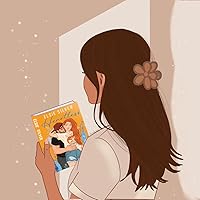
For fans of paranormal romance and romantasy, this is a sexy supernatural graphic novel about being out on your own, finding your dream apartment, and discovering that your new place is haunted by a handsome spectral stranger from another dimension.
For fans of paranormal romance and romantasy, this is a sexy supernatural graphic novel about being out on your own, finding your dream apartment, and discovering that your new place is haunted by a handsome spectral stranger from another dimension.
Sure, he can’t see you and you can’t touch him, but who said every relationship starts out perfectly? Freaking Romance, by the creator of Snailogy and Death: Rescheduled, gives star-crossed lovers a whole new meaning. Convinced that they don’t have a future together because they’re universes apart, Zelan convinces Zylith to ask Vera out on a date, despite the fact that he's falling more and more for her himself.
Zylith is torn between pursuing love or her career, struggling to unpack her true feelings for her best friend, and her growing connection with the man from another world she cannot touch.
Tempers flare and hearts threaten to break, and a brush with a dangerous stranger brings all three hurtling towards a future no one could expect.
This volume collects episodes 37–51 of the supernatural hit WEBTOON comic Freaking Romance, with over 287 million reads.
Can you even call it a cliffHANGER with an ending like that!???! That was so MEAN. You best believe that I will be beating down the door to get my hot little hands on the next volume of this!
I love the characters, though some of them are just...somewhat suss. I love the banter and the wit, as well as the strength and determination of them. They are all so young and full of life and hope and fighting for their dreams, not even always sure what those dreams are, but not giving up. It's so full of life and I love it.
But. THAT. ENDING. It is BRUTAL and I REALLY hope things somehow magically turn out ok for all involved. The drunk jerk needs to be kicked really REALLY hard in his nads multiple times for what he did, just sayin.
5, my heart can't take it and I need the next volume NOW please, stars!
My thanks to NetGalley and Wattpad/WEBTOON Unscrolled for an eARC of this book to read and review.
This entire review has been hidden because of spoilers.
Holy guacamole! This is volume 3 in Freaking Romance. And let me tell you, it lives up to its name. I love this series so much. It’s funny, it’s cute. It makes you think. This cliff hanger is making me freak out. I need volume 4 like now. Thank you Snailords and WEBTOON for allowing me to read this graphic novel in return for my honest review!
WE DID NOT JUST END ON THAT CLIFF. Gosh this series gets better with each new volume. I'm such a massive fan of the art and the sassy banter. I loved getting more of our lovely MC's lore, and I can't wait to get my hands on the next book.
Thank you to publisher for sending me an eArc in exchange for an honest review.
I really enjoyed this volume a lot! We got to see more of Vera and her friendship with Zylith. We also get to see more of Zelan (who is the sweetest cinnamon role). He will do anything for Zylith (even if that means slowly losing her). I’m very excited to see where the story goes, especially after that ending!! Wholly crap, I can’t wait for the next volume!!
Ça prend vraiment un chemin que je n’imaginais pas, peut-être un chouïa trop surnaturel vis à vis de l’histoire général de base.
Néanmoins, ce point permet de continuer l’évolution des personnages.
Ça part quand même dans tous les sens, on remonte dans le temps, on revient dans le présent, puis le futur. Il faut comprendre où l’auteur nous emmène.
Mais la fin est belle. Avec un possible spin-off sur le frère (qui m’a bien fait rire !).
C’était beau. C’était une belle morale de fin. C’était à la hauteur de mes espérances.
Whew. Volume 3 was A LOT. In the best, most layered, emotionally intense way possible. After a helpful recap from the previous volumes, this installment dives deep into the psychological and emotional wounds of its characters—particularly the trauma, heartbreak, and vulnerability that have shaped who they are.
Let’s talk about Zylith. Her character is painful and powerful to watch unfold. She doesn’t understand love. She doesn’t know how to give it, receive it, or even recognize it—and that’s rooted in her upbringing. Raised in a home where love was transactional and violent, where anger filled the air more than affection, Zylith learned to buy friendships, to be emotionally absent, and to protect herself through detachment. She equates connection with payment and control—and we see how this has stunted her emotional development.
On the other hand, Vera, from a humbler background, processes her trauma in the opposite direction. She takes pain and turns it into strength. She uses her childhood as a motivation to be different, to be kinder, stronger, and more compassionate. It was so moving to see how both girls navigated trauma—but how differently they responded to it.
The complexity deepens with Zelan, who still remains an enigma. We know he’s famous in his world. We know about his hospitalized mother and his brother. But his mystery adds tension to the emotional and social knots being pulled tighter every chapter.
What I found especially powerful in this volume was the sharp critique of patriarchy and how women are objectified in this world—treated like commodities or tools for male desire. There’s a pivotal scene where Vera, who is male-presenting, is mistaken for a man. The second her femininity is discovered, her strength is diminished in the eyes of her opponent—even though she proves herself by taking him down. That moment was brilliant symbolism. Women are often underestimated, but they have the power to shatter oppressive systems—even when the systems hit back.
One antagonist in this arc—a man who represents patriarchal aggression and post-capitalist anger—loses his job and transfers all his rage onto women. First through violence, then through twisted sexual entitlement. His assault on Zylith is framed as “what he’s owed,” and it’s chilling. But again, the women fight back. They don’t go down without a scream, a fist, or a shattering of glass.
And the ending? I DID NOT SEE IT COMING. That final fight scene—Zylith falling, broken glass everywhere, Zelan’s voice shouting from above, Vera in shock—it left me breathless. We also get that awkward but revealing moment where the romantic tension becomes a triangle (maybe even a poly-triangle?) and we’re left wondering: who loves who? Who’s hiding what?
Episode 37–51 were packed with intensity, layered character arcs, complex trauma, social critique, and a cliffhanger that has me running to WEBTOON to read what happens next.
I’m honestly amazed at how the writers have handled this emotional weight while still pushing the story forward. Volume 2 didn’t land with me as strongly, but Volume 3 more than made up for it. Emotional. Complex. Raw. And so real.
This entire review has been hidden because of spoilers.
Thank you, NetGalley and WEBTOONS Unscrolled for the opportunity to read an advanced digital copy.
Freaking Romance by Snailords is a graphic novel that blends romance, fantasy, and mystery into a visually stunning and uniquely intriguing story. With captivating artwork and an engaging premise, this Webtoon immerses readers in the life of Zylith, a young woman who moves into an apartment only to discover that she has an unexpected roommate—one who exists in an alternate dimension within the same space!
The story unfolds as Zylith tries to understand her strange connection with Zelan, the mysterious young man trapped in the parallel reality. Between romantic tension, emotional entanglements, and a touch of suspense, the plot delves into more than just attraction. It also follows Zylith’s personal growth as she navigates her career and love life. Her best friend, Vera, plays a key role, creating an intriguing dynamic that challenges traditional romance tropes.
One of the novel’s strongest aspects is its artwork. Snailords’ illustrations are mesmerizing, with expressive characters, stunning colors, and a composition that perfectly captures the tension and longing between the leads. However, despite its visual brilliance, the narrative can sometimes feel lighter than expected, especially compared to the author’s other works.
Nevertheless, Freaking Romance remains an addictive read, perfect for those who love romance with a supernatural twist. The connection between Zylith and Zelan, their impossible love, and the mystery surrounding their bizarre situation makes this an unforgettable graphic novel. And if this ever gets an adaptation, please cast Ruby Rose as Vera!
3 Reasons to Read Freaking Romance 1. A romance like no other – If you’re tired of conventional love stories, this one will surprise you with its unique concept of love that transcends dimensions.
2. Stunning and vibrant artwork – Snailords creates a mesmerizing atmosphere with detailed illustrations and colors that make every panel a visual masterpiece.
3. Memorable and dynamic characters – The interactions between Zylith, Zelan, and Vera keep the story engaging and full of unexpected twists, making it an addictive read.
I've been eagerly awaiting the next installment of Freaking Romance, and Volume 3 did not disappoint. This series is so damn cute and I'm grateful to have received an advance copy through NetGalley.
For those unfamiliar, Freaking Romance follows our protagonist, Zylith, as she navigates a web of relationships and alternate universes. Her love for both Vera, her best friend from her own universe, and Zelan, a captivating K-Pop star from an alternate one, continues to evolve and deepen.
This volume delves further into these relationships, introducing new dynamics and surprises. The most striking development is Vera's sudden ability to interact with Zelan, adding a fresh layer of complexity to the story. However, it's the cliffhanger ending that will leave readers, like me, eagerly anticipating the next volume.
Snailords' storytelling is engaging, and the artwork is stunning. The world-building is rich and immersive, making it easy to love. The addition of new content, including Zylith and Vera's backstory and the characters' interactions in public, adds depth and excitement to the narrative.
Overall, Freaking Romance Volume 3 is a fun continuation of the series. With its sassy characters, intricate world-building, and suspenseful plot twists, this series would be perfect as an animated series.
Recommendation: If you're a fan of romance, science fiction, and fantasy, Freaking Romance is a must-read. With its unique blend of multiverse exploration and heartfelt relationships, this series will captivate and leave you eagerly awaiting more.
Freaking Romance Volume Three picks up where volume two left off in the story about Zylith, Zelan and Vera. This volume includes episodes 37-51. Zylith finds herself in a very strange love triangle that is not actually a thing… because one of the people is her best friend (and those are some feelings to unpack!) and the other is a guy who lives in an alternate reality. What’s a girl to do? Zylith decides to do research so she can write a romance comic for a contest… by asking Vera out on a date! After some very awkward moments, and a brush with danger, the three MCs find themselves in a situation none of them could have predicted!
I love this artwork so very much! It is stunning, visually pleasing, and what drew me to Snaillord’s artwork when I first started reading their work on Webtoons. I rate these higher than I might have because the artwork does such heavy lifting. The story is a little bit of a letdown, especially after reading other works by them. There’s nothing to detract from the reading, but there could have been more effort put into the writing. I still look forward to the next part, if mostly for the art!
Thank you NetGalley and WEBTOONS Unscrolled for the opportunity to read an advanced digital copy. This is my honest review.
✧ Cette saga a pris possession de mon âme et de mon cœur. C’est une véritable merveille. Le travail incroyable réalisé sur cette saga est vraiment remarquable. Les trois tomes sont disponibles en librairie. ✨
✧ 𝐋'𝐡𝐢𝐬𝐭𝐨𝐢𝐫𝐞 Nous retrouvons nos personnages principaux dans leurs appartements et dans leurs amitiés naissantes. Ensemble, ils se lancent dans des paris risqués, poussant chacun à se rapprocher d'autres personnes, car leur amour est impossible. Ce tome met en lumière des thèmes puissants comme la confiance en soi, l’acceptation de soi et la capacité à repousser ses limites sans craindre le regard des autres.
✧ 𝐋𝐞𝐬 𝐩𝐞𝐫𝐬𝐨𝐧𝐧𝐚𝐠𝐞𝐬 J’ai adoré le personnage de Véra, de plus en plus développé au fil des tomes. Zelan et Zylith sont de plus en plus proches, et leur amitié se transforme en un amour interdit. Les personnages rythment l’histoire avec une telle facilité. Du début à la fin, j’ai été complètement emportée. L’amitié naissante entre Véra et Zelan est aussi belle qu’inattendue. J’ai qu’un seul mot à dire… 𝗝𝗲 𝘃𝗲𝘂𝘅 𝗹𝗮 𝘀𝘂𝗶𝘁𝗲 !
✧ 𝐋’𝐞𝐬𝐭𝐡𝐞́𝐭𝐢𝐪𝐮𝐞 Ce livre est juste 𝗺𝗮𝗴𝗻𝗶𝗳𝗶𝗾𝘂𝗲. C’est 𝘂𝗻𝗲 𝘃𝗲́𝗿𝗶𝘁𝗮𝗯𝗹𝗲 𝗯𝗲𝗮𝘂𝘁𝗲́. Les couleurs et l’intensité de chaque planche sont une merveille. L’auteur maîtrise parfaitement l’équilibre entre l’éblouissement et la douceur des couleurs. Chaque page tournée est une véritable œ𝘂𝘃𝗿𝗲 𝗱’𝗮𝗿𝘁 à l’état pur. 💖
Very back-and-forth plotwise. The art, as usual, is beautiful. Very well-drawn. Funny expressions and the dialogue is decent (at times a little juvenile, but that's okay).
I definitely am NOT a fan of the "is it Vera or is it Zelan?" romance quandary going on. I hope the next installment settles that question because volume 3 had more than enough uncertainty and maybe her-maybe-him-no-maybe-her-again-or-maybe-him-again back and forthness. ENOUGH! I am also very very very much NOT a fan of the main characters having other relations with side characters?? Why was there a whole section dedicated to Zelan hardcore making out with that random girl in the bathroom?????? I despise that kind of grossness in my romances. It's weird and doesn't make sense to me - am I reading a romance or is this supposed to be contemporary fiction with a playboy character having one affair after another after another (and so on and so forth into infinity)? Yuck. I considered giving this volume 3 stars instead because I really do not enjoy that aspect of this series.
I read this so quickly in one setting that I was startled by that cliffhanger!! I can't imagine Zelith's going to be okay, so I have no idea what future installments might bring. Crazy chaotic and unpredictable.
This entire review has been hidden because of spoilers.
Voulme three stars right where volume two ends. we have our main socially awkward girl zylith confused on what love is and our seaweed head of a cinnamon roll boy Zelan trying to help her sort out her heart and her head.
While Zelan is holding back his feelings he encourages Zylith to as Vera on a date. This does not go as planned, for any of them. Zylith is still unsure on how she feels on Vera and Vera is unsure if Zylith actually knows how it feels to want to be with some one.
When vera shows up for the date, things start going a little awry.
we end on a HUGE cliff hanger. Vera can see Zelan and they are able to talk to each other and just as this happens all chaos breaks loose. Then Zylith, well youll have to read to see what happens next.
This Volume touches on alot of real world questions and feelings we have all found ourselves in or for the readers on the younger side, maybe will find themselves in.
Snailords never disappoints and I cant wait for the next volume.
The writing is fantastic and you may think you know where its going then there is always a turn that keeps you hooked.
Thank you NetGalley and WEBTOON Unscrolled for the digital ARC for review.
L’année dernière, j’étais retombée sous le charme de Freaking Romance grâce à sa parution papier chez Neotoon, et la perspective de continuer cette série est sûrement LE truc qui m’a fait le plus plaisir quand l’équipe Hugo a choisi de me faire confiance un an de plus et de renouveler leur partenariat avec moi. À l’instant où le tome 3 de l’histoire de Zylith et Zelan est arrivée dans ma boîte aux lettres, j’ai donc sauté à pieds joints dedans, pour en ressortir plus frustrée que jamais.
Moins axés sur le mystère qui entoure l’appartement que nos personnages partagent malgré eux, et beaucoup plus centrés sur Zylith et Vera, leur passé commun et les sentiments et tensions qui rythment leur relation, ces nouveaux chapitres nous proposent une montée crescendo vers un point d’orgue choquant, un dénouement que je n’avais vraiment pas vu venir, un cliffhanger franchement criminel. Le tout est encore une fois porté par le dessin que je trouve toujours superbe, je suis vraiment très fan du style, de la finesse des traits et des choix de couleurs qui nous donnent des panels absolument magnifique.
Je reste peut-être un peu sur ma faim concernant Zelan, assez peu présent dans ce tome, mais je ne doute pas une seconde que le quatrième et dernier tome de la saga, dont j’attends des nouvelles avec impatience, nous donnera tout ce qu’on attendait, et plus encore !
The artwork in this series never disappoints. I love the colors and the detail. With this volume we get more of an inside look at Vera, which I love, and see more of a love triangle. I don't even know which one I'm rooting for at this point because I love Vera and Zelan. Vera is very protective, strong and outspoken, while Zelan is more quietly protective/supportive and a steady presence. I like the contrast there. I did feel like Zylith was more confusing and confused in this one and didn't have much character development but I like that we see a bit of the past and how her and Vera were in high school. The story here felt more like a filler to get to the next core part of the story but it ends on a major cliffhanger and I honestly have no clue where it's going but need to know what happens next!
I voluntarily read and reviewed an advanced digital copy of this title from WEBTOON Unscrolled via NetGalley. All thoughts and opinions are my own.
Freaking Romance is one of those books that I have been looking forward to getting another volume so I can find out what happens next.
Could I read it on WEBTOON? Yes. But I started this on WEBTOON Unscrolled and that is how I’ll continue it.
I love that this is an alternate world, multiverse kind of situation and our FMC is in love (I think in love) with two people: her best friend Vera who looks like Ruby Rose and is from her universe and Zelan, a K-Pop star white haired beauty who is from an alternate one.
This volume explores those relationships more and we get a surprise in Vera being able to interact with Zelan now.
But the most important part happened on the last page… a cliffhanger left me dangling off a building ledge. What am I to do?????😭
This releases on March 4th, 2025, so if you want to read it right away, it is available on WEBTOON.
This entire review has been hidden because of spoilers.
Thank you to NetGalley and the publisher for allowing me to read and review this book before publication.
Snailords does it again in volume three of Freaking Romance! A lot of new content in this one, including how Zylith and Vera meet, finding out how Zylith feels about everyone, our cross-dimensional characters interacting in public, and violence. Volume 4 can’t be printed fast enough!
I like seeing how Zylith’s character has changed since school, especially from a perspective other than her own. But the best part about this volume is that we get to see our characters interact outside of the apartment. While I love a good forced proximity story, it was interesting to see the world going about its business as Zylith and Zelan focused on each other and dealt with this limitations.
OH MY, THAT CLIFFHANGER! I am gonna need volume 4 ASAP! First time reading Snailords and Freaking Romance lives up to the hype!
Zylith is just a normal girl ;) trying to find the right path for love. Is her friendship with Vera platonic? Could she have feelings for Zelan? So many questions and it feels like time is not on her side.
Zylith's quirky personality shines bright, especially during the scenes when we see how she and Vera became friends. I also can't help but root for Zelan. He will do whatever it takes to make Zylith happy, even if that means never acting on his feelings...even though it would be super complicated with them being from two different worlds. This volume was screaming CHOICES and JEALOUSY. I couldn't stop reading and I didn't want to stop! And then the cliffhanger hit me. I was like NOOOOO, I need more!
I read this story on Webtoon when it first was published many moons ago and was absolutely obsessed with it. The art style is so beautiful and I found myself looking close at all of the details and colors! This story is super unique because it is a love story about two individuals who can see each other in the same apartment but in a parallel universe. They can see, and interact with each other as well as other people from this whole other world and no one knows why.
The cliffhanger gave me chills and honestly since this is a re-read for me I found myself getting emotional because I love these characters so much! I can't wait to continue with this series!
Thank you NetGalley and WEBTOON Unscrolled for the gifted copy!
Zylith m’a encore une fois un peu plus touchée. J’ai adoré découvrir son passé, ce qui l’emprisonne pour construire une relation amoureuse et d’autres amitiés. Mon cœur c’est serré pour chacun de ses moments présents et passés ❤️🩹
Mais mon cœur a définitivement craqué pour Zelan… Il est prêt à poussé Zelyth dans les bras de sa meilleure amie Véra malgré ses sentiments de plus en plus fort pour elle. Il est persuadé qu’aucun avenir est possible entre eux puisqu’ils sont dans deux univers différents. Mais reste doux, bienveillant, sain et si protecteur. Il prend le temps d’expliquer à Zelyth comment fonctionne une relation saine et la manière de gérer le conflit dans un couple. 😮💨✨🩵
Je suis tombée amoureuse de chacun de leur moment. Et puis cette fin… j’ai besoin de la suite 🙂↔️
This third installment of freaking romance is what every girl needs in her life from the awkward teenage girl that is inside everyone to that one crush you have been building the courage to talk to. This author is so talented in the way they were able to illustrate and convey all the emotions through the panels. I have been a big follower and fan of this author, since the beginning. I loved every moment and how Snailords is able to leave me with an ending that had wanting more every single time. But I can’t tell you enough.. this was sooo good funny and overall cute! Can’t wait for the next one
"Freaking Romance: Volume 3" by Aidyn Arroyal (Snailords) is a graphic novel about a woman named Zylith trying to find herself. She is also in complicated relationships with her friends Vera and Zelan. The further you get into the novel, the more you get to know about the characters.
The artwork in the graphic novel is beautiful and adds to the story! I enjoyed it a lot and want to read the first two volumes of the series! I recommend this graphic novel to anyone looking for a sweet and heartwarming romance with LGBTQ+ representation!
Thank you, NetGalley and Wattpad Webtoon Book Group, for sending me an ARC of this graphic novel! It comes out March 04th, 2025!
Thank you to Netgalley and WEBTOON for an ARC in exchange for my honest review.
The love triangle is triangling, which isn't a word, but it still somehow fits. It's seriously like a game of ping pong, first tension builds with Zylith and Zelan, and then he's friendzoned and there's a moment with Vera and Zylith, but then Zylith is friendzoned. I was giggling a lot while reading this volume, because at least Zelan, Zylith, and Vera all have a good sense of humor about the situation they're in. I think the scene with the drunk man at the end was a little extreme, but it definiately caught me by suprrise! Overall I'm having a great time and I'll be happy to continue in the series.
I was so excited for this release. I LOVED vol 1 and enjoyed vol 2, so I was more than ready to continue this story. Sadly, this vol was not enjoyable for me. The pacing was all over the place. A lot of pages were used on backstory instead of moving the current story line forward. The focus wasn’t on Zelan and Zylith and the time/space rip as much as the first two. I wanted more about them and that is not what was presented here.
Overall, disappointed with this vol, but still looking forward to the next one and where the story goes.
Thank you to WEBTOON Unscrolled and NetGalley for an ARC of this graphic novel in exchange for an honest review.
I really really enjoy this series on the second read as well and this volume was so good. It is quite heavy on the mental stuff, something I definitely forgot from reading it on the app before. I like getting to know Zylith and Vera’s past and also their and Zelan’s feelings. It seems, even Zylith is confused now. And of course, the ending is this super huge cliffhanger that will change a lot for the whole story. Yes, some things are a tiny bit unrealistic in terms of how some things are portrayed, but I like the connection between the characters and how they are helping each other - knowingly or not - to heal and grow. A great series!
Ugh, I just don't care about love triangles. Either make it where everyone can be together or just make a decision! Such a promising series that is being ruined by the constant "who will she choose." The plot has basically halted to ask this question over and over (and over and over).
I still adore the art (look at that gorgeous cover!) and like all the characters. I just need there to be more happening in their lives. I did like the flashbacks and the humor is still hitting. Hopefully the next volume can find the magic of the first volume.
I hadn't read any of this Webtoon but the synopsis sounded so interesting. I read through the episodes featured in volumes one and two and jumped right in. This is a great mix of drama and humor with paranormal touches thrown in. The art is fantastic and I flew through it. After the cliffhanger it leaves off with I will definitely be reading more of the series and this author.
Thank you to Netgalley and the publisher for providing an ARC for an honest review.