

What do you think?

BORUTO-ボルト- -TWO BLUE VORTEX- [Boruto: Two Blue Vortex] #1
Boruto: Two Blue Vortex, Vol. 1
In a cruel twist of fate, Boruto’s and Kawaki’s lives have been switched due to a powerful jutsu. Now branded a traitor, Boruto is on the run from his village as he trains with Sasuke. But when Code attacks Konoha, it’s time for a grown-up Boruto to return home and show how powerful he’s become!
184 pages, Kindle Edition
First published February 2, 2024
About the author
Masashi Kishimoto
1,012 books4,075 followersMasashi Kishimoto (岸本斉史 Kishimoto Masashi) is a Japanese manga artist, well known for creating the manga series Naruto. His younger twin brother, Seishi Kishimoto, is also a manga artist and creator of the manga series O-Parts Hunter (666 Satan) and Blazer Drive. Two of his former assistants, Osamu Kajisa (Tattoo Hearts) and Yuuichi Itakura (Hand's), have also gone on to moderate success following their work on Naruto.
Kishimoto's first work as a manga artist was Karakuri (カラクリ?), which he submitted to Shueisha in 1995. This earned him the Weekly Shōnen Jump's monthly "Hop Step Award" in 1996, granted to promising new manga artists. This was followed in 1997 by a pilot version of Naruto (NARUTO-ナルト-), published in Akamaru Jump Summer. In 1998, Kishimoto premiered as a Weekly Shōnen Jump artist with a serialized version of Karakuri in Weekly Shōnen Jump, but it proved unpopular and was canceled soon after. In 1999, a serialized version of Naruto began publication in Weekly Shōnen Jump and quickly became a hit.
Kishimoto's first work as a manga artist was Karakuri (カラクリ?), which he submitted to Shueisha in 1995. This earned him the Weekly Shōnen Jump's monthly "Hop Step Award" in 1996, granted to promising new manga artists. This was followed in 1997 by a pilot version of Naruto (NARUTO-ナルト-), published in Akamaru Jump Summer. In 1998, Kishimoto premiered as a Weekly Shōnen Jump artist with a serialized version of Karakuri in Weekly Shōnen Jump, but it proved unpopular and was canceled soon after. In 1999, a serialized version of Naruto began publication in Weekly Shōnen Jump and quickly became a hit.
Ratings & Reviews
Friends & Following
Create a free account to discover what your friends think of this book!
Community Reviews
Displaying 1 - 30 of 86 reviews
June 18, 2024
just read the entire boruto manga on the train ride back from nyc and it is literally peak

February 23, 2024
Chapters 1-7
انقدری که از بلو ورتکس بوروتو راضیم از خود ناروتو هم راضی نبودم چه برسه به اون فاجعه اولی بوروتو.
خیلی خوب شده.
و داره به کاراکترها قشنگ تر می پردازه. اصلا بوروتو تازه داره شخصیت مستقل میگیره و دیگه بچهی ناروتو یا وسل نیست.
بهش پنج نمیدم چون منتظرم سورپرایزم کنه جلوتر و برا اون پنج رو نگه میدارم.
انقدری که از بلو ورتکس بوروتو راضیم از خود ناروتو هم راضی نبودم چه برسه به اون فاجعه اولی بوروتو.
خیلی خوب شده.
و داره به کاراکترها قشنگ تر می پردازه. اصلا بوروتو تازه داره شخصیت مستقل میگیره و دیگه بچهی ناروتو یا وسل نیست.
بهش پنج نمیدم چون منتظرم سورپرایزم کنه جلوتر و برا اون پنج رو نگه میدارم.

February 6, 2025
Really enjoyed the direction the series is going in. Ive been watching reviews of the unreleased chapters so I already knew basically what happened in this volume but still love actually reading it for myself. Can’t wait to see how Sarada’s mangekyo sharingan works.

March 7, 2024
Volume 1: Chapter 1-4
Arc 1: Boruto's Return
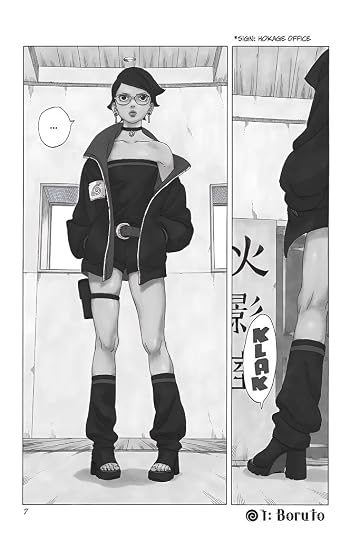
Post-time skip, Sarada still trying to convince Shikamaru, who is now the Eight Hokage, that Boruto did not kill Naruto. Eida is being suspicious why Sarada and Sumire did not affected by Omnipotence. Kawaki found Code's Claw Marks around Konoha. Suddenly, Code's Claw Grimes managed to infiltrate Konoha. Code is tired chasing Boruto so he decided to attack Konoha and wait for Boruto's arrival. Boruto appears from the sky and he reunited with Code and Kawaki.
Two years ago, Boruto already fought Code but he lose it but he managed to wound Code's left eye. The numbers of Claw Grimes that attacking is increasing. Some of the Claw Grimes bite a person and turn into a tree. Boruto trying to warn Code that Claw Grimes can be more lethal in future. Boruto asked Code the location of the Ten Tails. Boruto then used his new technique, Rasengan Uzuhiko. Rasengan Uzuhiko used the planet's rotation to the enemy. The enemy will feel spinning for his entire life as the planet still rotating. Kawaki interfered and Code managed to escape.
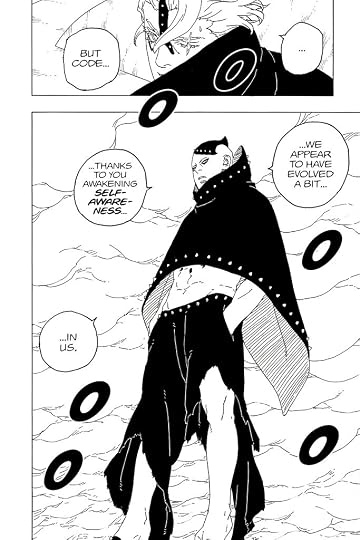
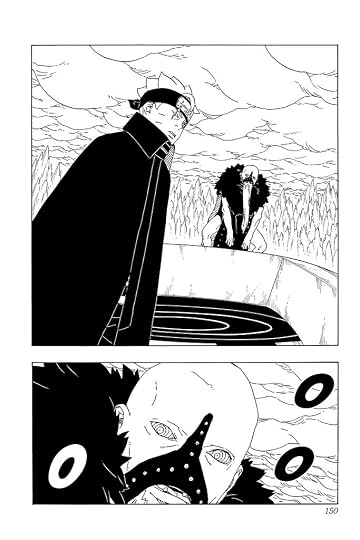
Boruto managed to locate Code and the Ten Tails whereabout by using the summoning toad. He then used Minato's technique, Hiraishin no Jutsu, to teleport to Code's place. It is too late, the Ten Tails have evolved thanks to Code for instilling a self-awareness to the Claw Grimes. There are 4 evolved Claw Grimes. Boruto rescinded his Uzuhiko on Code but Code fled from the dimension. Boruto also retreat. It is revealed that Sasuke already turned into a tree.
Arc 1: Boruto's Return
Post-time skip, Sarada still trying to convince Shikamaru, who is now the Eight Hokage, that Boruto did not kill Naruto. Eida is being suspicious why Sarada and Sumire did not affected by Omnipotence. Kawaki found Code's Claw Marks around Konoha. Suddenly, Code's Claw Grimes managed to infiltrate Konoha. Code is tired chasing Boruto so he decided to attack Konoha and wait for Boruto's arrival. Boruto appears from the sky and he reunited with Code and Kawaki.
Two years ago, Boruto already fought Code but he lose it but he managed to wound Code's left eye. The numbers of Claw Grimes that attacking is increasing. Some of the Claw Grimes bite a person and turn into a tree. Boruto trying to warn Code that Claw Grimes can be more lethal in future. Boruto asked Code the location of the Ten Tails. Boruto then used his new technique, Rasengan Uzuhiko. Rasengan Uzuhiko used the planet's rotation to the enemy. The enemy will feel spinning for his entire life as the planet still rotating. Kawaki interfered and Code managed to escape.
Boruto managed to locate Code and the Ten Tails whereabout by using the summoning toad. He then used Minato's technique, Hiraishin no Jutsu, to teleport to Code's place. It is too late, the Ten Tails have evolved thanks to Code for instilling a self-awareness to the Claw Grimes. There are 4 evolved Claw Grimes. Boruto rescinded his Uzuhiko on Code but Code fled from the dimension. Boruto also retreat. It is revealed that Sasuke already turned into a tree.

September 5, 2024
❤️❤️❤️
JSUIS DESO MAIS LE GLOW UP DU MANGA ENFT ????????
JE VAIS JAMAIS M’ARRETER
JSUIS DESO MAIS LE GLOW UP DU MANGA ENFT ????????
JE VAIS JAMAIS M’ARRETER

December 11, 2025
I've read better Boruto mangas. It is very boring, the story line is not that great, and I don't like that Shikamaru is the Hokage. I hate that Boruto is trying to be like Sasuke its really annoying how he tries to be cool and Emo.The first Boruto series was amazing and I enjoyed it. I'll continue to read this series it might get better.

February 12, 2024
i always forget how much i like this series

May 5, 2024
You didn’t see me reading this.

January 16, 2025
3+
Si legge volentieri, più che altro per uno spirito nostalgico, ma i dialoghi sono veramente semplicistici come anche molte svolte di trama. Bello il glow up dei personaggi.
Si legge volentieri, più che altro per uno spirito nostalgico, ma i dialoghi sono veramente semplicistici come anche molte svolte di trama. Bello il glow up dei personaggi.
May 5, 2026
Una buena continuidad y mejora del anterior Boruto, arregla cosas como niveles de poder y los personajes secundarios vuelven a ser Importantes así cómo Naruto vuelve a tener poder. Me encanto el estilo de dibujo de Mikio Ikemoto, hace ver los personajes más maduros e interesantes. Recomiendo ver primero el BORUTO: NARUTO NEXT GENERATIONS, antes de disfrutar del time skip

October 20, 2024
NON SO COSA STIA SUCCEDENDO MA È STATO PAZZESCO

January 18, 2025
banger. je hais kawaki sérieusement il me les BRISE

February 10, 2026
Placeholder for entire Two Blue Vortex (10/2/26).
February 21, 2026
8/10
Chapter 1:
Chapter 1: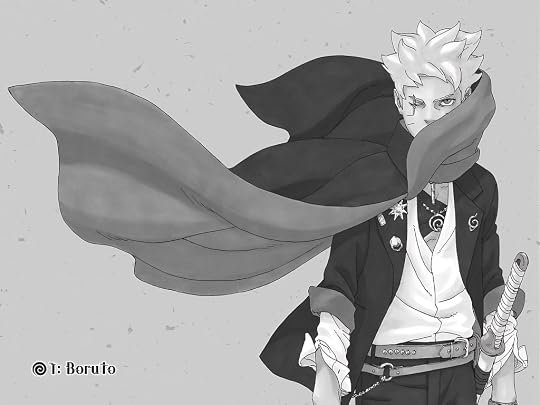
Chapter 1:
Chapter 1:
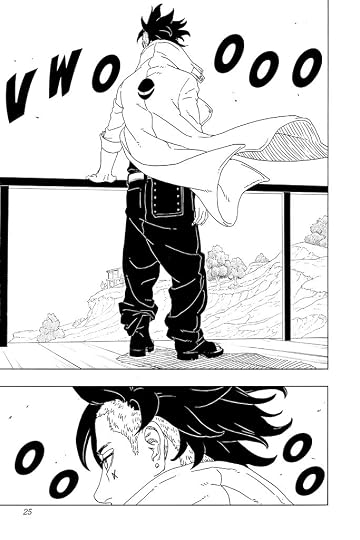
Chapter 1:
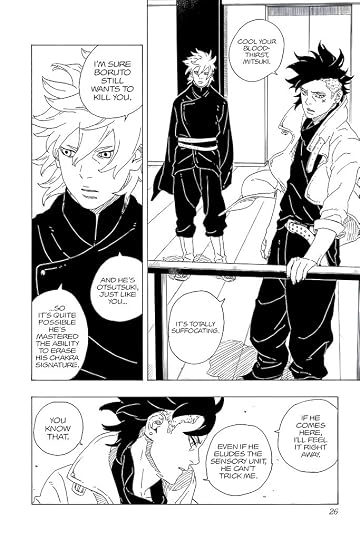
Chapter 1: You're the Sun, shining brightly upon my Moon, aren't you, Kawaki?
Chapter 1:
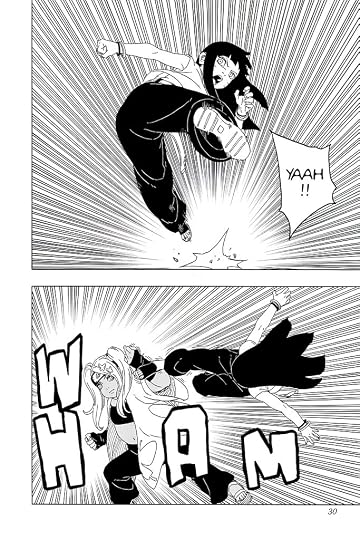
Chapter 1: I have this feeling that my dad is still alive somewhere.
Chapter 1:
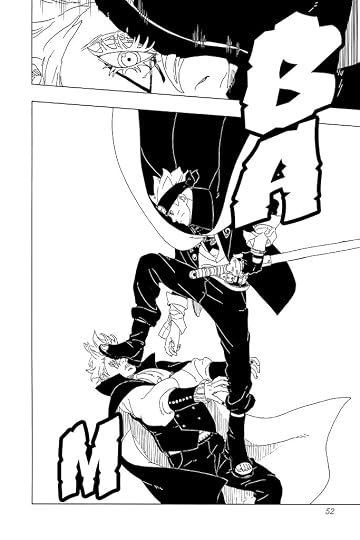
Chapter 1:
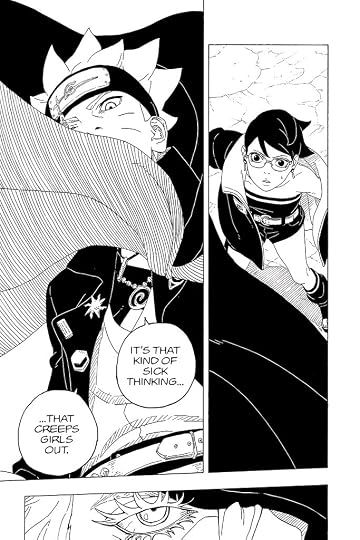
Chapter 1:
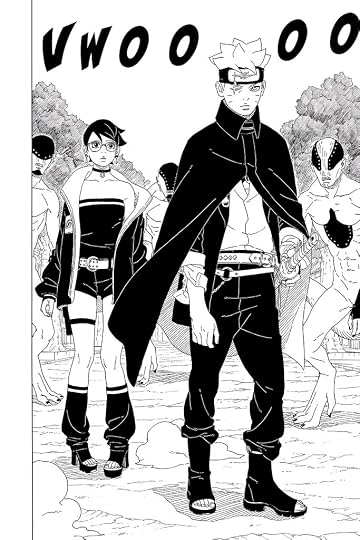
Chapter 1:
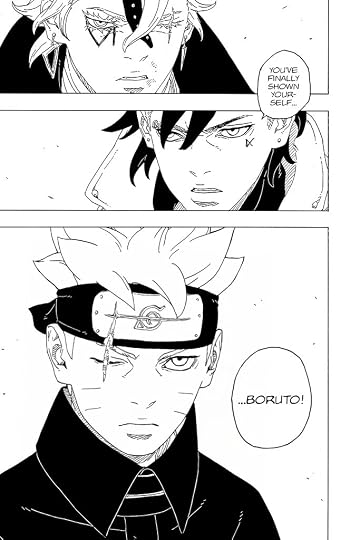
Chapter 2: Withdraw your monsters. All of them. Do it now, while you're still able to control them. And I'll let you live.
Wait, hold on. What did you just say? Did you forget that you ran off without making a dent two years ago? You've got some nerve to tell me that you're gonna spare my life!
You obviously heard me. So hurry up and do it, or else you'll lose more than your left eye this time.
Chapter 2:
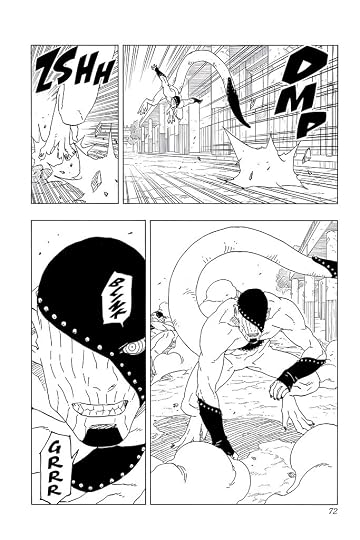
Chapter 2: You don't understand the true horror of Ten Tails.
Chapter 2:
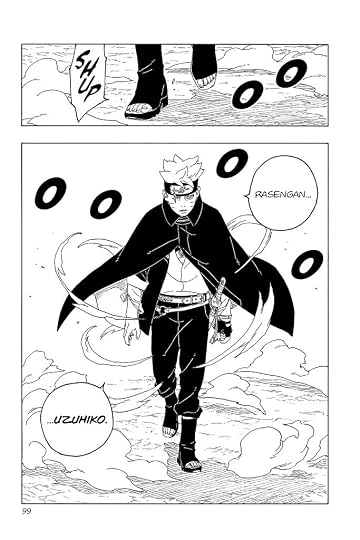
Chapter 3: So, Boruto's the one making the ground tremble. Or rather, it's the entire Earth. This attack make's use of planetary spin.
Chapter 3: Dammit! What did you do to me?!
Enjoy. Think of it as a biting counter-attack from this planet that you were trying to destroy.
From this planet?
A Rasengan that incorporates a planet's chakra - it's rotation. That's what Uzuhiko is. The power that is rushing through your body right now will never dissipate. Just like how a planet will never stop spinning. The damage will continue semi-perminently. Semi, because your life will run out before the planet stops spinning.
Chapter 3: Dying in Konoha doesn't sound bad, but not today.
Chapter 4:
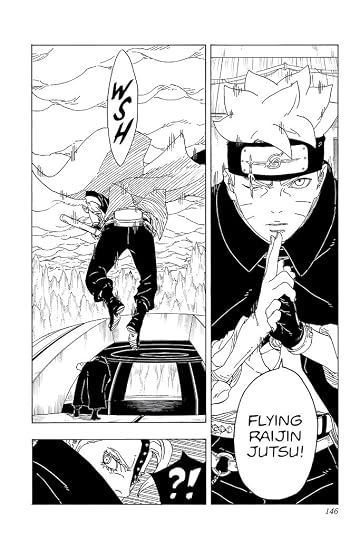
Chapter 4: Chakra. All life on a planet. Both current as well as past and long dead. We divine trees exist to suck the chakra out of all living things and form a chakra fruit. At least, that was our original driving instinct.
Chapter 4:
Chapter 4:
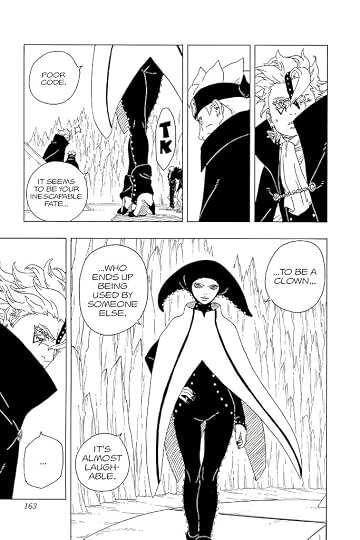
Chapter 4:
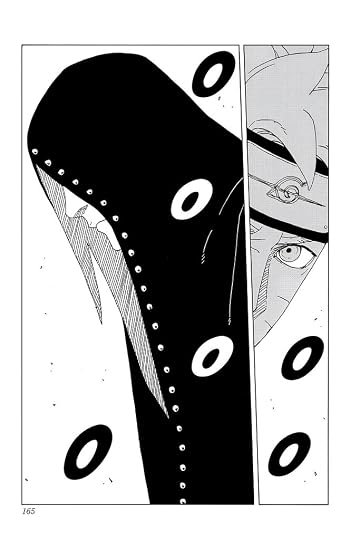
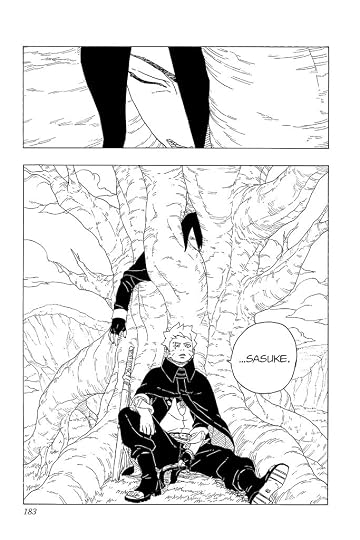
Chapter 4: You were lucky, Ohtsutsuki Boruto. Our self awareness having just awakened, overflowing curiosity and thirst for knowledge are still surpassing our instinctual drive to devour you. So run where you will, but no matter where you go know that you can never escape your destiny.
Chapter 4:
Chapter 1:
Chapter 1:
Chapter 1:
Chapter 1:
Chapter 1:
Chapter 1: You're the Sun, shining brightly upon my Moon, aren't you, Kawaki?
Chapter 1:
Chapter 1: I have this feeling that my dad is still alive somewhere.
Chapter 1:
Chapter 1:
Chapter 1:
Chapter 1:
Chapter 2: Withdraw your monsters. All of them. Do it now, while you're still able to control them. And I'll let you live.
Wait, hold on. What did you just say? Did you forget that you ran off without making a dent two years ago? You've got some nerve to tell me that you're gonna spare my life!
You obviously heard me. So hurry up and do it, or else you'll lose more than your left eye this time.
Chapter 2:
Chapter 2: You don't understand the true horror of Ten Tails.
Chapter 2:
Chapter 3: So, Boruto's the one making the ground tremble. Or rather, it's the entire Earth. This attack make's use of planetary spin.
Chapter 3: Dammit! What did you do to me?!
Enjoy. Think of it as a biting counter-attack from this planet that you were trying to destroy.
From this planet?
A Rasengan that incorporates a planet's chakra - it's rotation. That's what Uzuhiko is. The power that is rushing through your body right now will never dissipate. Just like how a planet will never stop spinning. The damage will continue semi-perminently. Semi, because your life will run out before the planet stops spinning.
Chapter 3: Dying in Konoha doesn't sound bad, but not today.
Chapter 4:
Chapter 4: Chakra. All life on a planet. Both current as well as past and long dead. We divine trees exist to suck the chakra out of all living things and form a chakra fruit. At least, that was our original driving instinct.
Chapter 4:
Chapter 4:
Chapter 4:
Chapter 4: You were lucky, Ohtsutsuki Boruto. Our self awareness having just awakened, overflowing curiosity and thirst for knowledge are still surpassing our instinctual drive to devour you. So run where you will, but no matter where you go know that you can never escape your destiny.
Chapter 4:
This entire review has been hidden because of spoilers.

May 4, 2025
This series is a sequel to Boruto: Naruto Next Generations.
(Basically this is Boruto's Shippuden arc and they restarted the volume count.)
So just in case you didn't read the first part or just need a recap ->
-Three Years Later-
Shikamaru is the Eighth Hokage but due to Eida's brainwashing, he refuses to believe Sarada's insistence that Boruto is innocent. Kawaki, meanwhile, is busy protecting the village from Code, though he still firmly believes that Boruto is dangerous. Then Code attacks the village, reasoning that Boruto will come out of hiding to rescue his beloved village (even if they all hate him) which... works. But Code's Ten-Tail minions cause utter chaos even as Boruto hints that they're even more dangerous than even Code knows.
I'll leave it there, but I have a few issues with this. One, modern ninja fashion is awful. They look like they're about to go to the club, not fight a world ending threat. Two, the pacing is way too fast. In less than 50 pages, we go from a glimpse at a peaceful village to eldritch horror war zone. Three, the stakes are still way too high for a volume 1. It and your power curve don't really have anywhere to go.
However, the reveal of the true horror threatening the world was an A+. That... that was good.
Overall, not bad. I still enjoy the world of Naruto and want this to be good, but I really hope it's not nonstop action without down time. Let me see the training arcs!
(Basically this is Boruto's Shippuden arc and they restarted the volume count.)
So just in case you didn't read the first part or just need a recap ->
-Three Years Later-
Shikamaru is the Eighth Hokage but due to Eida's brainwashing, he refuses to believe Sarada's insistence that Boruto is innocent. Kawaki, meanwhile, is busy protecting the village from Code, though he still firmly believes that Boruto is dangerous. Then Code attacks the village, reasoning that Boruto will come out of hiding to rescue his beloved village (even if they all hate him) which... works. But Code's Ten-Tail minions cause utter chaos even as Boruto hints that they're even more dangerous than even Code knows.
I'll leave it there, but I have a few issues with this. One, modern ninja fashion is awful. They look like they're about to go to the club, not fight a world ending threat. Two, the pacing is way too fast. In less than 50 pages, we go from a glimpse at a peaceful village to eldritch horror war zone. Three, the stakes are still way too high for a volume 1. It and your power curve don't really have anywhere to go.
However, the reveal of the true horror threatening the world was an A+. That... that was good.
Overall, not bad. I still enjoy the world of Naruto and want this to be good, but I really hope it's not nonstop action without down time. Let me see the training arcs!
February 13, 2025
The inheritance of greatness is as much a burden as it is a blessing. This is true in politics, in literature, and, as Boruto would have it, in the world of shinobi. To be born the child of a legend is to live under the constant shadow of comparison, a tension as familiar to the sons of presidents as it is to the scions of Hidden Leaf Village. Boruto, Masashi Kishimoto’s successor to Naruto, embodies this dilemma in both narrative and meta-narrative: it is a story about legacy that must itself grapple with its own.
That Kishimoto initially entrusted the writing of Boruto to another before reclaiming it suggests that even its creator recognized the difficulty of continuing a saga that had, by all accounts, concluded satisfactorily. The result is a series that is both a natural extension of Naruto and a deliberate attempt to redefine the ninja world for a new era—one in which the conflicts of old have been replaced by a subtler, but no less dangerous, set of crises.
The Narrative: Evolution or Repetition?
If Naruto was a bildungsroman wrapped in the high-energy spectacle of shōnen combat, Boruto is a postwar drama disguised as an action series. The great wars are over, the era of hidden villages locked in mortal struggle has passed, and the shinobi world is now a more interconnected, technologically advanced civilization. But where peace reigns, new anxieties emerge: the fear of obsolescence, the weight of expectations, and the question of whether the next generation, raised in relative prosperity, can ever match the willpower of their predecessors.
Boruto structures itself around this fundamental tension. Its protagonist, Boruto Uzumaki, is not the underdog his father was. Unlike Naruto, who clawed his way to acknowledgment, Boruto is the son of the Seventh Hokage, born into status and burdened by it. His rebellion is not against an indifferent world but against the suffocating expectations of legacy.
Yet, for all its thematic ambition, Boruto at times struggles under the weight of its own lineage. The conflicts, while engaging, often feel like echoes of Naruto’s grander struggles—villains wielding new forms of power, existential threats to the shinobi way of life, betrayals that reshape allegiances. The series is at its best when it leans into its own themes of generational transition rather than simply iterating on the tropes of its predecessor.
Characterization: The Weight of the Past
Boruto himself is a fascinating study in contrast. Unlike Naruto, who fought for acknowledgment, Boruto resents the consequences of his father’s success. He is neither the scrappy, ambitious hero nor the brooding, tormented antihero; he is, instead, a character defined by his attempt to carve out an identity independent of his famous lineage.
The new generation of shinobi—Sarada Uchiha, Mitsuki, and others—offer a compelling reflection of their legendary parents, but the series at times struggles with their development. Sarada, the daughter of Sasuke and Sakura, inherits her father’s aloof intellect and her mother’s fiery determination, yet she remains underutilized in the overarching narrative. Mitsuki, the enigmatic artificial son of Orochimaru, is among the most intriguing additions, his very existence challenging the notions of nature, nurture, and identity.
The handling of legacy characters—Naruto, Sasuke, and their contemporaries—is one of Boruto’s most contentious aspects. The series does not shy away from showing them as older, wearier figures, struggling with the paradox of preserving the peace they fought for while recognizing that true peace may always be unattainable. But their prominence often overshadows the next generation, making Boruto feel, at times, like an extension of Naruto rather than a truly independent story.
Kishimoto’s Writing: Familiar Strengths and New Challenges
Kishimoto’s return to Boruto was heralded as a course correction, an opportunity to realign the series with the vision of its original creator. His strengths remain evident—his ability to construct layered conflicts, his talent for balancing action with emotional stakes, and his deep understanding of the characters who defined Naruto.
Yet, Boruto presents new challenges. Where Naruto thrived on the clarity of its protagonist’s ambitions, Boruto is inherently more complex. It is a series about transition, about the discomfort of living in a world built by others. This makes for a richer, if less immediately compelling, narrative. The action sequences remain dynamic, but they are now set against a backdrop of political and technological shifts that complicate the once-simple dynamics of shinobi combat.
Themes: Legacy, Modernization, and the Burden of Peace
Perhaps the most fascinating aspect of Boruto is its engagement with modernization. The ninja world of Naruto was one of tradition, where battles were settled with jutsu and the way of the shinobi was the only way. Boruto presents a world where technology has begun to challenge that dominance—where scientific advancements create shortcuts to power, where the concept of ninjutsu itself faces existential threats.
This tension mirrors real-world anxieties about the erosion of tradition in the face of progress. Just as previous generations worry that younger ones lack the discipline and fortitude of their predecessors, Boruto questions whether the new era can ever produce warriors as formidable as those forged in war. It is a rare example of a shōnen series engaging with the concept of postwar malaise—not through overt moralizing, but through the very structure of its world and its conflicts.
Final Verdict: A Worthy Successor or an Inevitable Shadow?
Boruto is, in many ways, a necessary evolution of Naruto—a story that acknowledges the impossibility of simply rehashing the past while still grappling with the legacy it inherits. At its best, it is a thoughtful meditation on generational transition, on the struggle to define oneself outside the expectations imposed by history. At its worst, it succumbs to the very legacy it seeks to escape, relying too often on the echoes of past triumphs rather than forging its own.
For longtime Naruto fans, Boruto offers both nostalgia and frustration—the joy of revisiting a beloved world tempered by the recognition that the magic of the original can never be fully recaptured. For new readers, Boruto presents a compelling, if sometimes uneven, entry into a universe that has defined a generation of storytelling.
In the end, Boruto succeeds not by surpassing Naruto, but by wrestling with the impossibility of doing so. It is a series about legacy that must, inevitably, bear the burden of its own. Whether it ultimately transcends that burden remains to be seen.
That Kishimoto initially entrusted the writing of Boruto to another before reclaiming it suggests that even its creator recognized the difficulty of continuing a saga that had, by all accounts, concluded satisfactorily. The result is a series that is both a natural extension of Naruto and a deliberate attempt to redefine the ninja world for a new era—one in which the conflicts of old have been replaced by a subtler, but no less dangerous, set of crises.
The Narrative: Evolution or Repetition?
If Naruto was a bildungsroman wrapped in the high-energy spectacle of shōnen combat, Boruto is a postwar drama disguised as an action series. The great wars are over, the era of hidden villages locked in mortal struggle has passed, and the shinobi world is now a more interconnected, technologically advanced civilization. But where peace reigns, new anxieties emerge: the fear of obsolescence, the weight of expectations, and the question of whether the next generation, raised in relative prosperity, can ever match the willpower of their predecessors.
Boruto structures itself around this fundamental tension. Its protagonist, Boruto Uzumaki, is not the underdog his father was. Unlike Naruto, who clawed his way to acknowledgment, Boruto is the son of the Seventh Hokage, born into status and burdened by it. His rebellion is not against an indifferent world but against the suffocating expectations of legacy.
Yet, for all its thematic ambition, Boruto at times struggles under the weight of its own lineage. The conflicts, while engaging, often feel like echoes of Naruto’s grander struggles—villains wielding new forms of power, existential threats to the shinobi way of life, betrayals that reshape allegiances. The series is at its best when it leans into its own themes of generational transition rather than simply iterating on the tropes of its predecessor.
Characterization: The Weight of the Past
Boruto himself is a fascinating study in contrast. Unlike Naruto, who fought for acknowledgment, Boruto resents the consequences of his father’s success. He is neither the scrappy, ambitious hero nor the brooding, tormented antihero; he is, instead, a character defined by his attempt to carve out an identity independent of his famous lineage.
The new generation of shinobi—Sarada Uchiha, Mitsuki, and others—offer a compelling reflection of their legendary parents, but the series at times struggles with their development. Sarada, the daughter of Sasuke and Sakura, inherits her father’s aloof intellect and her mother’s fiery determination, yet she remains underutilized in the overarching narrative. Mitsuki, the enigmatic artificial son of Orochimaru, is among the most intriguing additions, his very existence challenging the notions of nature, nurture, and identity.
The handling of legacy characters—Naruto, Sasuke, and their contemporaries—is one of Boruto’s most contentious aspects. The series does not shy away from showing them as older, wearier figures, struggling with the paradox of preserving the peace they fought for while recognizing that true peace may always be unattainable. But their prominence often overshadows the next generation, making Boruto feel, at times, like an extension of Naruto rather than a truly independent story.
Kishimoto’s Writing: Familiar Strengths and New Challenges
Kishimoto’s return to Boruto was heralded as a course correction, an opportunity to realign the series with the vision of its original creator. His strengths remain evident—his ability to construct layered conflicts, his talent for balancing action with emotional stakes, and his deep understanding of the characters who defined Naruto.
Yet, Boruto presents new challenges. Where Naruto thrived on the clarity of its protagonist’s ambitions, Boruto is inherently more complex. It is a series about transition, about the discomfort of living in a world built by others. This makes for a richer, if less immediately compelling, narrative. The action sequences remain dynamic, but they are now set against a backdrop of political and technological shifts that complicate the once-simple dynamics of shinobi combat.
Themes: Legacy, Modernization, and the Burden of Peace
Perhaps the most fascinating aspect of Boruto is its engagement with modernization. The ninja world of Naruto was one of tradition, where battles were settled with jutsu and the way of the shinobi was the only way. Boruto presents a world where technology has begun to challenge that dominance—where scientific advancements create shortcuts to power, where the concept of ninjutsu itself faces existential threats.
This tension mirrors real-world anxieties about the erosion of tradition in the face of progress. Just as previous generations worry that younger ones lack the discipline and fortitude of their predecessors, Boruto questions whether the new era can ever produce warriors as formidable as those forged in war. It is a rare example of a shōnen series engaging with the concept of postwar malaise—not through overt moralizing, but through the very structure of its world and its conflicts.
Final Verdict: A Worthy Successor or an Inevitable Shadow?
Boruto is, in many ways, a necessary evolution of Naruto—a story that acknowledges the impossibility of simply rehashing the past while still grappling with the legacy it inherits. At its best, it is a thoughtful meditation on generational transition, on the struggle to define oneself outside the expectations imposed by history. At its worst, it succumbs to the very legacy it seeks to escape, relying too often on the echoes of past triumphs rather than forging its own.
For longtime Naruto fans, Boruto offers both nostalgia and frustration—the joy of revisiting a beloved world tempered by the recognition that the magic of the original can never be fully recaptured. For new readers, Boruto presents a compelling, if sometimes uneven, entry into a universe that has defined a generation of storytelling.
In the end, Boruto succeeds not by surpassing Naruto, but by wrestling with the impossibility of doing so. It is a series about legacy that must, inevitably, bear the burden of its own. Whether it ultimately transcends that burden remains to be seen.
June 29, 2025
آنقدر در موردش حرف زدم که کمتر کسی (متاسفانه شامل تمام آدمهای گودریدز که در دنیای واقعی نمیبینمشان) نمیداند، در ماهی که گذشت اتفاق مهم زندگیم جنگ و امتحان نبود، رنسانس ناروتو بود. (عجب جملهی کوتاه و خوانایی برای شروع گزارش کتاب مصوری که میانگین کلمه در جملهاش نزدیک دو یا سه است.) اول از همه حدود ۱۲۰ قسمتی که از انیمه مانده بود را دیدم و بعد که رفتم سراغ مانگا تازه فهمیدم که چقدر تغییر بیدلیل دادهاند. لعنت به ایدهی کش دادن.
در مورد کل مانگا خصوصا قسمت یک وضع واقعا خوب است. اولا سیر داستان مانگا منطقیست، دوما سیستمهای کارما و جوتسوها با یک منطق درونی کار میکنند که در فیلرهای انیمه و انیمه کنونها کلا نادیده گرفته شدند و در نهایت هم اینکه شخصیتها وقت لازم برای پرورش را میگیرند، یعنی برای شاهزادهی ۱۲ سالهی کشوری که اسمش را هم در ۱۰۰۰ قسمت قبلی نشنیدهایم وقت حرام نمیکنیم.
جدای از بخش اول، خود دو گرداب آبی (ایکاش یک اسمی مثل شیپودن میگذاشتند ما راحت بنویسیم شیپودن فکر نکنیم) شروع فوقالعادهای داشت و شخصیتها را نشاند آن جایی که باید. شخصیتهای ناروتو را با حربههای متفاوت از داستان خارج کرد و جا باز کرد برای بچههاشان. سیستمها و جوتسوهای جدیدی معرفی کرد و بهترین کاری که کرده: بوروتو را بیهمهچیز کرده که یعنی الان شخصیت اصلی شونن داریم و میتوانیم لذت ببریم. نکتهی جالب هم اینجاست که بوروتو را قشنگ از عرش گرفت و محکم کوباند به فرش. الان فرش به عرش رفتن شخصیت اصلی یک نوعی بازپسگیری است که هم از پدرش متفاوت است و هم همه، حتی خود بوروتو، میدانیم محقق شدنش آنجور که میخواهد پیش نمیرود.
در مورد کل مانگا خصوصا قسمت یک وضع واقعا خوب است. اولا سیر داستان مانگا منطقیست، دوما سیستمهای کارما و جوتسوها با یک منطق درونی کار میکنند که در فیلرهای انیمه و انیمه کنونها کلا نادیده گرفته شدند و در نهایت هم اینکه شخصیتها وقت لازم برای پرورش را میگیرند، یعنی برای شاهزادهی ۱۲ سالهی کشوری که اسمش را هم در ۱۰۰۰ قسمت قبلی نشنیدهایم وقت حرام نمیکنیم.
جدای از بخش اول، خود دو گرداب آبی (ایکاش یک اسمی مثل شیپودن میگذاشتند ما راحت بنویسیم شیپودن فکر نکنیم) شروع فوقالعادهای داشت و شخصیتها را نشاند آن جایی که باید. شخصیتهای ناروتو را با حربههای متفاوت از داستان خارج کرد و جا باز کرد برای بچههاشان. سیستمها و جوتسوهای جدیدی معرفی کرد و بهترین کاری که کرده: بوروتو را بیهمهچیز کرده که یعنی الان شخصیت اصلی شونن داریم و میتوانیم لذت ببریم. نکتهی جالب هم اینجاست که بوروتو را قشنگ از عرش گرفت و محکم کوباند به فرش. الان فرش به عرش رفتن شخصیت اصلی یک نوعی بازپسگیری است که هم از پدرش متفاوت است و هم همه، حتی خود بوروتو، میدانیم محقق شدنش آنجور که میخواهد پیش نمیرود.

February 25, 2024
This series has had a lot of growing pains in its initial run. Following in the footsteps of one of the money popular manga/anime is a lot to live up to, especially with a monthly release schedule killing momentum. I however, went into part 1 acknowledging that this is a completely different product with a completely different goal in mind. That being said, I enjoyed my time with Boruto part 1 and can say that part two is starting off with a confident foot forward. While it still somewhat lacks in dynamic characters, there’s still something to like about the story of Boruto as he tries to fight against a world that used to be his home. I have strong hopes that this series is finally out of its awkward teenage years and can blossom into a strong story that can stand on its own.

April 25, 2025
love a time skip. finally admitting that maybe boruto is a little goated

November 6, 2024
Influence des séries télé, désormais une série comme Boruto elle-même propose de se découper en saison à la Jojo pour marquer les ruptures et changements de ton. Un gadget mais aussi une façon de relancer la série !
Autrefois quand on faisait un petit bond dans le temps, comme dans DragonBall, on ne faisait pas repartir le compte de la série à zéro avec un nouveau titre, mais Boruto innove ici, pour autant est-ce que ça change quelque chose à la lecture ? Est-ce que de nouveaux lecteurs ne commenceront que ici ? Je suis dubitative. Conçue réellement comme une suite, ce Two Blue Vortex nous plonge quelques années plus tard dans un Konoha où Boruto et Kawaki ont échangé leur place et identité à cause d’un sort qui a été jeté et seuls quelques rares personnages isolés comme Sarada s’en rendent compte. La nouvelle génération a vraiment pris le relais et nous allons suivre cela.
Tome de mise en place de cette nouvelle scène, il apporte peu de relief. Nous découvrons les héros vieillis ou grandis. On nous montre la figure du nouvel Hokage. On nous présente la »menace » que représente Boruto avec son nouveau statut. Et on repart au combat avec l’attaque de Code sur le village. Rien de réellement surprenant ou spectaculaire. Plutôt quelque chose d’assez lisse et convenu qui permet de revoir un peu tout le monde et découvrir ce qu’il est devenu, avec à la clé quelques combats sympathiques contre des espèces de golem sans personnalités donc sans intensité.
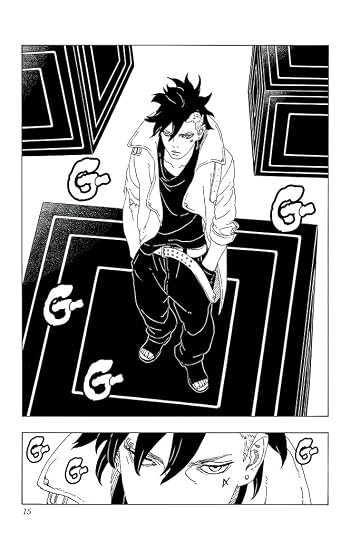
Mon petit plaisir fut de découvrir les nouveaux looks et designs. J’aime assez celui de Boruto, non plus inspiré des ninjas mais plutôt d’un samourai moderne. J’aime bien aussi celui de Sarada, sorte d’hommage à son père avec cette veste trop grande qui l’entoure. Quant à Kawaki, il a un look de Colombo un peu ridicule à mon goût et je ne suis pas fan de sa nouvelle coupe mulet. On a l’impression un peu de basculer dans une nouvelle ère, une ère de détective avec leurs chemises et manteaux longs. La plupart des personnages clés n’ont plus de tenues de ninjas et sont clairement en rupture sans que cela soit exprimé clairement. Ça titille mon esprit d’analyse.
Renouveau de la série, oui et non, Blue Vortex se présente surtout comme une suite avec des héros un tantinet vieilli et surtout un paradigme différent dont on ne sait pas encore réellement ce qu’il apportera. Ce premier tome d’introduction apporte peu de sel à notre moulin en dehors de revoir les personnages et d’assister à des combats un peu fade dans de nouveaux looks chamnés 😉 Attendons donc la suite pour juger sur pièce si c’est prometteur ou non.
ARticle complet : https://lesblablasdetachan.wordpress....

February 5, 2025
Boruto Uzumaki had it all, friends, family, and a village that loved him. Now, Boruto’s life has been turned upside down thanks to a powerful new Jutsu, where everyone believes Kawaki is the son of Naruto and Hinata Uzumaki, and Boruto has been branded a traitor and on the run from the village he once called home. Years later, Boruto arrives in the Hidden Leaf Village, grown-up and ready to show the world his new skills, thanks to his training with his teacher, Sasuke.
Masashi Kishimoto kicked off the second arc using a similar formula from the first Naruto series by using a time skip to show how much has changed in Boruto’s life. Eida’s Shinjutsu called Omnipotence has manipulated the memories of everyone on the planet to how the user sees fit, benefiting Kawaki, making him the Hokage’s son and Boruto an outlaw. What’s even stranger is that Sasuke’s daughter Saruda and her friend Sumire weren’t affected by this Shinjutsu, it is a strange situation but Kishimoto has been known for introducing mysterious elements early on in his work, something well-known regarding his earlier work with Naruto. It was a clever idea for Shikamaru to take the place of Naruto as Hokage, he has always had that kind of potential to become a leader due to his keen intellect and his strategic skills.
Aside from getting up to speed for those who aren’t familiar with what led up to this second part, the story is incredible so far, blending in a story that focused primarily on ninjas and bringing in more elements of Science Fiction and a space opera that adds a sense of cosmic tragedy mixed with drama. The first part laid out a familiar nostalgic tone from the early days of Naruto, but it introduced more modern elements of society and technology. Two Blue Vortex raises the stakes for Boruto by finding a way to reverse what has happened to their memories and to save his friends and village from a new threat that has the power to transform into Human God Trees.
Finally, let’s discuss the artwork. Artist Mikio Ikemoto returns to illustrate the second arc and his art continues to amaze me. With the gang making their return after the time skip, their designs are brought up to date with an intriguing sense of fashion that compliments each character’s different personality, which includes the villains such as Code, Jura, and the Claw Grime. The action scenes are drawn well, offering dynamic detail in each panel, I do enjoy how Ikemoto’s linework is always so clean and detailed.
Masashi Kishimoto kicked off the second arc using a similar formula from the first Naruto series by using a time skip to show how much has changed in Boruto’s life. Eida’s Shinjutsu called Omnipotence has manipulated the memories of everyone on the planet to how the user sees fit, benefiting Kawaki, making him the Hokage’s son and Boruto an outlaw. What’s even stranger is that Sasuke’s daughter Saruda and her friend Sumire weren’t affected by this Shinjutsu, it is a strange situation but Kishimoto has been known for introducing mysterious elements early on in his work, something well-known regarding his earlier work with Naruto. It was a clever idea for Shikamaru to take the place of Naruto as Hokage, he has always had that kind of potential to become a leader due to his keen intellect and his strategic skills.
Aside from getting up to speed for those who aren’t familiar with what led up to this second part, the story is incredible so far, blending in a story that focused primarily on ninjas and bringing in more elements of Science Fiction and a space opera that adds a sense of cosmic tragedy mixed with drama. The first part laid out a familiar nostalgic tone from the early days of Naruto, but it introduced more modern elements of society and technology. Two Blue Vortex raises the stakes for Boruto by finding a way to reverse what has happened to their memories and to save his friends and village from a new threat that has the power to transform into Human God Trees.
Finally, let’s discuss the artwork. Artist Mikio Ikemoto returns to illustrate the second arc and his art continues to amaze me. With the gang making their return after the time skip, their designs are brought up to date with an intriguing sense of fashion that compliments each character’s different personality, which includes the villains such as Code, Jura, and the Claw Grime. The action scenes are drawn well, offering dynamic detail in each panel, I do enjoy how Ikemoto’s linework is always so clean and detailed.
This entire review has been hidden because of spoilers.
April 6, 2025
I don't typically review manga, as I don't typically read them. However, this one was established as my fond memory of Naruto.
I mainly watch anime, especially Naruto to Shippuden. I stopped following it during Boruto: The Next Generation, as I'm rather accustomed to the older generation.
However, I heard Boruto aged up, and got a spin-off similar to Naruto Shippuden. So you can imagine my curiosity. I wanted to see how he grew up, if it is in parallel with his father, and how Sasuke has trained him. So my curiosity is naturally piqued. This edition doesn't disappoint.
Boruto is great at this one, I can see a lot of Sasuke in him. I'm proud. Almost shaking my fist at the universe proud. To be honest, I'm so behind. Ohtsutsuki this, Ohtsutsuki that. All I know is, my boys whup Kaguya. But the lore, I'm aware, is explored heavily with Boruto: The Next Generation. So there are so many characters I don't recognize, but the story I enjoyed. Good enough, eh.
Tempting to start following my nostalgia again, but knowing this series might cost me hundreds to buy is a bit unappealing. Naturally, I was a little depressed when there was no Naruto appearance, and only 1 tiny square cameo of my boy Sasuke. Storyline, I can understand why and where they are trying to go.
Good to see Boruto again. I'll riot if Sasuke dies, Kishimoto.
I mainly watch anime, especially Naruto to Shippuden. I stopped following it during Boruto: The Next Generation, as I'm rather accustomed to the older generation.
However, I heard Boruto aged up, and got a spin-off similar to Naruto Shippuden. So you can imagine my curiosity. I wanted to see how he grew up, if it is in parallel with his father, and how Sasuke has trained him. So my curiosity is naturally piqued. This edition doesn't disappoint.
Boruto is great at this one, I can see a lot of Sasuke in him. I'm proud. Almost shaking my fist at the universe proud. To be honest, I'm so behind. Ohtsutsuki this, Ohtsutsuki that. All I know is, my boys whup Kaguya. But the lore, I'm aware, is explored heavily with Boruto: The Next Generation. So there are so many characters I don't recognize, but the story I enjoyed. Good enough, eh.
Tempting to start following my nostalgia again, but knowing this series might cost me hundreds to buy is a bit unappealing. Naturally, I was a little depressed when there was no Naruto appearance, and only 1 tiny square cameo of my boy Sasuke. Storyline, I can understand why and where they are trying to go.
Good to see Boruto again. I'll riot if Sasuke dies, Kishimoto.
September 6, 2026
The decision to not show Boruto until the end of chapter 1 with one of the coldest introductions to a manga series I’ve ever read was genius.
I love the direction, artistically, tonally, all of the above, Boruto has adopted the personality that he should have after everything he’s been through, Kawaki is the most annoying character on earth, Sarada is coming into herself in really cool ways as well, I love how she’s been centered through out the series and really hopes she gets some crucial/pivotal moments through out the plot.
One of the best set up volumes I’ve ever read, really unlocking the entire plot without feeling like exposition was being vomitted at me.
The ending? The sasuke stuff? What will never be put past me in Boruto is their ability to continuously breaking the barrier of “no way this is fucking insane there is no way the writers did that”. So crazy, so cool, borugoat will come thru and I can’t wait to see how
I love the direction, artistically, tonally, all of the above, Boruto has adopted the personality that he should have after everything he’s been through, Kawaki is the most annoying character on earth, Sarada is coming into herself in really cool ways as well, I love how she’s been centered through out the series and really hopes she gets some crucial/pivotal moments through out the plot.
One of the best set up volumes I’ve ever read, really unlocking the entire plot without feeling like exposition was being vomitted at me.
The ending? The sasuke stuff? What will never be put past me in Boruto is their ability to continuously breaking the barrier of “no way this is fucking insane there is no way the writers did that”. So crazy, so cool, borugoat will come thru and I can’t wait to see how
June 19, 2024
The way the VERY FIRST CHAPTERS set all the suspense and add a lot of details to the mystery stew for readers is insane! First we know that Shikamaru replaced Naruto as Hokage because he was sealed for his own good by Kawaki. Later on we learn about Sasuke's situation too (I think is the second volume already). Don't even get me started about the Claw Marks, Code being humiliated by Boruto and even Jura or Hidari😭❤️. Peak fiction!
We are still searching for answers as where Sakura is and who is taking care of Sarada and don't get me started on HIMAWARI and her potential!
I have in depth reviews about the manga on my:
- YouTube channel: https://youtube.com/@roxysanime?si=gm...
- and TikTok: www.tiktok.com/@roxys.anime
We are still searching for answers as where Sakura is and who is taking care of Sarada and don't get me started on HIMAWARI and her potential!
I have in depth reviews about the manga on my:
- YouTube channel: https://youtube.com/@roxysanime?si=gm...
- and TikTok: www.tiktok.com/@roxys.anime
This entire review has been hidden because of spoilers.
March 23, 2026
First physical manga I read, I watched the whole anime and read the remaining Boruto volumes digitally. Mainly heard of people hating on it, but I love both the anime and the manga. I was really excited to start reading it and I’m happy it didn’t let down. The artwork is amazing!! It makes me very engaged, there were multiple moments where I was smiling or dropped my jaw. Boruto is really impressive with everything Sasuke taught him. It’s sick how he even knows Flying Raijin now, which was last used by Minato (Boruto’s grandpa). I don’t understand why people are hating on it. Yes lots of things have changed (like them being able to communicate through mind transmission, which I don’t like a lot since it might just be OP lol), but in a way i think it’s better than copy pasting Naruto. It keeps things fresh and this way it’s its own story with its own world and stuff :)

August 18, 2024
4/5 Stars (%76/100)
Part 2 of Boruto begins with a time skip. Last time, Eida rewrote the world with the powers so that Boruto and Kawaki's positions are changed. Boruto became a rogue ninja and Kawaki lived as "Boruto". This volume begins by showing us what has changed so far in a couple of years. Kawaki resembles Isshki a lot while Boruto returns to village looking like Sasuke but also Momoshiki. Lots of things happened in between two series but we don't know anything yet. I think this was a nice start.
Part 2 of Boruto begins with a time skip. Last time, Eida rewrote the world with the powers so that Boruto and Kawaki's positions are changed. Boruto became a rogue ninja and Kawaki lived as "Boruto". This volume begins by showing us what has changed so far in a couple of years. Kawaki resembles Isshki a lot while Boruto returns to village looking like Sasuke but also Momoshiki. Lots of things happened in between two series but we don't know anything yet. I think this was a nice start.

February 9, 2025
I loved this kick off to part two of Boruto! While i have given up watching the anime cause of all the filler, the manga just has me so intrigued. I didn’t think things could get so outlandish and crazy after the 4th great ninja war but they have managed to make it exciting once more!!
Boruto who was brash and bratty and spoiled in the first half is now strong and bad ass. What a difference in his character growth!
I cannot wait to see what this second half brings. If it’s anything like Shippuden was for Naruto I feel like I am going to love it!
Boruto who was brash and bratty and spoiled in the first half is now strong and bad ass. What a difference in his character growth!
I cannot wait to see what this second half brings. If it’s anything like Shippuden was for Naruto I feel like I am going to love it!

February 21, 2025
Ignorando el giro drástico que dio la historia ¿Por qué Inojin ahora parece Justin Bieber? 😭
December 15, 2025
I read this in one sitting, and it was really good. I've never read the original Boruto or Naruto manga, but I've seen the anime. It was really cool to see Boruto in a new light, and I really enjoyed the art, and how everyone looks older. One of my favorite things about stories is seeing how people grow over time, and following along in the future generation's footsteps. It's really cool to be following these characters again, and unravelling the mysteries of the Ohtsutsuki.
I look forward to the second volume.
I look forward to the second volume.
May 19, 2025
Boruto’s Return Arc - Chapters 1-15
Understandably this is mostly set up for future arcs. A showcase of where everyone is after the time skip, how strong they are and how cool their new designs are. For that function it works. I’m excited to see what happens next but as a self contained arc this doesn’t really do much. There are some emotional moments like Boruto vs Mitsuki and some hype moments like Himawari awakening the nine tails but thematically there’s not much here
7/10
This entire review has been hidden because of spoilers.
Displaying 1 - 30 of 86 reviews