This is not so much a review as thoughts I had while reading these poems.
Adorno is probably most famous for saying something like, how can there be poetry after Auschwitz? Maybe that is not exactly what he wrote, or maybe he didn't mean that there can be no poetry after Auschwitz, but rather what would a poetry look like after what had happened, how can one return to the old poetry, to say Romanticism when what had happened happened and the words of old poetry had been co-opted into the totalitarian myths that fueled a most civilized barbarity. If you are of my demographic and you dwell too long on the barbarity of Europe's twentieth century you are accused of pessimism (an awful crime in our day and age), especially if you happen to be taking this stand against aging sixties liberal radicals who seriously don't want to think that they didn't make the world a better place, and that the last twenty eight years (give or take a couple of decades) of US gross misconduct is just some aberration of sorts that stands against the greater trend of progress the world has enjoyed under their influence and tutelage. When you're head is shoved up your ass far enough or buried deep enough in the sand you can tell yourself anything that makes you feel better about your role in the world. You can also say that the holocaust is the past, things are better now and then blissfully move on.
That is sort of what the world did after Auschwitz, they vowed "Never Again", but that didn't stop it from continuing on, maybe it wasn't European Jewry, but say Soviet and Chinese dissidents, people in Rwanda, the former Yugoslavia, in East Timor, in Latin America and the list goes on. Mass killings, ruling by terror and violence, elimination of the unpure, the undesirables or just those who are different. But because you say Never Again you can go on your merry way and believe the world is a better place. In this world view Adorno's statement about poetry is absurd, poetry is exactly the same. Nothing about beauty, or any of that silly shit has been effected, so get over it say a fucking Kaddish and get ready for global hegemony.
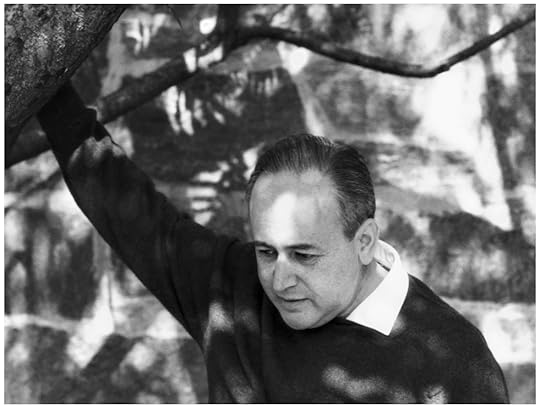
Celan's poetry is rather the answer to Adorno's question about poetry. It is poetry that tries to look in the face of the horror of what had happened and give an utterance to the unspeakable quality of it all. His poetry is a reminder of the magnitude of what had happened, and that almost any talk about it is an absurd reduction to phrases lacking in any real meaning. His poetry navigates this almost necessary silence and mourns the loss of not just the people who died but the death also of the world that has survived the holocaust. The poetry tries to express this loss, and express the way that words can only fail to adequately accomplish this massive task. In the spaces between the sparse lines, in what isn't said but which exists just under the surface of the words the meaning lies, the awful pain of mourning and attempts to understand the why of what has happened.
God pops his head up quite a bit in these poems, because he's one of the big problems with understanding what had happened. If there is a God how could he let this happen, how can one still believe in the Old Testament God after this? The easy answer is to say, well he didn't exist to begin with; of course (well maybe not of course) this answer leads to the more horrifying relization that if God doesn't exist then we are some really fucked up people, and we have to cope with not just an absurd existence but a terribly horrific and absurd existence. Evil takes on a whole new dimension that I don't think most people want to seriously confront if it is separated from the religious dichotomy of good and evil. If you don't believe me on this one take a couple of minutes to just think about all of the fucked up things in the world, and take away any underlying meaning to the universe and try to come to terms with what it means for us all. Then think about how much nicer it is to think about the same evil existing but which is balanced off by some kind of redeeming factor, and see which view of existence seems rosier.
So God is here in various guises, but God in a form that is both on the docket, so to speak, for what happened and as gone, or dead or whatever phrase you want to use. This is different than the contemporary vogue atheism that in a feel good way dances around about there being no God and comforts by making the horror of the world as the result of fanatic religion and narrow minded faith. Rather there is nothing to be joyful about the lack of God, what is the consolation prize in living in a world without God? Celan confronts this absent, mute, impotent, ignoble deity in a variety of ways, and leaves unsettling questions instead of any understanding.
So, um, now that I've ranted about lots of things, I guess I can say that I liked this book a lot. It's not nice reading to make you feel good, but it is a great book to make you confront the dark side of humanity and the self.