

What do you think?

Killers of a Certain Age #1
Señoras de armas tomar: Solo las mejores asesinas a sueldo llegan a jubilarse
Goodreads Choice Award
Nominee for Readers' Favorite Mystery & Thriller (2022)Older women often feel invisible, but sometimes that's their secret weapon.
They've spent their lives as the deadliest assassins in a clandestine international organization, but now that they're sixty years old, four women friends can't just retire - it's kill or be killed in this action-packed thriller.
Billie, Mary Alice, Helen, and Natalie have worked for the Museum, an elite network of assassins, for forty years. Now their talents are considered old-school and no one appreciates what they have to offer in an age that relies more on technology than people skills.
When the foursome is sent on an all-expenses paid vacation to mark their retirement, they are targeted by one of their own. Only the Board, the top-level members of the Museum, can order the termination of field agents, and the women realize they've been marked for death.
Now to get out alive they have to turn against their own organization, relying on experience and each other to get the job done, knowing that working together is the secret to their survival. They're about to teach the Board what it really means to be a woman--and a killer--of a certain age.
They've spent their lives as the deadliest assassins in a clandestine international organization, but now that they're sixty years old, four women friends can't just retire - it's kill or be killed in this action-packed thriller.
Billie, Mary Alice, Helen, and Natalie have worked for the Museum, an elite network of assassins, for forty years. Now their talents are considered old-school and no one appreciates what they have to offer in an age that relies more on technology than people skills.
When the foursome is sent on an all-expenses paid vacation to mark their retirement, they are targeted by one of their own. Only the Board, the top-level members of the Museum, can order the termination of field agents, and the women realize they've been marked for death.
Now to get out alive they have to turn against their own organization, relying on experience and each other to get the job done, knowing that working together is the secret to their survival. They're about to teach the Board what it really means to be a woman--and a killer--of a certain age.
328 pages, Mass Market Paperback
First published September 6, 2022
About the author
Deanna Raybourn
41 books9,857 followersNew York Times and USA Today bestselling novelist Deanna Raybourn is a 6th-generation native Texan. She graduated with a double major in English and history from the University of Texas at San Antonio. Married to her college sweetheart and the mother of one, Raybourn makes her home in Virginia. Her novels have been nominated for numerous awards including two RT Reviewers’ Choice awards, the Agatha, two Dilys Winns, a Last Laugh, three du Mauriers, and most recently the 2019 Edgar Award for Best Novel. She launched a new Victorian mystery series with the 2015 release of A CURIOUS BEGINNING, featuring intrepid butterfly-hunter and amateur sleuth, Veronica Speedwell. Veronica has returned in several more adventures, most recently AN IMPOSSIBLE IMPOSTOR, book seven, which released in early 2022. Deanna's first contemporary novel, KILLERS OF A CERTAIN AGE, about four female assassins on the cusp of retirement publishes in September 2022. (Please note: Deanna is not active on GR.)
Ratings & Reviews
Friends & Following
Create a free account to discover what your friends think of this book!
Community Reviews
Displaying 1 - 30 of 16,857 reviews

October 13, 2022
Fantastic premise, meh execution.
Four 60yo women who've been assassins for the last 40years go on a cruise to celebrate their retirement. They quickly realize someone is trying to get them killed.
The book lack depth and I wasn't emotionally invested.
Four 60yo women who've been assassins for the last 40years go on a cruise to celebrate their retirement. They quickly realize someone is trying to get them killed.
The book lack depth and I wasn't emotionally invested.

September 16, 2022
Well, the cover is cute….
I don’t really enjoy books about Spies or Assassins, so I was going to PASS on this one, but I DO gravitate towards “characters of a certain age” so when a lot of positive reviews started coming in for this book-I reconsidered!
Clearly sleuthing “Seniors” are having a moment with the success of Richard Osman’s “The Thursday Murder Club” series, and the “The Marlow Murder Club” by Robert Thorogood. Would a quartet of retiring female Assassins in their sixties capture my fancy as well?
OUTLIER ALERT
Apparently NOT.
But, surprisingly it WASN’T because they were ASSASSINS.
The strength of the books mentioned, or any COZY for that matter, are the CHARACTERS and that is the weakness of this book.
The book opens well enough in 1979 with a flashback to the the first mission that the women of “Project Sphinx” take on-posing as “Stewardesses” (even though that term was already replaced by flight attendant or cabin crew by then) to take out a quartet of Bulgarian men.
However, humor is subjective, and my first clue that the humor of this book would not be for me, was evident from page 12-when the first reference (of many) to “dicks” was made.
Chapter two and three return us to the PRESENT day, when our protagonists who are now retiring, have been sent on an all expenses paid, luxury cruise to (allegedly) thank them for their years of service. In reality, they have been gathered together so that could be eliminated by one of their own from the clandestine organization. that they have faithfully served for forty years.
When Billie makes their mark, they have to come up with a plan to stay alive.
In Chapter Four, the final pieces are assembled to set up this story with another flashback to 1978, where we will learn how Billie Webster, who will become the leader of this group, was recruited.
Personally, I think that this book would have benefited from introducing EACH of the women this way, because by 40%, I still couldn’t tell you much about any of the other three women.
I knew that Helen was the most beautiful and is barely functioning as she grieves the loss of her CIA husband, and Mary Alice is distraught that her wife thinks she is dead. I couldn’t really think of anything to make Nat stand out at this point.
Other than the women seeming awfully emotional and distracted for World Class Assassins, the CHARACTER DEVELOPMENT was lacking and by the end of the book, I hadn’t learned much more about any of them.
In addition, as the women would stick out their tongues at one another or give each other the middle finger, or make more jokes about “dicks” it seemed like I was reading about an elite group of twenty year old assassins, not a group of accomplished women in their sixties.
They just didn’t seem like “killers of a certain age” to me!
The ending leads me to believe that this COULD be the start of a series, but if so, it isn’t one that I will continue reading.
2.5 ⭐️ rounded up
A buddy read with Susan, who along with many other readers DID enjoy this-so be sure to read her amazing review before deciding if this would or would not be a fit for your personal tastes!
AVAILABLE NOW!
Thank You to Berkley books for the gifted ARC provided through NetGalley in exchange for a candid review!
I don’t really enjoy books about Spies or Assassins, so I was going to PASS on this one, but I DO gravitate towards “characters of a certain age” so when a lot of positive reviews started coming in for this book-I reconsidered!
Clearly sleuthing “Seniors” are having a moment with the success of Richard Osman’s “The Thursday Murder Club” series, and the “The Marlow Murder Club” by Robert Thorogood. Would a quartet of retiring female Assassins in their sixties capture my fancy as well?
OUTLIER ALERT
Apparently NOT.
But, surprisingly it WASN’T because they were ASSASSINS.
The strength of the books mentioned, or any COZY for that matter, are the CHARACTERS and that is the weakness of this book.
The book opens well enough in 1979 with a flashback to the the first mission that the women of “Project Sphinx” take on-posing as “Stewardesses” (even though that term was already replaced by flight attendant or cabin crew by then) to take out a quartet of Bulgarian men.
However, humor is subjective, and my first clue that the humor of this book would not be for me, was evident from page 12-when the first reference (of many) to “dicks” was made.
Chapter two and three return us to the PRESENT day, when our protagonists who are now retiring, have been sent on an all expenses paid, luxury cruise to (allegedly) thank them for their years of service. In reality, they have been gathered together so that could be eliminated by one of their own from the clandestine organization. that they have faithfully served for forty years.
When Billie makes their mark, they have to come up with a plan to stay alive.
In Chapter Four, the final pieces are assembled to set up this story with another flashback to 1978, where we will learn how Billie Webster, who will become the leader of this group, was recruited.
Personally, I think that this book would have benefited from introducing EACH of the women this way, because by 40%, I still couldn’t tell you much about any of the other three women.
I knew that Helen was the most beautiful and is barely functioning as she grieves the loss of her CIA husband, and Mary Alice is distraught that her wife thinks she is dead. I couldn’t really think of anything to make Nat stand out at this point.
Other than the women seeming awfully emotional and distracted for World Class Assassins, the CHARACTER DEVELOPMENT was lacking and by the end of the book, I hadn’t learned much more about any of them.
In addition, as the women would stick out their tongues at one another or give each other the middle finger, or make more jokes about “dicks” it seemed like I was reading about an elite group of twenty year old assassins, not a group of accomplished women in their sixties.
They just didn’t seem like “killers of a certain age” to me!
The ending leads me to believe that this COULD be the start of a series, but if so, it isn’t one that I will continue reading.
2.5 ⭐️ rounded up
A buddy read with Susan, who along with many other readers DID enjoy this-so be sure to read her amazing review before deciding if this would or would not be a fit for your personal tastes!
AVAILABLE NOW!
Thank You to Berkley books for the gifted ARC provided through NetGalley in exchange for a candid review!

February 12, 2023
I wanted to like it more than I actually did.

It was ok.
I probably wouldn't have been interested in this one at all if the ladies hadn't been old.
Except they didn't seem old! I'm not being ageist or whatever, but they acted like they were in their late 30s, not their mid-60s. I'm also really not sure how likely it would be that all 4 of these women would still be active assassins for this organization...until last week. I would think that in any physical job, most field agents would be getting aged into desk jockey seats by the time they are in their 50s - men or women. There are younger people who can move faster than you can at that point. It sucks, but it's true.
Speaking of, what are the odds that there's some super-benevolent organization out there that just wants to keep the world safe and trains assassins for this purpose?
Are they working for the Justice League or something?
I'm suspicious of anything that hokey.

Plus, the women themselves were kind of box tickers.
When it says this book is Golden Girls meets Bond, what it really means is that it's got 4 older women who are assassins, and isn't that just crrrrrazy enough to carry the whole story?
Because there really isn't much to differentiate any of them from each other besides the superficial stuff. One is the grieving widow, one is the lesbian, one is the sexpot, and the main character is the "tough" one.
I also thought there would be humor, but the zingers were things like my tits are saggy now! which just didn't make me laugh.
Admittedly, it may be because my tits are saggy now and I've already laughed about that enough.
Hah.
I was sort of expecting more assassin-y humor, like maybe one of them not being able to snipe someone from the rooftop because they forgot their glasses or something.
Fuck, I don't know. And I'm not really explaining that very well.

I think it would have made a better story if someone had come after these women thinking that they were your average AARP members and then found out they had once been ass-kickers.
Alas, no.
Apparently, their organization wants them dead (for spoilery reasons) and tries to take them out on their retirement cruise. They fight back and unravel the plot behind it all. The reader gets to see the old broads in action while learning about their past. The end.
BTW, the reason behind someone wanting them dead was lame.
LAME. I can't even...LAME.

Heads up, audiobook readers!
I thought the narration was terrible. I listened to the first 5 minutes or so and turned it off because the narrator's voice was so nasally and grating. Blech.
I went ahead and listened to a few other books before finally circling back to this one to give it another shot. Thankfully, there were two narrators - one for the flashbacks to their early careers and one for the present. The lady who read for the present was fine. However, that first narrator nearly killed me. <--pun intended.

Alright. Don't get me wrong, this wasn't terribly written or anything. And I see a lot of glowing reviews for this thing. I just maybe wanted something different than what it was?
If so, that's my fault.
I couldn't buy into the organization, the plot, or the personalities of any of the women.
I may just be getting picky in my old age, though.
It was ok.
I probably wouldn't have been interested in this one at all if the ladies hadn't been old.
Except they didn't seem old! I'm not being ageist or whatever, but they acted like they were in their late 30s, not their mid-60s. I'm also really not sure how likely it would be that all 4 of these women would still be active assassins for this organization...until last week. I would think that in any physical job, most field agents would be getting aged into desk jockey seats by the time they are in their 50s - men or women. There are younger people who can move faster than you can at that point. It sucks, but it's true.
Speaking of, what are the odds that there's some super-benevolent organization out there that just wants to keep the world safe and trains assassins for this purpose?
Are they working for the Justice League or something?
I'm suspicious of anything that hokey.
Plus, the women themselves were kind of box tickers.
When it says this book is Golden Girls meets Bond, what it really means is that it's got 4 older women who are assassins, and isn't that just crrrrrazy enough to carry the whole story?
Because there really isn't much to differentiate any of them from each other besides the superficial stuff. One is the grieving widow, one is the lesbian, one is the sexpot, and the main character is the "tough" one.
I also thought there would be humor, but the zingers were things like my tits are saggy now! which just didn't make me laugh.
Admittedly, it may be because my tits are saggy now and I've already laughed about that enough.
Hah.
I was sort of expecting more assassin-y humor, like maybe one of them not being able to snipe someone from the rooftop because they forgot their glasses or something.
Fuck, I don't know. And I'm not really explaining that very well.
I think it would have made a better story if someone had come after these women thinking that they were your average AARP members and then found out they had once been ass-kickers.
Alas, no.
Apparently, their organization wants them dead (for spoilery reasons) and tries to take them out on their retirement cruise. They fight back and unravel the plot behind it all. The reader gets to see the old broads in action while learning about their past. The end.
BTW, the reason behind someone wanting them dead was lame.
LAME. I can't even...LAME.
Heads up, audiobook readers!
I thought the narration was terrible. I listened to the first 5 minutes or so and turned it off because the narrator's voice was so nasally and grating. Blech.
I went ahead and listened to a few other books before finally circling back to this one to give it another shot. Thankfully, there were two narrators - one for the flashbacks to their early careers and one for the present. The lady who read for the present was fine. However, that first narrator nearly killed me. <--pun intended.
Alright. Don't get me wrong, this wasn't terribly written or anything. And I see a lot of glowing reviews for this thing. I just maybe wanted something different than what it was?
If so, that's my fault.
I couldn't buy into the organization, the plot, or the personalities of any of the women.
I may just be getting picky in my old age, though.

August 13, 2022
Deanna Raybourn brings friendship, humor, danger, and action to her suspenseful thriller,
Killers of a Certain Age
. Billie, Mary Alice, Helen, and Natalie worked as assassins for forty years. The Museum, an international clandestine organization, recruited them in the late 1970’s and they are now ready to retire. To celebrate, the company has given them an all- expenses paid cruise. However, when they find someone from their organization in disguise aboard the ship, they wonder if they have been marked for termination, or are they merely expendable?
The novel is mainly written from Billie’s point of view and has a few flashback scenes to the four women’s initial recruitment, training, and a couple of early missions. However, most of it is written in current times. Ms. Raybourn knows now to create dynamic characters that feel real and relatable despite the main characters being assassins. I loved the humor and depth.
This story captivated me from the first page with extraordinary characters, travel, brilliant world-building, and exciting scenes intersperses with wit and humor. There are unpredictable moments in the story that provide some unexpected twists. While this novel has some detailed depictions of violence and murder, it is about more than just assassins and their work. There’s a focus on friendship, connections, age, perception and invisibility of older women, trust, and much more.
Overall, this is an engaging, well-plotted, and wonderfully executed story that is entertaining and unique. If you like dry wit, mature characters, and plenty of action then this is definitely a book to consider reading. I’m looking forward to reading more by this author.
Berkley Publishing Group and Deanna Raybourn provided a complimentary digital ARC of this novel via NetGalley. This is my honest review. Opinions are mine alone and are not biased in any way. Publication date is currently set for September 06, 2022.
--------------------------------------------
My 4.19 rounded to 4 stars review is coming soon.
The novel is mainly written from Billie’s point of view and has a few flashback scenes to the four women’s initial recruitment, training, and a couple of early missions. However, most of it is written in current times. Ms. Raybourn knows now to create dynamic characters that feel real and relatable despite the main characters being assassins. I loved the humor and depth.
This story captivated me from the first page with extraordinary characters, travel, brilliant world-building, and exciting scenes intersperses with wit and humor. There are unpredictable moments in the story that provide some unexpected twists. While this novel has some detailed depictions of violence and murder, it is about more than just assassins and their work. There’s a focus on friendship, connections, age, perception and invisibility of older women, trust, and much more.
Overall, this is an engaging, well-plotted, and wonderfully executed story that is entertaining and unique. If you like dry wit, mature characters, and plenty of action then this is definitely a book to consider reading. I’m looking forward to reading more by this author.
Berkley Publishing Group and Deanna Raybourn provided a complimentary digital ARC of this novel via NetGalley. This is my honest review. Opinions are mine alone and are not biased in any way. Publication date is currently set for September 06, 2022.
--------------------------------------------
My 4.19 rounded to 4 stars review is coming soon.

September 6, 2022
3.5 stars rounded up
I thought this was overall a fun read about a group of four women in their 60s who have made their careers as assassins for a group called The Museum. They only kill bad people--started out killing Nazis and moved on to dictators, sex traffickers, drug smugglers, and the like. Now the women, Billie, Helen, Mary Alice, and Natalie are going on a cruise to celebrate their retirement. But it quickly becomes apparent that they are now targets for elimination. Who ordered them dead and why?
This is an entertaining book, an action thriller with bits of humor scattered throughout to diffuse some of the heavier moments. It's told both in the past and present, narrated by Billie giving the scope of their careers and where they are now. I can totally see this as a movie or TV series, these women are smart, skilled, and intuitive. I loved how they confronted all of the misogyny and ageism in their field.
I really enjoyed this unique tale and its characters. It's a quick read sure to bring a smile to the reader's face.
I voluntarily reviewed a complimentary copy of this book, all opinions are my own.
I thought this was overall a fun read about a group of four women in their 60s who have made their careers as assassins for a group called The Museum. They only kill bad people--started out killing Nazis and moved on to dictators, sex traffickers, drug smugglers, and the like. Now the women, Billie, Helen, Mary Alice, and Natalie are going on a cruise to celebrate their retirement. But it quickly becomes apparent that they are now targets for elimination. Who ordered them dead and why?
This is an entertaining book, an action thriller with bits of humor scattered throughout to diffuse some of the heavier moments. It's told both in the past and present, narrated by Billie giving the scope of their careers and where they are now. I can totally see this as a movie or TV series, these women are smart, skilled, and intuitive. I loved how they confronted all of the misogyny and ageism in their field.
I really enjoyed this unique tale and its characters. It's a quick read sure to bring a smile to the reader's face.
I voluntarily reviewed a complimentary copy of this book, all opinions are my own.

September 8, 2022
KILLERS OF A CERTAIN AGE is the Golden Girls with garrotes; four women who have spent forty years working as world-class assassins and are now cranky to be hitting retirement, soon made even crankier by the knowledge that someone has put out a hit on their lives. Stuffing their fanny packs with brass knuckles, detonators, poison syringes, and pistols, the intrepid four set off (snarking all the while about bad knees and menopause) to find out who's setting them up--and the result is an absolute joyride of a journey. If this isn't made into a movie stat--starring four fabulous 60+ A-list actresses who know how to drop acerbic one-liners--it will be a crime.

December 11, 2022
I struggled with this one. At the halfway point I speed read/skimmed to the end since it was a BOTM pick, and meh….
My enjoyment of it was 2 stars at best. It’s as if the book didn’t know what it wanted to be. Spy thriller or humor? Or both, in which case it failed on both counts. I suppose I don’t like to mix murder and humor, as other books in this sub-genre haven’t been favorites.
It was boring as a spy thriller and I didn’t enjoy the past/present alternating timelines. I found the crude quips and one liners juvenile and they quickly grew thin.
I applaud the author for choosing mature lady protagonists but I wish she hadn’t made them so silly.
As always, this is my opinion only so do please check out the positive reviews . This was a buddy read with Marialyce. She liked this one more than I did so do check out her review!
My enjoyment of it was 2 stars at best. It’s as if the book didn’t know what it wanted to be. Spy thriller or humor? Or both, in which case it failed on both counts. I suppose I don’t like to mix murder and humor, as other books in this sub-genre haven’t been favorites.
It was boring as a spy thriller and I didn’t enjoy the past/present alternating timelines. I found the crude quips and one liners juvenile and they quickly grew thin.
I applaud the author for choosing mature lady protagonists but I wish she hadn’t made them so silly.
As always, this is my opinion only so do please check out the positive reviews . This was a buddy read with Marialyce. She liked this one more than I did so do check out her review!

August 14, 2022
The Golden Girls meet Kill Bill!
Don’t underestimate female assassins, even if they are about to enter retirement!
Billie, Mary Alice, Helen and Natalie have worked for the Museum as an all female assassin group for forty years. To celebrate their retirement, they are sent on an all-expenses paid luxury cruise.
However, while enjoying their time off, they are targeted by one of their own agents.
Who put a hit out on a bunch of sixty-year old ladies? Why does someone want them dead?
The ladies must follow the clues to stay alive and take out their enemies before they are exterminated.
While I somewhat enjoyed this book, the plot follows a predictable storyline. It alternates between the past and the present, following the assassins from the day they were recruited. I was really hoping for something a little more original. This is not really a thriller or a comedy. In fact, I’m not sure what genre it should best be categorized. There are a few funny one-liners that create levity in this plot, but I wish Raybourn found more opportunities to use humor. However, the Menopaws! App. is extremely clever!
This book has a cinematic quality and I can easily see it be being made into a movie. While I enjoyed the plot, I found that it might be more exciting on the big screen than in print.
Overall, I’m not sure that I am the right reader for this book. It had a lot of potential, but ultimately might not be memorable for me.
3.5/5 stars rounded down
Expected publication date: 9/6/22
Thank you to NetGalley, Berkeley Books, and Kim-Salina for the ARC of Killers of a Certain Age in exchange for an honest review.
Don’t underestimate female assassins, even if they are about to enter retirement!
Billie, Mary Alice, Helen and Natalie have worked for the Museum as an all female assassin group for forty years. To celebrate their retirement, they are sent on an all-expenses paid luxury cruise.
However, while enjoying their time off, they are targeted by one of their own agents.
Who put a hit out on a bunch of sixty-year old ladies? Why does someone want them dead?
The ladies must follow the clues to stay alive and take out their enemies before they are exterminated.
While I somewhat enjoyed this book, the plot follows a predictable storyline. It alternates between the past and the present, following the assassins from the day they were recruited. I was really hoping for something a little more original. This is not really a thriller or a comedy. In fact, I’m not sure what genre it should best be categorized. There are a few funny one-liners that create levity in this plot, but I wish Raybourn found more opportunities to use humor. However, the Menopaws! App. is extremely clever!
This book has a cinematic quality and I can easily see it be being made into a movie. While I enjoyed the plot, I found that it might be more exciting on the big screen than in print.
Overall, I’m not sure that I am the right reader for this book. It had a lot of potential, but ultimately might not be memorable for me.
3.5/5 stars rounded down
Expected publication date: 9/6/22
Thank you to NetGalley, Berkeley Books, and Kim-Salina for the ARC of Killers of a Certain Age in exchange for an honest review.

November 29, 2022
Deanna Raybourn writes a fun, humorous and entertaining action packed thriller, shifting from the past to the present, featuring women of a certain age who have had an unusual career as elite assassins, working for a below the radar organisation known as the Museum for the last 40 years. Billie, Mary Alice, Helen and Natalie are retiring from a profession that has markedly changed over time with its now greater emphasis on technology. Narrated primarily from Billie's perspective, the women are on an all expenses paid vacation on a cruise ship when they become aware that they have now become targets for elimination themselves. They are forced to spring back into action, having to work together if they are to survive their ordeal, having to take on the Museum itself without any back up.
Insights into their past history are provided, from being recruited to kill Nazis, recovering art, and moving on to the likes of other bad people, such as dictators, drug lords and sex traffickers. The women make plans as they embark on their adventures, move from location to location, intent on taking out their enemies in a variety of gruesome ways. As the body count rises, it soon becomes clear that you underestimate these extraordinary post-menopausal women at your peril as they utilise their past experiences, expertise and unique skill set, to great effect. The issues associated with the ageing process are highlighted, the losses, the increasing number of bodily aches and pains, the problematic knees and more, all of which might be expected, when you are deadly female killers of a certain age, as the women take advantage of the notion that their age renders them 'invisible'.
Raybourn's thrilling novel is almost certain to be made into a movie, the ingredients are all there, the humour and wit, a marvellous set of characters, terrific locations, and the wonderful plotlines with twists. This is an engaging read with its pertinent themes, of getting older and the inescapable consequences of the ageing process, being women in a man's world, and the nature of female friendships. I can see this appealing to a wide range of readers. Many thanks to the publisher for an ARC.
Insights into their past history are provided, from being recruited to kill Nazis, recovering art, and moving on to the likes of other bad people, such as dictators, drug lords and sex traffickers. The women make plans as they embark on their adventures, move from location to location, intent on taking out their enemies in a variety of gruesome ways. As the body count rises, it soon becomes clear that you underestimate these extraordinary post-menopausal women at your peril as they utilise their past experiences, expertise and unique skill set, to great effect. The issues associated with the ageing process are highlighted, the losses, the increasing number of bodily aches and pains, the problematic knees and more, all of which might be expected, when you are deadly female killers of a certain age, as the women take advantage of the notion that their age renders them 'invisible'.
Raybourn's thrilling novel is almost certain to be made into a movie, the ingredients are all there, the humour and wit, a marvellous set of characters, terrific locations, and the wonderful plotlines with twists. This is an engaging read with its pertinent themes, of getting older and the inescapable consequences of the ageing process, being women in a man's world, and the nature of female friendships. I can see this appealing to a wide range of readers. Many thanks to the publisher for an ARC.

August 22, 2022
***HAPPY PUBLICATION DAY***
I went into this book just for entertainment value and it provided the humor and women of a certain age “spy stuff” that I enjoyed.
The novel is told mostly through the voice of Billie. She is one of four friends and former assassins which also include Mary Alice, Natalie and Helen. They all have just retired from 40 years working as elite assassins for an international organization known only as the “Museum”.
The novel moves back and forth from their recruitment into the group, some of their past operations and the present timeline.
The foursome are just settling into an all expenses paid luxury cruise paid for by the Museum. However it isn’t long before they discover that someone aboard the ship is trying to “eliminate” them.
After calling on some old friends in the organization they find out that someone on the Board of the Museum itself has targeted them for termination!! The question of who it is and why is what they need to determine.
The rest of the novel follows a plan they formulate to outsmart the assassins that have been sent to eliminate them one by one!!
This was an entertaining read with characters that were an interesting bunch that you would definitely want on your side!! This feels quite like the set up for a new series and I will watch for the next installment!
I received an ARC of this novel from the publisher through NetGalley. It was my pleasure to read and review this title.
Publication date is set for September 6, 2022
I went into this book just for entertainment value and it provided the humor and women of a certain age “spy stuff” that I enjoyed.
The novel is told mostly through the voice of Billie. She is one of four friends and former assassins which also include Mary Alice, Natalie and Helen. They all have just retired from 40 years working as elite assassins for an international organization known only as the “Museum”.
The novel moves back and forth from their recruitment into the group, some of their past operations and the present timeline.
The foursome are just settling into an all expenses paid luxury cruise paid for by the Museum. However it isn’t long before they discover that someone aboard the ship is trying to “eliminate” them.
After calling on some old friends in the organization they find out that someone on the Board of the Museum itself has targeted them for termination!! The question of who it is and why is what they need to determine.
The rest of the novel follows a plan they formulate to outsmart the assassins that have been sent to eliminate them one by one!!
This was an entertaining read with characters that were an interesting bunch that you would definitely want on your side!! This feels quite like the set up for a new series and I will watch for the next installment!
I received an ARC of this novel from the publisher through NetGalley. It was my pleasure to read and review this title.
Publication date is set for September 6, 2022

Read
September 13, 2022Premise a la the cinematic masterpiece Red starring Helen Mirren with a machine gun: four teen girls are recruited to become a squad of super-assassins for a shadowy bureau (the Museum) that hunts Nazis and other bad people. Cut to now, they're sixty, they're all retiring, and the Museum is trying to kill them. Our awesome foursome go on the run and take the fight back to the Museum, while also bickering about hot flashes and menopause, dealing with bereavement, and complaining about their dodgy knees.
It's terrific fun, with globetrotting and sneakery and some proper graphic on page violence. There is absolutely no messing about with questions such as "it is really okay to murder people even if they're bad?": we get straight in to murdering and keep at it, with an impressive bodies-to-page ratio and some lovely gory deaths. Our heroines are fed up of being old, of being underestimated, and definitely of bloody men in the workplace, and solve the latter problem at least with, again, lots of murder. I am here for it.
Excellent title, terrific amoral fun, great female friendships, and here's to post menopausal heroines. I wolfed this.
It's terrific fun, with globetrotting and sneakery and some proper graphic on page violence. There is absolutely no messing about with questions such as "it is really okay to murder people even if they're bad?": we get straight in to murdering and keep at it, with an impressive bodies-to-page ratio and some lovely gory deaths. Our heroines are fed up of being old, of being underestimated, and definitely of bloody men in the workplace, and solve the latter problem at least with, again, lots of murder. I am here for it.
Excellent title, terrific amoral fun, great female friendships, and here's to post menopausal heroines. I wolfed this.

May 31, 2022
I loved this so much. It’s super fun. I could definitely see this as a NetFlix series.
Killers of a Certain Age is set in two timelines. One is when the four protagonists are recruited and about twenty years old. Those chapters describe their training and their early missions—things like recovering art stolen during the Holocaust and taking out human rights violators. The other is set forty years later, at their retirement, when they realize that instead of getting their pensions, they’ve been marked for death by the agency they’ve devoted their lives to. Now, it’s a matter of killing people they’ve previously trusted, or be killed. So, they have to figure out how to stay off trained assassins’ radar without any of the backing of the organization behind them.
There is a fair amount of humor in this—a lot of it about getting older, how society underestimates women, and how 60-something women are invisible, which helps them out in their quest to stay alive.
This was the first time I’ve read Deanna Raybourn, but it won’t be the last. Thanks so much to NetGalley for the opportunity to review this novel, which RELEASES SEPTEMBER 6, 2022.
Killers of a Certain Age is set in two timelines. One is when the four protagonists are recruited and about twenty years old. Those chapters describe their training and their early missions—things like recovering art stolen during the Holocaust and taking out human rights violators. The other is set forty years later, at their retirement, when they realize that instead of getting their pensions, they’ve been marked for death by the agency they’ve devoted their lives to. Now, it’s a matter of killing people they’ve previously trusted, or be killed. So, they have to figure out how to stay off trained assassins’ radar without any of the backing of the organization behind them.
There is a fair amount of humor in this—a lot of it about getting older, how society underestimates women, and how 60-something women are invisible, which helps them out in their quest to stay alive.
This was the first time I’ve read Deanna Raybourn, but it won’t be the last. Thanks so much to NetGalley for the opportunity to review this novel, which RELEASES SEPTEMBER 6, 2022.

January 15, 2023
The best way to describe this book is a comfortable, easy read. The voice is wonderful and drops the reader right into the story. Great writing craft. Voice is "the everything," in writing and this author has it knocked. The characters are well drawn and three denominational. For these two reasons alone, you can't ask for more in a book. I will definitely pick up the next one.
Having said that, I personally, based on the description, anticipated something else. The premise sparked my imagination and I guess I just wanted more. Don't get me wrong there was plenty here to enjoy. I think in this case though, I had expected more in the intrigue department and maybe just a smidgen less in the everyday life of these women.
David Putnam author of the Bruno Johnson series (and now the Dave Beckett series)
d.
Having said that, I personally, based on the description, anticipated something else. The premise sparked my imagination and I guess I just wanted more. Don't get me wrong there was plenty here to enjoy. I think in this case though, I had expected more in the intrigue department and maybe just a smidgen less in the everyday life of these women.
David Putnam author of the Bruno Johnson series (and now the Dave Beckett series)
d.

September 8, 2022
4.5 rounded up
If I can offer one piece of advice that is to ignore these women of a certain age at your peril.
Mary Alice, Helen, Natalie and Billie have been members of an elite assassination squad for the last forty years. The organisation is so secret it’s referred to as The Museum. These four start as Project Sphinx, the first all female squad, recruited in 1978. Now they face their retirement and are to receive an all-expenses-paid cruise aboard the Aphritrite as a reward for their services. All is well, they happily wine and dine until Billie spots an operative she’s worked with previously posing as a crew member. Why is he undercover? Who is the mark? Heaven forfend it’s them because these ladies are no ordinary ladies and they won’t go down without a fight.
After all, they’re killers of a certain age.
When I saw the title I have my fingers crossed hoping it’s not something similar to a Richard Osman. It’s so not like his books and I love this one just as much as those!! This is a fun read from the get go. I enjoy the background to The Museum’s foundation which gives its shades of authenticity and the inserts of some of the four ladies training and assignments are terrifically colourful. It’s a very entertaining caper told at a fast pace and there’s never a dull moment. It’s written in a very lively way with plenty of really good humour. There are so many clever sections but the app Menopaws (LOL) deserves a specific mention!! That really makes me laugh!
The characters are very well portrayed, they’re all really likeable when the chips are down you root for them but have confidence in their ingenuity and multiple skills.
It’s an audacious tale, there is danger and excitement, it’s tense on occasions and at times they have to be ferocious . It ends as well as it begins and it makes me chuckle! I sincerely hope there’s a sequel and I could see a television company making an offer too… That would be so entertaining to watch! Who would play the fab four????
With thanks to NetGalley and especially to Hodder and Stoughton for the much appreciated arc in return for an honest review.
If I can offer one piece of advice that is to ignore these women of a certain age at your peril.
Mary Alice, Helen, Natalie and Billie have been members of an elite assassination squad for the last forty years. The organisation is so secret it’s referred to as The Museum. These four start as Project Sphinx, the first all female squad, recruited in 1978. Now they face their retirement and are to receive an all-expenses-paid cruise aboard the Aphritrite as a reward for their services. All is well, they happily wine and dine until Billie spots an operative she’s worked with previously posing as a crew member. Why is he undercover? Who is the mark? Heaven forfend it’s them because these ladies are no ordinary ladies and they won’t go down without a fight.
After all, they’re killers of a certain age.
When I saw the title I have my fingers crossed hoping it’s not something similar to a Richard Osman. It’s so not like his books and I love this one just as much as those!! This is a fun read from the get go. I enjoy the background to The Museum’s foundation which gives its shades of authenticity and the inserts of some of the four ladies training and assignments are terrifically colourful. It’s a very entertaining caper told at a fast pace and there’s never a dull moment. It’s written in a very lively way with plenty of really good humour. There are so many clever sections but the app Menopaws (LOL) deserves a specific mention!! That really makes me laugh!
The characters are very well portrayed, they’re all really likeable when the chips are down you root for them but have confidence in their ingenuity and multiple skills.
It’s an audacious tale, there is danger and excitement, it’s tense on occasions and at times they have to be ferocious . It ends as well as it begins and it makes me chuckle! I sincerely hope there’s a sequel and I could see a television company making an offer too… That would be so entertaining to watch! Who would play the fab four????
With thanks to NetGalley and especially to Hodder and Stoughton for the much appreciated arc in return for an honest review.

July 5, 2026
Older women often feel invisible, but sometimes that's their secret weapon., which is literally the case when old women - Billie, Mary Alice, Helen and Natalie take a end-of-careers holiday together when they find themselves the target of possible assassins plural! Oh, did I not mention it, these four older women were retiring from 40 years as assassins! A bit of a one-trick pony in the humour field, but the actual plot is quite interesting as are the backstories of their recruitment as assassins. A core concept that has become a trope in modern media, but pretty well executed. A Three Star, 6 out of 12 rating.

2026 read
2026 read
September 9, 2022
Deanna Raybourn has a beloved historical mystery series. I’ve read a few and adored them. I really need to get back to it. Killers of a Certain Age is her new standalone novel, now available, as of this week!
Four women, all friends in their sixties, have worked as international assassins for the Museum most of their lives. Meet Natalie, Billie, Mary Alice, and Helen. With the technology push, their tactics are considered obsolete, or at the least, old school. It’s time to retire, and then intend to celebrate with an all expenses paid trip together.
When they should be enjoying every bit of this trip, they realize they’ve are being targeted by their own organization, and they have to fight for their lives. Together, using all the skills they’ve developed over their long careers.
Killers of a Certain is so juicy good. The title perfectly fits these trained assassins who just happen to be sixty years old and at the top of their games. It’s thrilling, chilling, and full of banter, adventure, darkness, and fun. Inclusivity at its best with a cast of bad@ss, strong, female main characters. Fast-paced, twisty, vividly told, and wholly entertaining. Love love love. Don’t miss it!
I received a gifted copy.
Many of my reviews can also be found on my blog: www.jennifertarheelreader.com and instagram: www.instagram.com/tarheelreader
Four women, all friends in their sixties, have worked as international assassins for the Museum most of their lives. Meet Natalie, Billie, Mary Alice, and Helen. With the technology push, their tactics are considered obsolete, or at the least, old school. It’s time to retire, and then intend to celebrate with an all expenses paid trip together.
When they should be enjoying every bit of this trip, they realize they’ve are being targeted by their own organization, and they have to fight for their lives. Together, using all the skills they’ve developed over their long careers.
Killers of a Certain is so juicy good. The title perfectly fits these trained assassins who just happen to be sixty years old and at the top of their games. It’s thrilling, chilling, and full of banter, adventure, darkness, and fun. Inclusivity at its best with a cast of bad@ss, strong, female main characters. Fast-paced, twisty, vividly told, and wholly entertaining. Love love love. Don’t miss it!
I received a gifted copy.
Many of my reviews can also be found on my blog: www.jennifertarheelreader.com and instagram: www.instagram.com/tarheelreader

Read
December 9, 2022Source of book: NetGalley (thank you)
Relevant disclaimers: None
Please note: This review may not be reproduced or quoted, in whole or in part, without explicit consent from the author.
And remember: I am not here to judge your drag, I mean your book. Books are art and art is subjective. These are just my personal thoughts. They are not meant to be taken as broader commentary on the general quality of the work. Believe me, I have not enjoyed many an excellent book, and my individual lack of enjoyment has not made any of those books less excellent or (more relevantly) less successful.
Further disclaimer: Readers, please stop accusing me of trying to take down “my competition” because I wrote a review you didn’t like. This is complete nonsense. Firstly, writing isn’t a competitive sport. Secondly, I only publish reviews of books in the subgenre where I’m best known (queer romcom) if they’re glowing. And finally: taking time out of my life to read an entire book, then write a detailed review about it that some people on GR will look at would be a profoundly inefficient and ineffective way to damage the careers of other authors. If you can’t credit me with simply being a person who loves books and likes talking about them, at least credit me with enough common sense to be a better villain.
*******************************************
Ah, this is just unabashedly good fun.
The book opens with our four heroines, Billie, Helen, Mary Alice and Natalie celebrating their retirement with luxury cruise. The twist is, what they’re retiring from is the job of being an all-female assassination squad (that is, the members of the squad are women, not that they specifically assassinate women, that would be kind of creepy) working for a shadowy international organisation with benevolent aims and terminal methods. The secondary twist is that they quickly come realise they themselves have become someone’s target. And the tertiary twist is that the ‘someone’ is their own organisation. What follows is a frankly amazing game of “get them before they get us” as the four women attempt to secure their future by way of murder and uncover who has betrayed them.
This is one of those books that’s difficult to review because a) I don’t want to spoil it and b) I basically manifested the Jessica Fletcher popcorn gif while I was reading, I was so gripped. It’s fantastically paced—offering us occasional glimpses of the past to contextualise the present—but, mostly, it’s just like … older woman competence porn with bonus violence? Tell me, what’s not to love about that?
If I had to get picky—and, well, I don’t have to, but I’m going to anyway—I’d say that while each of the women gets their own arc and their moment to shine, Billie is very much the protagonist of the story and that the means the others sometimes get short shrift. Helen, recently bereaved and fragile, was probably the best characterised after Billie (or at the very least my favourite), but Natalie is mostly brassy comic relief and Mary Alice’s relationship with her wife is resolved mostly off page. I can see not wanting to drag down the story or compromise the suspense, but Mary Alice’s whole deal is that she’s been lying to her wife about her job (Akiko assumes she’s a spy not an assassin) and, once the truth comes out, they essentially have to bring Akiko (and Akiko’s cat) with them for safety. Understandably vexed about the whole situation, Akiko stops speaking to Mary Alice for a while but then just sort of … gets over … before the big confrontation. And, again, I can logically see why you’d probably want to reconcile with your wife the night before she might literally die but—and this might just be me wanting more queerness as point of principle—I do wish we’d been slightly more privy to the emotions in play in that relationship. There’s also a bit of an odd dynamic where one of Billie’s devotedly loyal personal contacts is this Lisbeth Salander type which means, between her and Akiko, you’ve sort of got a Ukrainian woman and Japanese woman who spend the whole book dutifully following four Americans around the globe. But, at the same time, between the past and the present, antagonists and allies, victims and ex-lovers, the book has a really sprawling cast, so its occasionally utilitarian approach to its secondary characters is perhaps to be expected.
The final thing I’d say—and I don’t know how to put this tactfully, so I’ll just put it bluntly but … there’s always, I think, a slight concern with media that is specifically focused on women and empowerment to be … gender prescriptive at best and kinda TERFy at worst. And, obviously, I’m not here to say it’s wrong to focus on women and empowerment in whatever way an author sees fit, nor is it my place to approve or condemn particular approaches. For me personally, I felt Killers of A Certain Age offered a diverse cast for whom what being “happy, successful and a woman” meant very different things and who navigated both their identity and their place in a patriarchal society in different ways. Basically—and again, this is just my perspective—part of what made the book such a guilt-free thrill-ride, albeit one in which people get murdered a lot, was its accompanying sense of receptivity to many possible ways of living.
Even if that’s being a woman in your sixties who can kill someone with your bare hands.
An enthusiastic rec from me. I sincerely need this book to be a TV show.
PS – There’s a bit of logistics in the beginning third of the book where the women have to travel to, from and about the UK in a way that won’t alert the people who are tracking them. Because I’m a total arse (and don’t trust Americans with my country) I actually looked up the various travel times, airports, and flight patterns and they totally checked out. That made me really happy. I do love discovering another author’s borderline pathological attention to detail.
Relevant disclaimers: None
Please note: This review may not be reproduced or quoted, in whole or in part, without explicit consent from the author.
And remember: I am not here to judge your drag, I mean your book. Books are art and art is subjective. These are just my personal thoughts. They are not meant to be taken as broader commentary on the general quality of the work. Believe me, I have not enjoyed many an excellent book, and my individual lack of enjoyment has not made any of those books less excellent or (more relevantly) less successful.
Further disclaimer: Readers, please stop accusing me of trying to take down “my competition” because I wrote a review you didn’t like. This is complete nonsense. Firstly, writing isn’t a competitive sport. Secondly, I only publish reviews of books in the subgenre where I’m best known (queer romcom) if they’re glowing. And finally: taking time out of my life to read an entire book, then write a detailed review about it that some people on GR will look at would be a profoundly inefficient and ineffective way to damage the careers of other authors. If you can’t credit me with simply being a person who loves books and likes talking about them, at least credit me with enough common sense to be a better villain.
*******************************************
Ah, this is just unabashedly good fun.
The book opens with our four heroines, Billie, Helen, Mary Alice and Natalie celebrating their retirement with luxury cruise. The twist is, what they’re retiring from is the job of being an all-female assassination squad (that is, the members of the squad are women, not that they specifically assassinate women, that would be kind of creepy) working for a shadowy international organisation with benevolent aims and terminal methods. The secondary twist is that they quickly come realise they themselves have become someone’s target. And the tertiary twist is that the ‘someone’ is their own organisation. What follows is a frankly amazing game of “get them before they get us” as the four women attempt to secure their future by way of murder and uncover who has betrayed them.
This is one of those books that’s difficult to review because a) I don’t want to spoil it and b) I basically manifested the Jessica Fletcher popcorn gif while I was reading, I was so gripped. It’s fantastically paced—offering us occasional glimpses of the past to contextualise the present—but, mostly, it’s just like … older woman competence porn with bonus violence? Tell me, what’s not to love about that?
If I had to get picky—and, well, I don’t have to, but I’m going to anyway—I’d say that while each of the women gets their own arc and their moment to shine, Billie is very much the protagonist of the story and that the means the others sometimes get short shrift. Helen, recently bereaved and fragile, was probably the best characterised after Billie (or at the very least my favourite), but Natalie is mostly brassy comic relief and Mary Alice’s relationship with her wife is resolved mostly off page. I can see not wanting to drag down the story or compromise the suspense, but Mary Alice’s whole deal is that she’s been lying to her wife about her job (Akiko assumes she’s a spy not an assassin) and, once the truth comes out, they essentially have to bring Akiko (and Akiko’s cat) with them for safety. Understandably vexed about the whole situation, Akiko stops speaking to Mary Alice for a while but then just sort of … gets over … before the big confrontation. And, again, I can logically see why you’d probably want to reconcile with your wife the night before she might literally die but—and this might just be me wanting more queerness as point of principle—I do wish we’d been slightly more privy to the emotions in play in that relationship. There’s also a bit of an odd dynamic where one of Billie’s devotedly loyal personal contacts is this Lisbeth Salander type which means, between her and Akiko, you’ve sort of got a Ukrainian woman and Japanese woman who spend the whole book dutifully following four Americans around the globe. But, at the same time, between the past and the present, antagonists and allies, victims and ex-lovers, the book has a really sprawling cast, so its occasionally utilitarian approach to its secondary characters is perhaps to be expected.
The final thing I’d say—and I don’t know how to put this tactfully, so I’ll just put it bluntly but … there’s always, I think, a slight concern with media that is specifically focused on women and empowerment to be … gender prescriptive at best and kinda TERFy at worst. And, obviously, I’m not here to say it’s wrong to focus on women and empowerment in whatever way an author sees fit, nor is it my place to approve or condemn particular approaches. For me personally, I felt Killers of A Certain Age offered a diverse cast for whom what being “happy, successful and a woman” meant very different things and who navigated both their identity and their place in a patriarchal society in different ways. Basically—and again, this is just my perspective—part of what made the book such a guilt-free thrill-ride, albeit one in which people get murdered a lot, was its accompanying sense of receptivity to many possible ways of living.
Even if that’s being a woman in your sixties who can kill someone with your bare hands.
An enthusiastic rec from me. I sincerely need this book to be a TV show.
PS – There’s a bit of logistics in the beginning third of the book where the women have to travel to, from and about the UK in a way that won’t alert the people who are tracking them. Because I’m a total arse (and don’t trust Americans with my country) I actually looked up the various travel times, airports, and flight patterns and they totally checked out. That made me really happy. I do love discovering another author’s borderline pathological attention to detail.

October 15, 2022
Assassins are typically muscular, well-built men who move in and out of the shadows with ease. This book focuses on an elite group of women in their 60's who have been successful assassins for decades. Retirement isn't exactly in their blood.
Now the tables have been turned on them and the organization that trained them to be expert killers wants each of the four of them dead.
Fast-paced, riveting action ensues.
Now the tables have been turned on them and the organization that trained them to be expert killers wants each of the four of them dead.
Fast-paced, riveting action ensues.

December 10, 2022
I love having fun with a great read.
Aside from the fun, the book speaks to a plethora of serious current topics as well as issues from the characters past. Combined, makes for a well balanced story.
There is nothing better than smiling through a story.
I must say that some of the methods of murder are very creative. Don't try them at home. :)
Aside from the fun, the book speaks to a plethora of serious current topics as well as issues from the characters past. Combined, makes for a well balanced story.
There is nothing better than smiling through a story.
I must say that some of the methods of murder are very creative. Don't try them at home. :)

September 15, 2022
As my favorite fictional geriatric Grandma Mazur would say – this one was a real pip!

Picture it, Sicily 1929. Okay, not really, but this was the story of a group of “golden girls”of sorts. Billie, Mary Alice, Helen and Natalie have spent the past 40 years . . . .
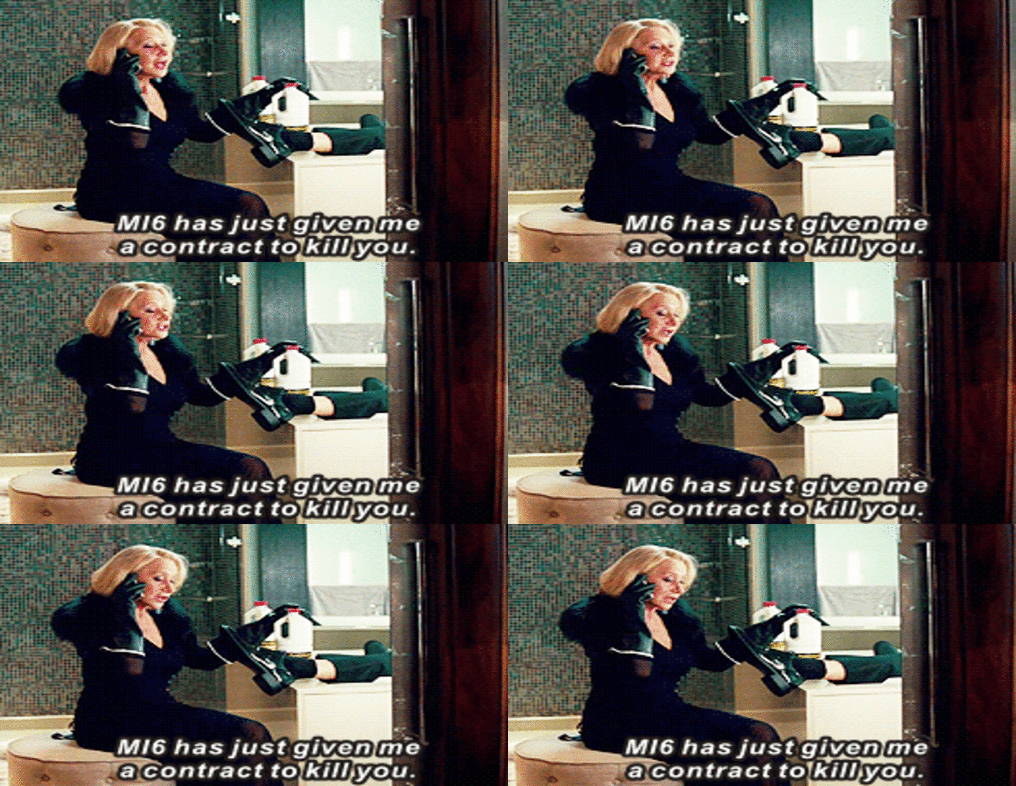
As a thank you for their contribution to ridding the world of various drug lords, sex traffickers, Nazis, dictators, etc. the four have been given an all expenses paid retirement cruise. And also, now they are the targets for the next hit?????
Talk about an action-packed thrillride. I generally don’t tend to enjoy reading fight scenes and high adrenaline cat and mouse situations, but this one was an exception. Mad props for a new take on a familiar plotline, introducing me to these enjoyable ladies, for the humor and for keeping me on the edge of my seat from start to finish. This was pure fun.
ARC provided by NetGalley in exchange for an honest review. Thank you, NetGalley!
Picture it, Sicily 1929. Okay, not really, but this was the story of a group of “golden girls”of sorts. Billie, Mary Alice, Helen and Natalie have spent the past 40 years . . . .
As a thank you for their contribution to ridding the world of various drug lords, sex traffickers, Nazis, dictators, etc. the four have been given an all expenses paid retirement cruise. And also, now they are the targets for the next hit?????
Talk about an action-packed thrillride. I generally don’t tend to enjoy reading fight scenes and high adrenaline cat and mouse situations, but this one was an exception. Mad props for a new take on a familiar plotline, introducing me to these enjoyable ladies, for the humor and for keeping me on the edge of my seat from start to finish. This was pure fun.
ARC provided by NetGalley in exchange for an honest review. Thank you, NetGalley!

Want to Read
September 17, 2022Struggling and decided to DNF at 15%.............

October 5, 2022
Never underestimate a woman!
This was a very different story.
On the front cover it says… “It’s kill or be killed, but they’ve been at this a long time…” which makes you wonder…what does this all mean?
As it turns out, you have four very accomplished women who are now retired and being offered a wonderful all-expense paid cruise as a retirement gift by their “company.”
What they don’t realize is that there is an assassin on board intended for them.
Now, why would an assassin be after four sixty-something year old retirees?
And that is where the adventure begins.
You think I’m going to spoil this for you?
Think again.
Go get this one and then…enjoy the thrill ride. Or should I say...cruise...
This was a very different story.
On the front cover it says… “It’s kill or be killed, but they’ve been at this a long time…” which makes you wonder…what does this all mean?
As it turns out, you have four very accomplished women who are now retired and being offered a wonderful all-expense paid cruise as a retirement gift by their “company.”
What they don’t realize is that there is an assassin on board intended for them.
Now, why would an assassin be after four sixty-something year old retirees?
And that is where the adventure begins.
You think I’m going to spoil this for you?
Think again.
Go get this one and then…enjoy the thrill ride. Or should I say...cruise...

June 17, 2024
I loved this book!! I want it to be a series so bad!!!!!
This book was like Carmen SanDiego, gathering up her three best friends to travel the world and catch the bad guys. I loved everything about this book. I want to be best friends with the main characters and help them kill off the punchable ‘bad guy’ characters. The stories and memories they shared were awesome plot builders. Loads of fun twists and turns too!
Five well deserved stars ⭐️ ⭐️⭐️⭐️⭐️
This book was like Carmen SanDiego, gathering up her three best friends to travel the world and catch the bad guys. I loved everything about this book. I want to be best friends with the main characters and help them kill off the punchable ‘bad guy’ characters. The stories and memories they shared were awesome plot builders. Loads of fun twists and turns too!
Five well deserved stars ⭐️ ⭐️⭐️⭐️⭐️
November 9, 2023
I really enjoyed this one - it was so much fun.
The story features Billie, Mary Alice, Helen and Natalie, four women who have been together for forty years acting as a team of assassins. They work for an organization known as the Museum which was started initially in order to track down and kill important Nazis who survived the war. After this they were used to dispose of any person regarded as a threat to society. Now as they begin their retirement they find that they themselves are a target for assassination.
The premise is brilliant and the book is gripping right from the start. It is also totally entertaining and never lets the reader go. If it had been possible I would have liked to read it in one sitting and I was amazed to see it has quite mixed reviews. I guess I am its target readership and I loved it!
The story features Billie, Mary Alice, Helen and Natalie, four women who have been together for forty years acting as a team of assassins. They work for an organization known as the Museum which was started initially in order to track down and kill important Nazis who survived the war. After this they were used to dispose of any person regarded as a threat to society. Now as they begin their retirement they find that they themselves are a target for assassination.
The premise is brilliant and the book is gripping right from the start. It is also totally entertaining and never lets the reader go. If it had been possible I would have liked to read it in one sitting and I was amazed to see it has quite mixed reviews. I guess I am its target readership and I loved it!

September 5, 2022
Seriously Fun!
A network of female assassins over a "certain age." When they met, they relied on their looks and their skills, to get the job done. Now that they've been put out to pasture, and someone wants them dead, they have to rely on their skills and each other to keep them alive.
Engaging and fun, this was a wholly unique idea. I enjoyed the storyline, and the characters and hope they return.
3.85 stars
Thanks to Berkley Publishing Group for the arc via NetGalley.
A network of female assassins over a "certain age." When they met, they relied on their looks and their skills, to get the job done. Now that they've been put out to pasture, and someone wants them dead, they have to rely on their skills and each other to keep them alive.
Engaging and fun, this was a wholly unique idea. I enjoyed the storyline, and the characters and hope they return.
3.85 stars
Thanks to Berkley Publishing Group for the arc via NetGalley.

August 26, 2022
Killers of a Certain Age by Deanna Raybourn is a humorous and action filled thriller novel. The story in Killers of a Certain Age is one that is told by changing the point of view with the majority from Billie’s perspective and then with some flashing back to the past the various characters in their past.
Billie, Mary Alice, Helen, and Natalie have come to that time in life to slow down and have decided to retire. The ladies certainly have had a busy work life and deserve to think about relaxing, they have all worked as elite assassins for an organization known as the Museum for the last forty years.
In celebration of their retirement the Museum is sending Billie, Mary Alice, Helen, and Natalie on an all expense paid vacation. Shortly after arriving on their vacation though the ladies spot another assassin and come to the conclusion the Museum is now after them.
Killers of a Certain Age by Deanna Raybourn is one of those books that as soon as I saw it I just knew I had to read it. Thankfully this novel was exactly as I thought it would be being full of humor and plenty of action for our more mature group of gals. The story wasn’t totally an original one as I have come across the retiring assassin plot before so not a total five stars but definitely a fun one I’d recommend.
I received an advance copy from the publisher via NetGalley.
For more reviews please visit https://carriesbookreviews.com/
Billie, Mary Alice, Helen, and Natalie have come to that time in life to slow down and have decided to retire. The ladies certainly have had a busy work life and deserve to think about relaxing, they have all worked as elite assassins for an organization known as the Museum for the last forty years.
In celebration of their retirement the Museum is sending Billie, Mary Alice, Helen, and Natalie on an all expense paid vacation. Shortly after arriving on their vacation though the ladies spot another assassin and come to the conclusion the Museum is now after them.
Killers of a Certain Age by Deanna Raybourn is one of those books that as soon as I saw it I just knew I had to read it. Thankfully this novel was exactly as I thought it would be being full of humor and plenty of action for our more mature group of gals. The story wasn’t totally an original one as I have come across the retiring assassin plot before so not a total five stars but definitely a fun one I’d recommend.
I received an advance copy from the publisher via NetGalley.
For more reviews please visit https://carriesbookreviews.com/

September 8, 2022
To think I almost skipped this book because I hate the cover! I've never read anything from Deanna Raybourn, but I definitely know who she is. I believe that KILLERS OF A CERTAIN AGE is her first contemporary thriller, but I could be mistaken. Regardless, this book was fast and fun, with great character development. Without going too much into the synopsis, this book dives into a world with a secret organization and highly-skilled assassins. These assassins are now in the age of retirement and are celebrating on an all-expenses paid vacation on a cruise. However, once they realize that they're being targeted by the Museum, the same organization they've worked for, the group knows that they have to take matters in their own hands.
Like I mentioned, this book is fast and fun, but it also dives into a demographic that pop culture soon forgets, sadly. Our main characters are older and ready to retire, but that doesn't mean they're just left for dead. TV and film usually ages women out at a certain age (assuming this is where the name of the book comes from), but I will bet money that this book was optioned and will showcase this age group of women spectacularly. If this book continues on with a series, I will probably not continue reading, however I did enjoy the story in this book and would recommend it for those who like action thrillers. I really thought that this book gave off Charlie's Angels vibes, but with menopause. I can't imagine this book not being a winner for readers and I am curious to hear what you think.
Like I mentioned, this book is fast and fun, but it also dives into a demographic that pop culture soon forgets, sadly. Our main characters are older and ready to retire, but that doesn't mean they're just left for dead. TV and film usually ages women out at a certain age (assuming this is where the name of the book comes from), but I will bet money that this book was optioned and will showcase this age group of women spectacularly. If this book continues on with a series, I will probably not continue reading, however I did enjoy the story in this book and would recommend it for those who like action thrillers. I really thought that this book gave off Charlie's Angels vibes, but with menopause. I can't imagine this book not being a winner for readers and I am curious to hear what you think.

September 15, 2022
The term ‘woman of a certain age’ is usually coined for an indeterminable older woman in both form and substance.
Becoming invisible can be a casualty, but while the females in this book are older in years, they’re young in adventure. And they’re BOLD.
I’m a fan of espionage and had so much fun reading about these kick ass (literally) ladies near my own birth year. The beautiful locales, planning, and taking down enemies had everything I could ask for in a spy type novel.
Although, I have to admit to wincing a bit because I know of the aches and pains that come with an athletic lifestyle later on.
Hardback copy purchased from The Book Depository.
Becoming invisible can be a casualty, but while the females in this book are older in years, they’re young in adventure. And they’re BOLD.
I’m a fan of espionage and had so much fun reading about these kick ass (literally) ladies near my own birth year. The beautiful locales, planning, and taking down enemies had everything I could ask for in a spy type novel.
Although, I have to admit to wincing a bit because I know of the aches and pains that come with an athletic lifestyle later on.
Hardback copy purchased from The Book Depository.

January 24, 2023
vacation book #6 - review to come??? i promise i will come back to reviewing - i SWEAR!

October 3, 2022
Deanna Raybourn's Killers of a Certain Age is a timely and very entertaining novel about a foursome (Billy, Mary Alice, Helen, and Natalie) of 60 something women who were employed for an A-list organization (the Museum) of assassins for forty years. Unfortunately, in this day and age, their aptness and skillful savvy has been deemed antiquated and it seems no one recognizes what they can still bring to the table during these times in which people are increasingly relying on automation rather than interpersonal expertise.
After the foursome decides to pack their bags and take a grand vacation to observe the departure from their decades long careers, they have now been sighted for termination by one of their former colleagues. Even more disheartening, only the Board, the highest-tier of members of the Museum, can issue a mandate to kill field operatives.
The foursome quickly comes to terms with the fact that counting on their seasoned skillsets and one another is a must if they hope to handle the situation and come out unscathed.
Billy, Mary Alice, Helen and Natalie are determined to make the organization regret taking them for granted and thinking they can get away with such a task. The former employers will be dealt quite an education on what women are really made of - and that those "of a certain age" will make certain their roars are heard loud and clear.
As a social worker (specializing in Gerontology for many years) and long term care Ombudsman - not to mention, someone who has had a lifelong special affinity for older adults - I am so appreciative for the fantastic portrayal of this age group which Deanna Raybourn has provided us in this novel. With the amount of blatant agism all around us today this is a much needed and refreshing message for all ages.
Narrators Jane Oppenheimer and Christina Delaine make a tremendous duo of voices. They do a wonderful job bringing all the characters to life and easily kept me entertained throughout. Bravo.
After the foursome decides to pack their bags and take a grand vacation to observe the departure from their decades long careers, they have now been sighted for termination by one of their former colleagues. Even more disheartening, only the Board, the highest-tier of members of the Museum, can issue a mandate to kill field operatives.
The foursome quickly comes to terms with the fact that counting on their seasoned skillsets and one another is a must if they hope to handle the situation and come out unscathed.
Billy, Mary Alice, Helen and Natalie are determined to make the organization regret taking them for granted and thinking they can get away with such a task. The former employers will be dealt quite an education on what women are really made of - and that those "of a certain age" will make certain their roars are heard loud and clear.
As a social worker (specializing in Gerontology for many years) and long term care Ombudsman - not to mention, someone who has had a lifelong special affinity for older adults - I am so appreciative for the fantastic portrayal of this age group which Deanna Raybourn has provided us in this novel. With the amount of blatant agism all around us today this is a much needed and refreshing message for all ages.
Narrators Jane Oppenheimer and Christina Delaine make a tremendous duo of voices. They do a wonderful job bringing all the characters to life and easily kept me entertained throughout. Bravo.
Displaying 1 - 30 of 16,857 reviews