

What do you think?
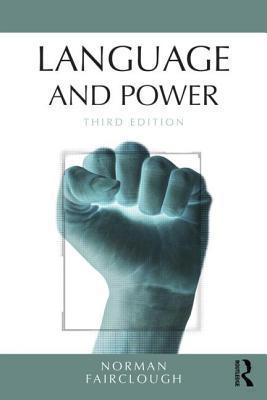
LANGUAGE AND POWER, 3RD EDITION
Language and Power is widely recognised both as a classic and an essential introductory textbook to the field of Critical Discourse Analysis. It focusses on how language functions in maintaining and changing power relations in modern society, the ways of analysing language which can reveal these processes and how people can become more conscious of them, as well as, more able to resist and change them.
In this twenty-fifth anniversary edition, Norman Fairclough includes a substantial new introduction and brings the discussion up-to-date. He shows both the importance of the book in the development of critical discourse analysis over the past three decades and how language and power relations have changed due to major socio-economic changes.
It remains vital reading for all students of discourse analysis, critical discourse analysis and other related courses.
In this twenty-fifth anniversary edition, Norman Fairclough includes a substantial new introduction and brings the discussion up-to-date. He shows both the importance of the book in the development of critical discourse analysis over the past three decades and how language and power relations have changed due to major socio-economic changes.
It remains vital reading for all students of discourse analysis, critical discourse analysis and other related courses.
274 pages, Paperback
First published January 1, 1989
Ratings & Reviews
Friends & Following
Create a free account to discover what your friends think of this book!
Community Reviews
Displaying 1 - 25 of 25 reviews

August 2, 2014
This is a wonderful book – I think what I like most about, when compared to other books by Fairclough I have read, is that it really does go out of its way to be clear and useable. This is a less of a book and more of a weapon. It presents a series of worked examples to show the reader how to critically engage with language so as to see how language is being used to position them within political and ideological frames. Although this book was written quite some time ago – many of the examples, for instance, relate to Margaret Thatcher’s Prime Ministership – it is still highly relevant. In some ways it may be that the distance we have from the events and stories discussed here might make them easier for us to learn from.
Fairclough is very much on the left of politics – but I think that even people on the right could learn from this book. Not that I think it would ‘convert’ you – but the linguistic tools he uses here don’t really belong to left or right, but to reason and rationality. If language is essentially a socially conditioned means for us to communicate and if it can be shown that language helps to structure the world into ‘common sense’ so as to make certain ideas seem natural and others unthinkable, then surely seeing how language facilitates that framing is something of interest to everyone.
One of Fairclough’s main concerns is that society is essentially coercive. There are two major (although certainly not mutually exclusive) ways in which a society can enforce the power relations it needs to sustain itself. The most obvious, even if the least frequently used, is through literal coercion. That is, the use of force. Every society reserves the ultimate right to use force to maintain itself, in fact, societies reserve for themselves the sole legitimate use of force – any other use of force in society not performed by the state is, by definition, illegitimate. But no society would last long if it required the constant use of force against its own population just to remain in power. Consent, then, must be manufactured and it must be manufactured in a way that makes such consent seem obvious, necessary and common sense. How this is done is based largely on how language is used to naturalise the inequality of power relations within a society.
Fairclough’s point, then, and how the book ends, is to call for critical language analysis to be taught in schools so that students can see how language is used as an instrument of power in the interests of those in power so as to naturalise certain ways of understanding the world.
A lot of this book, then, presents texts and then shows how the grammatical features of those texts work to construct the reader in particular ways. This isn’t just about an analysis of texts, though. The point is that language is a form of social communication. As such to understand any particular text demands a three level analysis. This analysis begins by viewing the features extant in the text itself – questions such as whether or not agency is being attributed. This is a key idea and so I won’t just pass over it. In English the standard form of a sentence is subject-verb-object – someone does something to someone else. Such a sentence has agency – you can see who did what. But there are other sentences in English which only have verb-object. These sentences, by definition, cannot show agency, since there is no one shown as doing anything. These sentences describe ‘events’ – they tell you stuff happened, but not what caused the event. If you see sentences without subjects – sentences without agency – you should always wonder why you are not being told who brought those events about.
There are, obviously enough, many more grammatical features to texts than just agency, and many of these are discussed throughout the worked examples. However, texts do not stand in isolation. They are meant to communicate, and communication always takes place within particular contexts. To understand a text it is essential to also understand these contexts and what transactions are being made within those contexts and therefore what power relations those contexts are manifesting.
The three levels of interpretation, then, should focus on the content of what is said or done; the relations that the people engaged in the communication have with each other; and the ‘subject positions’ these relations enable or enforce via this exchange. (see page 46)
Okay, so what does all that mean? There is an interesting part of this where a teaching doctor is asking questions of a trainee doctor. Naturally, we need to look at the literal structure of the questions and dialogue to gain an understanding of how this communication is taking place. But the point here is that you really also need to understand the power relationships that are implied, or a lot of this simply will not make sense. In ‘normal’ conversations one person doesn’t get to ask all of the questions or to structure the answers the other person will give in a way outside of the will of that other person. The subject positions of teacher and taught are power relations and their maintenance and coercive force are brought into being in communication – particularly via the use of language. Analysing how those relations become apparent in language is the point of critical discourse analysis and what this book is seeking to explain.
The rest of this review will be a series of quotes from the book. They will give the wrong impression of this book, as I have tended to focus on bits I want to use elsewhere – and, as I’ve said, this book is mostly a series of worked examples, something the quotes which follow do not make clear.
…the exercise of power in modern society, is increasingly achieved through ideology, and more particularly through the ideological workings of language. Page 2
Language is therefore important enough to merit the attention of all citizens. In particular, so far as this book is concerned, nobody who has an interest in modern society, and certainly nobody who has an interest in relationships of power in modern society, can afford to ignore language. Page 3
It is perhaps helpful to make a broad distinction between the exercise of power through coercion of various sorts including physical violence, and the exercise of power through the manufacture of consent to or at least acquiescence towards it. Power relations depend on both, though in varying proportions. Ideology is the prime means of manufacturing consent. Page 3-4
This does not, I hope, mean that I am writing political propaganda. The scientific investigation of social matters is perfectly compatible with committed and ‘opinionated’ investigators (there are no others!), and being committed does not excuse you from arguing rationally or producing evidence for your statements. Page 5
Mainstream linguistics is an asocial way of studying language, which has nothing to say about relationships between language and power and ideology. Page 7
Sociolinguistics is heavily influenced by ‘positivist’ conceptions of social science Page 7
The main weakness of pragmatism from a critical point of view is its individualism: ‘action’ is thought of atomistically as emanating wholly from the individual, and is often conceptualised in terms of the ‘strategies adopted by the individual speaker to achieve her ‘goals’ or ‘intentions’. Page 9
Language is part of society; linguistic phenomena are social phenomena of a special sort, and social phenomena are (in part) linguistic phenomena. Page 23
Politics partly consists in the disputes and struggles which occur in language and over language. Page 23
So, in seeing language as discourse and as social practice, one is committing oneself not just to analysing texts, but to analysing the relationship between texts, processes, and their social conditions, both the immediate conditions of the situational context and the more remote conditions of institutional and social structures. Page 26
But the increasing reliance on control through consent is also perhaps at the root of another, qualitative feature of contemporary discourse: the tendency of the discourse of social control towards simulated egalitarianism, and the removal of surface markers of authority and power. Page 37
Notice that the latter type of constraint is also a form of self-constraint: once a discourse type has been settled upon, its conventions apply to all participants, including the powerful ones. However, this is something of a simplification, because more powerful participants may be able to disallow varying degrees of latitude to less powerful participants. Page 47
Not all photographs are equal: any photograph gives one image of a scene or a person from among the many possible images. The choice is very important, because different images convey different meanings. Page 52
The myth of free speech, that anyone is ‘free’ to say what they like, is an amazingly powerful one, given the actuality of a plethora of constraints on access to various sorts of speech, and writing. Page 63
‘Formality’ is one pervasive and familiar aspect of constraints on access to discourse. Formality is a common property in many societies of practices and discourses of high social prestige and restricted access. It is a contributory factor in keeping access restricted, for it makes demands on participants above and beyond those of most discourse, and the ability to meet those demands is itself unevenly distributed. It can also serve to generate awe among those who are excluded by it and daunted by it. Page 65
A formidable axis is set up between social position and knowledge; since whose in prestigious social positions do learn to operate formally, an easy conclusion for those who don’t is ‘I can’t because I’m not clever enough’ rather than ‘I can’t because I’m working class’. Page 68
Broadly speaking, inculcation is the mechanism of power-holders who wish to preserve their power, while communication is the mechanism of emancipation and the struggle against domination. Page 75
Recall that I suggested in Chapter 2 that ideology be regarded as essentially tied to power relations. Let us correspondingly understand ideological common sense as common sense in the service of sustaining unequal relations of power. Page 84
Texts do not typically spout ideology. They so position the interpreter through their cues that she brings ideologies to the interpretation of texts – and reproduces them in the process! Page 85
‘News’ generally disguises the complex and messy processes of information gathering and interpretation which go into its production, and the role therein of ideologies embedded in the established practices and assumptions which interpreters bring to the process of interpretation. Page 129
Informal conversation between equals has great significance and mobilizing power as an ideal for of social interaction, but its actual occurrence in our class-divided and power-riven society is extremely limited. Where it does occur, its occurrence is itself in need of explanation; it certainly ought not to be taken, as it often is, as a ‘norm’ for interaction in general. Page 134
Any political party or political tendency needs to have a social base, some section or sections of a population whom it can claim to represent and can look to for support; it is commonplace for parties to project this social base onto the whole population, claiming that ‘the people’ have the properties of their own supporters. Page 185
Synthetic personalization simulates solidarity: it seems that the more ‘mass’ the media become, and therefore the less in touch with individuals or particular groupings in their audiences, the more media workers and ‘personalities’ (including politicians) purport to relate to members of their audiences as individuals who share large areas of common ground. Page 195
There seems to be a widespread delusion (or in some cases, an attempt to delude) that if more people were trained in getting jobs, there would be more jobs – or to put it differently, that people’s failure to get jobs is due to their own inadequacies, including for instance their inability to ‘interview well’, rather than to those of the social system. Page 217
I think that in general, synthetic personalization may strengthen the position of the bureaucracy and the state by disguising its instrumental and manipulative relationship – but only so long as people do not see through it! Page 222
Yet as we have seen in this book, language use – discourse – is not just a matter of performing tasks, it is also a matter of expressing and constituting and reproducing social identities and social relations, including crucially relations of power. Page 237
Fairclough is very much on the left of politics – but I think that even people on the right could learn from this book. Not that I think it would ‘convert’ you – but the linguistic tools he uses here don’t really belong to left or right, but to reason and rationality. If language is essentially a socially conditioned means for us to communicate and if it can be shown that language helps to structure the world into ‘common sense’ so as to make certain ideas seem natural and others unthinkable, then surely seeing how language facilitates that framing is something of interest to everyone.
One of Fairclough’s main concerns is that society is essentially coercive. There are two major (although certainly not mutually exclusive) ways in which a society can enforce the power relations it needs to sustain itself. The most obvious, even if the least frequently used, is through literal coercion. That is, the use of force. Every society reserves the ultimate right to use force to maintain itself, in fact, societies reserve for themselves the sole legitimate use of force – any other use of force in society not performed by the state is, by definition, illegitimate. But no society would last long if it required the constant use of force against its own population just to remain in power. Consent, then, must be manufactured and it must be manufactured in a way that makes such consent seem obvious, necessary and common sense. How this is done is based largely on how language is used to naturalise the inequality of power relations within a society.
Fairclough’s point, then, and how the book ends, is to call for critical language analysis to be taught in schools so that students can see how language is used as an instrument of power in the interests of those in power so as to naturalise certain ways of understanding the world.
A lot of this book, then, presents texts and then shows how the grammatical features of those texts work to construct the reader in particular ways. This isn’t just about an analysis of texts, though. The point is that language is a form of social communication. As such to understand any particular text demands a three level analysis. This analysis begins by viewing the features extant in the text itself – questions such as whether or not agency is being attributed. This is a key idea and so I won’t just pass over it. In English the standard form of a sentence is subject-verb-object – someone does something to someone else. Such a sentence has agency – you can see who did what. But there are other sentences in English which only have verb-object. These sentences, by definition, cannot show agency, since there is no one shown as doing anything. These sentences describe ‘events’ – they tell you stuff happened, but not what caused the event. If you see sentences without subjects – sentences without agency – you should always wonder why you are not being told who brought those events about.
There are, obviously enough, many more grammatical features to texts than just agency, and many of these are discussed throughout the worked examples. However, texts do not stand in isolation. They are meant to communicate, and communication always takes place within particular contexts. To understand a text it is essential to also understand these contexts and what transactions are being made within those contexts and therefore what power relations those contexts are manifesting.
The three levels of interpretation, then, should focus on the content of what is said or done; the relations that the people engaged in the communication have with each other; and the ‘subject positions’ these relations enable or enforce via this exchange. (see page 46)
Okay, so what does all that mean? There is an interesting part of this where a teaching doctor is asking questions of a trainee doctor. Naturally, we need to look at the literal structure of the questions and dialogue to gain an understanding of how this communication is taking place. But the point here is that you really also need to understand the power relationships that are implied, or a lot of this simply will not make sense. In ‘normal’ conversations one person doesn’t get to ask all of the questions or to structure the answers the other person will give in a way outside of the will of that other person. The subject positions of teacher and taught are power relations and their maintenance and coercive force are brought into being in communication – particularly via the use of language. Analysing how those relations become apparent in language is the point of critical discourse analysis and what this book is seeking to explain.
The rest of this review will be a series of quotes from the book. They will give the wrong impression of this book, as I have tended to focus on bits I want to use elsewhere – and, as I’ve said, this book is mostly a series of worked examples, something the quotes which follow do not make clear.
…the exercise of power in modern society, is increasingly achieved through ideology, and more particularly through the ideological workings of language. Page 2
Language is therefore important enough to merit the attention of all citizens. In particular, so far as this book is concerned, nobody who has an interest in modern society, and certainly nobody who has an interest in relationships of power in modern society, can afford to ignore language. Page 3
It is perhaps helpful to make a broad distinction between the exercise of power through coercion of various sorts including physical violence, and the exercise of power through the manufacture of consent to or at least acquiescence towards it. Power relations depend on both, though in varying proportions. Ideology is the prime means of manufacturing consent. Page 3-4
This does not, I hope, mean that I am writing political propaganda. The scientific investigation of social matters is perfectly compatible with committed and ‘opinionated’ investigators (there are no others!), and being committed does not excuse you from arguing rationally or producing evidence for your statements. Page 5
Mainstream linguistics is an asocial way of studying language, which has nothing to say about relationships between language and power and ideology. Page 7
Sociolinguistics is heavily influenced by ‘positivist’ conceptions of social science Page 7
The main weakness of pragmatism from a critical point of view is its individualism: ‘action’ is thought of atomistically as emanating wholly from the individual, and is often conceptualised in terms of the ‘strategies adopted by the individual speaker to achieve her ‘goals’ or ‘intentions’. Page 9
Language is part of society; linguistic phenomena are social phenomena of a special sort, and social phenomena are (in part) linguistic phenomena. Page 23
Politics partly consists in the disputes and struggles which occur in language and over language. Page 23
So, in seeing language as discourse and as social practice, one is committing oneself not just to analysing texts, but to analysing the relationship between texts, processes, and their social conditions, both the immediate conditions of the situational context and the more remote conditions of institutional and social structures. Page 26
But the increasing reliance on control through consent is also perhaps at the root of another, qualitative feature of contemporary discourse: the tendency of the discourse of social control towards simulated egalitarianism, and the removal of surface markers of authority and power. Page 37
Notice that the latter type of constraint is also a form of self-constraint: once a discourse type has been settled upon, its conventions apply to all participants, including the powerful ones. However, this is something of a simplification, because more powerful participants may be able to disallow varying degrees of latitude to less powerful participants. Page 47
Not all photographs are equal: any photograph gives one image of a scene or a person from among the many possible images. The choice is very important, because different images convey different meanings. Page 52
The myth of free speech, that anyone is ‘free’ to say what they like, is an amazingly powerful one, given the actuality of a plethora of constraints on access to various sorts of speech, and writing. Page 63
‘Formality’ is one pervasive and familiar aspect of constraints on access to discourse. Formality is a common property in many societies of practices and discourses of high social prestige and restricted access. It is a contributory factor in keeping access restricted, for it makes demands on participants above and beyond those of most discourse, and the ability to meet those demands is itself unevenly distributed. It can also serve to generate awe among those who are excluded by it and daunted by it. Page 65
A formidable axis is set up between social position and knowledge; since whose in prestigious social positions do learn to operate formally, an easy conclusion for those who don’t is ‘I can’t because I’m not clever enough’ rather than ‘I can’t because I’m working class’. Page 68
Broadly speaking, inculcation is the mechanism of power-holders who wish to preserve their power, while communication is the mechanism of emancipation and the struggle against domination. Page 75
Recall that I suggested in Chapter 2 that ideology be regarded as essentially tied to power relations. Let us correspondingly understand ideological common sense as common sense in the service of sustaining unequal relations of power. Page 84
Texts do not typically spout ideology. They so position the interpreter through their cues that she brings ideologies to the interpretation of texts – and reproduces them in the process! Page 85
‘News’ generally disguises the complex and messy processes of information gathering and interpretation which go into its production, and the role therein of ideologies embedded in the established practices and assumptions which interpreters bring to the process of interpretation. Page 129
Informal conversation between equals has great significance and mobilizing power as an ideal for of social interaction, but its actual occurrence in our class-divided and power-riven society is extremely limited. Where it does occur, its occurrence is itself in need of explanation; it certainly ought not to be taken, as it often is, as a ‘norm’ for interaction in general. Page 134
Any political party or political tendency needs to have a social base, some section or sections of a population whom it can claim to represent and can look to for support; it is commonplace for parties to project this social base onto the whole population, claiming that ‘the people’ have the properties of their own supporters. Page 185
Synthetic personalization simulates solidarity: it seems that the more ‘mass’ the media become, and therefore the less in touch with individuals or particular groupings in their audiences, the more media workers and ‘personalities’ (including politicians) purport to relate to members of their audiences as individuals who share large areas of common ground. Page 195
There seems to be a widespread delusion (or in some cases, an attempt to delude) that if more people were trained in getting jobs, there would be more jobs – or to put it differently, that people’s failure to get jobs is due to their own inadequacies, including for instance their inability to ‘interview well’, rather than to those of the social system. Page 217
I think that in general, synthetic personalization may strengthen the position of the bureaucracy and the state by disguising its instrumental and manipulative relationship – but only so long as people do not see through it! Page 222
Yet as we have seen in this book, language use – discourse – is not just a matter of performing tasks, it is also a matter of expressing and constituting and reproducing social identities and social relations, including crucially relations of power. Page 237

October 7, 2015
Ok this book really did it for me. To begin with, obviously Fairclough has worked with ACTUAL students and seems keen to actually teach/share knowledge instead of just persuading or showing off his intelligence. The book has numerous examples showing "how to" use discourse analysis in all sorts of situations and with all sorts of questions and Fairclough even tries to scaffold the reader attempting her/his own analysis with questions and teasers.
The main topic of the book is all the ways language ALWAYS contains politics and ideology and the possibility of starting to unpick the traces of ideology in "common sense" and in becoming aware of who is circulating particular ideas and how and why. The stated intention of this critical method (and I do love me a bit of critical method) is to make people more intentional in how they use discourse, and thus not trapped in false inevitability that shores up unjust relations.
The book is carefully and systematically broken up into short, labeled sections. This (third) edition contains obvious signs of having actually been revised for 2015 not just having been churned out again. It's a hard read with difficult words and concepts but it is a read where the author is trying to carefully bring you along with him...it's not opaque like some academic writing.
I wasn't convinced I was going to like Fairclough, but I thought he'd be a useful person to have read. I have huge respect for him because he writes like a teacher (like he wants to empower and extend the reader in a respectful way) not just like an academic.
The main topic of the book is all the ways language ALWAYS contains politics and ideology and the possibility of starting to unpick the traces of ideology in "common sense" and in becoming aware of who is circulating particular ideas and how and why. The stated intention of this critical method (and I do love me a bit of critical method) is to make people more intentional in how they use discourse, and thus not trapped in false inevitability that shores up unjust relations.
The book is carefully and systematically broken up into short, labeled sections. This (third) edition contains obvious signs of having actually been revised for 2015 not just having been churned out again. It's a hard read with difficult words and concepts but it is a read where the author is trying to carefully bring you along with him...it's not opaque like some academic writing.
I wasn't convinced I was going to like Fairclough, but I thought he'd be a useful person to have read. I have huge respect for him because he writes like a teacher (like he wants to empower and extend the reader in a respectful way) not just like an academic.

April 12, 2020
أصنف الاستمرارية في قراءة هذا الكتاب المعقد بمثابة التحدي لي..الصعوبة البالغة في التركيز أثناء القراءة،والحشو الكثير لربما هو كذلك لمن كان من غير أهل الإختصاص،رغم بينة هدف المؤلف بوضع الكتاب حيث تسهل قراءته على من لا يتمتع بخبرة سابقة حول ماهية عمل اللغة للمحافظة على علاقات السلطة وتغييرها وطرق تحليلها،وكذلك زيادة وعي الناس وقدرتهم على المقاومة.
بعد مقاومة من أثر النضال لإتمامه أترك بعض من خارطة التيه فيه بعضا من الانتفاع العالق بعقلي،لا أن يتلبس نقصا بما احتوى من غزارة من تثبت الأمثلة والشرح ومنزال يطرحه المؤلف ويتقن الإسهاب فيه.
يؤكد نورمان فيركلف على أثر تغيير الحياة الاجتماعية على تغيير طبيعة علاقات السلطة على كافة المستويات العالمي والوطني والمحلي والمساهمة بالتالي في تشكيل الأحداث.
يعتبر لنشأة وتطور الفضاء الإلكتروني والحرية بالتواصل النسبي المساواة الدور البارز بما يسمى "نظام الخطاب المجتمعي"
يرى المؤلف أن الوعي بأساليب اللغة تسهم في تمكين بعض الناس من السيطرة على الآخرين،و الوعي ما هو إلا بداية طريق التحرر.
وعن الأيديولوجيات ومفهومها النادر الظهور أثناء المناقشات والذي يعتبره قصورا فيها يقول :"ترتبط ارتباطا وثيقا بالسلطة،لأن طبيعة الافتراضات الأيديولوجية الكامنة في أعراف محددة - ومن ثم
طبيعة هذه الأعراف نفسها.والأيديولوجيات وثيقة
الارتباط باللغة، لأن استعمال اللغة أشد صور السلوك الاجتماعي شيوعا".
يندد ساخرًا ممن يزعمون صدارة الصور البصرية محل اللغة باعتبارها ثقافة"ما بعد اللغة".
من خلال الفرد المتحدث نستطيع إيجاد كيمياء سيطرة الأعراف والإبداع،فمن خلال الإستراتيجيات التي يستخدمها المتحدث لتحقيق مقاصده قد يستهين بسيطرة الأعراف الاجتماعية والقيود التي تفرضها على الناس وهي امتداد لتشكيل هوياتهم،فمنهم من يستغل اللغة والأعراف في ظروف معينة،وما يصحب الحديث من مظاهر بصرية تساعد على تحديد المعنى مثل ابتسامة متكلفة أو إيماء بالرأس.
ويعد الخطاب الوعاء المفضل للأيديولوجيا وهي ممارسة السلطة من خلال الرضا المجتمعي لا من خلال القسر،وأحد تلك الأمثلة الجرعات الثابتة من الأخبار التي يتلقاها معظم الناس كعامل سيطرة اجتماعية،وكذلك يتضمن الإعلانات والتعليم والبيروقراطية الحكومية.
ويعتقد من خلال الصراع الاجتماعي ينشأ تحول في علاقات السلطة،بينما الثبوت ينتج صبغة محافظة على إعادة الإنتاج،وهي رغم الثبوتية إلى تجديد في عالم متغير.!
مما لفت انتباهي وصفه للغة الإنجليزية المعيارية بالشيزوفرينيا ،فهي تطمح في ان تصبح لغة قومية وهي لا تزال لهجة طبقية وأحد أسباب ذلك ارتباطها بمصالح الطبقة الرأسمالية الثقافية.حيث أن تصاعد نموها يحسب من عملية استعمار طويلة،تطورت على حساب اللغة اللاتينية والفرنسية واللهجات الغير معيارية.
يعود مرة أخرى للعلاقة بين الأيديولوجية و اللغة والسلطة فيقول: "وتحقق الأيديولوجيا أقصى فاعلية لها عندما تعمل في أقصى درجات الخفاء،فإذا أدرك المرء أن جانبا معينا من المنطق السليم يتسبب في الحفاظ على ضروب التفاوت في السلطة على حسابه،لم يعد ذلك المنطق منطقا سلينا، وقد يفقد القدرة على الحفاظ على ضروب التفاوت في السلطة، أي في أداء مهمته الأيديولوجية. وأما الخفاء المشار إليه
فيتحقق عندما تتسرب الأيديولوجيات إلى الخطاب لا باعتبارها عناصر صريحة في النص بل باعتبارها افتراضات في خلفيته تدفع منتج النص إلى رسم صورة العالم في النص بأسلوب معين، من ناحية، وتدفع مفسر النص إلى تفسيره بأسلوب معين، من ناحية أخرى. فالنصوص لا تصرح عادة بالأيديولوجيات، ولكنها تقدم للمفسر مفاتيح معينة تجعله يستعين بالأيديولوجيات في تفسيره للنصوص، فيعيد إنتاج هذه
الأيديولوجيات في غار ذلك!"
ويطرح فيركلف الرأسمالية المعاصرة من خلال لب التحليل الذي أجراه "يورجن هابرماس " للرأسمالية المعاصرة "الزعم بأنها تتميز إلى حد ما بوجود نظم، تستعمر حياة الناس وأن هذه النظم تضخمت أبعادها
فوصلت إلى ما يعتبر أزمة. وأما النظم فهي المال والسلطة، أو الاقتصاد والدولة والمؤسسات. إذ نری من ناحية أن الاقتصاد وسوق السلع - في صورة المذهب
الاستهلاکی - يؤثران تأثيرا هائلا لا ينقطع في شتى جوانب الحياة، وأشد وسائطه وضوحا هي التليفزيون والإعلان. ونرى من ناحية أخرى أن الدولة والمؤسسات
تمارس سيطرة غير مسبوقة (خصوصا من جانب المؤسسات العامة على الأفراد من خلال شتى أشكال البيروقراطية."
كنتيجة حتمية اللغة والسلطة تؤثر في عولمة الخطاب كنشاط اقتصادي والأهمية الجوهرية في فهم ضروب الصراع أو الأنظمة الجديدة.
بعد مقاومة من أثر النضال لإتمامه أترك بعض من خارطة التيه فيه بعضا من الانتفاع العالق بعقلي،لا أن يتلبس نقصا بما احتوى من غزارة من تثبت الأمثلة والشرح ومنزال يطرحه المؤلف ويتقن الإسهاب فيه.
يؤكد نورمان فيركلف على أثر تغيير الحياة الاجتماعية على تغيير طبيعة علاقات السلطة على كافة المستويات العالمي والوطني والمحلي والمساهمة بالتالي في تشكيل الأحداث.
يعتبر لنشأة وتطور الفضاء الإلكتروني والحرية بالتواصل النسبي المساواة الدور البارز بما يسمى "نظام الخطاب المجتمعي"
يرى المؤلف أن الوعي بأساليب اللغة تسهم في تمكين بعض الناس من السيطرة على الآخرين،و الوعي ما هو إلا بداية طريق التحرر.
وعن الأيديولوجيات ومفهومها النادر الظهور أثناء المناقشات والذي يعتبره قصورا فيها يقول :"ترتبط ارتباطا وثيقا بالسلطة،لأن طبيعة الافتراضات الأيديولوجية الكامنة في أعراف محددة - ومن ثم
طبيعة هذه الأعراف نفسها.والأيديولوجيات وثيقة
الارتباط باللغة، لأن استعمال اللغة أشد صور السلوك الاجتماعي شيوعا".
يندد ساخرًا ممن يزعمون صدارة الصور البصرية محل اللغة باعتبارها ثقافة"ما بعد اللغة".
من خلال الفرد المتحدث نستطيع إيجاد كيمياء سيطرة الأعراف والإبداع،فمن خلال الإستراتيجيات التي يستخدمها المتحدث لتحقيق مقاصده قد يستهين بسيطرة الأعراف الاجتماعية والقيود التي تفرضها على الناس وهي امتداد لتشكيل هوياتهم،فمنهم من يستغل اللغة والأعراف في ظروف معينة،وما يصحب الحديث من مظاهر بصرية تساعد على تحديد المعنى مثل ابتسامة متكلفة أو إيماء بالرأس.
ويعد الخطاب الوعاء المفضل للأيديولوجيا وهي ممارسة السلطة من خلال الرضا المجتمعي لا من خلال القسر،وأحد تلك الأمثلة الجرعات الثابتة من الأخبار التي يتلقاها معظم الناس كعامل سيطرة اجتماعية،وكذلك يتضمن الإعلانات والتعليم والبيروقراطية الحكومية.
ويعتقد من خلال الصراع الاجتماعي ينشأ تحول في علاقات السلطة،بينما الثبوت ينتج صبغة محافظة على إعادة الإنتاج،وهي رغم الثبوتية إلى تجديد في عالم متغير.!
مما لفت انتباهي وصفه للغة الإنجليزية المعيارية بالشيزوفرينيا ،فهي تطمح في ان تصبح لغة قومية وهي لا تزال لهجة طبقية وأحد أسباب ذلك ارتباطها بمصالح الطبقة الرأسمالية الثقافية.حيث أن تصاعد نموها يحسب من عملية استعمار طويلة،تطورت على حساب اللغة اللاتينية والفرنسية واللهجات الغير معيارية.
يعود مرة أخرى للعلاقة بين الأيديولوجية و اللغة والسلطة فيقول: "وتحقق الأيديولوجيا أقصى فاعلية لها عندما تعمل في أقصى درجات الخفاء،فإذا أدرك المرء أن جانبا معينا من المنطق السليم يتسبب في الحفاظ على ضروب التفاوت في السلطة على حسابه،لم يعد ذلك المنطق منطقا سلينا، وقد يفقد القدرة على الحفاظ على ضروب التفاوت في السلطة، أي في أداء مهمته الأيديولوجية. وأما الخفاء المشار إليه
فيتحقق عندما تتسرب الأيديولوجيات إلى الخطاب لا باعتبارها عناصر صريحة في النص بل باعتبارها افتراضات في خلفيته تدفع منتج النص إلى رسم صورة العالم في النص بأسلوب معين، من ناحية، وتدفع مفسر النص إلى تفسيره بأسلوب معين، من ناحية أخرى. فالنصوص لا تصرح عادة بالأيديولوجيات، ولكنها تقدم للمفسر مفاتيح معينة تجعله يستعين بالأيديولوجيات في تفسيره للنصوص، فيعيد إنتاج هذه
الأيديولوجيات في غار ذلك!"
ويطرح فيركلف الرأسمالية المعاصرة من خلال لب التحليل الذي أجراه "يورجن هابرماس " للرأسمالية المعاصرة "الزعم بأنها تتميز إلى حد ما بوجود نظم، تستعمر حياة الناس وأن هذه النظم تضخمت أبعادها
فوصلت إلى ما يعتبر أزمة. وأما النظم فهي المال والسلطة، أو الاقتصاد والدولة والمؤسسات. إذ نری من ناحية أن الاقتصاد وسوق السلع - في صورة المذهب
الاستهلاکی - يؤثران تأثيرا هائلا لا ينقطع في شتى جوانب الحياة، وأشد وسائطه وضوحا هي التليفزيون والإعلان. ونرى من ناحية أخرى أن الدولة والمؤسسات
تمارس سيطرة غير مسبوقة (خصوصا من جانب المؤسسات العامة على الأفراد من خلال شتى أشكال البيروقراطية."
كنتيجة حتمية اللغة والسلطة تؤثر في عولمة الخطاب كنشاط اقتصادي والأهمية الجوهرية في فهم ضروب الصراع أو الأنظمة الجديدة.
September 3, 2020
يُعدّ الكتاب مادة مكثّفة للمبتدئ في هذا المجال، وإضافة ثريّة لمن هو في المستوى المتقدّم. هناك إضاءات جيّدة وضعها المؤلّف في حقول متعدّدة ربطًا بجميع مجالات السلطة والأيديولوجيا.
يستطيع الباحث العودة كلّ حين لهذا المرجع كمصدر لتوثيق بعض الأفكار والاستنارة بالأدّلة التطبيقيّة والتحليليّة المذكورة فيها، والتي استنبطها فيركلاف من لبّ الواقع لتوضيح العلاقة الوطيدة للغة في المجتمعات، وأنّ دراستها لا يمكن أن تكون كيانًا مستقلًّا كنحو منفصل عن هيكلها المرتبط بالواقع.
.
.
في تقديم الكتاب كتب فيركلاف عبارة من أجمل ما قرأت في العمل الأكاديميّ. سأذكرها تاليًا، لكن برأيي أوّلًا أنّ الباحث الأكاديميّ لا ينفكّ عن سماع وتوجيهات عدم انحيازه لجانب معيّن، وأن تكون دراسته موضوعيّة قدر الإمكان، وإن أدلى برأيّ ما فعليه أن يدعّمه قدر ما استطاع بالأدّلة العلميّة والمنطقيّة له، بالإضافة لتغييبه للأنا في البحث، إلّا أنّي أوافق المؤلّف لذكره هذه العبارة "لقد كتبت الكتاب بضمير المتكلم، ولم أشأ إخفاء آرائي وتفسيراتي الشخصيّة بالأسلوب "غير الشخصي" التقليديّ في العمل الأكاديمي، ولو أنّي أرى اختلافًا بين تبيان الرأي الشخصيّ في الدراسة (البحث) عن الكتاب، غير أنّ ذلك لا يعني إقصاء التصوّر الذاتيّ.
ملاحظات على الهامش يمكن العودة إليها للتوسّع لاحقًا:
- يبيّن فيركلاف الفروق الأساسيّة بين التداوليّة من التصوّر الأوروبي والتداوليّة بتصوّرها الأنجلو أمريكي
-اللغة بحسب التصوّر الدي سوسيري وعلم اللغة الاجتماعي
-اللغة نتاج اجتماعي
-النصّ والخطاب عند مايكل هاليداي
-مبدأ العلية
-السلطة وتشكيل الخطاب
-القيم العلائقيّة للمعالم النحويّة
-الأيديولوجيا ولائحة الممارسات البريطانيّة
-عولمة الخطاب وخطاب العولمة
يستطيع الباحث العودة كلّ حين لهذا المرجع كمصدر لتوثيق بعض الأفكار والاستنارة بالأدّلة التطبيقيّة والتحليليّة المذكورة فيها، والتي استنبطها فيركلاف من لبّ الواقع لتوضيح العلاقة الوطيدة للغة في المجتمعات، وأنّ دراستها لا يمكن أن تكون كيانًا مستقلًّا كنحو منفصل عن هيكلها المرتبط بالواقع.
.
.
في تقديم الكتاب كتب فيركلاف عبارة من أجمل ما قرأت في العمل الأكاديميّ. سأذكرها تاليًا، لكن برأيي أوّلًا أنّ الباحث الأكاديميّ لا ينفكّ عن سماع وتوجيهات عدم انحيازه لجانب معيّن، وأن تكون دراسته موضوعيّة قدر الإمكان، وإن أدلى برأيّ ما فعليه أن يدعّمه قدر ما استطاع بالأدّلة العلميّة والمنطقيّة له، بالإضافة لتغييبه للأنا في البحث، إلّا أنّي أوافق المؤلّف لذكره هذه العبارة "لقد كتبت الكتاب بضمير المتكلم، ولم أشأ إخفاء آرائي وتفسيراتي الشخصيّة بالأسلوب "غير الشخصي" التقليديّ في العمل الأكاديمي، ولو أنّي أرى اختلافًا بين تبيان الرأي الشخصيّ في الدراسة (البحث) عن الكتاب، غير أنّ ذلك لا يعني إقصاء التصوّر الذاتيّ.
ملاحظات على الهامش يمكن العودة إليها للتوسّع لاحقًا:
- يبيّن فيركلاف الفروق الأساسيّة بين التداوليّة من التصوّر الأوروبي والتداوليّة بتصوّرها الأنجلو أمريكي
-اللغة بحسب التصوّر الدي سوسيري وعلم اللغة الاجتماعي
-اللغة نتاج اجتماعي
-النصّ والخطاب عند مايكل هاليداي
-مبدأ العلية
-السلطة وتشكيل الخطاب
-القيم العلائقيّة للمعالم النحويّة
-الأيديولوجيا ولائحة الممارسات البريطانيّة
-عولمة الخطاب وخطاب العولمة

February 26, 2016
One of the few books I put willingly on my to-reread list.

May 11, 2018
One of the major source texts for critical discourse analysis/critical language studies. Marxist perspective on rhetorical choices, looking at the material and sociopolitical underpinnings/outcomes of how we use language.
I really appreciated the methods the author presented and how clear his presentation was; I will be making use of this in the future.
His presentation of those methods sometimes had that "abled progressive-Marxist white guy" thing going on, though. Like the way he explicitly discounted identity politics to prioritize class analysis. In actual practice, this often actually means centering the experiences of white men, so I have learned to be skeptical of those making this decision. Also, some of his examples put me off (viewing therapy as a bureaucratic method of training patients to internalize neoliberal concepts instead of as a method of survival for those of us with mental illness; both are true, I'd say, but you wouldn't know it from reading this. He also had a rape example, which seemed like an unnecessary and callous choice given how many SV survivors there are who might be caught off guard while reading this.)
"Practices which appear to be universal and common-sensical can often be shown to originate in the dominant class or the dominant bloc.... Ideological power... is a significant complement to economic and political power"
I really appreciated the methods the author presented and how clear his presentation was; I will be making use of this in the future.
His presentation of those methods sometimes had that "abled progressive-Marxist white guy" thing going on, though. Like the way he explicitly discounted identity politics to prioritize class analysis. In actual practice, this often actually means centering the experiences of white men, so I have learned to be skeptical of those making this decision. Also, some of his examples put me off (viewing therapy as a bureaucratic method of training patients to internalize neoliberal concepts instead of as a method of survival for those of us with mental illness; both are true, I'd say, but you wouldn't know it from reading this. He also had a rape example, which seemed like an unnecessary and callous choice given how many SV survivors there are who might be caught off guard while reading this.)

July 30, 2024
Przydatne i dobre, ale szkoda, ze nieprzetłumaczone na język polski, myślę że więcej bym z niej wyniosła

October 7, 2012
Norman Fairclough is very famous and considered to be the father of Critical discourse analysis, but the most notable thing is his works is that he is making a comparison between the society and the Language and each Linguistic entity. Here in "Language and Power" he trying to make a distinction between the power in all it's aspects and between Language as a Humanistic overcome. It was really a nice attempt to make critical demonstrations.

April 16, 2018
Very enjoyable and clearly written book. Useful to read in companionship with Freire’s pedagogy of the oppressed and Foucault’s archaelogy of knowledge. I just read another book edited by fairclough but it was huge. This one is much better because he distils all the same issues into a more concise and readable novel. I love his axiology and auto narrative stuff here. Lovely.

January 4, 2013
Read this a long time ago and it was one of a small number of texts which reframed how I thought about language use in many contexts. Interesting stuff.
May 14, 2025
Do not mistake my 4 stars as indicative of a poorly written book—this rating is the result of some minor gripes I have with the overall readability. Of course, I am coming to this book as a community psychology Master’s student, with a slight familiarity with discourse analysis. I did not purchase this book; it was free during a department book swap. I have no monetary obligations to rate this poorly or incredibly well, contrary to some (I’m assuming) folks in this review section! Before I go on a tangent about paying to access knowledge and the implicit indebtedness we might feel—allow me to actually talk about the book itself.
Fairclough makes it explicit that this book is perhaps best used as a textbook. It is still palatable as a standalone read, albeit slow-going at times, but would be even more powerful if accompanied by lecture/other resources/being able to ask an instructor about parts of the text. I would argue this is true for the first 7 chapters of the book. The final two chapters were the most actionable when thinking of how to apply the book’s insights in the real world.
As my first real book/non-article introduction to critical discourse analysis, I’d say it does a pretty alright job. Language and Power covers exactly those things.
Fairclough makes it explicit that this book is perhaps best used as a textbook. It is still palatable as a standalone read, albeit slow-going at times, but would be even more powerful if accompanied by lecture/other resources/being able to ask an instructor about parts of the text. I would argue this is true for the first 7 chapters of the book. The final two chapters were the most actionable when thinking of how to apply the book’s insights in the real world.
As my first real book/non-article introduction to critical discourse analysis, I’d say it does a pretty alright job. Language and Power covers exactly those things.

October 26, 2017
Though I wouldn't classify this book as a "fun read," it does contain many thoughtful statements that often require further reflection, e.g. "The more mechanical the functioning of an ideological assumption in the construction of coherent interpretations, the less likely it is to become a focus of conscious awareness, and hence the more secure its ideological status - which means also the more effectively it is reproduced by being drawn upon in discourse" (108).
October 16, 2020
Must read for anyone interested in critical discourse analysis. However, Fairclough, unfortunately, doesn't offer a comprehensive overview of how to actually use his proposed framework. Another suggestions would be to start with Discourse and Social change to understand the Foucauldian influence in Fairclough's analysis.

December 14, 2022
Fairclough's work on language and power is the backbone of our understanding of the subject. Unlike many other academic works, Fairclough's will only continue to grow in importance in the Surveillance Capitalism era (which would be more aptly named The Info War Era).

Read
March 22, 2021pLIS la dette ha vore den siste sekundærlitteratur-boka eg las for Oppgåva™
September 23, 2023
Read p21-77.
A good insight into the world of linguistics. I used this book for my political dissertation.
A good insight into the world of linguistics. I used this book for my political dissertation.

May 8, 2024
It's discourse analysis for slow communists. Super autistic in a bad, bad way. I don't know which planet Fairclough lives on, Britain?

May 10, 2024
Super good book on the basis of critical discourse analysis, as well as with examples of texts and their analysis under the framework. Highly recommend for any linguist.

Read
August 21, 2025another dissertation book

December 9, 2025
Solid theory, tho i think some of his structures are too solid/conservative whereas he should be more open minded.
April 2, 2026
seminal but i found i didn’t always agree with him (loved the chapter on discourses of thatcherism though)

Read
September 20, 2026Critical discourse analysis. On how language reinforces or challenges power structures.

Read
May 12, 2015(I don't rate non-fiction or textbooks)
A very interesting book, although I did not agree on some of the points the author made. But the parts about ideology in commonsense assumptions was very thought provoking.
A very interesting book, although I did not agree on some of the points the author made. But the parts about ideology in commonsense assumptions was very thought provoking.

Read
February 27, 2014Read as RA working on longitudinal study of students entering the law profession - too long ago to remember the details!

December 4, 2015
Excellent deconstruction
Displaying 1 - 25 of 25 reviews