Jump to ratings and reviews
Rate this book

2034: Writing Rochester's Futures

Rate this book
It’s 2034 on the edge of the altered state of New York. Best-selling Nebula and Hugo Award-winning author Nancy Kress leads a tour of things to come, alongside Star Trek writer Sally Caves, two-time John W. Campbell Award finalist Nick DiChario, playwright/philosopher Craig DeLancey, and fourteen other Rochesterian masters of speculative fiction. With an Introduction by Jack Garner and a Forward by University of Rochester Senior Science Writer Jonathan Sherwood, 2034 explores eighteen visions of where Rochester may find herself in her 200th year.

289 pages, Kindle Edition

First published January 1, 2009

3 people are currently reading
32 people want to read

About the author

Nancy Kress

453 books903 followers
Nancy Kress is an American science fiction writer. She began writing in 1976 but has achieved her greatest notice since the publication of her Hugo and Nebula-winning 1991 novella Beggars in Spain which was later expanded into a novel with the same title. In addition to her novels, Kress has written numerous short stories and is a regular columnist for Writer's Digest. She is a regular at Clarion writing workshops and at The Writers Center in Bethesda, Maryland. During the Winter of 2008/09, Nancy Kress is the Picador Guest Professor for Literature at the University of Leipzig's Institute for American Studies in Leipzig, Germany.

Excerpted from Wikipedia.

Ratings & Reviews

What do you think?
Rate this book

Friends & Following

Create a free account to discover what your friends think of this book!

Community Reviews

5 stars
4 (30%)
4 stars
3 (23%)
3 stars
4 (30%)
2 stars
0 (0%)
1 star
2 (15%)
Displaying 1 - 4 of 4 reviews
371 reviews36 followers
July 16, 2019
I'll confess, I picked this collection up because I went to grad school in Rochester, and no matter how awful the weather or how abysmal the public transportation, it's hard to voluntarily live in a place for six years and not get at least a little attached to it.

***Genelove by Nancy Kress: This one didn't really grab me. There was just too much focus on relationship drama, which has never particularly appealed on a personal level. That, and there was just something about how the two separate storylines were tied together that didn't really jive.

***Interesting Times by Eric Scoles: Overall, the emotional arc and the examination of the things people are willing to sacrifice for their careers and the speed at which technology develops that makes it necessary to never stop running just to keep up. Again, though, I could pinpoint a specific issue that made this story not as enjoyable as it could have been, and in this case it was the constant use of confusing technobabble that made it impossible to get a grip on what the character was actually doing.

***Culinary Capital, 2034 by Ben Chapman: This one was certainly the most fun so far, and the strong satirical bent was also quite enjoyable. It both had a strong narrative voice and didn't take itself too seriously, and I liked that. What knocked it down to three stars was its use of a trope I am really sick of, which is the hero who has a crush on a woman who's told him again and again and again that they're just friends and no, really, she's not interested, thanks, right up until he pulls some amazing stunt to Save the Day and she promptly decides to reward him with her love, because that's totally how attraction works.

***Night Bells by Dana Paxson: Again, not bad. It just didn't do anything that particularly stood out.

****2034 by Rory Gillett: Okay, now this struck a chord. It wasn't a long poem, but it was bleak, and as mentioned in the intro, I think that it says something that the work by the youngest writer in the anthology is also the most cynical.

**Hollow Lives by Adele Ciccaglione: Not a fan, as this one did several things that rubbed me the wrong way. First of all there was the Attack of the Dystopia Cliches, where the whole population is constantly medicated to keep them from feeling anything bad right up until one person stops taking the meds and yadda yadda yadda, been there done that.


Then, there was the med shaming, where it's constantly repeated that people are being overmedicated just to numb themselves so they don't have to experience anything unpleasant ever—never mind that most people who take medications in real life do so because they actually need them. The nail in the coffin was Luke's hypocrisy, where after all of his sanctimonious preaching about how Never Feeling Real Emotions Is Bad, he then tells Angie she shouldn't read the news about all of the horrors that are taking place in the outside world because she'll just upset herself for no reason!

**The Naked Girl by Sally Caves: This one was just annoying, on several different levels. Again with the confusing technobabble with no grounding in anything that's going to make sense to a modern-day reader that makes it impossible to understand what's actually going on. The writer's apparent inability to start a new paragraph when a new character starts talking. And another pet peeve: the constant use of stupid pseudo-teenage slang:

"Glad that wasn't 'French your ass,'" goes Ju Lee, our boss. Ellen's like, "I hate to grief you, but Madge brought her daughter."


Even the senior adults are using TeenSpeak (TM)!

Mom tells her the hilarious old story: how she ate her hearing aid by accident.

"I had the jelly beans in my right hand and the aid in my left and well, it like ended up in my mouth."


This is all over the place. Characters constantly using "goes" instead of "says". Characters inserting extraneous "like"s every other word. Keep in mind that these aren't middle school students; they're every single one of them grown-ass adults, and what's more, the white-haired senior generation talks exactly the same as the young, hip kids. Nope, can't do this anymore. I'm out.

****Time Enough for Love by Gary A. Mitchell: Okay, now this was neat. I'll admit I'm always a sucker for , and I think the conclusion was actually strengthened by the fact that what exactly was going on was ultimately left ambiguous.

****Day of the Bicentennial by Lindsay Ely: This one was pretty pointless, but it was still very fun. It hits that perfect balancing point between horror and humor. (Not to mention I was tickled, for strange coincidence reasons, to see both a mention of the Rochester Bicentennial making the news in Beijing, and a mention of the narrator crouching like a bizarre gargoyle atop a Mt. Hope mausoleum.)

*****Picoat by Kim A. Gillett: You want to know how to immediately get into my good graces? Emulate The Twilight Zone. I love dramatic irony, and even more so in a speculative fiction context. The narrator has a sort of sixth sense that allows him to intuit which policy choices will allow Rochester to thrive and which will result in its ruin. Yet, it was one of those exact choices—an unpopular choice, to boot—that was supposed to make Rochester better and yet ended in the deaths of a whole class of kindergarteners and several of their teachers. As it turns out, though, it wasn't the building that was the problem that was standing in the way of a prosperous Rochester— As the narrator realizes in that final bitter moment of epiphany:


It really makes you think.

***One City at a Time by Craig Delancey: A less successful attempt at playing up irony. There are kids out there who are making a real effort to fix some of the city's worst environmental and economic problems, AND SUCCEEDING, but their mothers are constantly worried that they're "wasting their time" when they should be concentrating on school, because don't they know that nothing can be done to fix the big problems and the only goal worth aiming for is to get out of the city and find a better place to live until humanity ruins that place too? While it's clear that this is supposed to be about generational complacency, the impact just doesn't come across.

And AGAIN! AGAIN we have a couple of grown-ass adults constantly using obnoxious TeenSpeak (TM) for no reason that is ever explained:

"With all of these hoses running this way and that to, like, move the water around in them real fast."


"We should be glad they have projects together, I guess," Bea said softly. "And they aren't into, like, drugs."


"Sure, water's valuable. But then it comes down to, like, who's got the money to buy it? They just aim to, like, suck it all away, with that stupid pipeline."


"But maybe we could, like, threaten them with separation if they don't get their grades up. Next year's their senior year. That's the one that counts. If we convince them to think of grades as, like, another project,, maybe they'll work on it."


Seriously, WHY?

****Want Not by L. S. Gathman: This is a story about how the older generations have messed things up for their descendents and are now struggling to pay off whatever part of it they still can to keep any more of it from falling on their children and grandchildren. While it was pretty clear from the beginning what was going on, this was nevertheless an interesting read.

***The Costs of Survival by Jamie Gilman Kress: This wasn't a badly done story—as a matter of fact it was written quite well—but it was nevertheless really upsetting to read. It's exactly the kind of conclusion I have a strong visceral reaction to, to the point where I just don't want to see any more of this, thanks.

***Getting Wet by Tom Moran: Another future dystopian hellscape, where America has fragmented, resources are scarce to nonexistent, and the only hope that anyone can find is to flee across the lake to Canada. It's not that the idea isn't compelling, it's just that the telling didn't particularly resonate in this short of a space, and I'm honestly getting a bit burnt out on grimdark post-apocalypses in this collection.

****Top 10 Headlines, Rochester, NY, 2034 by Nick DiChario: I'll admit I kept for waiting for the story to introduce some theme to tie the various headlines together, which it never really did, but the punchline at the end was definitely worth it. I don't want to spoil it, but it got a well-earned laugh.

***The 2034 Lilac Festival by Steven Donner: Another poem, and I have to admit that poetry has to be really compelling for me to get into it. I guess it was good enough for what it was trying to do.

***North Star Pipeline by Steve Carper: It was an interesting idea having the main conflict be over a pipeline that carried water rather than oil, but it just... wasn't really tied up. The story didn't feel like it had a proper ending.

***Scotch and Sizzlenuts on the Resolute Bay by Alicia Doty Henn: Getting seriously burnt out on the manipulative asshole who sabotages his ex to get her to do what he wants, and she eventually just goes along with it Because Reasons.

Overall

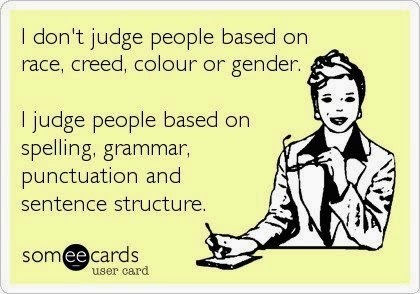
One comment about the collection as a whole, and I'm starting to feel really old school because I find myself making this particular complaint over and over and over again, even though nobody else seems to be particularly bothered by it or even to notice: the whole thing was really poorly edited. We see a character "ringing" a blanket and a company "pairing down" its staff, abrupt scene changes that aren't indicated by an accompanying scene break, and a character whose name changes back and forth between Baldo and Ubaldo depending on which paragraph you're reading. I thought all of this was just a matter of common sense and basic literacy, but I'm starting to feel like that crotchety old grandparent who's constantly spouting off lines about how "When I was your age...!" Well, when I was your age, people knew how to spell. And punctuate. And proofread. And keep their homonyms straight. Not to mention how to speak like adults.

1 review
July 15, 2020
A future history of the City of Rochester, NY. Like most anthologies, some stories are better than others (and some seem to be chapters of what become novels). All in all, good stories in general, and fun for current, past or future residents of Monroe County, NY.
Displaying 1 - 4 of 4 reviews

Can't find what you're looking for?

Get help and learn more about the design.