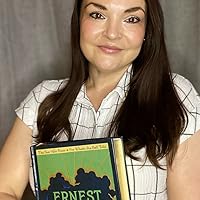
(2026 Re-read Review)
Fierce and yet subdued, patient, even, a trap waiting to be sprung but one you don’t even realize you have wandered into. I loved this even more the second time around, (bumping it up to proper five form four and a half.). In my original review I mention a few sections that seemed either slower or more drawn out than maybe they needed to be, and I have to say I rescind that. The pacing, even in those moments, feels so much more deliberate my second time around. His foreshadowing is so subtle but consistent it really makes the ending inevitable and yet breath-taking, at the same time.
One thing I clued into a lot more this read around was the use of hunger and appetite. Obviously this is a common metaphorical device in a vampire story, but it really jumped out at me this time. The attention to what kind of food the pastor is eating, his inability to control himself and eat a week’s worth of food in an evening; the ways appetite and hunger aren’t always the same, sometimes the whetting of one tames the other; the focus on food and consumption (extraction, colonization, devastation) and more. In addition to the epistle I already wrote (below) I found this and other new small details to fascinate upon, and I left more impressed than when I started. I think, always, I need to reinforce how beautiful and immersive the language is. It does not hold your hand, the use of Blackfoot terminology, but it is winking at you as it does it, and the relationship between language, (or maybe its ownership), and how one experiences the world, is something that Graham Jones is playing with in really evocative ways. While it does ask a little more of the reader it really makes this something special and spellbinding.
I should add that this re-read was done via audiobook, and that was wonderful. It had three different narrators for the different characters’ sections and all three did a great job, with the production overall adding to the immersive (and maybe damning) experience.
***
(Original 2025 Review)
This novel is the burning iron used to cauterize a wound by campfire light. Stephen Graham Jones takes an unflinching look at some of the worst violences of American history, the deepest wounds whose poison still taints this nation’s lifeblood, and confronts it with equal parts heart and terror. Everything about this novel is great, from the story to the characters to the writing style and framing device to the scenes of heartbreak and terror that are scattered through the book, enough to make sure you never forget how bloody of a history you’re reading. But, also, it is a violent vampire story with literally one of the best interpretations of vampire mythology I think I have ever seen, deserving to be in the upper echelon of great vampire stories.
I have more thoughts about the overall framing device which I will get to, but first the choice to use an epistolary format is great. Of course it is a huge nod to Dracula, but it also brings an authenticity to the story that is deeply felt. Being honest, there is almost always some element of artifice with epistolary stories—how could the interlocutor remember all of this dialogue, why is this being recorded in the first place, and of course the pesky problem of how to deal with an ending—and to some extent those issues are here, though others are very cleverly circumvented. Yet they never are an obstacle because the personal voice conveyed through this narrative device is so powerful it far outweighs any such considerations. The characters are incredible. We have two central characters and they both are given voice, as epistolary sections come from both of them. What is beautiful about them is that they are complicated and painful and both have a mix of heroic and admirable traits along with the horrific and terrible. Never for a second do you doubt the authenticity of these characters, and having the story written in their alternating voices is powerful and affecting. The world-building is similarly breathtaking. Whether it be the small, grey vicissitudes of life in early 20th century Montana colony or the vast, ebullient geography of the Blackfeet, the sense of place, and all of its joy and desperation, is constantly present. It shapes the characters and story in important ways, and invites the audience deeper into the story. The writing is spectacular, the way two distinct voices are captured so well and are so pivotal to the story. The way Pastor Beaucarne can somehow have simultaneous awe and disdain, jealousy and hatred born form that jealousy, for the Blackfeet, for Good Stab, is beautifully captured. The way that he can gently mock the Blackfeet way of naming animals in very descriptive ways, childish, he calls it, and then slowly catch himself unintentionally using the Blackfeet terminology as his story progresses. It’s all great. The pacing works well, for the most part. It isn’t a fast-paced novel, but Graham Jones chooses to start it with a wonderfully lurid scene, one that tells the same story in two different ways, which serves to not only get the audience invested but also to make clear how important a role authorial voice has on the framing of events. Then there are some scenes of action and violence throughout, pretty evenly distributed, until a horrific climax that just keeps escalating. The ebb and flow is good, aided by the switching between voices. However there is a section after the climactic scene that felt a little longer than it needed to be. It was never boring, it was telling us an important story, and it could be a story all unto itself, it was that interesting. But it seemed to disconnect the climax from the denouement and resolution, a little. This novel is telling more than one story at once, in fact it is telling three, (or three-in-one), woven beautifully around each other through the novel, and this section, the longest chapter in the book, feels like a knot in that weave. There are other slow or slow-ish sections, this is a history story, a time-traveling story, first and foremost, and I suppose that may not work for some people. For me the history served to amplify the tension and terror of the present. Aside from that one section being a little longer than I may have wanted it to be continuing its placement in the overall story I really enjoyed the pacing and the way it helped keep the story bristling with meaning and emotion.
I haven’t mentioned the actual framing story, that of a great-great-granddaughter coming into possession of this journal and transcribing it. This section is so short in the beginning it does just feel like a convenient framing device. However, it comes back in the end with a lot more substance, and you realize that it is not just a literary means to deliver the story but it is the story, or at least an important part of it. I will say that these sections are where the epistolary style was the least convincing (though they also are what made the epistolary nature of the rest of the story work so well). From a thematic perspective, though, it felt important for the framing sections to also be epistolary. This is because Graham Jones doesn’t ever try to pretend there aren’t big themes and ideas being explored. Obviously there are ideas of genocide and occupation, what it means to steal not just a peoples’ land and lives but their histories, their culture, their humanity. Part and parcel with this are questions of vengeance, justice, and ownership. There are echoes of The Fall of the House of Usher, and how culpability lives in bloodlines. It is also about knowing yourself, observing your own transformation and identifying the catalysts, maybe nurturing them, even. What is ownership—of land, of actions, of blood, tragedy, and reparation? But even as these ideas are clear and present there are never easy answers, no one-size-fits-all solution. There are only messy resonances, stabs in the dark, hoping to hit the right spot. As always Graham jones highlights these obvious questions with more subtle strands running through the story. For instance, there is a wonderful fascination with trilogies, with an often contradictory (or contradictory-seeming) tri-partite nature of things. Obviously Good Stab calls Pastor Beaucarne “Three-Persons,” seemingly coming from the holy trinity worshipped in Christian mythologies. The pastor has his own triple nature, though, one that isn’t revealed in full until later in the novel so I won’t spoil it here. But Good Stab also has his own trilogy of identity: he is Good Stab, but he is also Fullblood, and also Takes No Scalps. The story itself is tri-partite: the pastor’s story, Good Stab’s story, and Etsy’s story—which is, in part, why the framing device needed to be epistolary in nature. The other reason is that even the very epistolary structure is tri-partite: it is gospel, it is confession, and it is witness. This is what this story is, at its heart, a witness. Witness to atrocity, to reality, to potential—to past, present, and future, all at the same time. It was a thrill to be able to be allowed to bear such witness, and live to share the tale.
(Rounded up from 4.5)
I want to thank the author, the publisher Saga Press, and NetGalley, who provided a complimentary eARC for review. I am leaving this review voluntarily.