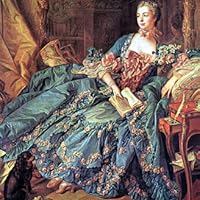
It was high noon on a mid-August morning of the year 1792, but Jeanne, the waiting-maid, had only just set the coffee down on the small table within the ruelle of Mme de Montargis' magnificent bed. Great ladies did not trouble themselves to rise too early in those days, and a beauty who has been a beauty for twenty years was not more anxious then than now to face the unflattering freshness of the morning air. Laure de Montargis stirred in the shadow of her brocaded curtains, put out a white hand for the cup, sipped from it, murmured that the coffee was cold, and pushed it from her with a fretful exclamation that made Jeanne frown as she drew the tan-coloured curtains and let in the mid-day glare. Madame had been up late, Madame had lost at faro, and her servants would have to put up with Heaven alone knew how many megrims in consequence.
Patricia Wentworth--born Dora Amy Elles--was a British crime fiction writer.
She was educated privately and at Blackheath High School in London. After the death of her first husband, George F. Dillon, in 1906, she settled in Camberley, Surrey. She married George Oliver Turnbull in 1920 and they had one daughter.
She wrote a series of 32 classic-style whodunnits featuring Miss Silver, the first of which was published in 1928, and the last in 1961, the year of her death.
Miss Silver, a retired governess-turned private detective, is sometimes compared to Jane Marple, the elderly detective created by Agatha Christie. She works closely with Scotland Yard, especially Inspector Frank Abbott and is fond of quoting the poet Tennyson.
Wentworth also wrote 34 books outside of that series.
Historical fiction is not her best style of writing in my humble opinion. I've read better books on this subject, such as "Ninety-three" by Victor Hugo. See my review here
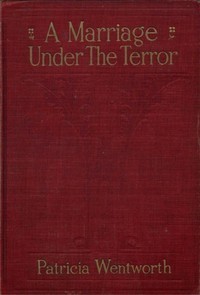
2* Beggar's Choice 2* A Marriage Under the Terror TR The Fire Within TR Devil's Wind
Miss Silver series 3* Grey Mask (Miss Silver, #1) 2* The Ivory Dagger (Miss Silver, #18) 4* Out of the Past (Miss Silver, #23) 3* The Benevent Treasure (Miss Silver, #26) TR The Case Is Closed (Miss Silver, #2) TR Lonesome Road (Miss Silver, #3) TR Danger Point (Miss Silver, #4) TR The Chinese Shawl (Miss Silver, #5) TR Miss Silver Deals With Death (Miss Silver, #6) TR The Clock Strikes Twelve (Miss Silver, #7) TR The Key (Miss Silver, #8) TR She Came Back (Miss Silver, #9) TR Pilgrim's Rest (Miss Silver, #10) TR Latter End (Miss Silver, #11) TR Wicked Uncle (Miss Silver, #12) TR The Case of William Smith (Miss Silver, #13) TR Eternity Ring (Miss Silver, #14) TR The Catherine Wheel (Miss Silver, #15) TR Miss Silver Comes to Stay (Miss Silver, #16) TR The Brading Collection (Miss Silver, #17)
As part of a year long homage to Patricia Wentworth, I have tracked down some of her rarest titles. In this, set in the 1790s and her only historical, newly orphaned Aline de Rochambeau travels to Paris to take refuge with a cousin before an arranged marriage. Fresh from a convent, Aline is at first unaware that her wordly cousin, Madame de Montargis, and Aline's unattractive fiance, Vicomte Selincourt, are lovers. Luckily, as both are unappealing, they are arrested and sentenced to the guillotine, where they die better than they lived.
Friendless, Aline is rescued by a shrewd Frenchwoman who appropriates Aline's money and pearls, but feeds her, albeit as little as possible. Aline embroiders to support herself, and becomes the amanuensis of a very worthy young Republican, Jacques Dangeau, who is captivated by her quiet beauty although disapproving of her artistocratic background and beliefs. When Aline is reported to the police, Dangeau marries her to protect her life, but although she returns his affection she refuses to compromise her standards after he votes for the death of Louis XVI. Usually, couples with problems to work out do not have to worry about the French Revolution...
Fan of Wentworth will not recognize her usual mystery style as this book more resembles A Tale of Two Cities but I enjoyed it.
Opening: It was high noon on a mid-August morning of the year 1792, but Jeanne, the waiting-maid, had only just set the coffee down on the small table within the ruelle of Mme de Montargis' magnificent bed. Great ladies did not trouble themselves to rise too early in those days, and a beauty who has been a beauty for twenty years was not more anxious then than now to face the unflattering freshness of the morning air. Laure de Montargis stirred in the shadow of her brocaded curtains, put out a white hand for the cup, sipped from it, murmured that the coffee was cold, and pushed it from her with a fretful exclamation that made Jeanne frown as she drew the tan-coloured curtains and let in the mid-day glare. Madame had been up late, Madame had lost at faro, and her servants would have to put up with Heaven alone knew how many megrims in consequence.
A well-written love story set in the French Revolution. It has the typical 1st act of attraction and falling in love, the 2nd act of misunderstandings and pointless separations, and the 3rd act of the danger of denouncement and death by guillotine. There were some interesting historical figures brought to life, and also interesting takes on the motivations of the French revolutionaries. However, the main characters are so very French, with passions and emotions that change swiftly and for little apparent reason. It reminded me of the Three Musketeers in that regard. The woman spends half her time in a state of near total mental collapse, in the way of delicate females of the time. This of course leads to her fainting at several inopportune moments, and of course being taken for dead during one such faint. Eye roll. She was, of course, un-ironically pure white, blonde, and blue-eyed, an observation which every single character made every time they looked at her, thought about her, or talked about her. Despite the flaws of the main characters, it was interesting and fun, with good adventure, some surprises, and enjoyable side characters.
This was a straightforward historical romance, with little of the mystery and detection of Wentworth’s later novels. It describes the peripherals of the Revolution without going into too much detail about the Convention, the mock trials and the executions. The central premise is that an aristocratic lady, full of the prejudices of her class, is forced to marry a commoner, both to save her from the guillotine, and from an intended rape by another of the prominent Deputies.
No more need be said, for the story takes a predictable trajectory. What is interesting is how the girl is forced to recognise the shallowness of her class, their ugly indifference to human values, and the importance they place on society, privileges, and a code of polite manners even in the face of death. Her husband, on the other hand, a Deputy in the Convention, a rising star in the Republic, one of those who voted for the King’s death, is quickly disillusioned by the politics of the Terror, until Robespierre issues the order for his execution.
This must have been written at a very young age, while the author was still trying for a métier or a vehicle best suited to her style. It was published as a debut novel in 1910, and received the Melrose award for it – notably her only award. While the story is effective, it has too much of the panting and weeping of defenceless girls, and too little of Wentworth's élan and wit of the Miss Silver novels.
This is a very early Patricia Wentworth romance-drama, almost melodrama, and it would be a good story if it were handled better. Thankfully, Wentworth got a LOT better at writing. This story is set during the French Revolution in Paris and the countryside 20 miles outside of Paris, featuring a romance between an aristocratic shrinking-violet type of young woman and a republican revolutionary young man with Ideals. Really, it's a sort of apology by an unabashed class-conscious writer who prefers to think that the upper class has some sort of built-in superiority over the lower classes, and that's hard to put up with. You have to want to look at how Patricia Wentworth was developing as a writer to get through it. There is one couple later in the novel who have just been married, who are quite appealing in their equality with each other and their unabashed celebration of each other's strengths as the young wife effects a daring rescue mission and outwits her father who would denounce her to the revolutionary tribunals.
For something that I just found lying around, this book was not too bad. The love story is negligible and lackluster, but the history and personalities are interesting. I don't know a lot about the French Revolution, other than some of the names and that it devolved into chaos. On the other hand, I do know that 1) this book was written by someone with strong British/monarchal sympathies, and 2) recent scholarship suggests that everything was much, much worse and people were far more cruel than this book admits.
I read an ebook, so I don't have the copyright info available. I'm guessing it's a 1920s or 1930s book, though. There's quite a lot of, "Oh, it's so awful, I can't even tell you," directly to the reader, which I found annoying. Not that I particularly want to read horrible stuff, but the patronizing narrator bugged me.
This is written much in the style of Alexander Dumas. It starts out with almost as much detail as Dumas would have used. Then it seemed to become more abbreviated. Not that that is necessarily a bad thing as some Dumas novels can drag on due to the detail. I enjoy historical fiction because I learn something, in this case about the Terror and the rampant killing done in France during it. While reading this book, there was actually an answer on Jeopardy and the question was “what is the Terror”. How coincidental! The ending of the book was quite abrupt, as though the author couldn’t figure out where to take the plot so it just ended.
I thought this was a good book even though it did have a lot of killing in it. By far my biggest problem was when they would put in French phrases. I never studied foreign langues while in school so I was at a disadvantage and had to ask my husband who did have French in school. I cannot imagine living in a time where you didn't know if you would be alive tomorrow. I do think it was a good book and showed the way things were during the revolution. You should at least read this book. The underlying story is very good .
1790s France and the revolution. Newly orphaned Aline de Rochambeau travels to Paris to take refuge with a cousin before an arranged marriage. Cousin is arrested and Aline is alone. Then follows the class clash pattern of aristocrat lady, full of the prejudices of her class forced to marry a commoner, both to save her from the guillotine, and from an intended rape by another of the prominent Deputies. There is more -- my first foray into French revolution politics, but a lot of stereotypical behavior too.
This book was very readable as are all of Patricia Wentworth's books, but it wasn't at all what I expected. The book was part historical fiction and part love story. I enjoyed learning more about the French Revolution from a first person perspective. The romantic side of the story was a little more stretched and the ending left me unsatisfied.
I made it 20% in and had to stop. I can tolerate the overly complicated writing style, although I find it pretentious and don't enjoy it. Then I encountered uncommon words which I had to look up and found they had been used incorrectly. That did it. It felt like trying too hard to have literary importance but failing.
Patricia Wentworth's first historical romance, a terrifying look at The Terror that the French Revolution became. Mob rule is dangerous. A young aristocrat visits Paris and is caught up in the lunacy. A young official of the Revolution rescues her.
This version has odd non-words sprinkled in just often enough to confuse the meaning. Perhaps optical character recognition was used to digitize the book and didn't do it well.
The title makes this sound like a biography or some other nonfiction book. It isn't. It is a good story and good writing. The ending is a bit contrived, though.
a bit dated in type of story line but the biggest problem with this is the absolutely horrid typesetting (with, for instance, the same name spelled differently 3 ways on one page).
The characters were not well crafted. The story was melodramatic rather than dramatic. Even the historical elements were lightly brushed over rather than given the vivid detail that they deserved.
Hero is a rising young politician in France in 1792-1793. Heroine is a convent raised aristocrat ingenue who arrives in Paris just in time for riots and guillotine action. The usual romance asks whether love can survive adversity. The usual French Revolution novel asks the question -- will these people survive?
The customs of circa 1910 writing lie heavily on this book, and the writer does not have the brio of a Dickens or a Victor Hugo. So the result dates badly, even though there are individual sequences that are pretty well done. Main problem is the plot seems to have designed around a couple of admirable set pieces (including an excellent closing scene), and the need to keep the hands of the hero clean enough to suitably embrace our fair heroine. If you take the plunge, you'll find many of the misunderstandings and class frictions that often power the plot of a romance, and plenty of visits to the Bastille and the Guillotine, for that French revolution feeling.
Unfortunately, this book is nothing at all like Wentworth's excellent murder mysteries. It does contain plenty of murder, but exclusively mob violence or executions by guillotine because it is set during the French Revolution's reign of terror. And no mystery or puzzles whatsoever. Without giving away any spoilers, I can say that I was also disappointed by the plot device the author used to conclude the story. The relationships between the characters definitely held my interest throughout--but I expected more from the denouement which read to me simply like lazy writing.