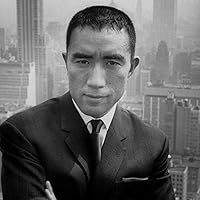
Shusaku Endo (遠藤周作), born in Tokyo in 1923, was raised by his mother and an aunt in Kobe where he converted to Roman Catholicism at the age of eleven. At Tokyo's Keio University he majored in French literature, graduating BA in 1949, before furthering his studies in French Catholic literature at the University of Lyon in France between 1950 and 1953. A major theme running through his books, which have been translated into many languages, including English, French, Russian and Swedish, is the failure of Japanese soil to nurture the growth of Christianity. Before his death in 1996, Endo was the recipient of a number of outstanding Japanese literary awards: the Akutagawa Prize, Mainichi Cultural Prize, Shincho Prize, and Tanizaki Prize. (from the backcover of Volcano).
Interesting read. Excellent piece of historical fiction and Endō's exploration of faith is what really holds it together. Enjoyed this a lot more than I thought I would.
Silence tells the story of a zealous Portuguese missionary who smuggles himself into a reclusive 17th century Japan to both, find a former teacher who is rumoured to have apostatised, and serve the largely underground local Christian community. He gets caught, and is forced to reconsider his faith and beliefs as his followers are cruelly persecuted in his name. As he struggles with reconciling his ideals with the violence it seems to cause to others, the book repeatedly emphasises the ‘silence of God’ and the absence of their guidance duringthe most desperate of situations. Mixed with Endo’s simple but powerful prose, Silence emerges as a read that is as intense as it was bleak. As someone who’s been through their own crisis of faith, I found a great deal of resonance here, but even if you have a mild interest in the human condition, you are likely to find Silence to be worth your while. Personally, I found it to be one of the finest books I’ve ever read, and I’d highly recommend it to anyone, especially for how it addresses such complex theological questions through the most base human experiences. It also makes for a significant step up from the already stellar film adaptation by Martin Scorsese. All in all, a classic that deserves all the plaudits it has received over the decades.
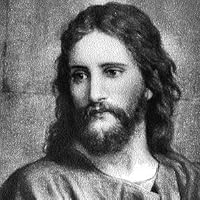
"At night as he lay in bed with his eyes closed listening to the song of the turtle-dove in the trees, behind his closed eyelids he would pass through every scene in the life of Christ. From childhood the face of Christ had been for him the fulfilment of his every dream and ideal. The face of Christ as he preached to the crowd the Sermon on the Mount. The face of Christ as he passed over the Lake of Galilee at dusk. Even in its moments of terrible torture this face had never lost its beauty. Those soft, clear eyes which pierced to the very core of a man’s being were now fixed upon him. The face that could do no wrong, utter no word of insult. When the vision of this face came before him, fear and trembling seemed to vanish like the tiny ripples that are quietly sucked up by the sand of the sea-shore."
As an atheist I do find it hard to empathise with people undergoing crises of faith. I'm like, get over it! But this tale of a zealous Portuguese missionary being hunted in isolationist Japan, then pressured relentlessly to apostatize, generates a real sense of desolation. The titular heavenly silence gets louder and louder as you turn the pages. And it ends up being about more than the loss of religious faith; it's about futility in general, staring defeat in the face, the crushing of dreams and ambitions.