Jump to ratings and reviews
Rate this book

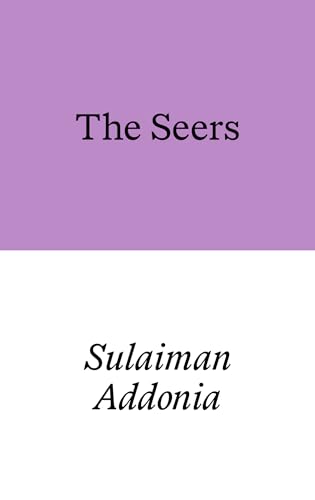
Prototype Publishing The Seers.

Rate this book
With echoes of Zora Neale Hurston and Clarice Lispector, Sulaiman Addonia turns from the broader immigration narrative of land and nations to look closely at the erotic and intimate lives of asylum seekers.

Set around a foster home in Kilburn and in the squares of Bloomsbury where its protagonist Hannah sleeps, The Seers chronicles the first weeks of a young Eritrean refugee in London. As Hannah grapples with her own agency in a strange country, her sexual encounters become an unapologetic expression of self—a defiant cry against the endless bureaucracy of immigration.

In a single, gripping, continuous paragraph, The Seers moves between past and present to paint a surreal and sensual portrait of a life being burned up in search of refuge. For Hannah, caught between worlds in the UK asylum system, the West is both savior and abuser, seeking always to shape her, but never succeeding in suppressing her voice.

232 pages, Paperback

First published January 1, 2024

22 people are currently reading
967 people want to read

About the author

Sulaiman Addonia

8 books105 followers
Sulaiman S.M.Y. Addonia is an author residing in London. He was born as the son of an Eritrean mother and an Ethiopian father in Eritrea. He spent his early life in a refugee camp in Sudan, following the Om Hajar massacre in 1976. In his early teens, he lived and studied in Saudi Arabia. He sought the asylum with his brother in London in 1990, and studied at the University College London.

Ratings & Reviews

What do you think?
Rate this book

Friends & Following

Create a free account to discover what your friends think of this book!

Community Reviews

5 stars
95 (33%)
4 stars
124 (43%)
3 stars
55 (19%)
2 stars
10 (3%)
1 star
2 (<1%)
Displaying 1 - 30 of 46 reviews
Profile Image for Paul Fulcher.
Author 2 books1,950 followers
April 3, 2025
Longlisted for the 2025 Republic of Consciousness Prize, UK & Ireland, for small presses
Longlisted for the 2025 RSL Ondaatje Prize, for a distinguished work of fiction, non-fiction or poetry, evoking the spirit of a place

I was in between societies and ideas, between the sexual energies inside me that stretched my desires towards Anne one day and Bina-B on another, between languages, between feeling safe and unsafe in a country that had once occupied mine and yet refused to open its doors fully to me.

The Seers is the third novel by Sulaiman Addonia, an Eritrean-Ethiopian-British novelist, and published by Prototype Press.

It is narrated by Hannah, originally from Eritrea and now seeking asylum in the UK. It opens strikingly:

My mother gave birth to me in Keren, but I rebirthed myself in London that spring night as I topped Bina-Balozi on a bench in Fitzroy Square. It was as if a lantern was attached to the tip of my strap-on so that as I entered him, I saw my reflection in a world inside him that was familiar and unfamiliar, beautiful and disturbing, disruptive and reaffirming.

Immersed in Hannah's thoughts, the novel has a number of intertwined strands in her recollection including:

- her memories of her time with her father in Eritrea, a country serially colonised by Mussolini's Italy, the British (who prove to be as rascist as those they displaced) and then Ethopia;

As the Eritrean proverb taught to me by my father goes: ኵሉ ይሓልፍ ፍቕሪ ትቕጽል – kullu yihalif, fiqri yiterif – everything passes, love remains.

- her mother, who died when she was young, but she is now getting to know through her explictly-written (Hannah's father was illiterate, although a lover of the physical manifestation of the written word);

- her attempts to navigate the UK asylum system, a country that is welcoming in one sense, but requires her story to be sanitised to fit the narrative the Home Office wishes to hear;

They softened the rough edges of my story, cut out the controversial bits and homed in on the present atrocities between African nations that led me to flee, leaving out the inconvenient truths of the contributing factors of world order, disentangling me from my reality and creating a simple, presentable version of a refugee who would fit into the future of this country.
I was boxed as Black African, woman, straight.


- Hannah's strong sexual energies, stirred by her situation.

- her time staying in Kilburn with a social worker Diana, while Hannah's application is processed, and her love-hate relationship with Diana's fellow lodger, Anne and later a former lodger with Diana, Bina-Balozi;

- and a later time, living homeless in Tavistock Square, where she communes with the ghosts of writers and poets, including Virginia Woolf. It is there a university lecturer, a transgender woman from Róisín, originally from Ireland befriends her and bestows on her the label that gives the novel its title:

So years later I moved to London and started my transition, and here I am: this woman in front of you. That’s why, Hannah, I can see all your sides. I noticed it the first moment I looked at you in Tavistock Square. We’re seers, darling, because we had to see ourselves the way we are from the inside first, from the moment we were born, before we learnt to see the rest of the world. We’re the seers, I repeated her words. I bowed. Róisín raised my chin with her fingers, her eyes like a book that led me to imagine chapters of her history she’d told me passing through them. We are stories of fragments until we see ourselves the way we want to be seen.

We are the seers, I mumbled. Yes, we are, she said.


And this is all done in 136 pages, in Hannah's distinctively original voice. Very impressive. 4.5 stars

The judges' citation

A provocative, multi-faceted gem. Full of fierce anti-colonial rage and subtle artistry, addressing what it means to be a migrant in today’s fractured Britain.

The publisher

Founded in 2019 by Jess Chandler, Prototype is a publisher of fiction, poetry, anthologies and interdisciplinary projects. With an emphasis on producing unique and beautiful books, we are committed to championing the work of new voices in free-form contemporary literature. Prototype is committed to creating new possibilities in the publishing of fiction and poetry through a flexible, interdisciplinary approach. Each publication is unique in its form and presentation, and the aesthetic of each object is considered critical to its production. Through the discovery of high quality work across genres, Prototype strives to increase audiences for experimental writing, as the home for writers and artists whose work requires a creative vision not offered by mainstream literary publisher.
Profile Image for Nathalie.
684 reviews20 followers
December 23, 2024
Een overweldigend verhaal over oorlog en het verlangen naar vrijheid

Na zijn vorige roman "Stilte is mijn moedertaal" las ik nu de nieuwste worp van de Brits-Ethiopisch-Eritrese auteur Sulaiman Addonia die na jaren in Londen nu in Brussel is gesetteld. Een grenzen verkennende of grensverleggende roman, voor mezelf in ieder geval. Addonia wilde zich dan ook niet laten beperken door zijn uitgeverij en wilde zijn schrijven hoger, naar een rock ’n roll-niveau tillen. Dit mondt uit in een ongebreidelde uit het onderbewuste gehaalde stroom (stream of consciousness) aan lyrische woorden, poëtische zinnen, en kwaadheid uit de mond van de jonge Eritrese vluchtelinge Hannah over pijn, verlatenheid, seks, lust, de oorlog, het nog steeds heersende kolonialisme, de trauma’s die over de generaties heen zijn overgedragen. Al deze woorden komen samen in één lange alinea van zo’n 150 pagina’s.

Hannah heeft asiel aangevraagd in Londen en komt terecht in het huis van Diana, die haar opvangt tijdens de tijd die ze moet wachten op de Britse bureaucratie. In de vorm van een dagboek gegoten lees je de woorden van Hannah als een messcherpe aanklacht tegen de hypocriete houding en het egoïsme van het westen, en word je met de neus op de feiten gedrukt hoe het moeten vluchten van oorlog en opgelopen trauma’s een groot gevoel van ontworteling met zich meebrengen, de bodem onder iemands voeten zo maar wordt weggeslagen. Hannah wordt uiteindelijk niet erkend maar ook niet weggestuurd waardoor ze in een soort niemandsland terechtkomt waarin ze verschillende opeenvolgende ontmoetingen meemaakt.

Tegelijk is dit naast de zwaarte ook een speels boek vol met lust, passie, seks waarmee het boek zelfs een aanvang neemt, al vanaf de openingszin: “Ik ben geboren uit mijn moeder in Keren, maar werd herboren uit mijzelf in Londen, die lentenacht dat ik Bina-Balozi topte op een bank op Fitzroy Square.” Hannah krijgt in de “city” van Londen dan ook de vrijheid om haar seksuele identiteit volop te ontdekken en te beleven. Haar grote liefde is Bina Balozi, O.B.B. ook wel Bina-B. Tijdens de seks die ze met hem heeft, vertelt ze hem haar schrijnende verhaal dat ze meemaakte in haar huis, in het dorp waar ze opgroeide.

De vele seksscènes die elkaar in de roman opvolgen, zullen misschien niet door iedereen gesmaakt worden. Het is wel daarmee dat Hannah haar vrijheid opeist en haar identiteit vormgeeft. Wonen doet ze voor het tweede deel van het boek onder een boom in een park, haar “thuis”. Daar gaat ze in gesprek met de geesten van grote auteurs als Jorge Luis Borges, Arthur Rimbaud, Samuel Beckett, Virginia Woolf, Roberto Bolaño, Pablo Neruda, enz.
Haar vader begroef de boeken van haar geschoolde en werkende moeder in hun tuin zodat deze bewaard zouden blijven, hij zelf was analfabeet. Hannah leerde lezen en liet zich voortdurend omringen met boeken. Ook als ze bij Diana woont, laaft ze zich aan de daar prominent aanwezige boekenkast.

“Alles gaat voorbij, de liefde blijft”, een Eritrees gezegde, loopt als een mantra doorheen deze korte roman. Zo heftig en prachtig heb ik een tekst nog niet vaak meegemaakt. De beelden prikkelen de zintuigen, het is alsof je in een soort “trip” of hallucinatie zit, waardoor er ook niet altijd zo veel voor je eigen verbeelding overblijft om eerlijk te zijn… Addonia schreef de eerste opzet van dit boek in één ruk op zijn smartphone aan de Vijvers van Elsene. We mogen die vijvers dankbaar zijn dat hem daar de naam Hannah is ingevallen, en er zo veel inspiratie kreeg.

“In Londen, en in die eerste weken, was tijd het enige dat ik bezat, zo veel zelfs dat het voelde alsof het ministerie van Binnenlandse Zaken me in die zeeën van tijd wilde laten verdrinken.”


“Meer dan een lichaam hebben we niet om ons te herinneren aan de hoop die we hebben verloren, het thuis dat we nooit terug zullen krijgen. Thuis is meer geworden dan een land alleen.”
Profile Image for endrju.
440 reviews54 followers
July 18, 2024
Many novels that deal with forced migration and refugees finding themselves in different cultures usually tell stories about how the subjects find meaning or fail to do so in their new environment. That is, the novels usually deal with the semiotics of signifiers. It seems to me that Addonia is trying to do something a bit different here with his insistence on queer sex, where bodies become not only primary carriers of the production of meaning but meaningful in themselves, their orifices the histories. Following the recent material turn in feminist theory, I'd call it material-semiotic, since there are no clear boundaries between bodies and meanings. Therefore, queer sex in Addonia is equally a means to explore transgenerational memory of colonialism and racism as are the poetry and literature that abound in the novel. A formidable effort.
Profile Image for Maddie.
311 reviews49 followers
March 8, 2025
Frick. Absolutely deserves its spot on the RoC longlist.

Thank you to coffee house press for my advanced copy!
Profile Image for Els.
19 reviews
February 3, 2025
"Ik werd geboren uit mijn moeder in Keren, maar werd herboren uit mijzelf in Londen, die lentenacht dat ik Bina-Balozi topte op een bank op Fitzroy Square. Het was alsof er boven op mijn voorbinddildo een lampje zat dat me bijlichtte zodat ik, toen ik bij hem binnenging, mijn eigen reflectie kon zien ronddolen door een wereld binnen in hem die vreemd en vertrouwd, bekend en onbekend, mooi en schokkend, verrassend en bevestigend was. Nooit heb ik me zo aanwezig gevoeld als toen ik me zo volledig overgaf aan mijn seksuele macht, toen ik de kracht van mijn begeerte deed opzwellen om binnen in hem te ademen met nieuwe manieren van zien en gezien worden."

Haar vader en verdere familie achterlatend, vlucht Hannah als jongere weg uit Eritrea. Ze laat kolonisatie en oorlog achter zich, met de verwachting op haar schouders om in Londen een nieuwe toekomst op te bouwen, en zo haar familie van daaruit te ondersteunen. Het boek verhaalt de Londense avonturen van Hannah, en brengt je langs allerhande kleurrijke ontmoetingen en figuren met wie ze interageert. Wat vooral blijft hangen, is haar talige verbeeldingskracht en diep positief mensbeeld. Hoewel de thema's migratie, oorlog, trauma en verdeelde identiteiten door het boek zijn geweven, passeren ze slechts in de marge, eigenlijk eerder onthecht, waardoor het verhaal je nergens naar beneden haalt. Voor Hannah is seks een manier om haar identiteit herop te bouwen, Londense accenten op Eritrese fundamenten, die steeds meer overwoekerd raken door het nieuwe heden. Dit is een vrolijk verhaal over zoeken naar je identiteit via seks, zo poëtisch omschreven dat elke pagina je weer ontroert. Dit boek wil je eigenlijk in één ruk uitlezen. Toch degusteer je het beter als een doos Parijse chocolaatjes: af en toe omzichtig ééntje proeven, en ze snel weer aan kant leggen, je plezier uitstellend om het zo lang mogelijk te laten duren.

Voor mij is dit nu al hét boek van 2025.
Profile Image for Luke.
1,624 reviews1,190 followers
December 10, 2025
I remember those evenings when our garden was packed with adults and children who had come to read my father's books whenever there was a lull in the bombardment, when women who couldn't read or write would arrive with their bun sets and make coffee and popcorn in exchange for stories, when poets would read their unfinished work to gauge their audience's reaction, when, having read some of my father's books, debates would break out among intellectuals.

Even the way we want to love has to be negotiated in the same way we sought asylum in this country, our fate hanging on a matter of believability.
3.5/5

I'm giving this four stars before I overthink and underfeel it into white person insensitivity land. You see, this is one of those "difficult," stream of consciousness, single paragraph going on for 100+ pages shindigs, coupled with Eritrean refugee and queer, meaning if you can find another piece published in this particular intersection in the Anglo market in the last five years, I'll have to assume you know what you're doing. As such, I took as much care as my beleaguered brain could afford when it comes to taking in the experimentations that conform to the status quo side of things (Rimbaud, Neruda, Woolf, all of who and more make an appearance in the 2nd half) and those that don't (the queer, especially the sex, especially what some would term buggery and others pegging). I will admit to having an easier time with the more sanitized pushing of boundaries, for as much reason for my myopic habitus as well as the inordinate amount of other breeds of trauma I've been undergoing the past year. Still, this work was more than good enough to justify its dead man sprint of a format; when it was very good, it was devastating, something that happened at least a half dozen times in barely any pages. So, if you're in a frame of mind suited to push without caving into the same old 'transgressions' sloppily carved into its otherwise admirable diversity (for an example of the opposite, in this work, the titular moment is spoken into being through the triumph of a trans woman), this is something that more than merits the mores of modern day publications. Just mind the trigger warnings and your own stamina, lest the work necessitated mar the experience gained.
They handed me to a refugee organisation as if I were a crumpled, dog-eared book that everyone had attempted to read before stopping midway through, having stumbled across difficult sentences, disturbing images, and then quitting and passing me on.

I thought about the success and failure of a story and how it depends on other factors beyond the truth.
Profile Image for Amber.
779 reviews164 followers
February 28, 2025
ARC gifted by the publisher

What I loved
- how desire and displacement are intertwined. I don’t think I’ve ever read sexual desire examined as a manifestation of displacement. While I don’t usually enjoy books with too much sexual content, THE SEERS explores it in such a refreshing angle. (I still skimmed a few paragraphs because it got a bit much 🙈)

- the book is written in one single paragraph that alternates between past and present, illusions and reality. The writing is challenging, but aptly captures the vibes of waiting on one’s asylum case to get approved and the in limbo state one experiences when navigating bureaucracy

- the writing is gorgeous on the sentence level. Especially how the author gives a strong and distinct voice to the MC that refuses to be pitied simply because she’s a refugee. The anti-colonial sentiments are palpable, and is such a unique way of storytelling about refugees that often devolve into trauma porn or the perfect victim trope

What I find challenging
- the whole book is one paragraph and that makes stopping this book very challenging 😅

-the stream-of-consciousness writing style sometimes hinder the message the author is trying to say. And I find myself trying to decode if there are hidden messages in the dream-like sequences, which made the reading experience a bit clunky

-I’d only recommend this book for hard core lit fic fans who don’t need everything clearly explained to them and are open to new experiences!
Profile Image for Magdalena.
9 reviews
November 20, 2024
Heartbreaking and entirely too sexy to read on public transport. Like the London contemporary version of The Thief's Journal by Jean Genet
Profile Image for Ula .
225 reviews9 followers
Read
July 15, 2025
"I look back and convince myself that by making me read all these books, my father assigned me to an orphanage of literature. The written words would sculpt themselves into a human-like presence that would allow me to continue to feel the love of the family I lost to war."

"I often have to use stories from our past to validate how I want to live my present."

"The absurdity of borders, nationalities magnified when Diana caressed my hand as we turned into the High Road and I felt the beating of her heart in my chest. I didn't need the Home Office's permission to be recognised, to see and feel Diana beyond those separations."
Profile Image for Carmijn Gerritsen.
217 reviews7 followers
September 30, 2024
This short novella follows our protagonist as a refugee seeking asylum in Britain, waiting for her story, or 'narrative', to be acknowledged by the authorities. Wandering around the area surrounding Tavistock Square, she seeks a sense of belonging in light of her socio-political displacement. This is found through her relationship to other people, as well as the various literary figures and poetic voices that shape her world. In particular, this novel plays around with modernist references to Woolf, Eliot, Beckett, Rimbaud and more in order to ground the narrative in a space that is culturally, spatially and temporally lived. I especially enjoyed the poetic voice and the clever allusions to a cultural past that brings the context of London alive. The cityscape is namely found to be created through words and language. A new favourite book that I hope to explore in more detail soon!
Profile Image for Raf Vandenbussche.
131 reviews3 followers
January 13, 2025
“Verbeelding als filter voor walging”…wat een gedreven schrijfstijl vermag om dit hele verhaal echt te voelen..
Profile Image for Elise Miller.
7 reviews
June 4, 2025
One of the most beautiful books I have read. Deeply moving story that follows the themes of sexuality, colonisation and the deeper identities of refugees in london.
Profile Image for George Cooper.
88 reviews1 follower
December 17, 2025
3.75 stars-- Very dense book that teeters on being a bit absurd but still has interesting topics especially relating to asylum seekers and their cultural belonging/sexual agency. Fun to read a book that is set on kilburn high road as well !
Profile Image for Kedar Johnson.
25 reviews2 followers
November 4, 2025
This was kind of a strange read. This novella about an Eritrean women in London and her pending refugee status utilizes sexuality/sex (quite heavily) to explore themes surrounding colonialism and racism, self-discovery, and belonging as a foreigner in the West. The intersecting of the immigrant experience and sexual discovery was a bold choice and I appreciate Addonia for utilizing it so opening. The structure of this book required a lot more focus than usual. It was a nonlinear narrative with very lyrical sentences and no chapter or paragraph breaks. All of this, along with the sexual themes/motifs made it feel a bit surreal. It was a cool change for me, as it made me slow down and really take it in. I’ve definitely been thinking a lot about it. I think it was a unique idea and an engaging ride. I would love to read more of Addonia’s work in the future.
Profile Image for Tass.
82 reviews3 followers
March 16, 2025
3.5 leaning 4

unrelentingly intense - one long paragraph - but then so is life and sensation and experience and trauma and desire. affecting prose. expansive
Profile Image for Katy.
178 reviews
September 16, 2024
Ok I loved that. Big ol content warning. The way the narrator moves between/weaves together colonialism, being a Londoner, anal sex and queer erotics - SO glad I asked the workers at Burley Fisher their recs cause this really came through.
33 reviews
September 14, 2024
For sure one of the best and most incredible things I’ve ever read. Written as a stream of consciousness the language blew me away, the themes were so intricately dealt with. The character was so different from me and yet I was with her fully. A masterpiece.
Profile Image for Helena.
125 reviews
March 14, 2025
Herausfordernd

Welch ein provokanter und herausfordernder Text. Er hat mich nachhaltig beschäftigt und sehr beeindruckt, durchaus auch zu tief beeindruckt und war schwer verdaulich.

Hannah, eine junge Eritreerin, flüchtet nach Großbritannien. In Eritrea und auch auf der Flucht wurde sie vergewaltigt. In London wird sie als unbegleite Minderjähriger in einer Pflegestelle bei Diana untergebracht. Diese ist selbst eher unglücklich mit ihrem Leben. Hannah wartet auf den Asylbescheid. Sie versucht sich einzuleben, kann aber aufgrund der Gesetze nicht viel machen. Sie stößt wiederholt auf Rassismus. Sie versucht am Leben zu bleiben - nur das Begehren und die Lust halten sie am Leben. Sie verliebt sich.
Ihre spezielle Formen der Lust ist allgegenwärtig und nimmt sehr viel Raum ein. Sicherlich auch als Bewältigungsversuch ihrer traumatischen Erlebnisse zu verstehen. "Es muss weh tun, um all den Schmerz zu ertränken." Zudem setzt sie sich mit dem Tagebuch ihrer früh verstorbenen Mutter auseinander. Hier werden Parallelen deutlich,was ich letztlich als Versuch des eines feministischen Aufbegehrens verstehe.

Eine Bewertung fällt mir schwer. Ich kann von einem bis fünf Sterne alles vergeben:

1 Stern dafür, dass ich Dinge überflogen habe und überlegt habe, abzubrechen. Viele Geschehnisse und Beschreibungen irritierten mich und stießen mich sehr ab.

2 Sterne dafür, dass ich mich manchmal gelangweilt habe, da es zuviel desselben war und mir die Story zu wild wurde. Es nervte mich zudem, dass alles irgendwie mit Sex und verschiedenen Praktiken verbunden wurde. Ich habe einige Ideen dazu, wie man es verstehen kann, aber es war mir insgesamt zu viel und manchmal auch zu heftig.

3 Sterne dafür, dass der Autor ein Mann ist und ich mich fragte, ob es überhaupt okay ist, solch ein Buch aus der Ich-Perspektive einer jungen Frau zu schreiben. Anfangs dachte ich, es sei eine Autorin. Mein Mitgefühl mit der Protagonistin war dadurch sehr groß, fast schon quälend schmerzhaft und herzzerbrechend. Bald bemerkte ich aber, dass dieser Text nicht von einer Frau sein könne und begriff dann endlich, dass der Autor ein Mann war. Dadurch konnte ich mich besser vom Text distanzieren, und etwas Atem holen, fühlte mich aber auch etwas provoziert.

4 Sterne für den schrägen, ungewöhnlichen und eigenwilligen Text, der ohne Absätze, im Stil eines stream of consciousness geschrieben wurde. Dadurch ist man sehr dicht am Erleben der Hauptfigur dran. Nicht immer ist hierbei klar, ob Ereignisse tatsächlich oder eher metaphorisch geschehen.

5 Sterne für die eindrückliche Darstellung des Lebens als Geflüchtete, die sich einfinden muss und um ihre Identität ringt. Die Schilderungen der politischen und gesellschaftlichen Situation in Eritrea fand ich sehr interessant. Die Darstellung der der Warterei und der Verdammung zum Nichtstun in London fand ich sehr authentisch und beleuchtet das Asylsystem durchaus kritisch.
Der Text zwang mich inhaltlich zur Auseinandersetzung und wird mir nachhaltig im Gedächtnis bleiben. Auch strukturell zwang mich der Text zur Auseinandersetzung: was kann Literatur leisten, was soll sie leisten? Zudem hat der Autor meinen tiefen Respekt, da er im Nachgang seine literarischen Anleihen und entnommenen Gedichte als Quellen darlegt.

Fazit: Eindrücklich, tragisch, berührend, provokant, verstörend, interpretierbar. Nicht für jede*n geeignet.
Triggerwarnung: sexueller Mißbrauch, sexuelle Spielarten, Suizid, Gewalt
Profile Image for Gumble's Yard - Golden Reviewer.
2,189 reviews1,793 followers
April 3, 2025
Even the way we want to love has to be negotiated in the same way we sought asylum in this country, our fate hanging on a matter of believability. Yet what is there to believe or not to believe about us - two immigrants standing here in the heart of Bloomsbury, in the depth of the night, pretending that we're a myth.


Longlisted for the 2025 RSL Ondaatje Prize
 
Longlisted for the 2025 Republic of Consciousness Prize for UK and Ireland Small Presses – set up in 2016 to “reward, celebrate and promote literary fiction (explicitly including translated fiction and short story collections) that mainstream publishing was not supporting - work that is innovative, creatively challenging, and a financial risk on behalf of the publisher.”
 
And this novel perfectly fits that criteria – Canongate (not one of the big 5 and always counted by the large book prizes – Booker say – as an independent, but with something like a £15-20 million turnover) announced their signing of the book in the Bookseller in 2021 but it was actually published by London based Prototype Publishing who strive “to increase audiences for experimental writing, as the home for writers and artists whose work requires a creative vision not offered by mainstream literary publishers.”
 
And a Guardian interview with the author (who was longlisted for the Orwell Prize in 2019 for his previous novel) directly addresses this switch
 
“the past two years have been the most difficult of my career. A lot of publishers – young, old, black, white, Asian – try to push you towards how marketable your book can become.  …. It was constantly: “Yeah, but why is it one paragraph? Sulaiman can write really well, but why is he writing this erotic, sexual thing?” Giving space to your madness as a writer – to your playfulness, to your desire for experiment – becomes a white-man field; I really felt I had to stand up for myself. Maybe I’ve taken the concept of freedom into the wilderness [laughs], but, for me, it’s about paying homage to your imagination. I’ve lived in oppressive countries, I know what oppression is – the last thing I’d want to do is to turn my imagination into an oppressive thing.”

 
Now I have to admit that for all my admiration of the prize for recognising the publisher for doing exactly what the prize is set up to encourage – the sentence starting “Sulaiman ..” (and which I have bolded) could serve as my own lazy review of the novel which does not really conform to my tastes.
 
It is narrated by Hannah – an Eritrean seeking asylum in the UK from her country ravaged by the impact of successive colonialisations (Italy under Mussolini, the British from the war and whose casual racism as “rescuers” has coloured her and her families views, and then the Ethiopians in the armed conflict from which she flees after the death of her already widowed father, urged by her Aunts to go with people smugglers and try to make a success of herself in the UK and restore her families fortunes back home).
 
It is told (as again the interview implies) in a single paragraph which very effectively interleaves a variety of strands including:
 
Reminiscences of her time in Eritrea with her father – illiterate but nevertheless a hoarder and rescuer of books; widowed but still devoted to the memory of his mother whose picture he still dines with and whose diary (unread by him) he treasures;
 
Frequent repetitions of a Eritrean proverb he taught her – “ኵሉ ይሓልፍ ፍቕሪ ትቕጽል – kullu yihalif, fiqri yiterif – everything passes, love remains”;
 
Extracts from that diary which reveal her mother to be a lot more sexually active and motivated than either Hannah or her largely celibate father realised;
 
Her interactions with the immigration authorities – initially face to face, then via correspondence – and this is the part where much of the strongest writing comes in;
Listen, I said to the men in English.
What? one of them asked. I repeated it, this time letter by letter, L-i-s-t-e-n. The man shook his head. In this country, we say lisen, he said. I wondered about the missing letter T and why they decided to throw it away - and as if I developed instant kinship with a letter ejected from its rightful place, I gave the T a home on my tongue

 
Her stay with Diana at a “foster-home” for immigrants awaiting the outcome of their application – where she has a fiery and eventually sexual relationship with one of the other lodgers (Anne), a rather explicitly maternal relationship with Diana, meets a previous lodger Bina-Balozi, and has to deal – eventually rather violently – with an abusive anti-immigrant neighbour;
 
Her current situation – sleeping homeless under a tree in Tavistock square where she is visited by the ghost of various London based poets and writers;
 
Some Beckettian sections “EYES” in which Hannah records the impressions of her eyes;

A tryst with Bina-Balozi (motivated by her obsession with men’s posteriors) during which it seems the book’s stream of consciousness occurs  - and which seems both integral to the novel’s very essence, distinctiveness and conception (the novel opens “My mother gave birth to me in Keren, but I rebirthed myself in London that sprint night as a I topped Bina Balozi on a bench in Fitzroy Square” and precisely the element which turned both the original (and subsequent) publishers against it and challenged my own enjoyment of the novel.

But of course this freedom of the author’s approach and refusal to conform is deliberate and I particularly loved the way this was cleverly picked up with an immigration simile
 
They handed me to a refugee organisation as if I were a crumpled, dog-eared book that everyone had attempted to read before stopping midway through, having stumbled across difficult sentences, disturbing images, and then quitting and passing me on.


Because for all its disturbing difficulty I am glad I did not quit this book.
Profile Image for Suzanne Brink.
Author 2 books6 followers
February 16, 2025
Spannend boek, geheel eigen genre. Vlammend en zinnelijk, over de jonge Eritrese Hannah in Londen, die veel meer is dan een machteloze vluchteling. Ze zit namelijk ook vol hormonen en verlangens en denkt de hele dag aan seks met praktisch iedereen. Staan prachtige beelden in. Zoals: 'Ik maakte mijn ogen los van haar silhouet en sloeg een lange, krachtige complete herinnering aan haar op in mijn geheugen. Op de heuvel tegenover onze veranda dekte één ezel een andere. De ontvangende ezel bleef op het gras kauwen, ongemoeid door het grote wapen dat van achteren in haar wroette, haar rug onverschrokken, haar houding onaangetast. Dat, zei mijn tante, is een metafoor voor het leven. Je moet het over je heen laten komen, hoe hard je ook wordt genaaid.'
En: 'Als een keurige gast die zijn schoenen en al zijn verwachtingen bij de deur achterlaat kwam hij bij me binnen.'
De koppeling van seks met alle 'ismes' en trauma's van de wereld slaat op den duur dood. Na de dood van Diana, als Hannah volkomen de weg kwijt raakt, word ik niet meer meegenomen in het verhaal en treffen de wilde zinnen geen doel meer.
Profile Image for victoria marie.
355 reviews10 followers
Want to read
April 15, 2025
Longlisted for the 2025 Republic of Consciousness Prize for Small Presses, UK & Ireland

kuu yihalit, frqri yiterif—everything passes, love remains"
_____

from the judges:
A provocative, multi-faceted gem. Full of fierce anti-colonial rage and subtle artistry, addressing what it means to be a migrant in today's fractured Britain.

the press:
Founded in 2019 by Jess Chandler, Prototype is a publisher of fiction, poetry, anthologies and interdisciplinary projects. With an emphasis on producing unique and beautiful books, we are committed to championing the work of new voices in free-form contemporary literature. Prototype is committed to creating new possibilities in the publishing of fiction and poetry through a flexible, interdisciplinary approach. Each publication is unique in its form and presentation, and the aesthetic of each object is considered critical to its production. Through the discovery of high quality work across genres, Prototype strives to increase audiences for experimental writing, as the home for writers and artists whose work requires a creative vision not offered by mainstream literary publisher.
Profile Image for Max Davine.
Author 10 books56 followers
November 17, 2025
Sulaiman Addonia's The Seers tells the story of a refugee stuck in a convoluted system though an inner monologue in which trauma, pain, sex, and London all merge into an intense but lovingly crafted maelstrom. Shades of Djuna Barnes' Nightwood are present in the intense prose. but while Barnes' Paris was an inferno of repressed needs reaching bursting point, Addonia's The Seers revels in wanting to the point where it is more erotic on the page than acts of sex.

Deeply sensual and heartbreakingly truthful, there are moments of this single paragraph so like the swirling thoughts that bleed from the brain during a PTSD episode they may provide the most accurate rendition of it yet in literature. It is not a breezy read through. Addonia's restricting the whole story to one paragraph, one trail of thought, while inspired is best taken in manageable chunks. But it is a thoroughly commendable creation and highly recommended read.
Profile Image for Jack Parker.
Author 3 books9 followers
January 30, 2025
I've never read something that uses sex as a medium for exploring colonialism and racism and our personal histories in this way, with such a willingness to be raw and untamed in its depictions. I couldn't put the book down and as a Londoner I appreciate the perspective it gave me both on the experience of refugees and on London itself through the eyes of someone who didn't grow up here.

The main character Hannah felt so real, as did all the people she made connections with who were given surprising depth within what is ultimately quite a short book.
Profile Image for Rania.
35 reviews
March 11, 2025
I’m not used to this kind of literature, but I liked the writing of the author. It really is a genre on its own, I can’t really place it anywhere.
Hard topics like forced migration, struggling with sexual identity, loneliness, war,…
Also, very beautiful quotes in this book. The quote that was repeated every time & that I loved the most: “Everything passes, love remains.”

I got this book as a gift, and I’m very happy I did because I probably wouldn’t have picked it up by myself 😊
Profile Image for Michele Attias.
121 reviews1 follower
November 21, 2024
This story centres around Eretrian refugee Hannah who arrives in London holding her mother’s diary. In her mother’s diary, she recounts the sexual experiences that she has had during her time in colonial rule.
The short story explores colonialism and intergenerational trauma, as Hannah grapples to find herself sexually within this.
Although it was beautifully written and I love the authors writing, I find the authors need to punctually the pages with erotic fiction unnecessary and often feels misplaced in the story.
No doubt a fantastic writer, but adding sexual anecdotes and erotic desires randomly in a book about a refugee awaiting status in the UK, just feels jarring, and in my opinion doesn’t add to the story.
I also felt the same about his previous book (‘Silence is my mother tongue’).
In addition to this, although the book is short, it’s difficult to read, based on the fact that it reads as continuous paragraph with no chapters.
121 reviews1 follower
July 18, 2025
At first I thought what on earth is this. But when I finished it I thought wow what a stunning piece of writing. It was weird, and dark and an sad insight into the process of being a refugee in London. Interesting about humans carrying stories , other people’s stories and our own, and that all we’re made up of
Profile Image for Kwaku Osei-Afrifa.
Author 1 book5 followers
March 19, 2025
bb, i said, we're black. we obtain visibility when we're on the verge of breaking the law. this is our moment to shine.

utterly devastating. bursting with rage and love. another book that took me a while to realise how incredible it is.
Displaying 1 - 30 of 46 reviews

Can't find what you're looking for?

Get help and learn more about the design.