Jump to ratings and reviews
Rate this book

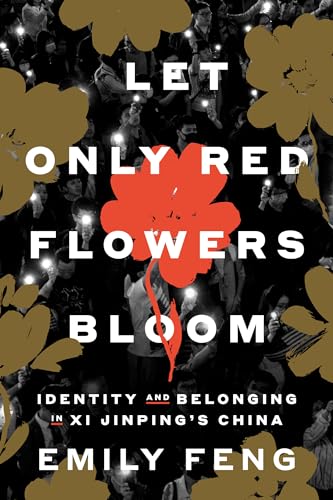
Let Only Red Flowers Bloom: Identity and Belonging in Xi Jinping's China

Rate this book
A “gripping and scrupulously reported” (The Washington Post) investigation into the battle over identity in China, chronicling the state oppression of those who fail to conform to Xi Jinping’s definition of who is “Chinese,” from an award-winning NPR correspondent.

“Emily Feng’s focus on ordinary people—bravely determined to shape their own lives—captures the mood of the Xi Jinping era more essentially than reams of statistics ever can.”—Evan Osnos, National Book Award winner, author of Age of Ambition

The rise of China and its great power competition with the U.S. will be one of the defining issues of our generation. But to understand modern China, one has to understand the people who live there – and the way the Chinese state is trying to control them along lines of identity and free expression.

In vivid, cinematic detail, Let Only Red Flowers Bloom tells the stories of nearly two dozen people who are pushing back. They include a Uyghur family, separated as China detains hundreds of thousands of their fellow Uyghurs in camps; human rights lawyers fighting to defend civil liberties in the face of mammoth odds; a teacher from Inner Mongolia, forced to make hard choices because of his support of his mother tongue; and a Hong Kong fugitive trying to find a new home and live in freedom.

Reporting despite the personal risks, journalist Emily Feng reveals dramatic human stories of resistance and survival in a country that is increasingly closing itself off to the world. Feng illustrates what it is like to run against the grain in China, and the myriad ways people are trying to survive, with dignity.

296 pages, Kindle Edition

Published March 18, 2025

131 people are currently reading
5893 people want to read

About the author

Emily Feng

3 books12 followers

Ratings & Reviews

What do you think?
Rate this book

Friends & Following

Create a free account to discover what your friends think of this book!

Community Reviews

5 stars
218 (36%)
4 stars
269 (45%)
3 stars
86 (14%)
2 stars
17 (2%)
1 star
0 (0%)
Displaying 1 - 30 of 101 reviews
Profile Image for Brendan (History Nerds United).
793 reviews679 followers
December 16, 2024
Two forces converged when I was deciding whether or not to read Emily Feng's Let Only Red Flowers Bloom: Identity and Belonging in Xi Jinping's China. The first was my avoidance of titles which contain "identity" in their subtitles. I have seen too many books which purport to discuss identity that become extensive forms of navel gazing or having nothing to do with identity but are more like extended rants about a subject. The second, and more powerful force, was my curiosity about China and finding a book which can help me understand it today. My inquisitiveness won out and thank goodness it did because Feng does exceptional work meeting the potential of the book's title.

What I most appreciate about Feng's book is her willingness to cover the topics her readers will want to read about. It is all in here. It's the equivalent of going to see your favorite band and they somehow play every single song you have on the wish list in your head. Subjects like Taiwan, Hong Kong, COVID, the one child policy, and even Tiktok were on my list. Feng checked every box while adding others I had no idea about.

The bigger shock to me was how much I enjoyed how Feng actually tackled Chinese identity. Each chapter focuses on a different character or characters who are struggling to define what it is to be Chinese. Many characters are patriots in their own way who are caught by the changing tides of the Chinese government. Less frequently, chapters are about someone actively fighting against the government in a more direct way. All of these stories highlight how different cultures, ethnicity, and languages are all Chinese in reality, but are not seen that way by an increasingly oppressive government.

Feng herself is infrequently the focus of the narrative, but she does call out her own struggles with what it is to be of Chinese descent (she is American). Most poignantly, while reporting on the persecution of Uyghurs, she is given positive treatment by the government because of how she looks, but is constantly followed otherwise for being a journalist and American. It is these contradictions which lie at the heart of this excellent book.

(This book was provided as an advance copy by Netgalley and Crown Publishing.)
Profile Image for Bonnie G..
1,810 reviews428 followers
August 24, 2025
An extraordinary feat of reporting, telling the story of repression of thought and speech through the stories of individual Chinese people from throughout China (including Hong Kong, Mongolia, Tibet, Taiwan, which may or may not correctly be considered part of China) and the diaspora. Feng's choice of stories is brilliant, and makes comprehensible things I believe are largely incomprehensible to those who are not Chinese and who have not lived under the strictures of Chinese control -- which is not to say they do not remain abhorrent. One thing that became clear as I read was how fully Trump has taken a page from Xi Jinping's playbook. He creates an outward appearance of freedom, foments nationalism, represses dissent, rules through fear, and makes "concessions" to those who publicly oppose him to stay popular and appear reasonable while being at all times a despot. Reading this a year ago would have been an entirely different experience.

A personal note on something that made this more special for me, and which I want to highlight because it might nto be immediately apparent to some readers why it matters. The first time I lived in that region was in 1984-1986 (I was 21 when I got there, if you are doing the math -- I really am that old), and I was primarily living in Taiwan, though I spent a great deal of time in Hong Kong and in various parts of Mainland China. Taiwan is enjoying a moment of freedom and growth now, but when I lived there, we were under martial law. There were men with machine guns on most corners in Taipei -- the police and the army were the same. All residents were spied on, threatened, and any speech that did not fully support the Kuomintang was likely to earn you a late-night visit from said gun wielders and, in some cases, imprisonment or deportation. I speak from experience on the late-night visits -- I had two, and I was no political rabble-rouser. Feng addresses this and also talks about the split between the Communists and the Kuomintang and why it matters now. It has been my experience that most people outside the region don't know this history, and it is crucial to understanding modern China.
Profile Image for David Frazier.
79 reviews6 followers
April 27, 2025
Written by NPR reporter Emily Feng (formerly at the Financial Times and an NYT researcher), this is an often gripping read and excellent recap of China's major human rights and ethnic identity-related stories of the past decade--starting around 2015. Lots of great personal stories bring to life major trends: China's rights defense lawyers, anti-corruption campaign, the lie flat movement, crackdowns on feminists, Uyghurs, Hui Muslims, Mongolians, Hong Kong booksellers, Hong Kong democracy activists, overseas Chinese critics, and of course China's silent fury over the existence of an independent Taiwan. My criticism would be that while it is extremely well done, it feels a little bit too much like textbook journalism. There's a sort of FOMO by which the author can't leave out any major stories of her genre, regardless of which media broke them. There is also loads of context explaining and boilerplate encapsulations-all very well written to be sure, but the conclusions are fairly predictable. Also, while the book manages to be convincing, it doesn't necessarily feel all that personal, which is maybe the missing spark.

You can also see my full review in the Taipei Times: https://www.taipeitimes.com/News/feat...
18 reviews2 followers
January 19, 2025
Nuanced and empathetic portrait of people representing different ways to be Chinese in today’s political climate. I particularly liked the chapter on the Hui scholar. Highly recommend for anyone interested in Chinese society
Profile Image for Jacqueline.
64 reviews
March 16, 2025
Thought provoking, well written and informative book; a succinct yet broad reaching portrait of China and people struggling to shape their own lives in a country imposing political conformity with often heart breaking consequences.

(Thank you to Crown publishing for the opportunity to read this ARC)
918 reviews20 followers
April 16, 2025
I initially was intrigued by the title. As opposed to Chairman Mao's saying of "let a hundred flowers bloom", I felt the title was a chilling indication of what China values-- you have to be the right ethnicity, speak the right language and of course obediently follow whatever the CCP says.

This book is a collection of reporting that spans multiple issues but it just left me flat. There's nothing new and the stories have multiple timelines that were confusing. Is it important to know what's going on in China? Of course, but I'm sure there are a lot better ways to learn than to read this book.
Profile Image for Ange.
131 reviews4 followers
May 14, 2025
Wow wow wow. Incredible accounts of people trying to find their way in scenarios where the government is actively oppressing them and/or they are fighting for a democratic China. Her examples of how the Chinese government can assert control, even beyond mainland borders, are chilling. She paints vivid pictures of passionate risk takers, spread across the world, making up their plans as they go along.
Profile Image for Cici Yu.
8 reviews
May 21, 2025
What a great book! I heard of Emily because I listen to her NPR story all the time as a producer at a local NPR station. After reading the book, I wrote a letter to her. Here’s what I said:

“I love each individual story that you included in your new book, as if I were there reporting with you. I found myself crying multiple times while reading your book because all those big social events you documented brought me back to my political depression phase. I love how you explore people's identities in this book, and I found myself less educated than I thought. I felt embarrassed or even a little bit guilty as a majority Han Chinese because I felt like I had not done anything to fight against the system, as those Uyghurs and Hongkongers did to fight for a better democratic society.
I want to say thank you so much for your book and your reporting. It helped me figure out what else I can educate myself about as a Chinese person. I questioned my own identity while reading this book, but I found it inspiring and empowering, as I decided to learn more about people's identities and how the environment has shaped them after reading your book.”

My heart follows every character in this book. And this is the book that guide me to think about what else I should learn and want to learn after college education. It’s really thought provoking and inspiring. I felt lost for the past two years and now I think I find my purpose — to educate myself and learn more about ethnic minorities groups in my own country.
1 review3 followers
May 26, 2025
A nuanced, raw portrayal of modern China and its melting pot of ethnicities, socio-economic standings, cultures, and politics. While much of China is discussed within the context of U.S.-China competition, we often miss the experiences of the Chinese role. Highly recommend this book for those looking to understand the complexities of China.
Profile Image for Alyssa.
53 reviews16 followers
August 8, 2025
Dear Kaitlyn,
I acknowledge that you are eagerly awaiting my review as you observed me silently finish this during lunch. I regret to inform you that I am speechless. I only have stars to give. I recommend this once you have finished Marcelus’ remarkably touching endeavors.
Kind regards,
Aly
Profile Image for Claire.
105 reviews
Read
June 23, 2025
Evidently well-reported with a very strong thesis: contrary to some pundits’ claims, Xi’s China is fixated on the issue of identity. As a result, the scope of acceptable identities has dramatically shrunk in recent years, coalescing around what the author identifies as the Party’s ideal Chinese citizen: a Mandarin-speaking, ethnically Han, straight, and card-carrying Party member. In this sense, China has rejected the Soviet model of ethnicity with which it began.

The book reaches its stride after chapter 4, when it begins talking about the plight of Uyghurs in Xinjiang, Hui and Muslims all throughout China, and people in Hong Kong, and shifts into a quasi-linked narrative structure. I learned a lot, particularly about the persecution of Muslims, and Feng’s structure—each chapter is a profile—makes for an affecting read.

I felt often frustrated by the writing, even as I was won over by the reporting and general conceptual framing. This is a personal pet peeve, I suppose, but I really prefer narrative nonfiction to offer a strong sense of chronology, and to identify narrated events with specific dates. While I understand the stylistic choice of not dating every event, I felt like it became hard to follow even the relative sequence of events. Also, the author at times explains extremely low-level concepts (e.g., a sidebar to clarify that Wang is one of the most common last names in China, or another to explain that renminbi is the Chinese currency), which is confusing, because this book does not feel like a particularly appropriate entry point into reading about China (in part because of the profile format and dizzying geographic/temporal scope of the book).
1,389 reviews16 followers
June 11, 2025
A really interesting book told in the stories of several people on the fringe of modern Chinese society - those who don’t fit the Han Chinese, loyal CCP mold. The author tells stories of lawyers fighting for justice, Muslims and mongols fighting to maintain an identity as the singular way of being Chinese is pushed to all of the sub cultures in the country. She looks at those who were living, and fighting, for autonomy in Hong Kong and Taiwan, and those who have fled to the diaspora (specifically the United States). The pressure to conform is strong, and the arm of the PRC state is powerful and long. It’s a really interesting look at modern China by highlighting specific people. It would have been interesting to hear more stories from those who aren’t members of fringe groups, and how some in the dominant culture are dealing with the shifts in China. Maybe the author didn’t have as many willing contacts in those groups, I guess, since to speak negatively of the state in any way is to put yourself in various levels of danger (of surveillance to physical). So it probably would be hard to delve more into the ‘every day’ for regular people. But either way, I liked the writing style and found the stories told to be interesting even if I would have liked some variance.
Profile Image for Gianna Coraluzzi.
198 reviews
November 18, 2025
This book was so good!!! I really could not put it down. This was written by a reporter who took stories & conversations with various people who are affected by the communist party. I dont think there is a person alive who could read these stories & not be gripped by the throat.

It also was very interesting seeing parallels to the US of today & where the US is headed which is funny/scary bc it mentions the US in very small increments.

I also got a huge lesson in the systems that uphold china but also the connection & where the territories or ownership of land is.

Another fun point that really helped me learn & grow was the conversations around islam in china & how people reacted to it. I really never thought of religion outside of something people follow, so seeing the lengths the government went to shape their view of who is Chinese & what Chinese people should follow was again another parallel to the US where i live at the moment.

i recommend everyone read
Profile Image for Mai Mccarthy.
36 reviews
October 25, 2025
Very accessible read; each chapter focuses on a new character whom Feng has interacted with. I deducted a star only because I finished feeling unsatisfied, but I suppose that’s the nature of contemporary storytelling. Feng is. Great writer, and an excellent journalist and I do highly recommend. 2025 US policies made a LOT of chapters particularly poignant, even though the book obviously focuses on China’s interior affairs. Uncanny at times.
Profile Image for Cynthia Cordova.
145 reviews5 followers
June 11, 2025
The approach of following individual stories feels effective in this book. Admittedly, I’m always a little drawn to that type but I do like it here. As an American, I hear a lot about China. But not really the people in China. More the government of China, so I enjoyed learning about the actual people. I felt a lot of the United States in hearing about certain groups being oppressed. The parts about language in particular made me think a lot of what indigenous people went thru and are still going thru now. I think it’s a nice reminder that no matter the type of state, they all use the same playbook. They are all oppressive to varying degrees but still, oppressive.
94 reviews
June 5, 2025
3.5 - I found the structure of telling individuals’ stories in order to create a broader picture of life in Xi’s China effective, and I learned more with each chapter. I did find it a little difficult to navigate the cross-cross of timelines across the stories until I reached the final chapters, which had a more sequential approach. This was probably due to my own limited knowledge base before reading the book. Recommend.
111 reviews
May 29, 2025
Een heel goed boek over de verschillende typen mensen in China en hoe de staat probeert deze mensen uit te wissen.
587 reviews3 followers
March 23, 2025
The first half became a bit formulaic in the chapter structure, not a rare characteristic of books by journalists, I’m finding. The chapters were more related to each other in the second half and, while chapter breaks seemed a bit forced, it was nice to see more of a continuous narrative for a change.

That isn’t meant to take anything away from the writing, the topics, the persons featured in the stories. The range of their experiences prohibited a tie-in other than the universal experience of repression and persecution. I probably just read it too fast so the similar structures were more noticeable - but there were people waiting for my copy of the book so I wanted to return it to the library as soon as possible.

I hope, as many in the United States seem prepared to follow a path similar to Xi Jinping’s, that we don’t allow things to get anywhere near this severe.
Profile Image for Aaron.
146 reviews4 followers
June 28, 2025
Not too long ago I read a great book on called “Nothing to Envy: Ordinary Lives in North Korea” by Barbara Demick that focused on a handful of dissenters elegantly spliced in with the history of the country. It helped enhance my understanding of just what was going on there way back then, in the semi-distant past, and also in the (somewhat, as the book was published in 2009) present. Learning about authoritarian countries not from the outside or even from the ‘inside’ via reporters and journalists (un)lucky enough to make it in and tell their tales, but from unabridged accounts of actual citizens makes, I think, for the greatest understanding. Thus, high expectations were to be had—and mostly met!--when diving into “Let Only Red Flowers Bloom”.

There’s a difference though between these two books: the North Korean one is a tale told over decades with each one unfolding gradually in stages only to converge together at the end. Here, we get something that only takes place in the modern era and with each tale being presented on its own. A different format and probably an easier one to write, but does it have the same effect?

Current day PRC is like a bizzaro world communist-flirts-with-capitalist country where pounding the nail of dissenters is a top-down diktat. We’ve a collection of accounts of those who don’t necessarily fit into Xi Jinping’s, by far the best General Secretary of the Chinese Communist Party in the last 14 years, view of a unified China both in thought and people. To put it simply: “we are all Han and we all believe in the party (but we know communism doesn’t exactly work so we’re going to introduce party-sanctioned capitalist elements and give them a little spin)”.

“So how does China compare to North Korea and also how does it compare to USA?” is what I had on my mind when consuming the multitude of accounts that make of this book. Being of the internet generation, the third chapter on the Scooter Thief caught my attention and deserves special mention not due to its protagonist (cool guy, kind of a tragic figure), but the way it describes China’s internet: basically a great happiness space of nonstop positivity slop (that with “AI Slop” can now only get worse). Sure, the Great Firewall may protect its diligent party-loving citizens from the threat of Wikipedia, but in its stead it seems to give them something akin to our potential future rotund brethren best portrayed in WALL-E. Is that the best identity to foster critical thinking skills? After all, in the west, we spend hours arguing on social media about articles we may browse (at best) and books we don’t event pretend to read.

Chapter by chapter, we are given a tour of a melange of people who…well, probably have a less than ideal “social score”. And that—the focus only on those who don’t gel with the system--becomes the only issue of note I have: we basically get a progression from light-touch dissidents to all out political rebels living abroad. What we’re missing is perhaps a “control group”. In other words, perhaps just one chapter where the author turns the lens on a random law-abiding mainland China citizen. This would allow us to see why some may indeed prefer the robust leadership of Xi Jinping whose party finds him such an effective ruler they were so kind as to remove term limits so he can remain in power indefinitely. Nonstop dissent from PRC, dissent from Xi, dissent from China is surely going to make for interesting tales, but not necessarily challenging ones if you come from a liberal democracy.

Xi Jinping as the book’s title implies, is very fond of only one type of flower blooming in China. Sadly, while he may be the wisest General Secretary of the Chinese Communist Party in the last 14 years, he probably is not familiar with a concept perhaps first brought to life by Rachel Carson in Silent Spring published in 1962: (my paraphrase) if one only allows one type of flower to bloom at the cost of all others, that just opens things up to the risk of an uncontrolled breakout of pestilence. With variety comes protection. It’s surprising that if he only opted for Chinese history to be his lodestar, the Four Pests campaign (which coincidentally concluded the year Silent Spring was published) should have been enough of a warning that life needs variety in order to survive...and flourish. Only red flowers may bloom in Xi Jinping’s garden and they may sure look lovely at the right time of the year, but what about those other 46 weeks or so?
Profile Image for Kaitlin.
156 reviews
June 12, 2025
Okay, this book was a lot. Not because it was hard to read as Emily Feng is a compassionate writer but because the reality she describes is so brutal. I’ve heard about China’s restrictions before from history class flashbacks, news segments, etc. but reading this brought me eye-to-eye with what it really means to silence voices and flatten identities in real time.

We all know about the One Child Policy (and how it skewed favor toward boys), but this book connects those policies with real human stories. I actually know someone who was born a girl in China in the late '90s, left on a train by her birth parents, and adopted in the U.S. That’s not just a policy; that’s a person’s life. Like… what did the Chinese government think was going to happen when everyone wanted boys? Were they planning to get cool with same-sex marriage to balance it out? (Spoiler alert: they didn’t.)

Feng’s reporting is full of these raw, infuriating details. The quotes that stayed with me are the ones that underline how much control the government tries to have over not just bodies, but minds. One interviewee says, “Even if you give a caged bird plenty of food, it will still try to fly away… Humans need a wider and freer world of their own, too.” And that’s really the heart of this book. It’s about people, especially women, minorities, and journalists that are pushing against a system that wants to make everyone a “red flower.”

There’s a sharp critique of how “acceptable” Chinese identity is being redefined by the state: You’re supposed to be Han, straight, Mandarin-speaking, loyal to the Communist Party, and obedient. Anyone outside that definition? At best, ignored. At worst, criminalized. As Feng writes, “Let only red flowers bloom. Green, blue, or white flowers: if they are not red, they will be cut down.”

Honestly? I kept thinking: how do people love a country that works this hard to erase them? This book helped me understand that question more. The heartbreak of being labeled a traitor when you speak up. The impossible balance of wanting reform without abandoning roots. One quote punched me in the gut: “How best to love a country that does not love you?” That said, I wish the book had dug a little deeper into what identity and belonging feel like day-to-day in China and not just what’s denied, but what’s carved out in spite of it. At times, it leaned heavily on what China isn’t, without showing enough of how people still find a sense of self. But that’s a small critique in a book that left me deeply grateful to live where I do. I complain about the news here sometimes, but this reminded me that in America our chaos still allows for debate, disagreement, and yes, identity.

Bonus shoutout: I read this for the Goodreads Heritage Reads challenge. But I didn’t force myself to pick a random book off a list. I was drawn to this one, and I’m glad I followed that instinct. I might not have picked it up otherwise, and I would’ve missed out.

Final thought: Read this. Rage a little. Appreciate your freedoms. And maybe let all the flowers bloom, not just the red ones.
Profile Image for Rebecca.
418 reviews
July 1, 2025
In her acknowledgements, Emily Feng thanks NPR for being a place "where creative storytelling and sharp news reporting are valued in equal measure" (274). To be sure, that describes Let Only Red Flowers Bloom. Feng lived in China for seven years and the book gathers together stories, using a tale of one or two to reflect the many. Each chapter has a focus, e.g. "The Lawyer" or "The Businessman" or "The Detained", but certain "characters" become threads that tie the chapters together. Kenny, for example, we meet first in "The Protestor" (Chapter 9) as a youthful idealist who is one of approximately 40K demonstrators in Hong Kong who believe they are peacefully protesting an extradition law. Kenny protests at night, unbeknownst to his parents, committing to a highly organized, underground network, that includes volunteer doctors and medics, as injured protestors were getting arrested when taken to the hospital. Kenny then has a new identity in Chapter 10 -- The Fugitive.

These stories serve as a mere primer on just *some* of the basic conflicts in China: the attacks on the Uyghurs and Mongolians, ethnic minorities of all stripes on the mainland, the battle for identity and sovereignty in Hong Kong and Taiwan, and much more. I chose this book because I realized I had a knowledge deficit when it comes to China, and I wanted to know more. Feng's narrative is compelling, well-researched, and wide-reaching--the final chapter, "The Diaspora," pulls back the curtain on the "long-arm" of the Chinese government but also the complexity of more than 5 million Chinese living in the U.S.

There are a few places where more careful editing might have curtailed some unnecessary repetition, especially in Chapter 11, but most of the book skillfully weaves in and out of the present and past, weaving with the cast of characters and their stories to ultimately express large questions. Feng herself had plenty of exposure to danger as well, but she instead choses to center the stories of those she interviewed, and does not inject her own challenges at the border or otherwise with any kind of dramatic hyperbole. If anything, her unadorned self-narrative is all the more chilling, as with her description of a high-speed chase wherein Feng and her driver are tailed after leaving the airport. After being detained, she notes:

"He [the driver] drove me back to the airport in silence. He gestured at his torso, then held a single finger up to his lips, motioning me not to speak. He had been bugged." (152)

The book is a powerful testament to storytelling as truth-telling, and it puts many human faces on complex issues that are reduced to inadequate headlines and social media blurbs in mainstream culture here in the U.S. A worthwhile read to remind us of the human spirit and how it has to endure in all sorts of contexts, all over the world.
Profile Image for Serge Perrin Merinos.
98 reviews1 follower
September 28, 2025
Emily Feng’s book is a gripping, essential work of reporting that chronicles the human cost of political conformity in Xi Jinping's China. The book, anchored by the stories of real individuals, effectively demonstrates how a diverse range of Chinese identities are collapsing under a single, stifling, Han-centric vision.
Feng masterfully covers a wide spectrum of contemporary China issues (from Taiwan, Hong Kong, and COVID-19 to crackdowns on Uyghurs, Hui Muslims, and human rights lawyers). The narrative is powerful in showing the domino effect of repression, illustrating the chilling realization of a Hui Muslim scholar in 2019 that "the oppression I saw inflicted on Tibetans twenty years ago and the Uighurs 10 years ago has finally reached (my) people."
The book posits that Xi Jinping's rigid control, which aims to suppress dissent both publicly and privately (even in person-to-person chats), is driven by a fear of a USSR-style collapse. This contrasts sharply with the buoyant atmosphere of the early 2000s, when China encouraged legal reform and social expression. That liberal vision evaporated after 2012, leading to the 2015 crackdown that ended the Rights Defense Movement.
Feng’s personal experience underscores the danger of seeking out dissenting voices. Despite being a Chinese-American woman who could sometimes blend in, she was publicly shamed in state media as a "race traitor" and ultimately expelled. Her sources faced serious consequences, including a driver who was beaten and others who were detained simply for speaking with her.
While highly persuasive, the book sometimes suffers from what feels like "textbook journalism." The individuals often appear as Platonic ideals—singularly motivated figures whose personal quirks are edited out. This flatness is occasionally compensated for by long passages of general context. Furthermore, Feng is notably silent on her own ethical decisions in interviewing people who risked their freedom for her reporting, a personal spark the book sometimes lacks.
The section on Taiwan highlights the complexity of cross-strait issues for the democratic government. While expressing solidarity with Hong Kong democracy activists, the government demonstrated extreme policy caution on granting political asylum, preferring to utilize back channels to facilitate refuge for the activists in other nations. This approach was viewed by the author as prioritizing concerns about being potentially "overrun," rather than offering direct support.
Despite these minor journalistic reservations, this book is an important record of resistance and survival in today's increasingly closed-off China.
Profile Image for Iniye.
155 reviews64 followers
May 1, 2025
“I apologize for being forced to make this speech anonymously as I live under oppression.”

‘Let Only Red Flowers Bloom: Identity and Belonging in Xi Jinping's China’ gives us a broad understanding of contemporary China. Broken down into chapters of short stories, the author gives us a mix of reporting and storytelling on how the Chinese Communist Party (CCP) attempts in reshaping the ‘ideal’ Chinese identity—one who is ethnically Han (and not the other fifty-five officially recognized ethnic groups), speaks Mandarin Chinese (not one of China’s hundreds of local dialects and minority languages), is heterosexual, and, ultimately, is loyal to the ruling Communist Party—and the impact it has on individuals and the society.

“Let only red flowers bloom. The state only wants its garden to have one type of flower: the red ones. Green, blue, or white flowers: if they are not red, they will be cut down.”

Through interviews conducted, this book delves into the stories and experiences of various individuals—from a lawyer to a businessman to a thief, and many more—who struggle in trying to maintain their cultural heritage under the strong arm of the government's policies which is aimed societal marginalization. Emily Feng does a fantastic job in letting us in on various topics including the treatment of the Uyghurs, COVID, Hong Kong, Taiwan, the one-child policy, and the Great Firewall of China—a digital barrier that not only censors information but also limits exposure to diverse perspectives. I first came across the Uyghur issue in 2019/2020 when Mesut Özil spoke against the unfair treatment they were receiving, which apparently led to the eventual end of his footballing career.

“...linking religion to ethnicity simplified the former into something biologically intrinsic to a person, passed down as a hereditary trait rather than the voluntary leap of faith of a believer. An ethnic distinction also created a buffer against proselytization and the further spread of Islam in China: to be Muslim now meant being born ethnically Hui or into one of China’s nine other Muslim ethnicities. Many Han Chinese today still find it inconceivable that they can convert to Islam. Muslims, they believe, have to be born Muslim.”

‘Let Only Red Flowers Bloom: Identity and Belonging in Xi Jinping's China’ is an important read, a strong reminder of how individual identity can withstand state-sponsored integration. It's a reflection on how as a society we have the tendency to erase or reshape the lives of minorities to satisfy our egos.
Profile Image for Henry.
54 reviews3 followers
May 2, 2025
Let Only Red Flowers Bloom is a remarkable and deeply resonant exploration of contemporary China—told not through abstract theory or political polemic, but through the lives of ordinary citizens navigating an increasingly ideologically rigid society. Through a tapestry of individual voices—teachers, artists, students, religious minorities, and loyal party members—the book reveals how the Chinese Communist Party, under Xi Jinping, is reshaping identity and belonging to conform to a vision of unity that brooks little dissent.

The author’s choice to let these personal stories guide the reader offers a rare and compelling perspective. Each account is like a single leaf—distinct in shape and color—yet together, they allow us to see and understand the broader forest of modern China. Through these stories, readers witness how the state’s reach extends into the most intimate corners of life, reinforcing loyalty, silencing deviation, and defining what it means to be a "true" citizen of the People’s Republic.

But the value of this book extends beyond cultural insight. Beneath the human narratives is an unmistakable warning: that the ideological tightening and nationalism on display in Xi’s China have global consequences. The book hints at the potential dangers the People’s Republic of China poses—not just as a rising power on the world stage, or as a regional force asserting dominance in East Asia, but also through its expanding influence within the United States. Whether through soft power campaigns, surveillance technologies, or political lobbying, the strategies used to shape identity at home are increasingly mirrored abroad.

Let Only Red Flowers Bloom is more than an intimate look at a society in flux—it is a call to understand the lived realities that underpin China's ambitions and the subtle, often underestimated ways those ambitions may affect us all. For policymakers, educators, and any citizen concerned about the future of democracy, this book is essential reading.
Profile Image for Nancy.
1,267 reviews53 followers
November 26, 2025


Let Only Red Flowers Bloom Identity and Belonging in Xi Jinping's China by Emily Feng by Emily Feng (no photo)

Quick Scan:

Ch 1-4 Ch short descriptive portraits of a few Chinese people
Ch Eye-opener Ch 5-6-7 about the "sinification" of Uyghurs, Hui (belief is Islam) and Mongolians
Ch 8 Best chapter - Hong Kong booksellers disappearing...suppress dissent Lam Wing-kee - Founder and original owner of Causeway Bay Books and Lui Bu and Gui Minhai - Managers at the book store...all abducted from Hong Kong and brought to China
Ch 9- Hong Kong Protestor Fugitive Offenders law - quick scan of the ‘news” about the protest in Hong Kong. I recommend a book that explains it better and in more detail: “City on Fire” (2020) by Australian writer and lawyer based Hong Kong. It is a page-turner!

City on Fire The Fight for Hong Kong by Antony Dapiran by Antony Dapiran Antony Dapiran

Ch 11-12 Aftermath of the protest Key figures flee to Taiwan...ask for asylum
Ch 13 Critical Diaspora.....are never really safe outside China, scary.

Personal Good effort to reveal what has happened and is happening behind The Great Chinese Firewall.
Profile Image for Richard Thompson.
2,911 reviews166 followers
June 10, 2025
It's always been "my way or the highway" for the Chinese Communist Party. No surprises there. It's an essential part of the Leninist tradition. And no big surprise that it happens under the banner of ethnic Han nationalism. It's pretty much always been that way in China. There have always been a lot of ethnic and religious minorities in China, but also a long tradition of centralization and a belief that the Chinese culture of the majority in the center is superior. There have been periods of time of loosening and tightening, but the pattern has been pretty consistent. This book talks about how this phenomenon plays out in the world of contemporary China for Uighers and other Muslim groups, for the Mongolians, and the Hong Kongers. If you don't want to assimilate and follow the party line, then you are in for a rough ride. This is no good for people who are on the wrong end of this. I have compassion for people who want to follow the culture of their ancestors or exercise freedom of expression and cannot do so, but I also hesitate to impose values of American individualism on the Chinese. I can be very clear when I read a story of individual oppression. That person should be allowed to live as he or she wishes. And I'm definitely against people who are essentially harmless being deprived of jobs or being sent to reeducation camps, but beyond that sort of thing, I have trouble knowing where to draw the line. Maybe most of what this book portrays as travesty is just another way to run a society that is different from the way we think. I'm not ready to come to a final judgement on this, but I'm skeptical of Ms. Feng's point of view, which struck me as being very American.
Profile Image for Socraticgadfly.
1,405 reviews455 followers
August 8, 2025
This book is a serious rebuke to two groups of people — Xi Jinping and his Xi Jinping Thought cadres within the Chinese Communist Party, on the one hand, and non-skeptical leftists, pseudo-leftists, anti-American establishment stanners, and poseur grifters like Max Blumenthal (right on Gaza, wrong about most other things, usually with grifting) on the other.

Feng interviews people across China and beyond — Uyghurs, Mongolians in Inner Mongolia, Hui (generally Muslim) in central China, Hong Kong dissidents, Chinese who flee to Taiwan, and the Chinese diaspora.

Xi Jinping continues to tighten the screws, as he did before COVID, before he got green-lighted by the CCP to become president for life, and beyond.

Many people in the second group have claimed that all Uyghur activists are, if not specifically Muslim radicals, then at least connected to the East Turkestan rebellious movement. (Feng does note a bit of rebellion in Xinjiang during early Communist China years, but, at the same time, it's clear today's Uyghurs that have gotten in Beijing's crosshairs have no such ties.)

People in the second group have claimed that the Hong Kong protests were at least indirectly, if not directly, instigated by the US. Tosh. On Hong Kong democracy protestors, the fact that the US consulate turned away several of them making asylum claims should itself refute the lie that these protests were instigated by US actors.

The final chapter, on the Chinese diaspora, especially in the US, shows how fragmented it is both internally and on its stance vis a vis today's China, and how the CCP exploits this today to infiltrate it.
48 reviews
May 9, 2025
Wow! My minor at grad school was in Asian studies and I focused a lot on Chinese history and the kidnapping and sale of Chinese women due to the one child policy. This extraordinary book surely deserves the Pulitzer Prize. The author grew up in America and moved to China after earning her college degree and reported on events in China and Hong Kong until 2022 when she was told she could no longer come to China. The way Xi Jinping enforces his authoritarianism and his drive to have only one Chinese voice for the whole country is horrific. It is a wake up call for anyone concerned about authoritarianism in other countries. Tens of thousands of people could fight for their own ethnicity or their own religion or their own beliefs and those 10,000 people could disappear. Feng captures one or two individuals in each chapter and simultaneously explains the history about how that person would’ve wound up in that situation and follows them until whatever happens. So not only do you easily care about each individual and understand what Hinping wants to do, you find out what happens to that person because of those enforcements of the new laws. This book is profoundly distressing and highly educational for all Americans to read. In addition, Feng clearly put her own life in danger on numerous occasions to get this information and deserves enormous respect.
Profile Image for Ravina.
11 reviews13 followers
June 3, 2025

⭐️⭐️⭐️⭐️1/2 – Quietly powerful and deeply moving


I don't usually read a lot of political nonfiction, but Let Only Red Flowers Bloom gripped me from the beginning. Emily Feng writes with such clarity, compassion, and moral urgency that you can't help but feel the weight of every story she shares.


The book is about identity – how it's shaped, erased, and controlled by those in power – and Feng tells this through the voices of people who are often pushed to the margins: Uyghurs, Hui Muslims, Mongols, civil rights lawyers, and overseas Chinese. What struck me most was how personal and immediate these stories feel. It's not abstract geopolitics—it's families, faith, language, fear, love and resilience.


Feng doesn't write with anger so much as quiet insistence—a refusal to let these voices be forgotten or flattened by propaganda. It's brave work, especially considering the risks she took as a journalist in China.


If I could change anything, I wish the book included a bit more about those who support the regime—not to justify anything, but to understand the full emotional and cultural landscape. Still, what is here is powerful and unforgettable.


Highly recommended if you care about human rights, modern China, or simply want to understand how identity can be both deeply personal and dangerously political.

Displaying 1 - 30 of 101 reviews

Can't find what you're looking for?

Get help and learn more about the design.