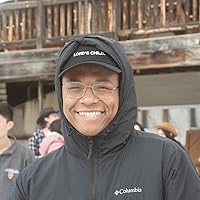
Navigate the deepest questions of faith with the compassionate guidance of a pastor whose faith nearly fell apart
This book is a must have for anyone facing a crisis of faith. When our hearts begin to question faith, we often fear voicing our concerns and confusions aloud. But questioning is inherent in the journey as we seek truth faith, as author and pastor Kevin M. Young has learned firsthand. At a time when many lack trust in clergy—and clergy members themselves are facing burnout and disillusionment—we need an honest and accountable reckoning with the role of the church in our lives. Reconstruct Your Faith takes you back to square one, helping you reengage with the church, the clergy, and God, using methods that have been essential to Christianity from its beginnings.
Embark on the next phase of your spiritual journey—even if you have become disillusioned with aspects of organized religion Receive guidance and wisdom from an open-minded pastor who has struggled with his own faith Examine the role of God, Evangelicalism, and the church in your past, present, and future Return to the foundations of faith to discover your own path through questioning to a stronger spirituality This book guides you through the application of ancient spiritual practice in your life's journey, regardless of your denominational identity as a Christian or your belonging to a particular tradition. Anyone experiencing a crisis of faith or nagged by persistent questions about the direction of the church today will find healing and answers in Reconstruct Your Faith.
“There is no mess in which Jesus will not meet us. There is no wreckage from which he cannot redeem us.”
This is basically a stripped-down version of John Mark Comer’s Practicing the Way aimed at people who are jaded with or hurt by Evangelicalism. I don’t mean this derogatorily at all, I’m just saying that very little in this book will surprise you if you’re at all familiar with the recent contemplative, “Let’s get back to the roots of our faith” push that has taken ahold of the Western Christian landscape. However, for someone like myself coming from that context, it is quite refreshing to hear all of this from a progressive voice. It’s comforting to see that the deconstruction that this book follows up on does not throw the Christian “baby”—Jesus—“out with the bathwater”.
I fault this book in just one way: I don’t think Young’s New York Abbey story, a constant narrative connecting to his points, is well-written. I do not question the impact it had on his life, but it felt like Young was putting on a voice to make his experience sound profound. Halfway through the book Young switches from telling the story in past to present tense—from a reading perspective this was incredibly jarring and I eventually stopped caring about the narrative. However, I think Young is excellent when simply sharing on the ancient rhythms he incorporates into his reconstructed faith.
Kevin takes you on his personal journey of finding hope and truth in the deep waters of deconstruction. This journey takes place over the course of a week among the monks of a silent Abbey. I felt like I was there. This book doesn’t tell you what to believe. It isn’t a step by step guide to reconstruction. But if you find yourself lost in the storm of deconstruction, fearful you will get swept away, this book is a reminder that there are indeed solid things to cling to even when you are questioning everything you ever believed.
This book is an honest and tender look at evangelical deconstruction from a heart that has struggled. It challenged me and helped me feel less alone on my deconstruction journey. The peace that the author finds in the liturgy calls to me as well. His true heart is heard through his struggles and small victories. I hope that at some point, I can find the same peace that he has found.
I got to know Kevin from Twitter / X and we have been on similar journeys over the last many years, questioning so many things in modern American evangelicalism. His book is written in an autobiographical style as he walks us through the week that changed his life and ministry in so many positive ways. He will introduce or reintroduce you to many ancient practices and explain their importance. He will explain his own reasoning on why and how his faith grew to be more anchored in Jesus. What is best is that he never chides or criticizes, he instead offers hope and wholeness for those who are deeply struggling with whether they can continue on in what has become of many churches. And if you are pastor wondering why so many people are simply checking out of church, this book is worth your time, if you open your mind and heart to understand.
This is simply a succinct primer on emergent theology popularized by theologians such as Brian McLaren. Young poisons the well right out of the gate by beginning with his standpoint epistemology about how judgmental fundamentalist Christians are. In typical postmodern fashion, this approach is supposed to baptize everything else he writes (after presenting his negative church experience) a certain level of authority that demands that others should listen to what he has to say, and somehow make his conclusions a part of their own intellectual framework. Young, like other emergent writers before him, wants to pretend that the Protestant Reformation never took place, primarily because of the emphasis placed on biblical authority and inerrancy by the Reformers. He conveniently neglects to mention the reasons for the Protestant emphasis upon scripture over tradition. I would ask him, “Aren’t the positive experiences that people have often had with the institutional church just as valid a standpoint epistemology as all the negative ones? What makes the negative perspective the authoritative one when you remove any source of authority?” Protestants affirm the authority of scripture precisely because of the fallenness and sinfulness of humans, including those in church leadership. This is another entry among a spate of books released in recent years that strives to make humans the sole arbiters of truth. It is nothing more than a handbook on do-it-yourself, ala carte Christianity. Its approach is much closer to Eastern Orthodox spirituality. It wants to completely relegate Reformational, and particularly Evangelical, Christianity to the dustbin of historical irrelevance. In order to reach the conclusions that Young does throughout this book, one has to eliminate the Bible as a source of divine authority in the life of the Christian, especially given its explicit moral pronouncements regarding human sexuality. This is a handy resource on deconstruction and standpoint epistemology, nothing more. You will only find Young’s arguments convincing if you have completely succumbed to postmodern modes of thinking. This is a book for maudlin millennial Christians who place their feelings over any form of absolute truth and who strive not to hurt the feelings of others by affirming and condoning any of their personal opinions and lifestyle choices, no matter how harmful those opinions and choices may be in the long term. I leave Young and his readers with the words of Jesus’ half-brother James: “Adulterers! Do you not know that friendship with the world is enmity with God? Therefore whoever wishes to be a friend of the world becomes an enemy of God.” (James 4:4 NRSVUE) Young’s thesis is essentially, “It’s just Jesus and me under a tree (preferably WITHOUT the Bible), there shall be no accountability.”
Written by a pastor who weather a crisis of faith, this book looks at ancient Christian practices, such as liturgical prayer, fasting, and pilgrimage, and how these practices can help someone enduring doubts. The author provides a lot of background on the ancient practices, which I found interesting and insightful. However, much of the book is written in a colloquial style that was somewhat off-putting (although it improved over time). Also, the author talks about a deep crisis of faith that he had, but he doesn't provide much background on it. I would have preferred more information about where he was coming from. Most of the book is set during his trip to a Trappist monastery, and his experiences with ancient Christian practices there. He has some insights about the Reformation and Protestant Christianity (particularly in the US) that I also thought were interesting and insightful.