What do you think?
Rate this book


96 pages, Paperback
First published January 1, 2003
Διαβάστε την εικονογραφημένη ελληνική κριτική στις βιβλιοαλχημείες

After two novels with depressive themes (The God of Small Things, The Kite Runner) I wanted to read something completely different, not even fiction.
So I chose this book from the famous Art publishing House, Taschen.

It all began in December 2011 when I bought a Vintage edition of The Woman in Black with a very spooky cover.
One of the few books that genuinely scared me sending shivers down my spine.

With time I slowly began to recognise quite a few covers of classic books that were depicting sublime, gothic, and incredible paintings.
I found out of course that they were all done by the same creator.
The most important artist of the German Romanticism.
Caspar David Friedrich

In addition to all this, when I visited the National Gallery in London last year and saw in person one of his paintings, I creamed my pants.

Winter Landscape with Church


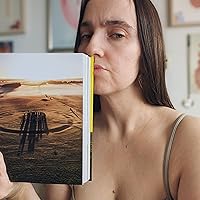
So when I returned back home, I ordered this book. Since it was less than 100 pages I read it and enjoyed it in less than 24h.
It is about his life and work, illustrated of course with many of his paintings.

He was born September 1774 in the German town of Greifswald then part of the Swedish Empire.
A small seaside town on the shores of the Baltic Sea.
He experience death from a very young and tender life, something we see as a recurring theme in his paintings quite a lot: (graveyards, ruins, snow, nights, and sunsets).
He began his studies in Copenhagen in 1794.
Four years later he returned back to Greifswald and in the same year he moved to Dresden where he will spend a great part of his remaining life.


I always preferred natural landscapes over portraits and interior scenes.
And Friedrich was doing exactly that.
Out of his 130+ works only 2 depicted interior scenes and 7 were portraits.
On these two occasions where the scene was an interior one, we are able to see a window with the outside world visible.
In other words the outside world and nature in general were (almost) always parts of his art.

I now can say that Friedrich belongs to my Pantheon of Painters along with Dali.