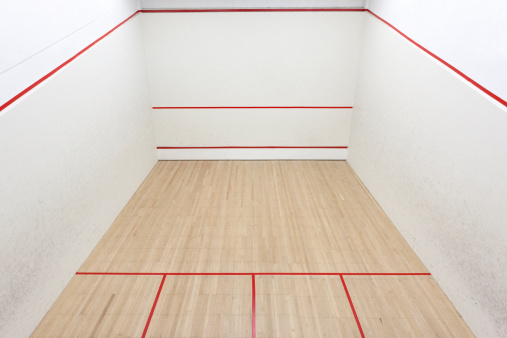
Jump to ratings and reviews
Rate this book

Western Lane

Rate this book
A taut, enthralling first novel about grief, sisterhood, and a young athlete‘s struggle to transcend herself.

Eleven-year-old Gopi has been playing squash since she was old enough to hold a racket. When her mother dies, her father enlists her in a quietly brutal training regimen, and the game becomes her world. Slowly, she grows apart from her sisters. Her life is reduced to the sport, guided by its rhythms: the serve, the volley, the drive, the shot and its echo.

But on the court, she is not alone. She is with her pa. She is with Ged, a thirteen-year-old boy with his own formidable talent. She is with the players who have come before her. She is in awe.

An indelible coming-of-age story, Chetna Maroo’s first novel captures the ordinary and annihilates it with beauty. Western Lane is a valentine to innocence, to the closeness of sisterhood, to the strange ways we come to know ourselves and each other.

166 pages, Kindle Edition

First published February 7, 2023

364 people are currently reading
14677 people want to read

About the author

Chetna Maroo

4 books102 followers
Chetna Maroo lives in London, UK. Her stories have been published in the Paris Review, the Stinging Fly and the Dublin Review and she was the recipient of the 2022 Plimpton Prize for Fiction. Western Lane is her first novel.

Ratings & Reviews

What do you think?
Rate this book

Friends & Following

Create a free account to discover what your friends think of this book!

Community Reviews

5 stars
1,356 (12%)
4 stars
3,835 (35%)
3 stars
4,349 (40%)
2 stars
1,057 (9%)
1 star
152 (1%)
Displaying 1 - 30 of 1,567 reviews
Profile Image for Adina.
1,292 reviews5,505 followers
September 21, 2023
Update! Now Shortlisted to the Booker Prize 2023! A big surprise

Longlisted for the Booker prize 2023
Book 5/13 (Dead Mother no. 2)

Western Lane is the 2nd novel from what I call “ The Dead Mother collection”. Chetna Maroo’s debut it is not a bad novel, it only got unlucky to be nominated to the Booker prize, where she is bound to be judged by higher standards. The writer is obviously talented but it is also immediately apparent that she still has a lot to learn about composition. The fact that the main theme of the novel was better addressed by more experienced writers does not help her case.

The family in this novel gets over the grief of losing the mother by playing Squash. Lots of it. The youngest girl, Gopi, shows the most talent and then her father subjects her to an intense training regime. Sport is a way for the two to connect but it also becomes life consuming.

It was an interesting perspective, healing trauma through sport while also being a coming of age story. The family is of Indian descent, which also contributes to the variety of the reading experience . However, the writing was not developed enough to make an impact on me.
Profile Image for Meike.
Author 1 book4,945 followers
March 14, 2024
Now Unsurprisingly Nominated for the Women's Prize for Fiction 2024
Shortlisted for the Booker Prize 2023

It's always a dangerous game when the Booker dismisses all strong contenders and instead presents a list composed of left-field entries, especially when they add young, promising authors who are not quite at the Booker level yet, but will then inadvertently be judged by Booker standards - to their own detriment. "Western Lane" is a decent book, but Booker material this is not (unlike The New Life, Chain-Gang All-Stars, Biography of X and all the other literary hits that went without a nod). Maroo tells the story of 11-year-old Gopi, whose mother has recently died. Now her father is alone, trying to take care of his three daugthers and pondering whether Gopi, the youngest, should go live with his childless brother and his wife instead.

Apart from the topic of grief, which is subtly rendered in Gopi's precise and often seemingly mundane observations, we learn about the bond between father and daughter through sport, in this case squash, which he wants the kids to take up in order to keep them occupied: While her sisters are not particularly dedicated or interested, Gopi and her dad do not only communicate through squash, spending time together on the court, their movement and alertness during the game is also connected to present physicality as opposed to the ephemeral process of grieving.

As Gopi develops a crush on Ged, the talented 13-year-old son of an employee at the title-giving sports establishment Western Lane just outside London, the element of race enters the narrative, because Gopi is British-Indian and her relationship to the white boy is seemingly deemed problematic by some, just like the the friendship her father strikes with Ged's mother. The migration background also plays a role when Gopi ponders the language barrier between her late mother and the siblings, as English was not her first language, but Gujarati. Silence is a major theme throughout the book, as are cultural differences and how Gopi's generation can deal with them.

So all in all, this quiet, shortish text offers many good ideas and is an interesting investigation into the nature of grief, but it is oh-so-slow and the set-up is very transparent and thus not particularly elegant, and sometimes even formulaic. I'm afraid this story is overall a little forgettable, but I feel like Maroo is very talented and could soon come up with a banger - this ain't it though, and the judges didn't do her any favors by nominating her now.

Also, I hate squash. On to the next.

EDIT: Of course this got nominated for the Women's Prize, a prize that generally celebrates highly accessible literature that is not big on ambivalence on the plot level or experimental designs on the aesthetic level.
Profile Image for Orsodimondo.
2,458 reviews2,430 followers
June 29, 2024
T L’ALBERO DELLA VITA


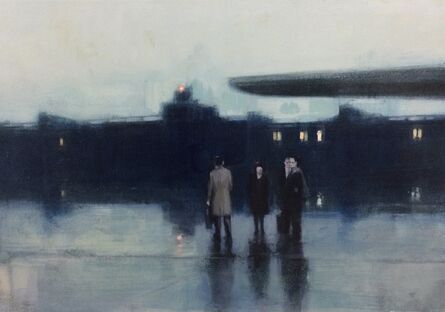
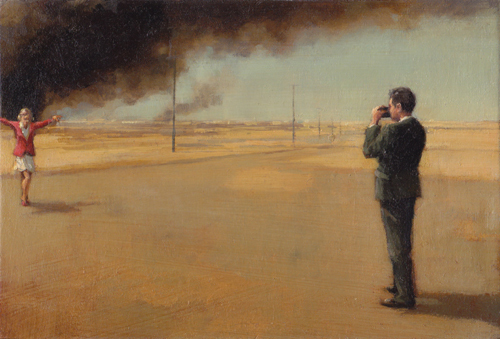
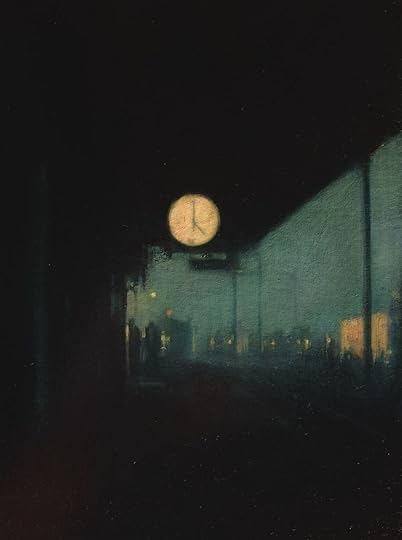
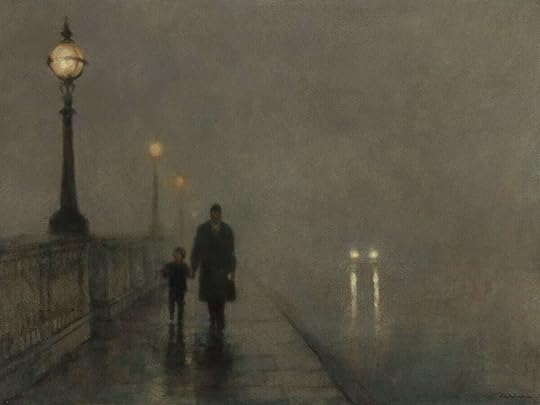
In copertina, Ben McLaughlin: Disegno e pittura per giovani, 2021 (Hosfelt Gallery, San Francisco)

Dalla Tanzania (o è il Kenya dove è nata Chetna Maroo?) approdati in Inghilterra, ma si capisce subito che l’origine è nel subcontinente, tutti i nomi lo indicano, a cominciare da quello della scrittrice.
Sono in terra d’Albione da un po’ di anni: integrati sì, ma senza perdere i connotati etnici, le regole castranti della comunità. La madre, che è morta da poco già a pagina 1, se la cavava così così con l’inglese, le sue tre figlie adolescenti (11 anni Gopi, la narratrice, 13 e 15 le altre due) studiano invece la lingua di casa. E la vera casa non è in Africa, rimane sempre l’India.
Un anno di storia, più o meno. Un anno per elaborare il lutto, l’assenza della madre è pesante, si capisce che è stata una mamma speciale, presente, affettuosa, saggia, sensibile, attenta. Un anno per crescere. Un anno per compiere un importante passaggio d’età.
Le tre ragazze costituiscono ciascuna il terzo di una unità, perché sono vicine, perché ciascuna ha le altre due. Ma sono anche il 100% della propria unità, ciascuna sola davanti all’assenza, sola nel proprio lutto.


E poi il padre, più solo di tutti, a suo modo, incerto, balbettante, però presente, consapevole e preoccupato per le sue tre figlie adolescenti. La sera scrive lettere a un amico del tempo che fu: Chetna Maroo non ci dice mai cosa scrive, e che si scambino solo ricordi del passato sembra poco credibile col marasma che l’uomo sta attraversando.


In tutto questo, lo squash, metafora della vita, dell’essere soli, del vincere e del perdere, delle difficoltà da superare, dell’allenamento che è quello che non si smette mai di praticare perché impariamo a vivere fino all’ultimo, fino alla fine, la lezione non è mai del tutto appresa.
Non credo cambi molto essere pratici di squash e delle sue regole: non capisco quelle del baseball e nemmeno bene quelle del football americano, eppure sono gli sport prediletti a stelle-e-strisce, luoghi e metafore di vita in mille film e cento libri, spesso amati.
Lo squash è molto bello in principio. Poi man mano sembra un po’ troppo, un po’ insistito, diventa quasi un inciampo. Ma trovo che Chetna Maroo recuperi nel finale, lasciandolo apertissimo, pieno di fili d’esistenza, di potenzialità di sospesi.


Lingua pulita, semplice, essenziale, momenti di leggera ironia, afflato condivisivo con le sue creature letterarie, empatia da una parte e dall’altra, molto studio psicologico, molte sfumature, nulla tagliato ad accettate, Chetna Maroo è capace di vedere nei suoi personaggi e attraverso di loro, è capace di costruire ponti sospesi, tra i suoi personaggi e non solo, tra il lettore e la pagina.
E per finire, una bellissima immagine recuperata da qualche parte, non un mio parto: la palla da squash pesa 23 grammi, il peso dell’anima, secondo Alejandro Iñárritu e il suo bel film, è di 21 grammi. Una piccola differenza. E quindi, viene da pensare, che sul muro di fondo, di dritto e rovescio, Gopi lanci la sua stessa anima.


Qui, e a precedere, altre immagini di opere di Ben McLaughlin.

Profile Image for Flo.
487 reviews530 followers
March 5, 2024
Update : Now shortlisted for 2024 Women's Prize for Fiction - Looking back at this one, I think I was a bit too harsh with it. I couldn't get past the Claire Keegan similarities. I'm gonna keep my original rating because I don't change ratings unless I'm rereading a book.

Now shortlisted for Booker Prize 2023 - This is the weakest one from the shortlist, but I prefer it to 'Pearl' and 'How to Build a Boat', who had almost the same theme. Still, the similarities to Claire Keegan are too strong for me.

Another mediocre book from the Booker 2023 longlist

Isn't it too soon to accept such strong Claire Keegan similarities? Also, if you think that the sports parts are strong, check some conventional sports novels to see that they are not something special. At least this one was shorter.
Profile Image for Jola.
184 reviews441 followers
August 19, 2023
Another case of theory and reality diverging unexpectedly: there was every indication that I would love Western Lane (2023) by Chetna Maroo and alas, I did not. It is a subtle, quiet, moving coming-of-age novel and I just adore this kind of book. Unfortunately, something didn't quite work for me here.

Western Lane is a touching story of how a family of Indian origin living in Britain copes — or rather fails to cope — with the death of their mother. What sets this short novel apart from quite a few written on a similar subject is that sport, specifically squash, plays an important part in it. The eleven-year-old narrator, Gopi, develops an obsessive passion for it. Squash becomes a sort of escape that allows her to take her mind off the loss her family is facing. It is also a weird platform of communication with her father, for whom it is also a kind of escapism. Maybe it's an over-interpretation, but it seems to me that squash in this novel can also be a metaphor for life and relationships. The premise was interesting but the execution in my opinion leaves a bit to be desired. Chetna Maroo's book reminded me of two novels: Gifted by Nikita Lalwani and Somebody Loves You by Mona Arshi. To be honest, Western Lane pales a bit in comparison with them.

Maybe if I were a fan of squash or tennis, I would have reacted to this novel more enthusiastically. The descriptions of matches and training sessions did not appeal to me much. Moreover, the coldness of the young narrator kept bothering me throughout the book, although certainly the family trauma justifies Gopi's apparent lack of emotions. Nevertheless, I wish Chetna Maroo had created a stronger connection between the protagonist and the reader. This would have made the story more impactful.

Leaving aside these caveats, I am impressed by the tact and delicacy with which the author approached the difficult subject. What is left untold is often more important in this novel than the things expressed with words. I often have trust issues when an author chooses an easy tearjerker as a topic, but this time I shouldn't have worried: there is absolutely nothing schlocky, mawkish or schmaltzy in the way Chetna Maroo deals with it. And she needed so few pages to convey so much.


Miki de Goodaboom, Emma Raducanu Dream 01.
Profile Image for Darryl Suite.
713 reviews812 followers
August 4, 2023
This book took me by surprise. It dealt with the theme of grief in a different and understated way that I haven’t encountered in a novel before. It’s very easy for readers to not even know that’s what the book is even about.

Maybe this novel hit hard because of my dad’s recent passing and my trying to figure out my complicated feelings. But I think this novel was successful in depicting grief in a devastatingly honest manner. It demonstrates that more times than not grief is not show-offy or outwardly expressive. Sometimes it is revealed in deceptively mundane conversations we participate in. Sometimes it is revealed in our fixations with newfound activities and shiny new things. Sometimes it is revealed when we think we are alone but don’t realize someone is there to witness. If you just look a little closer, you might catch a glimpse or an expression that disappears just as quickly as it had arrived.

This book was gorgeous and fascinating and perceptive. Especially when you watch out for how each of the characters, this family, deals with their grief. And believe me, every single character is dealing with this. And they are revealed subtly at different times of the book, and at multiple times throughout the duration of this book.

A quietly unique coming of age story that I’ll be thinking about for a very, very long time.
Profile Image for Henk.
1,196 reviews304 followers
September 11, 2024
Nominated for both the Booker Prize and the Women's Prize for Fiction, impressive for a debut!
A sensitive family portrait bound together by the opposing powers of grief and community, channeled through squash
Long conversations, with big gaps inside them

An Indian family with three sisters confronts trauma through squash. Grief, unspeakable distances between relatives, duty to family above happiness (in multiple iterations), this short debut has a lot of heft as we follow Gopi her daily routine after the passing away of her mother.

Before long we could hardly remember when we only play once or twice a week, as if it was for fun and sport is a way to escape societal norms (No one knows you play sports with a white boy).

The key axis of the book resolves around when it is right to choose for oneself and when should be there for others. Sisterhood is another thread clear in the book. You have to adres yourself to something applies as much too bereaved kids as to a father struggling with the role of widower. Victory and release are within reach, but can’t be achieved without a hard look at both oneself and one’s environment.

I think this could have been more emotionally touching and would have loved an exploration into the inner world of many of the side characters, but an impressive debut.
Profile Image for Maxwell.
1,441 reviews12.4k followers
August 2, 2023
Longlisted for the 2023 Booker Prize

"You can think it out, but in the end you don't know what is going to happen until you go through it."

At once a coming-of-age sports novel and subtle drama about a family recovering from grief, Chetna Maroo's debut novel Western Lane explores the multifaceted ways in which we, as humans, seek a better way to live.

Gopi is eleven years old when the novel opens and has recently lost her mother. She, along with her father, referred to as Pa, and her two older sisters, Mona and Khush, turns to the game of squash to have something to hold onto and focus on in their grief. Gopi, however, is the only one that shows real promise leading her father to focus more intimately and intensely on her relationship to the sport, while she takes any chance to find connection with her lonely and depressed father.

Maroo masterfully writes from the perspective of a grieving pre-teen in 1980s England. Gopi is wise beyond her years, as the youngest in a family just trying to make it after a devastating loss. It's through her narration and observations that we come to know the members of her family, immediate and extended, as well as fellow squash players at Western Lane, the facility near their house at which they play.

The tone is subtle and the prose is deceptive; it may be easy to write it off as plain or straightforward, but there is an emotional depth to her writing that comes through immensely. I felt so deeply for Gopi and her family, especially Pa who is lost at sea without his wife, a confidante and supporter of their family.

If you liked Claire Keegan's Foster or enjoy quiet A24 movies, you may find something to appreciate in Chetna Maroo's stunning debut.
Profile Image for Doug.
2,547 reviews914 followers
September 23, 2023
2.5, rounded down.

Booker longlist #5 for me to read. Ranked 13.

Before I get to the review proper, a mini-rant! To wit: when the Booker longlist was announced, wags referred to it as the 'Year of the Pauls', since three of the authors have that first name. But I will recall this as the 'Year of Dead Mothers' since now three of the five books I've read revolve around such - and the sixth book that I've just started begins with the death of yet ANOTHER mother! What gives?

I feel a bit sheepish giving this such a low rating, since there really wasn't anything AWFUL about it - it just wasn't very exciting either, IMHO. Partially, this is due to the fact that much of it concerns squash (the game, alas, not the vegetable, which I would have found much more interesting!). I have zero interest in sports and don't even know how the game is played, so long descriptions of practices, strategies, backgrounds and famous games of former illustrious players, and the games themselves just made my eyes glaze over. Worse, the concluding chapter is all about a tournament that the protagonist partakes in, but the stakes are so non-existent that I really couldn't care less whether she won or not.

Then, due to the fact the protagonist/narrator is an eleven-year-old Anglo-Indian girl, the prose is purposefully flat and unadorned. It reads just slightly more elevated than an elementary school reader - more reportage than anything. So I found much of the story plodding, due to the mundane style. Others have praised the view it gave into Indian family dynamics, but I have read such a plethora of Southeast Asian literature that it didn't seem necessarily novel or fresh to me.

Finally, I have no idea what the book is trying to say - it seemingly is about how this particular family handles its grief over the loss of the mother, and although that is constantly alluded to, no satisfactory conclusion is ever reached - it just kind of ... ends, once the tournament is perfunctorily dispatched with. I expect more from a Booker book.
Profile Image for fatma.
1,020 reviews1,180 followers
August 10, 2023
Western Lane is a quiet novel about a family--namely, three sisters --in the wake of the loss of their mother. The issue here is that it is so quiet as to feel completely muted--and that's really the beginning and the end of why I didn't find this novel to be particularly memorable, or even moving. Theoretically, the elements of its story should work for me: I love stories about families, especially ones that focus on the dynamics between a small group of characters. But the way this novel is written made it so difficult for me to connect with its story. The general impression I get from Western Lane is that it was aiming for subtlety and nuance but instead overcorrected and tamped down its entire narrative: that is, rather than subtle, the writing just felt flat, one-note. I wanted more from this story, because there were glimmers here and there of genuinely interesting or compelling moments. But it was like the narrative kept refusing to give me even the faintest bit more: more feeling, more introspection, just...more. I understand that this tamping-down is a function of the characters' grief--specifically the narrator, Gopi's, grief--but I just don't think the way it was done here served the story or its characters well.

There are quiet novels and then there are boring novels; Western Lane falls firmly in the latter camp for me. A mediocre, perfectly average story. Needless to say, I don't really understand how this one made it to the Booker longlist.

Thank you to Picador for providing me with an eARC of this via NetGalley!
Profile Image for Claire.
1,219 reviews313 followers
August 5, 2023
A slight novel about grief, family, human connection, and sport. I found this meditation on the myriad ways we process grief, and the complexity of family dynamics thoughtful, easy to read, and at times affecting. In the end, the narrative whole felt a little directionless or underdone, and maybe that was the point but this reader left this story feeling like something was missing.
Profile Image for melissabastaleggere.
161 reviews692 followers
August 19, 2024
libro più inutile della mia vita (nel senso che la mia vita è parecchio inutile ma questo libro ancora di più)
ma che cazzo frega a me del tennis poi cristo dio
Profile Image for Emmkay.
1,390 reviews146 followers
September 2, 2023
I was surprised how much I enjoyed this Booker long-listed short novel, given its focus on squash, which I know nothing about. I can’t say I ever truly understood all that was going on in the games and practices described, but the squash courts of Western Lane and the big tournament in a Perspex box at the end in fact made for atmospheric reading. The story was a sensitively written first-person account in the now adult voice of the protagonist, Gopi, of the year after her mother’s death. Eleven year old Gopi and her two sisters, Khush and Mona, are described by their aunt as “wild,” when she and their uncle seek to take one off their father’s hands, to be raised as their own. Instead, the girls’ father, Pa, throws himself into coaching the three girls to play squash, saying, “I want you to become interested in something you can do your whole life.” It is Gopi who takes most strongly to the sport, and soon she is practising with a young white boy at the club, while Pa smokes and talks with the boy’s mother. But grief continues to gnaw at the family, affecting each of them differently.

I thought it was beautifully and compactly written. In particular, it was peopled by so many three-dimensional, complex characters for such a short book, leaving me with a real sense of each of Gopi’s sisters, her father, her aunt and uncle, as well as her friend Ged and his mother. The story arc was perhaps a little obviously mapped out by an authorial hand, but that’s ok.

“A clean hit can stop time. Sometimes it can feel like the only peace there is.”
Profile Image for Hugh.
1,293 reviews49 followers
August 22, 2023
Longlisted for the Booker Prize 2023
Another enjoyable book from this year's longlist, but perhaps a bit lightweight to be a shortlist contender. It is an engaging coming of age story of a squash player from an English Gujerati family, the youngest child of a now widowed father whose hopes she embodies.
Profile Image for John Gilbert.
1,375 reviews216 followers
April 6, 2024
I liked this short novel, it seems more than several of my GR friends. Firstly because I love squash, having picked up the game over 30 years ago when I moved to Australia (I even played at Geoff Hunt's squash club in Melbourne a few times), but it wasn't necessary to enjoy the taut writing here. All through the novel the feeling of something hovered over everything. A mother's death, their father's grief, the love and differences with her two sisters, the extended family always hovering.

It was not always easy to know what was going on, especially in the relationship between 11 year old Gopi and her father. Squash is their bond, yet it also is a barrier between them. The lives of their immigrant family in Scotland is not easy to fathom, their customs and how they communicate with each other is not something I am familiar with, but it was always enthralling. I liked it, but I can see why many did not. 4 solid stars for this library ebook.
Profile Image for Sofia.
1,349 reviews295 followers
September 23, 2023
Gopi's grieving family used racquet as a lifeline to guide them out of the grief. The game becomes like an allegory to life, and each choice made is a life choice. The discipline in the game is discipline in life. Going on with the game is continuing with life. Their grieving journey through the game is leading them to find their own path through the myriad opinions of those around them.

Maroo uses plain language, which clearly shows the currents underneath until for me the water got quite murky and I could no longer follow the currents. I could not fully understand the whys and wherefores of the choices made.

2023 Booker shortlist
Profile Image for Michelle.
1,555 reviews256 followers
May 1, 2024
I think I went into this with too high expectations (being longlisted for the women's prize and all that), and now I feel a bit let down by it.

We meet Gopi in the aftermath of losing her mother. She's the youngest of 3 girls, and Dad, in his quiet way, isn't coping. No one in this family is dealing with their grief.

Grief and loss open up massive spaces, and Gopi fills her space by playing Squash at Western Lane every day.

This is a short book at less than 200 pages, but I feel like it needs a good edit. I like what this book is trying to communicate, but the execution falls flat.

I wanted to love this however it's a middle of the road 3 stars from me.
Profile Image for Krista.
1,469 reviews854 followers
August 24, 2023
I don’t know if you have ever stood in the middle of a squash court — on the T — and listened to what is going on next door. What I’m thinking of is the sound from the next court of a ball hit clean and hard. It’s a quick, low pistol-shot of a sound, with a close echo. The echo, which is the ball striking the wall of the court, is louder than the shot itself. This is what I hear when I remember the year after our mother died, and our father had us practising at Western Lane two, three, four hours a day.

Western Lane is a short domestic drama, a coming-of-age story, about surviving grief and making connections through one’s actions when words are no longer up to the task. Author Chetna Maroo writes in short, unadorned sentences that nonetheless capture something true about the experience of loss, and despite its brevity, I felt a real emotional punch with this. I liked the details from the family’s Indian-British (Jain) culture, I liked the particular POV of our eleven-year-old protagonist — who is feeling uniquely responsible for getting her father through his own grief at the same time she’s experiencing her first crush — and I even liked the bits on the squash courts that lead to an exciting tournament sequence. There is a lot packed in here, and while I would give it 3.5 stars if I could, I’ll round up to four (mostly to rank this higher than some of the other titles on the Booker longlist. Do I expect it to be shortlisted? Maybe not?)

Much later, Khush would say that that night was really the start of it, of Pa’s thinking about what he would do with us. It wasn’t Aunt Ranjan. It was Uncle Pavan talking about the past. But I think Pa told us himself what moved him. He sat beside us one morning on the bench outside the squash court and said, “I want you to become interested in something you can do your whole life.”

After a warning from his sister-in-law that his three daughters are at risk of “going wild” after the loss of their mother, “Pa” decides to focus on the girls’ squash skills at the local rec centre, Western Lane. As they run drills and “ghost” skills, Gopi (the youngest sister at eleven) emerges as the greatest talent; and when she starts training with thirteen-year-old Ged — the son of a white woman who works at the facility and whose attention from the girls’ father becomes concerning to their community — their friendship will start to fill in some of Gopi’s empty spaces. The relationship between the sisters is lovely — they are all good kids working to get their family through their tragedy — but even as Gopi continues to improve and attracts the attention of someone who thinks she should enter a local tournament, their father seems to be slipping further away from them:

After one of these silences, we heard Pa asking Ged’s mother if she didn’t feel, sometimes, that there was too much time. He asked her if things terrorised her, like hours, or the expressions on a child’s face, or the clattering of lids on pans. Maybe she moved in some way that told Pa she understood. He was quiet, and then he said: “The children. The girls. Sometimes I look at them and think they will eat me.”

Perhaps predictably so, Gopi puts a lot of pressure on herself to save her father through her performance at the tournament — this, after sacrificing herself in other ways — but there is something interesting about the way that Maroo uses sport as a metaphor for the disassociation of grief (Gopi sees herself moving through grief while still inside the grief; sees herself moving through game play while still in the game; marvels at seeing the Milky Way on the horizon while acknowledging her place in it), and it all worked for me. In different circumstances I might round this down to three stars, but there’s something to this and I’m glad I read it.
Profile Image for Lee.
548 reviews64 followers
August 20, 2023
Seems all my Goodreads pals are rather underwhelmed with this one and I’m out on a limb by my lonesome here! No problem with that though.

Sometimes we need something to save us, and finding it, or something that will serve for it at any rate, we grasp hold tightly. This short novel explores that dynamic with great empathy, building care for characters who are completely unfamiliar to me in one sense (British-Indian Jains) though my fellow humans in the deeper more important sense, and through an activity in the sport of squash that was only slightly more recognizable to me than the mostly incomprehensible sport of cricket. This learning opportunity added additional interest in my case (I’ve read novels that describe cricket of course; nothing doing).

With connections to Claire Keegan and Yiyun Li one could expect Maroo to produce a certain sort of quiet detailed prose and this she mostly has done in this her debut. The father’s emotionally bottled up distance was painfully evoked in brief passages of text throughout, most notably. An emphasis on sound was another thing I noticed. Here in the very opening page sound, and its lack, are used to suggest the father’s distance, and that which saves.
My father was standing far back, waiting. I knew from his silence that he wasn’t going to move first, and all I could do was serve and volley or disappoint him. The smudges on the wall blurred one into the other and I thought that surely I would fall. That was when it started up. A steady, melancholy rhythm from the other court, the shot and its echo, over and over again, like some sort of deliverance. I could tell it was one person conducting a drill. And I knew who it was. I stood there, listening, and the sound poured into me, into my nerves and bones, and it was with a feeling of having been rescued that I raised my racket and served.

I enjoyed this more than the elaborately decorative prose of Harding, for sure, but we’ll see what else the Booker longlist has to offer!
Profile Image for Alan (on December semi-hiatus) Teder.
2,705 reviews250 followers
September 21, 2023
September 21, 2023 Update Western Lane was announced as one of the six books shortlisted for the 2023 Booker Prize. The winner will be announced on November 26, 2023.

Squash Dreams
Review of the Dreamscape Media LLC CD-audiobook (February 7, 2023) narrated by Maya Saroya of the Farrar, Straus & Giroux hardcover original (February 7, 2023).

Longlisted for the 2023 Booker Prize.

[2.5]
It was again a chance thing that led me to "read" the audiobook edition of another longlisted 2023 Booker nominee, after listening to a narration of Sebastian Barry's Old God's Time. While looking for the half-dozen or so Booker nominees currently available in Canada at the library, I found that a CD-audio edition was available immediately, as opposed to joining the long list of hold requests for a hardcopy. I fortunately still have a CD-player available (even in the car), and I suppose many do not.

Western Lane is a straightforward coming-of-age story, unlike Barry's stream-of-consciousness novel. I didn't need to access an e-book to assist in following along. The main character is 11-year-old Gopi, the youngest of 3 daughters in a South Asian UK family whose mother has recently passed. In his efforts to keep the girls occupied, the father encourages their squash court activities at a local sports centre named Western Lane. As further inspiration, they watch the videotaped matches of Jahangir Khan, widely acknowledged as the greatest squash player to have ever played the game, with an world-record setting 555-match winning streak.

Maroo's storytelling is very matter-of-fact and well-told but it didn't rise to a level of quotable literary passages that one would expect and look for in a Booker nominee. It does avoid pre-teen or teenage angst for the most part, so it definitely rises above being a simple YA tale. But it just didn't ignite any spark or passion for me. It all leads up to a final junior championship match and then it's over.


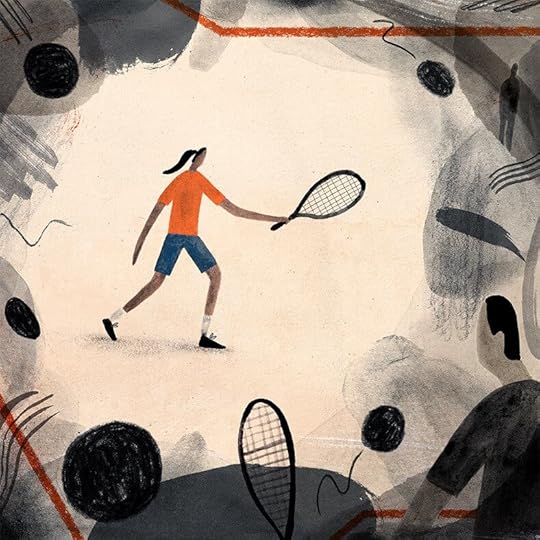
Illustration by Femme ter Haar for the New York Times review of “Western Lane”. Image sourced from the New York Times (link below)

Perhaps I just have too little interest in competition sports, and zero knowledge of squash especially, to fully appreciate this novel. I had the same problem with Aravind Adiga's Selection Day which centred around cricket. Adiga at least saw the humour of cricket being a "false sport", played by only 8 countries in the world. There was little or no humour in Western Lane to lighten the journey for non-aficionados.

Other Reviews
Finding Solace from Grief on the Squash Court by Ivy Pochoda*, New York Times, February 7, 2023.
A Tender Debut by Caleb Klaces, The Guardian, April 23, 2023.

* Reviewer Ivy Pochoda (The Art of Disappearing, Visitation Street, These Women a.o.) was a professional squash player prior to becoming an author.

Trivia and Link
As I previously did not know anything about squash, it was interesting to discover than squash players train with a method called "ghosting" i.e. practicing moves on the court without an actual ball. There are plentiful "ghosting" videos on YouTube, and you can see one here.
Profile Image for David.
744 reviews2 followers
August 12, 2023
The scattered scenes of Indian-Pakistani expat culture are interesting. I appreciate Maroo's subtle treatment of complicated grief following the death of a wife and mother of adolescent daughters. The use of Squash as metaphor for how one manifests one's internal life in a public space is interesting, if variably successful here. Overall, though, I must admit that I was mostly kept outside this story; more of a spectator than a reader-participant. It made for a less engaging experience than I prefer in a novel.
Profile Image for Peter Boyle.
581 reviews742 followers
October 1, 2023
This debut novel is set in late 1980s England. Gopi is 11 years old, the youngest of three daughters. They are all reeling from the recent loss of their mother. To focus their minds, their father sets them up an intense squash training schedule. Gopi shows the most talent for the game and she revels in it, finding a freedom from the struggles of life on the courts. She befriends another player named Ged, the son of an employee at the local sports centre. They are both suggested to take part in an upcoming tournament and turn their training efforts up a notch in preparation. But while Gopi enjoys her new identity as an athlete, the rest of the family are finding grief a heavy burden to bear, and cracks begin to show.

I probably wouldn't have heard of this quiet, understated story if hadn't made the Booker shortlist. To be honest I found it hard to connect with. Apart from Gopi, the other characters aren't particularly memorable. And even though it's a short novel, there isn't a whole lot of momentum to the story - it all felt a bit aimless. I did appreciate the perceptive way in which bereavement was examined - each family member seemed to deal with it in their own particular way. However, I was underwhelmed on the whole by Western Lane - it may be sensitively written, but for me there is something lacking that I can't quite put my finger on.
Profile Image for Afi  (WhatAfiReads).
606 reviews428 followers
August 2, 2023
Read this after the announcement of the Booker Prize 2023 Longlist that just came out yesterday, and this was my first pick and it was one that I finished in one seating.

“You can think it out, but in the end you don’t know what is going to happen until you go through it.”


A story that focuses on grief of a family as a whole and how they had made it through and channeled their grief with sports - specifically squash - and its a novella that highlights sisterhood as a whole and how they came together during the death of their mother. Paired with a straightforward prose, is a story of the different mechanisms for grief , family and squash .

I find that this book was easy to read; but one that interlaced with a lot more than just the mechanics of squash. Firstly, writing-wise , its one of the books that has a beautiful prose but its one that is not hard to read. The story has its own flair to it that makes the story seemed alive in its own way. I love how it creates a story of a family that is grappling with loss and how each of them had grieved in their own ways. Its interesting to read how the sport was interlaced with the family mechanics in here; and the fact that its written from the POV of a 13 year old makes the story seemed more raw and heartbreaking.

I was not that much a fan of squash, but I feel that the author had made the sport in here somewhat parallel to the feelings of our main protagonist. Its how the sport had become a bridge to save the link between her father and their children, and what kept the family somewhat at bay with the loss of their mother. I fell into a deep-hole of squash techniques and seeing the sport through the lens of the characters makes it almost poetic in its own way. There is a subtlety in Maroo's writing that makes the story; albeit short, one that touches hearts in ways that you didn't expect it would. Its a voice of a teen trying to find a place in the world where she is still trying to grasp girlhood through the help of her sisters (who are not that much of an adult themselves).

A story that took me by surprise. Definitely one that I liked seeing it in the list of the booker prize and discovering a new author and story.
Profile Image for Stitching Ghost.
1,483 reviews390 followers
May 30, 2024
I kept waiting for the trying to transcend herself part, I feel like it never quite happened.

Neutral 2.5 rounded up.
Profile Image for Vipassana.
117 reviews363 followers
August 4, 2023
*Long-listed for the Booker Prize.*

Western Lane has haunted me since I first read it. I was almost surprised to see it longlisted, not because I didn’t think it’s deserving of the honor – it absolutely is – but because I made the foolish assumption that it could have touched only me in a way that it did. At its core, beyond the brilliantly captured experience of grief and sport, this novel is the most astute portrait I’ve read about a universal experience: the helplessness of being a child. Foolish to forget that others have that universal experience.

———
A child’s desire for a modern squash racquet, a father’s heartbreak at his child abandoning a classic – the wooden racquet – for the sport he raised the child with. This scene has replayed in my mind so many times over the weeks since I finished reading Western Lane that I must try to write about this book.

A family loses a mother and a wife and they wander through their grief in the days after, each person’s pain bumping into the other. It is a quiet novel as several reviews have said. After all, some childhood learning is parsing through our gaps in understanding, parsing through the silence of those who are supposed to care for us. A child’s lack of understanding simmers in a gentle terror. Chetna Maroo has written a story about what it feels like to be in that soup by immersing the reader in that silence, fear, and drive of 11-year old Gopi. Gopi has passion for squash that resembles the heart of any art and a ear to her entire family's ways of coping with loss and the change it brings. You have to be still and look around to give a little more shape to the amorphous emotions of Gopi’s childhood.

It’s as much a portrait of grief and trauma through girlhood as it is through fatherhood.
Profile Image for Malacorda.
598 reviews289 followers
October 18, 2024
Come previsto non diventerà uno dei miei preferiti di tutti i tempi, eppure ho idea che si tratti di uno di quei libri che hanno bisogno di sedimentare per un po', per poi arrivare ad essere rivalutati e guadagnarsi una stella in più.

Parte bene esprimendo a suo modo l'incomunicabilità del dolore, le sensazioni non dette, congelate, fatte di sguardi o al più di gesti, emozioni che restano sospese come un lampadario in procinto di precipitare - energia potenziale ma non cinetica, non ancora - e l'angoscia dei protagonisti pare proprio quella delle figure ritratte da Edvard Munch. Poi, a lungo andare, la esile trama inizia un po' a girare su sé stessa (o girare a vuoto), ci sono elementi ripetitivi che sembrano non portare da nessuna parte (la stessa videocassetta riguardata all'infinito, le presenze del fantasma della madre, i malesseri e i mancamenti della protagonista, le lettere a Bala) e bisogna proprio arrivare alla fine per rendersi conto che se non portano da nessuna parte è perché si tratta più di un racconto lungo che di un romanzo: un racconto è una fotografia, e questo è una fotografia in seppia.

Condivido quanto scritto da @ferliegram laddove dice "mi sono sentito per lo più tenuto fuori da questa storia, più uno spettatore che un lettore partecipante" ed anche "ho però molto apprezzato l'originalità nel trattare una tematica così trita e ritrita come la perdita di un genitore e i conseguenti sconvolgimenti nella quotidianità di chi resta".

E riguardo quest'ultima cosa, la perdita del genitore: i più terribili sono La ragazza delle arance e Molto forte, incredibilmente vicino. Questo di Chetna Maroo li sorpassa alla grande. Ma meglio di questo di Maroo, a mio avviso è Caos Calmo nel descrivere in maniera implicita quella fase di "congelamento" del dolore, quando si è talmente stupiti e impietriti che non si riesce nemmeno a piangere. Quella fase che sta come un profondo respiro tra la tragedia e le lacrime.

Un'altra somiglianza che mi è venuta in mente è con i romanzi di Ali Smith. Ma più di tutto ho sentito una notevole somiglianza con L'oratorio di Natale: quest'ultimo non ambienta la sua storia in un contesto di immigrazione come invece fa Maroo, ma la cosa che accomuna fortemente i due libri è il modo di raccontare il dolore: raccontarlo per sottointesi, per non detti, con sguardi e silenzi, con impazzimenti che sfociano in un realismo magico. Nei commenti a L'oratorio di Natale avevo scritto: "Un libro sia sul dolore che sull'inadeguatezza. Il dolore della perdita è ben espresso: non tanto nelle parole dei protagonisti - che anzi per effetto del dolore quasi perdono la capacità di parlare - quanto nei loro gesti e atteggiamenti e sensazioni." Ho ricopiato pedissequamente perché è una descrizione che calza alla perfezione anche per il racconto di Chetna Maroo.
Profile Image for Fabian.
136 reviews82 followers
November 17, 2023
Dealing with grief through squash. Squash is a fast, breathless game, unlike this novel. The sterility of the hall, on the other hand, is reflected in the style, which means that the book leaves you cold for long stretches. 

Many things simply don't fit together, little is said, but in too many words. Only once do you lose your footing while reading the middle section, when the protagonist hits her father in the face with the ball during a game. But as quickly as it swells, the incident is forgotten. Another thing in common with the book.

At the end, there are echoes of the "Karate Kid" moment. The stereotypical catharsis of a coming-of-age novel.
Profile Image for Sarah ~.
1,055 reviews1,040 followers
August 13, 2023
Western Lane - Chetna Maroo

The Booker Prize 2023 Longlist #2

محاولات تأقلم عائلة مع الحياة بعد وفاة الأم، أب وثلاث بنات. حتى مع كل محاولات المضي قدمًا؛ نرى الأب يتلاشى شيئًا فشيئًا والفتيات يتفرقن، صورة لاضمحلال عائلة تتحلل بعد رحيل أحد أفرادها. في كل ظهور لـشخصية الأب تحديدًا، تذكرت
أبيات وديع سعادة :
"لا أعرف كيف لا تتوقف أرجلنا عن المشي حين نفقد شخصًا نحبُّه. ألم نكن نمشي لا على قدمينا بل على قدميه؟ ألم تكن النزهة كلها من أجله؟ ألم يكن هو النزهة؟ كيف يمشي واحدٌ إذا فقد شخصًا! أنا، حين فقدت شخصًا، توقفت. كان هو الماشي وأنا تابعه. كنت الماشي فيه.و حين توقَّف، لم تعُد لي قدمان."
Profile Image for Edward Champion.
1,642 reviews127 followers
September 24, 2023
What the hell is going on with the Booker Prize shortlist this year? This is the fourth book I've read and it represents the third that I completely detested. Is there some kind of payola going on? This is one of the dullest goddamned novels I've read this year. The prose is so banal and so without zest that the comparatively short length of this novel felt interminable. Gopi, the eleven-year-old girl who takes up squash, is as veneer-thin as Phylo dough, without any interesting character qualities or thoughts. And Maroo is a terrible writer. Her prose is more desiccated than a corporate press release. A small sample:

"Ged and I played three times that winter and more or less every day of spring. My thoughts became very clear in those months. I got up early in the mornings, not to be alone, but because the whole night I had been waiting for the day to begin."

Uh, what WERE those thoughts? Care to let us in? You have to love the "in those months" redundancy. You've already established that the time period is winter and spring! Got up early in the mornings? Uh, yeah, like 99% of humanity. In the fucking morning. And obviously you would be waiting for the day to begin if you hit the hay early.

This is the moronic and banal level in which this entire bullshit novel operates. We get no real sense of Gopi's grief and the relationship with her father is more vapid than a contestant being interviewed on a reality TV show.

Maroo has no voice. She has nothing to say about being human. And she writes about squash like a sociopathic entomologist who doesn't understand how visceral sports are.

And this made the shortlist? Seriously? What garbage.
Displaying 1 - 30 of 1,567 reviews

Can't find what you're looking for?

Get help and learn more about the design.