Jump to ratings and reviews
Rate this book

The Quiet Earth

Rate this book
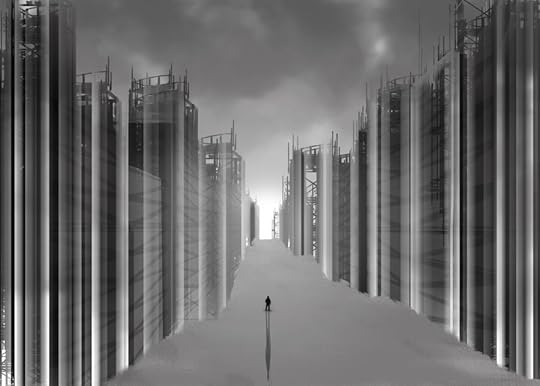
John Hobson, a geneticist, wakes one morning to find his watch stopped at 6.12. The streets are deserted, there are no signs of life or death anywhere, and every clock he finds has at 6.12. The Quiet Earth is a gripping, utterly absorbing New Zealand cult classic.

232 pages, Paperback

First published January 1, 1981

53 people are currently reading
959 people want to read

About the author

Craig Harrison

6 books11 followers
Craig Harrison is a fiction writer, playwright, and teacher. He has written several novels, short stories, plays, satirical works, and television comedies. His well known science fiction novel, The Quiet Earth, was published in 1981. Harrison has also written junior fiction, including The Dumpster Saga, published by Scholastic in 2007. His awards and prizes include the Elmwood Jubilee Prize, the J.C. Reid Award, and the NZ Theatre Federation prize. He came to New Zealand in 1966 to lecture in English at Massey University, where he remained until he retired.

Ratings & Reviews

What do you think?
Rate this book

Friends & Following

Create a free account to discover what your friends think of this book!

Community Reviews

5 stars
93 (18%)
4 stars
194 (38%)
3 stars
139 (27%)
2 stars
59 (11%)
1 star
21 (4%)
Displaying 1 - 30 of 73 reviews
Profile Image for Daren.
1,575 reviews4,575 followers
April 15, 2023
It is a bit of a novelty to read a sci-fi book set in New Zealand. Craig Harrison is a British author who emigrated to New Zealand as a lecturer at the age of 24. He wrote this novel some 16 years later, which shows as he had a reasonable understanding of New Zealand culture in putting together the book.

I find it hard with a sci-fi like this to talk much about plot without heading into spoilers, as the best part of the novel is learning about the main characters discoveries as he makes them. However, very briefly, this is a "man wakes up and there is nobody left on earth" story, and once he wakes we learn his back story, and go with him as he moves about trying to figure out what happened and whether there are other survivors. Hobson, the main character, worked as a research scientist in a secure facility researching the effects of radiation on DNA, and so the book takes a scientific approach. Hobson had also suffered a family tragedy where his son had died, so the reader learns more layers to that story as the novel rolls out too.

I suspect this novel is probably categorised as realistic sci-fi in that while they get a mention, there are no aliens or paranormal inputs. I am not really a sci-fi reader, other than a few classics, but I enjoyed the fact it is set locally (ok, North Island NZ), and there were some cultural elements to it (although not enough to confuse an international reader). There were layers in the story which were exposed only fairly slowly - the reader shouldn't expect fast pace action here, as Hobson searches for other signs of life.

I note there is a film, also made in New Zealand, but in reading a little about it, the film is so heavily adapted that it barely resembles the novel.

For me 3 stars, possibly 3.5 stars, but if it had been set anywhere other than New Zealand, it would probably have a half star less.
Profile Image for Scott.
324 reviews405 followers
June 3, 2019
You wake up one morning, and you are only person left on Earth.

Everyone else has disappeared without trace.

Cars sit abandoned at intersections. Empty planes have fallen in fiery fury upon suburbs.

What do you do? How do you cope? How do you figure out what happened to everyone else?

You’ve probably seen this idea before. It isn’t new. But it was, once, and before it became a science fiction trope it was first explored by Craig Harrison in The Quiet Earth, the book that was later adapted into the classic 1985 film of the same name (it’s worth noting though that the book is quite different from the film).

As The Quiet Earth begins Jim Hobson wakes up one morning in rural New Zealand to find his watch stuck at 6.12am.

The town is quiet. No people. No dogs. No birds. No insects. Nothing.

Hobson is utterly alone. Alone with his memories of a life not really worth living, of the child he lost and the wife who left him, an already lonely man rendered utterly cut off.

And so begins Hobson’s attempts to keep his sanity and survive, while searching New Zealand for any sign that someone else may have been spared.

Harrison spins this story brilliantly, showing us the world through Hobson’s eyes, the empty cities and the past and present of a man whose capacity for self delusion only gradually becomes apparent as his gripping story unfolds.

However, what really struck me in the Quiet Earth isn’t the amazing concept (and it is amazing) or the damn fine writing (and it is rather fine) or the multifaceted protagonist who elicits sympathy, loathing and even fear in the reader.

What struck me, as a child of 1980s New Zealand, is the unvarnished, ugly truth about relations between white New Zealanders and the indigenous Maori population.

New Zealand is often portrayed as a harmonious paradise, where indigenous rights, language and culture are respected. On an official level, this is true, with the rights and position of the Maori people in the nation recognised at all levels of government. It is also true that every year, every decade, has seen improvement in relations between races, with many white kiwis of my generation voluntarily learning the Maori language as adults, and working towards real equality. But, despite all this, there is still prejudice.

In the eighties, the time reflected in this novel… there was real ugliness. Mostly it was subtle, and undercover, but it was ugly. My family sent me to a private primary school at great cost to avoid my attending the local school that was ‘too rough’ – a coded term for ‘too brown’. I was told to avoid certain places as there were ‘too many Maoris there’. ‘Jokes’about Maori people, poverty and welfare payments were common. I’d forgotten some of the attitudes towards Maori that were prevalent among white New Zealanders, and The Quiet Earth puts them on display, front and centre.


That this is so skillfully done, in a genuine original of an SF novel where this racism is part of a compelling character whose darkness draws the reader into his mind, is testament to Harrison’s consummate skill as a writer.

The Quiet Earth is a stone cold SF classic, and an essential portrait of both a dark science fiction vision of the future and the darkness in New Zealand’s recent past, between Maori and European New Zealanders.

Read it, then watch the film too. They’re both essential SF works.

4.5 dark and compelling stars.
Profile Image for Ex Ex.
1 review
June 11, 2014
The Quiet Earth concerns the plight of a man who wakes up in a world where all of humanity sans himself has disappeared. How does a man survive in this world, where only the ghosts of his past and other mysterious beings seem to pass in and out of reality? What is reality when the rules no longer apply? All of this and more is explored within...

1.I may spoil the movie for you. I would advise you to watch the Quiet Earth movie before reading this review.

2. The Quiet Earth is my favorite movie. I have watched it many times and always come away with new insights into the plot.

3. I have wanted to read this book for ages after seeing the movie. As I understood it for years, the book was quite rare. I was seriously considering dropping the $400 or so USD that it was being sold for at one time or another just to read what inspired this great movie. However, I never got a chance to do so and moved on. I would check back on the book every year or so and luckily discovered it has been rereleased this month (June 2014) for a very affordable $11-12 USD on Amazon. I snatched it up and read it over a few weeks.

Now, for my review...
I think this book is criminally underrated. As others here have angrily pointed out, the book is not the same as the movie. While it isn't bit-for-bit the same as the movie, I can say that all important elements of the movie are present in the book, they are simply rearranged and presented in different lights. You're not going to be left clueless about why it is this way, it is a very consistent story that just happens to be different than what was shown on film in some superficial ways. Reviewers who act like this was highway robbery and a totally different story are misguided at best or disingenuous at worst. There is no reason to not check out this book.

As for the differences, the movie is a more of a sci-fi piece on alternate realities that has been retooled to be more entertaining for a movie audience. I do not think this is because the book is lacking, simply I think the creative team for the movie did what many screenwriters do when handling a great book-to-movie project: they change things, and they do these things for a multitude of reasons that we may never really know.

This is the point I want you to walk away with: The movie is excellent, but so is the book for the same reasons, and also for their own separate reasons. You can easily enjoy the book if you loved the questions posed in The Quiet Earth movie and want to see more perspectives on just what the hell happened, because the book presents its questions and answers in its scenario just as wonderfully The Quiet Earth movie did with its own. No, they do not match up totally, but the book manages to encompass and perhaps even explain the limited ending we saw in the movie in its own way. I will not spoil how!

Now, the book itself is marvelous. It's also very dark. It isn't so much a straight sci-fi piece about the end of civilization and the disappearance of humanity, although that setting is explored satisfactorily and plays a huge part in the book. Rather, that is the backdrop for the main story, which centers around a thrilling, engrossing look into the tearing apart of a man's psyche when faced with an unreality and impossible situations.

Mainly, The Quiet Earth is about the nature of guilt and the exploration of whether we are trapped in hells of our own making, or put there by unyielding, impossible to understand forces. It is remarkably heavy subject matter, but you will be stronger for having lifted and pondered it.

The book is unflinching in its examination of the main character. You will probably not like this man, but you will understand and identify with him in ways. You may even feel for him, as he *is* the seeming sole survivor of humanity.

I appreciate the book for giving us a real character, a person with a history, foibles and hitches; real flesh and hot blood flows here with him. Through the marvelous writing, we understand the cross Mr. Hobson bears. Even better, that examination plays intricately into revealing the why and what of the cause for humanity's disappearance and his survival. It all flows together to tell a wonderful story that has a satisfying ending.

The prose is smart and full of creative analogies and metaphors for what the main character experiences. At points the writing and events reminded me of Lovecraft, that strange power he had to make eerie images and feelings manifest in the reader is present here in these pages, too.

There were many interesting passages that I feel set this book apart from just about anything I've read before. It is surely a singular title in its combination of subject matter and powerful presentation; the book has its own voice and thus its own place in literature that must be appreciated, well beyond just being a post apocalyptic set piece.

I recommend this book highly if you enjoyed the Quiet Earth movie or just like post-apocalyptic writing and scenarios. Again, don't expect the high camp moments or sci-fi adventure of the movie. Expect to feel how the very last man on Earth could very well feel when coping with that reality.
Profile Image for Janelle.
1,630 reviews347 followers
September 8, 2024
John Hobson, a scientist working in genetics, wakes in his motel room to discover his watch has stopped at 6.12am. Then he notices the quiet…yes, he’s apparently the only creature left alive until he finds an earthworm. All clocks have stopped at 6.12 and people seem to have just vanished. Hobson calls it ‘The Effect’. This New Zealand novel from 1981 was a brilliant, tense read.
Profile Image for John Young.
38 reviews
July 10, 2014
Another reviewer called this book "criminally underrated", and I absolutely agree. This book is rich, dark, and haunting, while at the same time being completely non-atmospheric.

It's Lovecraft without the monsters, or maybe Stephen King with a more nuanced plot twist. It's totally worth a read if you liked "Fight Club."

The 1985 movie of the same name was only very loosely based on the book, and is entirely different in plot and tone, FYI (the movie is also worth seeing)
Profile Image for César Bustíos.
322 reviews115 followers
November 18, 2019
"We’re in limbo, stuck between a gone world which presses threats and memories in on us, vividly, one moment, then falls away into a sullen gulf of ages ago; and a future which is nothing. Which we must not think about. Or speak about. We make each day out of nothing. It is like leaning into space, blindfold. We are powerless to do anything else."

Well, not a quick read for me. It's the too-much-information-and-nothing-really-happens kind of book, somehow dense, with an elegant prose. Although it was entertaining enough to keep me going after the first drowsy third; by that time I had already grown some empathy towards Hobes and the mistery surrounding the "Effect". I liked how he tries to find answers from a scientific point of view and how he manages to keep sanity in a world where the line to insanity grows thin by the day.

It won't be on my best apocalyptic reads but would definitely recommend it for the followers of the genre.

Profile Image for Ubik.
71 reviews53 followers
September 28, 2008
Wow! If youre like most people and saw the film first (duh! Finding this book is like pulling teeth! so of course you saw the film already) then youre probably thinking you can breeze through the book and there will be minor changes. You would be WRONG! This is almost an entirely different story altogether and this is also one case where the film is WAY better than the book. If you want the details outlined, please go to the bottom of this review for the spoilers.

Note: If you want to find a copy of this book and youre not in New Zealand, or unless you want to spend hundreds of $$s (its not worth it), then you want to get it through ILL (interlibrary loan). I guarantee you you'll get the same copy I got (there's only one copy in North America) from Alberta, Canada. I'd be very interested in discussing the differences with people who have actually read this.

******************Now for the SPOILERS**********************

1. The female character in the movie: gone (read: love triangle = majority of the movie's conflict and character motivations: gone). One other character besides Api does get introduced towards the very end of the book and she is female, but she is unconscious (Api hits her with the shiny new car he just stole) and subsequently dies after only mumbling a few words in another pacific islander language other than Maori (cant recall what it was)

2. The reason theyre still alive is not explained in the book whatsoever. Recall that in the film, the reason is that they were between life and death at the moment of the event and so got "stuck" living. Here, they ponder the reason theyre still on Earth about once per page

3. The book introduces, but never revisits, the idea of other life forms hanging around. There is a scene where the main character is driving in the dark and something quasi-humanlike jumps out in front of him and he *thinks* that he hits it but he isnt sure. There is also a very suspenseful scene where he thinks a bogeyman is coming to get him, and there are unexplained noises in the forest

4. Instead of working on some sort of energy project, its a project involving bringing dormant traits out of genes

5. Instead of being about 40ish, the character is much younger and there is a subplot about suicide involving how his life has gone to shit because his wife left him after their autistic son drowned in the bathtub (long story, but he "let" the kid drown himself). The suicide ties into his own wish to kill himself and ponderings of why he is still left on the planet.

6. There are other things as well, but the only other thing that comes to mind right now is a warning not to expect the balcony scene or any attempts made on the main guy's part to try and make radio announcements or dress in women's clothing so if that was one of the highlights in the movie for you (as it was for me) youre going to be disappointed. Also, no freaky sunset ending; he jumps off a building and the story goes full circle with him waking up from a dream about him jumping off a building...

[/spoilers]

This entire review has been hidden because of spoilers.
Profile Image for Annie.
737 reviews64 followers
September 13, 2020
Ich kannte den Film dank Frau Blücher - dank ihr steht dieser nun auch in meiner Kiwi-Mediathek -
Über weite Strecken gefiel mir das Buch sogar besser als der Film. Hobson ist mir im Buch sympathischer, Api hat meiner Meinung nach hier mehr Tiefe. Und diese Pseudo-Dreiecksliebesgeschichte, die keine ist, wurde ganz weggelassen.
Jedoch hatte ich gehofft, dass Der Effekt hier vielleicht etwas besser erklärt wird. Wird er nicht.
Aus SF -Sicht finde ich deshalb Buch und Film unbefriedigend - aber beides lesenswert/anschaubar.
Profile Image for Kern.
138 reviews4 followers
January 22, 2022
A gripping novel which begins with a classic premise—man wakes up to find everyone else on Earth has disappeared—but constantly evolves from there, shifting gears sometimes at breakneck speeds. For a book that I would not describe as a "thriller" per se, it certainly reads like one.
Profile Image for Corey.
Author 85 books279 followers
February 2, 2022
This is an excellent sci-fi novel. I read it because I'm a big fan of the movie made from it in the 80s. The book is different, of course, and I think I prefer the ending of the movie, but this is well-done. The prose is stylish and the ruminations and questions thoughtful.
Profile Image for MB Taylor.
340 reviews27 followers
August 25, 2014
What an amazing book. I ran across this a couple of months ago at a book store, and it looked interesting so I bought it. Sure glad I did.

The Quiet Earth is a first person narrative of New Zealander John Hobson. He wakes up in a motel room in and quickly discovers that there's no one else in town. Convinced that there must be other people somewhere he begins not only a search for other people but a slow descent into madness starting with (what we assume/hope) is fear of the unknown.

As the novel progresses we learn more and more about Hobson as his thoughts turn inward, but not everything we learn seems totally consistent. We are apparently party to the lies he tells himself.


When I started to read the book, I made one blunder. I started to read the introduction. I wish people writing (and publishing) introductions in republications of older novels wouldn't assume the reader has already read the novel. Fortunately, I realized I was learning too much about the plot and stopped. Reading the introduction after reading the novel was much more enjoyable.


I really enjoyed this book. Like most of the other novels I've rated 4 stars recently, this novel felt very original to me. I don't think I've ever read anything quite like it.
Profile Image for Lisa.
3,791 reviews493 followers
August 26, 2024
This month's choice for #AYearofNZLit is a classic work of Kiwi Science Fiction...

Wikipedia and Goodreads tell us that
Born in England in 1942, Craig Harrison came to New Zealand in 1966 to lecture in English at Massey University, and stayed there to become a prize-winning New Zealand fiction writer, playwright, and teacher. He has written novels, short stories, junior fiction, plays, satirical works, and television comedies.

The Quiet Earth was his third novel, and is his best-known work.  It was made into a New Zealand SF film in 1985, and a quick Google search shows that its enigmatic ending is still generating discussion nearly forty years after it was made.  It's instructive to look at the respective cover images, (see them at my blog, link is below) ...

Bernard Beckett, in the Introduction, points out that the reason that a novel featuring one character alone on the planet is so rare in literature, is because it is so difficult to do.  It's hard to devise a credible set of circumstances that could lead to such a situation, and the other challenge is the extremely limited palette the writer gives himself. 
With nobody for the protagonist to talk to, nobody to generate external conflict, the novel must develop through a single character and his response to the nightmare scenario. A short story has permission to observe, to linger inside impressions and fears, but a novel of this type avoids storytelling at its peril.  Harrison, who acknowledges his echoing of a childhood favourite, Robinson Crusoe, instead embraces it. (Introduction, p. viii)

All the action takes place on New Zealand's North Island, as Hobson journeys with increasing desperation in search of signs of life.  The clocks have stopped, the phone lines are dead, the radio is nothing but static and the electricity has failed.  The creepiest element is that there are no bodies: a crashed airliner has no people in it.  Whatever has happened has made every living thing vanish.

Well, not quite.  An earthworm under the soil has survived. But what is Hobson going to eat if there is no livestock?  There being no other woman, there is no prospect of life getting a fresh start in some way.  How is he to survive, and to what purpose should he control his despair?

To read the rest of my review please visit https://anzlitlovers.com/2024/08/26/t...
Profile Image for E.
193 reviews12 followers
June 17, 2025
It was a truly terrifying experiment that went amok.

When brilliant physicists, theorists, and scientists tear the fabric of time and the DNA order of living things,. simply because they can, well, there it is. FAFO.

John Hobson, a geneticist involved in a project concerned with manipulating DNA, awakes in his hotel room in Thames, New Zealand, after a nightmare of falling from a great height. His wristwatch has stopped at 6:12. Upon getting up, he finds the electricity off. It is quiet outside, with nobody in sight. Hobson checks the time in his car, finding the vehicle's clock is also frozen at 6:12.

This perplexes him, as the vehicle's clock runs ahead of his wristwatch by several minutes.

The town's shops are locked and unattended, with no sign of people. Investigating a car sitting at an intersection, Hobson sees that the driver's seatbelt is still fastened.

Telephones are dead, and there is only static on the radio. All humans and animals have disappeared. No watch or clock shows anything later than 6:12.

Hobson concludes that some force has altered the clocks to show the same time and then stopped them, suggesting an intelligence behind the event, which Hobson dubs "the Effect".

An even more terrifying result becomes apparent.
The rest is in the book.
Profile Image for Bill Collins.
Author 7 books16 followers
December 15, 2014
The author abuses the reader of this book by making 9/10 of the book unneeded information about what his characters are seeing, doing and thinking.....all without moving the story forwards. The result is that the pacing is terribly slow, non-existent in the book.

I actually found myself, after reading the first three or four chapters, just skimming page after page; but the story refused to progress. After seventeen chapters and no plot movement worth mentioning, I finally gave up the the book and quit trying to read it.

I think this is a case where the author wanted to show us what a great writer he was, without any thought about what he was dragging his reader through. The first seventeen chapters could have easily been told in a single chapter, in order to move the plot along and not torture the reader.

This book goes in my DNF pile. I would never recommend it to anyone. I hate to ding any book this badly with a one star rating, but everyone needs to be warned before they spend their money purchasing it.
Profile Image for DJ_Keyser.
149 reviews1 follower
November 27, 2021
The fantastic cinematic adaptation of Craig Harrison’s novel was hardly full of sunshine and rainbows, but fuck, the source material makes it seem like a jolly old boy’s own adventure in comparison. Suffice it so say, it’s incredibly bleak. In actual fact, apart from the premise, the difference between the film and the book that inspired it is great enough that they are essentially telling completely different stories. Each is a resounding success in its own right, but this novel is a masterpiece. If a soul-rending post-apocalyptic examination of the dark interiority of man strikes you as appealing, seek this out.
Profile Image for Roberta.
2,010 reviews335 followers
December 29, 2020
Mmm... ok.
The ending is the best part, let's be honest. I almost quit, right before meeting Apirana. Unfortunately I coouldn't connect with the ethical dilemmas presented to me. Am I too PC? I'm starting to think that. The exursus of the authistic child made me unease and the dicotomy white man/maori felt too stressed, too black and white.
The idea is great, but I really can't stand the characters.
Profile Image for Chris Greensmith.
944 reviews11 followers
June 22, 2022
"‘Apirana,’ I said. He looked up. ‘I don’t know what being dead is like, but I do know about being alive, and this is it.’ The statement, packed with ironies as it was, swelling into a massive lie, still had a power to it as though the words could harden in the air and make their own reality in the same way that an exorcism might have strength to push against a manifest threat."
Profile Image for Sally the Salamander.
307 reviews6 followers
August 20, 2016
I liked this a lot more than I was expecting to.

The idea of waking up and having the world be completely empty is just terrifying to me. There is a nice slow burn as the MC realizes the gravity of the situation and tries to discover what may have caused it. There isn't a whole lot that happens for large chunks of the book, but the author's beautiful prose and the flashbacks (where we learn about our MC and who he is) keep things from getting dry.

That's about all I can say without giving away the plot.


If you like slow-building, psychological horror, give this one a go.
Profile Image for Paul.
583 reviews24 followers
December 1, 2016
"No, I had no feeling of being watched. Perhaps I could have defended myself against that more easily. An enormous isolation and loneliness, a sensation not of being observed but of being ignored, totally abandoned, was all i could separate from the confusion and fear. And this seemed all the more insidious because even now it was recognizable, I could feel my mind shoving blindly against it's shape, a distended growth out of feelings I'd always had.
But my brain still works. This is not a dream. I am alive. This is happening. What can i do?"

An excellent Post-Apocalyptic/Sci-Fi story set in New Zealand.

A man awakens in his motel room to find the electricity off & his wrist-watch stopped at 6:20am. Leaving his room he realizes there are no people about. No animals. No bees. No flies. No birds. What has happened? He's a scientist, so all sorts of theories race through his mind. Is this some kind of unfathomable extinction event?

This was made into a movie in the 1980's, starring NZ actor Bruno Lawrence. I vaguely recall seeing it when it was released, but not much detail. I think it was quite good.

Highly recommended. 4 stars from this reader.
Profile Image for Kate.
243 reviews
December 17, 2013
I... Have no idea what to make of this book. I liked the descriptions and the science focus, but... Hmm. The plot seems minimal and the main (and really only) character is unlikable. I think I was happy enough to keep reading, but the story just veered to casually into racism and I just couldn't keep going.
Profile Image for Benjamin.
268 reviews
February 7, 2019
Not what I expected having seen the movie, or thinking about the typical genre. Expertly written: slow revelation of an unreliable narrator (chapter 13 was especially horrific), particularly effective use of foreshadowing, avoidance of cliches. All the while building multi dimensional characters, an unpredictable plot, cultural tension, and an ambiguous ending that merits a reread.
Profile Image for Meddlesome Wretch.
76 reviews
September 14, 2015
The ending didn't make sense. I don't like it when books end up in the air and you are not sure what happened.
Profile Image for Scott C.
118 reviews
March 17, 2025
I was going to blast this with a negative review as the character was unlikable and some of the attitudes towards other have not aged well since this book was written but...... Once the mind completes this book and understands what it was all about and you come to the conclusion of what you think fully took place the rest of the story clicks into place. He is not meant to be a good man, he is not meant to be likeable, he is flawed but at the same time carries many of the internal demons that many people, maybe even ourselves, might have. Have not seen the movie. This one will make you think about it if you read what is being said and can keep the era this was written in from overshadowing the story itself.
57 reviews2 followers
February 5, 2019
I'm not sure if I liked this book or not. I found it annoyingly in parts, maybe because of the long paragraphs, but I found myself reading it quickly, so it must have something going for it. I know more about New Zealand's North Island than I did.

I was disappointed to find I'd finished it without being sure what had happened. I googled around, didn't find any reviews explaining it, but picked up a few clues and I think I worked it out. I'd like to invite anyone interested to discuss it in my "What happened" topic at the bottom of this page.
Profile Image for Sean Kennedy.
Author 44 books1,013 followers
October 10, 2017
A genuinely unsettling thriller where a man wakes up to find himself the only person left on Earth - or is he? The ambiguous ending will have you thinking for days after you've finished the book and put it aside.
Profile Image for Apocalyptic Thoughts.
36 reviews
June 26, 2017
I read this book after watching the movie and they are entirely two separate entities. So don't go into this book expecting the movie plot.

The Quiet Earth was an..okay book. I felt that the author wrote this using varied methods of 'stream of consciousness' and it shows in its random and non-organized writing. By the time I reached the end of the book, I didn't really care what caused the event that made everyone disappear. I really didn't. I think they revealed the reason..maybe? But it was mixed in with such gibberish that I didn't feel like delving through to find the meaning. I figure I'll go with the nonsensical reason the movie gave as why it all happened.

There are a few main "topics" or themes that this author dwells upon in this book. The main ones being racism and humanities innate ability to do great harm to other people under the guise of doing it for the greater good or doing it under orders or doing it as some humane way of handling a situation..or person.

There are two main characters in this book and its viewed all from the point of view of a geneticist, John Hobson. He meets up with Apirana Maketu, otherwise known as Api, who was a soldier. Both of these characters are extremely flawed and have to deal with each other in the aftermath of "the event." It explores how they relate to each other and to the outside world. It's their philosophical discussions that drive the main section of the book and it also is about the unsaid and unseen thoughts and forces that surround us and are between us. It also is about the eventual deterioration of humanity and the eventual demise of the ability to relate to other people.

Would I recommend this book? Yes. It is worth a read through, especially if you are a fan of the idea of "what if I was the last person alive?"

Suggestion: After reading it, go to the wiki article to get the wiki's answer for what caused the event if you were like me and just stopped caring.

It is rather ironic that I didn't care what the reason for "the event" is by the end of the book as the book's premise has to do with not caring and apathy. I don't think that was the authors point, however.

The below are two quotes that would, in my mind, exemplarize the above themes. I also was rather fond of the first one as it really defines what it would feel like living in a world...completely empty of living entities.

"It was like being on the platform of a deserted railway station wondering if you are too early or too late. You pace around, and wait, and look hard at ordinary objects; you stay, and wait, and nothing happens. There is no announcement. the waiting in one place becomes intolerable. Something terrible has occurred along the line. THe explanation is somewhere else."

"I was surprised, not merely at the warnings my aunt and uncle gave me about the undesirability of associating with Polynesian children, since I already had a vague idea that they disliked Maoris, and remarks about contagious scabies and head lice were familiar in the form of general warnings against people one should not mix with; no, what amazed me was the extent of my own naivete, revealed by the face that the Maori boy knew more about my surrogate parents than I did. In the shake of his head he had expressed a whole world of intuitive knowledge of which I was quite ignorant, knowledge gleaned in ways I couldn't even begin to guess at."
Profile Image for Ralph.
Author 44 books75 followers
December 28, 2014
Quite honestly, I read this book because I saw the film derived from it years ago. And also, quite honestly, the reason the film is watched, the reason people sit through endless sequences of the protagonist doing nothing is for the climactic, apocalyptic and disturbing final scenes. I don’t feel I am betraying anything of the book at this point in revealing that you will not encounter the same sort of thing in the book, for the book is, above all else, an introspective experience, though one with an ultimately flawed narrative, rather than a cinematic (i.e., visual) experience. On the other hand, unlike the film, we endure the ending so we can accompany the protagonist through a still life landscape.

On a particular Saturday morning in New Zealand, John Hobson (and do note the name chosen by the author) awakens from a disturbing nightmare to discover he is the last creature left alive in town, maybe in New Zealand, perhaps the whole world. It’s not that he finds bodies, for that at least would be something, but he finds nothing…and no one. They are all gone, as they are hiding, waiting perversely to jump out and yell “Surprise!” But it is a climax that never occurs. Not only are all the people gone, but the animals as well, no packs of roving dogs, not even any insects in the air, though he does find an earthworm below ground.

All the clocks are stopped at 6:12, an impossible event since clocks always tend to be slow or fast in relation to each other. In this, he sees a conscious act, an evidence of some kind of intelligence. As Hobson explores the remains of the world left for him, the reader explores Hobson, at least what he reveals of his life before and after The Event. We find that he is at heart duplicitous, especially to himself. Our opinion of Hobson and the role he may or may not have played in The Event changes as we travel with him, see the world and everyone else through the eyes of a man who may not be, ultimately, as trustworthy as we desire.

Though I came to the book because of the film, I knew I would not find the film. I knew there would be differences, knew there would be changes, perhaps significant ones, as there always are when filmmakers turn a cohesive book into a patchwork creature. As I expected, the book was better than the film, if we must compare, and I feel in this case we must, but I have only had two experiences in which the film was at least as good as the book from which it was taken. That said, however, there is a narrative flaw in the telling of the story which will affect those incapable of an immersive literary journey, and that is the first-person point of view---to whom is he telling his story, for what posterity is he preserving it, and, ultimately, how is he recording it? You can churn your mind about all those things and enjoy the book as much as you would curdled milk, or you can let your imagination merge with Hobson’s narrative journey through the quiet Earth.
Profile Image for Natira.
572 reviews18 followers
January 26, 2015
Ich bin wie andere Leser auch über den Film "The Quiet Earth", den ich sehr schätze, auf die zugrundeliegende Geschichte gekommen, die im letzten Jahr endl. als (engl.) ebook veröffentlicht wurde. Die Einleitung im ebook habe ich vorsichtigerweise erst NACH Lektüre des Romans gelesen: Weshalb nur werden diese Art Erörterungen nicht als Nachworte veröffentlicht?! Mal von der Spoilergefahr abgesehen, geben sie häufig eine bestimmte Lesart vor, die man als Leser nicht unbedingt bei der eigenen Lektüre gedanklich ausklammern kann. Es wird dann schon schwierig, Texte unbefangen selbst kennen zu lernen. Dies aber am Rande. ;)

Ich sehe den Film als eigenständig an, als eine auf den Motiven des Romans basierende Geschichte. Letztere habe ich gelesen - und dann gleich noch einmal gelesen: Ich wollte die Romandetails vor dem Hintergrund des Romanendes noch einmal aufnehmen, wobei zum Teil mit hineinspielte, dass das Englische nicht meine Muttersprache ist und ich überlegte, ob mir deshalb ggf. Einzelheiten entgangen sind.

Der Roman beginnt damit, dass der Endzwanziger Hobson im Motel im Bett hochschreckt und eine Welt vorfindet, in der es keinerlei tierisches Leben mehr zu geben scheint. Es ist Sommer in Neuseeland, heiß, kein Wind geht, E-Werke liefern keinen Strom mehr. Ist er wirklich allein? Weshalb er? Was ist passiert?

Ich bin mir sicher, dass ich bei neuerlicher Lektüre wieder Punkte entdecke, die mir wichtig erscheinen, mich zum Recherchieren oder Philosophieren anregen. Vielleicht verlagert sich mein Augenmerk dann weiter vom Erzähler Hobson weg (z.B. auf seinen erinnerten Kollegen Perrin) oder ich denke mehr über Sühne nach, Biologie oder vielleicht über Thermodynamik. Der Punkt ist, dass der relativ kurze Roman diese Möglichkeiten eröffnet. Der Film setzt Teile des Romans um, andere interpretiert er um bzw. schafft andere dramatische Punkte. Aber wie der Roman lädt auch der Film zum "Wiederkommen" ein. Ich mag das. Weshalb dann nur 4 Sterne? Weil mir der Autor manche Dinge bzw. Ereignisse zu kurz abgeleitet hat, besonders die auslösende Elemente zum Ende hin (im Hotel und nachfolgend).
Profile Image for Cateline.
300 reviews
May 13, 2015
The Quiet Earth by Craig Harrison, Introduction by Bernard Beckett

"The worst thing we could ever imagine is being alone, until we imagine being with somebody else." Introduction by Bernard Beckett.

John Hobson awakens in a motel room to a stopped clock, reading 6:12. Everything is silent, not only silent, but oppressively so. Nothing or no one moves. A ghost town with no ghosts or movement. At least at first (que Twilight Zone music).

The narrative screams "unreliable narrator", but is he? What has caused this evident disappearance of mankind, why is Hobson not affected?

A classic, by anyone's standard.
Highly recommended.
Profile Image for Praveen Mathew.
117 reviews4 followers
July 16, 2019
It is just plain bad. I’m not sure if the author intended the way it’s written since the main character is a scientist, but apart from occasional glimpses, the writing is absolutely dry and boring. And the sci-fi part is even more absurd.
Displaying 1 - 30 of 73 reviews

Join the discussion

Can't find what you're looking for?

Get help and learn more about the design.