"Grady's novel reads with the velvety tempo of the jazz music of its day. . . . Grady fearlessly explores heated race relations and the masks we all assume." — Chatelaine
With his curly black hair and his wicked grin, everyone swoons and thinks of Frank Sinatra when Navy musician Jackson Lewis takes the stage. It's World War II, and while stationed in St. John's, Newfoundland, Jack meets the well-heeled Vivian Clift, a local girl who has never stepped off the Rock and longs to see the world. They marry against Vivian's family's wishes—there's something about Jack that they just don't like—and as the war draws to a close, the couple travels to Windsor to meet Jack's family.
But when Vivian meets Jack's mother and brother, everything she thought she knew about her husband gets called into question. They don't live in the dream home Jack depicted, they all look different from one another—different from anyone Vivian has ever seen--and after weeks of waiting to meet Jack's father, he never materializes.
Steeped in jazz and big-band music, spanning pre- and post-war Windsor-Detroit, St. John's, Newfoundland, and 1950s Toronto, this is an arresting, heartwrenching novel about fathers and sons, love and sacrifice, race relations and a time in our history when the world was on the cusp of momentous change.
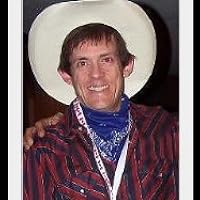
Wayne Grady is the award-winning author of Emancipation Day, a novel of denial and identity. He has also written such works of science and nature as The Bone Museum, Bringing Back the Dodo, The Quiet Limit of the World, and The Great Lakes, which won a National Outdoor Book Award in the U.S. With his wife, novelist Merilyn Simonds, he co-authored Breakfast at the Exit Café: Travels Through America. And with David Suzuki he co-wrote the international bestseller Tree: A Life Story.
He has also translated fourteen works of fiction from the French, by such authors as Antonine Maillet, Yves Beauchemin, and Danny Laferrière. In 1989, he won the Governor General’s Award for his translation of Maillet’s On the Eighth Day. His most recent translation is of Louis Hamelin’s October 1970, published by House of Anansi Press in 2013.
Grady teaches creative writing in the optional-residency MFA program at the University of British Columbia. He and Merilyn Simonds live in the country north of Kingston, Ontario.
A snippet from our Local newspaper The Windsor Star on July 27, 2022, reminded me of this book:
“Decades ago, the city honoured the 1834 abolition of slavery over a few days each August with a massive parade, carnival, and a variety of entertainment at the Jackson Park band shell, which saw talent contests and performances by future Motown artists, including Diana Ross and The Supremes. A young Martin Luther King Jr., Eleanor Roosevelt and American activists Mary Bethune, Benjamin Mays, Fred Shuttlesworth and Adam Clayton Powell all spoke before the large crowds.”
This book did reference this annual celebration in Windsor, which was traditionally held at Jackson Park. ————-
I have wanted to read this book almost since it was released. Try as I might to get either of my two book club groups to read this, it was never picked up on. The time had come for me to read it anyway and I am so glad that I did.
This book was a real joy to read. The author was born in Windsor Ontario Canada which is where much of this story takes place. I too was born in Windsor, lived there until my mid twenties, and have spent my entire life within minutes of the city. My working life was mostly in Windsor and I return a few times each week for just about any reason.
Anyway, it was great fun to know exactly the street corner references, the references to parks, the mayors, the schools, the hospitals, all lent to bring this story to life.
The story starts out with Jack joining the navy and being in St. John’s Newfoundland before heading out to sea, although there are thereafter many chapters retelling his childhood in Windsor. He meets Vivian in Newfoundland and courts her, sorta, from the sea, until his return. A short two years after meeting, and the ending of WWII, they marry and return to Windsor.
The story is told in chapters by alternating between Jack, Vivian, and Jack’s father, William Henry. The story is interesting as Jack, whose parents are black, is convinced he is white. He is very light skinned, and he has always “acted” as if he were white. Jack was born around 1925, and learned early in his life that “acting” white provided him opportunities that he would not otherwise have. This, of course, was a time when segregation was still flourishing. Jack, however, had a nonresident alien card for crossing the USA/Canada border in Windsor either by tunnel, ferry, or bridge to get to Detroit Michigan and that card indicated he was white, thereby confirming Jack’s own belief. Yet it is still sad knowing that if the truth were otherwise revealed, he would have been treated differently. Even sadder that such prejudice continues for some.
The author does a fine job of developing the characters of Jack, Viv, and William Henry, as well as some of the minor characters too. The story is a great reflection of life in Windsor at that time, referring to the main employers, Hiram Walkers Distillery, the salt mines (Windsor Salt), Chrysler, of course, as well as the restaurants and places of entertainment. Being across the river from Detroit, many of the big name bands and entertainers came to Windsor to get their start at places like the Top Hat.
Although this story is (well) before my time, many of these places were still going concerns in my youth, places referenced on both sides of the border.
The title is taken from the annual party in Jackson Park, still a beautiful park with many of the attributes referenced. But I feel that the title also provides a deeper meaning to each of the characters who each in their own way are liberated from social or political restrictions over the course of the story. It is quite a journey for Jack and his family.
Windsor is a very culturally diverse city, but prejudice continues to live within some of its citizens. Even though I was born a generation later than this story, I can totally understand how this story “could have happened “. In fact, I’m certain that it did many times over.
As mentioned, I quite enjoyed this lively account of Jack’s life in Windsor, and would guess that recognizing the setting greatly added to my satisfaction level.
Canada is becoming a grand melange of colours and cultures. In my own family, for instance, my daughters have Chinese origins, two grandchildren have African-Asian and Anglo roots, my wife's mother comes from a middle-eastern family and my daughter-in-law is Ghanaian.
But this comfort with diversity was much less common in our country's past. We have a sad history of blocking Chinese immigration, refusing Jewish refugees, forcing Indians onto reservations and into residential schools, interning Japanese Canadians, and discriminating against blacks.
What did such injustice do to people's lives? This has been a focus of much Canadian writing in recent years -- from Denise Chong (The Concubine's Children) to Joseph Boyden to Lawrence Hill (Any Known Blood.)
"Emancipation Day" is a startling new perspective in the context of this literature of oppression and racial conflict. Not so much because its three central characters are so memorably presented -- Jack, the young sailor from Windsor, seems straightforward in his passion (lust?) for Vivian, the Newfoundland girl who is surprised to find that she also has sexual desires; and much of the tension between Jack and his father William Henry seems predictable generational conflict.
But the heart of this story lies elsewhere -- in the fact that Jack is a mixed race child who passes for white while his parents are seen as "colored," in a social context where that difference is crucial in shaping status and opportunities. Grady traces powerfully the ways this question distorts Jack's life over the years and transforms his personal relations.
For the reader what emerges is a vivid portrait of our racialized past, given form in the blunt world of Windsor -- a place perhaps where what is more concealed (and even more virulent?) elsewhere is less veiled. The vibrancy of black society in that past is also evident and helps explain why we are now in a different and better world.
The force of this sad story tells us the importance for people of the anti-racist transformation that is underway. And the skill with which Wayne Grady has written this novel makes the book convincing and deeply interesting.
I remember my mother-in-law once telling me about how the singer/actress Dinah Shore gave birth to a black baby, and although it nearly broke up her marriage, her white husband ended up accepting the boy was his (although they did secretly give the baby up for adoption) after it was discovered that Shore had a black ancestor somewhere along the line. My mother-in-law wasn't telling me this story because she was horrified by the image of a white woman having a black baby -- she was simply sharing a weird-but-true story about miscegenation and the mischief that genes can play in future generations. And, of course, the story isn't even true -- it's just a rumour, but a tantalising enough rumour that it has persisted, an urban legend that chillingly makes young mothers wonder: "What would I do if my husband didn't believe his baby was really his?" Um, go on Maury for a dna test?
In the 1920's Windsor of Emancipation Day, the modern tools of paternity testing weren't yet available, and so when a black mother gives birth to a very white son, he is rejected by a father who insists he isn't his. As the boy, Jackson, grows up, he learns the advantages of passing for white, and after witnessing (and feeling conflicted by) the 1943 Detroit Race Riot, he joins the Navy, happy to be shipped far away where no one could guess his true identity. After meeting and marrying a rich white girl while stationed in Newfoundland, Jackson is eventually forced to confront and reveal where it is he came from.
Wayne Grady won the Amazon.ca First Novel Award for Emancipation Day, which is an interesting accomplishment for an award-winning author of 14 works of nonfiction and an award-winning translator of a further 15 books. Originally started as another work of nonfiction, but worked over and over again for 18 years in novel form, the writing of Emancipation Day was prompted when Grady discovered that his own great-grandfather was an African American emigrant from the United States. All this talent and all this time spent on its writing should have made for an excellent book, but I suppose that, like Michael Jordan attempting a baseball career, awesome skills of one type don't always translate to related skills; as a novel, this isn't a great book.
I was intrigued to learn that the lily white Wayne Grady had a black ancestor, but I don't know that that completely excuses the persistent racism of this book (in a Only a Ginger Gets to Call Another Ginger, Ginger kind of way). Honestly, there are no likeable black people here: Jackson's father and brother are lazy drunks who would steal shampoo from a house they're renovating; his mother is a flighty ditz who is constantly offering tea but forgetting to make it; the Emancipation Day celebration of the title (a day when black people take over a local Windsor park to celebrate the anniversary of the abolition of slavery in Britain and its colonies) is an annual bacchanalia, with black folks getting drunk and having sex in public, with lewd dancing and knife fights and people passed out in the bushes; Alvina and Dee-Dee aren't developed at all, but the evil "bird woman" with her Windsor special "Dark Secrets" gives an unpleasant glimpse into female society. It's no wonder that Jackson doesn't want to be associated with these people.
Jackson himself is a totally unlikeable character, unable to show affection to his new wife, Vivian, or loyalty to his own family. Vivian is a long suffering fool who is willing to accept a loveless marriage and the poverty that results from her husband's big dreams and low ambition -- and willing to be duped by his mother's face powder and father's absences. Could it have really taken years for Vivian to discover that she married into a black family, and especially when spending time in what is portrayed as a racially explosive city like Windsor?
And there are just too many coincidences -- Jackson being treated by Peter's father on a Navy ship; Jackson happening upon his father and brother during the riot (and of course they were looting a liquor store at the time); Jackson finding Della in the first place he looked. And there were strange scenes I just didn't buy into .
I did like the descriptions of jazz and bebop, was charmed by the scenes in Newfoundland, and found the suspense thrilling as Jackson and Vivian crossed the country on the train; heading slowly towards Jackson's secret past (and that's probably why it was such a letdown to have her think they were just well-tanned or overly powdered). When the little boy at the end is named Wayne, I have to wonder if that's the way that the author remembers his own childhood: and if he was that conflicted about race his whole life, 18 years and 20 rewrites turns out not to have been enough to translate his inner self into fiction.
Emancipation Day is written by a Canadian author; it is a novel inspired by the author's parents and his own life. The settings in the story are mainly Canadian -Newfoundland, Toronto, and Windsor - but there are many references to Windsor's neighbouring US city, Detroit. It is easy to enjoy a book which reflects sights and places one is familiar with; therefore reading Emancipation Day was pure joy. When Hiram Walker was first mentioned in the book, I did not have to contemplate whether Hiram Walker is another character or a company; and Windsor streets such as Wyandotte, Ouellette, McDougall, and Walker spring alive. The same goes for references such as the Don Valley, Danforth, or Euclid Avenue.
Each chapter in the book is written from the perspective of its main character and so the chapters have titles such as William Henry, Jack, or Vivian. SPOILER ALERT: Jack is the son of William Henry and Josie; his birth created much consternation for his parents; his father thundered:
"This here's a white baby"..... "No it's not," Josie said pleading. "It can't be, Willie. It's just real light, is all." "It's not. It's a white baby." "I want you to love this baby, Willie." "I can't, Josie. It ain't mine." "Willie, it is. It surely is."
Jack felt misunderstood growing up and according to his father, Jack acts and behaves as if he is white. His mother, on the other hand, decided to let Jack be Jack and she felt that he may have better opportunities and possibly a better life. After all, it was the 1940s. Jack spent his whole life attempting "tests" of white acceptance and denouncing at every opportunity his "colouredness". He was anxious to get away from his father's W. H. Lewis & Sons, Plasterers business and his Uncle Harlan's barbershop. His ticket was through the Navy Band where he plays the trombone and the drums; Jack hoped that being in the band will prevent him from seeing any action at sea. He was stationed in Newfoundland but he did end up at sea; however a doctor's note about his intense sea-sickness possibly saved him. He met Vivian when he was in Newfoundland. his debonair ways and his resemblance to Frank Sinatra floored young Vivian, only eighteen years old. She was from a respected family and they hoped that Jack will disappear from Vivian's life. Vivian's sister, Iris "referred to him as though he were a temporary unpleasantness, like a blocked drain" and "her father didn't take a liking to Jack, she could tell."
After the war ended, Jack was "demobbed" in Toronto and wished to live there as far away from his family as he could. He sold encyclopedias all the while hoping to get a band started which will earn him enough to support his family. He looked on with envy at the tuxedo-clad bandsmen at the Royal York Hotel where he didn't pay the cover charge but sneaked into the Imperial Ballroom to listen to the band and look at all the 'banker types" clients . He did take Vivian to Windsor at her insistence but never introduced her to his father. Circumstances led him back to Windsor and it was during this time, that Vivian understood more about her husband, his family, his dalliances, and his character. This book was an easy read; it held my interest as it explores race issues, father and son relationships, and self-identity. the last chapter titled "Me" packed a great punch and the last sentence of the book was a definite Wow.
This is a four stars book for me; its only shortcoming was Vivian's intuition, her deductions and revelations about Jack which appeared contrived. I highly recommend this book and am grateful to have received my own copy through Goodreads First Giveaways.
I loved how Mr. Grady flowed the story with the characters, as if it happened , so believable.
I live near a Black historical museum and the whole history of it's race is sad to hear, I was born at Grace hospital in Windsor, so I totally was not putting this book down till it was finished .. 2 days. It kept me wondering , what the characters would do with theirs lives as there history unraveled on the pages. thanks for writing this book , and giving it to me to read, I am thankful to goodreads the author and the publishing company Randomhouse.ca
I forgot how lucky I am to have such culture and richness at my backdoor, Detroit, Windsor , we have a lot to offer! thanks
A quick read about race and identity, as odd as that sounds. Who we think we are and who others think we are is often not one and the same, and Emancipation Day examines this through several points of view. The main character is Jack (Jackson to his family) Lewis, a sailor in the Canadian Navy during WWII. He meets and marries Vivian, a pretty young volunteer at the Knights of Columbus hall where his band plays. Vivian sees Jack as a Frank Sinatra-type crooner, and it isn't until they marry and go to visit his family in Windsor that she begins to understand that Jack has more secrets than King Tut's tomb. Jack's father gets his two cents in, too. William Henry Lewis is angry with Jackson for not being the son he wanted, and angry with himself for what he thinks is his failure as a parent. Jack's friends Peter and his mother Della are also a source of conflict and confusion. No one is telling the whole truth in this story, either to each other or to themselves. Grady makes it believable and touching, with no easy fixes. Free up some time to check this one out.
A struggle for me to finish and am wondering if, as the author noted "early versions were long & unwieldly" I would have finished the book as I was hoping for more of a history on Emancipation Day and not so much a story I could not always get into.
I wondered if both Jack and Vivian had some sort of "problems" since Jack wanted to hide the fact he was black despite he had black friends and music fans & Vivian for seemingly being insecure throughout her dating and marriage to Jack.
Still trying to figure out why Jack wanted to keep his racial bloodlines such as a secret as there was no indication there was any kind of political or legal issues. Maybe just the time frame the book centred on? It was nice to see how the author wrapped up the lives of the other family members & how he brought himself into the book at the very end.
Not for me and wanted to read it as I thought it might be useful as a possible tie-in before I read "Up From Freedom"
Although I felt Vivian's character's reactions to situations were somewhat unlikely I did very much enjoy the book. Good insights to race relations and struggles of the period. Not sure I understand the strength of conviction of Della's view towards the end of the book that society's reaction to inter-marriage etc was seen as all ok now (as it wasn't then and still is not really) and whether that was the authors view or whether he was just demonstrating the diversity of opinion then and now. It developed a strong picture of how far someone might go to separate themselves from a harder path to follow with absolute conviction as well as the difficult choices parents sometimes need to make and how we confront mistakes. The ending was like a sucker punch to the stomach.
This is a very good book, one I should have read when it came out. I'd put it on the list for one of my library book clubs, but only got around to reading it this week. Kept me awake, both because the story is so compelling and well-written, and because it deals with some of the most important themes of our time. Belonging. Race. Creation. Love.
I won't say any more about what the story covers, because that could spoil readers' enjoyment. But I heartily recommend it.
I found this book to be a very unique piece of work, about the inability of one to find himself and his place within society and the lack of acceptance of his heritage. I found that I struggled through the first few chapters of this novel, but as the story started to develop, I was eager to read on and found myself absorbed in the lives and relationships of those in the novel.
This was a book that was recommended to me, and when I read that it was set around WWII and steeped in the jazz and be bop movement that was popular at that time, I just couldn't resist it. When I found out that it was also a book that made the 2013 Giller prize long list and was nominated a Globe and Mail Best Book, I knew I had to read it. The book is about much more than WWII and the big band and jazz era. It is a book about families, and father and son relationships. It's a book about Canada and how we differ from our neighbours to the south. But the more we're different from them, the more we are the same it appears. I did not realize that Canada had it's own civil rights movement even one hundred odd years after the American war between the States and Emancipation Day. Even today there are many people living in Canada who deal with race and cultural issues on a daily basis. We have come a long way, but we still have a long way to go to achieve true equality in this country. This book shows us the anguish of children and people trying to fit in, through the eyes of one little boy. This little boy is 18 when the story opens, but in flashbacks we see this confused little boy as he grew up in Windsor, Ontario. We see his anguish as he determines that he has to escape his family and home life in order to find a place where he might finally feel like he belonged. We see the family that he leaves behind as they struggle to come to terms with the needs of this their youngest child. A young girl from Newfoundland is drawn into this family drama because she meets and falls in love with Jack. When she goes with Jack to visit his family home in Windsor, Vivian comes face to face with a Jack she never knew existed. Her life is forever changed, and she must find the strength to deal with the new reality that has come to her life. This is a book that definitely made me stop and think. I enjoyed it very much.
I met Wayne at a writer's conference and the first thing he asked me when he met me was: did you read my book? to which i responded: did you read mine? Since that day, i've been thinking about Wayne, and promising myself that I would read his book (at least one of them!) so that if/when we meet again, I can tell him, 'yes, why, yes, I did read your book.'. I started with Emancipation Day because it takes place in the Windsor, my home city. I quite like Grady's writing...it pulled me along and forced me to keep a pay-attention-pace as I was reading. I didn't love any of the characters, but there was a pull in each of them, in their struggle and in their growth and in their fight that kept me caring and wanting to know more. The writing is smooth and eloquent: "After a while he returned his gaze to the window, seemingly content that now he had gained her undivided attention he could pretend she wasn't there."Grady is excellent at the human condition...at its patience. I think that's what I liked most about his writing. It's like watching a white sheet flapping in the wind on breezy summer afternoon. You know you should be doing other things, but you're mesmerized by the effortlessness of the wind on the sheet and how the sheet just takes it. Thanks Wayne.
At times I thought this book was just okay. Many times I was confused by where the author was going with the story line....going back and forth between present and past. However, upon finishing the book I must say it was brilliant. Have you ever wondered what it would be like to live in another races skin? Jackson, the main character in this novel, pretty much does just that. The final chapter, and even more so, the final line (dialogue) in this novel is epic. I thought at first I would rate this a five star book.....but couldn't put it up there with Shadows In The Wind and Cutting For Stone....but it was definitely a contender.
Jack Lewis, a Navy musician stationed in St. John’s, Nfld, during WWII, meets Vivian and marries her despite her family’s misgivings. After the war, they set off for Windsor, Ont., to meet Jack’s family before they decide where they will live. It is in Windsor that Vivian starts discovering that there is much Jack has not told her and that much of what he has is not the truth.
Jack’s biggest secret, revealed to the reader in the first quarter of the book, is that he is passing as white. His entire life has been devoted to passing tests to prove that he is white: “girlfriends, lunch-counter waitresses, the high-school baseball team, and so far he’d passed them all.” He joins a band called the All-Whites: “No one blinked when Jack joined the band, which meant no one knew anything about him or his family.” To remain anonymous is his goal: “Nobody knew who he was, and nobody cared, which was Jack’s idea of paradise.” When Vivian suggests that since Jack’s family is in Windsor, he belongs there, he replies, “’No, it ain’t. . . . You get born, you grow up and you leave. . . . Why can’t I belong to where I’m going?’”
The relationship between Jack and Vivian is problematic. First of all, Jack is not a likeable person. He may resemble Frank Sinatra, but he has little else going for him. He’s a glib actor and not just when he’s on stage. Vivian‘s sister calls him a “smooth” performer: “’He’s meant to be looked at, not understood. . . . He’s all surface.’” She also describes him as “by-catch” and, even after the wedding, thinks of him as an “unpleasantness, like a blocked drain.” Even Vivian is bothered by his reserve and distance: “He didn’t look at her when he talked, he didn’t put his arm around her when they walked down the street. We’re not even married yet, she thought, and already we’re acting like an old couple. What will it be like when we’re actually married.” Furthermore, Jack never tells Vivian that he loves her. She “worried how to tell him she loved him . . . [and] practised telling him,” but there is no mention made of his ever declaring his love for her. Nonetheless, she marries him? Vivian’s sister says, “’You only think you’re in love with him because he’s your ticket off the island’” and Vivian, herself, when listing reasons for getting married mentions love “almost as an afterthought.” Certainly there is not a great deal of passion in the relationship – sex, yes, but passion, no. Perhaps Vivian hits on the truth when she comments to her husband, “’How can you love me if you don’t love your own family?’”
Vivian’s character development is weak. There just seems no vitality to her personality; she could best be described as tepid. Her most outstanding trait is her naivety, this perhaps being the result of her sheltered upbringing. She speaks about “about her desire to see something of the world,” but has little concrete idea of what she would like to see. Throughout the novel, she remains vague and amorphous. The last sentence of the novel is powerful, but it does suggest that she remains a non-entity - even in her own family she has no impact.
There are some plotting issues. For example, the timing of Vivian’s epiphany is just too perfect. Then, is it likely that Jack’s secret could be kept for so long in a community the size of Windsor? And, in the episode where Jack and Peter go searching for Della, how does Peter manage to return home so quickly and without a vehicle? By the time Jack finds Della, Peter is already home, despite their being “miles from home, too far to walk”? Peter’s absence is necessary for what transpires next, but it should be explained logically.
Despite its shortcomings, the novel does have good qualities. It seriously examines the theme of self-identity and explores race issues in the mid-twentieth century. The reader may not approve of Jack’s behaviour and would prefer if he were more accepting of his heritage, but it is understandable given the treatment of blacks in that time period. The use of point of view is very effective; the perspective of several characters is given, including that of Jack, his father, and Vivian. The title of the book is genius; it refers to the abolition of slavery in the British Empire, but it has an entirely different meaning for Jack. And given the date of publication and the author’s own history, Emancipation Day has meanings on other levels as well. Despite its not being flawless, the book certainly gives readers some things to consider.
Note: I received a copy of this book from the publisher via NetGalley.
I received an advanced reader copy of this book through the Goodreads first giveaways and I am so happy that I won a copy of this novel by Wayne Grady!
The book just drew me in right away and kept me wanting more as I read on. there are so many highs and lows when it comes to the emotional ties you make with the characters in this story. Wayne Grady depicts the struggles that were faced in the early post second world war years and how a young couple who barely knew each other were able to make it through the early years of marriage. Besides marriage the couple also has to deal with the issue of race which is a central theme throughout the novel. this theme is explored though the race riots in Detroit in the early 1940s, ans end up in the issue of self identity.
As a Canadian it was exciting to read about places I have grown up in or have visited and I was not let down by any aspect of the book maybe I was let down by the length but its because I did not want to story to end. the novel was divided into parts with chapters dedicated to a single character which allowed the reader to get many aspects of the characters life and feeling while still being able to relate the story back to a central plot line.
I would read this book again and would highly recommend it to my friends and family! Grady uses his experience with non-fiction to create a stunning piece of historical fiction that shows the struggles of Canadians during a time when the country was changing due to the end of a the Second World War and how it influenced all aspects of ones life whether it be through Race, Love or Employment.
This story started out as a 5 star read, until I got about half way through. It became a bit unbelievable.
Young Jack is a navy musician and is stationed in Newfoundland during WWII. He meets Vivian and they marry against her family's wishes. There is something about Jack that they don't like, but can't really pin point the reason.
The couple travels to Windsor where Jack's family lives. Vivian is very anxious to meet his family and when she is introduced to his mother and siblings, she becomes a bit suspicious about Jack's identity - but not entirely. They keep her from meeting Jack's father until he is hospitalized and in a comma. This is the moment that Vivian is sure that Jack is "colored" and comes from a colored family as she looks at his father in his hospital bed.
Apparently Jack's skin is so light that he passes as a white person and has spent his life to fit in with white people.
It just seems kind of strange to me that a black person born of 2 black people can look entirely like a white person. And Vivian seemed so very naive. The story didn't quite add up at times. It certainly spoke to the struggle for identity and explored the cost of prejudice on generation after generation.
I read Emancipation Day by Wayne Grady over just a couple days, following a pretty lengthy reading slump. I don't read a lot of historical fiction, but Grady's book had rave reviews, including a Giller nomination, so I decided to try it out. Despite taking place during the 1940s and 50s, Emancipation Days is extremely current with the tackling of race issues. In it, Jack Lewis meets Vivian Clift while stationed in Newfoundland, and the two fall in love and marry, despite her family's disapproval. After the war, they travel to Windsor, Ontario together to meet Jack's family, and that's when Vivian begins to realize that not everything is how Jack presented it to be, including Jack himself.
Despite being a country that often prides itself on diversity, Grady's novel shows some of Canada's dark history. Race is a complicated issue, and this is extremely evident in Emancipation Day as it alternates between Jack, Vivian, and occasionally Jack's father's perspective. It's an emotional and nuanced story that I was barely able to put down over the 2.5 days I read it. As much as I wanted the characters to act differently, with Grady's writing their actions and emotions felt authentic, which is exactly what makes Emancipation Day such an excellent and heartbreaking book.
I know that Canada as we know it today didn't become fully formed until long after our departure from England. And I know that WWII impacted the world in myriad ways and places, but at the same time I think of WWII almost exclusively as Europe. And when I think of racial issues in Canada, I think about residential schools, internment camps and head taxes. This story, told through alternating POV, reminds you that Canada as a country did not include Newfoundland until almost 1950, and that we were just as much a part of the war, and that racial issues in Canadian history definitely includes racism against black people. Weaved among these story elements is a sometimes uncomfortable picture of social segregation and internalized racism. The last chapter of the book carries a hopeful tone to it, and we imagine that perhaps the protagonist, Jack(son), has moved past his personal issues of race, only to have the notion destroyed in the closing line of the story.
Often I find that books start off really strong, but then they drag or the end is disappointing. Emancipation Day was the opposite for me. I found the beginning a bit slow and the first third quite ordinary. But the book got better and better -- especially when Vivian and Jack go to Windsor and we get far more insight into the complex race relations at the heart of the story. And without giving anything away, the last chapter -- especially the last few paragraphs -- is brilliant, sad and especially poignant because it becomes apparent that this story may be close to the author's own family history. Glad I read it and would definitely recommend it.
I liked this story, and the way the author moved from character to character, and his descriptive language was really good. And, perhaps my favorite part of the book, was the ending.....and the fact that, in this case, the author did not tie everything up in a pretty bow but left me pondering. Well done Mr Grady.
An intelligent well written powerful book. Sure it is about race and World War 2 and jazz but it ends up being about very real people brought to life by this first time novelist ( albeit, an accomplished experienced writer). Strongly recommended.
This book shows very well the Canadian experience vis-a-vis race, segregation and discrimination at the time. Wayne Grady is an excellent writer, and he captures not only the times but also the feelings and perspectives of the characters.
Jack is a white-appearing jazz musician from a Black family who marries a white Newfoundlander in an era where Newfoundland and Canada were still two different things. He keeps his family a secret from his wife as long as possible, partly out of legitimate fear of her reaction and partly from the inability to reconcile his own self-loathing and his own internalization of the virulent racism he's seen around him throughout his life. It spills over into his decision making, his relationships and his ability to connect. The most stark part is at the very end, when...
I just finished reading this book, Emancipation Day by Wayne Grady. It only came on my Reading radar due to One Book One Community in Waterloo Region. What a thought provoking book!!! This book comes on the heels of the explosion regarding ones heritage and ethnicity. We have had several articles recently regarding this issue in social media, newspapers and television, etc. From Joseph Boyden (Boyden writes superbly on Native American heritage -- One Day Road, Through Black Spruce and The Orenda) who is now being questioned regarding his Metis heritage. To the commercials from ancestry.com informing us how to find out where we originated from. There was a wonderful article in the Waterloo Region Record this week from Columnist Luisa D'Amato. Does this all in reality really matter? We all have a past and we all come from somewhere. As a world society we need to begin seeing people as they are, embrace their heritage and culture and recognize that we all have different realities. After reading this book I again question myself regarding what we see. In my past I have observed friends of my grandparents whereby the male came from a black/white marriage. As he didn't want "black" in his offspring it was agreed when his wife was pregnant that if the child was black they would put him/her up for adoption. Luckily they had a "white" child. This "white" child grew up and repeated her parents ideology to have a "white" child. Again luckily they did.
We have come so far from the good old days ... to where there are many mixing and blendings of culture and "colours" in society that for many of us we take people as they are and not what we feel they should be.
Emancipation Day is about a white man born into a black family in Windsor. Grady comes out with wonderful illustrations giving credence for how and why Jackson was conflicted. For example, on page 175 he states that there are varying degrees of the Windsor Tan. There is no truer statement - we are all various colours. So is Jackson (the protagonist in this story) a white man or a black man in a white body. How do we as individuals define ourselves? Do we even question our own colour identity? Would I feel differently if I was a black woman (or man) for example?
This book touched my soul on so many levels. It reminded me of a discussion I had with my father when I was 13 years old and stated that a black boy if he was painted white would then be a white boy. This black boy had the same discussion with his mother saying that if he took me and painted me black I would be a black girl. Years later, we have been unable to convince our parents from their thinking. In reality I still feel the same way. I like/dislike people on their actions and personality not the heritage/colour in which they originate. This then makes me ask - do I feel this way because I'm a white woman? In my heart of heart no. I judge people on their own individuality. Just treat me as an equal and, likewise, I will do the same.
As Jackson continued to come to grips with his own heritage and identity, Grady stated "Coloured People in Windsor behaved like they belonged to the place" (page 175). Don't we all as individuals discover our identity through our family of origin and the place which we experienced our formative years. Even those individuals who choose to "disown their family of origin are still connected. We may be born a "tabula rasa", but from the first day we connect to those around us and develop our own unique identities. Jackson felt of himself as white, he identified as white and he operated in "white" relationships. He wanted no part of his black heritage but he couldn't escape it. We see what our eyes see, would members of society look upon this white man as really a black man or vice versa.
Although fiction, this book was steeped in reality, as one example, there was the August 1st Emancipation Day ending the British Empire Slavery Act celebrated each year in Windsor. It has only been since 1991 that this designated day was piggy backed onto another day. Grady was also bang on with his geography. I knew every place which Grady illustrates of East Toronto. I was further able to relate to Jackson wishing to be part of a band as my grandfather was a Honky Tonk piano player. Oh the memories this evoked.
As Emancipation Day shows so vividly - no matter what an individual does we relate to our roots.
I grew up in a small town. Think 800 people. Think rural Ontario. Think white. For a couple of elections, we were the only riding to vote for a Reform Party (the precursor to the Conservative party) candidate in all of Ontario. So imagine the Stop Racism! campaign in my elementary school: when all of my class, including the two black kids in the school (siblings), staged an assembly to declare to the rest of the school that we were stopping! racism! And I really did feel like we were – united – putting an end to the scourge. Whatever it was. Wherever it might be. Around the same time (or perhaps only in my memory) I read Underground to Canada, a YA novel about the underground railroad and Canada’s role in ‘saving’ and ‘rescuing’ American slaves (imagine my dismay in reading The Book of Negroes to be reminded again that the sainted image of Canada as a safehaven might be a tiny bit (just a smidge) exaggerated). All this to say I grew up with an idea that not only was racism somewhere else (America), but race was somewhere else (I certainly didn’t have one).
As I’ve grown this taken-for-grantedness about my race – and race in general – has, of course, changed with the introduction of different experiences, people (and critical theory). And has changed (most perhaps) in the reading of fiction. For instance, in a fourth year seminar (with the great M O’C) I read Nella Larsen’s Passing which shares plot threads and thematic questions with Wayne Grady’s Emancipation Day: what is the difference between race enacted and race inherited? race felt and race imposed? I hadn’t considered the set of questions in this way before reading Larsen, it hadn’t occurred to me that race might be something you could put on yourself, or have put on you by others. Or that being recognized as white – and being seamlessly comfortable being recognized this way – afforded all sorts of privileges, recognized and invisible.
All that said, I’m not sure I’d recommend Grady’s Emancipation Day. While there’s a central conflict – what will happen when Jack(son)’s new white wife discovers that his family is black? – and some interesting detours in discussions of race and music, I wasn’t, on the whole, all that invested in Jack and his journey (perhaps because Jack is an unlikeable character, or maybe because I’m an unsympathetic reader). Though maybe Emancipation Day is worth a read as historical fiction – set at the end of WWII in Newfoundland (not yet part of Canada), Windsor and Detroit – its imagining of post-war era gender politics and economies is rich, so too, its explicit engagement with the ways Canadian (Windsor) race relations differ and don’t from American (Detroit). Or maybe not. (Maybe instead you should read one of Lawrence Hill’s other amazing books, Any Known Blood, which asks – and tries to answer – many of these same questions in a (for me) more engaging or nuanced ways. Just saying.)
I can’t say that I connected with any of the characters in Emancipation Day and that’s why I’ve given it 3 stars. I found Jack charming at first, but he quickly becomes sullen, withdrawn, isolated, and all around unlikable. His story is certainly hard to stomach sometimes, but it’s difficult to feeling any sympathy for him. I do feel some compassion to his wife Vivian, because she ends up marrying a man who she really doesn’t know, but she too falls flat. It was hard to really connect with her. It felt as though there was always some sort of barrier up between her and the reader. Vivian is a suffer in silence type of person who seemingly accepts the lot she is given in life. I wanted her to be stronger and braver, but she remains quiet and complacent.
We get to know Jack’s family a little more than Vivian’s as there are a few chapters from the perspective of Jack’s father. But William Henry’s chapters are really just discussions about his anger at his son, but his lack of willingness to do anything to reprimand the boy who rejects him and his family so fully. William Henry is a drunk, a slacker, and a theif. He does nothing to better his image in both his son and the reader’s eyes. He slots himself right into the negative image that surrounds anyone of colour in the story. William Henry, though, is the only character who I felt had some redeeming qualities. I could forgive many of his transgressions because he owns up to his short comings in the end. He recognizes that he rejected Jack in much the same way that Jack rejects him. He sees that he fail to punish his son for his blatant dismissal of his family. He makes a vow to right his wrongs. In my opinion, he’s the only character in which we see any kind of growth.
This book fell a bit short of my initial expectations, but it was still a very interesting read. Emancipation Day reveals a time and a place in Canada that is often forgotten about. Set in Windsor, it reveals a violence and hatred that occurred right here at home. As Jack puts it during the riots in Detroit, “we are at war.” They came from World War II into a war of the races. Grady addresses this conflict honestly and without reserve. He is not afraid to confront the struggle of self-identity–of not knowing who one is when one doesn’t fulling below to one race or another. Perhaps that’s why we can’t really connect with Jack, because he himself doesn’t fully know and understand who he is. He is inhibited by anger and lets no one, not even the reader, in. Emancipation Day is definitely worth the read, but I hope you’re reading experience is a little better than mine.