A lonely, bookish teen struggles to find his identity through Charles Baudelaire’s poetry until two girls, a bully and the class beauty, help him realize true love and real friendship. In the eleventh volume of The Flowers of Evil, Takao Kasuga has blossomed. After years of struggling with his inner demons and a lifetime of boredom, the young man has found peace. Now a high schooler living in the growing city of New Urawa, he has come a long way from his days of riding his bike and hitting used book stores in his sleepy mountain hometown in the rural regions of Gunma prefecture. But now he returns to Gunma, intent on finding the person who set him on this journey of self-discovery, for some closure.
Shuzo Oshimi (押見修造, Oshimi Shūzō) is a Japanese manga creator. Drawn in a realistic art style, his comics tend to be psychological dramas exploring the difficulties in human relationships and often touching on disturbing situations and perversions. Oshimi debuted in 2001 with the manga series Avant-Garde Yumeko, appeared in Kodansha's 'Monthly Shōnen Magazine.' Most of his works since then have been published by Kodansha and Futabasha. Among his first successes the single volume manga Sweet Poolside (2004), later adapted into a live-action film, and the series Drifting Net Café (2008–2011), also adapted for TV. Oshimi reached international acclaims with The Flowers of Evil (2009–2014) and Inside Mari (2012–2016), both adapted into successful anime. Other notable works are Blood on the Tracks (2017–2023) and Welcome Back, Alice (2020-2023) .
[Note: This is a rare spoiler-heavy review. I talk explicitly about how Oshimi ends the series and offer my interpretation. If you want a review that leaves the mysteries and plotpoints alone, check out my review of the series’ first five volumes.]
In one of Shuzo Oshimi’s final chapters in Flowers of Evil, former Baudelaire fanatic Kasuga is assigned to read once more from the poet’s Les Fleur du mal. The poem is “The Head of Hair” (also known in English as “Her Hair”), a devotion to luxuriating voyeuristically in a particular woman’s thick, dark hair. By calling to mind “sweltering Africa” and “languorous Asia,” the verses evoke a sense of finding the exotic in the mundane, of being rapturously transported by conveyance of the immediate and physical presence of another.
It’s been a twisted and twisting road for Oshimi’s series as well as for his characters. When I reviewed the first five volumes a few years ago (a review I recommend as an essential complement to this one), the series seemed to be headed toward an immediate crescendo—and in a way, it was. The tension and perversion builds throughout volume 6 and climaxes in the first chapter of volume 7. It’s cataclysmic to the lives of the series’ characters, and its effects mark everyone for the remainder of the story.
With the second chapter of volume 7, however, everything changes. The narrative’s tone is markedly altered. None of the overt tensions or perversions remain. Kasuga’s world has gone colourless and mundane. He’s a subdued wallflower in his new highschool, hesitantly going along with wherever his social circle’s current pulls him. By volume 6 he’s destroyed his copy of Baudelaire, signifying either a culmination or a new direction (we’re pressed to wait and see to discern which is the case); but by volume 7, Kasuga has given up entirely on reading. He’s nearly a blank slate. He seems rudderless, and less patient readers will suspect the same of the series.
As the third major arc of the story set in, readers discussing the series were concerned that Oshimi had lost steam and direction. It’s not uncommon that a story’s popularity will extend its publication beyond the point that its narrative can reasonably sustain.[1] But while Oshimi moves Flowers of Evil in drastically different directions, the new vector actually presents a kind of salvation for a narrative that had gone so far off the rails that it likely couldn’t have recovered without some compelling rearrangement of the furniture. So it is that with his new direction, Oshimi is given the rug with which to really pull the room together.
___
My wife rather loathed Flowers of Evil, at least at first. She read the first five volumes in order to help me get a handle on the book for my previous review. She was repulsed. The repellent nature of the kids’ depravities gave a feeling of nauseated horror. I talked somewhat about how unsettling the books could be in my review. It wasn’t the easiest sell to get her to read the rest of the series, but I wanted someone to bounce ideas off. In the end, she felt the books redeemed themselves and ended up glad she had finished entire series. I felt the same. This was an exciting series to encounter. There’s a lot here, much food for much thought.
___
One of the essential elements of discussion throughout Flowers of Evil, from beginning to end, is the nature and necessity of perversion. Characters’ interaction with the perverse, whether to embrace it or to demur, is at the heart of their futures—whether they with be able to transverse the mountains walling their pubescent selves off from the broad wide and exotic world that seems to only exist in their dreams and visions. Without the drive to perversion, these kids will be trapped in their stultifying provincial lives. But taking on the mantle of pervert creates a window into a whole new world of opportunities. This is a lodestone given from the series’ beginning, but the nature of what exactly is perversion is a question that Oshimi elides until his finale.
In the first two arcs (culminating in the first chapter of volume 7), Kasuga and Nakamura’s quest for the perverse manifests as mere dilettantism. They steal intimate articles of clothing, they display those articles, they wreck a school room, they run away, they cause a touch of social mayhem, they talk back to authority figures, and they attempt self-immolation. Essentially, they act out in the ineffectual manner that the voiceless often do (I mean, minus the panty-thefts),[2] and the wider culture has no mechanism by which to hear (let alone comprehend) their anguish. Throughout these arcs, Kasuga struggles to understand perversion. He recognizes its necessity, but cannot get his hands around what all it entails. He sees perversion as the means to saving and protecting Nakamura (in his terms, allowing her to get to the other side), but his inability to ascertain what perversion actually means in their context consigns Nakamura to destruction (fortunately abortive).
With the rise of the third act, Kasuga isn’t any closer to discovering the nature of perversion, but the need to understand has moved from immediate to remote. He has no contact with Nakamura and is alone in a new context at first very different from his prior secluded rural community. He’s largely content only to exist until he’s occasionally reminded of Nakamura. After one such reminder shocks him into remembering his earlier raison d’etre, Kasuga plaintively broaches the subject with some thuggish types:
Here I am, still alive. Breathing my pathetic breaths when there’s no reason. How ought I to go on living? How do I live as shamelessly as you guys do?
It’s unlikely that Kasuga actually suspects these toughs of holding any of the keys to his reawakening dilemma, but he’s still got a taste for self-destruction and the moment does catalyze his renewed need to understand perversion. To underscore the rebirth of his quest and emphasize the new direction it will chart, he moments later encounters a kind of surrogate for Nakamura in the form of Tokiwa—and in a fit of contrivance, Oshimi has her looking at Baudelaire’s Fleur du mal. Tokiwa is several times referenced as bearing a resemblance to Nakamura, though for the most part the comparison seems only glancingly justified by a miniscule physical likeness. Regardless, Kasuga’s growing friendship with Tokiwa gives him a constant reminder of the desire to understand his suspicion that perversion is necessary to a true life. This continued interest in the flowers of evil (the series emblem for the Perverse) gives the series a connection with the prior two acts—even while the governing narrative is remarkably more subdued.
Kasuga is growing up and Oshimi’s Flowers of Evil is obvious bildungsroman, being dedicated “to all the boys and girls suffering the torment of puberty, and to all the boys and girls who have ever suffered the torments of puberty.” In my previous review of the series, I remarked at length on the kind of wild expression against the ragged inequities of the world as the young teen encounters it. In this third arc, Kasuga (no longer in junior high) has largely put aside that overt kind of rebellion against his society and begins exploring the garden of earthly delights available to the regular citizen in contemporary Japanese society—all in his own broken and awkward manner, of course. In eventually coming to pursue a relationship with Tokiwa, he struggles to maintain the sense of a peaceful life while simultaneously still investigating his unanswered questions. Even his relationship with Tokiwa is in some degree an attempt to discover the end to which he is destined. Kasuga encourages Tokiwa to write and finish her novel because he recognizes it as being his own story and needs some sense of where it will all end for himself. He needs to know that there’s some hope that his quest will be completed.
When Saeki reappears, Kasuga’s precarious plans begin to sputter. He had tried to play the straight and had looked for satisfaction in subsuming his perverse side, but Saeki (made bitter by their junior high disasters) unravels that with a simple, surgical question: Will you make her unhappy too? (Said with a smile that says she knows Kasuga in some ways better than he does himself.) This instigates a confrontation with the spectre of Baudelaire’s flower in which Kasuga’s fears are addressed and he comes to recognize that before he can settle his account and complete his growth, he needs to understand why Nakamura denied him participation in what was to be their final act of perversion. In a kind of vision-moment he crushes Baudelaire’s flower, a signification that his quest for perversion will remain on hold until he understands Nakamura.
Kasuga underscores his new mindset by pursuing a safe, comfortable, non-perverse relationship, but he’s torn by a conflict. He hopes to find his answers through Tokiwa, but simultaneously he knows he needs resolution with Nakamura. He spends some salad days, playing the pleasant young man next to Tokiwa’s industrious, eager-to-please burgeoning young novelist, but we find the crushed flower has left a remnant stain in his palm and soon its tendriling petals begin to assert themselves. Kasuga’s realization that he cannot fully escape his path without first dealing with it prompts him to return to his old town, where he encounters both death (of a relative) and a means to resolving his quest (the location of the long-absent Nakamura).
This revelation prompts a total confession to Tokiwa (who could previously only guess at Kasuga’s past) and through some tumult prompts the couple to confront Nakamura. In a sense, Oshimi lets Kasuga have his cake and eat it too. Tokiwa, initially pissed and bereft, becomes the active instigator in Kasuga’s resolution with Nakamura. Almost from beginning to end, their reunion is Tokiwa’s show, emphasizing just how essential she will be to Kasuga’s solution going forward. In a final, ecstatic culmination to Kasuga’s confrontation with Nakamura,[3] Nakamura reiterates—this time verbally—her reason for pushing Kasuga off the stage at the end of the second story arc. “Don’t ever come back. You normal-man.” Nakamura releases Kasuga from his quest to solve her by suggesting that he was never going to be able to have the brand of perversity she’d require. It’s not the end of his quest, but it’s a step. It gives him time to consider and removes the immediacy of what he perceived as a threat to Nakamura. Even though she’s clearly not All Well, she’s not in any present danger.
So we in the penultimate chapter catch up with Kasuga in college. He’s reading Baudelaire again, but as an assignment. He’s not suffering from any of the obsessiveness of youth. His relationship with Tokiwa remains sturdy. She continues writing and studying and he, still a bit rudderless, ponders the spectral blank canvas of a composition book. In a post-coital reverie, Kasuga dreams mundane, pleasant, happy, normal futures for all the principal characters who’ve expressed their deep brokeness throughout the series. Kasuga and Tokiwa are together with children. Saeki is happily married. Kinoshita, who was bereft at being left behind and unable to escape the mountains, is visited by former best friend Saeki. And Nakamura is well-adjusted and is happily reacquainted with the father who saved her from self-immolation back in junior high.
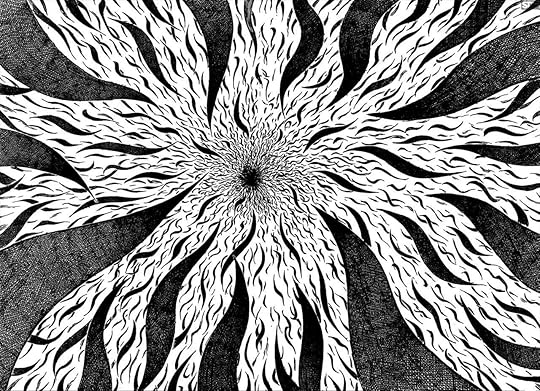
The curiosity that marks this dream as something Of Import is that it is presaged by Kasuga, standing naked and stripped bare before the reborn Flower of Evil, with one of its tendril-petals brushing his chest right where Nakamura tore at him years earlier. This marks, I believe, the following scenes as the ultimate perversion. If one considers how junior high Kasuga and Nakamura would react to Kasuga’s dream, we recognize that Kasuga has reached his ultimate understanding of perversion. If the “acting out” of the junior high years is a dilettante’s version of perversion, then the adult’s version is the acquiescence of social normalization—though not with doe-eyed acceptance but as a visceral considered response to the bald inequity of the world. Kasuga dreams the life of the true pervert and wakes to make that a reality so far as his power will allow.
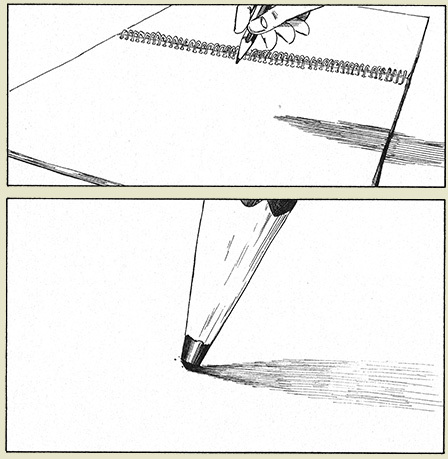
The first act of the rest of his life after receiving this moment of enlightenment is to open up his composition book and write. And what he writes is a single tendril-petal. This moment is anthemic for him. This is what defines him moving forward. He, like Baudelaire, will find the exotic in the mundane. He will be rapturously transported by his proximity to living the normal, pleasant life with Tokiwa. And perhaps most perverse, he will make this happen for Nakamura as well—if not in reality then at least in the province of fiction.
The final chapter of Oshimi’s story requires a bit of effort to interpret, but works best when understood as the first chapter of Kasuga’s new novel, the continuation of what he writes after drawing that evil petal at the close of the dream chapter. In his dream, Kasuga feverishly writes the futures of all his friends, page after page, a tremendous sprawling manuscript. When he wakes, Kasuga takes up this task for real. And in Flowers of Evil's final chapter, we see Kasuga write Nakamura’s history, placing himself in the story as saviour. Everyone involved is perverse save for Nakamura and eventually, we see, Kasuga. Nakamura is threatened to be swallowed by the perversion but Kasuaga offers her salvation. Nakamura doesn’t know it at the time, but this is the very salvation Kasuga dreams for her in the prior chapter.
His perversion is complete. Perversion and normalcy blend and mix and become indistinguishable but for the motive on which they are founded.
__
The last couple years of following Oshimi’s wild trail have been envigourating. Flowers of Evil takes a couple fascinating turns and keeps readers on their toes wondering what will happen next. And while early on I was uncertain of just how much I would enjoy the book, in the end it was just a really cool exploration of growing up. Oshimi’s page design is always solid and his art generally avoids the hiccoughs of the earlier chapters (save for the continuing recurrance of characters with the odd oversized antihelix). If it weren’t for the unwieldy length at eleven volumes, I’d suggest that Flowers of Evil would make the perfect book club book, as it’s ripe for discussion. _______
Footnotes 1) An immediate example is Death Note, a series positively swollen with tension through its first five volumes. The creators had originally intended to wrap with that climax, but the wild popularity of the series caused publishers to push them to extend the story for twice the length intended. And while the second half undulates beneath the seas of Goodness and Acceptability, those are so far and distinct from the pure greatness of what came before that most readers feel cheated by the introduction of the new characters, Near and Mello.
2) This is not meant as a judgment against the voiceless but more as a comment on the inherently mute nature of voicelessness.
3) After a four-page spread that may be my favourite bit of the entire series.
This is kind of a bizarre admission, but I read ten of the eleven volumes of this series in 2015 and didn’t read this eleventh volume because the library didn’t have it. . . and then I forgot about it til now, as I am looking over my list of manga series for similar failures to complete. Anyway, it led me to reread all of the series, as I had only reviewed the first volume, and I thought it was great, overall.
The story focuses on bookish middle-schooler Kasuga Takao, a boy who particularly loves Baudelaire’s Les Fleurs du Mal or, The Flowers of Evil. He also has a crush on Saeki and one day on a fateful impulse, he sees her gym shorts peeking out of her gym bag and steals them. This impulsive move is weird, but oddly still human, and would have been no big deal except that another girl, Nakamura Sawa, sees him take the shorts and threatens to humiliate him by telling Saeki unless he does her bidding.
Nakamura’s blackmail turns sinister over several volumes as she sees in him a kindred (dark, and she calls it “perverted”) spirit and thus uses this assumption to take control of his life. The first half of this series is increasingly manic, out of control, kind of a sexual horror tale with. Kasuga is not only a victim, as things unravel.
At some point Kasuga breaks free and leaves to begin a new life, falling in love with someone else. His escape and redemption comprise the second half of the series, at a more leisurely and calm pace, until he finally sees Nakamura again, in this volume. Kasuga’s new girlfriend sees the magnetism between Kasuga and Nakamura and at one point almost withdraws from her relationship with him, but we know very well it would be destructive For Kasuga and Nakamura to connect to each other again.
In the end Kasuga reflects on Baudelaire’s poetry and what it reveals about greed, lust, cowardice. A powerful and inventive coming of age series! Very strange, somewhat disturbing in places, but ultimately powerful, with a great finish.
I rated each of these separate volumes with four stars initially, but I think that my view now is that it might be better as a whole series, like five stars, than I initially thought.
Where does Aku no Hana stand at the moment? It would have been something I would have enjoyed reading endlessly if not for the last 25 chapters. The conclusion was okay, I suppose, but in all honesty, Nakamura and Kasuba had me hooked from the first page. I wanted to read more of their work. By all means, give Aku no Hana a try if you want to. Aku no Hana was an incredible experience from start to finish, even though it is by no means perfect. That's all for now, though.
Habiendo terminado, lo único en lo que puedo pensar es en robarle "Las flores del mal" de Baudelaire a mi hermano para hacer un análisis metaliterario de esta obra.
Este manga no ha sido lo que esperaba. Había escuchado muchas cosas de este manga, como que era perverso y retorcido, que había quienes dejaban de leer... Y sí, al principio puede dar esa impresión (sin alcanzar un nivel de locura extremo), pero, al final, la historia ha calado en mí no por sus momentos de depravación (escasos pero contundentes), sino por su reflexión.
Esperaba una historia que se regodeara en la perversidad y amoralidad de sus personajes. En su lugar, me he encontrado con una historia íntima, sobre la madurez, la búsqueda de la identidad, la aceptación a uno mismo y a los demás; y, ante todo, el perdón.
Esta es una historia para aquellos que se sienten solos y alienados del mundo y la sociedad. Un mensaje esperanzador para cada uno de nosotros.
You know what, I didn't expect that ending at all.
This series starts as one of the most uncomfortable series I've ever read. Interesting and I couldn't stop reading it, but unbelievably uncomfortable too. Kasuga starts as a perverted teenager with a tenuous hold on reality, his obsession with Saeki is unhealthy, to say the least, and then his obsession with Nakamura is even worse. Nakamura is one of the most toxic and unlikeable characters I have ever come across in a manga and honestly, for this book to have gone the complete opposite direction than I thought it was going to and end in a way where everyone gets the answers they need, enough to move on with their lives, and agree not to contact one another again, I'm shocked. Reading Oshimi's other work, this ending is somewhat reminiscent of the ending in Happiness, where it feels almost bittersweet but the characters' lives continue on, we watch Aya and Kasuga go to university. Aya writes her books, and Kasuga goes to class. They eventually get married and have children and all seems right in the world. We get a final extra chapter of sorts where we see the beginning of the book from Nakamura's point of view, and we see that she was potentially simply mentally unwell, seeing the world as something trying to infect her rather than a place she lives. Overall, I'm glad I read this series.
i genuinely cannot think of a situation where i would ever recommend this story. i gave the anime 4 stars (3.5), mainly because i don't think an anime (other than reading punpun) has ever made me more uncomfortable. the intentionally slow pacing of the show is unnerving while simultaneously blending together to create an unsettling time. although the manga is depicted better; the underwhelming ending knocks it down a star. an interesting time!
Yes, now I can finally say it. Quoting Shuzo Oshimi himself, this series felt suspicious, indecent, and yet nastily noble. Oshimi really has a knack for drawing a montage of wholesome events and closures in the final volume of his books—and that's what I most liked about him, aside from mindfuck, head-scratching premise. Also, Sawa's mind is seriously disturbing. I'm grateful we weren't in her head.
Thank god this trainwreck of a series is over. I will never understand how this series has such high ratings and rave reviews. It was boring and uneventful. And the promise of teens doing messed up stuff was also false. Hardly anything they did is something I'd consider "messed up" - they were just a bunch of bored teens living in a shitty small town trying to do something to liven up their lives. Nakamura is the angsty rebel teen who tries to prove how bad ass she is by not giving a shit about what adults say to her and by doing "edgy" weird shit to show how original she is. Kasuga is the loser teen with no sense of self or purpose so her gloms on to the first person to show him an ounce of interest. Nanako is the "I just want everyone to like me" teen that is so desperate for attention she'll do anything. And then the "messed up" stuff ends and then we have nothing but boringness while we follow Kasuga not being able to function without someone giving him his identity until we meet Tokiwa. And truth be told, she is the ONLY character I liked because she was the only one who seemed to just do her own thing and that was that. She was the only one with definitive character and original personality.
I wish I would have abandoned this series after the 5th volume, but I was hoping it'd get better or more interesting. It got worse and so boring. And this last volume... what a snooze fest! This was the most mediocre, uneventful ending ever.
The only good thing this series had going for it was every volume was a quick, easy read. So despite the fact this series bored me to tears, at least I got through it quickly
This may not be the ending that people had hoped for, but this is the ending that makes sense.
First, there are two "endings". I use quotes, because the story does not give a definite finish, but instead shows us that things will continue on. They may change, they may not, but the characters will continue to grow, both together and apart. This volume also gives the reader a brief glimpse into a major character's mind, and to how they viewed the world. There are no true answers given, but that is not the point. This volume is about the possibility for what can lie ahead.
This volume is also the most abstract, using imagery instead of dialogue to tell its story. Very little is actually said at all in this book, at least through any of the character's speaking. Their actions, be they violent and confusing, or simple and understated, say everything that needs to be said. The art has grown leaps and bounds since the first volume, and there is some striking imagery used here, specifically in a very bizarre, and yet fitting dream sequence. Character's expressions are vivid and emotional, and the progression as they age is done perfectly, changing the characters just enough, while still allowing them to be recognizable to the reader.
Flowers of Evil is a series that could not end easily, and I don't doubt that many will be disappointed with the understated, simple conclusion that is given, but for me, personally, I couldn't have been happier. While the first arc of the series dealt with the passion, struggle and pain that puberty, and the transition into adulthood can bring, the later half has been about the characters finding footing in their lives, and while they may never achieve understanding, they all find a kind of peace, or at least their place.
It is not a happy ending, or a tragic ending. It is a realistic ending. While this series has dealt with young characters, it has always been told from the point of view off someone who has moved past the struggle of growing up, and who looked back on their journey into who they have become, and had accepted both the positive and the negative as pieces that have created the whole of their adult selves.
Flowers of Evil, as a complete series, is one of the best manga I have ever read. It is thoughtful, intelligent and startling. It can shock, be vulgar, painful, horrifying, terrifying. It can tug at your heart strings, or make you reflect on your own youth. While I doubt many have had as dramatic childhoods as these characters, there are still pieces there that readers can connect with. This volume is the perfect final chapter to a nearly perfect series.
Acabo con pena uno de los mejores mangas que he leído. Brutal, por los personajes, por la manera en que el autor ahonda en la psicología de cada uno de ellos, por el desasosiego que impregna cada página y ese halo de esperanza cuando todo parece perdido, por los silencios y sí, también por su increíble dibujo. Recomendadísimo.
Ayer noche acabé de leer esta serie en un arreón final durante el que no podía parar de pasar páginas y no puedo sino admirarme de la troleada a la que me ha sometido Shuzo Oshimi, que ha hecho cuestionarme mi gusto, mi razonamiento y hasta mi cordura... Bueno, el caso es que me acerqué a este tebeo porque me ha molado bastante el arranque última serie de Oshimi, "A Trail of Blood", y se supone que esta "Las flores del mal" es su mejor obra, una escabrosa historia de suspense psicológico de poner los pelos de punta.
Aunque, la verdad, no es para tanto. Al principio se trata de la típica historia de angustia adolescente pasada de rosca que tiene lugar en un pueblo o pequeña ciudad del Japón, dos rebeldes sin causa en el turbulento entorno de un instituto nipón; Nakagawa, la outsider de la clase, rechazada por sus compañeros, solitaria, hastiada y un poco bicho, y un pringao, Kasuga, el típico rarito aficionado a la lectura que, asfixiado por un entorno de estrechos horizontes, desprecia a sus compañeros de los que se siente alienado. Un tipo narcisista, reprimido y cegado por ilusiones de amor platónico por su compañera, Saeki (el tercer vértice de un triángulo amoroso un tanto perturbado) a la que tiene idealizada, aunque son las corrientes subterráneas del deseo y la lujuria las que realmente le mueven. Yo he de reconocer que soy un señor ya mayor y debido a mi avanzada edad, estas cosas de la angustia adolescente me cuestan un poco, me suele pasar que cuando estoy ante este tipo de historias de chavales que no saben ni por dónde les da el aire, un grito de angustia existencial surge de mi interior, luchando por abrirse paso; NIÑO!!! TE RAPABA AL CERO Y TE PONÍA A CAVAR ZANJAS!!!!
Además, aparte de mis prejuicios y de ciertas expectativas frustradas (afirmar que este tebeo pone los pelos de punta da poco menos que risa), el primer arco argumental de siete volúmenes no carece de problemas. En concreto tres; a) la trama da demasiadas vueltas para lo que cuenta (incluso para los estándares japoneses), b) Kusagi, el protagonista, es un memo motoserrable; en parte el personaje está construido así a propósito, para ser un cretino (aunque eso no se descubre hasta el segundo arco), pero en parte se fuerza su comportamiento de ser unicelular porque eso es lo que pide el desarrollo argumental. Y c), para rematar, Oshimi se ve en la innecesaria necesidad de que de vez en cuando los personajes verbalicen a voces sus motivaciones y conflictos, un recurso que resulta forzadísimo.
El caso es que he de reconocer que, a pesar de todo, me estaba leyendo el tebeo como el que come pipas, aunque a la altura del tomo 5 y 6 reconozco que flaqueé un poquito. Las vicisitudes de la amistad entre Kasugi y Nakamura me recordaban a las de las protagonistas de "Criaturas celestiales", de Peter Jackson pero en menos lírico y algo más confuso y tontorrón. En ambas obras, los personajes, deseando huir de un mundo de horizontes limitados a través de la belleza, el arte o el amor, acaban atraídos por lo perverso hasta que no encuentran otra salida que la muerte. Pero en el caso de "Las flores del mal", las acciones de los protagonistas son cosas como vandalizar su aula, robar bragas y dirigirse de forma grosera a las figuras de autoridad... Más interesante es la evolución de Saeki, también atraída por lo perverso para huir de una vida estrictamente reglada, pero de forma más oblicua y mezquina. Pero hete aquí que cuando ya pensaba seriamente en abandonar, a la mitad del tomo siete este primer arco argumental llega a su clímax y la narración pivota en la dirección que Oshimi había planeado durante todo este tiempo; la historia de rebeldía adolescente se convierte en el relato de llegada a la madurez de Kasugi, que una vez superada de forma traumática el estéril bucle que mantenía con Nakagawa, pasa a aprender de sus experiencias, sus propios errores, y, aferrándose a lo más valioso de su pasado, el amor por los libros, es capaz de madurar, compartir y encontrar el amor como un verdadero adulto en un ascendente tramo final que se remata de forma brillantísima en el último tomo, de tal manera que aún no me he recuperado de la cara de tonto que me ha dejado Oshimi, obligándome a reevaluar lo que había leído hasta entonces (aunque no me bajo de la burra, al primer arco argumental le sobran uno o dos tomos como mínimo...).
Además, el dibujo de estos tres o cuatro últimos volúmenes evoluciona de forma espectacular hacia una narrativa que sólo se me ocurre calificar de contemplativa, reveladora del proceso de aprendizaje de Kusagi, de su paisaje interior una vez ha logrado reconducir su vida y ha tomado la resolución de resolver el conflicto con el pasado para afrontar el futuro. También me gusta mucho como se emplea la relación del protagonista con los libros, y en concreto con su homónimo, "Las flores del mal" de Baudelaire, que toma diferentes significados según aparece en el relato, subrayando el subtexto de este arco final, cómo un reencuentro con el poemario le sirve a Kasugi para reflexionar sobre su yo adolescente con otra mirada. Es más, incluso si entramos en lo metaliterario el propio manga también podría funcionar de esta manera, como una especie de test del tiempo. Imagino lo diferente que ha de ser encontrarse este "Las flores del mal" con dieciséis o con cuarenta años. Hubiera molado haber podido leer este manga en mi adolescencia y, ahora, pasados los años, volver a revisitarlo todo, lectura y experiencias, para descubrir no sólo que hay de verdadero en él, sino quien era y donde estaba entonces, lo que he cambiado y a dónde he llegado. Qué experimento tan fascinante hubiera sido.
و باز اوشیمی و طراحی که سوبژکتیویته شخصیتهایش را نشان دهد، دو فصل آخر بوس آشپز بود دوست داشتم میانه مثل happiness کوتاه تر بود اما به تجربه دیدن و خاندن دو روزه اش میارزید
i had no intention of reading this manga again. it simply found me. before i noticed, a flower had bloomed in me.
i had read the first 3 volumes before and i couldn't continue. i loved it then. i thought that 3rd volume was a great ending. the mountain scene was so impactful for me. even after finishing this series, it is still one of my favorite scenes. the heartbreak of that scene is just too powerful. nevertheless, i saw the anime at youtube by chance and i felt the urge to just start reading this series again. i normally don't do rewatches or rereads but, like i said, before i knew it i was already invested in this series again. and i am so grateful that i read it. it is very rare that i binge a manga, actually, it has been so long since i read a manga. this, this i couldn't stop.
this manga covers so many topics, my mind really goes anywhere and it is hard to write. the characters are so real. how they grow, how they struggle. it is all so real. the pain. the small moments of beauty that make up for every other misery that u felt your entire life. those moments are what makes this story so special. i honestly never thought this story was disturbing. there was always something that made me feel sympathetic towards the characters. they were just trying. trying to understand why they felt the way they felt and why everything was so hard. clinging onto something to survive. the last chapter will always break my heart.
seeing all the characters trying to overcome a collective trauma that they have experienced. there were scenes that broke my heart. so many scenes, actually. the characters that got left behind. that couldn't catch up with the world. it was really sad watching them struggle but it was also assuring that they kept going despite of it all. i felt them deeply.
the beach scene. one of the most beautiful moments ever written in any medium. after everything that happened, it was the perfect, i mean the absolute perfect conclusion. it was everything that was needed. to let go. to forgive. to move on. i can never explain the feelings i felt at that moment. how i was in that beach, with them. flowing with the waves as i watch the characters reach the climax. so many feelings put into frames. however i try, these feelings will always be unexplainable. i will keep thinking about that scene forever.
every panel was breathtaking. the art is simply stunning. the pace it creates, the flow it has, the beauty it has. the last volume, especially, had the most beautiful moments ever created. i could not think of a better final volume. everything paid off in the most natural and poetic way. looking back at the ruins of your coming of age years. the friends that got lost in the way. the one thing that you can't leave behind. going back and back. only to find there is nothing left from those times. past is gone and you are a different person now. only thing you can do is cherish them and move on. every single character lives in me. i will never forget.
i don't know how to process everything and move on with my life after this journey. it is ironic, isn't it? you see characters grow and move on in some way and when it all ends, you are so overwhelmed by emotions, u feel lost. sitting there, processing everything you've experienced. after that, comes the liberation. you are not the same person u was before. that feeling is worth everything.
I wanted to feel that feeling I felt after reading A Silent Voice, and I got my wish and then some. What a perfect ending to such an intense, thought-provoking series. Then that final chapter where we go back in time puts it in the 5+ stars category. I loved the scene with all three of them at the beach, all of it, the wrestling the hand-to-hand touch, all so beautiful and emotional--so much closure and healing (maybe? at least closure). I stop and stared at the page where Nakamura calls Kasuga "normal-man" because of course she would never give him that when they were younger. And rightfully so, because despite Nakamura's desire to make him so, she and Kasuga have always been fundamentally different. Why I love that last chapter so much is because Oshimi reveals that Kasuga did indeed save Nakamura, though he will never know it. How many people have touched our lives in ways we will never be able to express to them and vice versa? It's the painful ecstasy of being human, and Flowers of Evil captured so much of that in one series. I'm writing a terrible review in part because I'm feeling such strong feelings about it and having a hard time finding the words for them. I ABSOLUTELY LOVED this series and want to own it someday!! And not just on comixology! One thing I found interesting was how Kasuga continued to call his now-wife by her last name and she by his. Is that unusual? I thought the first name thing was reserved for intimate relationships. It's one of those things that can get lost in translation. 6 stars!
"Mira, pronto el sol se pondrá. El sol se pondrá en esta ciudad en el medio del mar y luego saldrá otra vez sobre el mar, siempre y siempre, dando vueltas y vueltas. Es hermoso".
Afuera llueve; dentro, se desnuda una tormenta, apenas espirales y vísceras, ahí donde brotan flores violetas. Y la cabeza gira y gira y gira. Giramos, giramos, giramos. Los relojes suenan, los ojillos se engrandecen y se pegan en las paredes, cerca, tan cerca. Las flores ahora son azules y hablan, hablan, hablan sin descanso, se sienten, pues, los intestinos afiebrados en el sopor de lo que presume ser una estación solitaria de tonos solares.
Tenía quince años en ese entonces, cuando hallé 'Aku no hana' (¿o me hallaron ellas a mí?, ¿es que acaso nos hallamos?). Aquellos años, mucho tiempo después confieso, fueron en los que más vulnerada me sentí por lo que me rodeaba, por lo que era, por lo que el espejo me mostraba, por lo que oía sollozante en mi cabeza en lenguas muertas, viperinas. Era de ese modo, como estar girando una y otra y otra vez en un espiral desenfrenado, visceral, grotesco, sediento. Toparnos fue una casualidad, de esas que ocurren entre el caos y el orden, entre la furia y la calma. Mis dedos se deslizaban por la pantalla de un teléfono celular, explorando YouTube (eran esos días en los que el anime anidaba ahí, tan rústico, tan extraño como puede sernos ahora), sentada en el sofá mullido de mi abuela, cuando lo miré, ni siquiera sé qué fue lo pensé, pero descargué la serie completa. Más tarde, serán semanas, me senté en la cama de mi habitación y reproduje el primer capítulo, solitaria, indefensa. ¿Qué acababa de ver? La sorpresa y el desagrado, fueron inminentes. Terminé el anime en dos días. Me encantó. Ni siquiera lo entendí. Fue revelador y, al mismo tiempo, fue un resultado natural, obvio, ¿no aquello hablaba sencillamente de nosotros, los miserables, los jóvenes azules? Más de un lustro después, a mi memoria llegó su recuerdo. Decidí leer el manga y, ah, necesito hablar de eso.
'Aku no hana', es la historia de Kasuga Takao (¿realmente?), un chico tímido e introvertido, amante de la lectura, especialmente de Baudelaire, que vive en un pequeño pueblo japonés y que asegura estar enamorado de su compañera de clases, Saeki Nanako, el prototipo de chica 'perfecta'. Pareciera así, que se trata sólo de un adolescente de lo más ordinario, si acaso hasta aburrido, sin embargo, el asunto se tuerce cuando Kasuga olvida su ejemplar de, precisamente, "Las flores del mal" en el instituto y decide volver por él, sólo para percatarse de que Saeki se ha dejado el uniforme de gimnasia en el aula. Paranoico y tan subnormal como se puede ser, nuestro protagonista opta por tomar el uniforme y se lo lleva a casa azotado por emociones contradictorias, eclipsadas por la culpa y la desolación que con frecuencia se presentan para aquellos quienes hacen lo indebido. Naturalmente, pronto se corre la voz de que hay un pervertido en la clase y las conjeturas de lo que habrá hecho aquel 'pervertido' acribillan la consciencia de Kasuga. Y es en esa vorágine de sentimientos que aparece Nakamura Sawa, la única testigo del crimen cometido y la rechazada de la clase, quien se aprovecha de lo visto para extorsionarlo y manejarlo a su voluntad, retorcida y caprichosa. Digamos que esa es la base del manga, pero creo firmemente que 'Aku no hana' va más allá, mucho más. Llamémosle metáfora. Enorme metáfora de lo que es la adolescencia y el tedio directamente conectado con las formas que toman el vicio y el mal en la individualidad. Lo son de igual forma, ambas protagonistas femeninas. Saeki por su lado, es algo así como el camino de la normalidad (al menos en un principio), de la decencia, del confort y la seguridad que ofrece el hogar, el pueblo en el que se nace. Nakamura se inclina al camino bohemio, a lo indebido, a lo 'anormal', a lo que llaman 'pervertido', aquello que los separa del japonés promedio, de la persona mediocre y aburrida que muere ahí donde ha nacido, en el lugar que es todo lo que se conoce. Y es ese, un miedo constante en la obra:
"Muerte... Va a morir, el abuelo se va a morir. Nacido en esta ciudad, muerto en esta ciudad, me iba a pasar lo mismo también. Yo dejé esta ciudad y todavía sigo vivo. Esta ciudad.... ¿en qué parte del mundo está?".
Este empuje a las elecciones igualmente se ejemplifica en varias escenas, en las que Kasuga se ve en una situación en la que debe elegir uno de esos dos caminos que se le muestran encarnizados en Saeki Nanako y Nakamura Sawa. Ciertamente, la cosa es extrañísima, turbia, retorcida, grotesca. Kasuga es una aberración bien construida. El tipo tiene pues, este complejo de superioridad en el que cae recurrentemente y del que toma y define toda su personalidad, dado que piensa en sí mismo como alguien con el derecho para mirar por encima al resto, a esos quienes considera borregos imbéciles. Siendo así, una plaga de 'come mierda' viviendo en el mismo pueblo y, él creyéndose tan especial por leer y entender a Baudelaire no comprende por qué sigue ahí, donde no pertenece, cuestión que se afianza con la presencia de Nakamura y su vínculo con ésta. Aun así, es este mismo vínculo el que ocasiona que Kasuga se dé cuenta de que él en realidad no es especial, que es igual a toda esa gente que tanto aberra, un simple 'come mierda', retraído, irrelevante y patético. '¿Quién soy?, ¿qué me hace diferente donde todos son iguales? Por supuesto, el detonante en este punto tan crucial de revelación, autodescubrimiento y la antítesis de la propia aceptación, es Nakamura Sawa, el que, considero con firmeza, es el mejor personaje de todo el manga en términos de complejidad y construcción. Esta chica, la paria, la rechazada, la peste, es el detonante de todo el conflicto tanto interno como externo de la serie, aquella quien logra que Kasuga conecte con lo peor de sí mismo, con su 'yo' verdadero, y él, ante ese enfrentamiento tan directo no puede negarse a su yo real, a su yo 'pervertido'. Nakamura acepta todo lo que tenga Kasuga para darle y lo lleva al límite buscando exponerlo y humillarlo. Ahora sí se siente especial, ¡él es un pervertido!
Y ah, creo que este concepto tan disperso y frecuente en la historia toma la forma de la 'anormalidad', de lo que rompe la cadena infinita de borregos, esperando no encajar, que es eso lo que Nakamura ofrece y a lo que se aferra el protagonista, dejando atrás el camino convencional que suponía Saeki. Tenemos pues este choque de lo que representan sus deseos y vicios a menudo enfrentados en disputas violentas. No es esta una historia de amor, no es un triángulo amoroso, es un embalsamamiento por aquellas representaciones tan dispares, tan obscenas, tan depravadas.
Ahora bien, llegados a esto, quiero hablar un poco de Saeki Nanako. Esta es la chica que se nos enseña como el típico personaje 'perfecto', amado por todos, amable, inteligente, atractiva, dulce, y que a su vez, parece ser el personaje más lastimoso de la obra. Saeki representa la corrupción, la facilidad de la degradación que se experimenta durante la búsqueda y pérdida de uno mismo. Este personaje es el que más se desnuda intentando buscar su mejor cara sólo para terminar descubriendo la putrefacción y decadencia interna. Kasuga contribuyó muchísimo a esto, ya que la idealizaba como el resto y tras el rompimiento de esta misma idealización, se desató una respuesta caótica, grosera y contrapuesta a los ideales inculcados en un principio. Y es que este personaje en particular tuvo un desarrollo impactante, totalmente opuesto a sí misma que nos reveló aquello tras la máscara de la sociedad:
"He estado pensando, ¿por qué todos llegamos a esto? Yo... tú sabes... ¿crees que he cambiado? Haber hecho algo así..., pero sabes, no tenía ninguna mala intención en absoluto. Realmente yo sólo quería hacer lo correcto. Sólo quería dejar salir lo que realmente estaba en mi corazón, ser sincera conmigo misma. ¿Qué hice mal? Debe haber sido... desde el comienzo. No he cambiado nada, siempre fue así. Al igual que tú me malinterpretabas, yo también te malinterpretaba, nada siempre es tan claro. Nadie... nadie puede llegar a ser especial. Todo el mundo es el mismo, la mayoría es sólo una cuestión de impresión. ¿Es tan especial que seas un 'pervertido'? Es por eso que no puedes llegar a 'el otro lado'".
Ese es otro punto destacable de la obra, ese del que Nakamura Sawa habla durante casi toda la serie y que ella nombra 'el otro lado'. Es esta creencia la motivación de Nakamura para soportar, la creencia de una existencia ficticia, metafórica y solitaria que de cierto modo también Kasuga adquiere. Pero realmente, ¿qué es 'el otro lado'? A mi criterio es lo diferente, eso que nos hace diferente, a eso que se aferran los incomprendidos para mantener la esperanza de que hay más, que aquello que se siente en ese momento no puede ser lo único que exista en el mundo. Y, oh, este personaje tan hostil, tan lleno de odio, de ira, de impotencia, de coraje es tan palpable, tan violento, tan complejo que es impresionante. Se percibe apenas un atisbo de lo que era 'su mundo' en el epílogo, y aun así resulta tan extraño, tan deprimente, tan roto y lejano, como mirarla desde adentro, en el centro, en la pulpa, y es el momento en el que le dice a Kasuga lo siguiente que parece un poco más comprensible mucho de lo que ella sentía y el cómo miraba su alrededor:
"Siempre, siempre estaba gritando. El pervertido dentro de mí, gritándome a mí con palabras que no podía entender. Kasuga, los gritos rebotaron de ti, y comprendí lo que la voz gritando podía decir. Podía oír 'quiero salir', 'déjame salir, por favor, déjame salir', ¿dónde está la salida?, ¿dónde está el otro lado? Pero yo sabía que no había 'otro lado'. No hay 'este lado'. No hay nada, no come mierdas, no pervertidos, no hay nada en absoluto. Porque sin importar dónde vaya, no voy a ser capaz de desaparecer".
En lo que respecta a la adaptación a anime, la cual fue dirigida por Hiroshi Nagahama y producida por Zexcs, comentaré que a mi percepción, el estilo y el diseño, pese a ser muy diferentes al manga, fueron decisiones acertadas. La animación es peculiar y, aunque causó bastante controversia y las opiniones son muy dispares, el que se usaran técnicas de rotoscopía buscando un realismo mayor y una acercamiento más humano parece una buena manera de retratar una historia como esta. Su secuencia de fotogramas y detalles contribuye exponencialmente al impacto general que se genera en el encuentro con la obra y, he de agregar, que el ending "花" o "A Last Flower", por ASA-CHANG y Junray, por su parte también consigue crear una atmósfera adecuada a la trama y la psicología de los personajes. El dibujo en el manga, por otro lado, tiene una mejora más detallada y profunda a medida que se avanza por sus páginas, definiendo con mayor precisión trazos y sentimientos mediante la tinta. Y es que la verdad, posee unos paneles verdaderamente alucinantes.
Finalmente tenemos el cierre de esta increíble historia; el tomo número once en el que el autor Shūzō Oshimi le da un final a su obra abriendo la posibilidad y los cuestionamientos. No hablaré demasiado de ello, la interpretación es un asunto subjetivo y creo que ésta realmente está sujeta a muchas otras percepciones individuales, pero sí diré que lo encuentro sublime.
"Tú me has dado tu barro y yo lo he convertido en oro". (Baudelaire, 'Las Flores del Mal').
aaaa yes this is what I wanted from the finale. This was GREAT.
So let's clean a little bit the thoughts here to explain. This series for me started terribly, I was so horrified by what these kids were doing and how they were acting the I really wasn't enjoying it. After half way through the story completely changes. We are not in middle school anymore but we are in high school. From here we start seeing amazing characters developments and maturity from them all. In a few volumes they grew up and started acting like adults. They changed in a good way and even if the past was still knocking they all had the ability to take things under control and have a final face to face with it.
The second to last chapter is just a sequence of images of how all the characters are living a simple normal life, they grew up as adults and all have their place in this world.
The very last chapter is probably the most important for the whole series, while the story was already wrapped up we finally jump back in the past and we see a few scenes from the very first volume... with a different POV, the one of Nakamura. In this chapter we see the world with her eyes, and it's a very different one from what we saw till now.
This read was definitely challenging, it goes off the rails more than once but it's what the author wanted since the beginning, to exaggerate, go over the top. Once get used to that type of narration it's a beautiful story of self discovery, of what is "normal" and where we belong in the world.
Wow, I really didn't expect this series to have such an emotional and hopeful conclusion. The first half of the series was mostly mindless shock horror, but it slowly transformed into a tale of redemption and growth. It's a story that shows you that a person isn't defined by their past, they can always make the choice to turn their life around. Kasuga was a gross and hateable person at the beginning of the series, it's amazing how much he turned himself around after confronting his dark past and confessing his sins so bravely. For a while, it seemed like this story was going to end with Kasuga falling into madness and doing something evil, but he made the choice to redeem himself and he did a pretty damn good job of it for what it's worth. This series ended up reminding me of Oyasumi Pun Pun.
This is the final volume of the series, and I'm giving the thing 5 stars. It's pretty much a perfect manga. There's no giant robots or other tropes that you usually associate with manga. Instead you get a story based in the adolescent years of ones life that deals with the fear, melancholia and awkwardness perfectly. The initial volumes are a whirlwind of awkward fear and teen terror, the later volumes slow down, and all of them are perfect in the way they portray the story. After reading so many mainstream North American comics, it's nice to see an artist stretch scenes out with silence for a few pages, confident in their art to convey feelings.
So yeah, this one is a good one, so go on and read the whole series already, you SHIT BIRD!
Esta historia para mí fue una idea de lo vulnerables que somos en la adolescencia, lo inseguros e ingenuos que podemos llegar a ser. Cosas que se arrastran aún en la adultez, mientras no las soltamos podemos ser arrastrados por ellas hasta el fondo.
Nakamura es un personaje tan "interesante", ella quería ver el otro lado de las cosas y se llevó a Kasuga viéndolo como un sujeto que podía ser igual a ella a través de esa perversión (como ella lo llamaba), también veía que él buscaba el otro lado de las cosas. En el camino pasaron llevandose a la inocente Saeki quien descubrió su lado más oscuro.
I feel like I’ve reached post nut clarity but for reading after finishing this series. It certainly took an unexpected turn for the plot, one I’m not adverse to but one I’m a bit on the fence on, but also happy to see it through but also left craving wanting to see more of the anguish from the first part. There’s so much to read into and so many motifs to absorb and understand that it’s difficult to be conclusive with the story and the characters. I can appreciate every step taken to complete the relevant character’s story, but I’m still uncertain. I absolutely enjoyed this story, and the realistic reflection of overwhelming despair and self loathing turned into a triumphant hope and resolve.
The initial story seemed almost cult like after comparing the two parts. Nakayama’s unwavering delusion characterised by the dark, obscure haze and obligatory shit-bug veiled by every 'normal' person, her saving grace being Kasuga and she fully dives into this unconventional angel, consoled through any means necessary; perversion. Seeing her pov at the end was an interesting touch, but also reminded me of how gruesome and degenerate the entire first part was, and the shift into adolescence kind of symbolises maturing doesn’t it? Nakayama’s life entirely changing off screen and the purposefully and vaguely depicted closure given at the beach with Kagusa and Tokiwa, supposedly rendered as a playful beach scene with all 3, finding their solace and forgiving the past together, and from how I see it, being grateful for their existence as it brought them to a new light in personality and livelihood.
Kasuga’s growth determined by eventually crushing the literal flower of evil in his palms, but accepting that his past actions have their consequences and his scars can’t heal, paving way for he and Tokiwa’s relationship, as he finally like FINALLY does something for himself for the sake of his own happiness. He empathises Tokiwa in her own illusionary trapped cage where she could only be set free by Kasuga, as I believe he was by being fettered to his past. They learn to be happy for themselves!!! Omg
Saeki was kind of casted off after her reintroduction, seemingly serving as Kagusa’s reminder of the trauma inflicted onto her, a painful nudge of how he’s only capable of hurting. The subtle reference from Tokiwa to how Saeki's new boyfriend seems very much like Kagusa definitely affirms to that too. I thought there would be much more on her but there isn’t, and it makes sense cos I doubt they’d want to be around each other after their lunch together.
It seems like everyone had a good conclusive ending, everyone moved on, everyone found a life for themselves, or at least the main characters did. This was a really enjoyable story to read, and it kind of made me sad reading the second part ngl maybe i am envious, but most of all it made me think a lot! not as much as fire punch though
Hmm. Didn't viscerally love this series, but do appreciate how it confronts the absurd, then charts a path through, or past. Have been reading a lot of works that confront the absurd lately (not sure if this is a coincidence or a result of a subconscious seeking-out), and think it would be cool to write one in the same vein - one that confronts, then moves out. How to find hope in the face of the absurd? How to continue living when every day it's a conscious, deliberate choice? The weight of it. I don't know. Existential depression is hard, man.
Une dose de courage, d'incertitude, de haine, d'incompréhension, de violence, de perversion , d'injustice...
C'est un message plutôt fort. On vit le désespoir d'un adolescent. L'influence que peut avoir une personnalité plus affirmée. Les conséquences de nos actes. Le cheminement de soi.
Sur fond de littérature. Les mots retentissent encore après ma lecture. Juste brillant.
Je sais jamais comment décrire les œuvres de cet auteur car elles me paraissent être une espèce de rêve fiévreux qui dure une après-midi. Mais j'ai bien aimé ma lecture et je pense que c'est une excellente représentation de la préadolescence, tellement que parfois je devais me forcer à continuer de lire
A review for all eleven volumes. In an afterword, the author writes that the manga should be read in particular by "adolescent boys and girls". I don't think anyone in puberty should read this manga. Even as an adult, I found it difficult to separate the few important ideas in this work from the questionable and contrived plot. The drawing style is beautiful and the small-town life depicted is very universal.