

What do you think?
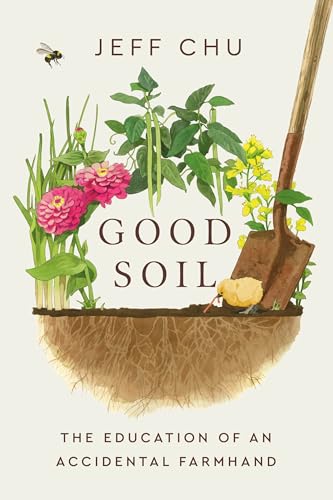
Good Soil: The Education of an Accidental Farmhand
In this beautifully written memoir, an accomplished journalist leaves New York City to work as an amateur farmhand at Princeton Seminary, while harvesting spiritual lessons that change his life
Jeff Chu had a seemingly successful life. As a writer at a fast-paced magazine company, he penned glossy profiles of business leaders while living with his husband in a New York City brownstone. Yet he struggled, as many of us do, with feelings of loneliness and disillusionment, all while trying to reconcile his identity as a first-generation Chinese American. Seeking a remedy, he left his job and enrolled at Princeton Seminary’s “Farminary,” a 21-acre farm where students learn to work the soil while asking the big questions of life.
As the seasons turn, Chu introduces us to a cast of characters, human and not, each with their own lesson to teach. From the cranes that visit the pond, to the worms that turn waste into fertile soil, to the Chinese long beans that get passed over in the farm’s CSA, Chu gently interrogates his relationship with the food on his plate and his own heritage, discovering what the earth is trying to teach us--if we’ll stop and listen.
In gorgeous, moving prose, Good Soil helps readers connect to the land and to each other at a time when we are drawn most to the phones in our hands. For nature lovers, foodies, and anyone who has daydreamed about a more meaningful life, this book is a tribute to friendship, acceptance, spirituality, and how love can grow from the unlikeliest of places.
Jeff Chu had a seemingly successful life. As a writer at a fast-paced magazine company, he penned glossy profiles of business leaders while living with his husband in a New York City brownstone. Yet he struggled, as many of us do, with feelings of loneliness and disillusionment, all while trying to reconcile his identity as a first-generation Chinese American. Seeking a remedy, he left his job and enrolled at Princeton Seminary’s “Farminary,” a 21-acre farm where students learn to work the soil while asking the big questions of life.
As the seasons turn, Chu introduces us to a cast of characters, human and not, each with their own lesson to teach. From the cranes that visit the pond, to the worms that turn waste into fertile soil, to the Chinese long beans that get passed over in the farm’s CSA, Chu gently interrogates his relationship with the food on his plate and his own heritage, discovering what the earth is trying to teach us--if we’ll stop and listen.
In gorgeous, moving prose, Good Soil helps readers connect to the land and to each other at a time when we are drawn most to the phones in our hands. For nature lovers, foodies, and anyone who has daydreamed about a more meaningful life, this book is a tribute to friendship, acceptance, spirituality, and how love can grow from the unlikeliest of places.
314 pages, Hardcover
First published March 25, 2025
About the author
Jeff Chu
7 books206 followersJeff Chu is an award-winning journalist, essayist, preacher, and speaker.
He serves as an editor-at-large at Travel+Leisure magazine, teacher in residence at Crosspointe Church in Cary, N.C., and parish associate for storytelling and witness at the First Presbyterian Church in Berkeley, Calif. Formerly a writer at Time and an editor at Fast Company, his work has also appeared in The New York Times, The New York Times Magazine, the Wall Street Journal, the Washington Post, and in numerous other outlets.
Jeff is an ordained minister in the Reformed Church in America. For several years, he served as co-curator of Evolving Faith.
He lives in Grand Rapids, Mich., with his husband, Tristan.
He serves as an editor-at-large at Travel+Leisure magazine, teacher in residence at Crosspointe Church in Cary, N.C., and parish associate for storytelling and witness at the First Presbyterian Church in Berkeley, Calif. Formerly a writer at Time and an editor at Fast Company, his work has also appeared in The New York Times, The New York Times Magazine, the Wall Street Journal, the Washington Post, and in numerous other outlets.
Jeff is an ordained minister in the Reformed Church in America. For several years, he served as co-curator of Evolving Faith.
He lives in Grand Rapids, Mich., with his husband, Tristan.
Ratings & Reviews
Friends & Following
Create a free account to discover what your friends think of this book!
Community Reviews
Displaying 1 - 30 of 663 reviews

November 5, 2024
Let me just start with the basics.
If I were to pick a favorite book of 2024 right now, it would be Jeff Chu's remarkable "Good Soil: The Education of an Accidental Farmhand."
While I expected to appreciate "Good Soil" having become familiar with Chu through his work with the Evolving Faith Conference and his co-authoring with Rachel Held Evans "Wholehearted Faith," the truth is I loved every word of "Good Soil" from the opening chapters that served up the roots of Chu's life to the natural, rhythmic prose of Chu's journey through Princeton Theological Seminary's "Farminary."
My favorite books tend to allow me to experience a full spectrum of emotions. Throughout my time with "Good Soil," I laughed, I cried, I reflected, I learned, and I felt a little less alone.
Chu was in his late 30's when he left his job as a magazine writer and enrolled at Princeton Theological Seminary. It was at Princeton that he encountered the "Farminary," a 21-acre working farm where students would learn to cultivate the earth while examining life's biggest questions. As would be spoken early on in the journey by the professors leading the program, it was expected that amidst the animals and the plants and the crops that would grow there love would also grow there.
I have shared more than once a pastoral visit not long after my cancer journey took my bladder and left me with an ostomy resulted in my answering the question from Rev. Gracie "How's your relationship with your body?" with a resounding "I hate it. " It was an unexpectedly honest spewing forth of unresolved trauma, a trauma based upon years of disability and years of violence and years of craving an intimacy I've never known. So, when Chu begins sharing his own relationship with his body I instantly began weeping (okay, sobbing) while also, I'd dare say, not quite feeling so alone in those unresolved areas.
There was more. So much more. Yet, to share too much is to ruin it for the reader who deserves to experience these lessons drawn from experiencing growth, decay, regeneration, and what it means to foster good soil. "Good Soil" is so refreshingly honest about family relationships that won't heal, friendships that will heal, the vitality of community, and the interconnectedness of us all.
"Good Soil" affirms the desire to belong and the significance of our roots. It affirms the decisions we make, at times when we're surrounded by those who disagree.
While I am a seminary graduate, I'm not a farmer. I can't say I'm particularly well-versed in ecological issues nor as a wheelchair user am I particularly adept at traveling out into nature other than along the trails (which I do quite frequently). Yet, I was enthralled by the warmth and wonder, connectedness and intimacy of "Good Soil."
If you've known me for any length of time, then you know that the word "tenderness" is my favorite word having become the key element of my namesake "Tenderness Tour" and having become perhaps my lifelong quest to both give and receive. Indeed, it was the word "tenderness" that came to mind again and again and again throughout "Good Soil."
There is also grief in "Good Soil," as anyone might expect who is familiar with Chu's connection to the late Rachel Held Evans. It's handled gently yet vulnerably, narratively a relatively small yet meaningful portion of the story that unfolds in "Good Soil." It could have backfired, of course, and yet Chu's remarkable wording makes it clear these were words he needed to write and stories he needed to tell.
Unquestionably, "Good Soil" is one of the best books of 2025 and an essential literary experience for those who practice a more progressive faith along with foodies, nature lovers, those who've ever felt like outsiders, and those who've ever discovered what it means to truly belong.
If I were to pick a favorite book of 2024 right now, it would be Jeff Chu's remarkable "Good Soil: The Education of an Accidental Farmhand."
While I expected to appreciate "Good Soil" having become familiar with Chu through his work with the Evolving Faith Conference and his co-authoring with Rachel Held Evans "Wholehearted Faith," the truth is I loved every word of "Good Soil" from the opening chapters that served up the roots of Chu's life to the natural, rhythmic prose of Chu's journey through Princeton Theological Seminary's "Farminary."
My favorite books tend to allow me to experience a full spectrum of emotions. Throughout my time with "Good Soil," I laughed, I cried, I reflected, I learned, and I felt a little less alone.
Chu was in his late 30's when he left his job as a magazine writer and enrolled at Princeton Theological Seminary. It was at Princeton that he encountered the "Farminary," a 21-acre working farm where students would learn to cultivate the earth while examining life's biggest questions. As would be spoken early on in the journey by the professors leading the program, it was expected that amidst the animals and the plants and the crops that would grow there love would also grow there.
I have shared more than once a pastoral visit not long after my cancer journey took my bladder and left me with an ostomy resulted in my answering the question from Rev. Gracie "How's your relationship with your body?" with a resounding "I hate it. " It was an unexpectedly honest spewing forth of unresolved trauma, a trauma based upon years of disability and years of violence and years of craving an intimacy I've never known. So, when Chu begins sharing his own relationship with his body I instantly began weeping (okay, sobbing) while also, I'd dare say, not quite feeling so alone in those unresolved areas.
There was more. So much more. Yet, to share too much is to ruin it for the reader who deserves to experience these lessons drawn from experiencing growth, decay, regeneration, and what it means to foster good soil. "Good Soil" is so refreshingly honest about family relationships that won't heal, friendships that will heal, the vitality of community, and the interconnectedness of us all.
"Good Soil" affirms the desire to belong and the significance of our roots. It affirms the decisions we make, at times when we're surrounded by those who disagree.
While I am a seminary graduate, I'm not a farmer. I can't say I'm particularly well-versed in ecological issues nor as a wheelchair user am I particularly adept at traveling out into nature other than along the trails (which I do quite frequently). Yet, I was enthralled by the warmth and wonder, connectedness and intimacy of "Good Soil."
If you've known me for any length of time, then you know that the word "tenderness" is my favorite word having become the key element of my namesake "Tenderness Tour" and having become perhaps my lifelong quest to both give and receive. Indeed, it was the word "tenderness" that came to mind again and again and again throughout "Good Soil."
There is also grief in "Good Soil," as anyone might expect who is familiar with Chu's connection to the late Rachel Held Evans. It's handled gently yet vulnerably, narratively a relatively small yet meaningful portion of the story that unfolds in "Good Soil." It could have backfired, of course, and yet Chu's remarkable wording makes it clear these were words he needed to write and stories he needed to tell.
Unquestionably, "Good Soil" is one of the best books of 2025 and an essential literary experience for those who practice a more progressive faith along with foodies, nature lovers, those who've ever felt like outsiders, and those who've ever discovered what it means to truly belong.

February 18, 2025
This is one of those rare, precious books that filled my soul with a glimpse of how, on this muddy planet full of wrongdoing and death, God or love or grace might still be near to us. But it is a grace tinged with sadness, a love marked by loss, a faith that hopes rather than one that knows. I’ve already recommended GOOD SOIL to more people in real life than any book in recent memory. It has me whispering to my discouraged friends, my queer friends, my one-foot-out-the-door friends, Jesus-loving-but-anti-Christian-nationalism friends, “Have you heard of Jeff Chu?”
The book is grounded in reflections arising out of Chu’s time working and taking classes at the Farminary (the farm at Princeton Theological Seminary), but as Chu counsels in the Author’s Note, he employs a circular rather than a linear mode of storytelling. The writing is exceptional, so it’s never hard to follow; even when the narratives seem fragmented, there’s always a purpose. He pulls in stories of his ancestor’s journeys, his parents’ disapproval of his sexuality, the food and language of his Cantonese American upbringing, his questions about faith and God, and the lessons of compost and little deaths and perpetual grief. Despite the specificity of Chu’s story, this book speaks universally to the human condition; I’m convinced that Chu is the sage that our times require. He does the radical (and highly unpopular) thing of loving one’s enemies with gentle strength and courage, but without compromising his spiritual integrity. And it all comes back to his confidence in God’s boundless love.
A remarkable book that will both heal and challenge you.
The book is grounded in reflections arising out of Chu’s time working and taking classes at the Farminary (the farm at Princeton Theological Seminary), but as Chu counsels in the Author’s Note, he employs a circular rather than a linear mode of storytelling. The writing is exceptional, so it’s never hard to follow; even when the narratives seem fragmented, there’s always a purpose. He pulls in stories of his ancestor’s journeys, his parents’ disapproval of his sexuality, the food and language of his Cantonese American upbringing, his questions about faith and God, and the lessons of compost and little deaths and perpetual grief. Despite the specificity of Chu’s story, this book speaks universally to the human condition; I’m convinced that Chu is the sage that our times require. He does the radical (and highly unpopular) thing of loving one’s enemies with gentle strength and courage, but without compromising his spiritual integrity. And it all comes back to his confidence in God’s boundless love.
A remarkable book that will both heal and challenge you.

Did Not Finish
March 28, 2025I didn't actually finish this book, and the primary reason is I think that the blurb is somewhat misleading. I DNFd at 40%.
The good thing is the book isn't bad. The writing is solid, it's very easy to digest, and while it's not super evocative, it's still has personality. The chapters are an okay length, they tend to stick to the topic at hand, although they feel a bit all over timeline wise, but that makes sense being more topic oriented. I also love that for an LGBTQIA+ person in the church, this book is going to mean a lot to that person, and I love that for them.
For me, the problem is while I am all for people having their religion, I don't want to be part of it unless I chose to. For this book, I didn't. It has exactly one line in the blurb that makes it seem like it may be religious in nature, so I assumed it would be a subplot at best. I was very wrong. It's VERY religious, and I found it extremely difficult to be engaged because of it. I came for farm/garden reading and that's there, but it's a catalyst for the religious talk. I can't finish it.
I hope someone who needs this finds it, again it's not BAD, just not at all what I felt it was advertised as.
The good thing is the book isn't bad. The writing is solid, it's very easy to digest, and while it's not super evocative, it's still has personality. The chapters are an okay length, they tend to stick to the topic at hand, although they feel a bit all over timeline wise, but that makes sense being more topic oriented. I also love that for an LGBTQIA+ person in the church, this book is going to mean a lot to that person, and I love that for them.
For me, the problem is while I am all for people having their religion, I don't want to be part of it unless I chose to. For this book, I didn't. It has exactly one line in the blurb that makes it seem like it may be religious in nature, so I assumed it would be a subplot at best. I was very wrong. It's VERY religious, and I found it extremely difficult to be engaged because of it. I came for farm/garden reading and that's there, but it's a catalyst for the religious talk. I can't finish it.
I hope someone who needs this finds it, again it's not BAD, just not at all what I felt it was advertised as.

April 29, 2025
A well-written, thoughtful, and vulnerable memoir, about the author’s experience working on the school farm while in seminary, and about his various personal struggles, especially with his conservative Chinese immigrant family and their reaction to his marrying a man. The marketing does downplay the amount of Christianity in the book, as other reviewers have mentioned, but it’s progressive and not preachy, and should work for secular readers too as long as you don’t mind the author discussing his spiritual life from time to time.
It was a bit of a slow read for me, as the chapters often feel like self-contained short essays, and I think it’s best appreciated a little bit at a time. At first I found myself disliking the author somewhat, but warmed up to him as I went along. He seems like an intense and often unhappy person, but he comes by it honestly and is self-aware. His reflections are to the point and seem well thought through.
Overall, this isn’t one I have a lot to say about, but I appreciated my time with it and would recommend to anyone interested in memoirs about nature and spirituality.
It was a bit of a slow read for me, as the chapters often feel like self-contained short essays, and I think it’s best appreciated a little bit at a time. At first I found myself disliking the author somewhat, but warmed up to him as I went along. He seems like an intense and often unhappy person, but he comes by it honestly and is self-aware. His reflections are to the point and seem well thought through.
Overall, this isn’t one I have a lot to say about, but I appreciated my time with it and would recommend to anyone interested in memoirs about nature and spirituality.

June 2, 2026
With his 2025 memoir Good Soil: The Education of an Accidental Farmhand, journalist Jeff Chu textually explores love, loss, complicated identities (including gender and ethnicity all melded together) as well the positive and healing powers of strong community ties via his personal experiences of labouring on his seminary's farm. For after enrolling at Princeton University's Theological Seminary at the age of thirty-nine, Chu took one class (and then more) at the so-called Farminary (basically a working farm designed to provide a hands-on place for seminary students to wrestle with spiritual and philosophical questions while at the same time getting their hands quite majorly and literally dirty).
Now Good Soil: The Education of an Accidental Farmhand very much engagingly and delightfully shows and tells us readers how Jeff Chu's time at the Farminary would prove both positive and life-altering and that his experiences with learning how to farm, learning how to tend the land, learning how to work with soil also helped to lessen and to mitigate the academic frustrations of doctrine and dry theological debates encountered in most of Chu's other Seminary courses (something to which I can certainly massively relate, since especially at the PhD level, many of my required, many of my core German language and literature courses equally so often had the tendency towards dryness and tedium), and that indeed, as Jeff Chu takes part in the daily chores of life and work at the Farminary in Good Soil: The Education of an Accidental Farmhand, he also notices, he equally becomes aware of a myriad of farming related metaphors and similes springing up through and because of his hands-on work in the fields. And yes, Chu throughout Good Soil: The Education of an Accidental Farmhand quite lushly and often even marvellously joyfully describes the community and the companionship he finds at the Farminary and that as he is learning the basics of farming (seeding, planting, watering, weeding, composting and the like), Jeff Chu's theology as well as his spirituality also and intriguingly becomes solidly intertwined with farming and vice versa (something which I have often myself considered and noticed with regard to farming and gardening, that religion and faith are in many ways basically pretty much akin and alike to the latter, but that I certainly have never been able to put this all into words as wonderfully, as astutely and as expressively as Chu so gloriously does in and with Good Soil: The Education of an Accidental Farmhand).
Finally, alongside of Jeff Chu's work at the Farminary, he with Good Soil: The Education of an Accidental Farmhand also textually digs (and with a bit of a pun intended here from me since the often self deprecating humour from Chu's pen totally makes me smile, smile and smile some more) pretty all-encompassingly into the multiple (and often rather conflicting) layers of his own life story, into his own biography as the gay son of Christian Chinese immigrants to the United States. Thus we in Good Soil: The Education of an Accidental Farmhand encounter Chu's deep childhood bond with his grandmother, his total love for his parents, albeit equally mixed with much worry about whether his mother and father will ever truly and fully accept either his homosexuality or his husband Tristan and also Jeff Chu's struggle to integrate all aspects of his identity into one harmonious or at least workable whole, as well as describing in Good Soil: The Education of an Accidental Farmhand with a detail that made (and still makes) me extremely hungry the mouth-watering feast Chu ended up preparing for friends and colleagues as his final Farminary project (and equally so wishing that I actually had both a green thumb and indeed sufficient land on which to garden and to try farming). But yes, Jeff Chu also recounts in Good Soil: The Education of an Accidental Farmhand the loss, the death of his dear friend and fellow author Rachel Held Evans and whose posthumous memoir, Wholehearted Faith, he edited, which while reading made me kind of want to cry, but that I am also really and truly ecstatic how Good Soil: The Education of an Accidental Farmhand also encounters and examines questions of loss, that in many ways, what Jeff Chu writes Good Soil: The Education of an Accidental Farmhand is kind of warts and all so to speak, is a memoir told delightfully, sensitively, often humorously and clearly, beautifully showing (and for me, with solidly five stars) that we have to care about and nourish not just external soil, but also the soil of our own life (both physical and spiritual, both earthly and metaphorically).
Now Good Soil: The Education of an Accidental Farmhand very much engagingly and delightfully shows and tells us readers how Jeff Chu's time at the Farminary would prove both positive and life-altering and that his experiences with learning how to farm, learning how to tend the land, learning how to work with soil also helped to lessen and to mitigate the academic frustrations of doctrine and dry theological debates encountered in most of Chu's other Seminary courses (something to which I can certainly massively relate, since especially at the PhD level, many of my required, many of my core German language and literature courses equally so often had the tendency towards dryness and tedium), and that indeed, as Jeff Chu takes part in the daily chores of life and work at the Farminary in Good Soil: The Education of an Accidental Farmhand, he also notices, he equally becomes aware of a myriad of farming related metaphors and similes springing up through and because of his hands-on work in the fields. And yes, Chu throughout Good Soil: The Education of an Accidental Farmhand quite lushly and often even marvellously joyfully describes the community and the companionship he finds at the Farminary and that as he is learning the basics of farming (seeding, planting, watering, weeding, composting and the like), Jeff Chu's theology as well as his spirituality also and intriguingly becomes solidly intertwined with farming and vice versa (something which I have often myself considered and noticed with regard to farming and gardening, that religion and faith are in many ways basically pretty much akin and alike to the latter, but that I certainly have never been able to put this all into words as wonderfully, as astutely and as expressively as Chu so gloriously does in and with Good Soil: The Education of an Accidental Farmhand).
Finally, alongside of Jeff Chu's work at the Farminary, he with Good Soil: The Education of an Accidental Farmhand also textually digs (and with a bit of a pun intended here from me since the often self deprecating humour from Chu's pen totally makes me smile, smile and smile some more) pretty all-encompassingly into the multiple (and often rather conflicting) layers of his own life story, into his own biography as the gay son of Christian Chinese immigrants to the United States. Thus we in Good Soil: The Education of an Accidental Farmhand encounter Chu's deep childhood bond with his grandmother, his total love for his parents, albeit equally mixed with much worry about whether his mother and father will ever truly and fully accept either his homosexuality or his husband Tristan and also Jeff Chu's struggle to integrate all aspects of his identity into one harmonious or at least workable whole, as well as describing in Good Soil: The Education of an Accidental Farmhand with a detail that made (and still makes) me extremely hungry the mouth-watering feast Chu ended up preparing for friends and colleagues as his final Farminary project (and equally so wishing that I actually had both a green thumb and indeed sufficient land on which to garden and to try farming). But yes, Jeff Chu also recounts in Good Soil: The Education of an Accidental Farmhand the loss, the death of his dear friend and fellow author Rachel Held Evans and whose posthumous memoir, Wholehearted Faith, he edited, which while reading made me kind of want to cry, but that I am also really and truly ecstatic how Good Soil: The Education of an Accidental Farmhand also encounters and examines questions of loss, that in many ways, what Jeff Chu writes Good Soil: The Education of an Accidental Farmhand is kind of warts and all so to speak, is a memoir told delightfully, sensitively, often humorously and clearly, beautifully showing (and for me, with solidly five stars) that we have to care about and nourish not just external soil, but also the soil of our own life (both physical and spiritual, both earthly and metaphorically).
April 3, 2025
The writing is proficient. The book just wasn't what I was expecting from the description.

February 24, 2025
3.5 Stars
Good Soil is a well-written, earnest, and transparent memoir by Jeff Chu about his years at Princeton Seminary and his lifestyle choices. He shares his experiences as a first generation Chinese-American and his work on a farm connected with the seminary. Fans of food preparation will enjoy this aspect of the memoir.
Chu spends a good amount of time discussing his lifestyle choices and identity. His reflection on his parents' reactions to his lifestyle and their acceptance was especially thoughtful. Even though his parents do not agree with his lifestyle, they do not reject him. They show their love for him in the best ways they can, and Jeff Chu accepts these gestures. In opposition to today's prevailing thoughts about drawing boundaries and cutting people out of your life who don't agree with you, Chu concludes that the Scriptures teach "honor your mother and your father." So Chu and his partner honor his parents and respect their beliefs, and the family finds ways to accommodate and respect each other. I found his explanation refreshing and healthy in today's culture, which encourages you to cut yourself off from those who disagree with you. I admire him for his hard work and courage in this area.
Thanks #NetGalley @ConvergentBooks for a complimentary eARC of #GoodSoil upon my request. My opinions are my own.
For more reviews visit my blog www.readingladies.com
Good Soil is a well-written, earnest, and transparent memoir by Jeff Chu about his years at Princeton Seminary and his lifestyle choices. He shares his experiences as a first generation Chinese-American and his work on a farm connected with the seminary. Fans of food preparation will enjoy this aspect of the memoir.
Chu spends a good amount of time discussing his lifestyle choices and identity. His reflection on his parents' reactions to his lifestyle and their acceptance was especially thoughtful. Even though his parents do not agree with his lifestyle, they do not reject him. They show their love for him in the best ways they can, and Jeff Chu accepts these gestures. In opposition to today's prevailing thoughts about drawing boundaries and cutting people out of your life who don't agree with you, Chu concludes that the Scriptures teach "honor your mother and your father." So Chu and his partner honor his parents and respect their beliefs, and the family finds ways to accommodate and respect each other. I found his explanation refreshing and healthy in today's culture, which encourages you to cut yourself off from those who disagree with you. I admire him for his hard work and courage in this area.
Thanks #NetGalley @ConvergentBooks for a complimentary eARC of #GoodSoil upon my request. My opinions are my own.
For more reviews visit my blog www.readingladies.com

November 2, 2024
Jeff Chu made me cry, and I’m mad about it. Yes, I have been looking forward to his next book since I read his first one, and yes, I know Jeff has a way of telling stories that you feel deeply in your soul. Though I also do not like letting my emotions out, I cried. Multiple times.
A memoir following the seasons through his time at the Princeton Seminary’s “Farminary,” Jeff got to me pretty quickly. It’s not hard, really. Just talk about religion and family + belonging, or rather, feeling like you don’t belong, and my feelings have to go somewhere. He spoke of scars, belonging, death, and grief with vulnerability and wisdom. The thought put into each story, past and present time woven together, combined with connections from his studies and wonderings, makes you pause to reflect on your own growth, your story, meaning, and compost.
Thank you Jeff, and to NetGalley and the publisher. I’m honored to read Good Soil. I shall go refresh my garden and try to convince my husband (again) that we need a few chickens.
A memoir following the seasons through his time at the Princeton Seminary’s “Farminary,” Jeff got to me pretty quickly. It’s not hard, really. Just talk about religion and family + belonging, or rather, feeling like you don’t belong, and my feelings have to go somewhere. He spoke of scars, belonging, death, and grief with vulnerability and wisdom. The thought put into each story, past and present time woven together, combined with connections from his studies and wonderings, makes you pause to reflect on your own growth, your story, meaning, and compost.
Thank you Jeff, and to NetGalley and the publisher. I’m honored to read Good Soil. I shall go refresh my garden and try to convince my husband (again) that we need a few chickens.
July 11, 2025
Jeff Chu is an Asian-American writer-turned-minister. I initially thought his 2025 memoir Good Soil would be in the vein of memoirs like Kristin Kimball's The Dirty Life: On Farming, Food, and Love or Brent Underwood's Ghost Town Living: Mining for Purpose and Chasing Dreams at the Edge of Death Valley - a story of a city person who makes a big life decision to move to the country/off the grid, reconnect with tradition, pursue a much more physically-demanding profession, and share their foibles and reflections along the way - but while Good Soil has elements of these tropes, it's a much more spiritual, reflective book at heart. Chu's premise is the decision he made in his 40s to pivot from a professional commercial writing career to become an ordained minister in the Reformed Church of America, which involves joining a Princeton seminary program that includes a farming extracurricular. While farming (and religion) are central frameworks of the book, these are used as a lens to focus on Chu's journey toward self-acceptance and navigating imperfect relationships with imperfect people. Though Chu doesn't use MBTI framework, he struck me as very IxFP - experiencing the world primarily through introverted feeling (using the function stack model), and hence coming off as perseverative, passive, overly-sensitive, and unable-to-escape-one's-own-head at one extreme (generally seen in those who are young, inexperienced, and live the metaphorical 'unexamined lives'), but contemplative, deeply thoughtful and wise at the other extreme (which is usually achieved through life experience and conscious character growth). As Chu reflects deeply on his life through both the experiences of going through seminary and writing this book, I was able to appreciate a lot of character growth in him - which is a sure sign of a good memoir.
My statistics:
Book 214 for 2025
Book 2140 cumulatively
My statistics:
Book 214 for 2025
Book 2140 cumulatively

October 23, 2025
Jeff Chu is a reporter/writer who has long struggled with reconciling his strict Baptist upbringing from his ethnic Chinese parents with his homosexuality and loving marriage with Tristan. He attempted to find a resolution by attending seminary (!) at Princeton.
In "Good Soil," Jeff tells us the story of serendipitously signing up for a seminar at a farm affiliated with the seminary. Jeff is very familiar with gardening and creating good food from the garden from his childhood. Cooking huge Chinese meals is his mother's love language; Jeff also loves to cook for his loved ones.
The chapters are divided by the seasons at the farm, starting with autumn and working through the two and a half years he spent as a farmhand, working for Nate and his wife, who gave pastoral advice and care along with instruction on growing and tending vegetables. There was a memorable chapter on obtaining chicks, then caring for them as they grew, then slaughtering them for meat. Jeff tried to work though relationships with his fellow farmhands; his feelings of separateness as a gay Asian American; and what he wanted to do after seminary.
Jeff finds the farm activities to be one long metaphor for providing pastoral care. Even as he graduated from seminary, and suffered two major losses at the same time, he still hadn't settled on a career choice, only knowing that he didn't necessarily want to pastor a church. He hadn't seemed to reconcile his very conservative family with his marriage, either. Jeff is apparently still a work in progress. Best wishes to him. 4.6 stars or so, rounded up to 5.
In "Good Soil," Jeff tells us the story of serendipitously signing up for a seminar at a farm affiliated with the seminary. Jeff is very familiar with gardening and creating good food from the garden from his childhood. Cooking huge Chinese meals is his mother's love language; Jeff also loves to cook for his loved ones.
The chapters are divided by the seasons at the farm, starting with autumn and working through the two and a half years he spent as a farmhand, working for Nate and his wife, who gave pastoral advice and care along with instruction on growing and tending vegetables. There was a memorable chapter on obtaining chicks, then caring for them as they grew, then slaughtering them for meat. Jeff tried to work though relationships with his fellow farmhands; his feelings of separateness as a gay Asian American; and what he wanted to do after seminary.
Jeff finds the farm activities to be one long metaphor for providing pastoral care. Even as he graduated from seminary, and suffered two major losses at the same time, he still hadn't settled on a career choice, only knowing that he didn't necessarily want to pastor a church. He hadn't seemed to reconcile his very conservative family with his marriage, either. Jeff is apparently still a work in progress. Best wishes to him. 4.6 stars or so, rounded up to 5.
July 1, 2025
4.5 stars.
Will write more later. In short: I bought a signed copy of Good Soil after attending Chu's author talk and wept the whole way home. What a comfort this book and his story has been for me
Will write more later. In short: I bought a signed copy of Good Soil after attending Chu's author talk and wept the whole way home. What a comfort this book and his story has been for me
June 3, 2025
3.5. I may come back and increase the rating based on how the book settles in. It was interesting sociologically but to quote Abby from Love on the Spectrum: “it’s interesting, but I’m not interested”
September 29, 2025
Beautifully, beautifully written, both as a work of spirituality and a work of gardening.
Which is maybe an essential connection after all.
Which is maybe an essential connection after all.

February 3, 2026
I really really really enjoyed this. It is perhaps overly earnest and man does Jeff love a metaphor. The whole book is spiritual metaphors for gardening. I'm not even a gardener. What can I say though, I am a sucker for stories about resurrection and redemption and he loves to talk about compost and how all this dead stuff makes the good soil for life to grow I mean come on. Also! That this man refuses to shut out his overly conservative parents who refused to come to his wedding or even meet his husband is so profound to me. "What does it mean to honor my parents, not because some ancient scribe told me to but just because I love them". Also, I was destined to love this book, because like me the author's love language is food -- he spoke to something about cooking and feeding people that I deeply believe but can't really explain.
June 26, 2025
2.5 and rounding down. I read this to complete three Goodreads challenges and get each bookmark badge in one go. The summary seemed interesting, but overall the book was not very uplifting and too “woe is me” for my liking. Good writing though. Some parts were interesting to read.
June 2, 2025
The description was misleading. This book was not what I expected, unfortunately! I had high hopes
June 20, 2026
I chose this book for two reasons: to satisfy a Goodreads challenge and to dream of gardening. What I got was an interesting read with plenty of farming and gardening metaphors. The connections to history gave depth to Chu's journey through the Farminary. The religious readings felt somewhat forced to me, perhaps because my religious journey has led me in another direction. My highlights shed light on the parts I felt inspired by.

April 15, 2025
As an avid gardener, I appreciated Chu's foundational metaphor. I'm also a kildeer spectator, a grower of green provider beans, and a listener to the kids who always insisted that beets taste like dirt. His vulnerability seasoned with humor carries a story of hope as he shares his own story alongside the story of his fellow accidental farmhands.

June 25, 2025
Sadly too philosophical for me. Didn’t resonate even tho I wanted it to:/

Read
May 28, 2025I love soil!
Completely my fault that I didn’t realise how religious this book would be so not going to give it a rating but I listened to the audiobook and it was so relaxing. Also interesting to hear about how the farm played into his understanding of his relationships and faith
Completely my fault that I didn’t realise how religious this book would be so not going to give it a rating but I listened to the audiobook and it was so relaxing. Also interesting to hear about how the farm played into his understanding of his relationships and faith
October 14, 2024
I am so excited for this eARC! Trying very hard to read it slowly and savor each gorgeous image. The writing is exactly what you would expect from Jeff Chu - it is hard not to stop everything to speed through the book in one sitting. Which would do a disservice to the beauty of the prose and the thoughtfulness of the words.
---------------------------------
My neighborhood book club is reading John Green's The Anthropocene Reviewed and I took a break from Jeff Chu's Good Soil to reacquaint myself with Green's essay collection before this month's meeting. Which I didn't need to do because it turns out I had forgotten to change the date in my calendar and so I waltzed into a stranger's house, right through the front door, with cookies and a pitcher of Diet Dr. Pepper (because fountain is better than bottled) on the wrong night. Yes, it was as mortifying as it sounds. But due to this unfortunate mishap, I had the happy accident of reading John Green and Jeff Chu in conversation with each other and that was a treat! I don't think I would have made the connection on my own but both have a very pastoral voice when they write. I think what I mean by pastoral is they both acknowledge the overwhelming grief of life while encouraging us to have faith there will also be joy. I posted the following to the neighborhood book club about The Anthropocene Reviewed and I think it is an equally valid description of Good Soil, "This is such a warm and lovely book written by a person who has a gift for letting their vulnerability show in beautiful ways." Thank you to Jeff Chu, Convergent Books, and NetGalley for the eARC.
Another book I believe Good Soil should be read in conversation with is Camille T. Dungy's Soil: The Story of a Black Mother's Garden. Both books are part memoir, part history lesson. They explore gardening and racism. They confront very real systems of oppression and still leave room for hope. Honestly, if anyone is looking for a book club idea, I would throw in a little Ross Gay and Annie Dillard and make a series of it.
And now we get to the warning section of this review. I cried. I first encountered Chu during a writing workshop. Since then, I've attended various conferences where he has spoken. I knew the tears were coming. I was prepared. But if this is your first encounter, let me warn you, you will be moved. Chu has a way of telling his own story in a way that resonates with your own and there is never a dry eye left by the time he is done. Have a hanky handy is all I'm saying.
Reading Good Soil was the treat for my heart and soul I thought it would be. The writing is lovely. The stories are achingly vulnerable. The emotions are earned. And in the end, through all the grief, love wins.
---------------------------------
My neighborhood book club is reading John Green's The Anthropocene Reviewed and I took a break from Jeff Chu's Good Soil to reacquaint myself with Green's essay collection before this month's meeting. Which I didn't need to do because it turns out I had forgotten to change the date in my calendar and so I waltzed into a stranger's house, right through the front door, with cookies and a pitcher of Diet Dr. Pepper (because fountain is better than bottled) on the wrong night. Yes, it was as mortifying as it sounds. But due to this unfortunate mishap, I had the happy accident of reading John Green and Jeff Chu in conversation with each other and that was a treat! I don't think I would have made the connection on my own but both have a very pastoral voice when they write. I think what I mean by pastoral is they both acknowledge the overwhelming grief of life while encouraging us to have faith there will also be joy. I posted the following to the neighborhood book club about The Anthropocene Reviewed and I think it is an equally valid description of Good Soil, "This is such a warm and lovely book written by a person who has a gift for letting their vulnerability show in beautiful ways." Thank you to Jeff Chu, Convergent Books, and NetGalley for the eARC.
Another book I believe Good Soil should be read in conversation with is Camille T. Dungy's Soil: The Story of a Black Mother's Garden. Both books are part memoir, part history lesson. They explore gardening and racism. They confront very real systems of oppression and still leave room for hope. Honestly, if anyone is looking for a book club idea, I would throw in a little Ross Gay and Annie Dillard and make a series of it.
And now we get to the warning section of this review. I cried. I first encountered Chu during a writing workshop. Since then, I've attended various conferences where he has spoken. I knew the tears were coming. I was prepared. But if this is your first encounter, let me warn you, you will be moved. Chu has a way of telling his own story in a way that resonates with your own and there is never a dry eye left by the time he is done. Have a hanky handy is all I'm saying.
Reading Good Soil was the treat for my heart and soul I thought it would be. The writing is lovely. The stories are achingly vulnerable. The emotions are earned. And in the end, through all the grief, love wins.
April 30, 2025
during the month of April I just felt in the mood for two spiritual books from leaders I admire.
Jeff’s story intersected w mine when I attended evolving faith and heard him speak for the first time. he took my paper I’d written my deepest spiritual fear on and brought it back to the farminary to feed the compost pile. My life has not been the same since. Thank you Jeff for your words and your life that have brought great meaning to my own.
Jeff’s story intersected w mine when I attended evolving faith and heard him speak for the first time. he took my paper I’d written my deepest spiritual fear on and brought it back to the farminary to feed the compost pile. My life has not been the same since. Thank you Jeff for your words and your life that have brought great meaning to my own.

May 3, 2025
Wow...a book without a doubt a "DNF" 20 pages in if started 20 years ago has left me stunned. I knew very little when requesting the book from the library- only that I love to garden and the back cover premise was inviting.
Jeff (the author) spent the book letting the reader actually know him and his struggles. Jeff is real, his story so unrelated to me and yet so personal when one shares their faith and angst and unbelief when reality hits a wall with the ethereal and we do not fit. I deeply appreciated his candor, insight and import of his journey.
So much wisdom and a few snippets from these pages; "I am persuaded, I believe"...
"One by product of chronic invisibility is a heightened sense of attentiveness to the world and the people around us".." Invisibility strikes at our most tender place where spirit meets the bone".....
or this HUGE idea:
"neglecting or destroying -you don't have to know that much about the past or culture, or people; But you are responsible for seeing and trying to see your surroundings. An absence of data is no excuse for an absence of respect, or of care or of heart"
"The idea of the resurrection is ridiculous and yet its as wondrous as it is because its not supposed to be -not the natural order of things- a disruption of what ought to happen. But even Jesus couldn't get to life everlasting without dealing with death first"
"Self control often feels like the least accessible fruit of the spirit"....
"We love what passes away"...
Eis Telos....Thanks Jeff Chu. Never thought I would learn so much from someone with such a different life path.
Jeff (the author) spent the book letting the reader actually know him and his struggles. Jeff is real, his story so unrelated to me and yet so personal when one shares their faith and angst and unbelief when reality hits a wall with the ethereal and we do not fit. I deeply appreciated his candor, insight and import of his journey.
So much wisdom and a few snippets from these pages; "I am persuaded, I believe"...
"One by product of chronic invisibility is a heightened sense of attentiveness to the world and the people around us".." Invisibility strikes at our most tender place where spirit meets the bone".....
or this HUGE idea:
"neglecting or destroying -you don't have to know that much about the past or culture, or people; But you are responsible for seeing and trying to see your surroundings. An absence of data is no excuse for an absence of respect, or of care or of heart"
"The idea of the resurrection is ridiculous and yet its as wondrous as it is because its not supposed to be -not the natural order of things- a disruption of what ought to happen. But even Jesus couldn't get to life everlasting without dealing with death first"
"Self control often feels like the least accessible fruit of the spirit"....
"We love what passes away"...
Eis Telos....Thanks Jeff Chu. Never thought I would learn so much from someone with such a different life path.

November 11, 2024
In October 2018, I was in the audience at the first Evolving Faith conference in Montreal, NC where Jeff Chu preached about the theology of the compost pile. I wept through his entire sermon (I was 7.5 months pregnant and cried basically the whole weekend. Shout out to author Jessica Turner who I met in the bathroom and who gave me her extra pack of tissues). I still have my notecard with my written hope on it that Jeff talks about in the chapter titled “worm” of Good Soil.
Jeff’s writing is masterful and always moving. You’ll find yourself wondering where he’s going with some explanation of noisy frogs and them, bam, the connection to some beautiful piece of theology hits you out of nowhere. This memoir of Jeff’s time at Princeton Seminary is beautifully written and an absolute pleasure to read. It’s dripping with love and reflections on his time working at the farm.
Thank you to the publisher for the gifted copy. All opinions are my own.
Jeff’s writing is masterful and always moving. You’ll find yourself wondering where he’s going with some explanation of noisy frogs and them, bam, the connection to some beautiful piece of theology hits you out of nowhere. This memoir of Jeff’s time at Princeton Seminary is beautifully written and an absolute pleasure to read. It’s dripping with love and reflections on his time working at the farm.
Thank you to the publisher for the gifted copy. All opinions are my own.
January 7, 2025
Before we begin, I'd like to thank NetGalley for an eARC of this book in exchange for an honest review!
I adored this book. I appreciated Jeff's vulnerability with his story and everything he learned during his time at the Farminary. He broke down his cultural background and connections to the farm in an accessible way, but what I appreciated the most was the way he openly wrestled with his faith, and that there weren't easy answers to his questions, especially when it came to trying to find a home in the world, and himself. Some of the questions were an answered in a new light, but others were left unanswered...just like real life. We truly learn so much about God when we work with his very good creation.
I look forward to a reread of this once it's officially published! Thank you Jeff for sharing your heart with us.
I adored this book. I appreciated Jeff's vulnerability with his story and everything he learned during his time at the Farminary. He broke down his cultural background and connections to the farm in an accessible way, but what I appreciated the most was the way he openly wrestled with his faith, and that there weren't easy answers to his questions, especially when it came to trying to find a home in the world, and himself. Some of the questions were an answered in a new light, but others were left unanswered...just like real life. We truly learn so much about God when we work with his very good creation.
I look forward to a reread of this once it's officially published! Thank you Jeff for sharing your heart with us.

April 9, 2025
Soil, theology, food; love, death, and the breathtaking reality of being a human in this messy world. What’s not to love?
June 29, 2025
DNF. Too much God talk, and not enough farming.

April 18, 2025
I heard about Good Soil before it came out from many writers I respect. But I kept putting off preordering it because of the title and subtitle. I won’t even walk in grass barefoot, so my level of interest in farming, or even gardening, is low, to say the least. And I (wrongly) assumed this book was aimed at people who enjoy working in soil. Fortunately, I was offered the opportunity to read Good Soil before it came out, so I gave it a chance. And I knew by the first few pages how lucky I was to be reading this incredible book. I’ve read many excellent spiritual memoirs, and this is among the very best.
In telling his story, Jeff Chu manages to be brutally honest while modeling healthy boundaries. He lets us into his griefs and makes us laugh. He shows us faith by how he lives and who he is without ever needing to preach or proselytize. He even opened me up, far beyond what I thought possible, to the wonder of farming, growing food, tending animals, knowing where and how and why things grow (or don’t), and caring about the rhythms and the details of life and death—for what they are, not just as metaphor or because of what they can teach.
As I reflected on this book, I asked myself what it is about. I think it is about learning to live and grow, even when it is uncomfortable or profoundly painful. And I think it is about discovering and developing the ability to nurture oneself, one’s community, and creation. And accepting that living, growing, and nurturing will include getting dirty.
Despite my lack of interest in farming or soil, I wanted to be on that farm, to be part of this story. Because this story is connected to so many other stories. And the way Jeff Chu tells stories leaves no doubt that every story matters. We will never know most of the stories of the people around us, even those closest to us. And we will probably never tell most of our own stories. But this story, Good Soil, is one I highly recommend because the specifics of Jeff Chu’s story will somehow resonate with your (probably very different) story in ways that will make you feel more alive, more capable of growth, and more able to live through the grief of death and the pain of life.
I also recommend reading Good Soil because I think we all need some fried rice. The first chapter is entitled “fried rice.” It was a nice beginning but I had no idea Jeff Chu was, intentionally, whetting my appetite. With each subsequent fried rice story, I longed to taste his what he was cooking. And, as the book went on, I began to wonder if, just maybe, I should try making it myself. Near the end, I thought, “I’m going to look back and find all of his advice about how to cook fried rice, and see if I can use that as the framework of a recipe.” And then—what a gift—he used the appendix to offer just that recipe framework I was craving.
Read this book—and try making some fried rice!
Thank you to Convergent for the privilege of reading an advance DRC of this book. I loved it so much, I purchased my own copy. All opinions are my own.
In telling his story, Jeff Chu manages to be brutally honest while modeling healthy boundaries. He lets us into his griefs and makes us laugh. He shows us faith by how he lives and who he is without ever needing to preach or proselytize. He even opened me up, far beyond what I thought possible, to the wonder of farming, growing food, tending animals, knowing where and how and why things grow (or don’t), and caring about the rhythms and the details of life and death—for what they are, not just as metaphor or because of what they can teach.
As I reflected on this book, I asked myself what it is about. I think it is about learning to live and grow, even when it is uncomfortable or profoundly painful. And I think it is about discovering and developing the ability to nurture oneself, one’s community, and creation. And accepting that living, growing, and nurturing will include getting dirty.
Despite my lack of interest in farming or soil, I wanted to be on that farm, to be part of this story. Because this story is connected to so many other stories. And the way Jeff Chu tells stories leaves no doubt that every story matters. We will never know most of the stories of the people around us, even those closest to us. And we will probably never tell most of our own stories. But this story, Good Soil, is one I highly recommend because the specifics of Jeff Chu’s story will somehow resonate with your (probably very different) story in ways that will make you feel more alive, more capable of growth, and more able to live through the grief of death and the pain of life.
I also recommend reading Good Soil because I think we all need some fried rice. The first chapter is entitled “fried rice.” It was a nice beginning but I had no idea Jeff Chu was, intentionally, whetting my appetite. With each subsequent fried rice story, I longed to taste his what he was cooking. And, as the book went on, I began to wonder if, just maybe, I should try making it myself. Near the end, I thought, “I’m going to look back and find all of his advice about how to cook fried rice, and see if I can use that as the framework of a recipe.” And then—what a gift—he used the appendix to offer just that recipe framework I was craving.
Read this book—and try making some fried rice!
Thank you to Convergent for the privilege of reading an advance DRC of this book. I loved it so much, I purchased my own copy. All opinions are my own.
December 12, 2025
What an absolute gem to read! The inclusion of the subject of spirituality was a welcomed surprise.
Chu is an incredible storyteller. His allegories of his experiences on a seminary based farm not only help you learn about the agrarian life, but you also feel the joy, heartbreak, struggles with shame and sense of belonging, and “difficult love” that he endures.
You can tell that Chu is immensely empathetic, and his humility and willingness to acknowledge his shortcomings is admirable.
Also, as an American born Taiwanese, there were so many times throughout the book where I felt connected to his upbringing, culturally and spiritually. From growing up in an Asian family who eventually got converted, the bullying due to having a small stature, being singled out for having Chinese food lunches, to being the type of introvert “who is allergic to small talk”, I can relate.
I’m so glad I happened upon Chu’s book. It was a lovely, heartfelt breath of fresh air. Good Soil is definitely a re-read in the future for me.
Chu is an incredible storyteller. His allegories of his experiences on a seminary based farm not only help you learn about the agrarian life, but you also feel the joy, heartbreak, struggles with shame and sense of belonging, and “difficult love” that he endures.
You can tell that Chu is immensely empathetic, and his humility and willingness to acknowledge his shortcomings is admirable.
Also, as an American born Taiwanese, there were so many times throughout the book where I felt connected to his upbringing, culturally and spiritually. From growing up in an Asian family who eventually got converted, the bullying due to having a small stature, being singled out for having Chinese food lunches, to being the type of introvert “who is allergic to small talk”, I can relate.
I’m so glad I happened upon Chu’s book. It was a lovely, heartfelt breath of fresh air. Good Soil is definitely a re-read in the future for me.
July 4, 2026
"The Good Soil: The Education of an Accidental Farmhand" is a new style book than what I was expecting. This book is very well written. thought provoking, and his life experiences seem very much needed to make the book work. Though he faces personal struggles, especially with his family and his transition into the"Pride World." Marrying a man and the family's feelings about it. I appreciated Chu's approach, showing it not to be too strong of a take in Christianity, and it does work in the secular world. Chu's spiritual life is discussed periodically.
This book was quite slow, and not moving at a faster clip didn't seem to be encouraging to the reader.
After Chu registered at the Princeton University Theological Seminary at the age of thirty-nine, his new experiences began. Another very important part of this story has to do with his work at the Farminary.
I was grateful his parents didn't reject him or his discussion of his thoughts and discussion of his lifestyle change. Even though they don't agree. he is not rejected by this famly.
I probably enjoyed the most his discussion, ingredients and recipes on fried rice, who he learned from (grandmother), ingredients and rules of assembly. Different book that what I was prepared to read. Overall, decent, clean and enjoyable.
Recommend if you like this style of reading: Rate: 3.5 stars.
This book was quite slow, and not moving at a faster clip didn't seem to be encouraging to the reader.
After Chu registered at the Princeton University Theological Seminary at the age of thirty-nine, his new experiences began. Another very important part of this story has to do with his work at the Farminary.
I was grateful his parents didn't reject him or his discussion of his thoughts and discussion of his lifestyle change. Even though they don't agree. he is not rejected by this famly.
I probably enjoyed the most his discussion, ingredients and recipes on fried rice, who he learned from (grandmother), ingredients and rules of assembly. Different book that what I was prepared to read. Overall, decent, clean and enjoyable.
Recommend if you like this style of reading: Rate: 3.5 stars.
Displaying 1 - 30 of 663 reviews