

What do you think?

Star Wars: The Rise and Fall of the Galactic Empire
A history of the dark times"So this is how liberty dies—with thunderous applause."-Senator Padmé AmidalaWhen Palpatine declared the birth of his new Empire, he expected it would stand for millennia. Instead, it lasted only 24 years. This is the story of how a tyrannical regime rose from the ashes of democracy, ruled the galaxy with an iron fist, and then collapsed into dust.It is a story of war and heroes, of the power of propaganda and the dangers of complacency. But most of all, it is a story of normal people trying to live their lives in the face of a brutal dictatorship.From the ruthlessness of Darth Vader's campaigns to the horrors of the Tarkin Initiative, this book offers fresh new insights into the dark entity at the core of Star Wars.© AND ™ 2024 LUCASFILM LTD.
432 pages, Hardcover
First published July 4, 2024
Ratings & Reviews
Friends & Following
Create a free account to discover what your friends think of this book!
Community Reviews
Displaying 1 - 30 of 267 reviews
July 7, 2024
I have been asking for a book like The Rise and Fall of the Galactic Empire for years now. I’ve first wrote something about it September 2022, but I wanted something like this for longer. So you can imagine how hyped I was when this book was announced.
Now we finally got it, and it’s everything I asked for and more.
Chris Kempshall takes the role the resistance fighter and historian Beaumont Kin and writes a deeply insightful analysis of the how the empire rose to power, how it operated, how it fell, and how it was allowed to rise again in the form of the First Order.
In universe of course this is all analysis done by Kin, but out of universe Chris Kempshall introduces (and reintroduces from Legends) to the Star Wars Canon a myriad of details on how the empire was run. Notably here are the incredibly charming foot notes referring to in Universe sources, such as Rebel Alliance reports or information from imperial archives. The analysis and message of this book is as relevant to the universe of Star Wars as it is for the real world. All this is filled with a love for and a knowledge of the universe of Star Wars, both Canon and Legends, that you seldomly get to see.
If you love the Star Wars Canon, you will love this book.
If you love Star Wars Legends, you will love this book, and you will be delighted everytime Chris Kempshall brings some obscure fact or character from Legends, no one but you seemed to remember, back into Canon.
And if you’re like me, you will not shut up about this book for a very long time.
Now we finally got it, and it’s everything I asked for and more.
Chris Kempshall takes the role the resistance fighter and historian Beaumont Kin and writes a deeply insightful analysis of the how the empire rose to power, how it operated, how it fell, and how it was allowed to rise again in the form of the First Order.
In universe of course this is all analysis done by Kin, but out of universe Chris Kempshall introduces (and reintroduces from Legends) to the Star Wars Canon a myriad of details on how the empire was run. Notably here are the incredibly charming foot notes referring to in Universe sources, such as Rebel Alliance reports or information from imperial archives. The analysis and message of this book is as relevant to the universe of Star Wars as it is for the real world. All this is filled with a love for and a knowledge of the universe of Star Wars, both Canon and Legends, that you seldomly get to see.
If you love the Star Wars Canon, you will love this book.
If you love Star Wars Legends, you will love this book, and you will be delighted everytime Chris Kempshall brings some obscure fact or character from Legends, no one but you seemed to remember, back into Canon.
And if you’re like me, you will not shut up about this book for a very long time.

January 31, 2025
I am EXACTLY the kind of nerd this book was written for, to the extent I was even hopeful that the in-universe footnotes might correspond to actual references to published material and media (no dice, though the author graciously shared a link to a detailed guide to the references and Easter Eggs with me).
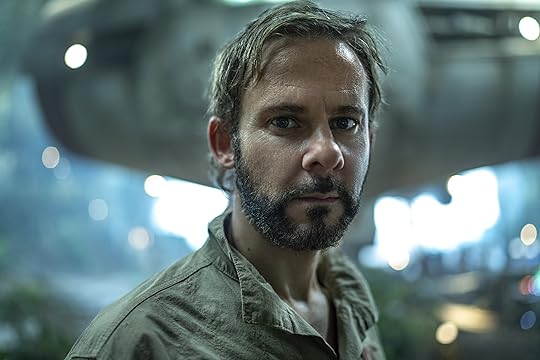
Remember this bro? Yeah, he 'wrote' this book!
Please be forewarned that this is written in the style of a non-fiction book *, but for those of us who loved Andor or even are old enough to obsess over imagining what 'The Senate' briefly mentioned in A New Hope might actually look and work like long before seeing it brought to dysfunctional life in The Phantom Menace and following films. The machinations of Palpatine, his accomplices and willing fellow travelers are meticulously detailed and, while the position of the author is that The Force is real and takes a role in events, the decisions and systems put into place by ordinary people are what truly move the Galaxy.
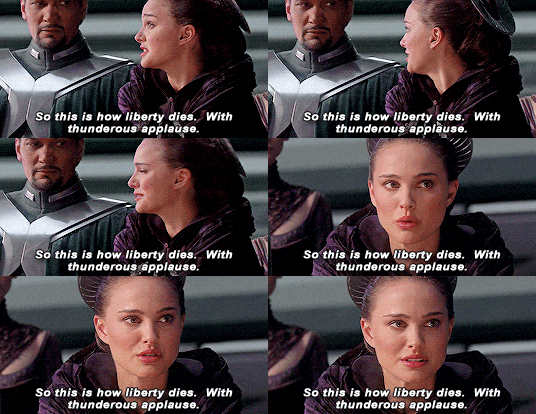
Doesn't feel like outlandish fantasy any more, does it?
* of a fictional universe (created in, and very much inspired, by our own).
Remember this bro? Yeah, he 'wrote' this book!
Please be forewarned that this is written in the style of a non-fiction book *, but for those of us who loved Andor or even are old enough to obsess over imagining what 'The Senate' briefly mentioned in A New Hope might actually look and work like long before seeing it brought to dysfunctional life in The Phantom Menace and following films. The machinations of Palpatine, his accomplices and willing fellow travelers are meticulously detailed and, while the position of the author is that The Force is real and takes a role in events, the decisions and systems put into place by ordinary people are what truly move the Galaxy.
Doesn't feel like outlandish fantasy any more, does it?
* of a fictional universe (created in, and very much inspired, by our own).

July 22, 2024
It's about time. In-universe histories and commentaries are plentiful in both Doctor Who & Star Trek fandom, but they are rare in the Lucasverse. This is one hell of an attempt to redress the balance: a book that combines history and metafictional commentary on the heart of the system that the original trilogy of films made famous. In particular, the exploration of Vader's role in the Imperial hierarchy & a re-evaluation of the significance of the Battle of Hoth are both highlights. No doubt several groups of what I like to call the "special people" in fandom will no doubt howl, as much of this may not conform to their own obsessive head canons...but if they can't appreciate the enormity of this work, then I pity them.

July 14, 2024
Ok, so, the good:
This is an attempt to write a fictitious, in-universe academic history text about the events of Star Wars. It touches on issues of historiography, bias, and ‘Great Man’ history vs structural causes. It doesn’t just cover the events of the films, but the underlying economics, social dynamics, and political background of the empire as portrayed in the movies. It paints a realistic portrait of how a fascist state operates in a galaxy far far away, while still acknowledging the fact that said state is ruled by an evil wizard.
I think this is very neat, and potentially an awesome way to get students or people uninterested in the art of historiography into understanding the process of how history is written. I also think it does a good job trying to explain or rationalize the very dumb plot developments that have happened under Disney’s watch.
The not so good:
I think the book would’ve worked better if it was further removed from the events of the films. The author mentions interviewing Rey, and directly quotes Luke Skywalker at various points, and to me that takes away some of the magic. I was hoping that the author would be writing from a vantage point of ignorance about the more personal narratives in the movies, and maybe would dismiss the supernatural elements altogether. But there just isn’t quite enough of that sort of “unreliable historian” in the book. Largely the events of the films are depicted accurately, with only things the narrator couldn’t have possibly known omitted.
It seems to me there isn’t enough of that ambiguity, that “well source A says this but B says this” that you see in, say, George RR Martin’s Fire and Blood. Why does the author know that Vader is Anakin Skywalker - that would’ve been a cool thing that the readers knew but the author didn’t.
Finally, the book is seriously hamstrung by its requirement (which I assume was a corporate mandate) to frame all of the events as leading up to Episode IX, and to recontextualize everything as being a part of the Emperor’s “grand plan” to do whatever nonsense happened in that movie. And that kinda sucks, because it requires contorting the rest of the book to ultimately be about a movie that very few people liked.
This is an attempt to write a fictitious, in-universe academic history text about the events of Star Wars. It touches on issues of historiography, bias, and ‘Great Man’ history vs structural causes. It doesn’t just cover the events of the films, but the underlying economics, social dynamics, and political background of the empire as portrayed in the movies. It paints a realistic portrait of how a fascist state operates in a galaxy far far away, while still acknowledging the fact that said state is ruled by an evil wizard.
I think this is very neat, and potentially an awesome way to get students or people uninterested in the art of historiography into understanding the process of how history is written. I also think it does a good job trying to explain or rationalize the very dumb plot developments that have happened under Disney’s watch.
The not so good:
I think the book would’ve worked better if it was further removed from the events of the films. The author mentions interviewing Rey, and directly quotes Luke Skywalker at various points, and to me that takes away some of the magic. I was hoping that the author would be writing from a vantage point of ignorance about the more personal narratives in the movies, and maybe would dismiss the supernatural elements altogether. But there just isn’t quite enough of that sort of “unreliable historian” in the book. Largely the events of the films are depicted accurately, with only things the narrator couldn’t have possibly known omitted.
It seems to me there isn’t enough of that ambiguity, that “well source A says this but B says this” that you see in, say, George RR Martin’s Fire and Blood. Why does the author know that Vader is Anakin Skywalker - that would’ve been a cool thing that the readers knew but the author didn’t.
Finally, the book is seriously hamstrung by its requirement (which I assume was a corporate mandate) to frame all of the events as leading up to Episode IX, and to recontextualize everything as being a part of the Emperor’s “grand plan” to do whatever nonsense happened in that movie. And that kinda sucks, because it requires contorting the rest of the book to ultimately be about a movie that very few people liked.
July 13, 2024
This book is an excellent review of the history of Star Wars from the ending of the Old Republic to the conclusion of Episode 9. Written in the style of the Rise and Fall of the Third Reich (an excellent and classic look at actual history and the evils of Nazism), this book successfully examines the Empire and First Order, as well their rises to power. It references just about all media that took place in that time period, and was written by a professional historian. I highly recommend it to all fans.

July 19, 2024
An incredibly moving love letter to Star Wars history and lore, with plenty of applicable warnings about the dangers of apathy and indifference in the face of rising totalitarianism.
Full review on my Space Wizards Book Club: https://spacewizardbooks.substack.com...
There was no doubt in my mind that I would love The Rise and Fall of the Galactic Empire. The new in-universe historical text written by real-life historian Dr. Chris Kempshall is everything I (also a historian) want to read in a reference book. There are footnotes, an index, and SO MANY details and Easter eggs connecting stories from across the canon AND Legends to create a comprehensive political history of the Empire.
What I didn’t expect, however, was how deeply moving this book is. It shouldn’t come as a surprise as the job of historians isn’t just to recite dates and facts but to paint a picture of a period with critical, human emotion-filled analyses of what went right and wrong.
The book is written from the point of view of Resistance historian Beaumont Kin (Dominic Monaghan in The Rise of Skywalker). Beaumont does what historians do best — explore what happened, in detail, and offer critical analysis to explain why it happened. The text references key historical events and figures from the Clone Wars all the way to the destruction of the second Death Star and the rise of the First Order to paint a nearly comprehensive picture of why the Empire rose and fell when it did.
This book isn’t a Star Wars history book, it’s a galactic history book. You’re reading it as if you’re a student in the Star Wars universe researching Imperial history and politics for an assignment. So, you’re getting a perspective of galactic history that is inevitably missing things because of lost sources and heavily redacted or destroyed records. The Empire, Beaumont writes, kept meticulous records of many things, but some of its worst atrocities weren’t documented due to Imperial apathy, indifference, and bigotry.
In other words, The Rise and Fall of the Galactic Empire is just like our own history books. Similarly, the book should make you draw connections to real-world politics and the rise and fall of empires. Star Wars has always been and will always be heavily political — war is in the name and George Lucas was not-so-subtly influenced by the Vietnam War to craft his original space opera tale.
The Rise and Fall of the Galactic Empire isn’t all sad and serious. It’s an excellent and at times exciting collection of canon events from movies, TV shows, books, and comics that come together to paint a broad-stroke picture of the original Star Wars saga. Coupled with Kristin Baver’s biography Skywalker: A Family at War, the two books create the most comprehensive look at several decades of galactic history.
As I said before, this book felt like it was made just for me and other nerdy historians. Kempshall’s love of history, Star Wars, and sharing those combined passions with others shines through from page one. I was truly in shambles by the first couple of pages because of the footnotes and historical writing style. It’s everything I could want in a Star Wars history book, and it inspires me to keep working toward a Star Wars history book I hope to write someday.
Full review on my Space Wizards Book Club: https://spacewizardbooks.substack.com...
There was no doubt in my mind that I would love The Rise and Fall of the Galactic Empire. The new in-universe historical text written by real-life historian Dr. Chris Kempshall is everything I (also a historian) want to read in a reference book. There are footnotes, an index, and SO MANY details and Easter eggs connecting stories from across the canon AND Legends to create a comprehensive political history of the Empire.
What I didn’t expect, however, was how deeply moving this book is. It shouldn’t come as a surprise as the job of historians isn’t just to recite dates and facts but to paint a picture of a period with critical, human emotion-filled analyses of what went right and wrong.
The book is written from the point of view of Resistance historian Beaumont Kin (Dominic Monaghan in The Rise of Skywalker). Beaumont does what historians do best — explore what happened, in detail, and offer critical analysis to explain why it happened. The text references key historical events and figures from the Clone Wars all the way to the destruction of the second Death Star and the rise of the First Order to paint a nearly comprehensive picture of why the Empire rose and fell when it did.
This book isn’t a Star Wars history book, it’s a galactic history book. You’re reading it as if you’re a student in the Star Wars universe researching Imperial history and politics for an assignment. So, you’re getting a perspective of galactic history that is inevitably missing things because of lost sources and heavily redacted or destroyed records. The Empire, Beaumont writes, kept meticulous records of many things, but some of its worst atrocities weren’t documented due to Imperial apathy, indifference, and bigotry.
In other words, The Rise and Fall of the Galactic Empire is just like our own history books. Similarly, the book should make you draw connections to real-world politics and the rise and fall of empires. Star Wars has always been and will always be heavily political — war is in the name and George Lucas was not-so-subtly influenced by the Vietnam War to craft his original space opera tale.
The Rise and Fall of the Galactic Empire isn’t all sad and serious. It’s an excellent and at times exciting collection of canon events from movies, TV shows, books, and comics that come together to paint a broad-stroke picture of the original Star Wars saga. Coupled with Kristin Baver’s biography Skywalker: A Family at War, the two books create the most comprehensive look at several decades of galactic history.
As I said before, this book felt like it was made just for me and other nerdy historians. Kempshall’s love of history, Star Wars, and sharing those combined passions with others shines through from page one. I was truly in shambles by the first couple of pages because of the footnotes and historical writing style. It’s everything I could want in a Star Wars history book, and it inspires me to keep working toward a Star Wars history book I hope to write someday.

Read
August 23, 2024This is the best Star Wars book I’ve read, but it’s also one of the best public history books I’ve read, and it’s also one of the best political books I’ve read.
Chris Kempshall does an absolutely incredible job writing as the in-universe historian Beaumont Kin and recounting the events of the Galactic Empire. His knowledge of the Star Wars universe is astounding and so detailed, drawing from the films, fiction, comics, video games and more.
This work is both a love letter to Star Wars and a great look at how historians do research: the archival footnotes and construction of the past made my heart sing. It’s also emotional and intense, but beautifully written: I was in tears at the end and I literally never cry at books.
If you’re a Star Wars fan, you’ll love this; if you’re a historical fiction fan, you’ll love this. It should get all the acclaim, and I genuinely can’t wait to see what Chris writes in future as the Star Wars universe is so much better for having him in it.
Chris Kempshall does an absolutely incredible job writing as the in-universe historian Beaumont Kin and recounting the events of the Galactic Empire. His knowledge of the Star Wars universe is astounding and so detailed, drawing from the films, fiction, comics, video games and more.
This work is both a love letter to Star Wars and a great look at how historians do research: the archival footnotes and construction of the past made my heart sing. It’s also emotional and intense, but beautifully written: I was in tears at the end and I literally never cry at books.
If you’re a Star Wars fan, you’ll love this; if you’re a historical fiction fan, you’ll love this. It should get all the acclaim, and I genuinely can’t wait to see what Chris writes in future as the Star Wars universe is so much better for having him in it.

December 29, 2024
Well I'm glad someone finally did something like this. A Fictional non fiction quasi academic text is great fun to say the least and the Galactic Empire was certainly the perfect topic for Star Wars. It also consolidates a lot of the timeline of the Empire and highlights bits of Canon and Legends from a more objective view as opposed to subjective character views.
One thing is for certain though, when reading through the rise and fall of the Empire I couldn't help but draw immense parallels between the Empire and the United States. Particularly during the chapters discussing the imprisonment/punishment for dissent, atrocities and Genocides and towards the end when the 'Centrists' that paved the way for the First Order are discussed. George was so right to choose the US as inspiration for his bad guy back in '77.
One thing is for certain though, when reading through the rise and fall of the Empire I couldn't help but draw immense parallels between the Empire and the United States. Particularly during the chapters discussing the imprisonment/punishment for dissent, atrocities and Genocides and towards the end when the 'Centrists' that paved the way for the First Order are discussed. George was so right to choose the US as inspiration for his bad guy back in '77.

July 12, 2024
Absolutely brilliant book.
If you are interested in political/military history and Star Wars, this book is well worth a read.
The author is a proper historian who has assumed the identity of a historian living in the time of the sequel movies who details the history of the Galactic Empire, often from different perspectives than seen in the TV shows or movies.
It presents a coherent picture of how the Empire came to power, how it worked and why it fell apart.
I really enjoyed the way it is structured as a serious academic text with endnotes at the end of each chapter that reference presumably fictional archives and interviews. At times he will reference events seen in a movie but the footnote will explain that it was referenced to an interview someone did after the war, etc.
I have read very few Star Wars books so quite a lot of story in the book was new. My understanding is he’s taken a lot of pre-existing lore but also some new stuff, and some stuff that has been taken out of the canon that he’s now re-canonized. I suppose if you’d read every Star Wars book this would be clearer but for me it meant there was plenty new.
The book goes through the history of military and political events but also explores bureaucratic structures, economics, ideology and the crimes of the Empire big and small so it gives quite a different perspective.
If you are interested in political/military history and Star Wars, this book is well worth a read.
The author is a proper historian who has assumed the identity of a historian living in the time of the sequel movies who details the history of the Galactic Empire, often from different perspectives than seen in the TV shows or movies.
It presents a coherent picture of how the Empire came to power, how it worked and why it fell apart.
I really enjoyed the way it is structured as a serious academic text with endnotes at the end of each chapter that reference presumably fictional archives and interviews. At times he will reference events seen in a movie but the footnote will explain that it was referenced to an interview someone did after the war, etc.
I have read very few Star Wars books so quite a lot of story in the book was new. My understanding is he’s taken a lot of pre-existing lore but also some new stuff, and some stuff that has been taken out of the canon that he’s now re-canonized. I suppose if you’d read every Star Wars book this would be clearer but for me it meant there was plenty new.
The book goes through the history of military and political events but also explores bureaucratic structures, economics, ideology and the crimes of the Empire big and small so it gives quite a different perspective.

December 7, 2024
This was such a rewarding read after completing my canon novel timeline! An in-universe historian writing a history book for the Empire was such a cool idea. This book will be an invaluable resource.

September 22, 2025
(4.0-4.5 Rounded Up)
Earlier this year I read William L. Shirer “The Rise and Fall of the Third Reich”. While I did read to better understand the history of Nazi Germany (and look for parallels in the 2020s political atmosphere), I also read to prepare for “The Rise and Fall of the Galactic Empire”. Inspired by Shirer’s work, this Star Wars book is written like an in-universe history book that charts the 60 years’ worth of Palpatine’s evil from “The Phantom Menace” to “The Rise of Skywalker”.
Written by real life war historian Chris Kempshall in the guise of Dominic Monaghan’s character in Rise of Skywalker, the book does a good job feeling like a real world non fiction book like Shirer’s classic text about a tyrannical regime. There’s plenty of footnotes to in-universe primary sources which were fine albeit I wish there was more to the footnotes than that (probably my biggest complaint of the book). And Kempshall does a great job getting the tone of an academic trying to make sense of a regime’s evil actions and the mindset of its citizens that willingly supported it or were ambivalent due to the stability it brought them. So as far as the gimmick of a non-fiction book from a fictional universe goes, Kempshall really succeeds and like this year’s “Mask of Evil” I’m sure Star Wars fans of certain demographics will draw parallels between what they see of Palpatine’s reign and what they’re seeing on the news.
Content wise, this is a smorgasbord of Star Wars content. Kempshall draws upon a plethora of Disney Star Wars content to craft the text and the in-universe history of Palpatine’s rise to power, his fall and his infamous “somehow” return. The movies get the bulk of the mentions which makes the book accessible but there’s plenty of references to the events of the Disney shows, novels, comics, games, etc. which will please fans of these projects. Some of the references I didn’t get too much like the chapter on Crimson Dawn which is heavily dependent on comic arcs I didn’t read but Kempshall does a good job recounting their significance without a reader needing to know their details or outcomes in their entirety. I myself loved the references to the “Alphabet Squadron” trilogy and “Andor” the book had (plus any reference to Thrawn and Pellaeon and the Legends content Kempshall re-canonizes like Kinman Doriana). The later Andor content which is exclusively to Season 1 content but not Season 2 does show some of the limits to the book as it can’t go into details about ongoing projects and character arcs(“The Mandalorian” and “Ahsoka” being ongoing so they can’t talk about Thrawn’s fate, not Andor Season 2’s great moments) but again Kempshall works around that with in-universe explanations (if anything the lack of talk on “Axis” works all the better to Luthen’s acceptance of his role).
Besides the references, the book makes sure it's not just a retelling of these events, there’s a lot of interesting analysis of the politics, daily life, etc. which makes for fascinating theories on how the Empire operates. Plus the book even slips in little nods and jokes to BTS moments from the making the movies (see Tarkin’s requisition for boots #iykyk). All in all it just gives a lot of cool reading material for Star Wars fans that is entertaining and maybe even makes fans think critically and draw connections to real world authoritarianism.
“The Rise and Fall of the Galactic Empire” lives up to the potential of its gimmick. It provides plenty of shoutouts to Canon and Legends projects that stitches them together to make a tapestry of the stories that show why the Galactic Empire was awful. It also may get some readers to be more cognizant of the Empire’s real world inspirations. Definitely worth a read to those like Chris Kempshall who are both students of history and uber Star Wars fans.
Earlier this year I read William L. Shirer “The Rise and Fall of the Third Reich”. While I did read to better understand the history of Nazi Germany (and look for parallels in the 2020s political atmosphere), I also read to prepare for “The Rise and Fall of the Galactic Empire”. Inspired by Shirer’s work, this Star Wars book is written like an in-universe history book that charts the 60 years’ worth of Palpatine’s evil from “The Phantom Menace” to “The Rise of Skywalker”.
Written by real life war historian Chris Kempshall in the guise of Dominic Monaghan’s character in Rise of Skywalker, the book does a good job feeling like a real world non fiction book like Shirer’s classic text about a tyrannical regime. There’s plenty of footnotes to in-universe primary sources which were fine albeit I wish there was more to the footnotes than that (probably my biggest complaint of the book). And Kempshall does a great job getting the tone of an academic trying to make sense of a regime’s evil actions and the mindset of its citizens that willingly supported it or were ambivalent due to the stability it brought them. So as far as the gimmick of a non-fiction book from a fictional universe goes, Kempshall really succeeds and like this year’s “Mask of Evil” I’m sure Star Wars fans of certain demographics will draw parallels between what they see of Palpatine’s reign and what they’re seeing on the news.
Content wise, this is a smorgasbord of Star Wars content. Kempshall draws upon a plethora of Disney Star Wars content to craft the text and the in-universe history of Palpatine’s rise to power, his fall and his infamous “somehow” return. The movies get the bulk of the mentions which makes the book accessible but there’s plenty of references to the events of the Disney shows, novels, comics, games, etc. which will please fans of these projects. Some of the references I didn’t get too much like the chapter on Crimson Dawn which is heavily dependent on comic arcs I didn’t read but Kempshall does a good job recounting their significance without a reader needing to know their details or outcomes in their entirety. I myself loved the references to the “Alphabet Squadron” trilogy and “Andor” the book had (plus any reference to Thrawn and Pellaeon and the Legends content Kempshall re-canonizes like Kinman Doriana). The later Andor content which is exclusively to Season 1 content but not Season 2 does show some of the limits to the book as it can’t go into details about ongoing projects and character arcs(“The Mandalorian” and “Ahsoka” being ongoing so they can’t talk about Thrawn’s fate, not Andor Season 2’s great moments) but again Kempshall works around that with in-universe explanations (if anything the lack of talk on “Axis” works all the better to Luthen’s acceptance of his role).
Besides the references, the book makes sure it's not just a retelling of these events, there’s a lot of interesting analysis of the politics, daily life, etc. which makes for fascinating theories on how the Empire operates. Plus the book even slips in little nods and jokes to BTS moments from the making the movies (see Tarkin’s requisition for boots #iykyk). All in all it just gives a lot of cool reading material for Star Wars fans that is entertaining and maybe even makes fans think critically and draw connections to real world authoritarianism.
“The Rise and Fall of the Galactic Empire” lives up to the potential of its gimmick. It provides plenty of shoutouts to Canon and Legends projects that stitches them together to make a tapestry of the stories that show why the Galactic Empire was awful. It also may get some readers to be more cognizant of the Empire’s real world inspirations. Definitely worth a read to those like Chris Kempshall who are both students of history and uber Star Wars fans.

September 4, 2025
This took me forever to finish, but it was super interesting.

August 12, 2024
In the wake of Emperor Palpatine's return and defeat (in 'The Rise of Skywalker') Resistance historian Beaumont Kin sets out to examine the history of the Galactic Empire in an attempt to understand how it and its atrocities could have found a foothold in the galaxy a second time.
Now, cards on the table, I HATE the Sequel Trilogy but the premise of this book I found genuinely engaging.
Written by a real-world war historian, taking on the persona of an in-universe historian its overall premise is this: We all grew up with stories of how awful the Nazis were, so how have we let the same evil rise up again?
If that's not the perfect message for these times in which right-wing populism is on the increase across the world (here in the UK, in particular, we've literally just had a whole string of fascistically-motivated riots by right-wing pricks), then I don't know what is.
This is a historian and the Star Wars brand standing up and saying "Dear Star Wars fans, beware the dangers of apathy!". On that alone, I would rate this book incredibly highly.
However, this book isn't just its message.
Here we get the first in-depth history of the Star Wars galaxy (or at least 60-ish years of it) written under the new Canon. There were similar tomes in the Expanded Universe, but none written as though it were an actual history book, examining motives, consequences and drawing conclusions to the observations.
This is a Star Wars book that dares to treat Star Wars fans as intelligent adults, capable of pondering complex themes and, in that way, this book is very much aimed at the same audience who thought 'Andor' was pure brilliance. People like me, for example.
As well as tying together the various movies, TV shows, novels and comics of the new canon, this book also sneaks plenty of little Easter Eggs in for long-term fans of the old Expanded Universe canon (AKA 'Legends'). I was therefore delighted to see things like the destruction of Caamas, the Battle of Derra IV and Hiram Drayson (of all people) brought over into the official canon.
This is a book that acknowledges that a great deal of good content about the Empire, the Rebellion and the New Republic is there to be mined in the 40-ish years of Star Wars stories told before Disney bought the rights.
The only reason I've not given this a perfect score is that, like pretty much every real-world history book I've ever read, this book can occasionally be a bit dry and repetetive of certain ideas. It adds to the authenticity, but detracts from the overall pleasure of reading.
* More reviews here: https://fsfh-book-review2.webnode.page *
Now, cards on the table, I HATE the Sequel Trilogy but the premise of this book I found genuinely engaging.
Written by a real-world war historian, taking on the persona of an in-universe historian its overall premise is this: We all grew up with stories of how awful the Nazis were, so how have we let the same evil rise up again?
If that's not the perfect message for these times in which right-wing populism is on the increase across the world (here in the UK, in particular, we've literally just had a whole string of fascistically-motivated riots by right-wing pricks), then I don't know what is.
This is a historian and the Star Wars brand standing up and saying "Dear Star Wars fans, beware the dangers of apathy!". On that alone, I would rate this book incredibly highly.
However, this book isn't just its message.
Here we get the first in-depth history of the Star Wars galaxy (or at least 60-ish years of it) written under the new Canon. There were similar tomes in the Expanded Universe, but none written as though it were an actual history book, examining motives, consequences and drawing conclusions to the observations.
This is a Star Wars book that dares to treat Star Wars fans as intelligent adults, capable of pondering complex themes and, in that way, this book is very much aimed at the same audience who thought 'Andor' was pure brilliance. People like me, for example.
As well as tying together the various movies, TV shows, novels and comics of the new canon, this book also sneaks plenty of little Easter Eggs in for long-term fans of the old Expanded Universe canon (AKA 'Legends'). I was therefore delighted to see things like the destruction of Caamas, the Battle of Derra IV and Hiram Drayson (of all people) brought over into the official canon.
This is a book that acknowledges that a great deal of good content about the Empire, the Rebellion and the New Republic is there to be mined in the 40-ish years of Star Wars stories told before Disney bought the rights.
The only reason I've not given this a perfect score is that, like pretty much every real-world history book I've ever read, this book can occasionally be a bit dry and repetetive of certain ideas. It adds to the authenticity, but detracts from the overall pleasure of reading.
* More reviews here: https://fsfh-book-review2.webnode.page *

July 20, 2024
I can't say enough good things about this book. It's super nerdy and high concept, but. It's an in-world book on the history of The Galactic Empire, written by Dominic Monaghan's character from Rise of Skywalker. It's written as a serious look at how fascism rises through politics, is accepted by the population, and is eventually defeated, then rises again due to people forgetting history, but using The Empire from Star Wars as an example. It even has tons of "footnotes" to Imperial and Rebel "documents" that are basically the events in the movies, shows, books, and comics.
I never thought a Star Wars book would be so timely as to give me chills, and remind me of the essential historical work " the author is the President for the International Society for First World War Studies and a Senior Research Fellow for the Centre for Army Leadership, Royal Military Academy Sandhurst, so he has a great knowledge of how empires rise and fall.
He also does a wonderful job of leaving holes where some stories like Thrawn are still being told, with a tongue in cheek that "I won't go into that, as my colleagues have covered that extensively elsewhere" Or other similar excuses of redacted documents, or things still being researched.
A very, very cool deep dive that you honestly don't need to be a canon Superman to enjoy, as it's structured very well around the broad beats everyone knows already.
I never thought a Star Wars book would be so timely as to give me chills, and remind me of the essential historical work " the author is the President for the International Society for First World War Studies and a Senior Research Fellow for the Centre for Army Leadership, Royal Military Academy Sandhurst, so he has a great knowledge of how empires rise and fall.
He also does a wonderful job of leaving holes where some stories like Thrawn are still being told, with a tongue in cheek that "I won't go into that, as my colleagues have covered that extensively elsewhere" Or other similar excuses of redacted documents, or things still being researched.
A very, very cool deep dive that you honestly don't need to be a canon Superman to enjoy, as it's structured very well around the broad beats everyone knows already.
August 3, 2024
This is a historical work, written completely in-universe by Beaumont Kin in 35 ABY. It looks like a novel, but it's a sourcebook 'pur sang'. Since SW has expanded greatly in the last decade, this work requires a lot of research which was very well done. Events from shows like 'Andor' and 'The Bad Batch' surely haven't been forgotten. Most Important of all, this book contains a lot of new info. Of course this book can't change the outcome of the Galactic Civil War, but it adds little bits of info here and there. Since it's a historical work, the book also contains conclusions and thoughts about historical events. These certainly weren't taken lightly and are always very interesting to read.
If you are familiar with the Ubiqtorate, ISB and PORD you'll absolutely enjoy this book. If you aren't familiar with these terms, then this book will tell you all about it. It also includes a large amount of info about the New Republic, something that's been rarely discussed in the canon.
Without any doubt one of the best Star Wars books that have been released in the new canon.
If you are familiar with the Ubiqtorate, ISB and PORD you'll absolutely enjoy this book. If you aren't familiar with these terms, then this book will tell you all about it. It also includes a large amount of info about the New Republic, something that's been rarely discussed in the canon.
Without any doubt one of the best Star Wars books that have been released in the new canon.

December 27, 2025
A very fun and creative premise that spans the history of the Star Wars canon while being very history (and unfortunately contemporary events) informed. At times it feels like Kempshall is speaking to the modern world (specifically America) when he talks about the galaxy.

July 28, 2026
Przede wszystkim dla fanów Gwiezdnych Wojen, ale nie tylko. Ambitna próba załatania dziur, wykorzystująca nowy kanon i elementy Legend (przynajmniej według mojej interpretacji), bogata w detale, choć przyznam, że i tak pewnych elementów mi brakowało. Świetnie zaadaptowana akademicka forma opracowania buduje immersję, ale i tworzy dysonans - Chris Kempshall wcielił się tu w rolę Beaumonta Kina, historyka żyjącego w czasach istnienia i upadku Najwyższego Porządku, który podsumował ostatnie kilkadziesiąt lat kosmicznej historii najnowszej - z głównym naciskiem na okres od Wojen Klonów po upadek Nowej Republiki, czyli jakieś pięć dekad działalności Palpatine'a i jego naśladowców. Z początku może to razić, lecz da się przywyknąć i nawet to polubić.
Najwięcej radości czerpać będą osoby dobrze obeznane nie tylko z filmami i serialami, ale też pamiętające komiksy czy książki. Wiele postaci poznałem dopiero przy tej lekturze, a przez umiarkowaną znajomość świata nie jestem w stanie rozpoznać co istniało wcześniej, a co do życia powołał sam autor, sprawnie wypełniając luki w dostępnym materiale. Obronną ręką wyszedł też tłumacz, Krzysztof Kietzman, którego praca mimo ogromu materiału jest niezauważalna. Miałem zresztą do czynienia z wcześniej przełożonymi przez niego książkami z uniwersum, działało to równie sprawnie.
Do "Powstania i upadku..." podchodziłem z pewnymi obawami, raczej ograniczając oczekiwania. Niepotrzebnie, to solidna pozycja. W pewnych aspektach zaskoczyła mnie pozytywnie (uwzględnienie ostatnich seriali, otwarcie na uzupełnienia w przyszłości), w innych pozostawiła niedosyt. Nie ma tu map, infografik, które wzbogaciłyby przekaz - garść fotosów i obrazków z filmów czy fanartów to raczej zapychacz niż wartość dodana. Odniesienia do archiwów Imperium/Republiki w przypisach to miły akcent, który nic nie wnosi. Jeśli wcielać się w badacza z tamtego świata, to warto iść na całość i uzupełnić przekaz o fizycznie istniejące załączniki z imperialnymi strukturami, zasięgami terytorialnymi itd. Rozumiem, że licencja niosła ze sobą pewne ograniczenia, a niedopowiedzenia są konieczne ze względu na mnogość dziur i potencjalne rozszerzenia, zwłaszcza gdy trzeba jakoś pożenić ze sobą nowy kanon i legendy, ale nic nie poradzę na to, że odczuwam wybrakowanie. Narzucony monograficzny charakter publikacji ogranicza też większe dygresje, może i dobrze, natomiast wciąż można wiele opowiedzieć. Widać, ile problemów stworzyła trylogia sequeli. Na marginesie, przezabawnie czyta się o "komandor Rose" czy "generale Finnie" jak o bohaterach, pamiętając że to raczej fajtłapy o złotych sercach. Starcie wysokiego z niskim jest w tym przypadku komiczne.
Warto przede wszystkim jeśli ktoś lubi książki historyczne i Star Warsy jednocześnie. Nie potrzeba wielkiej znajomości świata, by wybrać się w tę podróż z przyjemnością (nawet jeśli opisano ludobójstwo...), a autor zgrabnie wplótł uniwersalne przemyślenia na temat ludzkiej natury. Na szczególną uwagę zasługuje zagadnienie integracji rozerwanych społeczeństw, radzących sobie z traumą po upadku reżimu. Wymieniając Imperium na dawne i obecne dyktatury, można przeanalizować problemy jakie niesie ze sobą ponowne scalenie zwycięzców ze zwyciężonymi. Łatwo dostrzec zagrożenia jakie czyhają w dobie chwiejących się demokracji i zaobserwować złudę populistycznego autorytaryzmu, obiecującego porządek za cenę wolności. Kempshall nie popadł przy tym w moralizatorskie kaznodziejstwo znane z ckliwych przemów, nie opowiedział się po żadnej ze stron współczesnych sporów - zwrócił uwagę na jedną z większych wartości Gwiezdnych Wojen w komentowaniu rzeczywistości. Niezależnie od galaktyki, człowiek zostaje człowiekiem, a przy pomocy fikcji łatwiej przyswoić pewne prawdy czy dojść do wniosków, które kiedy indziej kłóciłyby się z zasiedziałymi przekonaniami. Muszę przyznać, że to chyba największa zaleta tej książki i w tym względzie obroni się ona nawet długo po tym, jak Disney rozbucha Gwiezdne Wojny do zupełnie nieprzepastnych rozmiarów. Niezależnie od retconów i wymazywania tego, co było, Imperium powstanie i upadnie w ten sam sposób, z tymi samymi konsekwencjami. Schemat jest wieczny, nazwy własne to tylko zastępowalne rekwizyty.
Najwięcej radości czerpać będą osoby dobrze obeznane nie tylko z filmami i serialami, ale też pamiętające komiksy czy książki. Wiele postaci poznałem dopiero przy tej lekturze, a przez umiarkowaną znajomość świata nie jestem w stanie rozpoznać co istniało wcześniej, a co do życia powołał sam autor, sprawnie wypełniając luki w dostępnym materiale. Obronną ręką wyszedł też tłumacz, Krzysztof Kietzman, którego praca mimo ogromu materiału jest niezauważalna. Miałem zresztą do czynienia z wcześniej przełożonymi przez niego książkami z uniwersum, działało to równie sprawnie.
Do "Powstania i upadku..." podchodziłem z pewnymi obawami, raczej ograniczając oczekiwania. Niepotrzebnie, to solidna pozycja. W pewnych aspektach zaskoczyła mnie pozytywnie (uwzględnienie ostatnich seriali, otwarcie na uzupełnienia w przyszłości), w innych pozostawiła niedosyt. Nie ma tu map, infografik, które wzbogaciłyby przekaz - garść fotosów i obrazków z filmów czy fanartów to raczej zapychacz niż wartość dodana. Odniesienia do archiwów Imperium/Republiki w przypisach to miły akcent, który nic nie wnosi. Jeśli wcielać się w badacza z tamtego świata, to warto iść na całość i uzupełnić przekaz o fizycznie istniejące załączniki z imperialnymi strukturami, zasięgami terytorialnymi itd. Rozumiem, że licencja niosła ze sobą pewne ograniczenia, a niedopowiedzenia są konieczne ze względu na mnogość dziur i potencjalne rozszerzenia, zwłaszcza gdy trzeba jakoś pożenić ze sobą nowy kanon i legendy, ale nic nie poradzę na to, że odczuwam wybrakowanie. Narzucony monograficzny charakter publikacji ogranicza też większe dygresje, może i dobrze, natomiast wciąż można wiele opowiedzieć. Widać, ile problemów stworzyła trylogia sequeli. Na marginesie, przezabawnie czyta się o "komandor Rose" czy "generale Finnie" jak o bohaterach, pamiętając że to raczej fajtłapy o złotych sercach. Starcie wysokiego z niskim jest w tym przypadku komiczne.
Warto przede wszystkim jeśli ktoś lubi książki historyczne i Star Warsy jednocześnie. Nie potrzeba wielkiej znajomości świata, by wybrać się w tę podróż z przyjemnością (nawet jeśli opisano ludobójstwo...), a autor zgrabnie wplótł uniwersalne przemyślenia na temat ludzkiej natury. Na szczególną uwagę zasługuje zagadnienie integracji rozerwanych społeczeństw, radzących sobie z traumą po upadku reżimu. Wymieniając Imperium na dawne i obecne dyktatury, można przeanalizować problemy jakie niesie ze sobą ponowne scalenie zwycięzców ze zwyciężonymi. Łatwo dostrzec zagrożenia jakie czyhają w dobie chwiejących się demokracji i zaobserwować złudę populistycznego autorytaryzmu, obiecującego porządek za cenę wolności. Kempshall nie popadł przy tym w moralizatorskie kaznodziejstwo znane z ckliwych przemów, nie opowiedział się po żadnej ze stron współczesnych sporów - zwrócił uwagę na jedną z większych wartości Gwiezdnych Wojen w komentowaniu rzeczywistości. Niezależnie od galaktyki, człowiek zostaje człowiekiem, a przy pomocy fikcji łatwiej przyswoić pewne prawdy czy dojść do wniosków, które kiedy indziej kłóciłyby się z zasiedziałymi przekonaniami. Muszę przyznać, że to chyba największa zaleta tej książki i w tym względzie obroni się ona nawet długo po tym, jak Disney rozbucha Gwiezdne Wojny do zupełnie nieprzepastnych rozmiarów. Niezależnie od retconów i wymazywania tego, co było, Imperium powstanie i upadnie w ten sam sposób, z tymi samymi konsekwencjami. Schemat jest wieczny, nazwy własne to tylko zastępowalne rekwizyty.

December 23, 2024
A staggering work that I would unequivocally recommend to any obsessive-minded Star Wars fans like myself. This book, written by an actual academic historian, applies the investigative principles of that field to the continuity of the franchise to create an in-universe textbook accounting for the complete mechanics of its subject. In 400 dense hardcover pages, author Dr. Chris Kempshall -- writing from the perspective of a fictional professional of his discipline within the titular galaxy -- covers how exactly the Galactic Empire came to power, governed, and was eventually defeated, far beyond the major events specifically depicted on the screen.
It's a remarkable achievement. It not only takes in the entirety of the official canon (a collection of disparate movies, TV shows, novels, comics, games, and more, produced by hundreds of individual writers over several decades for a variety of intended audiences and age levels) and synthesizes them into one coherent narrative. It also draws relevant insights and raises significant critiques from across that body to help illuminate the underlying drama, with the inevitable blanks lovingly and plausibly filled in by the author himself, occasionally by integrating characters and elements from Star Wars Legends (the 'expanded universe' of pre-2014 stories that Disney categorized as non-canonical due to their haphazard and contradictory nature, but have often been a source of inspiration for the new canon like this). A certain sort of reader will get a kick out of seeing names like Hiram Drayson finally brought back into the fold, but the primary accomplishment here stems from Dr. Kempshall taking up such prior contributions and carefully thinking through their various implications.
For example: why, in a universe teeming with diverse intelligent lifeforms, do so many of the Empire's officers appear to be white, male humans? The Doylist explanation would account for the realities and biases of 20th-century Hollywood when George Lucas was originally creating the saga, but this is a Watsonian production through and through. Taking that mission seriously means accepting the situation at face value and instead interrogating the premise to yield inferences about the prejudiced attitudes behind imperial staffing patterns and link them to similar forces at play throughout the setting. Likewise, Lucas and his co-writers presumably didn't put much thought into the military and government command structure of the Empire, which results in a hodgepodge of conflicting signals shown on-screen. But the professor has, and he weaves a brilliant story of how for instance the Death Star's destruction would have impacted the chain of command or how Darth Vader operated outside of that traditional hierarchy in ways that complicated the war effort and were a factor in his side's ultimate downfall. As a result, the Rebel Alliance's victories are awarded additional context that deepens their impact well beyond the initial authorial intent.
There are so many fun Easter eggs to spot for those of us who have partaken widely of the Star Wars canon, but the writer plays fair by citing fictitious references in his footnotes instead of specific published titles from our reality. That approach also creates some nice instances of dramatic irony, as there are plenty of cases where his everyman narrator figure couldn't know the same details that we the audience might, like the identity of the mysterious early Rebel leader codenamed 'Axis' on the series Andor. On the downside, he's sometimes forced to declare a given topic uncertain due to records remaining lost or classified, which I imagine has been at Disney's editorial discretion for stories they aren't yet ready to tell.
I think the weakest / least convincing part of the book can be found in its final section exploring the post-Endor era that gave rise to the First Order and the New Republic, but that's more to do with the sparseness of the existing canonical record and the lack of critical distance there than a flaw in the author's command of the material per se. Even comparable history texts from our world face a similar conundrum as their timeline approaches the present day, and the effort is commendable in attempting a moral lesson about complacency in a time of resurgent political extremism. Still, he's on much stronger ground with the earlier supporting evidence behind how the Empire initially emerged from the ashes of the Old Republic and its civil war against the Separatist movement, and in how that transition created the circumstances that formed the background of the original films.
Overall: a treat to read and linger over, and accordingly one of my top books of the year.
[Content warning for slavery, genocide, police brutality, and torture.]
Like this review?
--Throw me a quick one-time donation here!
https://ko-fi.com/lesserjoke
--Subscribe here to support my writing and weigh in on what I read next!
https://patreon.com/lesserjoke
--Follow along on Goodreads here!
https://www.goodreads.com/user/show/6...
--Or click here to browse through all my reviews!
https://lesserjoke.home.blog
It's a remarkable achievement. It not only takes in the entirety of the official canon (a collection of disparate movies, TV shows, novels, comics, games, and more, produced by hundreds of individual writers over several decades for a variety of intended audiences and age levels) and synthesizes them into one coherent narrative. It also draws relevant insights and raises significant critiques from across that body to help illuminate the underlying drama, with the inevitable blanks lovingly and plausibly filled in by the author himself, occasionally by integrating characters and elements from Star Wars Legends (the 'expanded universe' of pre-2014 stories that Disney categorized as non-canonical due to their haphazard and contradictory nature, but have often been a source of inspiration for the new canon like this). A certain sort of reader will get a kick out of seeing names like Hiram Drayson finally brought back into the fold, but the primary accomplishment here stems from Dr. Kempshall taking up such prior contributions and carefully thinking through their various implications.
For example: why, in a universe teeming with diverse intelligent lifeforms, do so many of the Empire's officers appear to be white, male humans? The Doylist explanation would account for the realities and biases of 20th-century Hollywood when George Lucas was originally creating the saga, but this is a Watsonian production through and through. Taking that mission seriously means accepting the situation at face value and instead interrogating the premise to yield inferences about the prejudiced attitudes behind imperial staffing patterns and link them to similar forces at play throughout the setting. Likewise, Lucas and his co-writers presumably didn't put much thought into the military and government command structure of the Empire, which results in a hodgepodge of conflicting signals shown on-screen. But the professor has, and he weaves a brilliant story of how for instance the Death Star's destruction would have impacted the chain of command or how Darth Vader operated outside of that traditional hierarchy in ways that complicated the war effort and were a factor in his side's ultimate downfall. As a result, the Rebel Alliance's victories are awarded additional context that deepens their impact well beyond the initial authorial intent.
There are so many fun Easter eggs to spot for those of us who have partaken widely of the Star Wars canon, but the writer plays fair by citing fictitious references in his footnotes instead of specific published titles from our reality. That approach also creates some nice instances of dramatic irony, as there are plenty of cases where his everyman narrator figure couldn't know the same details that we the audience might, like the identity of the mysterious early Rebel leader codenamed 'Axis' on the series Andor. On the downside, he's sometimes forced to declare a given topic uncertain due to records remaining lost or classified, which I imagine has been at Disney's editorial discretion for stories they aren't yet ready to tell.
I think the weakest / least convincing part of the book can be found in its final section exploring the post-Endor era that gave rise to the First Order and the New Republic, but that's more to do with the sparseness of the existing canonical record and the lack of critical distance there than a flaw in the author's command of the material per se. Even comparable history texts from our world face a similar conundrum as their timeline approaches the present day, and the effort is commendable in attempting a moral lesson about complacency in a time of resurgent political extremism. Still, he's on much stronger ground with the earlier supporting evidence behind how the Empire initially emerged from the ashes of the Old Republic and its civil war against the Separatist movement, and in how that transition created the circumstances that formed the background of the original films.
Overall: a treat to read and linger over, and accordingly one of my top books of the year.
[Content warning for slavery, genocide, police brutality, and torture.]
Like this review?
--Throw me a quick one-time donation here!
https://ko-fi.com/lesserjoke
--Subscribe here to support my writing and weigh in on what I read next!
https://patreon.com/lesserjoke
--Follow along on Goodreads here!
https://www.goodreads.com/user/show/6...
--Or click here to browse through all my reviews!
https://lesserjoke.home.blog

April 2, 2025
Loved reading about Star Wars lore. I loved that this book had its own publications and research to back up what was said. Though it is a fiction book, it felt like being truly immersed in the Star Wars universe.

November 27, 2024
"Palpatine was not a demon. He was a man. It is that aspect I find most terrifying of all." (pg xiii)
---FIRST IMPRESSIONS----
This is a very insightful book.
It's funny how much you can think of "the Empire" as one whole that acts under the same hierarchy and therefore mindset, and yet not take in the full context necessary to see how divergent it was in military strategy, the governing of worlds, and complacency regarding threats.
It also felt so real, as it was told as an in-universe document written by Beaumont Kin (played by Dominic Monaghan in "IX: The Rise of Skywalker"; see page vi before the "Contents" page).
Admittedly, I was worried that when it wasn't referencing events from the films/books/TV series, I would get bored or skim-read.
And yet, while some moments did stir up memories based on my limited exposure to Star Wars Canon continuity, my interest was dredged from learning what happened BETWEEN the familiar, especially regarding strategies such as the planting of weapons on "legacy worlds" to justify Imperial occupation and exploitation.
I also enjoyed the references to other "documentations", which included:
—a work on the Skywalkers by Kitrin Braves (really just a reference to "SKYWALKER: A Family At War" by Kristin Baver)
—"Artistically Done: The Life and Times of Grand Admiral Thrawn" (biography)
—"After Order 66: The Empire's War on the Jedi Order"
—"An Imperial Guide to Coruscant"
—"The Long Shadow of The New Order"
—"Twi'lek Culture and the History of Ryloth"
- "Filling the Vacuum: Artistic Responses to the Missing"
—"Hero of the Empire"
—"Honor Lost on Lasan: Serving the Empire, Fighting for the Alliance" (memoir by Kallus)
—"The Folly of War: An Analysis of the Rebel Alliance"
The inclusion of these titles actually made me feel like I could go and look them up in a local archi— er, LIBRARY.
(It's probably too much to ask, but I would be interested in seeing some of these titles created and released).
Anyways, the point of the book is to show the Empire was more than Palpatine and that those who followed him (whether it be as an Imperial loyalist, a complacent citizen, or a failed historian) were just as responsible for the creation of it as he was:
"Just as any one could potentially be a hero in the Rebellion, so too could anyone be a monster in Palpatine's Empire." (pg 137)
OVERALL,
I enjoyed the immersion of this book; in fact, as more information releases, I'd be interested in getting updated versions.
---FIRST IMPRESSIONS----
This is a very insightful book.
It's funny how much you can think of "the Empire" as one whole that acts under the same hierarchy and therefore mindset, and yet not take in the full context necessary to see how divergent it was in military strategy, the governing of worlds, and complacency regarding threats.
It also felt so real, as it was told as an in-universe document written by Beaumont Kin (played by Dominic Monaghan in "IX: The Rise of Skywalker"; see page vi before the "Contents" page).
Admittedly, I was worried that when it wasn't referencing events from the films/books/TV series, I would get bored or skim-read.
And yet, while some moments did stir up memories based on my limited exposure to Star Wars Canon continuity, my interest was dredged from learning what happened BETWEEN the familiar, especially regarding strategies such as the planting of weapons on "legacy worlds" to justify Imperial occupation and exploitation.
I also enjoyed the references to other "documentations", which included:
—a work on the Skywalkers by Kitrin Braves (really just a reference to "SKYWALKER: A Family At War" by Kristin Baver)
—"Artistically Done: The Life and Times of Grand Admiral Thrawn" (biography)
—"After Order 66: The Empire's War on the Jedi Order"
—"An Imperial Guide to Coruscant"
—"The Long Shadow of The New Order"
—"Twi'lek Culture and the History of Ryloth"
- "Filling the Vacuum: Artistic Responses to the Missing"
—"Hero of the Empire"
—"Honor Lost on Lasan: Serving the Empire, Fighting for the Alliance" (memoir by Kallus)
—"The Folly of War: An Analysis of the Rebel Alliance"
The inclusion of these titles actually made me feel like I could go and look them up in a local archi— er, LIBRARY.
(It's probably too much to ask, but I would be interested in seeing some of these titles created and released).
Anyways, the point of the book is to show the Empire was more than Palpatine and that those who followed him (whether it be as an Imperial loyalist, a complacent citizen, or a failed historian) were just as responsible for the creation of it as he was:
"Just as any one could potentially be a hero in the Rebellion, so too could anyone be a monster in Palpatine's Empire." (pg 137)
OVERALL,
I enjoyed the immersion of this book; in fact, as more information releases, I'd be interested in getting updated versions.

July 16, 2024
I've been a Star Wars fan since I was 8 years old and my dad took me to see the rerelease in theaters. That love for Star Wars has never faded, but in the years since I've gone on and gotten multiple history degrees so imagine how excited I was hear we were getting a historic look at the Galactic Empire (in the style of The Rise and Fall of the Third Reich. I have never hit "pre-order" so fast.
I absolutely loved this book, I mean just look at the (slightly insane) amount of highlights I have on my kindle. From Kempshall importing the most important roll of a historian ("The role of a historian—my role as a historian—is to try to tell you not just how but why these things happened. To try to make you understand the importance of these past events and what they mean for us today and tomorrow.") to showing how actually horrifying the Empire was in that galaxy far, far away this book was everything I hoped for and more.
The best thing I can say is that book has inspired me to run to the library and take out every book I can find that takes place during this time period in the Star Wars timeline
I absolutely loved this book, I mean just look at the (slightly insane) amount of highlights I have on my kindle. From Kempshall importing the most important roll of a historian ("The role of a historian—my role as a historian—is to try to tell you not just how but why these things happened. To try to make you understand the importance of these past events and what they mean for us today and tomorrow.") to showing how actually horrifying the Empire was in that galaxy far, far away this book was everything I hoped for and more.
The best thing I can say is that book has inspired me to run to the library and take out every book I can find that takes place during this time period in the Star Wars timeline

January 2, 2025
I will admit this book had me in the beginning but it became more clear to me the failings of this novel is that the lore isn’t consistent or concrete enough to write a novel like this. Most of the important facts or just the authors view point or speculation on some facts or what he says discrepancies of events. Furthermore half this stuff is all mostly known to any Star Wars fan and the stuff that is more advance isn’t even deeply explained or explored with the endings of certain stuff like Thrawn apparently deep secrets. This novel could’ve been amazing especially with the writing but unfortunately Disney can’t decide shit and fail to make Star Wars well diverse in lore and actual history of there “universe” womp womp.

October 24, 2024
I wanted to love this.
I love Star Wars. I love history books. I desperately wanted to love this, but was able to only sort of enjoy it, because an editorial decision was made with the footnotes that I find utterly appalling, the, referencing materials that are not actually available. Every reference to an event should have pointed to book, television program, film, or comic that was available to readers of this book.
I love Star Wars. I love history books. I desperately wanted to love this, but was able to only sort of enjoy it, because an editorial decision was made with the footnotes that I find utterly appalling, the, referencing materials that are not actually available. Every reference to an event should have pointed to book, television program, film, or comic that was available to readers of this book.

July 18, 2024
An essential read for any Star Wars fan, full of new information, incredible references, and commentary that, while written “in universe”, is highly topical in our current world. I sincerely hope Dr. Kempshall gets to tell more stories in this universe!

August 7, 2024
It was really good. There should be more books like this. It was kind of like a Star Wars history book and I enjoyed. Highly recommend for Star Wars fans.

August 30, 2024
This slapped so hard. I loved this. Lots of good info on the Empire presented via an in-universe history book. Very cool.

September 7, 2024
I have been wanting to read a book exactly like this one since about 1997... and it was well worth the wait!

October 5, 2024
What a great spin on “Star Wars” this one is!
Written as an authoritative text, I really enjoyed this one.
Happy Reading, everybody!
Written as an authoritative text, I really enjoyed this one.
Happy Reading, everybody!
October 11, 2024
Fantastic book

April 20, 2025
Promise I’ll get back to reading proper books soon. This is kind of an admirably strange project to come out of the Disney machine – an in-universe history book as a way of wrestling the current canon into something approaching a coherent shape. Seems like it was commissioned at the same time as Mask of Fear, i.e. when Disney realised people quite liked Andor. Full credit to Chris Kempshall for a valiant effort here but he’s limited by the core concept. Doesn’t feel like he had much license to invent new “history” (to avoid stepping on the toes of future works, presumably), so a lot of this is necessarily just recounting the plots of various movies, novels, comics, etc. Occasionally there is some fun business around the in-universe historian’s point of view, contradictory sources and so on, which I enjoyed a lot. However, sometimes you’re stuck with several pages recapping a Chuck Wendig book, and nobody needs that. Granted, I’ve bumped it up a star since I started writing this because I remembered one thing that does seem to be an original Kempshall invention – one of the dumber plot beats from one of the cartoons is recontextualised, via a bit from Andor, into an unbelievably bleak gag. Good gear 👍
Displaying 1 - 30 of 267 reviews