I need to start by saying that poetry is not my type of literature. I generally do not appreciate poetry and probably miss 90% of the metaphors and symbolism and what people enjoy about them. It was an easy read and flowed nicely however the poetic nature of it was sometimes distracting. This being said however, I did truly enjoy the story.
I found the fantasy/post-apocalyptic world created rather unique and interesting. It held my curiosity while I tried to discover what else this world had. I am curious to know what else this world holds and of course, what happened. I found parts of it a bit rushed going from captive, to escape, to growth (trying to avoid too many spoilers here). This might be though because I am used to reading novels. The art was also a good addition and I would have liked to see more of it.
Even if you are not a poetry lover, I still recommend picking this book up for a nice light read. It is entertaining and is a great story about growing up, making difficult decisions to move past obstacles, leaving loved ones and appreciating things in life.
The Watcher is a young boy, enslaved, as are his family and his friends, by fierce soldier dragons who make them work the fields and do their bidding. But the Watcher is not satisfied with his lot in life. He doesn’t like being a slave. He wants to be free. In the distance, the Watcher can see the metal skyscraper ruins, remnants of a world destroyed, a way of life before his time. His parents tell him stories of life amongst the skyscrapers, but stories are not enough. The Watcher must see for himself. He must be free.
Joshua Pantalleresco’s epic narrative poem, “The Watcher”, tells the story of a dystopian adventure, in a time after the fall of the great skyscraper towers. Written in free verse, this epic chronicles one boy’s journey to freedom and discovery and his return to rescue his family and friends. What the Watcher discovers is that life and the world around him is beautiful and it’s a beauty he wants to share with his family and friends. This is a journey to freedom, “Somewhere along this journey, the slave boy died/ leaving me in his place/ I am no longer a tool to be used/ but a free man.” The Watcher transformed on his journey to freedom, from a Watcher to a Dragon Slayer to a Hunter to Rebel Rescuer and once again Dragon Slayer. The end result? A brave new world full of beauty and, best of all freedom. This is an epic tale much like the Greek epic, “The Odyssey”. Readers will quickly immerse themselves in a tale, poetically told and a sense of poetry they never knew existed.
Disclosure: I purchased “The Watcher” by Joshua Pantalleresco from a local bookstore. I do not know the author and have never had any communication with him about this book or any other subject. The comments that follow are my own personal opinion. I received NO compensation of any kind, or from any one, to provide this review.
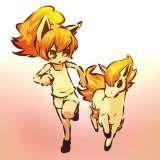
This is an epic poetry book about a futuristic world and a boy’s challenge to free himself from servitude. The poetry is beautifully written and the book contains some wonderful original art by Florence Chan. I read the entire book in under two hours and enjoyed it very much.
Delightful read; the descriptions and emotions were very nicely described. Although I rarely read children’s stories, the book was well done and surprised me with a very interesting and tightly written storyline. The poetry was excellent.
It's not exactly prose, it's not exactly poetry, but if you give yourself over to it, the writing has a rhythm and pace that fits the action and draws you closer to it. Think of a good sea shanty. During the quiet parts everyone hushes in anticipation. During the rollicking parts everyone cheers and sings along. The Watcher is like that.
The story arc is crisp, the main character's motivations are straightforward, the world is fleshed out just enough to place you there. The author doesn't spend time on many details, but the ones he does focus on are the right ones for the story. But it's the way the story is told, the way it's written, that really makes this a fun read!
Poetry generally is not my thing, but The Watcher is a post-apocalyptic story told as an epic poem in the same tradition as the Norse sagas. As such it concentrates more on telling the story of a boy escaping slavery by dragons and less on clever rhyme schemes or symbolism. I found it engaging, with both large and small mysteries to pursue. My biggest issue is that I wish it were longer. It's a vast world out there, in both time and space. Fortunately, there are further books in the series.
We as human beings seem to always become stuck in our ways. The same routine welcomes us day after day. For some, these routines are inevitable and cannot be changed due to vital reasons. However, for most people, it seems they become bored in their routines, yearning for something new, yet doing nothing to change it. Change can be scary and the uncertainty of what it may bring is the cause of many people hesitating to try it, but it can do wondrous things for the soul as author Joshua Pantalleresco focuses on in his epic poem The Watcher.
Dragons have made humans their slaves, making them work for reasons unclear. One young boy’s job is to sit atop a tower to watch for foul weather, but as he gazes off at the horizon day after day, he begins to wonder what else is out there. Achieving what no human has done before, he escapes the dragons into the unknown, curious to know what the world has in store for him, yet concerned if he will survive long enough to find out.
Readers should not let the dragons fool them into thinking they are reading an epic poem that reads like something out of an epic fantasy series. Instead, readers should expect to take a step back, really think about where they are in their lives, and where they would like to be. “[The world] will make you large like it is if you let it” (Pantalleresco 43). This is only one powerful statement of many Pantalleresco shares in The Watcher. He shares amazing wisdom and insight into the human soul all within a short epic poem where the dragons play a semi-minor role while a young human boy takes the lead.
While the dragons’ roles may not be as large as readers first believe, they do play a vital role in shaping humanity. Dragons have arrived on the planet somehow and want humans to serve them and harvest for them for reasons unknown. While it would have been interesting to learn more about where they came from, why they came to Earth, and how long they had been ruling the humans, Pantalleresco poses an excellent question through them. History has proven time and time again that humans are selfish and believe they are stronger than anything else and can take over anything they want. This is not the case for every individual human, but for humanity as a whole, it unfortunately is. However, when something stronger comes along, it really puts a mirror up to humanity’s face: Is this what humanity was… is? Is this what humanity has always been and is doomed to remain? Is it possible to still change or is it too late?
Next we look at the young unnamed protagonist. He is not yet a man, but he is not a child anymore: a rather vulnerable age and definitely an age filled with uncertainty. Pantalleresco picked an age that portrays how people feel when they try something new and make change in their life, no matter how old they are. Along with this uncertainty that every human feels in his or her life, Pantalleresco inserted a rather nice surprise into his poem: religion. This is rare to find in any story or poem nowadays, but always a pleasure to read. Even if readers are not religious, the message to take away from the young boy is to have faith. Even when all seems dark and that the world has come to an end, if one has faith and believes in good, all will be well. And, if one has that unbreakable faith, miracles happen all the time. “How many miracles were out there, so easily dismissed?” (Pantalleresco 30)
The Watcher is a rare find when it comes to writing that makes readers take a look at their own lives and at humankind. Within a short epic poem, Pantalleresco looks into the human soul and uncovers perhaps the biggest fear, yet deepest longing any human has: for change… for something new. “This book is dedicated to those that believe that there is more” (Pantalleresco 5). Just from his writing and his dedication, readers will be able to see the author as a positive person and a believer in there being more out there for everyone. And, using quick, yet descriptive detail, Pantalleresco is able to paint an incredibly vivid picture within the readers’ minds and these descriptions are accompanied by beautiful drawings by the talented illustrator Florence Chan. The Watcher could have easily been turned into a novel or book series; however, this short epic poem makes a quick impression and leaves a lasting effect with any reader and should most certainly be the next work to read on anyone’s list.
**Originally published on my blog Roll Out Reviews on August 13, 2018**
Building on a long history of narrative epic poetry, this tale follows a young human slave in a dystopian society as he makes his moves to escape the oppressive non-human regime. The interesting premise fights to play through the poetic structure, or lack thereof.
Traditionally, epic poetry is purely narrative with the speaker telling the story of a hero. The structure of the poem, whether it chooses to adeptly utilize rhyme or not, often employs rhythm providing momentum for the poem. In the English and Norse epics, the mid line break [caesura] also built a sub-structure into the poem. Rhythm and [optional] rhyme aided in memorizing the tale.
This tale is free verse since it opted for first person stream-of-consciousness rather than third person narrative. It also opts to eschew all punctuation to achieve the desired POV. That forces all structure onto the line breaks and stanza breaks to reflect the phrases. There is no win from this structural arrangement.
The stream-of-consciousness limitation to the narrative compromises the world building of the tale without third party characters introducing outside concepts. Not that this is necessarily a bad thing, the narrow POV is meant to be highly filtered. But with such a tantalizing recent history lingering in the shadows of the tale, one could hope for a wider lens. Characters in the know, such as the speaker's parents, are silenced by their effective absence.
With everything else stripped away [other characters, context, structure and even punctuation] the reader solely relies on the speaker and the interesting if sparse illustrations by Florence Chan. The speaker fails in consistency. Verb tenses flip from present tense to past tense and then double back again without a subsequent change of subject or time period. Either the speaker is giving the immediate tale that the reactionary rhetorical questions and present tense verbs would imply, or he has gained at least the limited understanding and context provided by the passage of time. Both cannot happen at once, and yet confoundingly here they do. And even the very passing of time is made contradictory. In the scene "The Hunt," the speaker claims an "after-the-fact" advantage that time provides: "patience was the key to those early days / the times were tough / I had no idea what to look for . . . I've tried killing [the stag] every day since I came here . . ." After this the first successful hunt scene plays out in the present tense, despite the opening passage being after the tough times of unsuccessful hunts.
Perhaps the tale is relying on the missing graphic structure that illustrations can provide. Such as in Brian K. Vaughn's Saga graphic series where scenes play out in the present tense, but the ultimate narrator is also able to apply meta commentary in the past tense from a far future POV. If that is the case, it hasn't been established here.
Dystopian fantasy presented with elegant poetry. This format paints the inner thoughts, worries, and dreams of the protagonist in an interesting way and catches your attention. Can't wait to read more from this author.
The Watcher is a fantasy tale written in a poetic narrative, detailing the escape and adventure of the narrator—a boy who has been held captive by dragons all of his life. Once the boy escapes, he sees the world outside his prison for the first time.
The Pros: The images are lovely. They add a beautiful depth to the story that allow the reader to better visualize the character and the world. I wish there were more images, as I feel it would have made the story even more enjoyable. The poetic narrative style is also nice because it removes a “density” that can usually be very cumbersome in high fantasy work. I also like that the genre-blending that happens here, for this piece is part high fantasy and part dystopian/post-apocalyptic. Individually, both genres can be too predictable and cumbersome, but here, it struck a nice balance. It removed some of the predictability of the dystopia and I didn’t have to read about cod-pieces, which I usually hate. Also, the initial psychological encounters that the boy faces when he finds himself alone in the wild for the first time felt authentic. Too often writers, in the name of plot, push through important moments like this, when the character’s interior strife deserves more attention. Pantalleresco did not do that here, which was pleasant surprise.
Cons: The narrative felt unbalanced and pacing lopsided. It seemed we went from capture to freedom too quickly, which robbed the story of some of the inherent dramatic tension of the escape. Also, we stumbled through the forest for a little too long and made the decision to return and save the family too hastily. There were also technical errors that weakened the readability of the story. For example, the sentences themselves had quite a bit of passive voice, tense shifts, and other errors that disrupted my experience with the story itself. I also found myself pondering—much too long—other technicalities. For example, a deer meat and coconut milk dinner is mentioned. However, coconut milk is made by pureeing/grating the flesh on the inside, which I am not sure the narrator could do in his situation. If he just split open the coconut and drank, that’d be coconut water. This is trivial and unimportant, but the fact that I even have room to consider this means I either 1) know far too much about coconuts or 2) the writing isn’t strong enough in this particular place to keep my mind from wandering to other things.
Overall, I think the genre-blending and images are great and think people with these interests should consider it for these reasons alone. If however, you are a stickler for poetic form and dramatic tension, you may not enjoy this as much.
Enslaved by dragons in a compound, the humans have no choice but to obey the commands and adjust to the life of slavery. The Watcher, however, longs for freedom outside the world of fire breathers. Will he succeed in his escape? If so, what awaits him out there?
This book, told in poetry form, takes the reader into a world of slavery; humans made slaves by dragons. The focus in on one main character only known as The Watcher. He struggles with staying and continuing the cycle or fleeing the only life he's ever known, leaving behind family and friends.
Joshua Pantalleresco writes an enchanting poem of a post-apocalyptic world ruled by dragons. The content is original and fresh. The length of the book is short but it is packed full of engaging words and imagery that is accentuated with artist renderings. What a wonderful blending of fantasy and post-apocalyptic poetry.
The book isn't as dramatic as I had hoped it would be. I realize this is suitable for most ages but there was a certain lack of build up when The Watcher put his plan into action. There wasn't as much trepidation relayed in The Watcher's voice and actions.
Other than that, though, I found the poetry form of The Watcher to be beautifully written and engaging. I enjoyed following The Watcher as he contemplated a different life, organizing and executing a plan, and how he handled freedom. The ending had me wanting to move immediately on to Stormdancer, the sequel to The Watcher.
Review copy courtesy of the publisher at no cost in exchange for an honest review.
A familiar story told in a bold new way that I found more satisfying than earlier attempts. Mankind's search for survival and redemption in a post-apocalyptic world. Yes, it's been done. But this is not a rehash of Planet of the Apes. Pantalleresco takes a lyrical approach and uses narrative poetry to delve into the human heart, using fallen Man as a catalyst for a much deeper story. Add gorgeous illustrations by Florence Chan and you have a book that should appeal to a broad range of readers. An excellent pick for school and public libraries.
This is a delightfully creative story, and an easy read. The author uses poetry to tell a story that is part fantasy, part science fiction. It is also a story of bravery, love and moving beyond your circumstances. It's a story that would work well for teens as well as adults. I won this book in a contest and am really glad I did.
Was a nice short book. Read almost like a Poem! Loved this way of writing! Very enjoyable! Look forward to reading more from this Author! It is an apopyliptic world where dragons have come to rule in the ruins of our human civilization. Shows a boys perspective of escape and freedom.