What if your best days weren’t left to chance, but something you could control and activate at will? Most of us want to be a little happier, a little more focused, and a lot less stressed. We want simple approaches that are easy to fold into our everyday lives.
In Sharp, you’ll discover dozens of evidence-backed strategies to help you unlock your potential and enhance your performance—whether at work, school, home, or in relationships. Cognitive scientist Therese Huston unpacks the latest neuroscience research to deliver a gold mine of techniques to help you feel your sharpest How a calming deep breathing technique improves decision-making Exactly what kind of exercise helps you think on your feet What brain science says you should look for in a doctor, and How to get focused on your most unfocused days. Forget the tired advice of "get more sleep"—Sharp dives into more innovative, actionable tips that can make a difference in your daily routine. Best of all, many of them take five minutes or less.
Whether you want to make fewer mistakes, support your partner through life’s challenges, or simply learn faster, Sharp gives you the tools to do it all, without having to overhaul your entire lifestyle. It’s time to take charge of your mental and emotional well-being with science.
For anyone looking to be a little happier, a lot more productive, and far less stressed, Sharp offers the solutions you’ve been looking for.
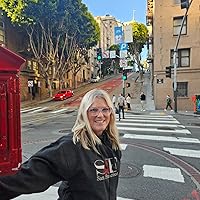
THERESE HUSTON, PH.D., is a cognitive scientist at Seattle University and the author of four books. Her latest book, "Sharp: 14 Simple Ways to Improve Your Life with Brain Science," helps you make the most of the brain you've got. Whatever your age, we all want to be a little mentally sharper.
Therese received her BA from Carleton College and her MS and PhD in cognitive psychology from Carnegie Mellon University. She completed a post-doc in clinical cognitive neuroscience at the Center for the Neural Basis of Cognition and she’s earned a postgraduate certificate in Organizational Leadership from the Said Business School at the University of Oxford.
In 2004, she founded the Center for Excellence in Teaching and Learning at Seattle University. Therese has also written for the New York Times and Harvard Business Review and "How Women Decide" was named a summer reading title by Oprah.com.
Therese gives talks and leads workshops on how to create more inclusive workplaces. Microsoft, Amazon, Nationwide, Morgan Stanley, the Cleveland Clinic, and TEDX have all asked Therese to give talks on creating more inclusive workplaces.
When she’s not writing or speaking, she loves to spend time with her charming and very bright husband and her adorable but not-very-bright Boston Terrier.
Sharp is like a stack of some of the most useful articles you’ve ever read about how to leverage brain science to make your life better – professionally and personally. They cover how to make fewer mistakes, enhance creativity, make better decisions, and more. The tips are practical and quick— many take just minutes. But most importantly, Dr. Huston, a cognitive scientist at Seattle University, explains in depth why you’ll want to bother. She has a talent for translating a research paper’s mind-numbing methods section into a gripping story that sticks with you.
Recommended for anyone interested in neuroscience, psychology, self-help, science-backed mental health advice, and productivity.
This book should be read by many. Every chapter is a way to improve your life. The solutions are easy to manage and could be done by anybody. I really really enjoyed the authors smooth writing. It was almost like being back in college with your favorite professor. Highly recommend.
This book has some fantastic - and entirely feasible - ideas for better productivity, creativity, and effectiveness no matter what your roles in life may be. Most of the tips could be summed up as "move your body" and "use your brain," but there were nuances and variations for each intended result that you wouldn't necessarily consider on your own. I especially appreciated the science backing up each idea, the age-related considerations (side note: things are not always harder after 50!), and the summary toolkit at the end of each chapter. Though I read the book front to back, I will be working through the ideas one by one. What I've tried so far has already made a positive difference!
nice book with easy-to-implement tricks: the biggest takeaway will be: 1. picture the process of moving towards your goals 2. goal : challenging but achievable , public goal for ppl to see 3. progress: physically record it & share with ppl some of my takeaways which I plan to incorporate to my daily life:
# creative - go for a walk / run, ideally best to go on a new route, *then jot down my thoughts / brainstorm immediately*
# focus: - star at 1 non moving object for 2 minutes , I prefer somewhere far for eyesight / nature,
# motivated - remind myself of bigger goal - cold shower / cold walk => every morning (then visualise my vision board)
> when I need to handle a task that I dread - listen to a music I like while doing that task , music that gives me chills
# look at my values & remind myself when would I spend time on it this week - ask myself what I value most in life & remind myself when would I spend time on it this week / in the future => every morning, every start of week
How to accomplish more? > When I practice visualise in the morning / anytime / when making my vision board: - picture the process of working towards / on my goal, step by step , PICTURE entire routine, from start to the end of working towards that goal
> When I wanna introduce a new habit: - use if , then , by linking it into my current routine
> When I have a new goal: - set achievable & challenging goals, then share it publicly - write my progress & share it on regularly basis - when I started -> focus on how much accomplished - when I end -> focus on how much left
This entire review has been hidden because of spoilers.
Sharp: 14 Simple Ways to Improve Your Life with Brain Science is a practical, grounded, and refreshingly evidence based guide to becoming more focused, resilient, and effective without resorting to extremes or gimmicks. Therese Huston excels at translating cutting edge neuroscience into strategies that feel immediately usable in real life.
What makes Sharp stand out is its clarity of purpose. Each chapter tackles a common human challenge motivation, stress, bias, decision making, creativity and replaces vague advice with concrete, research backed techniques. Huston doesn’t oversell transformation; instead, she empowers readers with tools that compound over time, making progress feel achievable rather than overwhelming.
The writing is accessible without being simplistic, intelligent without being academic. Whether discussing cognitive load, emotional regulation, or chronic stress, Huston consistently connects brain science to everyday moments at work, at home, and in relationships. The chapter on supporting a partner through stress is particularly thoughtful, expanding the book’s relevance beyond individual self improvement.
This is a smart, trustworthy, and genuinely useful book—ideal for readers who want to work with their brains, not against them.
This book is so well-written and explains brain science in easy to understand terms. The author covers 14 topics to improve your life, one covered in each chapter. I particularly liked that she recaps the key points at the end of each chapter. At the end of the book is a very useful appendix with 30 strategies that each take 5 minutes or less and organized so you can jump to the chapter you need. I didn't read this straight through, I found it best to tackle one topic at a time.
I received this book for free through Goodreads First Reads.
This delightful and insightful book was very enjoyable because it was easy to understand. It was clearly written to help.us stay sharp. It offered many easy activities for our brain. One could only hope that this book was even longer.
There are some good tips in this book and it felt like a worth-while background information type read. There was no lightening bolt moment for me, but it was worth the time.