

What do you think?
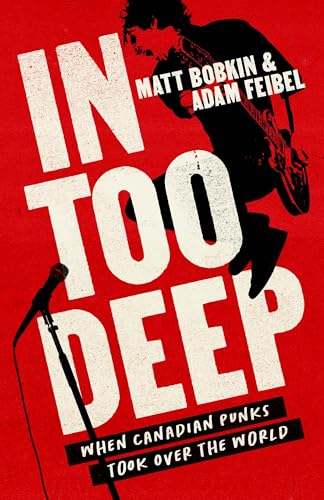
In Too Deep: When Canadian Punks Took Over the World
The unlikely story of a bunch of small-town Canadian punks who conquered the global music industry.
After punk found commercial success in the ’90s, with bands like Green Day, the Offspring, and Blink-182, a new wave of punk bands emerged, each embodying the DIY spirit of the movement in their own way. While Southern California remained the spiritual home of punk rock in the early 2000s, an unexpected influx of eager punks from Canada took the world by storm, changing the genre forever.
Drawing on exclusive interviews and personal stories from nine artists of the era, In Too Deep explores how Canada became the improbable birthplace of a new age of punk icons. Covering the rowdy punk rock of Gob and Sum 41, the arena-sized ambitions of Simple Plan and Marianas Trench, the reinvention of the popstar by Avril Lavigne and Fefe Dobson, and the quest to bring hardcore into the mainstream by Billy Talent, Silverstein, and Alexisonfire, In Too Deep traces the evolution of a music scene that challenged notions of who and what should be considered punk while helping to define Millennial culture as some of their generation’s first superstars.
After punk found commercial success in the ’90s, with bands like Green Day, the Offspring, and Blink-182, a new wave of punk bands emerged, each embodying the DIY spirit of the movement in their own way. While Southern California remained the spiritual home of punk rock in the early 2000s, an unexpected influx of eager punks from Canada took the world by storm, changing the genre forever.
Drawing on exclusive interviews and personal stories from nine artists of the era, In Too Deep explores how Canada became the improbable birthplace of a new age of punk icons. Covering the rowdy punk rock of Gob and Sum 41, the arena-sized ambitions of Simple Plan and Marianas Trench, the reinvention of the popstar by Avril Lavigne and Fefe Dobson, and the quest to bring hardcore into the mainstream by Billy Talent, Silverstein, and Alexisonfire, In Too Deep traces the evolution of a music scene that challenged notions of who and what should be considered punk while helping to define Millennial culture as some of their generation’s first superstars.
- GenresNonfictionMusicCanada
344 pages, Paperback
Published June 3, 2025
Ratings & Reviews
Friends & Following
Create a free account to discover what your friends think of this book!
Community Reviews
Displaying 1 - 30 of 38 reviews

July 30, 2025
You know when a book feels like it was written for you? This is one of those books. All the bands discussed in this book exploded when I was finishing high school/going to college, and it sent me spiraling into yet another nostalgic music trip. I’ve been doing that a lot lately, but have you watched the news? I need some freaking endorphins, OK!
“In Too Deep” is a love letter to the brilliant and energetic branch of punk (from the poppier stuff to the noisier kind) that Canadian bands were making in the late 90s and early 00s, leading many of those bands to become huge commercial success – breaking the age-old curse about Canadian bands are either huge in Canada or huge everywhere else.
Now genre purists might get all huffed up about what the authors consider punk: we can argue about what defines the genre until the cows come home and still disagree, so if you are that type, look at the list of bands the book discusses and if you don't care about their story or don't think they are punk, don't read it.
Let’s get this out of the way: the book is too damn short and doesn’t include enough bands to my taste. I get it, it’s impossible to cover everything and the authors had to make choices, but just a footnote for Propaghandi, really? Gawd. But I was especially delighted to learn more about Gob (“Foot In Mouth Disease” is one of the best Canadian punk records ever made) and Billy Talent, two bands who make my little Canuk heart beat extra fast even to this day. I was a lot less invested in most of the other bands, to be honest, but the authors clearly love their subject and all the bands they choose to discuss, which makes the book very fun and engaging even if you aren't a Simple Plan fan. They are also serious music nerds, who understand the cultural and industry context in which those bands got together and evolved, and do a fantastic job of explaining it all to the reader. The time period they focus on was a really exciting period for Canadian bands, with MuchMusic still going strong, and the cancon (that’s ‘Canadian content’) regulation that gave bands a lot of wonderful exposure. It's also a fascinating look at how relationships with labels, indie or major, can have a significant impact on any artist's trajectory (Gob deserved much better!).
As mentioned above, I think that punk purists might take offence at the fact that the book includes chapters on Avril Lavigne and Fefe Dobson. I don’t really think of them as punk musicians, but I will admit that Avril’s first record was a breath of fresh air when the only female artists I heard on the radio were pop princesses like Britney and Christina. No shade on them, but they were impossible to relate to, as where a little Ontarian girl who wore cargo pants and liked electric guitars was a beacon of hope: there were other girls like me out there! I hated all her other records, but I kept the first one; it’s a souvenir of an innocent time. Fefe and her were both very young when they got into this business, and their labels had a plan for them that they did not really agree with, and eneded up making much poppier music than they wanted, and that sucks. I would have loved it if these two girls had been given the freedom to make exactly the records they wanted instead of being saddled with songwriters who did not have the same ideas as them.
Highly recommended for Canadian geriatric millennials who wasted away many a summer’s day at Warped Tour and who used to listen to MuchLoud in their parents’ basement, but for anyone who is passionate about music in general, and pop-punk, more specifically. If you got excited about the "When We Were Young" festival, this is for you!
“In Too Deep” is a love letter to the brilliant and energetic branch of punk (from the poppier stuff to the noisier kind) that Canadian bands were making in the late 90s and early 00s, leading many of those bands to become huge commercial success – breaking the age-old curse about Canadian bands are either huge in Canada or huge everywhere else.
Now genre purists might get all huffed up about what the authors consider punk: we can argue about what defines the genre until the cows come home and still disagree, so if you are that type, look at the list of bands the book discusses and if you don't care about their story or don't think they are punk, don't read it.
Let’s get this out of the way: the book is too damn short and doesn’t include enough bands to my taste. I get it, it’s impossible to cover everything and the authors had to make choices, but just a footnote for Propaghandi, really? Gawd. But I was especially delighted to learn more about Gob (“Foot In Mouth Disease” is one of the best Canadian punk records ever made) and Billy Talent, two bands who make my little Canuk heart beat extra fast even to this day. I was a lot less invested in most of the other bands, to be honest, but the authors clearly love their subject and all the bands they choose to discuss, which makes the book very fun and engaging even if you aren't a Simple Plan fan. They are also serious music nerds, who understand the cultural and industry context in which those bands got together and evolved, and do a fantastic job of explaining it all to the reader. The time period they focus on was a really exciting period for Canadian bands, with MuchMusic still going strong, and the cancon (that’s ‘Canadian content’) regulation that gave bands a lot of wonderful exposure. It's also a fascinating look at how relationships with labels, indie or major, can have a significant impact on any artist's trajectory (Gob deserved much better!).
As mentioned above, I think that punk purists might take offence at the fact that the book includes chapters on Avril Lavigne and Fefe Dobson. I don’t really think of them as punk musicians, but I will admit that Avril’s first record was a breath of fresh air when the only female artists I heard on the radio were pop princesses like Britney and Christina. No shade on them, but they were impossible to relate to, as where a little Ontarian girl who wore cargo pants and liked electric guitars was a beacon of hope: there were other girls like me out there! I hated all her other records, but I kept the first one; it’s a souvenir of an innocent time. Fefe and her were both very young when they got into this business, and their labels had a plan for them that they did not really agree with, and eneded up making much poppier music than they wanted, and that sucks. I would have loved it if these two girls had been given the freedom to make exactly the records they wanted instead of being saddled with songwriters who did not have the same ideas as them.
Highly recommended for Canadian geriatric millennials who wasted away many a summer’s day at Warped Tour and who used to listen to MuchLoud in their parents’ basement, but for anyone who is passionate about music in general, and pop-punk, more specifically. If you got excited about the "When We Were Young" festival, this is for you!

June 9, 2025
Great book! It truly is a love letter to Canadian punk.
It’s like an encyclopedia showing the band or artists beginning and they set the scene with a descriptive masterpiece that makes you feel like you’re hearing them for the first time.
The chapters are split by artists + an intro and epilogue. There's chapters for Gob, Sum 41, Avril Lavigne, Simple Plan, Billy Talent, Silverstein, Alexisonfire, Fefe Dobson, Marianas Trench. It has a very cool epilogue recognizing how far music in Canada has come with shoutouts for some popular pop artists now. Intro was also super interesting.
I loved the listing of smaller bands from similar locations as the bands highlighted in each chapter. I was surprised Finger Eleven and Nickleback didn’t get their own chapter but I guess they’re more rock? Also no mention of the Flatliners or the Nils which I’m pretty sure are punk? Some other small bands tho mentioned included:
Not by choice
No warning
ill Scarlett
Cancer bats
Moneen
Attack in Black
Fucked Up
There’s a great bibliography and index. The footnotes are also amazing and show how well research this book is. Most of the information in the book is from the authors original interviews, additional interviews, and hundreds of reputable external sources.
Loved the classic mentions of venues like lees palace, The Opera House, Horseshoe tavern, and even Zanzibar lol.
Includes some cool early photos of the artists performing!
I would argue it’s mainly focused on 1990s- present day with a clear focus on the early 2000s when punk really exploded in Canada. There’s still some great mentions of early front runners on the scene tho from Canada, USA , and abroad which were popular in the 1970s-1980.
I highly recommend this book for not only Canadian punk lovers, but punk lovers worldwide and those interested in Canadian culture more generally.
I would only change the books title. If you are quickly glancing at it like I often do when browsing books it seems like it would be heavily focus on Sum 41 cuz of the In Too Deep part. As someone that’s read Whibleys book I wasn’t interested in that (not cuz I didn’t like it I just had already read a book about Sum 41)
Luckily I like punk and Canada enough that I eventually went back and picked it up. I think a more generalized title would’ve been better. I guess In Too Deep is catchy tho.
I plan on buying this book and sharing with my punk loving friends
It’s like an encyclopedia showing the band or artists beginning and they set the scene with a descriptive masterpiece that makes you feel like you’re hearing them for the first time.
The chapters are split by artists + an intro and epilogue. There's chapters for Gob, Sum 41, Avril Lavigne, Simple Plan, Billy Talent, Silverstein, Alexisonfire, Fefe Dobson, Marianas Trench. It has a very cool epilogue recognizing how far music in Canada has come with shoutouts for some popular pop artists now. Intro was also super interesting.
I loved the listing of smaller bands from similar locations as the bands highlighted in each chapter. I was surprised Finger Eleven and Nickleback didn’t get their own chapter but I guess they’re more rock? Also no mention of the Flatliners or the Nils which I’m pretty sure are punk? Some other small bands tho mentioned included:
Not by choice
No warning
ill Scarlett
Cancer bats
Moneen
Attack in Black
Fucked Up
There’s a great bibliography and index. The footnotes are also amazing and show how well research this book is. Most of the information in the book is from the authors original interviews, additional interviews, and hundreds of reputable external sources.
Loved the classic mentions of venues like lees palace, The Opera House, Horseshoe tavern, and even Zanzibar lol.
Includes some cool early photos of the artists performing!
I would argue it’s mainly focused on 1990s- present day with a clear focus on the early 2000s when punk really exploded in Canada. There’s still some great mentions of early front runners on the scene tho from Canada, USA , and abroad which were popular in the 1970s-1980.
I highly recommend this book for not only Canadian punk lovers, but punk lovers worldwide and those interested in Canadian culture more generally.
I would only change the books title. If you are quickly glancing at it like I often do when browsing books it seems like it would be heavily focus on Sum 41 cuz of the In Too Deep part. As someone that’s read Whibleys book I wasn’t interested in that (not cuz I didn’t like it I just had already read a book about Sum 41)
Luckily I like punk and Canada enough that I eventually went back and picked it up. I think a more generalized title would’ve been better. I guess In Too Deep is catchy tho.
I plan on buying this book and sharing with my punk loving friends
July 3, 2025
Reading IN TOO DEEP was a pleasant trip down memory lane for me, letting me relive some formative summers where the bands featured in this book were reigning supreme on MuchMusic and the radio.
The authors did a stellar job with their research - I was able to learn so much not just about the bands themselves, but the music industry as a whole and the major players behind the scenes who helped shaped these bands into who they eventually became.
Each chapter delves deep into a specific band’s lore, and even if you’re not a fan of every single band mentioned, you’re sure to be engaged by the sheer amount of interview material and little-known information offered up by the authors.
Normally I’m a slowish reader but I flew through this book in 2 days - I was happy to read out fun facts to whoever was around me while I was reading :)
Amazing job Adam and Matt!
The authors did a stellar job with their research - I was able to learn so much not just about the bands themselves, but the music industry as a whole and the major players behind the scenes who helped shaped these bands into who they eventually became.
Each chapter delves deep into a specific band’s lore, and even if you’re not a fan of every single band mentioned, you’re sure to be engaged by the sheer amount of interview material and little-known information offered up by the authors.
Normally I’m a slowish reader but I flew through this book in 2 days - I was happy to read out fun facts to whoever was around me while I was reading :)
Amazing job Adam and Matt!

September 29, 2025
That was great. feel like any Canadian kid who grew up in this era will feel the nostalgia in this book. From buying Simple Plan’s No Pads, No Helmets…Just Balls as my first album, when I was just a kid, to seeing Billy Talent live in 2025, it’s a full-circle trip. Growing up listening to these artists on MuchMusic or 102.1, and seeing some live at various stages of their careers, this book really reflects that experience. While some details felt familiar, I appreciate the research and interviews the authors conducted and even learned a few new fun facts. Highly recommend.

July 2, 2025
great vacation book! nostalgia central for the music and the Canada of the 90s/00s. had a lot of info I had no idea about despite having spent many teenage years studying some of these bands in DEPTH

June 3, 2025
A great, well researched look at Canadian punk. I learned so much and the love the authors hold for the genre is very evident. One of the best Canadian punk books I've read.
August 6, 2025
I can clearly remember the first albums I ever had as a kid. One was, oddly, Ultimate Victory by Chamillionaire. The others were Still Not Getting Any by Simple Plan, Chuck by Sum41, and Billy Talent by (you guessed it) Billy Talent.
To say these albums defined my taste in music would be an understatement. I would never have gotten into metal or hardcore if I had never listened to Chuck. If I had never heard Billy Talent’s This is How it Goes, I probably would never have realized that screaming can in fact sound good.
Canadian punk, hardcore, and metal deserves more recognition. There are so many bands from Canada that could have a chapter in a book like this. Cancer Bats, Comeback Kid, Pup, Propaghandi, Despised Icon, and maybe the most recent breakout act in Spiritbox. With the recent success of bands like Turnstile and Knocked Loose and Spiritbox we might be seeing a cultural “revival” of punk and hardcore and I really really really hope there are Canadian bands coming up ready to break through again.
So sick to see NOBRO get a shout out in the epilogue. Genuinely so sick. We are so cool.
I am not entirely sold on the chapter for Marianas Trench, and I am partially sold on Fefe Dobson, I just get the feeling they aren’t really “punk” in the way the others mentioned were. There is a reason I think those chapters had less “further listening” footnotes than other chapters. But I get it, and gatekeeping sucks, so I’ll let it go
Anyway, pretty essential reading if you grew up in the era I did listening to what I did. Very well researched and I learned a lot that I didn’t know before, and learned about bands I had never heard of before (Grade, for example, is so good)
To say these albums defined my taste in music would be an understatement. I would never have gotten into metal or hardcore if I had never listened to Chuck. If I had never heard Billy Talent’s This is How it Goes, I probably would never have realized that screaming can in fact sound good.
Canadian punk, hardcore, and metal deserves more recognition. There are so many bands from Canada that could have a chapter in a book like this. Cancer Bats, Comeback Kid, Pup, Propaghandi, Despised Icon, and maybe the most recent breakout act in Spiritbox. With the recent success of bands like Turnstile and Knocked Loose and Spiritbox we might be seeing a cultural “revival” of punk and hardcore and I really really really hope there are Canadian bands coming up ready to break through again.
So sick to see NOBRO get a shout out in the epilogue. Genuinely so sick. We are so cool.
I am not entirely sold on the chapter for Marianas Trench, and I am partially sold on Fefe Dobson, I just get the feeling they aren’t really “punk” in the way the others mentioned were. There is a reason I think those chapters had less “further listening” footnotes than other chapters. But I get it, and gatekeeping sucks, so I’ll let it go
Anyway, pretty essential reading if you grew up in the era I did listening to what I did. Very well researched and I learned a lot that I didn’t know before, and learned about bands I had never heard of before (Grade, for example, is so good)
June 19, 2025
*4.5 Stars*
n Too Deep was a blast to read, and I definitely enjoy the trip back to my teenage years listening and watching MuchMusic videos. To be honest, I have actually forgotten about some of these videos and I did spend considerable time on Youtube watching old videos of Avril Lavigne, Sum 41, Gob, and Billy Talent. What a blast to the past that was!! But on a more serious note, this book had a great blend of the creative genius behind these bands as well as their personal lives and fight to get to the top.
This book is definitely written by authors who love the punk rock scene, but also acknowledge the difficulties of Canadian artists breaking into the international market. With the chapters broken into discussions around individual artists, I appreciated the different ways the artists broke the mold and became huge hits both in Canada, the US, and internationally. There's chapters on Gob, Simple Plan, Sum 41, Avril Lavigne, Silverstein, Billy Talent, Marianas Trench, Fefe Dobson, and Alexisonfire. I understand there are more punk rock bands in Canada and not all of them can be mentioned in this book, but I certainly enjoyed learning more about the ones that were highlighted. There were even connections made with Finger Eleven and Nickleback, and a lot of American bands were mentioned as well, such as Blink 182, but only because they were associated with the Canadian bands through tours and for other reasons.
While the book focused mainly on artists who exploded during the 1990s, there were some descriptions of those artists who were also on scene during the 1970s and 1980s, and while it would be interesting to learn more about their influence, this was not the book for that. I also spent a lot of time in the bibliography and read all the footnotes as I like to read biographies of musical artists and I was looking to further my reading experience. Personally, I enjoyed those as much as the book and I was amazed to learn how much of this book came from the authors' personal interviews with the artists.
In too Deep was a fun book to read and for someone who hasn't necessarily kept up with some of the bands, it was good to learn more about them. I appreciated the research that went into this book including original and new interviews with band members and producers as well as other credible sources. Honestly, if you are a music fan in general, you should take a look at this book. Highly recommend!
I received a copy of this book from the publisher.
n Too Deep was a blast to read, and I definitely enjoy the trip back to my teenage years listening and watching MuchMusic videos. To be honest, I have actually forgotten about some of these videos and I did spend considerable time on Youtube watching old videos of Avril Lavigne, Sum 41, Gob, and Billy Talent. What a blast to the past that was!! But on a more serious note, this book had a great blend of the creative genius behind these bands as well as their personal lives and fight to get to the top.
This book is definitely written by authors who love the punk rock scene, but also acknowledge the difficulties of Canadian artists breaking into the international market. With the chapters broken into discussions around individual artists, I appreciated the different ways the artists broke the mold and became huge hits both in Canada, the US, and internationally. There's chapters on Gob, Simple Plan, Sum 41, Avril Lavigne, Silverstein, Billy Talent, Marianas Trench, Fefe Dobson, and Alexisonfire. I understand there are more punk rock bands in Canada and not all of them can be mentioned in this book, but I certainly enjoyed learning more about the ones that were highlighted. There were even connections made with Finger Eleven and Nickleback, and a lot of American bands were mentioned as well, such as Blink 182, but only because they were associated with the Canadian bands through tours and for other reasons.
While the book focused mainly on artists who exploded during the 1990s, there were some descriptions of those artists who were also on scene during the 1970s and 1980s, and while it would be interesting to learn more about their influence, this was not the book for that. I also spent a lot of time in the bibliography and read all the footnotes as I like to read biographies of musical artists and I was looking to further my reading experience. Personally, I enjoyed those as much as the book and I was amazed to learn how much of this book came from the authors' personal interviews with the artists.
In too Deep was a fun book to read and for someone who hasn't necessarily kept up with some of the bands, it was good to learn more about them. I appreciated the research that went into this book including original and new interviews with band members and producers as well as other credible sources. Honestly, if you are a music fan in general, you should take a look at this book. Highly recommend!
I received a copy of this book from the publisher.

September 29, 2025
My angsty grade 8 self is feeling seen. Fun deep dive into Canadian punk/emo history. What a nostalgic treat 🤘🏼
Throwback to Nexopia times. This quote got me lol:
“It wasn't just about the music anymore, either. Emo was a fashion statement, a lifestyle, a state of mind. The subculture especially thrived on MySpace, where hordes of teenagers would show off their jet-black fringe haircuts, dark eyeliner, skinny jeans, and studded belts in their profile pics, set their favourite emo songs to auto-play on their page, and quote the most angst-ridden lyrics in their status updates (along with "3" to denote a broken heart).”
Throwback to Nexopia times. This quote got me lol:
“It wasn't just about the music anymore, either. Emo was a fashion statement, a lifestyle, a state of mind. The subculture especially thrived on MySpace, where hordes of teenagers would show off their jet-black fringe haircuts, dark eyeliner, skinny jeans, and studded belts in their profile pics, set their favourite emo songs to auto-play on their page, and quote the most angst-ridden lyrics in their status updates (along with "3" to denote a broken heart).”

July 28, 2025
Awesome, fun trip down memory lane for anyone who was a fan of this period of music. I found it to be an extremely easy read not in the sense that it was basic, but in that it kept you engaged and respected your time. Learned tons of fun and interesting things about some formative musicians in my life, highly recommend.

August 30, 2026
Gob: a Canadian punk’s favourite Canadian punk band.
As a 905 scene kid this was a very enjoyable read.
I would’ve skipped Fefe and Marianas trench as chapter choices, no offence. Also, I know more metal leaning, but protest the hero should’ve had a panel, naw? If we’re talking about an update one day, Pup and Counterparts deserve chapters
As a 905 scene kid this was a very enjoyable read.
I would’ve skipped Fefe and Marianas trench as chapter choices, no offence. Also, I know more metal leaning, but protest the hero should’ve had a panel, naw? If we’re talking about an update one day, Pup and Counterparts deserve chapters

July 2, 2026
Easily one of my favourite books of all time.
A great high-level walk through an incredibly nostalgic period for music in Canada.
A great high-level walk through an incredibly nostalgic period for music in Canada.
August 1, 2025
Voici un très bel ouvrage sur l’émergence de groupes et d’artistes canadiens issus de la mouvance punk-rock de la fin des années 1990-début 2000. Écrit Matt Bobkin et Adam Feibel, deux journalistes musicaux, In Too Deep raconte les débuts de groupes comme Sum 41, Billy Talent, Simple Plan ou Alexisonfire (mais aussi Silverstein, Avril Lavigne, Gob, Fefe Dobson et Marianas Trench) en remontant à leurs débuts puis en décrivant les aléas de leurs parcours respectifs. Ce livre est une mine d’informations tirées d’entrevues directement réalisées par les auteurs, mais aussi glanées ça et là dans des dizaines d’articles.
J’ai beaucoup aimé la division du livre en chapitre (un par artiste), permettant de voir l’évolution de ces jeunes de banlieues qui ont réussi à percer le marché canadien, puis à rayonner à l’international, pour la plupart. Les nombreuses anecdotes racontées dans le livre m’ont beaucoup intéressé, alors que les références culturelles saupoudrées au fil des chapitres ont permis de raviver une certaines nostalgie en moi. En effet, les allusions à MySpace, au Vans Warped Tour, à MusiquePlus/MuchMusic et aux nombreux groupes populaires à cette époque (Blink-182, Green Day, The Offspring, etc.) m’ont fait réellement plaisir!
In Too Deep est un ouvrage qui fait référence à une époque musicale qui n’est plus, alors que la popularité se mesurait surtout en nombre d’albums vendus.
La plupart des artistes présentes dans le livre m’étaient connus, puisque j’ai beaucoup écouté ce type de musique au secondaire et au cégep.
Je serais d’ailleurs intéressé à lire pareil ouvrage sur des artistes québécois (Vulgaires Machins, entre autres). Je crois aussi que quelque chose pourrait être fait au sujet des groupes qui ont émergé a la même époque dans la ville de Québec: Each on Set, Still My Queen, Wasted Sunday, Dance Laury Dance, etc.
J’ai beaucoup aimé la division du livre en chapitre (un par artiste), permettant de voir l’évolution de ces jeunes de banlieues qui ont réussi à percer le marché canadien, puis à rayonner à l’international, pour la plupart. Les nombreuses anecdotes racontées dans le livre m’ont beaucoup intéressé, alors que les références culturelles saupoudrées au fil des chapitres ont permis de raviver une certaines nostalgie en moi. En effet, les allusions à MySpace, au Vans Warped Tour, à MusiquePlus/MuchMusic et aux nombreux groupes populaires à cette époque (Blink-182, Green Day, The Offspring, etc.) m’ont fait réellement plaisir!
In Too Deep est un ouvrage qui fait référence à une époque musicale qui n’est plus, alors que la popularité se mesurait surtout en nombre d’albums vendus.
La plupart des artistes présentes dans le livre m’étaient connus, puisque j’ai beaucoup écouté ce type de musique au secondaire et au cégep.
Je serais d’ailleurs intéressé à lire pareil ouvrage sur des artistes québécois (Vulgaires Machins, entre autres). Je crois aussi que quelque chose pourrait être fait au sujet des groupes qui ont émergé a la même époque dans la ville de Québec: Each on Set, Still My Queen, Wasted Sunday, Dance Laury Dance, etc.

June 13, 2025
I am having such a good time reading this book and I’m not even half way through the first chapter.
Will return.
----------------------------------------------
I am very biased because reading this book felt like reading about my best friends from elementary and high school. None of it is new information, none of it is surprising, but it is SO delightful to read. I always wonder if the bands and music I like that are "big" only feel that way because I'm in Canada, and Canadian broadcast media is required to play a certain percentage of Canadian-made media. But, no, these bands just really are that great, and people around the world know it.
I'm from Toronto, so I don't have the same feelings as someone from Burlington, or Ajax, or St. Catherine's might have reading about these bands, but I loved the experience all the same. You're shooting fish in a barrel when you write a book about Canadian media, I'm automatically hooked. But a book about Canadian music in the late 90's-mid 2000's? This would have been an encyclopedia during my teenage years, I'd've kept it close at hand at all times.
Only can't give it a 5 stars because I KNOW I'm biased, and I've gotta keep up my street cred.
If you want to know why I am the way I am, read this book and listen to the bands that are mentioned.
Will return.
----------------------------------------------
I am very biased because reading this book felt like reading about my best friends from elementary and high school. None of it is new information, none of it is surprising, but it is SO delightful to read. I always wonder if the bands and music I like that are "big" only feel that way because I'm in Canada, and Canadian broadcast media is required to play a certain percentage of Canadian-made media. But, no, these bands just really are that great, and people around the world know it.
I'm from Toronto, so I don't have the same feelings as someone from Burlington, or Ajax, or St. Catherine's might have reading about these bands, but I loved the experience all the same. You're shooting fish in a barrel when you write a book about Canadian media, I'm automatically hooked. But a book about Canadian music in the late 90's-mid 2000's? This would have been an encyclopedia during my teenage years, I'd've kept it close at hand at all times.
Only can't give it a 5 stars because I KNOW I'm biased, and I've gotta keep up my street cred.
If you want to know why I am the way I am, read this book and listen to the bands that are mentioned.

August 14, 2025
Most of the artists covered in this book are my all-time faves so this was an instant-buy the day it was released. And what a treat. You can tell every detail has been meticulously researched and put together with passion for the genre.
Alan Cross has some wonderful podcast episodes (Ongoing History of New Music) about the beginnings of punk in Canada (starting back around the 70s I believe), but he ends it by the 90s, so this is a more than satisfying continuation.
The blurb on the back says it best: “and look, here’s what really matters: there is now a book published by a prestigious, reputable publishing house about Gob. What else could you possibly want?”
The amount of Gob mentions throughout the entire book was awesome. I love those guys so much and I had no idea how far their influence reached.
Alan Cross has some wonderful podcast episodes (Ongoing History of New Music) about the beginnings of punk in Canada (starting back around the 70s I believe), but he ends it by the 90s, so this is a more than satisfying continuation.
The blurb on the back says it best: “and look, here’s what really matters: there is now a book published by a prestigious, reputable publishing house about Gob. What else could you possibly want?”
The amount of Gob mentions throughout the entire book was awesome. I love those guys so much and I had no idea how far their influence reached.
August 3, 2025
I loved this book. I grew up in the 60s and I knew very little about this era or music. I loved learning all about these young musicians who started in their garage and hit the world stage. There is so much great information here and it reads very quickly. When one paragraph ends, you want to continue on because of the great writing. I highly recommend this for anyone who is interested in the Canadian music scene. Doesn’t matter if you grew up with this music or not. I spoke with many of my friends who don’t live in Canada and none of them had any idea that all of these bands are Canadian. We need to celebrate our own and this book does it expertly! Hard to believe this is Matt and Adam’s first book. Kudos!

November 25, 2025
Although a compelling and interesting look at the punk influence out of Canada from the late 90s to the mid-00's, the sheer amount of material that had to be stuffed into each chapter watered down (and no doubt) left out crucial parts of each band/artists' story.
It's understandable as there is only so much room to write on each subject, however I found myself left wanting at the end of every chapter. Wanting to know more about the struggles, the triumphs, the stories of the road, etc. Again, understandable that all of that cannot be stuffed into one book, but it still would've been refreshing.
All-in-all, it is well-written and obviously well-researched with interviews and snippets from more sources than I can count.
Well done, and I can't wait for the next one!
It's understandable as there is only so much room to write on each subject, however I found myself left wanting at the end of every chapter. Wanting to know more about the struggles, the triumphs, the stories of the road, etc. Again, understandable that all of that cannot be stuffed into one book, but it still would've been refreshing.
All-in-all, it is well-written and obviously well-researched with interviews and snippets from more sources than I can count.
Well done, and I can't wait for the next one!
January 2, 2025
There seems to be a push in 2025 to write more books about Canadian music and I love it!
This book goes through some of Canada's most popular pop-punk artists of the 2000s, from Alexisonfire to Fefe Dobson to Gob. Each artist gets a detailed treatment of their beginnings and how they broke through to become huge Canadian bands. There are lots of interviews with band members, producers and the media that provide lots of new information that, as a fan of all the artists in the book, that I wasn't aware of.
If you are a Canadian music fan, this is a must read - one of my favourite books I've read in awhile.
This book goes through some of Canada's most popular pop-punk artists of the 2000s, from Alexisonfire to Fefe Dobson to Gob. Each artist gets a detailed treatment of their beginnings and how they broke through to become huge Canadian bands. There are lots of interviews with band members, producers and the media that provide lots of new information that, as a fan of all the artists in the book, that I wasn't aware of.
If you are a Canadian music fan, this is a must read - one of my favourite books I've read in awhile.
January 7, 2026
Decent fairly topline look at a handful of bands I connected with other the years. Just a baffling order to these chapters though. It's like a badly ordered mixtape tracklist that loses steam before you finish. It's hard to call it chronological because there's so much overlap, but it's so front loaded with the bands/artists that really did feel like they were take over global record sales (who you really do equate most with Canada at that time period) and then it's just a steady drop each chapter until the last couple are a big "who?" of artists that seemingly failed to achieve resounding international success.

July 31, 2026
Z’omg! This book had me so amped up and nostalgic; I was lucky enough to see almost every single band mentioned in this book in concert, and specifically remember the Silverstein reference at Warped Tour; my first year attending/ first mosh experience/ first festival/ formative years for independent musical taste development. Was especially cool to read this in tandem with being able to see Billy Talent’s 20th Anniversary Tour for Billy Talent ||. Loved, loved, loved; huge appreciation for putting my formative music and concert years into a story. HIGHLY RECOMMEND to my generation and friends of overlapping musical taste!!!!
This entire review has been hidden because of spoilers.
August 7, 2025
Really interesting look at punk/pop-punk/emo and how Canadian bands had an outsized influence on the genre. I'm a bigger fan of some of the bands featured more than others - it definitely helps to have that connection with the band when reading their story, it makes it more interesting. But hearing some of the anecdotes and the hard work - and sheer luck - it takes to make it was fascinating. The book is quite accessible for everyone but has enough detail that I imagine intense music fans would still appreciate it.

April 29, 2026
Excellent book! Perfectly encapsulates the music scene that was a huge part of my teen years and shaping who I am today. I love how the chapters are like individual stories, but also connect together to create this picture of the scene as a whole. I also met the authors, and they are super chill dudes! I definitely am buying copies of this book for all my friends who rocked out with me over the years <3

July 16, 2025
As someone who grew up in the South Western Ontario Punk and Hardcore scene this book was a fascinating insight of the bands that made it on the world stage from that area. I enjoyed the authors’ decision to include bands from what many of the scene would have associated with the pop world. Going to be listening to Gob for the rest of the summer.

March 28, 2026
i liked this book! it was well researched and well written and as someone who very much didn’t grow up (as a teenager) with this music it was neat to see into another “era” and especially cool to learn about Canadian music history in this type of narrative journalism nonfiction way. not life changing or nostalgic for me but still very enjoyable

August 29, 2025
“every Canadian story is an underdog story […] and you can only wonder who’s going to be next.”
unsurprisingly, i’ve seen almost all of the featured bands in concert. i loved this behind the scenes look at how they became the artists i grew up watching on much music/mtv.
unsurprisingly, i’ve seen almost all of the featured bands in concert. i loved this behind the scenes look at how they became the artists i grew up watching on much music/mtv.

August 6, 2026
Really enjoyable book, but Fefe Dobson and Marianas Trench are the outliers of the book, feel free to skip those last two chapters. I would have rather the author spent more time on the Gob, Alexisonfire, Billy Talent chapters instead of wasting space on Fefe Dobson.

August 15, 2025
A very enjoyable read. Took a subject I know very little about, and made it exceptionally interesting. No higher recommendation from me.

September 5, 2025
This book brought back so many memories.
So much information written in an engaging and entertaining way.
So much information written in an engaging and entertaining way.
September 18, 2025
Need a part 2!
February 11, 2026
Great bit of nostalgia for those of us who grew up on Much Music, dreaming of Warped Tour, posting lyrics on our MySpace.
Displaying 1 - 30 of 38 reviews