A little over five hundred years ago, a boy sat in a garden, waiting for his story to begin. His name was Babur, and he would soon found an empire that astonished the world.
For three hundred years, Babur’s sons and grandsons, alongside their mothers, wives, sisters, and daughters, would wage wars, make art and music, eat a delicious fruit or two, and both shape and be shaped by the land they made their home.
History would call them the Mughals. The Book of Emperors tells their stories.
The Book of Emperors is divided into a chapter per emperor, with the first six emperors, Babar, Humayun, Akbar, Jahangir, Shahjahan and Aurangzeb—getting slightly longer chapters. The later emperors (barring Bahadur Shah ‘Zafar’) get relatively little space. Not, however, so little that their life and times are dismissed out of hand. Short-lived emperors, of the come-and-go type, are in fact explained well (in a delightful mini-chapter, ‘The Year of Four Emperors’).
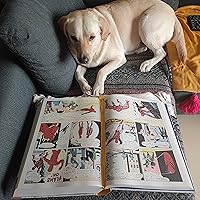
These mini-chapters, in fact, were among the most interesting aspects of the book. They appear between one main chapter and the next, and centre round one aspect or the other of the lives of the Mughals. How their kitchens functioned; the artists and poets they patronized; the emperor’s daily routine; the ladies of the haram. Each of these mini-chapters takes up a double spread, and is lavishly illustrated, with text boxes to tell the tale.
I would think that the target audience for this book would begin at around 11-12 years. Keeping the lower age range of the audience, I can see why the style of this book is what it is: Mughal lite, so to say. Not overridden with facts, not going on an on about dry and boring stuff like battles and conspiracies and conquests (though there are some of those). There are interesting little titbits, odd anecdotes, all of it imparted in an easy, very readable style.
And Nikhil Gulati’s illustrations are a joy: in the Acknowledgements, he mentions Bichitra, Mansur, et al, as inspiring him, and it shows: the illustrations are so vivid, so beautifully detailed, and so obviously a tribute to Mughal art. Not a copy, no; just intelligently inspired.
Highly recommended. Not a book to use as reference material for heavy duty research; but a wonderful homage to the Mughals. If you have any interest in the Mughals (or would like to nurture such an interest, especially in someone young), don’t miss this book.
I throughly enjoyed reading it. Couldn’t put it down since last evening. If I was a kid, after reading this book I’d want to immediately seek more books about the Mughals to fill in the details. Bahadur Shah Zafar’s was my favourite chapter, I always found his story to be quite moving and reading that chapter hit the right emotions.
Do you also get bored while reading history textbooks - the rulers and the kingdoms? Well, I used to. I would always feel so sleepy when studying history. But, I recently realized that it was not the subject; it was just the boring textbooks.
"The Book of Emperors: An Illustrated History of the Mughals" completely changed my perspective. This vibrant exploration of Mughal history, starting from the illustrious Babur, captivated me from the first page. Instead of dry facts and dates, this book breathes life into each emperor's story, accompanied by stunning illustrations that vividly depict their lives and times.
What makes this book truly special is its accessibility. The writing style is engaging and easy to follow, making it perfect for readers like me who want to delve into history without feeling overwhelmed. Each chapter unfolds like a captivating narrative, blending cultural insights, political intrigue, and personal anecdotes seamlessly.
Moreover, the book doesn't just focus on the wars and victories but also the emperors’ interest in art, culture, and literature. This holistic approach adds depth and richness to the narrative, providing a comprehensive understanding of the era.
Whether you're a history enthusiast or simply curious about the Mughal dynasty, "The Book of Emperors" offers a refreshing take on centuries-old stories. It's not just informative; it's a visual and intellectual treat that transports you to the opulent courts and turbulent times of the Mughal Empire. I highly recommend it to anyone looking to learn more about this fascinating period in a more engaging and colourful manner.
“Once, the padishah of Hindustan had been the richest man in the world. But by 1837, he was just an old man whose wretched circumstances elicited the pity of a passing traveller”
I’ve always been fascinated by the Mughal Empire. While many Indians view the Mughals as outsiders who came to pillage India without integrating into Indian culture, I believe this perception was heavily shaped by British colonial narratives. When the British East India Company took control of India from the Mughals, they emphasized a divide-and-rule strategy, which reinforced these views. The vast territory once unified under the Mughal Empire was divided, and anti-Mughal sentiments were strategically sown.
The Book of Emperors provides insight into this history. It illustrates both the Mughals' achievements and the decline that led to British rule. The book begins with Babur’s rule in 1526, chronicling his journey from the Fergana Valley, his struggles, and his eventual conquest of India, where he established a kingdom. It covers the Timurid lineage, showcasing the empire’s zenith under Akbar and its gradual descent after 1713, culminating in its fall to the British in 1857.
The author brings the emperors to life beyond mere dates and events, delving into their lives, cultures, interests, cuisine, architecture, and art, accompanied by beautiful, vibrant illustrations. I especially appreciated how each story evoked emotions, drawing me into both the triumphs and the series of poor decisions that led to the empire's decline. I felt both frustration at the missteps and sorrow at its eventual fall.
The book also illuminated details I hadn’t known before, such as the Mughals' use of Persian language and culture, the fate of the Peacock Throne, and the empire's unraveling. It highlighted rulers who embraced Indian culture, influential Mughal women who held the empire together, and the pivotal events and figures that shaped this remarkable era.
It’s mind-blowing to consider how one empire could control such a vast and wealthy expanse—from Kabul to Burma in the east and from Kashmir to Tamil Nadu in the south—for over 300 years. I was surprised to learn that only the first three emperors ruled successfully. The next two simply enjoyed its splendor, while one briefly expanded its territories. Unfortunately, the rulers that followed led the empire from bad to worse, ultimately losing any hope of restoring the grandeur it had achieved under Akbar.
The author has made The Book of Emperors beautifully accessible to both history lovers and those simply curious about the Mughal Empire. Through vivid storytelling, centuries-old stories come alive, transporting readers back to an era of royal courts, wars, and the intricate politics of a powerful kingdom.
Overall, The Book of Emperors is a beautifully written and illustrated chronological History of the Mughals, sure to make readers fall in love with this remarkable era all over again.
The Book of Emperors: An Illustrated History of the Mughals by Ashwitha Jayakumar and Nikhil Gulati
This book is a scintillating journey through Mughal history, making it accessible and engrossing for readers from young to old. Jaykumar's narrative style twists historical events into graphic storytelling, far away from the dry recounting one finds in most conventional textbooks. . The book is no dry record of wars and rulers but probes deep into the interest of emperors in art, culture, and cuisine and thereby paints a whole canvas of their life and times. This approach lends depth and richness to the Mughal era, bringing it alive in a manner that is at once informative and entertaining. . The highlight of the book comes in the form of Gulati's illustrations, which add a visual feast to the engaging text. Every single page has been detailed with beautiful artwork that brings historical figures and scenes alive before one's eyes, making one connect more emotionally with the material. The detailed and vivid illustrations make the book an artistic journey as much as a historical one. . The jacket of The Book of Emperors is striking, drawing readers right in and promising beautiful content inside. It is a very educative and nice book on the subject—altogether, an exemplary collaboration of Jayakumar and Gulati into one book, a must-have for history enthusiasts and casual readers alike. . There are so many more obscure facts and stories surrounding the Mughal emperors that give insight into their personal lives and the rich culture that existed at the time. It is a unique take on the history of the Mughals, which becomes very interesting for people who want to learn more about that era through engaging text and beautiful picture.
As a child who absolutely loved reading about Indian history in school, I knew I had to grab this book ASAP.
The Book of Emperors encompasses major historical aspects of the Mughal empire—from its beginning all through to the end till it's fall, as evident by the rise of other traders who went on to become conquerors.
Reading all the stories and their interpretations again had me reminisce about my history classes back in school, esp. the Mughal reign, concept of naboobs (nawabs), diwans, puppet ruler, battle of Plassey, Siraj-ud-Daulah, Mir Jafar part, the famous Sepoy mutiny of 1857, and the aftermath.
It's kind of a battle between those who find history boring to read about and, of course, the exceptions, ardent fans of history, so it becomes very crucial for writers to gauge the attention span of their readers and write in a way that is more engaging and less daunting. And Jayakumar and Gulati, as the brilliant new commanders of the army of histories, have made sure to win this battle by employing all the tactics at their hands!
With Jayakumar's brave interpretations of historical anecdotes, a dash of blunt criticism, and too-good-to-be-true illustrations that constitute Gulati's forte, The Book of Emperors would definitely be cherished by those who have always been intrigued by their pasts.
The Book of Emperors: An Illustrated History of the Mughals by Ashwitha Jayakumar and Nikhil Gulati is a captivating dive into the world of the Mughal dynasty, offering a blend of rich historical details and stunning visuals. The authors have done an excellent job of making the Mughals’ complex history accessible while maintaining the grandeur of the empire’s story. The illustrations are not just beautiful but also informative, providing a visual understanding of the era’s culture, architecture, and court life.
The book is structured in a way that guides the reader through key events and figures, from Babur’s establishment of the empire to the reign of Aurangzeb. It doesn’t overwhelm with excessive details, making it suitable for both history enthusiasts and casual readers interested in learning about the Mughals. The language is simple, and the narrative flows seamlessly, which keeps you engaged throughout.
What stands out is how the book also brings the lesser-known stories and challenges faced by the emperors into light, offering a well-rounded perspective. This book is perfect for anyone wanting to gain a deeper understanding of one of India’s most influential dynasties, with the added bonus of beautiful illustrations that complement the text.
This entire review has been hidden because of spoilers.
Being a history buff, I enjoyed reading The Book of Emperors. Even though it is a children's book, I found it to be full of new information and stories about Emperors from the Mughal Empire that not many know of.
In schools we are usually taught until Aurangzeb and then the last Mughal Emperor Bahadur Shah Zafar during the revolt of 1857. But very few people know of the emperors who came in between and how they ruled. This book gives you just that information. The stories of emperors we hardly talk about and the lesser-known facts about popular Mughal Emperors.
There are parts in the book where the writer has highlighted what the Mughals loved to eat and what their kitchen looked like, the lives of the queens and Begums and what a day in the life of an emperor looked like. Each part is beautifully accompanied by some detailed artwork by Nikhil Gulati which brings the stories to life.
The written content and the artwork complement each other and bring out a book that is an enjoyable read. I would say this is a book for all ages because any person who loves to read about history can pick this book up and be fascinated with the information it has.
Ingeniously crafted, this compilation of historical victories, failures, decision-making moments and indelible outcomes is a masterpiece owing to its rich selection and richer visual depiction. Laden with stories that shaped our present, The Book of Emperors reigns supreme in providing a comprehensive account of the lives of mughal rulers.
With a masterful blend of historical insight and narrative flair, the book invites readers to explore the lives and legacies of the Mughal emperors, from Babur to his illustrious descendants. Through vivid storytelling, the author paints a detailed picture of an era marked by grandeur, warfare, artistic innovation, and cultural fusion. The inclusion of both the rulers and the influential women in their lives adds depth and dimension, making "The Book of Emperors" not just a historical account but a vivid portrayal of an empire that shaped and was shaped by its people and their land. A must-read for both young and old history enthusiasts and anyone fascinated by the complex interplay of power, culture, and legacy.
Review: If you are impressed by the book's cover page, you will fall in love with Mughal history once again after reading this book. You will read how each piece after piece has been put into place, connecting history to people and places. Not only that, but the writing style is also easy and engaging with complementing and stunning illustrations. The book has been researched so well that it is full of new information and stories, which are often unheard of or unread. A few points which make the book unique: are the way It has highlighted the importance of the Queen and Begums in the lives of emperors, and how it has shown the emperor’s interest in art, culture, literature, and his personal life as well, what they liked to eat etc (along with wars and victories). I highly recommend this book to anyone looking to learn more about this period more engagingly. @bookmarked2023
The Book of Emperors reads with a certain lightness — its language simple, almost as if written with teenagers and curious young readers in mind rather than adults seeking depth. At times, the tone drifts into that familiar GenAI-like flatness, the kind where the words tell you what happened but rarely linger long enough to make you feel anything about it.
And yet, in spite of that softness of prose, the book charms you. The illustrations are genuinely delightful — vibrant, detailed, lovingly crafted — the kind that make you pause longer than you intended. The overall design, the colours, the texture, the visual storytelling… it all comes together to make the book feel like an object worth holding, a small treasure on any shelf.
It may not challenge you as a reader, but it might just win you over as a book lover.
It’s rare to find engaging history books in India. This well-researched and anecdotal book on the Mughals attempts to change that. Beautiful illustrations and interesting facts pepper the narrative throughout. I read it to my son and we both enjoyed it!
I attended a workshop earlier this year on how to read Mughal paintings by Aswitha Jayakumar, where I first learned about this book. It is a truly informative read, enriched with wonderful illustrations that bring history alive. History geeks assemble for this one!
Wonderful book for introducing Mughals to readers of all age groups...the illustrations elevate the book to another level..beautifully designed. Highly recommended for all