PERFECT FOR FANS OF Mel Robbins' THE LET THEM THEORY and THE COURAGE TO BE DISLIKED
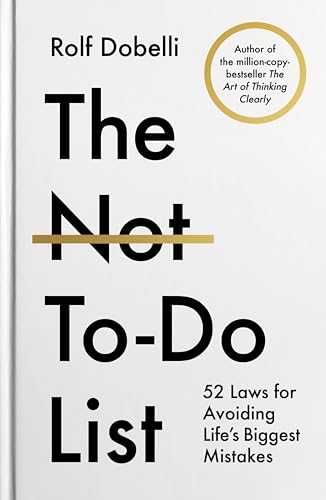
The new book from the multi-million-copy bestselling author of The Art of Thinking Clearly
Have you Got stuck in your career? Said 'yes, sure' when you should have said 'sorry, no'? Tried to change someone? Listened to your inner voice?
These are all examples of habits, decisions and behaviours that will derail your efforts to build a life of success - of better decisions, career and relationships; of happier and healthier living.
In his new international bestseller, Rolf Dobelli reveals 52 of life's biggest mistakes, and shows why the key to living well is so much simpler than you might think. Just understand what the pitfalls are... then avoid them.
Rolf Dobelli is a Swiss author and businessman. He began his writing career as a novelist in 2002, but he is best known internationally for his bestselling non-fiction The Art of Thinking Clearly (2011, English 2013), for which The Times has called him "the self-help guru the Germans love".
این کتاب با عنوان فهرست کارهای انجام ندادنی از نشر مون منتشر شده.. کتاب سطحی و پیش پا افتاده با مطالب تکراری.. مثلا همه میدونن که نباید با ادم های منفی باف تو زندگیشون بگردن یا همه میدونن باید مدیریت مالی داشته باشن و ولخرجی نکنن یا هممون میدونیم باید تمرین کنیم که هر چیزی رو قبول نکنیم و بلد باشیم نه بگیم و حالا ۵۲ قانون اینجوری در ۳۰۰ صفحه نوشته شده که نه تنها نکات جدیدی رو نمیگه بلکه فقط تکرار نکات قدیمی و سطحیه..
I wish this book didn't have the sarcastic or ironic sections at the beginning of each chapter, each of which is consumable enough. The author applies the law of inversion to state various points on how to lead a good life. All of which are earnest enough but as a reader I really could have done without the sections at the beginning of each chapter. Would have made for a thinner and more consumable book. I picked up this book because I have read the author's earlier work which was great. This is a basic but good enough read you can consume quickly.
کتاب در مورد شیوه های مرسوم شکست خوردن است، پس منطقی است که با انجام ندادن آنها، احتمال شکست خوردن کم شود یا حداقل اینکه شکست ها کم عمق تر شوند. در واقع احتمالا همه خوانندگان قسمت عمده ای از مطالب کتاب را از قبل می دانند و شاید دقیقا به همین دلیل است که کتاب امتیاز بالایی کسب نکرده است ولی از سمت مقابل، اگر به دید یک یادآوری به کتاب نگاه بشود، کتاب قابل اعتناتر می شود. البته که ممکن است با مباحثی از کتاب موافق نباشید ولی بهرصورت به عنوان یک داربست فکری، مفید است. به نظرم می رسد که شخصیت نویسنده ذاتا کمی بدبین و محتاط است، به همین دلیل هم است که کلیت کتاب کمی ناامید کننده است. اما یک نکته قوت کتاب، پیوست نسبتا پر و پیمان انتهای کتاب است پینوشت: کتاب من از نشر مهرگان خرد با ترجمه فاطمه یزدانپناه بود
Some good parts, some less good parts. I feel like the author tries to gloss over a lot of complex topics, providing oversimplified solutions (and for some chapters I just flat out disagree with him).
From the author of The Art of Thinking Clearly comes a new non-fiction title, The Not To-Do List: The Surprisingly Simple Art of Success!
Instead of a To-Do List for success, Dobelli has come up with the inverse, a Not To-Do List. Each chapter consists of sarcastically written entries on a Life of Misery, followed by advice from the Quiet Voice of Reason. Formulaic, but an inspiring self-improvement book to get oneself back on track, if you're feeling unmotivated, sluggish. This book outlines the keys to a life of failure, and counters such negativity with logic.
The Not To-Do List is a powerful and wise guiding force for living your best life each day.
One thing I didn't quite like was how the author kept referring to Warren Buffett, Charlie Munger, Berkshire Hathaway so frequently, it felt like a shameless plug/advertorial at times which was a bit cringey for me. And there was a lot of 'reflected glory' kind of remarks like 'oh my friend who happens to be a billionaire' which I found off-putting.
But here are some lines I enjoyed:
'Maintenance is by no means a heroic deed. It is boring and unsexy, and most of it goes unseen. But that's not to say it's any less important than heroism - in fact, quite the opposite. While we systemically overestimate the value of a grand design or a brave rescue mission, we systematically underestimate the value of quiet ongoing maintenance.'
'[Benjamin Franklin] was on a constant quest for self-improvement. At the age of 20, he came up with a plan to 'perfect' his character. He compiled a list of 13 virtues he wanted to cultivate in his life - things like industry, frugality, resoluteness and avoiding unnecessary small talk. He devoted a week to each of these virtues, consciously practising and focusing on them. Then he started the cycle all over again from the beginning.'
'Never give others a reason to meddle in your personal life. Set clear boundaries and deal with your own problems behind closed doors. A small cast, three-act play is over faster than an epic opera.'
'Your environment offers plenty of lessons on the foolish things that are best avoided. I'm not suggesting you delight in them, but you should definitely learn from them. Where exactly did this person go wrong? Probe like a scientist.'
'In a hundred years' time, people will wonder: what on earth was going through these people's minds when they posted and consumed all that inane nonsense? Didn't they have anything better to do with their lives?'
This book is a masterclass in cutting through the noise of modern self-help literature, and honestly, it's one of the most useful reads I've encountered in recent years. What makes The Not To Do List genuinely exceptional isn't the complexity of its ideas—it's the clarity with which Dobelli presents what we already know deep down but have somehow lost in the chaos.
The genius of this book lies in its premise: instead of yet another motivational tome telling you what to do, Dobelli does something radical by telling you what not to do. The 52 items he outlines feel painfully obvious once you read them, yet they're precisely the things most of us are actively doing wrong—caught up in the exhausting, chaotic lifestyle that characterizes our modern age. Whether it's saying yes to everything, listening to your unreliable inner voice, having impossibly high expectations, or endlessly multitasking, nearly every reader will find themselves uncomfortably reflected in these pages.
What strikes me most is how the author validates what we suspect: if you're feeling stuck, unfulfilled, or perpetually exhausted, the problem likely isn't that you're missing some secret ingredient or success hack. The problem is almost guaranteed to be one (or several) of these 52 items. And Dobelli articulates each point with surgical precision—not with motivational fluff, but with the steady, unsentimental reasoning of someone who understands both business and human psychology.
Despite appearing deceptively simple or like "just another self-help book," this is genuinely one of the best investments of time I've made reading in the last couple of years. The usefulness-to-page ratio is extraordinary. There's no filler, no lengthy anecdotes stretched to chapter length, no vague philosophizing. Each chapter is focused, actionable, and respects your intelligence. Dobelli treats the reader like someone capable of understanding complex ideas without needing them spoon-fed through repetitive motivational language.
The book is most valuable for people ready to genuinely question themselves—for those willing to admit that their life isn't working the way they want and are honest enough to explore what role they might be playing in that failure. If you're someone who reads self-help books because you're serious about reconsidering your life direction and eliminating what isn't serving you, this is essential reading. It won't make you feel good; it will make you think acutely and, more importantly, act differently.
If you've ever found yourself making the same life mistakes over and over, Dobelli's "The Not To Do List", instead of telling you what to do (like most self-help books), this one flips the script and focuses on 52 things you should avoid.
The book's central philosophy borrows from Charlie Munger's wisdom: "All I want to know is where I'm going to die, so that I'll never go there." Each short chapter identifies a common pitfall, explains why it's problematic, and then offers "the quiet voice of reason" - practical advice for steering clear.
For newcomers to self-help literature, this is an accessible, quick read with straightforward language and a unique negative-to-positive approach that makes lessons stick. Experienced readers will find majority of chapters familiar territory, despite that they will find it as a good read.
Overall, it's a good addition to your reading list if you're looking for practical life advice presented in a novel way - just don't expect mind-blowing revelations if you're already well-versed in self-improvement literature.
Subtraction, not self-improvement. This is not a book that tells you to work harder. It's the gentle friend who leans in and whispers, "You don't have to do that." And somehow, your shoulders relax. . Rolf Dobelli does not give out mantras. He gives you a scalpel. Every idea in The Not-To-Do List challenges you to cut—habits, distractions, mental rubbish posing as ambition. There is a relief in the way he writes: exact, limited, and pleasantly unsentimental. It is not intended to make you feel better. It is intended to make you think more acutely, live more simply.
Some of it stung—because it was true. The cult of remaining perpetually in high expectations, the urge to multitask, the fantasy that saying yes always counts—Dobelli takes these down with a measured, matter-of-fact voice that admits no performance. You get the message or continue to overpack.
For me it was a gentle course correction. The best part being this isn't a guide to do more. It's permission to do less—and do it well..
While I appreciate that the author tried to do something different, the book’s format didn’t quite work for me. Each chapter starts with a sarcastic section where the author encourages you to do something you shouldn’t, followed by an explanation of why you should not act that way.
I could have easily done without this sarcastic part, and I ended up skipping it in most of the chapters.
That said, some chapters were better than others. Some of the advice felt overly simplified or even extreme at times.
No for rating for this book - as I don’t know how to rate it.
This book motivated me to go see a dermatologist (weird I know) and motivated me to rethink the way I save. However, there some points I disagree with (Cult chapter, I’m looking at you!). At the same time, the author says in the end of the book that he is entitled to change his opinions and might change them, I hope he does. (No, I’m not trying to change people.)
Good book if you’re busy and on the go. This book has a lot of mini chapters (3 pages) and I personally love how he Star each chapter sarcastically. This book is easy to read. I’d you already into self help books and have read half of the books on the market, then this book is more of a reminder and you won’t learn much more.
Very good pieces of wisdom, some of them obvious but the book serves as a great reminder for them. Some chapters I resonated a lot with like the chapter on maintenance of things (Chapter 1) and the chapter on Emotions Defining you (Chapter 39)
Good book on self development. Nothing new called out but the way of writing is unique and engaging. Writing is based on inversion method suggested by Charlie Munger. It keeps you hooked till last page.
Straight to the point as the title suggests and 3-4 pages per topic, in Dobelli’s style. Every chapter got you thinking - have I made this mistakes before? Or, did it remind you of someone?
Though I’d think some topics needs much more depth to the solutions, not a simplified one size fits all approach.
Overall an easy to read book, a bit underwhelming compared to his previous bestsellers. ‘the art of thinking clearly’ and ‘the art of good life’ knock better sense.
I loved this approach to development, with an emphasis on the inversion mental model to show you how NOT to live. Compiled across many areas of life and disciplines, the book has several different suggestions, tips, perspectives, frameworks and tools for improving your thinking.
Patronising. Mentions warren buffet so many times. Not practical. An example, don’t kill yourself, take anti depressants. Such a general view and out of touch