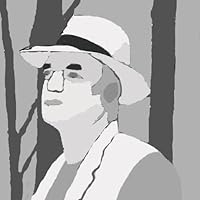
Australian popular novelist, a natural storyteller, whose career as a writer extended over 60 years. Jon Cleary's books have sold some 8 million copies. Often the stories are set in exotic locations all over the world or in some interesting historical scene of the 20th century, such as the Nazi Berlin of 1936. Cleary also wrote perhaps the longest running homicide detective series of Australia. Its sympathetic protagonist, Inspector Scobie Malone, was introduced in The High Commissioner (1966). Degrees of Connection, published in 2003, was Scobie's 20th appearance. Although Cleary's books can be read as efficiently plotted entertainment, he occasionally touched psychological, social, and moral dilemmas inside the frame of high adventure.
Jon Stephen Cleary was born in Sydney, New South Wales, into a working class family as the eldest of seven children. When Clearly was only 10, his father Matthew was condemned to six months' imprisonment for stealing £5 from his baker's delivery bag, in an attempt have money to feed his family. Cleary's mother, Ida, was a fourth-generation Australian. From his parents Cleary inherited a strong sense of just and unjust and his belief in family values.
Cleary was educated at the Marist Brothers school in Randwick, New South Wales. After leaving school in 1932, at the age of fourteen, he spent the following 8 years out of work or in odd jobs, such as a commercial traveler and bush worker – "I had more jobs than I can now remember," he later said of the Depression years. Cleary's love of reading was sparked when he began to help his friend, who had a travelling library. His favorite writers included P.G. Wodehouse. Before the war Clearly became interested in the career of commercial artists, but he also wrote for amateur revues. In 1940 he joined the Australian Army and served in the Middle East and New Guinea. During these years Cleary started to write seriously, and by the war's end he had published several short stories in magazines. His radio play, Safe Horizon (1944), received a broadcasting award.
Cleary's These Small Glories (1945), a collection of short stories, was based on his experiences as a soldier in the Middle East. In 1946 Cleary married Joy Lucas, a Melbourne nurse, whom he had met on a sea voyage to England; they had two daughters. His first novel, You Can’t See Round Corners (1947), won the second prize in The Sydney Morning Herald’s novel contest. It was later made into a television serial and then into a feature film. The Graham Greene-ish story of a deserter who returns to Sydney showed Cleary's skill at describing his home city, its bars, and people living on the margin of society. Noteworthy, the book was edited by Greene himself, who worked for the publishing firm Eyre & Spottiswoode and who gave Cleary two advices: "One, never forget there are two people in a book; the writer and the reader. And the second one was he said, 'Write a thriller because it will teach you the art of narrative and it will teach you the uses of brevity.'" (In an interview by Ramona Koval, ABC Radio program, February 2006)
A decent Australian detective is tasked with the unenviable job of arresting the High Commissioner in London. The HC’s crime was discovered by his political rival so it was a hunt based on sour grapes than in the pursuit of justice.
Scobie Malone, the cop, struggled with objectivity as the HC was such a likeable chap and didn’t seem like the kind of fella who would have committed a crime like that (no spoilers). The timing couldn’t have been worse as the HC was to be the star in the peace conference that could fix the international crisis in Vietnam.
I must admit, the international politics didn’t interest me in the detail it was delivered, so…I….skipped to the end and read it backwards. I was mainly interested in the mystery and it was easier to follow that way, knowing which parts weren’t relevant to the case. Also…I wasn’t impressed with the reveal. Had I read every word, I might even have been mad. Not that it wasn’t unrealistic, just that it wasn’t anything special.
This was the first of 20 in the series. I am tempted to continue with the series despite the negatives as Scobie Malone is an interesting character and maybe the other cases are less political.
The Scobie Malone series written by Jon Cleary is probably Australia's best known and most popular police procedural series. Certainly it is the longest running series with this first book, The High Commissioner having been published in 1966 and continued for a further 19 books with the last published in 2004.
The first Scobie Malone book introduces us to a young, slightly raw Detective Sergeant who is about to be taken from his comfortable environment in Sydney, Australia and placed in a more unfamiliar locale in London.
The job assigned to Scobie is a daunting one, particularly for a guy who has never been far from home for any length of time. He is to quietly slip in to London and arrest the Australian High Commissioner for murder. The arrest is to be done quickly and with as little fuss as possible for fear of tarnishing Australia's reputation in the eyes of foreign dignitaries.
The strength of The High Commissioner is the character of Scobie Malone, an unassuming, likable man with a canny detective's nose. It was easy to feel for him as he was thrown into the unfamiliar world of international politics. A clear picture of his ideals and beliefs is assembled during the book through his conversations with Quenton and his wife ensuring that he is a character that I would like to read more of. In fact, with the exception mentioned above, Cleary does an excellent job of depicting all of his characters, giving them all solid backgrounds, making them real and believable.
This is a taut thriller that starts with what appears to be a straightforward, if somewhat daunting task, and slowly progresses in complexity. The obstacles placed in Malone's path display his flair for adapting to his surroundings and his ability to make the most of difficult situations. His simple arrest turns into a longer than anticipated lesson in diplomacy.
The pace is sedate as befits a story filled with political intrigue, built around insightful conversations and the almost unnoticed gathering of facts by Malone. But it is also relentless with occasional flashes of extreme excitement thanks to the assassination attempts. It culminates in a terrific ending that is both unexpected as well as satisfying.
The High Commissioner is a strong opening to the Scobie Malone series, revealing just enough of the detective to whet the appetite to find out more. If he is this effective so far from his home patch in Sydney, I’d like to find out just what he can achieve when he gets home.
Eye read 2025 8.76/10 The conversations were top notch. The action scenes believable and gave impact. The politics bored the sheeeet out of me, but it was background padding and not padded thick. The places described felt realistic, and the writing was of the time so takes you back to the mid 1960s UK. Scobie is on special assignment in London, thrown in the deep end and learning the ropes in the international embassy scene. I look forward to reading more Scobie Malone novels by Jon Cleary.
Excellent reading. I'm glad I finally got around to one of the early Scobie Malones. The current events may have changed but everything else - politics, diplomacy, etc. - is probably very much the same as in the mid-60s.
"We want you to go to London," said the Premier, "and arrest the High Commissioner for murder..."
The Australian High Commissioner, John Quentin, seems about to achieve the diplomatic triumph of ending the war in Viet Nam. If he pulls it off, nothing can stop him rising to the highest political office, applauded by the gratitude of the world. But at this supreme moment, his own past catches him up. Twenty years earlier in New South Wales a man had murdered his wife and disappeared. Evidence now comes to light that establishes his identity as that of the High Commissioner.
But, for Quentin, the present as well as the past is suddenly alive with danger. Violence lurks in the shadows of the glittering, chattering world of ambassadors and ministers to the Court of St. James's. Caught in a whirlpool of emotions and confronted by an enemy whom he cannot help liking and admiring, Scobie Malone finds himslef doubling the roles of gaoler and bodyguard.
Made into a film in 1968, starring Rod Taylor, Christopher Plummer, Lilli Palmer, Camilla Sparv & Daliah Lav.
To exact political revenge Detective Sergeant Scobie Malone is sent to London to arrest the Australian High Commissioner for murder. What should be a simple task is turned on it's head when it becomes clear that someone is trying to kill the High Commissioner. So instead of arresting him, Scobie sets out to protect him as the High Commissioner cannot return to Australia immediately as he is in the middle of a conference trying to prevent war in Vietnam.
This book is over 50 years old but it has a timelessness to it that makes it enjoyable. Being so old during the process of digitizing there were many many mistakes. It reflects extremely badly upon the publisher of this book who need to take a good hard look at themselves.
Despite that this is an enjoyable read and the first in the Scobie Malone series.
Written in 1966. I enjoyed the plot with the twists and turns and the relationship that developed between the main characters. Having lived through the 60s, Cleary's observations of this period is like taking a step back in time. The clash between the political, cultural,and conservative times after the war and the dramatic change gathering momentum during this period makes this book deja vu for anyone who lived though these heady moments. A great book four decades ago that is still a great read.
This was a random pick when I decided to read a new author. I have great instincts, apparently. This was written in the 60's but was fresh and so very real. The best cop book I've read in a long long time, second to none in making you love the characters and, since it is centered on a Viet Nam peace conference, I could revisit the time.