

What do you think?
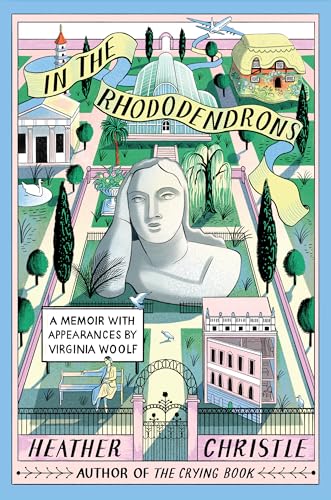
In the Rhododendrons: A Memoir with Appearances by Virginia Woolf
For readers of Also a Poet, Orwell’s Roses, and My Autobiography Of Carson McCullers—as well as the legions of Virginia Woolf fanatics—the acclaimed poet and author of The Crying Book crafts a deeply moving, immersive, and lyrical hybrid memoir about her mother, Woolf, and the transformative power of writing.
When Heather Christle realizes that she, her mother, and Virginia Woolf share a traumatic history, she begins to rewrite and intertwine each of their stories, in search of a more hopeful narrative and a future she can live with.
On a recent visit to London's Kew Gardens, Heather Christle’s mother revealed a shocking secret from her she had been sexually assaulted as a young girl growing up in London, under circumstances that strangely paralleled Heather's own sexual assault during a visit to London as a teenager.
Her private, British mother’s revelation—a rare burst of vulnerability in their strained relationship—propels Christle down a deep and destabilizing rabbit hole of investigation, as she both reads and wanders the streets of her mother's past, peeling back the layers of family mythologies, England’s sanctioned historical narratives, and her own buried memories. Over the course of several trips to London, with and without her mother, she visits her family's "birthday hill" in Kew Gardens, the tourist-ified homes of the Bloomsbury set, the archives of the British Library, and the backyard garden where Woolf wrote her final sentence. All the while, she finds that Woolf—both famously depressed in life and exuberant on the page—and her writings not only constantly seem to connect and overlap with her mother’s story, but also that the author becomes a kind of vital a sometimes confidante, sometimes mentor, sometimes distancing lens through which Christle can safely observe her mother and their experiences.
Wide-ranging and prismatic, the fruit of an insatiably curious, delightfully brilliant mind, In the Rhododendrons is part memoir, part biography of Virginia Woolf, part reckoning with the things we cannot change and the ways we can completely transform, if we dare. It is also a book unlike any other, and one that will send readers down rabbit holes of their own.
When Heather Christle realizes that she, her mother, and Virginia Woolf share a traumatic history, she begins to rewrite and intertwine each of their stories, in search of a more hopeful narrative and a future she can live with.
On a recent visit to London's Kew Gardens, Heather Christle’s mother revealed a shocking secret from her she had been sexually assaulted as a young girl growing up in London, under circumstances that strangely paralleled Heather's own sexual assault during a visit to London as a teenager.
Her private, British mother’s revelation—a rare burst of vulnerability in their strained relationship—propels Christle down a deep and destabilizing rabbit hole of investigation, as she both reads and wanders the streets of her mother's past, peeling back the layers of family mythologies, England’s sanctioned historical narratives, and her own buried memories. Over the course of several trips to London, with and without her mother, she visits her family's "birthday hill" in Kew Gardens, the tourist-ified homes of the Bloomsbury set, the archives of the British Library, and the backyard garden where Woolf wrote her final sentence. All the while, she finds that Woolf—both famously depressed in life and exuberant on the page—and her writings not only constantly seem to connect and overlap with her mother’s story, but also that the author becomes a kind of vital a sometimes confidante, sometimes mentor, sometimes distancing lens through which Christle can safely observe her mother and their experiences.
Wide-ranging and prismatic, the fruit of an insatiably curious, delightfully brilliant mind, In the Rhododendrons is part memoir, part biography of Virginia Woolf, part reckoning with the things we cannot change and the ways we can completely transform, if we dare. It is also a book unlike any other, and one that will send readers down rabbit holes of their own.
288 pages, Hardcover
First published April 15, 2025
About the author
Heather Christle
14 books302 followersHeather Christle is the author of The Crying Book (Catapult), a NYT Editor’s Choice, Indie Next Selection, and national bestseller that was translated into eight languages, awarded the Georgia Book Award for memoir, and adapted for radio by the BBC. An Associate Professor of English and Creative Writing at Emory University in Atlanta, Christle is also the author of four poetry collections including The Trees The Trees (Octopus Books), which won the Believer Book Award and was adapted into a ballet by the Pacific Northwest Ballet. In 2021 she was the recipient of a George A. and Eliza Gardner Howard Foundation Fellowship in nonfiction. Born in Wolfeboro, New Hampshire to a Merchant Mariner from North Dakota and an artist from London, Christle spent her teen years and early twenties immersed in the Boston punk scene. She attended Tufts University, graduating in 2004. After receiving her MFA from UMass Amherst in 2009, she was a Creative Writing Fellow at Emory University from 2009-11, and has also taught at UT Austin and Sarah Lawrence College. She lives in Decatur, Georgia, with her partner (poet and writer Christopher DeWeese), their child, and two cats.
Ratings & Reviews
Friends & Following
Create a free account to discover what your friends think of this book!
Community Reviews
Displaying 1 - 30 of 41 reviews
April 30, 2025
Oh to traipse around London researching this book would have been oh so fun. So much Virginia Wolf history. I have personally not read any of Woolf's work yet, but it is on my TBR. What drew me to the book was the premise of shared trauma, and then the relationship to a known author who committed suicide (Woolf). Mental health related books always draw me in, especially those in relation to historic creative individuals.
I was not disappointed. I enjoyed hearing the author's own experiences, the reality of what it's like living with a mental health disorder and trying to be a working creative individual. I appreciated these aspects of the book immensely. I loved all of the history interwoven throughout the story about Woolf, and the author's own family history as well.
Definitely a recommended read for anyone who enjoys British history (especially in relation to Woolf and her compatriots in her circle), trauma and mental health, and learning about the creative process. The author did manage to keep this a lighter read, even though it did touch on some heavier subjects like rape and suicide.
I was not disappointed. I enjoyed hearing the author's own experiences, the reality of what it's like living with a mental health disorder and trying to be a working creative individual. I appreciated these aspects of the book immensely. I loved all of the history interwoven throughout the story about Woolf, and the author's own family history as well.
Definitely a recommended read for anyone who enjoys British history (especially in relation to Woolf and her compatriots in her circle), trauma and mental health, and learning about the creative process. The author did manage to keep this a lighter read, even though it did touch on some heavier subjects like rape and suicide.

March 17, 2025
in the rhododendrons is a memoir that intertwines the life of heather christle with the lives of both her mother and virginia woolf. using various gardens and buildings throughout england, christle traces a path between major events that are mirrored in the lives of all 3 women.
i loved the deep dive into the mother-daughter relationship that is at the heart of the book. christle grapples with the tumultuous relationship they had when she was a teen and the precarious task of writing about the details of their bond without ruining the patched-over contact that they have today. this aspect of the book had the most emotional impact for me, thinking about all the misunderstandings and things left unsaid in any relationship.
there’s a lot of autobiographical content about virginia woolf in the book. it’s presented in such a way that i don’t think you need to be fully familiar with her work, but you do need to have an interest in her. sometimes the connections between christle and woolf felt a bit far fetched, but overall i think it was an interesting exploration of the complicated feelings we can have towards problematic authors.
i felt really engaged with this book in the beginning, flying through the first third in one sitting. christle’s voice is clear and entertaining while being informative. however, as life got a bit busy for me i found it difficult to immerse myself in the later sections of the book. i think i would’ve benefited from a more condensed reading experience as i got lost with the different people and places each time i returned to the book.
3.5 stars ⭐️ thank you to algonquin and netgalley for the digital copy - out 4/15!
i loved the deep dive into the mother-daughter relationship that is at the heart of the book. christle grapples with the tumultuous relationship they had when she was a teen and the precarious task of writing about the details of their bond without ruining the patched-over contact that they have today. this aspect of the book had the most emotional impact for me, thinking about all the misunderstandings and things left unsaid in any relationship.
there’s a lot of autobiographical content about virginia woolf in the book. it’s presented in such a way that i don’t think you need to be fully familiar with her work, but you do need to have an interest in her. sometimes the connections between christle and woolf felt a bit far fetched, but overall i think it was an interesting exploration of the complicated feelings we can have towards problematic authors.
i felt really engaged with this book in the beginning, flying through the first third in one sitting. christle’s voice is clear and entertaining while being informative. however, as life got a bit busy for me i found it difficult to immerse myself in the later sections of the book. i think i would’ve benefited from a more condensed reading experience as i got lost with the different people and places each time i returned to the book.
3.5 stars ⭐️ thank you to algonquin and netgalley for the digital copy - out 4/15!
April 15, 2025
If you ever take a book recommendation from me let it be this one: please read this precious gem of a book

February 27, 2025
In the Rhododendrons by Heather Christie
Audio Version
Overall Grade: B
Information: B-
Writing/Organization: B
Narration: C
Best Aspect: I preferred the memoir part to the Virginia Woolf references but it was an interesting story overall.
Worst Aspect: The narration was done with so much drama, I often forgot this was nonfiction.
Recommend: Yes.
Audio Version
Overall Grade: B
Information: B-
Writing/Organization: B
Narration: C
Best Aspect: I preferred the memoir part to the Virginia Woolf references but it was an interesting story overall.
Worst Aspect: The narration was done with so much drama, I often forgot this was nonfiction.
Recommend: Yes.

December 19, 2025
I read 28 books this year by or about members of the Bloomsbury Group - this was a perfect finale. This spoke to me from the introduction where in the author quotes Jacob's Room by Virginia Woolf - which was my favorite read of the entire year. An original memoir.

March 8, 2025
I received a copy of this audiobook from Algonquin & Net Galley. I appreciate it, and thought the audiobook was narrated well and was easy to pay attention to.
First, Christle was very vulnerable with her story-sharing here. She ties a traumatic event of hers that relates to both her mother & Woolf. I thought the authors self-reflection was very strong. I remember enjoying her writing in The Crying Book, and she continues to weave words together well.
First, Christle was very vulnerable with her story-sharing here. She ties a traumatic event of hers that relates to both her mother & Woolf. I thought the authors self-reflection was very strong. I remember enjoying her writing in The Crying Book, and she continues to weave words together well.
September 14, 2025
3.25
I bought this book in a place that I love (a Brooklyn bookshop), with the hope that it would remind me of another place I love (London). If that was all I needed from it, job well done. However, I couldn't get past the overly sentimental treatment of Christle's Woolf-obsession, nor her somewhat ungenerous attitude towards her mother. The anglophilia was off-putting, maybe most because it reflected something about me that I'm embarrassed of. This could have been something, but the execution wasn’t there.
But that cover? 5 stars.
I bought this book in a place that I love (a Brooklyn bookshop), with the hope that it would remind me of another place I love (London). If that was all I needed from it, job well done. However, I couldn't get past the overly sentimental treatment of Christle's Woolf-obsession, nor her somewhat ungenerous attitude towards her mother. The anglophilia was off-putting, maybe most because it reflected something about me that I'm embarrassed of. This could have been something, but the execution wasn’t there.
But that cover? 5 stars.
June 22, 2025
I am very fortunate to have learned from Heather Christle. I’ll leave you with my favorite quote from the book:
“IN MY PARENTS' HOUSE in Maine, on a display shelf and out of reach, my mother has three beautiful blue wineglasses, a gift from a rich friend to my grandmother, who later passed them on with a command: You must promise never to drink from these. They are too valuable. A promise my mother has kept.
I should call her back, I think, so I can tell her I want her to drink from them before she dies. That I would join her if she'd let me. We could raise a toast. To ourselves, to our faults.
It would be okay if a glass broke. Even all three! The world would not end. The world would not end and she would still be loved…”
(the cool part is this is where I’d like for the quote to stop, but it would be disingenuous to the book and to Christle to end it here, AND this following part is really what I learned while reading In the Rhododendrons)
“… Silently I practice saying this in the center of the octagonal hut, blue shards scattered around me on the floor.
But that's easy, it's so easy to ask someone else to let go. How much harder to watch your own precious things break. And I know that I must. I can't ask of my mother what I refuse to ask of myself.“ (228)
“IN MY PARENTS' HOUSE in Maine, on a display shelf and out of reach, my mother has three beautiful blue wineglasses, a gift from a rich friend to my grandmother, who later passed them on with a command: You must promise never to drink from these. They are too valuable. A promise my mother has kept.
I should call her back, I think, so I can tell her I want her to drink from them before she dies. That I would join her if she'd let me. We could raise a toast. To ourselves, to our faults.
It would be okay if a glass broke. Even all three! The world would not end. The world would not end and she would still be loved…”
(the cool part is this is where I’d like for the quote to stop, but it would be disingenuous to the book and to Christle to end it here, AND this following part is really what I learned while reading In the Rhododendrons)
“… Silently I practice saying this in the center of the octagonal hut, blue shards scattered around me on the floor.
But that's easy, it's so easy to ask someone else to let go. How much harder to watch your own precious things break. And I know that I must. I can't ask of my mother what I refuse to ask of myself.“ (228)

June 25, 2025
A dislocating memoir exploring the trauma in the author's life through the lens of Virginia Woolf's life and her own mother's recollections. I had mixed feelings about this. At times brilliant and at others somewhat opaque, I found it hard to pin down, although this may have been a deliberate trope on the part of the author.

January 5, 2025
4.5 stars. Memoirs like this with that little something extra are catnip to me.

June 16, 2025
**3.5 Stars**

Read
July 28, 2025honestly the virginia woolf parts were less interesting than the author's memoir! very evocative and i felt like i was in all of these places that i'd never been.
October 28, 2025
basically my life in middlemarch but it’s virginia woolf instead of george eliot (and heather christle instead of rebecca mead). can’t complain i guess?

November 13, 2024
A beautiful book, one that has really stayed with me in the months since I've read it. This mini-genre of memoirs that also draw on/examine the lives of famous artists or writers is now fairly established, and god knows Woolf is a figure people are always writing about and often in this personal context, but Christie makes this format feel fresh. Her mother's life's parallels to Woolf's are eerie and beautifully evoked here, and Christie writes so well about the complications of that maternal relationship and also about her own relationship with Woolf as a figure and with her work, her relationship with England as an American with an English parent, and about her own work as a writer and poet.
I just loved this book, it's hard to put why exactly into words, but if you also love literature and especially Woolf you will love this too.
I just loved this book, it's hard to put why exactly into words, but if you also love literature and especially Woolf you will love this too.
July 9, 2025
Κάποια βιβλία δημιουργούν -και, κατ' επέκταση, μπορούν να ενταχθούν σε- ένα στενό δίκτυο λογοτεχνικών σχέσεων βάσει όχι μόνο της ειδολογικής τους ταυτότητας, αλλά κυρίως μιας βαθύτερης γειτνίασης. Και, σχεδόν πάντα, το δίκτυο αυτό περιλαμβάνει όχι μόνο τα λογοτεχνικά έργα αυτά καθ' εαυτά, αλλά και τους αναγνώστες τους. Ένα τέτοιο βιβλίο είναι το "In the Rhododendrons: A Memoir with Appearances by Virginia Woolf".
Μαζί με το "To the River: A Journey Beneath the Surface" της Olivia Laing πλάθουν -το καθένα ξεχωριστά- ένα μωσαικό προσωπικών αφηγήσεων με πυξίδα, αλλά και κάτοπτρο, τη ζωή της Virginia Woolf. Η Christle παραθέτει τα σπαράγματα της οικογενειακής αλλά και προσωπικής της ιστορίας, καθρεφτίζοντάς τα στα αντίστοιχα σπαράγματα της οικογένειας Stephen αλλά και της ίδιας της Woolf, φωτίζοντας εν τέλει όλα εκείνα τα βιώματα και τις στιγμές που ενώνουν κάποιους από εμάς με την ίδια ανεπαίσθητη κλωστή που περιέγραψε κάποτε η Charlotte Brontë στο "Jane Eyre": "As if I had a string somewhere under my left ribs, tightly knotted to a similar string in you". Υπήρχαν στιγμές κατά τις οποίες, προτού διαβάσω την επόμενη πρόταση, ήξερα ακριβώς τι επρόκειτο να εκφράσει η Christle. Διότι, όλοι όσοι έχουμε αγαπήσει τη Virginia Woolf κι έχουμε περπατήσει στους ίδιους Λονδρέζικους δρόμους με εκείνη, έχουμε διαβάσει τα βιβλία και τα ημερολόγιά της, έχουμε επισκεφτεί την τελευταία της κατοικία στο Monk's House, και -το πολυτιμότερο όλων- έχουμε επιλέξει συνειδητά να αναβιώσουμε την πορεία της κατά μήκος του ποταμού Ouse, έχουμε μοιραστεί -όπως αποδεικνύεται- τις ίδιες συγκινήσεις, σκέψεις και συνειδητοποιήσεις πάνω στα κοινά αυτά ερεθίσματα.
Τέλος, αξίζει να σημειωθεί πως η Christle, όπως και η Laing αντίστοιχα, έχουν διευρύνει αισθητά το λογοτεχνικό είδος του life-writing με τα εν λόγω βιβλία τους, ξεφεύγοντας από τα στενά όρια των (auto)biography, memoir, nature/travel writing ή autofiction, και δημιουργώντας ένα αμάλγαμα αυτών με πολύτιμο επίκεντρο την έννοια της καλλιτεχνικής αλλά και προσωπικής σύνδεσης, παραλληλίας και γειτνίασης.
Εν είδει επιλόγου - μια παραλλαγή στο αλλόκοσμο κομμάτι "Sycamore Trees" των Angelo Badalamenti και David Lynch ως επιστέγασμα της αίσθησης του νοερού ανοίκειν που αφήνει το "In the Rhododendrons":
"And I'll see you
And you'll see me
And I'll see you in the branches that blow
In the breeze
I'll see you in the trees
I'll see you in the trees
Under the Rhododendrons"
Μαζί με το "To the River: A Journey Beneath the Surface" της Olivia Laing πλάθουν -το καθένα ξεχωριστά- ένα μωσαικό προσωπικών αφηγήσεων με πυξίδα, αλλά και κάτοπτρο, τη ζωή της Virginia Woolf. Η Christle παραθέτει τα σπαράγματα της οικογενειακής αλλά και προσωπικής της ιστορίας, καθρεφτίζοντάς τα στα αντίστοιχα σπαράγματα της οικογένειας Stephen αλλά και της ίδιας της Woolf, φωτίζοντας εν τέλει όλα εκείνα τα βιώματα και τις στιγμές που ενώνουν κάποιους από εμάς με την ίδια ανεπαίσθητη κλωστή που περιέγραψε κάποτε η Charlotte Brontë στο "Jane Eyre": "As if I had a string somewhere under my left ribs, tightly knotted to a similar string in you". Υπήρχαν στιγμές κατά τις οποίες, προτού διαβάσω την επόμενη πρόταση, ήξερα ακριβώς τι επρόκειτο να εκφράσει η Christle. Διότι, όλοι όσοι έχουμε αγαπήσει τη Virginia Woolf κι έχουμε περπατήσει στους ίδιους Λονδρέζικους δρόμους με εκείνη, έχουμε διαβάσει τα βιβλία και τα ημερολόγιά της, έχουμε επισκεφτεί την τελευταία της κατοικία στο Monk's House, και -το πολυτιμότερο όλων- έχουμε επιλέξει συνειδητά να αναβιώσουμε την πορεία της κατά μήκος του ποταμού Ouse, έχουμε μοιραστεί -όπως αποδεικνύεται- τις ίδιες συγκινήσεις, σκέψεις και συνειδητοποιήσεις πάνω στα κοινά αυτά ερεθίσματα.
Τέλος, αξίζει να σημειωθεί πως η Christle, όπως και η Laing αντίστοιχα, έχουν διευρύνει αισθητά το λογοτεχνικό είδος του life-writing με τα εν λόγω βιβλία τους, ξεφεύγοντας από τα στενά όρια των (auto)biography, memoir, nature/travel writing ή autofiction, και δημιουργώντας ένα αμάλγαμα αυτών με πολύτιμο επίκεντρο την έννοια της καλλιτεχνικής αλλά και προσωπικής σύνδεσης, παραλληλίας και γειτνίασης.
Εν είδει επιλόγου - μια παραλλαγή στο αλλόκοσμο κομμάτι "Sycamore Trees" των Angelo Badalamenti και David Lynch ως επιστέγασμα της αίσθησης του νοερού ανοίκειν που αφήνει το "In the Rhododendrons":
"And I'll see you
And you'll see me
And I'll see you in the branches that blow
In the breeze
I'll see you in the trees
I'll see you in the trees
Under the Rhododendrons"

July 2, 2025
God bless libraries. It is reassuring to know that Woolf's words echo in others' craniums as well.
"'Yes, but what can I say of the Parthenon—that my own ghost met me, the girl of 23; with all her life to come; that'" (Christle quoting Woolf, 9).
Christle has penned a memoir that is poignant and innovative and just plain odd, and it works. She returns to the memory of her sexual assault as a teenager, tracing haunting parallels between her own narrative, her mother's, and Virginia Woolf's. It is an tale of identity, legacy, nostalgia, and signs. As someone studying women artists and gardens in the nineteenth century, I enjoyed Christle's exploration of Kew Gardens, as well as historic estates like Monk's House, Charleston, and Knole.
The link between the final phrases "For there she was" (Mrs. Dalloway) and "For it was a snail" ("The Mark on the Wall")!!! A genius observation, tied to the notion of binocular vision.
Christle also tackles the thorniness of motherhood. She wonders what it would cost her own mother to "admit to anything like shadow," and that moved me (and felt like a footnote from recent therapy). However, there is too a tenderness and the inherent hope of a new generation. This is the first time I have read a book where a parent (Heather) has referred to their non-binary child as they/them, so that was heart-warming and feels like important representation in this current moment.
"'All Joy reminds. It is never a possession, always a desire for something longer ago or further away or still about to be'" (Christle quoting C.S. Lewis, 68).
Very funny being a poet because it is such a small literary world; Heather would mention someone by their first name, and I would immediately be able to guess who that was and had often read them / been in the same room as them before. I need to read more of her verse though! 🤗
"I do not want such stories to displace whatever wholeness grows in the soil of my own life, nor my mother's. Let there be room for it all, I tell myself. Let there be seasons" (35).
As a note to self, I do think I need to spice up my summer reading with more poetry and fiction because the back-to-back non-fiction has been unflinching and is making me a little depresso.
Altogether, this was very Louise Glück Averno-coded (complimentary).
"'Yes, but what can I say of the Parthenon—that my own ghost met me, the girl of 23; with all her life to come; that'" (Christle quoting Woolf, 9).
Christle has penned a memoir that is poignant and innovative and just plain odd, and it works. She returns to the memory of her sexual assault as a teenager, tracing haunting parallels between her own narrative, her mother's, and Virginia Woolf's. It is an tale of identity, legacy, nostalgia, and signs. As someone studying women artists and gardens in the nineteenth century, I enjoyed Christle's exploration of Kew Gardens, as well as historic estates like Monk's House, Charleston, and Knole.
The link between the final phrases "For there she was" (Mrs. Dalloway) and "For it was a snail" ("The Mark on the Wall")!!! A genius observation, tied to the notion of binocular vision.
Christle also tackles the thorniness of motherhood. She wonders what it would cost her own mother to "admit to anything like shadow," and that moved me (and felt like a footnote from recent therapy). However, there is too a tenderness and the inherent hope of a new generation. This is the first time I have read a book where a parent (Heather) has referred to their non-binary child as they/them, so that was heart-warming and feels like important representation in this current moment.
"'All Joy reminds. It is never a possession, always a desire for something longer ago or further away or still about to be'" (Christle quoting C.S. Lewis, 68).
Very funny being a poet because it is such a small literary world; Heather would mention someone by their first name, and I would immediately be able to guess who that was and had often read them / been in the same room as them before. I need to read more of her verse though! 🤗
"I do not want such stories to displace whatever wholeness grows in the soil of my own life, nor my mother's. Let there be room for it all, I tell myself. Let there be seasons" (35).
As a note to self, I do think I need to spice up my summer reading with more poetry and fiction because the back-to-back non-fiction has been unflinching and is making me a little depresso.
Altogether, this was very Louise Glück Averno-coded (complimentary).
March 26, 2026
As a nonfiction writer and lover of Virginia Woolf, I thought this book was made for me. Christie grapples with a tumultuous, traumatic childhood through retracing the places of her mother’s childhood in England. This memoir is billed as having “appearances by Virginia Woolf,” wherein the writer also retraces Woolf’s footsteps and literary career, sort of as a proxy to understand her mother when there’s so much pain and misunderstanding between the two.
The premise is compelling, but truthfully the prose can feel forced/like it’s trying too hard to make associative leaps. For instance, there’s a moment where Christie is on a boat on the Thames and says she imagines herself slipping off the side to swim down the river (of time essentially). To me, these leaps (there are many, also of feeding Virginia Woolf crumbs and walking hand in hand with her???) are just too much— I don’t find them daring but rather dull and forced.
Lastly, I think the writer does not totally investigate her own limits of perspective. Throughout this book, Christie writes of feeling abandoned by her mother but also retreats during COVID into a closet where her own child passes notes under the door to coax her to communicate. I’m really not trying to mom-shame her but rather just to mention I think the writer’s own flaws are skated over too quickly… I think readers want to see a writer own their faults and missteps rather than justify them so they can trust the fairness of that writer’s perspective when writing about the people in their life.
Again beautiful concept but I found it sadly lacking.
The premise is compelling, but truthfully the prose can feel forced/like it’s trying too hard to make associative leaps. For instance, there’s a moment where Christie is on a boat on the Thames and says she imagines herself slipping off the side to swim down the river (of time essentially). To me, these leaps (there are many, also of feeding Virginia Woolf crumbs and walking hand in hand with her???) are just too much— I don’t find them daring but rather dull and forced.
Lastly, I think the writer does not totally investigate her own limits of perspective. Throughout this book, Christie writes of feeling abandoned by her mother but also retreats during COVID into a closet where her own child passes notes under the door to coax her to communicate. I’m really not trying to mom-shame her but rather just to mention I think the writer’s own flaws are skated over too quickly… I think readers want to see a writer own their faults and missteps rather than justify them so they can trust the fairness of that writer’s perspective when writing about the people in their life.
Again beautiful concept but I found it sadly lacking.

April 28, 2025
In the Rhododendrons is a lyrical, contemplative memoir that weaves together the lives of Heather Christle, her mother, and Virginia Woolf. Using the physical spaces of English gardens and historic homes as waypoints, Christle draws evocative parallels between key events in their lives, creating a layered meditation on legacy, memory, and womanhood.
At its heart, the memoir is an exploration of the mother-daughter relationship. Christle writes with vulnerability and restraint about the tension-filled years of her adolescence and the delicate process of revisiting that time. This thread invites readers to reflect on their own familial relationships—the things said, the things left unsaid, and the ways time both heals and complicates.
Virginia Woolf’s presence in the book is more than literary homage; she becomes a figure through whom Christle examines the complexities of influence, admiration, and critique. You don’t need to be a Woolf scholar to appreciate these sections, but an interest in Woolf—or at least the questions she raises about creativity, mental health, and feminism—will deepen the experience.
Overall, In the Rhododendrons is a quiet but resonant book, one that prompts thoughtful engagement with the past and with the flawed figures who shape us.
At its heart, the memoir is an exploration of the mother-daughter relationship. Christle writes with vulnerability and restraint about the tension-filled years of her adolescence and the delicate process of revisiting that time. This thread invites readers to reflect on their own familial relationships—the things said, the things left unsaid, and the ways time both heals and complicates.
Virginia Woolf’s presence in the book is more than literary homage; she becomes a figure through whom Christle examines the complexities of influence, admiration, and critique. You don’t need to be a Woolf scholar to appreciate these sections, but an interest in Woolf—or at least the questions she raises about creativity, mental health, and feminism—will deepen the experience.
Overall, In the Rhododendrons is a quiet but resonant book, one that prompts thoughtful engagement with the past and with the flawed figures who shape us.

September 27, 2025
Let me start out by saying that I am clearly not the target audience for this book. I have children the author's age. So, yes, that makes me her mother's age. The enemy's age. I felt the author's animosity more and more acutely the deeper I got into this book. I liked the author less and less the deeper I got into this book. When one is reading a memoir, that is not a good thing.
I didn't understand the author's obsession with Virginia Woolf. Surely an obsession that extreme is not healthy. I started to feel like I was watching "Groundhog Day". Every day the same thing: the same paths walked, the same thoughts expressed, the same questions asked, the past rehashed over and over and over again, with no discernible progress made. I got so tired of it all. Why didn't the author?
On the plus side, I think the book cover is pretty great.
I didn't understand the author's obsession with Virginia Woolf. Surely an obsession that extreme is not healthy. I started to feel like I was watching "Groundhog Day". Every day the same thing: the same paths walked, the same thoughts expressed, the same questions asked, the past rehashed over and over and over again, with no discernible progress made. I got so tired of it all. Why didn't the author?
On the plus side, I think the book cover is pretty great.

March 24, 2026
I came to this completely by chance. I was in the mood for a literary biography and went looking for Hermione Lee’s Virginia Woolf on audio, but instead found this. I was immediately intrigued by the comps to My Autobiography of Carson McCullers (which I adored) and Also A Poet (which I also really enjoyed).
Like those books, this blends biography and memoir into something meditative and self-interrogating. The subtitle, “With Appearances by Virginia Woolf,” is spot on: Christle turns to Woolf less as a subject than as a kind of companion. The book reads like a sustained act of walking alongside her — the author follows threads, draws connections, and, in the process, works through her own experiences of trauma.
My only qualm is that, at times it does feel like more of her research makes it onto the page than is strictly necessary — there are stretches that read as a bit tangential — but overall I found it thoughtful and rather charming. I’m glad I stumbled upon it!
Like those books, this blends biography and memoir into something meditative and self-interrogating. The subtitle, “With Appearances by Virginia Woolf,” is spot on: Christle turns to Woolf less as a subject than as a kind of companion. The book reads like a sustained act of walking alongside her — the author follows threads, draws connections, and, in the process, works through her own experiences of trauma.
My only qualm is that, at times it does feel like more of her research makes it onto the page than is strictly necessary — there are stretches that read as a bit tangential — but overall I found it thoughtful and rather charming. I’m glad I stumbled upon it!
August 25, 2025
Strange and lovely and hard to summarize/reduce. I found Christle sometimes quite unsympathetic as a narrator in her interactions with her mother, who I felt rather sorry for, but I also admired her for just allowing herself to be so. Something here about the ultimate futility of anger directed towards the people around a horrible event who didn’t stop it but didn’t cause it either. Virginia Woolf is out of reach, really— some of the questions of why her and why write this story now never felt entirely clear. But I appreciate the messiness of it, the synchronicities and patterns and doublings acting as the prose version of a rhyme. It feels playful and clever and experimental in ways that delighted me. Would like to read the crying book again!

December 30, 2025
I loved Christle’s The Crying Book as well as her poetry, and I wasn’t disappointed by her new memoir, In the Rhododendrons. A stereoscopic motif runs through the book as she considers her own life, her mother’s life, and the life and writing of Virginia Woolf. Some of Christle’s subject matter is intense (content warning: suicide, sexual assault), and she certainly allows it to have emotional weight. Yet there is a lightness to the book. The traumas and troubles are significant, but Christle refuses to let them define the lives of her three subjects. Avoiding neat and familiar trauma plot narratives, this is an imaginative and beautiful, if sometimes difficult, book.

February 26, 2025
Thanks to NetGalley and Hachette Audio for the Audio ARC!
In the Rhododendrons is a highly emotional journey of discovery and reflection. The author reflects a lot on her mother, their relationship, their shared traumas, and how things could have been different. Underpinning it all is the tragic life and brilliant words of Virgina Woolf, who fits neatly into the story in more ways than you would think possible. I think there is something here for everyone, something we can all connect to, something we can learn from, or something we can feel.
In the Rhododendrons is a highly emotional journey of discovery and reflection. The author reflects a lot on her mother, their relationship, their shared traumas, and how things could have been different. Underpinning it all is the tragic life and brilliant words of Virgina Woolf, who fits neatly into the story in more ways than you would think possible. I think there is something here for everyone, something we can all connect to, something we can learn from, or something we can feel.

August 24, 2025
I enjoyed this book, but I just don’t think it was for me. Christie’s writing is great and the imagery she uses is fantastic, but I struggled to be engaged throughout the book. Christie is an impeccable writer, but the references to Woolf were somewhat lost on me because I am not too familiar with Woolf’s work outside of the few essays I read from her in high school. However, I am curious/interested to see what Christie writes next!

Did Not Finish
July 24, 2026I'm abandoning this after 42 pages (is that significant?) I can't get a measure of the author's style or see the wood for the trees ... the Woolf for the Rhododendrons?!
I will return this to the library and add to my 'wish list' to try again another time.
ps. a GR book can't be in 2 states at once, 'Did not Finish' and 'Want to Read', which makes sense I suppose. Anyhoo, it's on my bookcrossing and mental Wishlists
I will return this to the library and add to my 'wish list' to try again another time.
ps. a GR book can't be in 2 states at once, 'Did not Finish' and 'Want to Read', which makes sense I suppose. Anyhoo, it's on my bookcrossing and mental Wishlists
October 5, 2025
Interesting book with a unique style. At times, it felt a bit rambly with extra parts that didn’t draw me in. I fear that maybe this book was too high-brow for me and maybe I just didn’t get some of the subtlety. However, overall, I thought it was a great story and felt very raw and vulnerable in a unique writing style I haven’t seen before.
July 27, 2025
The parallel lines Christle draws between herself, her mother, and Virginia Woolf are captivating on their own, but she also works in Walter Benjamin, British imperialism, and other historical allusions as well. I found this enriched the text greatly.
December 27, 2025
Will someone please tell me why this book is so fascinating? Although written well, it felt like I was scrolling Instagram with pictures of meals. I found I just didn't care what was going on or unfortunately why. 1 star

April 24, 2025
She is an exceptional writer. It was a tough read and I don’t think I could ever read it again.
This entire review has been hidden because of spoilers.
May 5, 2025
cryinggggggggg, it’s so good. i needed (and need) this book. thanks heather ♥️
Displaying 1 - 30 of 41 reviews