Jump to ratings and reviews
Rate this book

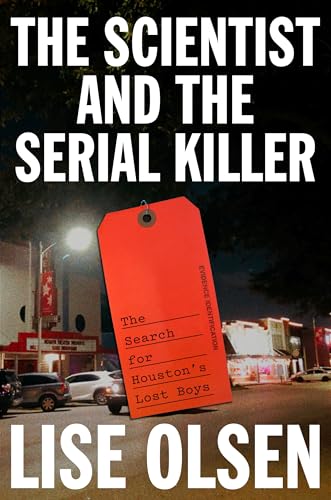
The Scientist and the Serial Killer: The Search for Houston's Lost Boys

Rate this book
Between 1971 and 1973, more than twenty-seven teenage boys disappeared from idyllic, tree-lined neighborhoods in Houston. This is the true story of how one dedicated forensic scientist finally identified the victims of the "Candy Man," one of America's most prolific serial killers.

Houston, Texas, in the early 1970s was an exciting place—the home of NASA, the city of the future. But a string of missing teenage boys, many from the same neighborhood, hinted at a dark undercurrent that would go ignored for too long. While their siblings and friends wondered where they’d gone, the Houston Police Department dismissed them as thrill-seeking runaways, fleeing the Vietnam draft or conservative parents, likely looking to get high and join the counterculture.

It was only after their killer, Dean Corll, was murdered by an accomplice that many of those boys’ bodies were discovered in mass graves. Known as the “Candy Man,” Corll was a local sweet shop owner who had enlisted two teenage boys to lure their friends to parties where they would be tortured and killed, and then buried.

All of Corll’s victims’ bodies were badly decomposed; some were only skeletal. Known collectively as the Lost Boys, many were never identified. Decades later, when forensic anthropologist Sharon Derrick discovered a box of remains marked “1973 Murders” in the Harris County Medical Examiner’s Office, she knew she had to act. It would take prison interviews with Corll’s accomplices, advanced scientific techniques, and years of tireless effort to identify the young men whose lives had been taken. But one by one, nearly all of their names have been returned to them.

Investigative journalist Lise Olsen immerses readers in this astonishing story, simultaneously bringing to life the teens who were hunted by a killer hiding in plain sight and the extraordinary woman who would finally give his victims back their dignity and their names. The upside-down murder mystery reveals new information about this case and astonishing facts about why these victims were forgotten in the 1970s—and why what happened to them remains relevant.

440 pages, Kindle Edition

Published April 1, 2025

139 people are currently reading
6072 people want to read

About the author

Lise Olsen

3 books30 followers

Ratings & Reviews

What do you think?
Rate this book

Friends & Following

Create a free account to discover what your friends think of this book!

Community Reviews

5 stars
136 (26%)
4 stars
223 (42%)
3 stars
144 (27%)
2 stars
17 (3%)
1 star
3 (<1%)
Displaying 1 - 30 of 137 reviews
Profile Image for Sheila.
3,079 reviews120 followers
November 19, 2024
I received a free copy of, The Scientist and the Serial Killer, by Lisa Olsen, from the publisher and Netgalley in exchange for an honest review. In the early 1970's twenty- seven boys, disappeared in Texas. This was such a sad read, but a really good read. Families ripped apart by the "Candyman" what a horrible man. This book has a lot of information, on a brutal time in Texas, and pictures.
Profile Image for Brendan (History Nerds United).
796 reviews687 followers
January 18, 2025
Dang. When I started The Scientist and the Serial Killer by Lise Olsen, I immediately had the sneaking suspicion this would be a book which had great information but would end up overstuffed. The first chapter, for instance, is immediately engaging, but oddly, there were a lot of very long sentences trying to cram as much story into them as possible. I hoped it was just beginning jitters, but unfortunately the problem expanded.

The book looks at the serial killer Dean Corll and two of his accomplices. It also follows Dr. Sharon Derrick who in the almost present day is still working to positively identify some of the victims decades later. There is also a few chapters on near victims who barely escaped Corll's grasp. Oh, there is also some allusions to horrible police work and maybe a pedophile ring. Do you see the issue?

On top of this, chapters will jump back and forth between the time of certain killings or the work of Derrick. I could see how Olsen was trying to organize the book but ultimately it was too many people, too many timelines, and stories which could end up half-baked.

It's truly a shame because Olsen does some great work at times. She is clearly trying to bring dignity back to many victims who were shoved to the side. This is not a true crime book which is just peddling in horror and some aspects of it are truly engrossing. Unfortunately, there is just too much of some things and not enough of others.

(This book was provided as an advance copy by Netgalley and Random House.)
Profile Image for Mai H..
1,342 reviews792 followers
2025
October 2, 2025
Non-fiction November TBR

📱 Thank you to NetGalley and Random House
Profile Image for Devin The Book Dragon.
384 reviews246 followers
Read
February 10, 2025
Unfortunately, I will be DNFing this at 50%. I am not saying this is a bad book or anything, but I really had trouble with the way it was written. It really jumped perspectives and timelines a lot, and I felt myself becoming confused with the constant backtracking, then jumping ahead again. I do feel interested in the cases and these stories, and I really loved the scientific aspect of discovering unidentified bodies. I have a lot of respect for the work of the Dr. and also this author for being so detailed in covering the cases. However, I think that if this was told in a more chronological timeline this would make a lot more sense to readers. I think the chapters need to be rearranged.


Just received a ARC copy via Netgalley in exchange for a review. Thank you!
Profile Image for Kristy.
1,427 reviews181 followers
June 21, 2025
3.5 Stars

I’m surprised I never heard of Dean Corll, aka the “Candy Man,” before given how prolific of a serial killer he was. This book blends both the gruesome murders of dozens of boys in the 1970s along with the scientific and anthropologic work of forensic anthropologist Sharon Derrick, who decades later tirelessly worked to bring justice for the Lost Boys and peace to their families. Well researched and well written.

I received an advanced copy through Netgalley in return for an honest review.
Profile Image for Kathleen Kolling.
192 reviews9 followers
December 1, 2024
In 1973, the cops were called to investigate the murder of a man named Dean Corll in Pasadena, Texas. Once they arrived, however, they realized the case was much more complicated than a single murder. The murdered, Elmer Wayne Henley, immediately confessed to killing Corll but also informed cops that there were dozens of Corll's murder victims buried beneath the ground of an outdoor shed. 27 bodies were eventually recovered across multiple burial locations, all males in their late teens and early twenties, who had been victims of brutal rape, torture, and murder. Unfortunately, many of the bodies were badly decomposed and couldn't be identified. This book takes a look at the decades-long investigation and pursuit to identify the victims and give closure to their families.

This book was very interesting in its premise. I did not know much about this case going into it. Unfortunately, I felt the book was loaded with too many people, facts and timelines. The author jumped back and forth between past and present narratives, often repeating herself in order to remind us what was introduced in an earlier section. She also included a lot of history of forensics that was barely pertinent to this case and listed many other missing persons who ended up being ruled as not connected to Corll, so the inclusion of their names just got confused in the story about the 27 victims. I felt there was also too much focus on the litany of investigators involved in the case. This might prove interesting to readers more versed in forensics, but for me, this book didn't flow well.


*** I received this book as an ARC from NetGalley. Opinions expressed in this review are completely my own. ***
Profile Image for meghan.
34 reviews5 followers
Read
April 13, 2025
First of all thank you to Penguin Random House for the free copy in exchange for an honest review.

I will admit I am not typically a non-fiction reader, but I do have a love of true crime. Lise Olsen knocked this out of the park!

I didn't know anything at all about the Candy Man murders or the Lost Boys prior to reading this. Sharon Derrick's journey to recover these victims and give them back their identities so their families could have peace was so inspiring. I love how the author gave more energy to the victims and their stories rather than glorifying the monsters who committed the crimes.

I enjoyed the timeline changes that showed the events immediately after Corll's death leading up to present day with almost all Lost Boys getting back their identities. I will say that the timeline could be a bit confusing at times with the jumping back and forth between the 70s and 2000s. However, I felt that the mixed media aspects brought so much to the story. Pictures, handwritten memos, maps, etc really helped bring the whole story together.

The science-heavy chapters (regarding DNA, bone reconstruction, etc) did not seem too dense and were easy to understand from someone who does not have a background in forensic science.

Overall, this was a wonderfully written story and from my understanding all elements of the case were brought together in a way that honored the victims and provided education to the reader about forensic science practices that made victim identification possible.

I would recommend this to anyone interested in true crime or the forensic science fields.

4.5 stars rounded up to 5!
Profile Image for Shereadbookblog.
969 reviews
December 29, 2024
In the 1970s, at least 27 teenage boys in Houston were kidnapped, sexually assaulted, tortured, murdered and buried by Dean Corll, given the moniker “The Candy Man.” Many were reported missing, but the police never put the cases together and in many instances wrote off the reports as kids who had run away.The horror these boys experienced was only made known when one of Corll’s young accomplices killed him. As bodies and bones were dug up, most of them were in such decayed condition that they couldn’t be identified. They became known as the “Lost Boys” until thirty years later when forensic anthropologist Sharon Derrick was determined to put a name to as many as she could, an effort that took years and was made possible only by scientific advances.

This is an important story; one that needs to be told and especially the lesson of how, along with prejudice against “ hippies” and homosexuality,
reports of poor teenagers missing from dysfunctional families were basically ignored by authorities. Equally important is the recounting of Derrick’s relentless search for the identity of the lost boys. The account, unfortunately, gets bogged down a bit in details, shifting timelines, and repetition.

Thanks to #NetGalley and #RandomHouse for the DRC.
Profile Image for Rebecca Hill.
Author 1 book66 followers
October 18, 2024
Dean Corll was one of the most sadistic serial killers, and yet, he remained unknown until his untimely death. When he was shot by one of the teens that hung out at his house, there were a lot of questions. Those questions then led to admissions, and of course, bodies. Instead of just one or two, many bodies are turned up, and they need identifications.

With the identifications pending, Dr. Sharon Derrick worked non-stop, talking to families and tracking down any information she could find. Through all of her work, she managed to identify all of the victims, but one. It was starting to wear on her, and eventually, she moved on, taking another job.

Oh my goodness. The Lost Boys of Houston, this entire story was one that will stay with me for a long time. I had read a small amount on Dean Corll before, but diving into this book, I learned so much more. While he operated in plain sight, he roped many more into doing some of the dirty deeds, ensuring that if he was ever caught, he would not be the only one going to prison.

There were aspects of this book that were harder to read than others, but I could not put it down. I wanted to know more, wanted to find answers. While there will never be full closure, there is at least a few that would do time for the horrific murders. This is a book that is going to stay with the readers for a very long time.

True horror is packed into these pages, with some redemption shining through with forensic science. A must read for true crime fans, and for those who are looking for scientific advances and triumphs.
Profile Image for Rachel.
655 reviews36 followers
May 9, 2025
4 Stars!

This true crime story is both well written and disturbing.


SUMMARY
in the early 1970s somewhere between 28 and 30 Young teenage boys went missing in Houston primarily from Pasadena and from the Heights neighborhood. When Dean Coril was shot by 17 year-old Dean Henley, it was discovered that he had been kidnapping, raping, torturing and killing teenage boys in an alarming number. And using other teenage boys to lure them to his house with a promise of parties, beer and drugs. At the time the police were not very sympathetic about these lost boys, many of whom they considered to be juvenile delinquents. They classified them as runaways and outrightly told the parents they weren’t going to waste time looking for them.

Only after Dean was murdered, Wayne basically could not stop talking and took the authorities to a boat shed where many of the bodies were uncovered. They found more and more as the weeks went on. Carl and his teenage accomplices were prosecuted sentenced and sent to prison. Some of the boys were identified, but not all of them leaving parents spending decades, wondering what happened to their child

Forensic pathologist Sharon Derick took it as her personal mission starting in 2006 to identify as many of the boys as she possibly can. This book is the story of those boys and her mission.

Weirdly, although I have lived in Texas for 35 years, I had never heard of the Houston lost boys. it was equally disturbing what happened to these boys that so many boys could disappear from the same neighborhood/part of town without anybody linking their disappearances

WHAT I LOVED
this is a very well written book. Thoroughly researched. I truly admired sharon Derick and her commitment to helping those parents find their boys. As a mother of two boys, 120 and 117 I cannot imagine not knowing what happened to my children. I’m sure she gave a lot of families the answers they had been searching for for decades.

WHAT I DIDN’T LOVE
this book was kind of hard to read in places. Listening to horrible things happening to teenagers is beyond disturbing. Other than that, there were a few parts where it got kind of long going into some of the details of the forensics. I’m sure it was all necessary but, it did get a little long in places.

OVERALL
This is a well written book. I would recommend it to people who have a strong stomach and don’t Mind reading true crime. It can get pretty disturbing.
Profile Image for Catalina.
1,928 reviews67 followers
March 26, 2025
I hate having to rate this only because it's a nonfiction true crime based on actual events.
You can tell this is so well researched and studied by the author. They really know their shit when it comes to this horrible serial killer and his victims.
I just wish it were rearranged differently because we skip around a bit chronologically so I got a bit confused at times when we skipped back to a past timeline and then back forward to after certain things happened.
Obviously one can search up and read about this case but it's cool to see it sorta brought forward in this authors writing.

Thank you to the publisher for the advanced copy.
Profile Image for Karen Siddall.
Author 1 book115 followers
April 7, 2025
Fascinating recounting of the identification of the last of Houston’s Candy Man serial killer’s victims.

The Scientist and the Serial Killer: The Search for Houston’s Lost Boys by Lise Olsen is a meticulously researched and amazingly detailed accounting of one woman’s dedicated work to finally reunite some of the long-unidentified victims from the early 1970s serial killer known as “The Candy Man” with their names and families.

In a three-year period during the early 1970s, Dean Arnold Corll, with the help of two teenaged accomplices, abducted, tortured, assaulted, and murdered at least 29 boys and male teens in the Houston and Pasadena cities of Texas. Author Lise Olsen reveals the story by alternating between how the victims came to be introduced to their murderer and 30 years later as Dr. Sharon Derrick, Ph.D., an experienced bioarchaeologist pursuing a career in forensic anthropology, works to match the still unidentified victims with whom they were in life. Even with the focus on the processes Derrick went through, the story is riveting, and readers will not want to put the book down.

The story is fascinating for a number of reasons, one being that even with the advancements in science and the tools available to help identify anonymous corpses (from 1973 when the bodies were uncovered to the mid-2000s when Derrick’s journey begins), Dr. Derrick still faced an extraordinarily difficult and complex task. Thirty years and more had passed from the victims’ deaths and their rough burials in unprotected, unmarked graves, the evidence degrading even further. Possible family members of the dead had moved around, moved on, or passed on themselves, eliminating useful sources of information for identification. DNA identification was still a much sought-after and months-long process, and commercial DNA testing for the general public, such as 23 and Me or Ancestry.com, was still years away. On top of that, the original law enforcement reporting and handling of the missing person’s reports in Houston were given little attention. In addition to this, law enforcement and its tools were quite different then. The 70s were pre-community policing, pre-Amber Alerts, pre-cellphones, pre-personal computers, pre-Internet, and even pre-in-patrol-vehicle-computer monitors connected to centralized policing software. Houston PD didn’t see the connection among the reports of missing boys clustered in certain neighborhoods, indicating there was a bigger problem than runaways: no one did until after Corll had been killed by one of his teenage accomplices who confessed what he knew.

The story of Derrick’s determination despite so many obstacles, both in the evidence and in the situation, is pretty amazing. Each case has fascinating elements to it, and her work finally puts a name to tragic victim after tragic victim. The author’s presentation of how this was accomplished is compelling and heart-wrenching, as after each successful identification, she provides a photo of the victim with a summary of his short life. It really brings home that, at one time, these were real, living, breathing children who laughed and played, had hopes and dreams, families and friends, with their entire lives still ahead of them. More than fifty years later, their heartbreaking stories are finally being completed.

I recommend THE SCIENTIST AND THE SERIAL KILLER to readers of non-fiction, especially those who enjoy true crime or forensics.

I voluntarily reviewed this after receiving an Advanced Review Copy from the author through "Lone Star Book Campaigns."
Profile Image for LindaPf.
755 reviews66 followers
December 1, 2024
Fans of true crime probably often wonder if they are a few degrees of separation from a real life serial killer. I grew up in Chicago, a large metropolitan area, and I know that two female acquaintances were semi-adjacent to serial predators: John Wayne Gacy, the “Killer Clown” (she worked at the same pharmacy where the last of Gacy’s 34 victims also was employed) and the Tylenol Killer (she was the assistant manager at one of the drugstores where that still unknown murderer planted tainted capsules). Now I live in Salt Lake City, less than a tenth the size of Chicago, and I volunteer at the University of Utah where Ted Bundy was a law student while killing 4 women. Brrrrrrr….

This book is the true story of the Houston Mass Murders victims of Dean Corll, known as “The Candy Man”, who murdered and tortured at least 28 young men between 1970 and 1973. Corll stopped only because an accomplice/potential victim finally shot him. Like with Gacy (who was arrested a few years later), so many of Corll’s initial victims were young outcasts and unidentifiable when their bodies were found (5 of Gacy’s are still unknown).

Dr. Sharon Derrick is a real life “Bones,” a forensic anthropologist who tried to restore the identities of the Houston “Lost Boys” and give some closure to the families of missing people when she started at the Harris County Medical Examiner’s office in 2006, 33 years after Corll died. She was mystified as to why these teenage boys (who would have been her contemporaries in high school) had never been claimed. Her work on the backlog of unidentified dead helped identify all but one of Corll’s.

Olsen’s book delves into the original investigation and the discovery of bodies at multiple grave sites. The Houston Mass Murders reaped international attention based on the quantities of victims discovered, which at the time seemed unthinkable (Corll’s victims were the highest discovered count at that time in the US; Gacy, Sam Little, and Gary Ridgway surpassed the Candy Man).

Olsen describes the meticulous procedure that Dr. Derrick takes as she tries to identify the victims one by one and seeks out some background on how these lost boys could have encountered Corll and his accomplices. The history of the Harris County Medical Examiner’s Office is also detailed as well as the incorporation of the Forensic Anthropology and Computer Enhancement Services, FACES, in order to construct modern 3-D portraits and the usage of familial DNA profiles, all significant advancements since the 1970s. Olsen also examines the hostile Texan attitudes towards homosexuality in the 70s, which often dismissed Corll’s victims as “lesser” since they may have been vulnerable gay teens.

This is a fascinating book for a true crime fan. It is, in parts, gory and horrifying, but it also gives meaning to the lives of the victims once Dr. Derrick and her team identified them. 4 stars.

Thank you to Random House and NetGalley for an advanced reader copy!
Profile Image for Paige Gunn.
96 reviews
November 22, 2024
I received this ARC from NetGalley and the publisher for my honest review. Thank you!

I have not dabbled in reading true crime since mandatory college reading, but I felt that this book was very well-written and gave a great recollection of events pertaining to The Lost Boys. The author did an amazing job putting together the work of Derrick and having a mixture of engaging storytelling and nonfictional writing styles. I learned a LOT in this book and actually had not been familiar with The Lost Boys previous to reading. I feel that those who have followed this story would be most inclined to read this book with the amount of detail given.

My only concern is that there was a large amount of repetition, but this might just be the way many true crime books are written. I just felt that it could cut down the length of the book with repeated details dwindled down.

#thelostboys #netgalley #thescientistandtheserialkiller
Profile Image for Kat (BostonKatReads).
142 reviews
April 25, 2025
I was really excited about this book, as I am from Texas and had never heard of the Corll murders. There was lots of great information about the victims and the process of identifying them, but it felt muddied with too much information throughout. I don’t mind a lengthy book, but it shouldn’t FEEL long through the whole thing.

I appreciate the insight into the victims and giving their stories and memories air to breath. But timeline jumps between chapters and veering into the pornography ring and shoddy police work took away from those boys’ experiences, in my reading.

Mind your TWs for this if you have them. Many thanks to the author, publisher, and NetGalley for an eARC in exchange for my honest review.
Profile Image for Shaunna.
106 reviews
July 10, 2025

I’m not sure how my true crime loving self missed hearing about Dean Corll, but HOLY SHEET. This book seemed very explicitly informative and I am shoooook. 30 confirmed victims that were all so so young with suspicion there are far more victims is heartbreaking. Still having research and DNA testing relevant FIFTY YEARS LATER to try and figure out identities is insane. I hope these families get the answers and closures they deserve. Corll was such an evil sadistic scumbag and I hope he is rotting in hell. 😈
This book told the story well but there were a few times the time hopping and tie-in to more modern science didn’t flow easily and that’s why I gave 4 stars instead of 5, but definitely a must read or listen!
This entire review has been hidden because of spoilers.
Profile Image for Emily Bush.
220 reviews1 follower
October 6, 2025
When Dean Corll was killed in August 1973, no one could have imagined that he tortured and killed 30 young men in the Houston Heights area in the early 1970s. In the 1990s, anthropologist Dr. Sharon Derrick set out to discover who the unidentified bones belonged to finally give peace to the families all these years later. Equal parts disturbing and intriguing, this book goes through the painstaking process of identifying human remains and getting DNA profiles for missing persons. While long at times, the identifications and interviews with Dr. Derrick and family members kept this book interesting.

Thank you to NetGalley and the publisher for the advance copy in exchange for an honest review.
Profile Image for Andi.
1,672 reviews
gave-up-on
December 6, 2024
I like to thank the publisher and NetGalley for allowing me a read.

I think the writing of this book was a bit rough. It was a lot of quoting and it seemed to grab from articles and thrown together to make a narrative. The way it flowed was rough for me to get invested.

I made it 20% into the book and I had to bounce out.

Maybe those who enjoy books where the narrative is mostly quotes will find it enjoyable, I'm looking for a flow when reading a true crime / non-fiction book.

Out of respect to the author I'm refusing to rate it due to not finishing it.
Profile Image for McKenna.
159 reviews
December 13, 2024
Thank you to NetGalley for the advanced copy of this book.

The story starts out really strong and intriguing but the details ended up being muddied by all of the extra information. It felt like the book took forever to read. Most true crime books are much more condensed and to the point. This book kept going back and forth between the scientist who helped IDing many of the victims and the actual story of the crime. I really think the book could have been organized better and condensed.
339 reviews
June 22, 2025
Fascinating book, based on the real case of a serial killer in Houston in the early 70's. It's amazing the lengths the forensic anthropologist went through to identify so many of the victims. It also is a commentary on how poorly the original investigation was handled. It was upsetting to read how so many disappearances of young men were just blown off as "runaways." I realize they didn't have access to all the interjurisdictional information that currently exists, but even for that time, too much was swept under the rug.
Profile Image for Meg.
Author 1 book13 followers
August 7, 2025
Well-written, well-researched, with focus on the victims and their families. This case is infuriating because of how these boys were disregarded and everything was swept under the rug as much as possible. I hope they can get the last 2 identities matched properly; the boys and their families deserve some small measure of peace.
97 reviews1 follower
Read
October 11, 2025
It's more about the science than the killing/torture, though that is addressed head-on and not avoided. All in all, Olsen handled this period respectfully and more like a puzzle than a morbid curio. I also appreciated the way the victims and Houston itself in the 70's were brought back to life.
Profile Image for WednesdayWoah.
87 reviews6 followers
November 9, 2024
This book is a dense and heavy read. I mean this complementary. It’s so well researched and full of information. It’s not a quick read, and the subject matter, being a true crime case (and a mishandled one at that) is heavy in more ways than one.

If true crime is your thing, I can not recommend this book enough. I found myself so invested. These lost boys felt like they were mine, now, too. Each correct identification after so long, too long, actually felt bittersweet. These young souls cut off so brutally and so young, but finally given back their names, their families given some closure at last.
Profile Image for Meags.
217 reviews19 followers
July 16, 2025
This book reads like a lot of unconnected chapters. There are several repetitions and I found it overall confusing. I actually worked at the ME's office from 2007-2008 and I don't remember Derrick at all. (Absolutely remember Dr Wolf and Dr Sanchez.) The book really suffers from a kitchen sink approach. It hopped around in time a lot, and the time spans overlapped. The past and present bled together in confusing ways, and also there were multiple crimes discussed that were beyond the scope of Dean Corll's victims and which just made everything muddy. Funny how the author mentions Truman Capote and also writes some of the chapters in a narrative much like In Cold Blood, ascribing thoughts and deeds to characters that weren't spoken of by the subjects and also couldn't be known.
Author 2 books9 followers
April 11, 2025
I don't usually read more than one book about a given serial killer/mass murderer, but I made an exception here because the other book about Dean Corll that I've read was written in 1974 and of course lacks a huge amount of the information we've learned since. (That one is "The Man With the Candy" by Jack Olsen, I presume no relation to Lise. It's quite good if you get past the out -of-date info.)
This was overall an interesting book, detailing the ongoing efforts to identify Dean Corll's murder victims, some of whom were misidentified and given to the wrong families.
The case has been plagued from the beginning by sloppy police work and what seems to me to be a general disinterest on the part of society and the media. That's not to say it didn't make headlines at the time; it did, but ask around for people to name you some famous serial killers from the 1970s and I bet all of them say Ted Bundy right off the bat, and probably most know the Son of Sam too, but they aren't likely to know Dean Corll's name unless they're big true-crime buffs or they were living in Texas at the time.
Which is a shame, not only because it means it's been that much harder for the families of his victims to get answers, but also because there's a lot to chew over that I think is important to chew over.
For instance, unlike most SK's, Corll preyed upon people he knew; he knew his victims and they usually knew each other. The book makes clear that most boys in the Houston Heights area were well aware of the disappearances in their fairly tight-knit neighborhood, and they all knew that Corll's house (or houses, he was always skipping out on his rent and moving in someplace else) was a place where boys like them went to drink, smoke pot, take pills, huff paint, bring stolen goods, and many of them even knew that sex could be exchanged for these perks. Yet they continued going to Corll's, and bringing friends and relations. Hell, one victim was even bringing his eleven-year-old sisster along with him when he was supposed to be babysitting her at home. She was often the only fully-dressed person in the place, and described once watching a boy overdose and not knowing if he lived or died.
Another issue that could be discussed ad nauseam is the psychology of Corll's teenage accomplices, David Brooks and Wayne Henley, particularly henley. The boys were paid (in cash, cars, and drugs) by Corll for each victim they managed to bring him, and both were sexually manipulated by Corll, Brooks as a very young teen. But Henley, in particular, seems to have embraced his role, admitting that he came to enjoy the torture and murder of his friends once Corll had begun insisting that he and Brooks take an active part and not just be procurers.
Wayne Henley is in fact a very interesting case. He crosses the line from victim to accomplice, and not just crosses it; he kicks around and stomps till that line is just about invisible. Brooks seems to have already been pulling away from Corll at the time of the latter's death, but Henley stuck with him till the bitter end, when something finally snapped and he and Corll faced off for a final confrontation, and Henley shot and killed him and ended his rampage.
Yet even as he acted to save the lives of his two friends that were present that early morning in 1973, and even as he told the police everything he knew, assisted in finding gravesites and insisted that there were more to be found, Henley gloried in the media attention and painted himself as a hero. Understandable at the time for a frightened teenager, but he has been doing the same thing for the last fifty years. He has never stopped promoting himself or trying to grab whatever media attention comes his way. As one investigator puts it "Wayne feels a lot of things, but remorse is not one of them." You would think that if he was truly an innocent victim coerced and brainwashed by Dean Corll, he would have come to his senses once Corll was dead, and certainly after so many decades apart from him. He's not a stupid person by any means, and this armchair criminologist (yours truly) can only conclude that there are no "senses" to come to; Henley was just as depraved as Corll was, but was fated to be no more than a blustering, swaggering small-timer without Corll; Corll wasn't like a match to Henley's gasoline, but Henley was like an extra stick of dynamite to Corll's pipe bomb.
And another thing: #MeToo and missing-wite-woman syndrome and all, Corll's victims got little to no attention, either when they disappeared or when they turned up dead. The police rarely if ever accepted a missing-persons report on any of these boys and young men, and when they did take a report they didn't act upon it. The boys were just assumed to have run away, gone to California, whatever hippies and poor Texas boys did in the early seventies. Contrast that with the Bundy case and you have major food for thought.
Finally, the "boy porn ring" angle. Henley and Brooks talked about it at the time they were arrested, and even before that, Heights boys talked about it among themselves, usually making light of it. But it wasn't till years afterward that the ring's existence was confirmed, and none of Corll's other accomplices were called to account for it, though most ended up being on the hook for other things. This, coupled with the fact that one small bit of skeletal remains has been proven to belong to a boy far younger than Corll's youngest confirmed/identified victim (13) is a Really Big Deal. I hope very much that the identifications continue and that if anyone is still alive to face earthly justice, that they are made to face it.

The book itself is well-written. There are time jumps, but each chapter is clearly headed with the time and place so there isn't really that much confusion. There is a lot of repetition, and Ms. Olsen seems to be overly attached to the word "oversized." Seriously, she uses it way too often, and sometimes unnecessarily. For instance, she describes an "enormous oversized radio car phone." Look, if something's enormous it's also oversized. Or when she describes someone carrying around "an extra-large Diet Coke in an oversized cup." Really? He actually has this big amount of soda in a cup to carry it around? Imagine that. Well, and if it's an extra-large soda, it ought to be pretty obvious that any cup besides an oversized one wouldn't make any sense.
But overall, "The Scientist and the Serial Killer" was a fascinating and very thought-provoking read.
Profile Image for Faithe.
279 reviews7 followers
March 1, 2025
If I could give this book more than 5 stars I would! The Scientist and the Serial Killer: The search for the Houston Lost Boys by Lise Olsen is well done. Lise Olsen is a well known investigative journalist who turned her findings into a book. This book centers around Dean Corll a prolific serial killer, 17 year old Wayne Henley who killed him and Dr. Sharron Derrick, a forensic anthropologist.

Decades after the murders took place, Dr. Sharron Derrick found boxes of unidentified remains from Dean Corll's victims and worked hard along herside her team to reunite them with their loved ones. In 1973, Dean Corll's murder count was 27, with 7 of them being unidentified.

Throughour the years Dr. Sharron Derrick was able to put names to 7 previously unidentified remains and reunite them with their families. From 2008 to 2014 she was able to identify Randell Lee Harvey, Joseph Allen Lyles, Michael baulch, Roy "ikie" Bunton, Steven ferdig-sickman, Donnie falcon and Willard k "rusty" branch jr.

I thought the book was really brought together with the inclusion of pictures, taken from police archives and records. It was also interesting to learn that the terms John Doe, Jane Doe and Baby Doe are no longer used as they are considered unprofessional and dehumanizing to the dead.

Thank you to Lise Olsen for partnering with NetGalley. I received an advanced reader copy of this book in exchange for my honest opinion and review.

This book hits stores April 1st 2025
Profile Image for Mare B.
15 reviews6 followers
April 17, 2025
I was so excited to read this book and the first chapter was very promising. It was well researched and the passion comes through. Unfortunately, it just started to run flat and I began to dread reading it. The timeline and the amount of people became overwhelming.
It’s an important story that needs to be told and I’m glad that it was, it just felt like it was loaded with unneeded information.

Thank you to NetGalley and Random House for allowing me to read this eARC.
Profile Image for Kristine Hall.
939 reviews71 followers
March 27, 2025
4.5 STARS. Engrossing, evocative, and weighty, THE SCIENTIST AND THE SERIAL KILLER is a book that needed writing, and Lise Olsen pulls no punches and delivers.

“When you wake in the morning, the naughtiness and evil passions with which you went to bed have been folded up small.” – from Peter Pan or The Boy Who Wouldn’t Grow Up by J.M. Barrie

At one point, the author compares the world of serial killer Dean Corll to J.M. Barrie’s 1911 Neverland (not the Disneyfied version), and it feels disturbingly apropos. As the author says in her opening Author’s Note, her account in THE SCIENTIST AND THE SERIAL KILLER is “a deeply troubling tale that remains relevant and resonates through time.”

Olsen does an excellent job of setting the atmosphere for the scenes, whether it’s one set in Corll’s world or one set decades later in Dr. Derrick’s. In both worlds, there is a battle between the cooperative and the uncooperative. Readers will be angered by the inaction of the Houston Police Department despite a clear pattern of boys from the Heights neighborhood disappearing and their families begging for help. In their time, the missing boys are considered by the police to be hippies or homosexuals or poor or dysfunctional, labeled as runaways, and forgotten. In her time, Dr. Derrick faces sexism and as a women, is discounted. It is disheartening that these same prejudices persist, and families desperate for answers get only despair.

On the other hand, the advances in forensic technology over the years are amazing – triumphant, really -- and Olsen's explanations make for fascinating reading. Just the changes in FACES (Forensic Anthropology and Computer Enhancement Services) in the fifteen years after its launch are mind-blowing and now allow for highly accurate facial reconstructions that ultimately helped Dr. Derrick identify some of the unknown victims. Her commitment to The Lost Boys and to science gives the dead some measure of justice and their families some measure of peace.

THE SCIENTIST AND THE SERIAL KILLER is organized into six parts, and readers are given a lot of information to process. At times, Olsen writes long sentences and repetitive passages, and we can feel the urgency with which she wants to share this story; she’s deeply invested, and by book’s end, so are we. Though the book understandably jumps back and forth through time, Olsen provides a number of tools to help see the big picture.

One of these tools is "Sharon Derrick’s 2023 Case List," which lists the victims by year, in the order their deaths occurred. The inclusion of a maps and diagrams helps readers visualize events. A particularly powerful element of THE SCIENTIST AND THE SERIAL KILLER is that as each Lost Boy is identified, there’s a portrait of the victim and a summary of his case. I choked up with emotion every time by not only the thought of a life lost in such a violent way, but also because at last, he was identified. Photographs are also sprinkled throughout the book and though some are macabre, the photos are never gratuitous. Even a photograph of a message written on a notepad in 1972 is included, all pointing to Olsen’s meticulous research and reliance on primary sources. The extensive "Notes" and "Selected Bibliography" give readers even further insight into the murder cases and the scientists who solved them.

I read an early ARC from NetGalley last year and was able to compare it to a more recent version. Though some typos were still present, additional editing has clearly taken place and eliminated many of the errors and repetitive paragraphs that I initially noticed. I trust the final version, available for purchase on April 1, 2025, will be clean -- and I highly recommend getting a copy. I may get the audiobook since I’m already familiar with the story.

By the conclusion of THE SCIENTIST AND THE SERIAL KILLER, the bodies of thirty young men are found and nearly all of them identified, thanks to the commitment of one scientist, who felt compelled to seek justice for Houston's Lost Boys. And thanks to the commitment of investigative journalist Lise Olsen, their stories are no longer buried in the past.

This full review and other special features on Hall Ways Blog.
Profile Image for J Kromrie.
2,491 reviews47 followers
March 8, 2025
Thanks to the publisher and Netgalley for this eARC.

Lise Olsen’s "The Scientist and the Serial Killer: The Search for Houston's Lost Boys" is a profoundly unsettling yet compelling exploration of the intersection between scientific inquiry, journalistic tenacity, and human depravity. A blend of true crime and investigative journalism, the book meticulously chronicles the horrifying crimes of Dean Corll a prolific serial killer, 17-year old Wayne Henley who killed Corll and Dr. Sharron Derrick, a forensic anthropologist who found boxes of unidentified remains from Dean Corll's victims and worked with her team to identify the 7 unidentified victims and to reunite them with their loved ones decades after the crime.

In 1973, Dean Corll's murder count was 27, with 7 of them being unidentified. Dr. Sharon Derrick, a forensic anthropologist was determined to bring their stories out of the shadows.

What makes Olsen’s narrative stand out is not just the grotesque reality of Corll's actions but the compassionate lens through which she examines their aftermath. The “lost boys” are not merely victims; they are human beings with families, histories, and potential, which Derrick—alongside Olsen—works to restore to them, posthumously. Olsen’s ability to balance the harrowing nature of the crimes with the dignity of these boys’ stories is a testament to her skill as both a writer and an investigator.

One of the book’s strongest features is its portrayal of Dr. Derrick, the titular “scientist.” Derrick’s tireless work as a forensic anthropologist reveals the often-overlooked field of identifying remains and reuniting them with grieving families. Her role as a quiet yet powerful crusader for justice contrasts sharply with the calculating and manipulative Corll, making their interplay an ethical and philosophical study of humanity’s capacity for good and evil.

Olsen’s writing is deeply empathetic yet unflinchingly honest, sparing no detail in her dissection of Houston’s flawed justice system. As the title suggests, this book is as much about the societal and institutional failures that allowed Corll to operate. Through Derrick’s eyes, readers are forced to grapple with the grim reality of how easily the vulnerable slip through the cracks.

The narrative pacing is deliberate, reflecting the painstaking nature of forensic work. While some readers may find the technical details of anthropology challenging, those who persist will be rewarded with a richer understanding of the discipline and its impact on the living and the dead.

For readers of true crime, "The Scientist and the Serial Killer" offers not only the dark thrill of unraveling a serial killer’s psyche but also a meaningful meditation on justice, memory, and the resilience of the human spirit. Olsen doesn’t merely recount a story; she places readers in the thick of it, forcing us to question how society can better protect its most vulnerable—and how science and determination can help right some of the wrongs when it fails.

In the end, this book serves as a haunting reminder of the delicate balance between progress and negligence, between science and humanity, and ultimately, between justice and injustice. It is not just a story; it is a call to action. A must-read for those brave enough to confront the shadows of human nature.
Profile Image for Maryann.
Author 49 books551 followers
April 4, 2025
A story full of tragedy and determination to find the truth.

I’m a big fan of true-crime stories and was eager to read this one when I first heard about it, so it was a pleasure to get an ARC to review.

The narrative switches timelines, and that’s done very well, with chapter and “part” titles that easily move the reader back and forth. And there’s a nice balance between the two timelines – one in the early 70s when serial killer Dean Corll and his accomplices abducted, tortured, and murdered so many boys, mostly young teens in the Houston area. The other part of the book focuses on the efforts of Sharon Derrick, and other scientists, to identify remains that were found in several locations in and around Houston.

I liked that Olsen doesn’t give a lot of graphic details on how the boys were killed, rather lets the reader know the history of each one, so we can make a connection to who they were. That certainly made me care more about them, as well as be fully invested in the outcome of the investigation by Sharon Derrick.

We also meet family members who begged the Houston police to investigate the disappearances that were clearly not just that the boys ran away, which is what police believed. While reading, it was easy to get frustrated that the police didn’t take any more action, which possibly could have led to an arrest much sooner and saved lives.

Particularly interesting to me is the information about grief that’s briefly covered when sharing the struggles of family members who are left if a sort of limbo about the missing child. Olsen quotes Pauline Boss, a psychotherapist who was practicing in 1974 and recognized what she called “frozen grief” – caught between hope and hopelessness and never knowing whether loved ones were dead or alive. Boss saw that dynamic at play with families who had loved ones missing in action during war times and never had a body to bury, as well as relatives of other missing persons. She calls this “Ambiguous loss.” It’s a loss that goes on and on. “And those who experience it tell me they become physically and emotionally exhausted from the relentless uncertainty.”

It was easy to see how that applies to all those mothers, fathers, sisters, and brothers, as well as extended family, who never knew the truth until Derrick got to that truth through her dogged determination. As hard as it is to know your child is dead, it’s even harder not knowing where he is.

Showing the challenges that Derrick faced as she tried to gain more respect in her field at a time when it was dominated by men is a nice touch, and I was amazed at all she went through in her determination to identify those bones that had been stored in a morgue for so many years. She never gave up when lesser men, or women, did.

Doing research for my mystery novels, I’ve had a long interest in forensics and reading about the evolution of forensic anthropology and the ways scientists learned to use DNA as a tool for identifying bones was something new for me. The science is fascinating and explained well, without pulling the story down with lots of technical jargon. Having that science come alive through the actions of Derrick ,and other scientists, helps it to be far more accessible to the reader.

This is really a terrific book, and you don’t even have to be a fan of true crime to enjoy reading it. Check it out!
Displaying 1 - 30 of 137 reviews

Can't find what you're looking for?

Get help and learn more about the design.