Decades after Nathalie Hart's fateful mission to Bethesda, Earth teeters on the brink of collapse. As the planet's resources dwindle, the orbital elites of the ruling Yun Ju play a dangerous game with Earth's population from space.
A DESPERATE PLAN TO SAVE THE WORLD. Jason Nevsky, driven by his aunt Nathalie's legacy, fights to save a starving planet. But when he uncovers a sinister political plot, he realizes the Yun Ju will stop at nothing to maintain their power. His mission becomes a desperate gambit that could either save Earth or doom it forever.
BETRAYAL. SACRIFICE. REBELLION. Meanwhile, Jason's estranged daughter Liz joins an elite training program that puts her close to the heart of the Yun Ju's power. But as she rises through the organisation’s ranks, Liz finds herself torn between loyalty to her new home and a growing realization of its dark secrets.
Father and daughter find themselves on opposite sides of a conflict that will determine humanity's future. With time running out and billions of lives at stake, they must each make impossible choices that will shape the destiny of both Earth and the stars.
If you loved The Expanse and the intricate political intrigue of Arkady Martine's novels, you won't be able to put down this second book in The Guardian Cycle series.
Inversions is nominally a sequel to Melcer's previous book Refractions - a space opera looking at the failure of a settlement on a new planet designed as a (religious) bolt-hole from Earth. As such it sat in a complicated bit of political futurology where Earth was failing due to climate crisis and pandemic, and the major actors were a corporate-led USA and a culturally and scientific-led protectorate of China. The politics mainly mattered around the motivations of the rescue team, the collapse of trust when everyone is slightly corrupt - but even then the ultimate antagonist was nameless operative of a secret society looking to remove most of humanity's free-will to help them survive. That the moral decision made by the lead character at the end of that book to undermine the mind control project even felt debatable was a testament to how well-written and argued it was.
Inversions, which is still a very entertaining bit of political near-earth orbit space opera, unfortunately, doubles down on its secret societies. On top of that there is a touch of Skywalker syndrome where everyone important to the action is related to the protagonist of the first book. Nevertheless it does do a good job at picking up the issues on Earth fifty years later or so (time dilation being what it is), and part of me did wonder if the original lead would pop up near the end (this is supposedly the second book of two - though there are more than enough dangling threads from this and its predecessor to continue the series.
I enjoyed Inversions, though not as much as Refractions, as the heart of the drama here is familial. It relies on a severed bond between father and daughter which is set up as a huge betrayal, but since both characters hold our viewpoint, we never quite know exactly why the daughter has disowned her notorious but fundamentally well-meaning father. Indeed the book does have a big issue with exploring the morality of its protagonists, even the character coded as the antagonist is shown to be carrying out actions for the greater good, but it doesn't feel content with having her be morally compromised, it gives her many examples of decision making where she takes a Hollywood moral decision over one of moral pragmatism. Nevertheless, Mercer finds a solid way to build an exciting climax into a long-term tale of societal collapse, and it was lots of fun getting there. Would happily read more.
In the aftermath of humanity's first exoplanet colonization and the stunning revelation of why and how it failed, Earth is left reeling. The private space stations remake themselves, but remain distant and aloof, above the fray they disdain. Earthside, one man doggedly attempts to mend the ripping fabric that holds Earth's frail humanity from falling over the edge of the abyss. His daughter reviles him for his utter ineffectuality, cutting ties to him as she flees to a better future in the space stations. Meanwhile, one exclusive space station overseer has her own plan for saving humanity, and it doesn't necessarily include Earth.
This book is a gem, rich in deep emotion yet overflowing with hard science--and harder choices. Directly and indirectly, it examines the decisions humans make every day, why they make them, and the effects that ripple from them, as well as how different perspectives show the same choices in entirely different lights. The similarities as well as the differences between the three POV characters are expertly drawn, and in the end, they are what make the story breathe, what kept me reading, hooked on learning "what will happen next?"
Yet none of this could exist without the science that's been so carefully build and deftly shown, and which highlights both the amazing and the terrible aspects of technology. Coming on the heels of 2024's amazing solar eclipse during a year of solar maximum, the science surrounding the way space stations could handle solar events is especially riveting.
The pacing is wonderful, starting with a slow burn and quickly building, until by the ending it's an all-out race against time that left me breathless. Simply put, this book is stellar; it even outshines the first of the duology, and proves M V Melcer is an author to watch.
Set maybe half a century after the first book, Refractions, this looks at the aftermath of Nathalie's message back to Earth, with her now grown up nephew, Jason, dedicating his life trying to solve Earth's resource problem. On the other side we have the 'elites' living on orbitals. Yes, that seems a little familiar, but the writing is strong, the mix of hard SF and accessible, human-level story kept in balance, and plenty of peril to be had.
I do think I preferred the first book, mainly because the space voyage out to a distant colony felt a little more escapist than return back to Earth dealing with climate crisis, riots, and all that. Still a worthy follow on, and I'd really like to see a third instalment and what happens next.
Melcer has crafted a remarkable sequel in "Inversions" on multiple levels. If you enjoyed the high-paced, non-stop action of the first book in the series, you may need to reset expectations - this is a different kind of work. Just as good as the first novel, but for different reasons.
The author has "fast forwarded" the plot decades in the future, leaving old characters' fates a bit up in the air. But the current plot features globe-spanning conspiracies, class rights struggles and human rights.
The multiple POV work is impressive as well; each character has a unique and vibrant perspective on plotlines, often directly at odds with each other. Makes for very interesting reading as well.
"Inversions" is a different kind of book from the initial work in the series and I think the overall collection is made better from it.
This book is the sequel to Refractions, but works fine as a standalone. In Inversions, we follow three main characters: Jason Nevsky, Elizabeth Lake, and Ranath Eyre.
✿ Jason Nevsky - head of Earth's Food Alliance.
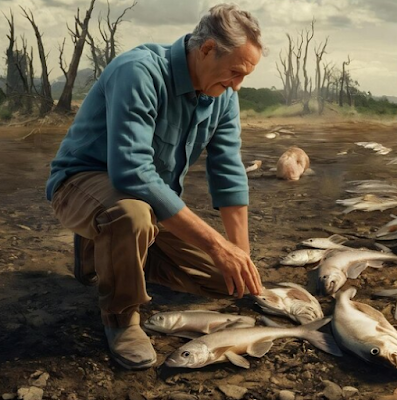
It's close to the year 2400 and Earth is in dire straits. The planet has never adapted to climate change and is reeling from scarcity wars and the plague - a phage that kills crops. All terrestrial populations are going hungry, barely holding on with help from the Food Alliance, headed by Jason Nevsky.
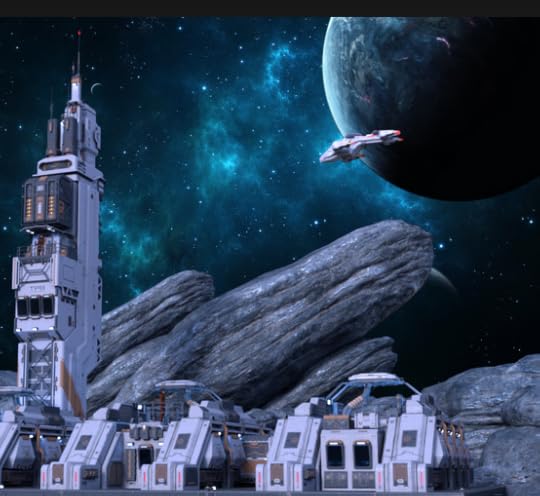
The Food Alliance has a deal with the Yun Ju, a conglomerate of wealthy organizations on outposts in space. In return for food shipments from Earth, the Yun Ju supplies anti-phage treatments and technology. Nevertheless Earth is on the verge of becoming unable to sustain life (at least human life).
A big part of Jason Nevsky's job is to limit Earth's population growth and restore its natural ecosystems, such as rain forests. Unfortunately, this means less farmland for growing food. If countries don't agree to the environmental restorations, Jason can withhold phage remedies and technology. Thus starving populations throw feces and trash at Jason, who's the most hated man on Earth.
✿ Elizabeth Lake (Liz) - an engineer with a double doctorate in heliophysics and magnetospherics.
Liz just graduated from the Aspire Academy on Earth, and applies for a job with the Renewal Corporation of the Yun Ju. Liz has been working toward this for years, her ambition being to leave Earth forever, and have a life and career in space.
Liz is actually Jason Nevsky's daughter, Anna Nathalie Nevsky. Liz changed her name twice (at great expense) to break ties with her father, and the hate his name stirs. Liz hasn't spoken to her dad for ten years, since she left home at age fifteen. This breaks Jason's heart.
✿ Ranath Eyre - head of the Renewal Corporation.
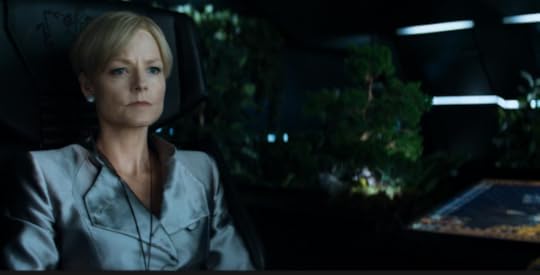
Ranath is head of the Yun Ju's Renewal Corporation, which builds and sells 'assemblers' (robots) that do various kinds of work. For three decades, Ranath has used the Renewal Corporation to secretly accumulate a fortune - not for herself but to build an 'Ark' (a human habitat) near Saturn.
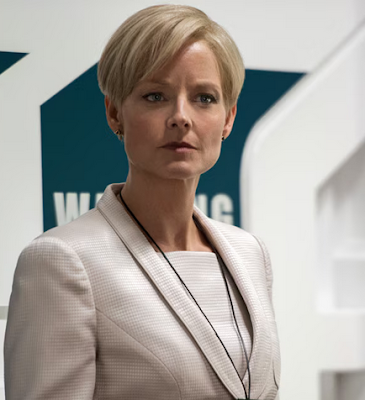
Ranath believes the Earth is doomed, and she has a clandestine plan to populate the Ark with the best of humanity, such as professionals, scientists, philosophers, artists, writers, etc. In Ranath's view, the Ark will eventually be self-sustaining.....and will be the future of humankind.
Ranath is aware of Liz Lake's secret identity but still hires her to work for the Renewal Corporation.
*****
Just like countries on Earth are rivals for power and resources - and spy on and plot against each other, the corporations that make up the Jun Yu are rivals for power and resources - and spy on and plot against each other.
Ranath has two main competitors in the Jun Yu: 'Liberty' run by American Nevil Richardson.....
......and the 'Sunrise Group' run by Chinese Li Qiang.
Both Richardson and Qiang want more than their fair share of Ranath's assemblers, particularly the newest model just now coming off the assembly line.
To keep her Ark a secret, and to hoard the assemblers needed to build the Ark, Ranath is constantly scheming, prevaricating, lying, and maneuvering. Hardly a word out of Ranath's mouth is the truth.
Everyone up in space seems to have a secret agenda, and much of the book is about the negotiating and manipulating among the various groups.
One thing the entire Jun Yu shares is a strategy to keep the populations on Earth poor and subjugated, almost like serfs whose sole purpose is to supply the Yun Ju with food. Jason Nevsky was unaware of the Yun Ju's devilry for upwards of twenty years, but he's caught on now, and institutes a plan of his own.
As the complicated situation plays out, Liz finds herself caught between her boss Ranath and her father Jason, and Liz has some difficult decisions to make.
The story is engaging, but most of the main characters are unlikable. Ranath is a liar; Liz is a spoiled brat; and Richardson and Qiang are blackmailers. Jason is almost the sole sympathetic protagonist, doing his best to save Earth. Will he succeed? What do you think?
On an amusing note: Most of the characters in the novel are CONSTANTLY drinking coffee, and I thought this was a plot point, that the coffee was laced with drugs, or exerted mind control, or stripped memories.....or SOMETHING. But no, these folks apparently just love coffee. LOL
M.C. Melcer deserves props for her (probably) realistic portrait of what will happen to Earth if humanity doesn't wake up and roll back global warming, and repair the damage we've done to the flora and fauna.
All in all, I enjoyed the book and recommend it to sci-fi fans.
In the aftermath of humanity's first exoplanet colonization and the stunning revelation of why and how it failed, Earth is left reeling. The private space stations remake themselves, but remain distant and aloof, above the fray they disdain. Earthside, one man doggedly attempts to mend the ripping fabric that holds Earth's frail humanity from falling over the edge of the abyss. His daughter reviles him for his utter ineffectuality, cutting ties to him as she flees to a better future in the space stations. Meanwhile, one exclusive space station overseer has her own plan for saving humanity, and it doesn't necessarily include Earth.
This book is a gem, rich in deep emotion yet overflowing with hard science--and harder choices. Directly and indirectly, it examines the decisions humans make every day, why they make them, and the effects that ripple from them, as well as how different perspectives show the same choices in entirely different lights. The similarities as well as the differences between the three POV characters are expertly drawn, and in the end, they are what make the story breathe, what kept me reading, hooked on learning "what will happen next?"
Yet none of this could exist without the science that's been so carefully build and deftly shown, and which highlights both the amazing and the terrible aspects of technology. Coming on the heels of 2024's amazing solar eclipse during a year of solar maximum, the science surrounding the way space stations could handle solar events is especially riveting.
The pacing is wonderful, starting with a slow burn and quickly building, until by the ending it's an all-out race against time that left me breathless. Simply put, this book is stellar; it even outshines the first of the duology, and proves M V Melcer is an author to watch.
(Posting this here because apparently this book has two different GoodReads pages, one for Kindle and one for paperback, even though it’s the same book)
The second book in the The Guardian Cycle Series Previous Review of Refractions
This story picks up after the big reveal at the end of the first book … when the corporation responsible for attempt to enslave/control the human race through the ubiquitous mind link devices has gone into hiding and the surviving corporations evolved into something that seems even more sinister. The picture painted here is an earth on the verge of collapse and the uneasy, and at times, exploitive alliance between the “elites” who have escaped to high earth orbit and those still stuck on the ground. It is an incredibly dark future that captures the self destructive nature of man fairly well, making it a hard story to read at times … made even more difficult with the slow, quasi-realistic pacing. As with he previous installment, even the science is generally in the realm of the possible with a little imagination, making the world building outstanding.
I was given this free advance reader copy (ARC) ebook at my request and have voluntarily left this review.
Thank you to NetGalley and Aspen & Storm publishing for a copy of this book. All thoughts are my own.
In this follow up to Refractions, we see an Earth on the brink. On the verge of ecological collapse, there are good shortages, riots, plague, and above it all are the wealthy class in orbit. This is a story of the man trying to fix the problem, a woman trying to get away, and another determined to start things over.
This book was compelling. It was well written with a constant tension. I wanted to know how it ended. It was linked to the prior book, but far enough removed that it could be read stand alone.
While I thought this was an excellent book - I would say it was not an easy read. Diving into a near future world where alliances have collapsed, wars and famine have broken out, and the rich rise above the mess and do their best to keep everyone else down... Well it wasn't escapism.
Worth reading, but not if you are looking for light entertainment.
INVERSIONS (THE GUARDIAN CYCLE BOOK2) by M.V. Melcer
Although I have read book 1 in this series, REFRACTIONS, I was a little lost for the first couple of chapters. I think the series needs to be read together, not the space of a year in between them.
This is a compelling book, you find yourself right there on the space stations that are owned by a Chinese conglomerate, zooming up and down the space elevators.
I binge read this book and I loved the cover.
I received a complimentary copy of #inversions by #mvmelcer from #stormpublishing #netgalley I was under no obligation to post a review.
I couldn't put this book down we follow up with the society left on Earth post the activities in Inversions. We explore the starvations and deprivations of the people left in the surface as well as the society of space station dwellers who live like parasites above the body of the people.
I really enjoyed the hard science fiction dealing with how large space stations would handle large solar flares.
The main characters are both daughters of controversial men following up with themes father/daughter trauma.
I am fully invested in the Guardian Cycle, and can't wait to further explore the universe either on earth or other colony's
I was given a review copy by the publisher and netgallery.
Inversions draws readers back into MV Melcer's vibrant world of food shortages, civil unrest, and political machinations that came out of the first book in this series, Refractions. A taut and tense tale of exceptional people in extraordinary circumstances, Inversions juxtaposes the realities of agriculture onto political intrigue with gripping results.
This is a story of difficult choices and sacrifice set between chaotic poverty on Earth and elegant abundance of the planet's orbital stations. Another fantastic read from MV Melcer!
It takes a moment to get in the story and all the characters but once you are “on board” I couldn’t put it down. I am not a true sci-fi fan but this story would work in any setting. I was fascinated about the moral dilemmas the characters face and how they reflect on the modern day world. I read the first book as well which is a bit more action packed but this second one is deeper and more character based. Melcer shows well how many different sides can “sit” in us and we are not always what we pretend. So you could say the story puts a mirror in front of us. Where would we stand?
I'd read the first in the series, enjoyed it, and hoped for a repeat. Well, this one just didn't connect with me. I was lost for the first few chapters (I can only blame my fading memory for that), but even when things started to make sense, I wasn't really interested. The world itself is complex and nuanced, and this time I wasn't willing to put in the effort to immerse myself.
I received a complimentary copy of the book from the publisher and NetGalley, and my review is being given freely.
A very good followup, exploring how the first book's ending affected Earth through a trio of well-developed characters of the next generations while depicting the political conflict between the rich in orbit and the poor on earth.
I couldn't put this book down we follow up with the society left on Earth post the activities in Inversions. We explore the starvations and deprivations of the people left in the surface as well as the society of space station dwellers who live like parasites above the body of the people.
I really enjoyed the hard science fiction dealing with how large space stations would handle large solar flares.
The main characters are both daughters of controversial men following up with themes father/daughter trauma.
I am fully invested in the Guardian Cycle, and can't wait to further explore the universe either on earth or other colony's
I was given a review copy by the publisher and netgallery.
Just finished Inversios, what great Sci Fi story. The moment I started reading Refractions came back to me. This one is even more dramatic. Various egos get in the way and one crisis after another. Great cast of characters that kept the story going right to the end. I wonder what is next, can't wait!
This is an excellent 2nd book in an interesting and enjoyable series. It's a tale of space travel, colonization of another planet, and political maneuvering. It's about someone trying to make the best of a terrible situation where there are no good solutions in reach, and having to make awful decisions. The political scene is set with depth and believable actions, and for the most part plausibility. It's a solid, substantial look into the possible future.