

What do you think?

The Hunger Habit: Why We Eat When We're Not Hungry and How to Stop
A program proven to heal our relationship with food and our bodies from New York Times bestselling author of Unwinding Anxiety .
Sometimes it feels as if there are as many ways to struggle with food as there are foods to eat. Craving, habit, emotions, boredom, stress, anxiety, or just the simple fact that a box of donuts seems to be omnipresent in the breakroom (free food!) can lead to feeling out of control around food. While anxiety feels like something that happens to us, the pull of food feels like something we should be able to handle. After all, we have to eat! But it's not that simple. The result of this constant struggle—and then giving in or giving up—is a toxic cocktail of shame and self-judgment that makes it feel like it is impossible to change our behavior.
The Hunger Habit is based on Judson Brewer’s deeply researched plan proven to help us understand what is going on in our brains so that we can heal the guilt and frustration we experience around eating. This is not a diet book pretending not to be a diet book. The step-by-step program focuses on the training out brains to tap into awareness to change our relationship with food and eating—shifting it from fighting with ourselves to befriending our minds and bodies. There is no willpower, calorie-counting, or restricted eating. Setbacks are a good thing! The key is to learn how to work with our brains rather than resisting our impulses, and to adopt an attitude of self-kindness rather than self-judgment.
Grounded in cutting-edge neuroscience and several decades of clinical practice as a psychiatrist, The Hunger Habit is both accessible and compassionate. It will finally help you break out of food jail and reclaim your life.
Sometimes it feels as if there are as many ways to struggle with food as there are foods to eat. Craving, habit, emotions, boredom, stress, anxiety, or just the simple fact that a box of donuts seems to be omnipresent in the breakroom (free food!) can lead to feeling out of control around food. While anxiety feels like something that happens to us, the pull of food feels like something we should be able to handle. After all, we have to eat! But it's not that simple. The result of this constant struggle—and then giving in or giving up—is a toxic cocktail of shame and self-judgment that makes it feel like it is impossible to change our behavior.
The Hunger Habit is based on Judson Brewer’s deeply researched plan proven to help us understand what is going on in our brains so that we can heal the guilt and frustration we experience around eating. This is not a diet book pretending not to be a diet book. The step-by-step program focuses on the training out brains to tap into awareness to change our relationship with food and eating—shifting it from fighting with ourselves to befriending our minds and bodies. There is no willpower, calorie-counting, or restricted eating. Setbacks are a good thing! The key is to learn how to work with our brains rather than resisting our impulses, and to adopt an attitude of self-kindness rather than self-judgment.
Grounded in cutting-edge neuroscience and several decades of clinical practice as a psychiatrist, The Hunger Habit is both accessible and compassionate. It will finally help you break out of food jail and reclaim your life.
Audiobook
First published January 30, 2024
Ratings & Reviews
Friends & Following
Create a free account to discover what your friends think of this book!
Community Reviews
Displaying 1 - 30 of 188 reviews

March 17, 2024
DISCLAIMER: This review is written by someone who is in active recovery from disordered eating. In addition, I am a licensed mental health therapist who specializes in the treatment of eating disorders. My personal experiences may lead me to be more critical of this book than the average reader. As with all reviews, what I write here is a reflection of my own thoughts, opinions, and knowledge up to this point.
This book was off to a great start…for about the first two pages. The author demonstrates a clear understanding of the binge-restrict cycle, how it plays out in everyday life, and how it keeps us stuck. What he does not do is take the pivot toward framing this as a sign of health and the body working to protect us from starvation. Rather, he doubles down, miring this cycle in shame and touting the same personal responsibility rhetoric of every doctor and “nutritionist” you’ve ever heard talk about the subject of food and our culturally disordered relationship to it.
His whole deal is “habits”. It’s not you who is to blame, it’s just your habits….
I’m sorry….what? So you’re still saying it’s me.
No. This book makes zero acknowledgement of the capitalist context in which diet culture has been allowed to thrive and destroy lives. He makes very little, half-assed acknowledgement of the role of trauma in affecting our personal relationships to food. He’s just giving us the same ole bullshit. Personal responsibility and anti-fat bias.
I think his ATTEMPT at a reframe COULD be helpful for some people, particularly those who take well to addiction rhetoric. However, this book also has the potential to do a lot of damage.
If you are actively struggling with an eating disorder or disordered eating this is not a safe book for you. If you live in a larger body, this book was not written with you or your health in mind.
This book was off to a great start…for about the first two pages. The author demonstrates a clear understanding of the binge-restrict cycle, how it plays out in everyday life, and how it keeps us stuck. What he does not do is take the pivot toward framing this as a sign of health and the body working to protect us from starvation. Rather, he doubles down, miring this cycle in shame and touting the same personal responsibility rhetoric of every doctor and “nutritionist” you’ve ever heard talk about the subject of food and our culturally disordered relationship to it.
His whole deal is “habits”. It’s not you who is to blame, it’s just your habits….
I’m sorry….what? So you’re still saying it’s me.
No. This book makes zero acknowledgement of the capitalist context in which diet culture has been allowed to thrive and destroy lives. He makes very little, half-assed acknowledgement of the role of trauma in affecting our personal relationships to food. He’s just giving us the same ole bullshit. Personal responsibility and anti-fat bias.
I think his ATTEMPT at a reframe COULD be helpful for some people, particularly those who take well to addiction rhetoric. However, this book also has the potential to do a lot of damage.
If you are actively struggling with an eating disorder or disordered eating this is not a safe book for you. If you live in a larger body, this book was not written with you or your health in mind.
January 25, 2024
I'm a big fan of Jud Brewer, but this book really made a huge impact on me - here's why:
It made me think differently about the ways I’ve tried to face eating challenges, dieting & weight loss in the past. Rather than feeling terrible about myself, I’m able to see a new perspective based on peace with myself and working with my patterns as they actually are.
It also made me reflect on how much of weight, diet, eating and other behavior change books are usually leveraging our self criticism and harsh self judgments. Dr Jud’s approach, and especially this book, is incredibly refreshing because it’s built on self acceptance and self compassion. It goes into specific practices to deconstruct self criticism and judgment and show how looking at our behaviors with kindness and curiosity fuels the awareness that drives change.
Most of all, it made me feel HOPEFUL about long entrenched eating habits and ways I can work with them. Dr Jud’s approach is elegant and insightful, based on just a few specific ways of looking at our patterns and bringing in awareness.
Highly recommend!

August 19, 2024
4.5/5 stars!
“Now pay careful attention to this next sentence. If you don’t pay attention, it will be really, really hard to change your habits. If you pay attention, your habits will change for good. And this might be easier than you think.”
This book contains: hungry ghosts, feeling hunger, paying attention, food jail, mindfulness, RAIN exercises, meditation, cravings, and feeding emotions.
Wow, this book is great! I didn’t think I was going to like this book as much as I did but I ended up taking a lot from it.
In this book, the author Dr. Jud shares his plan to help us heal from the guilt of overeating and give in to our cravings by helping us understand what is going on with our brains when it happens. With that information, we can take back our power to make changes and start the healing journey. This is not the type of book where you’ll get dietary tips or anything of the sort, so keep that in mind if you’re considering reading this. This book is focused on helping to change our behavior and relationship with food, with compassion and kindness, by working with our brains instead of against them.
So who are the people this book is appropriate for? I would say people struggling with binge eating disorder and/or people feeling that they have no control over food. There are a lot of people who have cravings and have the need to eat to feed emotions (boredom, stress, anxiety) - not necessarily because they’re hungry -, and end up feeling ashamed and angry with themselves. If you’re struggling with eating disorders such as bulimia nervosa or anorexia nervosa, this is NOT the book for you. The author makes this very clear!
The idea behind the book is very interesting because I don’t think I ever read about this kind of approach for an issue like this. I think my big take from the book is in essence to be mindful about food and start paying more attention to body cues. This way it is possible to make long-lasting changes to our binging and eating habits. The book includes practice sections divided into days, so the goal is for you to read a section per day for 21 days. The author also makes available free resources for those who are interested in the hands-on approach!
I’ve started to practice what is preached, and I started noticing a few new things while I’m eating or thinking about food. It’s a work in progress, but I’m determined to persist to see a different outcome one day.
There were some moments in the book that were starting to get a little repetitive, and for that reason only, I didn’t rate this higher. With that said, I truly think this is a great book with a different perspective from other books with the same hot topic.
Blog | Bookstagram | BookTok | BookTube
“Now pay careful attention to this next sentence. If you don’t pay attention, it will be really, really hard to change your habits. If you pay attention, your habits will change for good. And this might be easier than you think.”
This book contains: hungry ghosts, feeling hunger, paying attention, food jail, mindfulness, RAIN exercises, meditation, cravings, and feeding emotions.
Wow, this book is great! I didn’t think I was going to like this book as much as I did but I ended up taking a lot from it.
In this book, the author Dr. Jud shares his plan to help us heal from the guilt of overeating and give in to our cravings by helping us understand what is going on with our brains when it happens. With that information, we can take back our power to make changes and start the healing journey. This is not the type of book where you’ll get dietary tips or anything of the sort, so keep that in mind if you’re considering reading this. This book is focused on helping to change our behavior and relationship with food, with compassion and kindness, by working with our brains instead of against them.
So who are the people this book is appropriate for? I would say people struggling with binge eating disorder and/or people feeling that they have no control over food. There are a lot of people who have cravings and have the need to eat to feed emotions (boredom, stress, anxiety) - not necessarily because they’re hungry -, and end up feeling ashamed and angry with themselves. If you’re struggling with eating disorders such as bulimia nervosa or anorexia nervosa, this is NOT the book for you. The author makes this very clear!
The idea behind the book is very interesting because I don’t think I ever read about this kind of approach for an issue like this. I think my big take from the book is in essence to be mindful about food and start paying more attention to body cues. This way it is possible to make long-lasting changes to our binging and eating habits. The book includes practice sections divided into days, so the goal is for you to read a section per day for 21 days. The author also makes available free resources for those who are interested in the hands-on approach!
I’ve started to practice what is preached, and I started noticing a few new things while I’m eating or thinking about food. It’s a work in progress, but I’m determined to persist to see a different outcome one day.
There were some moments in the book that were starting to get a little repetitive, and for that reason only, I didn’t rate this higher. With that said, I truly think this is a great book with a different perspective from other books with the same hot topic.
Blog | Bookstagram | BookTok | BookTube
February 26, 2024
I am someone who enjoys food. In fact, I enjoy it so much that it is part of my job, as I'm a Food Scientist with a MS in Food Science and Human Nutrition.
That being said, I was disappointed that this book was less about food and nutrition, and more of a self-help meet diet culture manual. Don't get me wrong though! Judson Brewer, is an intelligent, charismatic, and thoroughly researched PhD who uses his learnings to best help those stuck in the mindless cycle of diet culture / weight yo-yoing. The main thesis of the book is that intuituive eating is the answer to your problems.
I enjoyed his message, and I do support much of what Brewer wrote. However, while much of the information wasn't groundbreaking or novel (side note - I'm Japanese and have always known Hara Hachi Bun Me), the way in which Brewer helps those understand through his 21 day challenge was a new and refreshing take. Each day is its own chapter, which makes for a brief and easy read (perfect for any individual doing 75 Hard/Soft), and it has its own challenge.
While the idea of one challenge a day is inspired and helps those who are new to the practice, it doesn't make for an enjoyable listen if you're on a time crunch because you borrowed the audiobook from the library. Should you read this, I would recommend trying the physical book.
I would recommend this book to:Anyone who is tired of diet culture, those wanting a new approach to eating, people looking for an insightful non-fiction work for a 75 Hard / 75 Soft Challenge.
That being said, I was disappointed that this book was less about food and nutrition, and more of a self-help meet diet culture manual. Don't get me wrong though! Judson Brewer, is an intelligent, charismatic, and thoroughly researched PhD who uses his learnings to best help those stuck in the mindless cycle of diet culture / weight yo-yoing. The main thesis of the book is that intuituive eating is the answer to your problems.
I enjoyed his message, and I do support much of what Brewer wrote. However, while much of the information wasn't groundbreaking or novel (side note - I'm Japanese and have always known Hara Hachi Bun Me), the way in which Brewer helps those understand through his 21 day challenge was a new and refreshing take. Each day is its own chapter, which makes for a brief and easy read (perfect for any individual doing 75 Hard/Soft), and it has its own challenge.
While the idea of one challenge a day is inspired and helps those who are new to the practice, it doesn't make for an enjoyable listen if you're on a time crunch because you borrowed the audiobook from the library. Should you read this, I would recommend trying the physical book.
I would recommend this book to:Anyone who is tired of diet culture, those wanting a new approach to eating, people looking for an insightful non-fiction work for a 75 Hard / 75 Soft Challenge.

July 13, 2024
This book doesn't remotely bill itself as Buddhist, but that's what it is. And it's not a diet book either, although it's kind of that, too. It's about the neuroscience behind the habit of eating. And the solution for eating better: kind curiosity.
Until this book, I didn't realize that I actually didn't know when I was hungry. All of my eating "choices" were done out of habit. I eat at this time, I clean my plate regardless of whether I'm full, I always grab a snack when going out the door.
The author, a neuroscientist, had started researching cravings to help people quit smoking. A side effect of his technique — kind curiosity — was that the smokers not only quit smoking, they lost weight, something that doesn't usually happen. But the smokers became more mindful of their actions and that included with food.
The actual solutions involve reward-based learning. But first you've got to become disenchanted with the rewards you get from bad choices, like eating junk when you're bored or stressed or to reward yourself when you're feeling down.
I've read a few mindful-eating books like Buddha's Diet: The Ancient Art of Losing Weight Without Losing Your Mind and Savor: Mindful Eating, Mindful Life, and they didn't do anything for me. This one worked.
The author has an app called Eat Right Now that came well before the book. It teaches everything in the book but with reminders on your phone and daily lessons. The book, while covering the same stuff as the app, has different content. I enjoyed both. They've not only helped me eat only when I'm hungry — something I've never done before — but they've helped me be kinder and more curious. In other words, I found them priceless.
Until this book, I didn't realize that I actually didn't know when I was hungry. All of my eating "choices" were done out of habit. I eat at this time, I clean my plate regardless of whether I'm full, I always grab a snack when going out the door.
The author, a neuroscientist, had started researching cravings to help people quit smoking. A side effect of his technique — kind curiosity — was that the smokers not only quit smoking, they lost weight, something that doesn't usually happen. But the smokers became more mindful of their actions and that included with food.
The actual solutions involve reward-based learning. But first you've got to become disenchanted with the rewards you get from bad choices, like eating junk when you're bored or stressed or to reward yourself when you're feeling down.
I've read a few mindful-eating books like Buddha's Diet: The Ancient Art of Losing Weight Without Losing Your Mind and Savor: Mindful Eating, Mindful Life, and they didn't do anything for me. This one worked.
The author has an app called Eat Right Now that came well before the book. It teaches everything in the book but with reminders on your phone and daily lessons. The book, while covering the same stuff as the app, has different content. I enjoyed both. They've not only helped me eat only when I'm hungry — something I've never done before — but they've helped me be kinder and more curious. In other words, I found them priceless.

May 23, 2024
Really actionable advice and exercises to break unhelpful habits with food. Got some good tools for my healthy eating toolbox.

February 7, 2024
I picked up this book at a favorite bookstore with no prior knowledge of Judson Brewer or his work. In just the few days of reading it, I’m already finding myself thinking differently, changing the voices in my head. This book takes a look at our relationships with food and how we can change them. How often do we eat for reasons other than actual hunger? What are the messages we give ourselves each day? Using stories, examples, explanations, and science, Brewer breaks down how to use awareness to begin the process of changing our relationship with food. I appreciated the judgement free zone, and how foods and eating did not get labeled as good or bad. He does reference his app that goes along with the information in the book - though I found the information in the book helpful and accessible on its own.

May 15, 2024
There are a lot of actually helpful tips in this book if you, like me, struggle with eating to try and fill a void-esp when tired, bored, stressed for me. I didn’t follow the 21 day set up the book lays out, just read straight through. It was a bit longer than necessary as nonfiction books tend to be but I, overall, found this very helpful.

August 29, 2025
Poprvé jsem to poslechla celé a teď jedu druhé kolo pěkně kapitolu po kapitole. Hodně zajímavý koncept. Těším se, až dojdu podruhé na konec.
Věřím, že se mi změní alespoň nějaký ten postoj...
Pak řeknu jistě, jestli doporučuji, ale zatím bych doporučila.
Věřím, že se mi změní alespoň nějaký ten postoj...
Pak řeknu jistě, jestli doporučuji, ale zatím bych doporučila.

July 11, 2025
Good advice/tips. Could have been shortened.

October 15, 2025
For those who don’t know of Judson Brewer, you’re missing out. He’s a psychiatrist and mindfulness researcher who specializes in breaking habits. It’s one of the reasons why everyone’s love for that God-awful book Atomic Habits drives me nuts. Books like the ones Jud writes should be the books with the crazy amount of popularity. One of Jud’s first programs was for quitting smoking, and they found it was better than the Gold Standard treatment at the time.
Jud’s first book, The Craving Mind, blew me away. It’s more about learning how habits work and breaking habits as a whole, using an understanding of “the habit loop” and mindfulness. He then released a book called Unwinding Anxiety, and this one’s about unhealthy eating habits. As someone who’s struggled with weight his whole life, this was a phenomenal book.
There are a ton of mindfulness techniques in this book to help with noticing when you’re not hungry and are just craving, and there are some great stories from people in his program as well. While many think mindfulness means you have to slow everything down, Jud teaches you how to develop new habits, so you can be mindful even if you have a busy life.
Jud’s first book, The Craving Mind, blew me away. It’s more about learning how habits work and breaking habits as a whole, using an understanding of “the habit loop” and mindfulness. He then released a book called Unwinding Anxiety, and this one’s about unhealthy eating habits. As someone who’s struggled with weight his whole life, this was a phenomenal book.
There are a ton of mindfulness techniques in this book to help with noticing when you’re not hungry and are just craving, and there are some great stories from people in his program as well. While many think mindfulness means you have to slow everything down, Jud teaches you how to develop new habits, so you can be mindful even if you have a busy life.

October 28, 2024
If you beat yourself up about bad eating habits and you're struggling to lose weight, I'd try reading or listening to this book. I didn't listened every single day, but I did read only a day/tactic at a time as the author suggests, and allowing yourself time to reflect on each concept is really helpful. In the middle of listening to this, I had several stressful/upsetting things happen. Normally, I would probably beat myself up for not working out or eat more junk food, then have a hard time getting back into a healthy routine. Because of this book, I gave myself grace and time to be human and got back to my normal healthy habits much faster.
February 26, 2024
Decent book with a research angle
The book was decent, utilizing a lot of the information from intuitive eating programs. The overall structure is nice, and there are some very good nuggets within. There was a few too many references to Buddhist monks and their practices, and I think mindfulness can be separated from that Religion. When reading any book, the phrase, “eating the meat and spitting out the bones” is applicable. I enjoyed the book, but did spit out a number of the bones.
The book was decent, utilizing a lot of the information from intuitive eating programs. The overall structure is nice, and there are some very good nuggets within. There was a few too many references to Buddhist monks and their practices, and I think mindfulness can be separated from that Religion. When reading any book, the phrase, “eating the meat and spitting out the bones” is applicable. I enjoyed the book, but did spit out a number of the bones.

March 12, 2024
Only about 10-15% of the book could be deemed worthwhile. The rest feels like filler material, giving the impression that it was primarily created as a money-making venture for the author.

September 26, 2025
Taková klasika - ne, že by tam pro mě bylo mnoho nového, ale bylo to pěkně sepsáno. Líbí se mi koncept 21denní výzvy. Líbí se mi důraz na laskavost k sobě. Obecně to není kniha "za trest", ale spíš za odměnu. :-)

August 15, 2024
The thing about diet and exercise and weight loss is that they mostly don't work. Humans are immensely resistant to ongoing changes in body composition. Brewer, a psychiatrist, neurologist, and mindfulness coach, offers his summary of what might be a more successful program. The basic premise is that you have to break the habits of disordered eating and learn to listen to your body again. Modern snack foods are addictive, at the perfect triple point of sweet, salty, and fatty. Due to past experiences, we eat to deal with moods like depression, anxiety, and boredom. Obviously, you can't eat your way out of a bad mood.
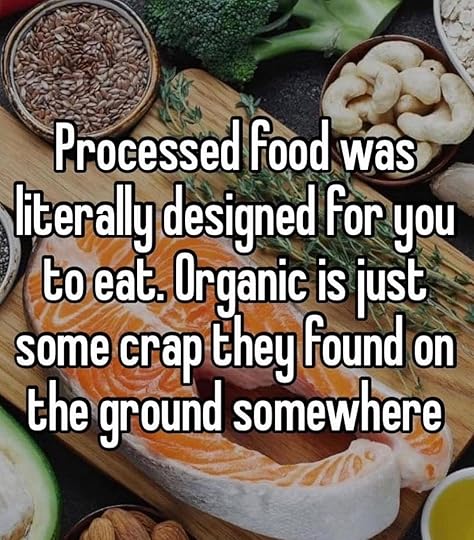
Processed food was literally designed for you to eat. Organic is just some crap they found on the ground.
There's a lot of neurojargon, like references to the orbitofrontal cortex, dopamine, and various memory systems, but the basic technique is mindfulness based. No one has enough discipline to simply override the urge the eat, especially not over the long term. What is possible is to recognize the patterns and moods that trigger compulsive eating and develop new habits. Techniques like mindful eating, using attention to savor food rather than shoveling it down, and RAIN (recognize, accept, investigate, nurture) on junk food cravings can help us relearn 'proper' experiences around eating an entire carne asada super burrito, or a pound of jellybeans. As we learn to take pleasure in healthier foods and remember that junk food comes with a price, better eating habits come naturally.
This book recommends a 21 day course of exercises. There's also an Eat Right Now app, which I found expensive ($100 a year), and a little intrusive with notifications. I can do mindfulness for free, ya know. I'll also say as a natural born hater, I am not doing a loving-kindness meditation. Finally, I just have some stress and boredom eating, which is likely amenable to this kind of intervention. If you have a diagnosed eating disorder, I'm not sure mindfulness is the right approach.
Processed food was literally designed for you to eat. Organic is just some crap they found on the ground.
There's a lot of neurojargon, like references to the orbitofrontal cortex, dopamine, and various memory systems, but the basic technique is mindfulness based. No one has enough discipline to simply override the urge the eat, especially not over the long term. What is possible is to recognize the patterns and moods that trigger compulsive eating and develop new habits. Techniques like mindful eating, using attention to savor food rather than shoveling it down, and RAIN (recognize, accept, investigate, nurture) on junk food cravings can help us relearn 'proper' experiences around eating an entire carne asada super burrito, or a pound of jellybeans. As we learn to take pleasure in healthier foods and remember that junk food comes with a price, better eating habits come naturally.
This book recommends a 21 day course of exercises. There's also an Eat Right Now app, which I found expensive ($100 a year), and a little intrusive with notifications. I can do mindfulness for free, ya know. I'll also say as a natural born hater, I am not doing a loving-kindness meditation. Finally, I just have some stress and boredom eating, which is likely amenable to this kind of intervention. If you have a diagnosed eating disorder, I'm not sure mindfulness is the right approach.
September 16, 2024
eat mindfully

October 2, 2024
I liked the scientific/mindfulness approach to bringing awareness to our eating habits.

November 17, 2025
This is a really thorough version of the intuitive eating/mindful eating framework. I've read a few books on this and thought that it was a good idea but totally unpractical (at least for me). This book really gets into the nuts & bolts of how to make it work.
A lot of this book seems to be about knowing why you eat and understanding when you are actually hungry, neither of which was useful.
I've already sorted that out, I'm aware why and what triggers stress eating or happy eating or bored eating or whatever other reason I'm eating that has nothing to do with hunger. Maybe just because I really love donuts, from that particular shop, and it's like 2 hours away, and I'm gonna get them and eat them whether I'm hungry or not, just because I'm close.
And I suppose if you don't pay attention to the difference between hunger and cravings and habit eating, then this might be eye opening, but not really an issue for me.
Once you understand those two things there isn't a lot of the book left for useful solutions and what was there seemed like too much emotional effort to do (again, at least for me).
A lot of this book seems to be about knowing why you eat and understanding when you are actually hungry, neither of which was useful.
I've already sorted that out, I'm aware why and what triggers stress eating or happy eating or bored eating or whatever other reason I'm eating that has nothing to do with hunger. Maybe just because I really love donuts, from that particular shop, and it's like 2 hours away, and I'm gonna get them and eat them whether I'm hungry or not, just because I'm close.
And I suppose if you don't pay attention to the difference between hunger and cravings and habit eating, then this might be eye opening, but not really an issue for me.
Once you understand those two things there isn't a lot of the book left for useful solutions and what was there seemed like too much emotional effort to do (again, at least for me).

September 14, 2026
95% of this book: practice mindfulness
i feel like a lot of chapters were drawn out and at a certain point it was just the concept of mindfulness recycled in different ways. it took months for me to finish and i honestly can‘t believe i did it.
i think the content of this book has potential to help people. i also think it is obvious how passionate the author is about the topic. maybe it just wasn‘t for me.
i also feel like it is geared more towards middle aged or older people based on the humor lol.
the author gaslighting himself into not liking gummy worms and mentioning it (over and over again) as an example also didn‘t sit well with me.
i feel like a lot of chapters were drawn out and at a certain point it was just the concept of mindfulness recycled in different ways. it took months for me to finish and i honestly can‘t believe i did it.
i think the content of this book has potential to help people. i also think it is obvious how passionate the author is about the topic. maybe it just wasn‘t for me.
i also feel like it is geared more towards middle aged or older people based on the humor lol.
the author gaslighting himself into not liking gummy worms and mentioning it (over and over again) as an example also didn‘t sit well with me.

March 2, 2024
I have read a ton of books on eating issues and this one was so on point. I listened to it and had to order a hard copy. This author is smart AF. Blends science and mindfulness. Will read his other books.

October 21, 2024
This is the BEST book on how to work with your brain rather than against it. I had more than one MAJOR a-ha moment. Breaking habits is a journey for sure, yet kindness and compassion to yourself feels so much better than the judgment and measuring that go hand in hand with dieting.

April 8, 2024
The Hunger Habit by Judson Brewer is intriguing! I might need to grab a physical copy to fully absorb the information. Brewer's arguments about the science behind overeating resonate with me, but there are also some points I'd like to explore further. Audiobooks can be great, but sometimes complex ideas need the focus that comes with reading on paper.

April 12, 2024
3.5 rounded down.


June 14, 2024
Honestly nothing revolutionary.

March 13, 2026
Helpful insight for shifting the mental aspects of eating when you’re not hungry
May 9, 2026
This book was interesting but it took so long to get to what to do about the problem of mindless eating that I just gave up reading

June 8, 2024
The author kind of bugged me in how he tried to constantly relate to the topic, but admittedly had never struggled with it. But besides being bugged, the research he offers was fantastic. We mindlessly eat to numb ourselves, among other things. So, he offers us the practice of eating with mindfulness (think: the raisin experiment). Being fully present as we consume (food but also social media, etc?). And importantly, offering self compassion and kindness to ourselves as we navigate these ideas. Great book. I'll likely listen to it again.

October 2, 2024
I really liked this book! I read the ebook and am considering buying the paper version to have as a reference. I think if you really want to work through the principles, you need to do it over a period of time, not just by speed reading this book. The tools make me really think before I turn to food instead of dealing with difficult emotions and giving myself grace. Note, if you actively struggle with anorexia this will not be a good book for you! I’d recommend it for someone who wants to make better choices with food and learn how to stop emotional eating
Displaying 1 - 30 of 188 reviews