Op 27 oktober 2024 beginnen de festiviteiten rondom de 750ste verjaardag van de stad Amsterdam. In deze geactualiseerde editie van Amsterdam vertelt Russell Shorto de geschiedenis van de meest vrijzinnige stad ter wereld. Van de aanleg van de eerste grachten in de veertiende eeuw tot het begin van de eenentwintigste eeuw, wanneer de zo gekoesterde vrijzinnige idealen onder vuur liggen. Met een nieuw voorwoord en een nieuw hoofdstuk over hoe Amsterdam veranderd is in de tien jaar sinds de eerste publicatie van Amsterdam.
Russell Shorto is the author, most recently, of Revolution Song, a new narrative of the American Revolution, which the New York Times called a "remarkable" achievement and the Chicago Tribune described as "an engaging piece of historical detective work and narrative craft." He is also the author of The Island at the Center of the World, a national bestseller about the Dutch founding of New York. Shorto is senior scholar at the New Netherland Institute and was formerly the director of the John Adams Institute in Amsterdam.
This is an entertaining read and a good warm-up if preparing a visit Amsterdam. Do not expect a great deal more than that. This book will also be liked more by an American readership since most of the comparisons are made with the US. It is clearly written for them.
Russell Shorto, who as is to be expected is an American, who decided to settle in Amsterdam as a freelance writer. He loves the city and that clearly transpires in the reading. His account is a mixture between personal experiences, his research on the history of the place, as well as his opinions. This gives variety to the account. The very personal touch is given from the start as he adroitly begins by taking us along with him in his daily bicycle ride.
But there is a certain tint of novelty in his descriptions that creates the impression that everything he knows about the city he learnt only while being there, and recently.
The main argument is in the title. His understanding of Amsterdam is that it is the most liberal city, in the world, and he traces that liberalism through the city’s rich past, and this liberalism is proven in the way the practice of religion was given always a greater freedom than enjoyed in other contemporary societies. The liberalism excelled in particular in their mercantile foundations, but also in their political structures, social relationships, and of course, also in the license given to the pursuit of sex and alternative states of consciousness.
I found Shorto deals better with the modern than with past times. His treatment of history has the texture of recent readings. By that I mean a considerable amount of reading done in a relatively short time and which has not really settled. And even if his love of the place is very inspiring, he gives the impression of being an outsider to Amsterdam. But his enthusiasm is certainly more contagious when he deals with the twentieth century, in particular with WW2 and with the turmoil of the 1960s.
One irritation for me was his overuse of the expression “in the world”, which is in the title as well. When language is too inflated it loses value, and when "in the world" is found so often, it eventually projects a certain degree of provincialism. But that may be the doing of the editor and of what we the public like to buy.
But overall this is a perfect starting point for any incursion into the city of the canals.
Ahhh, Amsterdam. Apple cake, hashish, cheese, canals, bikes and seedy red light areas. Or at least, that's largely what tourists see while they revel in the city's legendary liberalism.
What they don't see is that Amsterdam's influence extends far beyond a few stoned backpackers. According to Russel Shorto, Amsterdam is one of the parents of freedom as we know it, a city that helped birth not only the protestant reformation, but modern ideas of tolerance and acceptance of difference that are now embraced worldwide.
After reading Ben Coates' Why the Dutch are Different I was curious to read more about my ancestral home and its most famous city. Amsterdam: A History of The World’s Most Liberal City really hit the spot. The history that Shorto reveals is scintillating. This is the story of how a backwater village in a swampy dump became the greatest city in the world, at least for a while, a center of art and culture that produced Rembrandt, Vermeer and eventually Van Gogh.
If you've spent time in the Netherlands you'll be familiar with its interesting mix of liberalism (do what you like in your personal life, smoke drugs 'till you fall in a canal, etc. etc.) and sometimes amusing conservatism (don't put your rubbish in the wrong bin, wear white shoes if you are a young woman, blue suits if you are a man, and brace yourself for the bureaucracy!), something that Shorto attributes to the Dutch history of both working together to protect their country from the sea, while at the same time encouraging individual agency, landholding and commerce.
Shorto shows how this uniquely Dutch combination of communalism and individualism has produced a uniquely liberal society, something that was substantially helped by the Netherlands’ famously relaxed attitude towards low-level illegal activity, an attitude that goes back centuries. Nowhere is this attitude more stark than in a comparison of how they treated early protestant 'heretics' vs the rest of Europe:
Catholic Europe: round them up en-masse and torture them horribly. If they repent behead the men and drown the women. If they don't repent, burn them at the stake.
The Dutch: Ignore them and hope they'll go away. If they don't go away, ignore them some more.
This attitude to some extent still prevails today. Allied to Dutch pragmatism regarding trade, this relaxed attitude saw Amsterdam become incredibly polyglot, home to tens and tens of nationalities and languages, all co-existing and working with each other.
This multicultural tolerance has not been perfect. Dutch society was stretched to breaking point during the Nazi occupation, where a far greater proportion of Jewish people were handed over to the Nazis than in some other nations (with the cooperation of the authorities) and much of the population was at best ambivalent about such evils. The horror of the war led to much soul-searching on the behalf of the Dutch, many of whom questioned how deeply held the vaunted Dutch liberalism and tolerance really was among the people of the Netherlands.
Post war, however, Amsterdam doubled down on its heritage of openness and liberalism. The sixties hit the city hard, and to an extent, never went away, the progressiveness of that decade becoming part of Amsterdam's fabric, and the eventual liberalising of drug, prostitution and same-sex marriage laws cementing the city’s reputation for relaxed attitudes to vice and personal relations.
Today questions around migration and integration have also stretched Dutch tolerance a bit, but the nation, and Amsterdam has remained stunningly liberal, combining broad personal freedoms with an effective and generous welfare state.
This is a fascinating history, woven through with personal stories, and Shorto’s touching interviews with a Dutch holocaust survivor.
If you've never visited the Netherlands I urge you to do so, if only to see the famous Dutch liberalism up close, and experience one of the worlds more interesting cultures. Certainly after my last visit, and reading this book, it seems to me that the international symbol of freedom isn't the bald eagle, or the stars and stripes - it's a wedge of spiced Gouda, enjoyed during the Amsterdam pride parade, with the fragrant aroma of marijuana in the air.
A marvellously readable book on the history of this city! It goes back to the 1500’s and 1600’s with the author outlining the distinctive features of Amsterdam and Holland in that era.
It was never as dominated by the Church and Royalty as France and Spain were – the two major mainland European powers of the time. This was significant because Holland was not feudal and therefore did not have a top-down society. The Dutch were not subservient to an all-powerful Church nor to an all–powerful Monarchy. This allowed for freer development of business entrepreneurs leading to a mercantile class of people who did not want to be controlled and hindered in their money-making ventures. All worked together to prevent their low-lying land from being flooded. The author argues persuasively that this individualist and collective effort in business and the control of the sea made for a more liberal and tolerant society. Protestants from France migrated to Holland to escape persecution; Jews from Iberia also did the same. This made for a society that was both diverse and tolerant.
This all fostered the growth of individualism, an essential component of liberalism. Toleration was fostered by a Dutch word “gedogen” which means “illegal, but look the other way”. This was developed as an art form in Amsterdam and exists to this day. For example when Amsterdam was under the yoke of Spain they were told to “Inquisition” Protestants, but for the most part this was ignored. Well sometimes it didn’t always work out, with horrible results – and then the Protestants would retaliate with similar results.
There are wonderful passages on Rembrandt whose paintings were not of the aristocracy or of the ecclesiastical type – but were portraits of the business classes. Rembrandt could be a rather obstinate fellow and quarrelled frequently with his patrons – with the result that requests for his services diminished over time and he was never as wealthy as some of his lesser known contemporaries.
And there is Spinoza – who was excommunicated from the Jewish community and faith. Spinoza is considered by many in the philosophical world to be the originator of secularism. Spinoza considered all religions to be man-made. For this he was ostracized and never joined any other faith – very unusual for that era, the 1650’s. Spinoza was allowed to live his life; but, to illustrate the darker side of the era, Dewitt, the leading Dutch republican, was torn apart by a mob in 1672! DeWitt and the republicans were replaced by the Dutch Monarchy.
So to some extent liberalism subsided after this, however it did leave its imprint. The Dutch Monarchy was never as powerful as in France. Amsterdam became a leading publisher and many forbidden books (by Spinoza, Descartes...) that were banned elsewhere, were available. It continued to tolerate different brands of Christianity and Judaism. Liberalism (like any ideology) spread to France (Descartes, Voltaire) and England (John Locke). One has only to think of the impact of the American Revolution and the French Revolution!
In the modern era, Eduard Douwes Dekker in 1860 wrote a book highly critical of Dutch colonialism. Aletta Jacobs became the first female doctor in Holland and was a strong advocate and educator in the 1870’s for the reproductive rights of women, particularly in the use of contaceptives.
The horrible Nazi occupation is discussed. Some have argued that this is one reason that Amsterdam went somewhat “over the top” in the 1960’s as an attempt to counter-balance the evil of occupation and collaboration.
Amsterdam was one of the first cities to bring Gay Rights into the open during the 1960’s. Due to the openness and education in the use of birth control Holland has one of the lowest teenage pregnancy rates in the world, it also has a low rate of abortion (in other words if you really want to lower the abortion rate start making birth control accessible). There are more bicycle riders in Amsterdam per capita than any other European city.
Did you know Amsterdam influenced many historical events including, but not limited, to The Enlightenment, the establishment of the stock market, and the American Revolution? Did you know it was the birthplace of the invention of firefighting equipment and the streetlamp? Did you also know one of Amsterdam’s mayors stated “craziness” is considered a “value” in the city? Me neither! However, Dutch citizens’ opinions vary regarding this “quality”.
Covering a wide breadth of the city, he also discusses what the term “liberalism” can all encompass and the harrowing and disturbing times such as the treatment of citizens and refugees during times of war.
Shorto is one of those non-fiction authors who sneaks vegetables as ingredients in the cookies and makes you like them; he makes history engaging. He does so specifically by bookending the narration with personal accounts of interviews with a Dutch Holocaust survivor. You may also shed a tear as I did, visiting her story through his graceful narration.
A great choice for history enthusiasts and non-fiction book discussions. - Sara W.
Amsterdam doesn’t quite fire the imagination for people the same way that Venice and Paris do. Romance, beauty, tragedy, history is what springs to mind when one thinks of Paris or Venice. Now think of Amsterdam. Which jumped into your mind first – drugs, prostitutes, or Anne Frank? Did you think of the famous Nightwatch, Rembrandt, Van Gogh, or pancakes?
Nope, you thought of sex and drugs.
And this is what Shorto elegantly counters in his book about the world famous city and trading center. I’ve been to Amsterdam twice, and I can tell you there is much more than canals, Anne Frank, and prostitutes.
Though Anne Frank is important, and Shorto doesn’t ignore her. He doesn’t disregard the drugs or the prostitutes either, but he doesn’t let them overwhelm the city or the narrative. In fact, he also shows the connections between all three and Amsterdam and the rest of the world.
And that is Liberalism. Not in the sense of American democrats either, not disconnected from capitalism either
Shorto starts and ends the book with two stories – one about his day care provider who is trying to get a relative into the country, and another about Frieda Menco, a Holocaust survivor who knew Anne Frank. These two women stand as examples of times when the famous Amsterdam Liberalism is, temporary it seems, punched down. But it seems to come back fighting. Menco represents this because of where she lives and the ties that the location has to her past. The day care provider is the modern answer to this, living in an Amsterdam which is trying to adjust and find itself after the murder of Theo Van Gogh and immigration.
Shorto argues that in many ways the liberalism that the world associates with Amsterdam is in part a product of the unique Dutch landscape that the fight with the sea in many ways contributed to the Dutch view. The view of us against the sea, as opposed to us against them, made the other a thing of nature as opposed to people and, therefore, something that is harder to kill and slaughter. Furthermore, the liberalism is re-enforced by a view of capitalism – toleration is beneficial to business and the people of Amsterdam need the business.
This sounds mercenary, and perhaps it is, but if Shorto is correct, and he makes an excellent argument, then it really does illustrate what the world can be at its best. And it is the world because Amsterdam has exported its liberalism. Shorto is able to link the city to the development of New York, beyond simply the first settlers and place names.
The roots of the liberalism are shown not only in the development of the city but in the arts that come out of the city. While Shorto’s focus is usually city wide, his section on Rembrandt in Amsterdam and how the Master’s painting reflects the change in culture that goes along.
Additionally, in most histories of places, the rulers go hand and hand with the place. It is hard, for instance, to talk about London without talking about the British monarchy in general. But Amsterdam, while nominally part of a country that has a king, is a kingless city. This lack of ruler gives the city even more character, at least in terms of this book.
In terms of style, Shorto’s book about his adopted city is not like Ackroyd’s love poem in prose to London. This is not a criticism Shorto’s book is something different, less about a city then about the ideas that the city represents. This is reflected in the chapters that while linear in time due also wonder or go on digressions that are beautiful and lovely for all the light connection to the topic at hand. It’s like wondering the little allies and streets of the city, meandering our way though the canals.
It is to Shorto’s credit that while he deals with Anne Frank, whose spirit is strongly associated with the city, he does not present the Holocaust and the Dutch role in hit though rose colored glasses. He does not hold up Miep as an example of all Dutch during the war years. More importantly, he takes what some would call a failure to live up to the values of liberalism and shows how the Dutch emerged from the Holocaust willing and determined not to let liberalism fail again. The rebuilding of the society after the war with the determination to live up to and create that society. This leads to the squatting, the John Lennon bed in, the openness and acceptable of homosexuals that is not found everywhere or anywhere at the same time.
In many ways, Shorto’s biography of Amsterdam and the idea that it represents is brilliant and matches the idea and city itself. It offers a non-varnished view of ideas and how they change, fail, and grow stronger - much like the cities and people where they reside. Furthermore, it is though the liberalism of Amsterdam that Shorto also seems to express a hope for the human race.
While occasionally interesting, “Amsterdam: A History of the World's Most Liberal City” was not very thought provoking. I had many problems with Mr Shorto’s thesis. These, I shall enumerate (in no particular order and I would have given page numbers, but reading it it eBook format, page numbers are relative to your fort size and not absolute): 1. Amsterdam was not an independent actor in a vacuum, and what is often most important, is what is happening elsewhere and the interactions of the two. Mr. Shorto deals with this problem, as he does with many other problems, through the expedient of just ignoring it. For example, there is no discussion, of the influence of Amsterdam’s neighboring German States. Is it's liberalism merely a local node for ideas just as ingrained in places such as Hamburg or Lübeck? 2. Shorto seems to see something natural, special and organic about Amsterdam's freedom. But the city could equally be seen as just a fortunate, remote northern survivor from what had once been a dense network of Low Country "liberal" trading cities, most of which were successfully crushed and destroyed by French or Spanish troops. 3. Shorto occasionally contradicts his own arguments. For example, Amsterdam's baseline religious tolerance is countered with his recounting the appalling scenes of Anabaptists having their chests cut open and hearts pulled out to be smeared, still beating, on their faces; Catholic priests and nun stripped and killed and churches desecrated; Jews not surviving the Nazi’s in greater proportions than the rest of Occupied Europe. 4. Some of Mr. Shorto’s reasoning does not stand up to close scrutiny: “Amsterdam was an oligarchy,” we’re told, a few pages before being reminded of “the egalitarian nature of Dutch society.” Or, that Thomas Jefferson drew from John Locke, and Locke spent five years in Amsterdam, so Amsterdam deserves some credit for Declaration of Independence’s pursuit of life, liberty and happiness clause. 5. He describes actions that are truly amazing, implying they are unique to Amsterdam, when in fact they are actions in use elsewhere long before Amsterdam. An example being the driving of piles into marshy land in order to build upon it. This method was used in Venice for centuries before the expansion of Amsterdam. 6. “Major”, “first”, “greatest”, “best” and what seemed at times an almost of each page occurrence of “golden age” or “liberalism”; I began to suspect that superlatives were a way of repeating, the claims that weren’t proven, as if quantity of argument could make up for quality. In short, it seemed that Mr. Shorto’s ideas were superimposed upon his material rather than to flow out of it; as if he had his thesis, then found the facts, not always successfully, to support it, and disregarding anything that didn’t fit.
As both a historian and a smoker (not cigs) I have a deep appreciation of Amsterdam. Russell Shorto seems to be in love with Amsterdam as well. This was an entertaining book, especially if you've spent time in this wonderful city.
It is a look at the development of the city as a liberal bastion. Starting from the year 1200, we see industrious Dutch people put up dikes to reclaim the land and called their settlement-Amstelredamme (this due to the dam built on the Amstel River).
From there the city developed in a unique fashion due to the close ties between the Dutch people of this land. Shorto then traces the various political, religious, and social mores that created the basis for the ultra-liberal modern city.
From Spinoza to William, Prince of Orange, the leading citizens have helped to shape the city into what it is today.
A fun dive into the history of one of Europe's most interesting and liberal cities. A must read if you plan to visit.
As an American of Dutch descent, I like to learn as much as I can about the history and culture of The Netherlands. I picked up this book with that purpose in mind, and I thoroughly enjoyed Shorto's entertaining and stimulating history of "the world's most liberal city."
Shorto recognizes, of course, that Amsterdam is widely perceived as exceptionally liberal in the sense of permissive (tolerating drugs, prostitution, and until recently, squatting in abandoned buildings). But he argues that throughout its history the city has also nurtured liberalism in the sense of "commitment to individual freedom and individual rights, and not just for oneself but for everyone...." In fact, he says it's possible to make the claim that liberalism in this higher sense, which to him represents the division between medieval and modern, was born in Amsterdam.
Shorto traces Amsterdam's fascinating history from the 1300s when the people worked cooperatively to reclaim land from the sea, up to the present day. He brings the city's history to life by weaving the stories of individuals into the overall narrative of the city's development. Indeed, he personalizes the story even further by incorporating his own observations and experiences as an American living in the city. This aspect of the book may make it more appealing to American readers than to others, but I think that most readers will agree that his personal perspective enhances the narrative.
What a fantastic history of Amsterdam. Mr. Shorto does a marvelous job of painting a wonderful picture of the city, both in the past and the present. In this book, while Mr. Shorto inserts himself from time to time, it is done in a way that enhances the story and makes it feel like he is giving us a tour of the city and is helping us walk through its very detailed past. A+ job. Wonderfully put book altogether. Best book of the year so far for 2022.
I liked this book so much that when I was listening to the audio I went and bought the book to keep with me for the future. A fascinating trip through the history of Amsterdam as well as The Netherlands.
Inspired by a fellow reader I've gone a small quest to learn more about the country of my ancestors. I have not been disappointed in this book. Although my family did not come from Amsterdam itself, I figured I would glean a little more understanding of Hollanders as well. I ended up learning so much more from this book.
"Amsterdam is, by most accounts, the most liberal place on earth. It is often laughably liberal or shake-your-head-in-disbelief liberal. In saying this I am using the definition of liberal as synonymous with free, open, and permissive. But, the word has another, deeper and higher meaning, which is in fact related to the other." and he goes on to write
"A difficulty that the word [liberalism] suffers today is that is has seemingly opposite meanings in the United States and in Europe."
For these two quotes alone I believe this would be advantageous book for Americans to read, especially in this election year. Words and definitions are being bandied about but I think there is a different understanding of these words depending on which side of the pond you are from.
Beginning around 1000AD the people of this delta area began a battle to control the water: "-The water, the perils, the bravery, the absurdity of the geographic position, and the development of complex communal organizations to cope with the situation - explains much of Amsterdam's history and provides as well a backdrop to the development of liberalism"
It's important to know that at this time there was no one leader or King. These efforts were organized by groups of towns people all over this small region. It would not be until Willem of Orange that the country would unite under one leader.
And, this sets up the idea for the whole book: that the Netherlands, and Amsterdam in particular, was uniquely placed to embrace individual thought that works together for the betterment of the group. A place where Capitalism and Social Welfare programs successfully co-exist.
"'America is the land of the free. [says one Dutch friend] But I think we are freer.' Freer...because you [the Dutch] are not alone. That is the story that Amsterdam tells. Working together, we win land from the sea. Individually, we own it; individually, we prosper, so that collectively we do. Together, we maintain a society of individuals."
Of course it is not without its excesses, abuses, and problems. The author delves deeply into both old, historic tragedies as well as new problems facing The Netherlands, along with most of Europe. Overall, this was not only an enlightening read, it was a fascinating one. 5/5 stars
Dedication: For Pamela, Anna, Eva, Anthony, Reinier, Hector and Benjamin
The opening is a warm family moment that instantly draws a reader in: A day in Amsterdam begins with me leaving my apartment with my toddler son in my arms, strapping him into his seat between the handlebars of my bicycle, working his blocky little sneakered feet into the footpads, then setting off through the quiet, generally breezy streets of our neighborhood, which is called Oud Zuid: Old South.
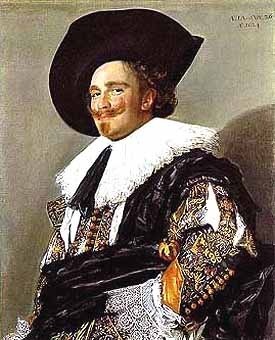
My memories of Holland are of tulips and windmills, land reclamation, the Laughing Cavalier and all things Orange.
My impressions of Amsterdam, where I haven't been, are of canals and bikes, diamonds and sex, drugs and Van der Valk
Loved this, admired the easy writing. A must for any reference library.
Na 15 jaar laten verstoffen in de kast, maar eens opgepakt vanwege de 750e verjaardag van Amsterdam. Had eigenlijk een slechter boek verwacht, Amerikaanse historici hebben namelijk nogal de nijging om de Nederlandse geschiedenis en ‘tolerantie’ te bewonderen (ik bedoel, de titel van dit boek alleen al). Dit viel me verrassend mee. Zijn stukken over expat in Amsterdam zijn rond 2012 (toen we dat nog gezellig vonden) waren irritant en overbodig. Niet gelukt uit te lezen, wel geleerd dat Amsterdam ooit is ontstaan door het mirakel van een hostie!♥️
Amsterdam, toonbeeld van tolerantie. Het is een cliché, maar dit boek gaat in op de achtergrond van die tolerantie. In een tijd dat de meeste Europese bevolkingen nog gebukt gingen onder het gezag van monarchie en kerk, gingen de Amsterdammers (en andere Nederlanders) de strijd aan met een heel andere vijand: water. Ze wonnen land van de zee en dat gewonnen land vervolgens vrijwaren van de natuurkrachten, vereiste samenwerking tussen de burgers en vertrouwen in mekaar. In geval van nood moesten die burgers om mekaar kunnen rekenen, en dan helpt het niet echt als op elke slak zout wordt gelegd: leven en laten leven, het afwijkende gedrag van je buur 'gedogen', het succesrecept van de zo geroemde Amsterdamse tolerantie. Die tolerantie stoelt niet zozeer op filosofische en theoretische achtergronden, maar gewoon op ... gezond pragmatisme. Individualisme en burgerzin, het zijn twee tegengestelden, en toch wisten de Amsterdammers al vroeg de twee te rijmen. Het boek gaat in op de hoogtepunten van de Nederlandse geschiedenis, en dus van Amsterdam: terwijl de Zuidelijke Nederlanden ten prooi vallen aan Alva, wordt Nederland een vrijhaven voor godsdienstvrijheid. De intelligentsia van Antwerpen vinden een nieuwe thuishaven in Amsterdam en zorgen voor een ongekende bloei van de stad. Uiteraard gaat dit boek ook sterk in op het ontstaan van de VOC, die de basis legde voor de Gouden Eeuw, waarin het kapitalisme met al zijn voor- en nadelen (niets nieuws onder de zon !) het licht zag. Bijzonder boeiend vond ik ook de geschiedenis van Rembrandt: misschien wel voor de eerste keer in de Europese geschiedenis staat een kunstenaar niet ten dienst van kerk en politieke macht, maar komen(weliswaar welgestelde)burgers in the picture.
Dat Amsterdam een belangrijke rol speelde bij de stichting van New York (vroeger Nieuw-Amsterdam) wisten we al, maar ik heb er nooit bij stilgestaan dat het de Nederlanders zijn die New York vanaf het prilste begin vorm hebben gegeven als een internationale, multiculturele en tolerante stad (in tegenstelling tot bv. het 'Puriteinse' Boston). En dat de oprichting van de jonge Amerikaanse natie zich voor veel aspecten heeft laten inspireren door Nederland...
Kortom, een zeer boeiend boek, dat meer dan het lezen waard is. Ook al omdat de zwarte bladzijden uit de Amsterdamse geschiedenis helemaal niet geschuwd worden: ruim driekwart van de Joodse bevolking van Amsterdam overleefde WOII niet (het hoogste percentage in heel Europa!). Ook op de crisis inde multiculturele samenleving (de moord op Theo Van Gogh) wordt uitgebreid ingegaan.
This is a wonderful compact volume sketching the history of the City of Amsterdam from the medieval age to present day. Shorto has a lot of ground to cover, but he strikes a good balance between the key historical elements that make us think of this Dutch city as the world's pre-eminent source of progressive, liberal ideology.
In essence, Shorto believes the fact that the city was literally built as a dam and polder works to drain farmland by the locals themselves, rather than having a feudal lord commanding his serfs to do so, gave everyone a stake (and reward) in a risky, difficult venture. This was somewhat of an equalizing, co-operative background current that has worked through Amsterdam (and Dutch) society, continuing with their experiments with religious freedom and the subsequent long fight against the Spanish Inquisition, all the way to present day.
Rather than present a dry chronology of dates and events, Shorto takes us through a selection of these anecdotally, bringing the events to life through vivid descriptions of the characters involved. We learn about William Duke of Orange and his knack for remaining "silent" to buy time in preparing against King Philip and the Duke of Alba. We walk around the canals and streets with Spinoza as he gestates his radical ideas that will become his Ethics. We are present at Dr Tulp's anatomy lesson in the Waag, with Rembrandt setting up his easel to capture the moment. We travel through the childhood memories of an 86-year-old Auschwitz survivor who jumped rope with Anne Frank in Merwedeplein in the late 1930s before the horrors the Nazis brought. We hang out with long-haired hippies by the National Monument on Dam Square as Provo protesters march by in the late 1960s.
Although I have Dutch heritage and already know much of the background of this progressive yet tiny country with Amsterdam at the heart of it all, I am always surprised by how much more there is to learn about it. Russell Shorto disappoints neither novices nor more experienced Dutch visitors. He describes both well-known and little-known wonders of this gem of a city where the River Amstel meets the Ij.
An extremely interesting book for anyone interested in European history, because it covers much more than the history of Amsterdam. Which makes sense when you consider that no city can come into existence in a vacuum.
Starting with the first efforts of man to reclaim land from the sea and continuing on through wars, religious and political; economic developments; exploration and colonization of the outside world; and the lives of philosophers and kings, among others, the author ends the book with a poignant treatment of the Holocaust and the Nazi occupation of Holland.
But this is more than a history book. There is a thread that runs through it that is basically a discussion of the difference between liberalism and conservatism, and among the different types of each.
The book is easy to read despite its heavy cast of characters and the long period it covers, and I am sure that I learned more than I would have if I'd read a history textbook.
The author also inserts personal anecdotes of his life in Amsterdam and about people he has come to know who also live there, making the book interesting on yet another level.
Amsterdam padeció problemas que se convirtieron en soluciones, paso de sufrir de inundaciones a crear sistema de canales que no solo les soluciona el inconveniente sino que los convierten algunos en canales para el paso de comercio. La locura encaja con esa cultura conservadora de dos maneras: la ciudad, por un lado, se enorgullece de su tradición tolerancia y, por otro lado, la lógica de que es mejor legalizar y reglamentar las actividades que van a realizarse de todos modos. La palabra `Liberal´ video latín LIBER, que significa ´libre, una raíz presente también en vocabulario como ´libertario´ y ´libertino´. Se trata de una de esas palabras que, a lo largo de la historia, ha Sio tiroteadas sin piedad en distintas direcciones. El liberalismo es un cesto difuso que abarca una serie de ideas también difusas en torno a la justicia, la ética, la propiedad privada, etcétera. ´Las personas están atrapadas en la historia, y la historia está atrapada en las personas´. La idea del Multi culturalismo en tanto convicción de que toda sociedad debe hacer lugar a sus minorías culturales y apoyarlas activamente. Lo que hoy conocemos como holanda no es mas que un vasto delta filial en el que desembocan el RIN, el Mosa o Maas, y el Escalda. La tolerancia no implica ´celebrar la diversidad´. Mas bien, tiene que ver con soportarla y es un concepto nacido de la necesidad y el pragmatismo. Me gusto este libro, desde mi inexperiencia historia se me facilito leerlo ya que posee un introducción que te deja con ganas de mas para este tema interesante.
In preparation for a summer trip to Amsterdam (and Ghent), I wanted to immerse myself in the history of this well-known city and learn more about the people, events and natural forces (i.e. the encroaching North Sea) that shaped this capital of commerce. Russell Shorto is the perfect guide for this purpose. He is an American writer who lives in Amsterdam. His prose is crisp and colorful as he weaves his day-to-day life with the powerful narratives that forged, not only the beginnings of capitalism, but the beginnings of liberalism—an emphasis on individual rights.
People tend to think of Amsterdam as a wild party town with the “coffee shop” marijuana bars and a red light district with legal prostitution on open display. All of this being the result of the Dutch legal philosophy of gedogen or toleration. But the Dutch people are not by any stretch a loose-living, hard partying people. They tend to be conservative, stoic and hard-working. For centuries they’ve worked together to stave off the sea and carve out a profitable existence. Their spirit of persistence and cooperation has made them a very independent-minded and flexible citizenry. Shorto presents the thesis that Amsterdam is the birthplace of Liberalism—not exactly the American brand of liberalism, but a unique emphasis on individual freedom that is more akin to American Libertarianism. The people of Amsterdam are the product of their environment and it made them resilient and ungovernable in any feudal milieu.
From the flame-retardant host that put the city on the holy relics tour map to the rise of the herring trade and beginnings of modern branding, Shorto deftly navigates readers through the major upheaval of the Dutch Revolt against Hapsburg Spain and the resulting Golden Age of commerce and art that made the Dutch Provinces a colonial and global power.
I learned so much in reading this book:
I was introduced to Baruch Spinoza, the Jewish secular philosopher, who rocked the religious world with his writings—a man so controversial in his worldview that he was excommunicated by his own Jewish religious leaders, a group known for questioning and arguing everything.
I also learned that Amsterdam was the birthplace of the first true stock market with shareholders purchasing stock certificates of the trading company known as the VOC (The Dutch East India Company: the first true corporation). Not only was this the beginnings of a proto-capitalism, but it became the breeding ground for the kind of corruption, greed and scandals that led to the 2008 financial crisis. Short selling and Ponzi schemes are nothing new—they were common in Golden Age Amsterdam.
I also enjoyed discovering the writer Multatuli, the pen-name for Eduard Douwes Dekker, a civil servant who wrote the satirical novel, Max Havelaar which cast a harsh spotlight on the cruelty and corruption of the Dutch colonial system. Dekker’s seminal novel and his later writings would make him the father of social justice movements right up to today.
If you want to know more about the history and the people of this fabled city, I can’t recommend this book enough. I'm confidently heading to Amsterdam, with more preparation and knowledge than any travel guide book could have possibly offered.
Not entirely satisfactory as a history either of Amsterdam or of Liberalism. Nevertheless, an interesting read.
Shorto argues convincingly that Amsterdam at the beginning of the 17th century was most liberal city in the world: the most financially advanced, with the first stock exchange, the most commercial, the best planned, the most tolerant, the most polyglot, publishing 30% of the world’s books, the greatest science hub, with the best lenses for telescopes and microscopes, and the most republican city north of the Alps.
Many of these features crossed the channel during that century: in fact he argues that the seizure of the English crown in 1688 marks the completion of the Dutchification of England, not its beginning. And with the imposition of royal power in Amsterdam, London became the global centre of liberalism.
He also points out that New York was a tolerant, liberal, commercial, polyglot centre even before the English took it over. For years afterwards, the English needed Dutch translators because Dutch was the only European language the local Indians knew.
After WWII, the Dutch were thrown out of Indonesia, and many dark skinned people of mixed race arrived in Amsterdam. Just as the Anglo-Indians were more English than the English, the Indo-Europeans were more Dutch that the Dutch, and they assimilated so well that only their colour and their cuisine remains to distinguish them.
This was just okay. I skipped through the boring parts, which were quite a lot, possibly because I’ve been reading quite a bit about Amsterdam lately! Some of it was fine, but the rest was a bit monotonous and tedious for me. One part that I thought was particularly interesting was towards the end of this book, the author reminds us of the story of “The Boy Who Held Back the Sea” – one that many are familiar with. I had previously read that this is not a Dutch story, but was actually written by an American over a century ago. A Dutch friend reminds the author that the story is “purely American”, that in the Netherlands, “dike building and dike repair are communal enterprises, were the Dutch to construct such a fairy tale, the ‘hero” would be town water board.
In the 1600s, Amsterdam had their golden age. They built the buildings along the canals. They formed the East India Trading Company and became a major commercial center. They established the first stock market. Rembrandt was a knocking out portraits for the wealthy. It lasted until the British and French jointly attacked around 1672 and destroyed it all for them. Today, they have no skyscrapers and are a moderately sized city. Historically, they are a city of tolerance that continues today. The sin trades are regulated and they have low crime rates. Teen pregnancy rates and abortion are very low. And they don’t have an opioid problem like the US. It seems to work for them.
This is a very well written and historically accurate history of the most liberal city in the world. The author is an American who chose this city as his home for seven years. The writing shows his love for the city and his understanding of the polatics and history of it. I recommend it to all. Enjoy and Be Blessed. Diamond
This book is amazing! I have always found history incredibly boring, so much so that I typically have trouble retaining anything I read/learn. Yeah, at one point I knew the order of ascension of the British monarchy...not anymore. Heck, I read an entire book ABOUT Spinoza, yet the first time he was mentioned in this book the name was new to me. So you get the point: my memory sucks. Even though Shorto manages to somehow make every aspect of Amsterdam's history rich and engaging, I worry that all of this wonderful information will, all too soon, leave my wizening brain.
Sooooo...the rest of this review is just going to be a list of facts that I found particularly interesting and that I want to remember--or at least record here for when I inevitably do forget. I suppose spoilers?
-The founding of Amsterdam is a miracle: in 1345 a magical Eucharist was vomited up, in two fires, and yet still remained whole. This put the city on the map and made it a pilgrimage destination.
-The discovery of a way to preserve fish longer led to the ability to journey farther out to sea which led to the need for newer ships.
-Erasmus, the illegitimate son of a priest, was raised in an (abusive) Amsterdam monastery introduced ideas that would avalanche into the Reformation: the essence of Christianity is not found in the Vatican or church dogma, but in the individual. He despised the "superstition of ceremonies," stressed individual human reason, and coined a new term for this approach to learning: "liberal studies" (38-39).
-After Luther's break from the church spread, Protestantism became popular--although still outlawed--in Amsterdam; however, this is one of many examples of the power that be (at this time the Catholic officials) just sort of looked the other way. This was called gedogen, or toleration of illegal activity.
-Dutch landownership was different from most of Europe in that it was not manorial: "circa 1500, only 5% of land was owned by nobles, while peasants owned 45% of it...which meant that ordinary Dutchmen were less inclined to adopt the posture of obedience that serfs and peasants elsewhere did" (45). The reason for this difference was water and the communal need to literally carve out new land; the result of this was more diversity in individual beliefs...and more tolerance.
-October 25, 1555 Charles V (grandson of Ferdinand and Isabella of Spain and heir to Hapsburg dynasty) abdicated his throne--and titles of Holy Roman Emperor and king of Spain--to his 28 year old son Philip II. Willem of Nassau, born into poverty, inherited some ridiculous fortune and because his uncle was buds with Charles, he ended up living at the palace. He became Prince of Orange and was liked by the Dutch. He was working for peace, but when he was sent by Philip to meet with Henry, the king of France (war with France had just ended), he learned that Philip and Henry were planning major attack on Protestantism. Henry mentioned this because he assumed Willem knew; he did not but played along, keeping quiet, and earned the moniker Willem the Silent. Convinced that Philip was going to take intolerable measures against the Dutch, he became a rebel leader.
-Philip brought the Spanish Inquisition to Amsterdam to ferret out--and punish--non-Catholics. Some Dutch approached Margaret (Philip's appointed regent of the area) in an over-the-top, fawning, obsequious manner to basically make a threat that there would be trouble unless the heresy laws were not relaxed. They satirically became known as the Order of Beggars (66-67).
-While Willem of Orange continued to try to earn tolerance, diversity, pluralism, and individual rights from Philip, Philip sent the Duke of Alba --a real evil son-of-a-bitch--to crush Calvinist movement among Dutch (whose leaders had been largely just ignoring [gedogen!]). He beheaded Dutch royals and put 18,000 Dutch to death. Willem converts to Calvinism and finally sees need for open revolt. A successful propaganda campaign clearly pitted the evil Alba against Willem, the defender of liberty. Songs were written in honor of his heroism, including what is still the national anthem "Wilhelmus" (72-79).
-May 26, 1578 Catholic leadership in Amsterdam caved and "the real Amsterdam was born" (83). Willem sailed in with orange robes and fanfare, which explains Netherlands' soccer team's colors to this day.
-Union of Utrecht grants freedom of religion! People, people with skills!, came to Amsterdam, which posed no restrictions on newcomers.
-Cornelius De Houtman sets sail in 1595 on what would become a comedy-of-errors-sea voyage intended to reach Java, get a bunch of pepper, and break Portugal's monopoly on sea trade. (89-101).
-East Indies became the place to go to trade. Dutch merchants had to ban together. Because of wars with Spanish and Portuguese, the government supported the Dutch ships. This all results in "a private, for profit venture, yet with governmental oversight and with not only the power but the obligation to wage war on behalf of the Dutch republic. It would have the authority to build and maintain military forts and, from these, to impel foreign populations and leaders to trade with it" (103). And thus was born the Dutch East India Company or VOC; arguably "no company in history has had such an impact" (103).
-The VOC leads to an era of consumerism where Dick van Os sold shares of VOC stock and "birth[ed] capitalism" in his little house in Amsterdam. The New Bridge became the first stock exchange where shareholders met to sell shares of VOC and speculate on the underlying price. "Nearly all variations of financial transfers in use today--call options, repos, futures contracts, short selling, naked short selling--were invented or pioneered in Amsterdam in the seventeenth century" (110). With these first capitalist ventures, the first inherent unscrupulous practices of capitalism and the realization that there IS need for regulation.
-Amsterdam expanded greatly with the influx of cash and commodities and Amsterdam "became the amazon.com of the seventeenth century" (116). Everyone became traders who operated offices out of their first floors, had their familial living quarters in the back, and goods stacked in the upper floors.
This book is the story of the birth of classical liberalism, modern finance, and globalism while describing the unique dynamics of Amsterdam and the Netherlands that created the spark. Major themes are the early republic’s standoff with political and religious tyranny and its communal ethos, economic mobility, and pragmatic tolerance.
The history of Amsterdam as a sanctuary for dissent, pluralism, art, and intellectual debate is well described. Many significant residents such as Spinoza, Rembrandt, Locke, and Van Gogh receive mini-profiles. Others profiled were new characters to me such as Aletta Jacobs, who opened the city’s first contraception clinic in the late 19th century and was an early leader for “planned motherhood” and women’s equality. Also highlighted are the lives of typical residents to explore the development of Dutch culture from many perspectives.
In later chapters, the book addresses the export of these ideas during the Dutch Golden Age and tackles the issues of colonial exploitation and recognition of the need for government regulation as the Dutch culture developed.
It concludes with the more modern struggles of the industrial revolution and accessible housing. Special focus is on are WWII and the Holocaust, and the social liberalism and the civil rights and welfare movement. The book quickly concludes with the creation of the city’s modern day liberalism and its challenges.
I read this book while flying to and traveling around Amsterdam and the Hague. It really helped me to appreciate the past and the present. It provided a context for understanding the choices that people in the Netherlands make--as you have to negotiate streets with bikes and trams. As I visited museums and looked at all the portraits, I could understand the nature of the civil society. It is a real contrast to visiting England where there are portraits of kings, queens and nobles. Russell Shorto is such a good writer. I like his attention to both the golden age of the Netherlands and the decline and the difficulties of World War II. I visited some of the Jewish historical and current sites, as the Portuguese synagogue is still in use, to understand this community. I could also see how the pilloring in the society--their form of separation made it easier to identify and target this population. I was shocked by how much of the Jewish population died during this period. I'll continue to read about the Netherlands but recommend this book for someone who is visiting Amsterdam and other parts of Northern Holland to really help you understand the area.
While Shorto does a fine job of distilling key events in the the history of Amsterdam, this depiction was very much a blatant promotion of the city rather than a frank and balanced analysis of its past. I read it just before traveling to the Netherlands for the first time and everything in the book was repeated ad nauseum in every museum. The text glosses over the nastier bits of history like the VOC's hand in Dutch colonization - it is mentioned but very briefly. He goes into more detail describing his walk with his child along the canals to his son's caregiver than he does any of the exploitation and violence of the Dutch abroad. Very disappointing. Read it with a boulder of salt.
Wow. I felt like I was back in Ms. Sorenson’s AP European History class, where the events were absolutely wild - and I could follow the “story” of European history, and I felt smart.
I thought this was a fabulous history of a city and the ideas behind it, and I’m sold. From the discussion of the polders and water boards, reclaiming land from the swamp, to Spinoza and moving away from religion, to the Dutch East India company and trade, to the Nazi occupation and challenges with current multiculturalism, I thought this book was so informative and well-written. Loved it.
Amazing. Goes beyond the history of Amsterdam and synthesizes eloquently and concisely how forces of liberalism are epitomized in the city of Amsterdam and the effect it has had on modern society as we know both in Amsterdam and internationally. There is a wealth of information in this book - intellectual, geographical, historical-. Highly recommended for anyone interested in western history and development of its ideals in the special case of Amsterdam.
I was almost finished, and then I left the book on top of car and besmirched my wife's library account. Hopefully my actual trip to Amsterdam goes better.