“A compassionate guide on personal finance that focuses on the value of your life instead of just fixating on the value of a dollar.” — Erin Lowry, author of the Broke Millennial series.
In Wealth Is a Mindset, Shang Saavedra, Founder of Save My Cents and top personal finance coach, creates a judgment-free space for readers to learn about personal finance and make their dreams of financial independence come true, one cent at a time.
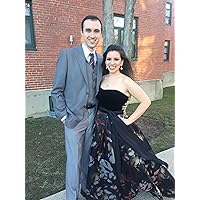
Shang Saavedra is the Founder and CEO of Save My Cents, a personal-finance education and coaching platform that focuses on the intersection of mental health and financial wealth. Her ethos is that changing one’s finances isn’t merely about making or saving more money. In her mind, personal finance is personal and thus related to one's upbringing, past experiences, family history, and more. It requires bravely facing the traumas and fears of one's past and tracing how they lead to mindsets grounded in scarcity and insecurity, especially as they relate to the handling of money.
Drawing upon scientific research on psychology and neuroscience, as well as many mental health experts, Saavedra has developed a methodology called “Trigger, Action, Reward,” which identifies the root causes of unhealthy money behaviors, provides concrete suggestions on how to break those cycles, and guides readers toward an abundance mindset that leads to financial success and security. Through her online classes and coaching lessons in investing, saving for retirement, debt freedom, and more, she has helped thousands of clients implement the TAR strategy and achieve transformative change in their lives.
Wealth Is a Mindset provides practical, concrete applications of Saavedra’s mindset-changing methodology. It is also an empathetic memoir that shows how Saavedra and her husband overcame many of their own emotional challenges to attain financial freedom. Dozens of anecdotes from her clients illustrate how the strategy works in real life. More importantly, it shows that we all are human, our inherent worth going far beyond simply a salary and net worth number. Featuring prescriptive, judgment-free exercises and worksheets to show step by step how to pay down debt, raise income, start a side hustle, save more money, invest for retirement, and build generational wealth, Wealth Is a Mindset will help readers find ways to improve their money and their lives, no matter where they are in their personal money story.
Personal finance is personal and often has psychological roots. Shang does a great job of breaking down three different money archetypes and how each should adapt based on the situation. This is a great read for someone getting started with investing or who wants to become work optional some day.
A self-help book that dives deep into the psychology behind our money habits while urging the reader to change their own lifestyle.
I'm pretty mixed with this one. On one hand, Saavedra has plenty of helpful insights about what to do and not to do with one's money. However, I didn't understand a huge chunk of this book which makes it hard to utilize as a productive resource. I personally know very little about personal finances and investing, so most everything I read was brand new information to me. I think it will take a few reads to truly dissect the useful information out of this one for me.
The look into psychology and different types of money archetypes that people fall into was interesting. The few that she talks about in great detail are Feast and Famine, Adverse Events, and Scarce Immigrant. These are three common archetypes that people fall into when it comes to how they view and spend their money. She also talks about how personal finance not being taught to us as children/young adults makes it really hard for us to properly digest this information while simultaneously failing to prepare us for the reality of society and the money we need to save up in order to survive.
There are a ton of sections that talk about how to design a budget, how to pay off debt, and what types of saving accounts to open up at different stages of your life. After finishing this book, I feel none the wiser of what I should do to prepare for financial freedom and retirement success, but I do feel that I have a great resource on my hands if I need to specifically refer to what to do regarding money and certain life events.
Saavedra doesn't hold back when it comes to talking about her personal life story, which I feel is super important when it comes to a life coach. She talks about everything she has had to cut out of her life to live in a frugal world of financial freedom. Her stories are often inspiring, but they also can be condescending at times. She talks about how she needed to cut out designer purses and leave her overflowing closet behind, which just feels out of this world as someone who grew up with much less than this. I don't often gripe about the circumstances of my youth, but I want to point out that it took me years to realize that most people didn't grow up without cold water in their shower or a hammer holding their window open in the summer. I'm glad she's being honest, but it can be hard not to feel resentment toward her from time to time.
Overall, "Wealth is a Mindset" is not only a personal finance self-help book, but also a deep dive into human psychology and the trauma that shapes us into the spenders that we are. This book overflows with good information, unfortunately, I had a hard time absorbing it. I may keep this one around for future reference, but for now, I don't feel that much wiser about personal finance.
As someone who does read a lot of self-help books, I’m happy to say this one was a smooth read. The author tells us a bit about herself and her own upbringing, and then a bit about how she came to be a financial coach. One of the early things we learn about is that she and her husband decided to invest and save early, so they’d have enough to live on one income once they eventually had kids.
Now, where her methodology gets interesting to me is that she starts with root causes. As in, the way we think about spending and saving comes from the way we saw our family approach it when we were young – so not everyone’s obstacles will be the same. It’s easy enough to say “save more” – but what a given person’s reasons are for not doing that already may differ.
She also breaks down several different ways to hit financial freedom goals: negotiating raises to make more, negotiating debts to pay less, having side hustles, having roommates, etc. She wants the reader to think big, and realize there are many different ways to either make more or spend less… and these, in various combos, are the building blocks to saving (or investing) for your retirement.
You’re most of the way through the book before she even hits you with the idea that you need to make a budget and then try your best to stick to it. Because by then, you will have tackled so many different ideas on how to make that happen, that it shouldn’t even be a hard task.
For a finance book, this was not hefty or overwhelming. (Without the Notes/Further Reading, the actual text comes in at only 200 pages!) And if you like psychology/self-help books, much of the context she presents is more in that realm. I’d say this is a perfect book for beginners who want to start learning more about how to manage their money better.
There's a lot of personal story in this book. So if you're looking for direct, how-to information... it's mostly at the back end of the book. The first half was a struggle for me to get through... and I contemplated putting the book down a couple of time. There are some sources she gave in the book that is a good start.
New York Stock Exchange & Nasdaq for Stock Investing. treasurydirect.gov for Bond Investing.
My favorite quote from the book: "'If a product is free for you to use, then you are the product.' We aren't using Facebook, Tiktok, or Instagram because these services serve us. Rather, our attention, time, & eyeballs are being 'purchased' for free & sold to the highest-bidding advertiser."
The reason I enjoyed that quote so much is because everywhere I go, people truly are glued to their phones waiting for a spouse, or in line for a ride at a park, or at a restaurant waiting for their food... I'm not criticizing, but I can see where this quote has validity. Advertising is everywhere and on everything.
Overall, this book was all right. Like I said, the last two chapters (in my opinion) held the most beneficial information for me. I have some direction on where to start, things to look in to, etc...
Finally had a chance to read Shang's first book that is a culmination of her years of financial freedom coaching. If you're a beginner investor, this book is for you!
It'll help you understand the psychology of money and how your life experiences can impact your financial well-being. Shang offers a number of easy-to-remember frameworks through the trends she's observed fromm all those she's worked with.
Take a chance on this quick read - it's certain to improve a part of your financial life!
I love this book and author so much that I found her on Instagram and reached out to her to have her on my podcast. Her book is now proudly posted as a rec on my website and my family has made several changes from this book. I found a book that finally makes sense to me.
I’ve followed Shang for years and I really appreciated this book. She tells you what you need to do, and it sounds harsh, but in listening to this book you see the compassion she approaches everyone with. Looking forward to utilizing a lot of this information going forward!
I follow Shang and her social media handle on IG. If you are a devoted follower, you would already know most of the content in this book. I really like reading about the different clients and their scenarios that Shang shares in this book. It is more relatable to know that these are actual people, their lives, and their choices. Besides that, everything in this book is already on her IG page.
Shang is one of the few influencers who speak the truth about passion and work. "Following your 'passion'" is not something everyone can afford. Passion does not pay bill. I always think of one's major in college as what can lead to a stable career, which then can support one's passion (which can be their minor in college). It's good to know that I am not the outlier.
Shang mentions a few things in this book that touch my heart personally: 1. Being promised certain benefits or rewards, only to have them unfulfilled or removed without cause. 2. The company real values are shown by who gets rewarded, promoted, and LET GO. 3. Listen first. Give more than you receive.
I’ve read my fair share of personal finance books, so I wasn’t sure what I’d gain from yet another one, but WIAM indeed offered fresh insights that make it stand out from the rest! WIAM dives into the mental and emotional side of money, not just the usual budgeting and investing tips, though it has a lot of practical advice as well. Shang’s approach is so caring and nonjudgmental, helping you work through limiting beliefs and understanding the why behind your money habits in order to more effectively and sustainably achieve financial wealth. Her story of becoming work-optional in her early 30s through frugality, hard work, and addressing her mental health is inspiring, and the stories of her coaching clients are relatable and just as motivating. Even if you’ve already consumed a lot of personal finance content before, WIAM has a unique perspective that’s worth checking out.